South Korean card giant completes stablecoin payments pilot for foreigners

cointelegraphОпубліковано о 2025-12-23Востаннє оновлено о 2025-12-23

Анотація

BC Card, one of South Korea's largest payment processors, has completed a pilot project enabling foreign users to pay local merchants using stablecoins. The initiative, conducted with partners including Wavebridge and Aaron Group, allowed users to convert overseas stablecoins into digital prepaid cards. The pilot is part of BC Card's broader strategy to implement a stablecoin payment system, responding to evolving regulations in South Korea. The country is actively discussing won-based stablecoins, though regulatory progress has been delayed due to disagreements between the Financial Services Commission and the Bank of Korea. Globally, stablecoins are gaining traction as payment alternatives, with companies like YouTube and Visa adopting them for payouts and settlements.

South Korean payments processor BC Card has completed a pilot project that enabled foreign users to pay local merchants using stablecoins.

BC Card’s pilot project was announced Tuesday and was conducted with blockchain company Wavebridge, wallet provider Aaron group and cross-border remittance provider Global Money Express. The companies had foreign users convert their stablecoins held in overseas wallets, which were partnered with BC Card, into digital prepaid cards.

The company said this pilot was not a short-term project, but part of preparations to implement a stablecoin payment structure. The change is a response to the evolution of South Korean stablecoin regulations, it said.

BC Card is one of South Korea’s largest payment companies, which reportedly processes over 20% of South Korea’s card transactions and covers 3.4 million domestic merchants. Its majority owner is KT Corp, one of the country’s three major telecom companies.

Shehram Khattak, general counsel at Trust Wallet, told Cointelegraph:

Ultimately, banks will have to deal with legacy operations but not only from an operations perspective but also processes; the entire department will have to change how they function.”

Related: US lawmakers propose tax break for small stablecoin payments, staking rewards

South Korea takes stablecoins seriously

In late July, local media reported that credit card companies were scrambling to respond to perceived threats from stablecoins. The nation’s credit card industry reportedly formed a joint task force as local regulators opened discussions regarding the introduction of won-based stablecoins.

BC card reportedly launched an internal team dedicated to tracking trends in both the domestic and international stablecoin markets. Still, local stablecoin regulations are taking longer to take shape than anticipated.

Earlier this month, South Korea’s Financial Services Commission (FSC) failed to submit a draft proposal on stablecoin regulations by the deadline requested by the country’s ruling Democratic Party. Lawmakers said that the delay was caused by disagreements between the FSC and the Bank of Korea (BOK), the nation’s central bank.

The crux of the debate appears to be the BOK’s desire to require banks to own at least 51% of any stablecoin issuer seeking regulatory approval. Other regulators appear to be pushing towards a more diverse ecosystem.

Related: Crypto Biz: Bank stablecoins get a rulebook; Bitcoin gets a land grab

Stablecoins take on the world

Stablecoins are increasingly discussed as an alternative or complementary payment method to traditional solutions such as payment cards or bank wire transfers.

Adoption is moving quickly, with YouTube allowing US content creators to receive payouts in the dollar-pegged PayPal USD (PYUSD), earlier in December.

Meanwhile, Visa launched USD Coin (USDC) settlement services for some US-based financial institutions.
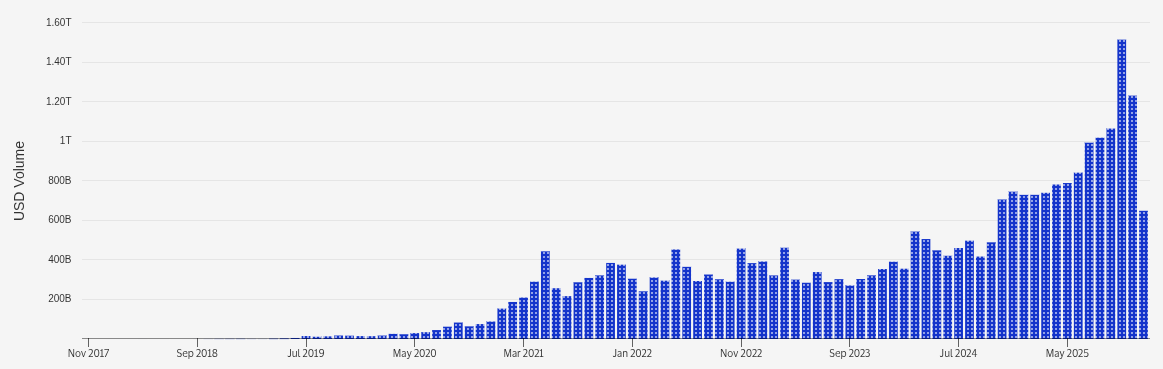
Stablecoin transaction volume. Source: VISA

Related: Galaxy predicts stablecoins will overtake ACH transaction volume in 2026

Пов'язані питання

QWhat is the main achievement of BC Card as reported in the article?

ABC Card has completed a pilot project that enabled foreign users to pay local South Korean merchants using stablecoins.

QWhich companies partnered with BC Card for the stablecoin payments pilot?

ABC Card conducted the pilot with blockchain company Wavebridge, wallet provider Aaron Group, and cross-border remittance provider Global Money Express.

QWhy did BC Card initiate this stablecoin pilot project according to the article?

AThe pilot was part of preparations to implement a stablecoin payment structure in response to the evolution of South Korean stablecoin regulations.

QWhat regulatory disagreement is mentioned regarding South Korea's stablecoin framework?

AThe Bank of Korea wants banks to own at least 51% of any stablecoin issuer, while other regulators prefer a more diverse ecosystem, causing delays in regulatory proposals.

QHow are stablecoin adoption trends illustrated in the article beyond South Korea?

AThe article mentions YouTube allowing US creators to receive payouts in PayPal USD (PYUSD) and Visa launching USD Coin (USDC) settlement services for some US financial institutions.

Пов'язані матеріали

While Everyone Says NFTs Are 'Dead', the Art World is Quietly Completing an 'On-Chain Renaissance'

While many declare NFTs "dead" and dismiss them as overhyped JPEGs, a significant institutional shift is quietly underway within the art world, signaling a "on-chain renaissance." Traditional art, a ~$60B market, is stagnant, aging, and highly concentrated, facing a massive $80 trillion generational wealth transfer to digital-native heirs. Contrary to the narrative, leading institutions have been building infrastructure for digital and on-chain art. Major museums like MoMA, the Centre Pompidou, LACMA, and the Guggenheim have acquired seminal NFT works into their permanent collections. Top galleries like Pace, Gagosian, and Hauser & Wirth have launched NFT platforms or accepted crypto, with Pace giving a solo show to generative artist Tyler Hobbs. Auction houses Sotheby's and Christie's operate dedicated on-chain sales platforms. This follows a historical pattern where every major art movement—from Impressionism to Pop Art—was initially mocked before institutional acceptance. NFT art, only 7-12 years old, is progressing faster. Auction data shows resilience, with works by Beeple ($69.3M), Pak (~$91M), and Dmitri Cherniak ($6.2M in a bear market) achieving high prices. A new cohort of collectors (e.g., FlamingoDAO, PleasrDAO) and "Medici" figures like Cozomo de' Medici are accumulating foundational works. The core argument is that NFTs represent not a speculative asset class but a new ownership system for digital culture, solving provenance issues through immutable, timestamped blockchain records. The medium has survived the speculative crash and is being institutionalized. The bet isn't on short-term price rallies but on the long-term cultural significance of on-chain art as the defining medium for the next generation of collectors.

marsbit36 хв тому

While Everyone Says NFTs Are 'Dead', the Art World is Quietly Completing an 'On-Chain Renaissance'

marsbit36 хв тому

Jensen Huang's Message to Graduates: AI Won't Replace You, But Those Who Excel at Using AI Will

NVIDIA CEO Jensen Huang, addressing 2026 graduates at Carnegie Mellon University, emphasized that AI will not replace people, but those who leverage AI effectively will have an advantage. He delivered this message during a commencement speech where he also received an honorary doctorate, his seventh. Huang reflected on his personal journey as an immigrant, starting from humble beginnings as a dishwasher to co-founding NVIDIA. He shared early struggles, including a near-bankruptcy moment saved by honesty with Sega, highlighting resilience and learning from failure. He positioned the current era as the dawn of the AI revolution, a shift as significant as past computing waves. Huang explained that AI is redefining computing from human-written software to machine learning, creating a new industry focused on manufacturing intelligence. While acknowledging fears about job displacement, he argued that AI amplifies human capabilities rather than replaces human purpose. Tasks may be automated, but the core meaning of professions remains. Huang urged graduates to embrace this transformative time with responsibility and optimism. He stated that AI should democratize technology, bridging gaps and enabling broader participation in creation and problem-solving. His final advice was to actively engage with the opportunity: "So run, don’t walk," and to put their hearts into their work.

marsbit43 хв тому

Jensen Huang's Message to Graduates: AI Won't Replace You, But Those Who Excel at Using AI Will

marsbit43 хв тому

Three Scenarios for BTC's Future Direction and a Duel Between Two Strong Forces | Special Invited Analysis

**Title: Three Scenarios for BTC's Future Trajectory and a Key Duel | Invited Analysis** The market remains at a critical juncture. Over the past week, Bitcoin (BTC) consolidated broadly between $79,500 and $80,600, validating previous technical analysis. The current focus is on whether this marks the start of a new uptrend or a pause within a larger correction. **BTC Multi-Cycle Analysis & Three Possible Scenarios** BTC's daily chart structure, following its peak at $126,200 in October 2025, presents three primary technical scenarios based on Elliott Wave theory: 1. **Bullish Scenario (End of Correction):** The corrective A-B-C wave from $126,200 ended at the $60,000 low in February 2026. The current price action is the start of a major Wave I uptrend. A subsequent Wave II pullback would not break below $60,000. 2. **Bearish Scenario 1 (Complex Correction):** The correction is unfolding as an A-B-C-D-E pattern. The current move from $60,000 is a D-wave rally. After its completion, a final E-wave decline could potentially breach the $60,000 level. 3. **Bearish Scenario 2 (Larger Correction):** The entire move down from $126,200 to $60,000 was a large A-wave. The current rally is a B-wave correction within a larger A-B-C structure, to be followed by a C-wave decline below $60,000. *Analysis suggests Scenario 2 is less probable due to time disproportions between waves. The battle is effectively between the Bullish Scenario (1) and Bearish Scenario (3).* **Key BTC Levels & Weekly Strategy** On the 4-hour chart, BTC trades above a crucial consolidation zone ("Central Pivot C"). * **Key Resistance:** $83,500-$84,500; $89,000-$90,500. * **Key Support:** $78,500-$79,500 (pivot upper bound); $73,500-$75,000; $69,500-$70,500. **Weekly Outlook:** The market direction hinges on BTC's ability to hold above or break below the $78,500-$79,500 support zone. * **Mid-term Strategy:** Neutral/Wait-and-see stance due to unclear direction. * **Short-term Tactics:** Two contingency plans using 30% max capital: * **Plan A (Bullish):** Look for long entries if price holds above $78,500-$79,500 with confirming signals. Initial stop-loss below $78,500. * **Plan B (Bearish):** Consider short positions if price breaks below $73,500-$75,000 with confirming signals. Initial stop-loss above $76,500. **HYPE Analysis & Strategy** HYPE's daily chart shows a seven-segment structure from its January low of $20.46, forming a "rising pivot" zone. * **Key Level to Watch:** $45.76 (previous high). A break above would confirm the bullish structure remains intact. * **Short-term Strategy:** Focus on pivot zone boundaries ($38.41 upper, $34.44 lower). * **Long:** Consider on support near $38.41 with bullish confirmation signals. * **Short:** Consider on a break below $34.44 with bearish confirmation signals. * Position size must be below 30% with strict stop-loss discipline. **Risk Management Reminder:** Always set an initial stop-loss upon entry. Move stop-loss to breakeven at +1% profit, then trail it upwards to lock in profits dynamically. All views are based on technical analysis for informational purposes only and do not constitute investment advice. The market is inherently risky.

Odaily星球日报51 хв тому

Three Scenarios for BTC's Future Direction and a Duel Between Two Strong Forces | Special Invited Analysis

Odaily星球日报51 хв тому

Sequoia Interview with Hassabis: Information is the Essence of the Universe, AI Will Open Up Entirely New Scientific Branches

Demis Hassabis, co-founder and CEO of Google DeepMind and Nobel laureate, discusses the path to AGI and its profound implications in a Sequoia Capital interview. He outlines his lifelong dedication to AI, tracing his journey from game development (e.g., *Theme Park*)—a perfect AI testing ground—to neuroscience and finally founding DeepMind in 2009. He emphasizes the critical lesson of being "5 years, not 50 years, ahead of time" for successful entrepreneurship. Hassabis reiterates DeepMind's two-step mission: first, solve intelligence by building AGI; second, use AGI to tackle other complex problems. He highlights the transformative potential of "AI for Science," particularly in biology where tools like AlphaFold have revolutionized protein folding. He envisions AI-powered simulations drastically shortening drug discovery from years to weeks and enabling personalized medicine. Furthermore, he predicts AI will spawn new scientific disciplines, such as an engineering science for understanding complex AI systems (mechanistic interpretability) and novel fields enabled by high-fidelity simulators for complex systems like economics. He posits a fundamental worldview where information, not just matter or energy, is the essence of the universe, making AI's information-processing core uniquely suited to understanding reality. He defends classical Turing machines as potentially sufficient for modeling complex phenomena, including quantum systems, as demonstrated by AlphaFold. On consciousness, Hassabis suggests first building AGI as a powerful tool, then using it to explore deep philosophical questions. He believes components like self-awareness and temporal continuity are necessary for consciousness but that defining it fully remains an open challenge. He predicts AGI could arrive around 2030 and, once achieved, would be used to probe the deepest questions of science and reality, much as envisioned in David Deutsch's *The Fabric of Reality*.

链捕手1 год тому

Sequoia Interview with Hassabis: Information is the Essence of the Universe, AI Will Open Up Entirely New Scientific Branches

链捕手1 год тому

Торгівля

Спот
Ф'ючерси
活动图片





