South Korea To Review Seized Crypto Custody Practices After Recovery Phase Leak Incident

bitcoinistОпубліковано о 2026-03-03Востаннє оновлено о 2026-03-03

Анотація

South Korean financial authorities, led by Deputy Prime Minister and Finance Minister Koo Yun-cheol, have pledged to review and strengthen the management of seized crypto assets after a series of security incidents resulted in losses of nearly $30 million. This decision follows a recent leak by the National Tax Service, which accidentally exposed a wallet’s recovery seed phrase in a press release, leading to the theft of $4.8 million in tokens. The government plans to collaborate with agencies like the Financial Services Commission to enhance security measures and prevent future breaches. This incident is part of a broader pattern, including earlier losses of $21 million in Bitcoin from a prosecutor’s office and $1.4 million from a police station, highlighting systemic vulnerabilities in the custody of digital assets by public institutions.

South Korean financial authorities have pledged to revise their crypto custody practices following public scrutiny over multiple incidents that led to the loss of nearly $30 million in seized digital assets over the past few months.

Authorities Move To Enhance Crypto Custody Practices

South Korea’s Deputy Prime Minister and Minister of Finance, Koo Yun-cheol, affirmed that authorities will review their management practices of seized crypto assets by government and public authorities, and develop measures to prevent the theft and loss of these assets.

“In response to the recent digital asset information leak incident at the National Tax Service (NTS), the government will promptly review the status and management practices of digital assets held and managed by government and public institutions—such as those seized from delinquent taxpayers—in collaboration with relevant agencies, including the Financial Services Commission (FSC) and the Financial Supervisory Service (FSS),” the finance minister wrote in a Sunday X post.

“We will also swiftly develop and implement measures to prevent recurrence, including strengthening digital asset security management,” he continued, noting that the South Korean government only holds crypto assets acquired through legal enforcement actions, such as seizure.

The upcoming review and Koo’s statement follow a wave of criticism over the authorities’ practices and management of crypto assets after the tax agency exposed the recovery seed phrase of a seized wallet, leading to unauthorized access and theft of the tokens inside it.

As reported by Bitcoinist, South Korea’s National Tax Service recently published an official press release to highlight its crackdown on tax nonpayers, but accidentally shared a full wallet seed phrase in the process.

The Thursday press release was reportedly part of a broader NTS enforcement campaign targeted at people who owed taxes, showing seized crypto assets as evidence of the agency’s efforts.

Nonetheless, it included an image of two Ledger cold wallets alongside a handwritten sheet of paper that exposed the wallets’ complete mnemonic recovery phrases.

Soon after, one of the confiscated wallets’ entire balance, 4 million Pre-Retogeum (PRTG) tokens worth around $4.8 million, was transferred to another address, blockchain researchers found, but noted that the cryptocurrency has extremely low liquidity.

According to Professor Cho Jae-woo of Hansung University’s Blockchain Research Institute, the other wallets with seed phrases visible in the same image did not appear to carry significant risk, as the leaked tokens are also difficult to convert into cash.

The expert criticized the incident, but shared his hope that it “serves as a turning point for the establishment of a robust virtual asset management system within Korea’s public sector.”

South Korea’s Custody Mishaps

Last week’s incident is the latest in a series of security breaches that have led to the loss of around $27 million in seized crypto assets under the government’s custody since the start of the year.

In January, the Gwangju District Prosecutors’ Office faced backlash after discovering that 320 Bitcoin (BTC), worth around $21 million, had gone missing months ago. According to local reports, authorities only discovered the theft during a routine check of seized financial assets held as criminal evidence.

Prosecutors found that the crypto assets, first seized in 2021, were lost to a scam in August while authorities were handling the assets. Notably, a malicious actor drained the wallets after investigators mistakenly accessed a phishing website.

In an unexpected turn of events, the hacker returned the stolen Bitcoin in mid-February, the Gwangju District Prosecutors’ Office confirmed, vowing to continue to track down the malicious actors involved while conducting related investigations and inspections.

The incident led to a nationwide review, which revealed another security breach at the Seoul Gangnam Police Station last month. The Gangnam station announced it had lost 22 BTC, worth around $1.4 million at the time, that were voluntarily submitted to authorities during an investigation in November 2021.

Local news outlets reported that the leak had not been detected until recently, as the investigation into that case had been suspended. The inspection revealed that the cold wallet storing the Bitcoin was not stolen. However, the assets stored inside had vanished without a trace, deepening concerns about local authorities’ knowledge of cryptocurrencies and proper measures to handle and custody seized digital assets.
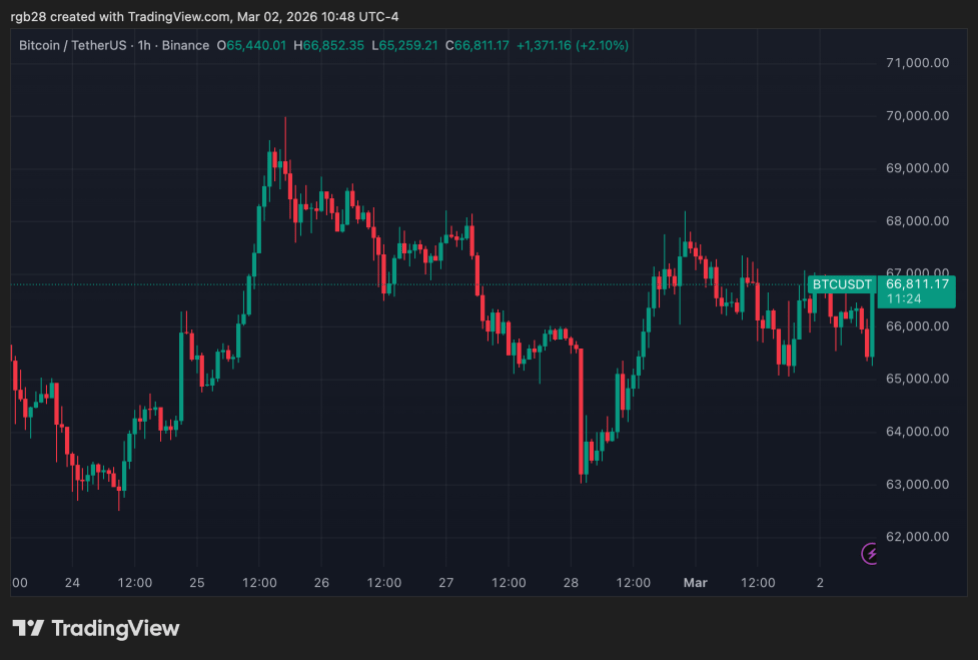
Bitcoin trades at $66,811 in the one-week chart. Source: BTCUSDT on TradingView


Пов'язані питання

QWhat prompted South Korean financial authorities to review their crypto custody practices?

AThe review was prompted by a series of security incidents, most recently the National Tax Service's accidental leak of a wallet's recovery seed phrase, which led to the theft of seized crypto assets and public scrutiny over the loss of nearly $30 million.

QHow much in Pre-Retogeum (PRTG) tokens was stolen from the seized wallet after the NTS leak, and what was its approximate value?

A4 million Pre-Retogeum (PRTG) tokens, worth approximately $4.8 million, were stolen from the seized wallet.

QWhat was the significant Bitcoin-related security breach that occurred at the Gwangju District Prosecutors' Office earlier this year?

AIn January, the Gwangju District Prosecutors' Office discovered that 320 Bitcoin (BTC), worth around $21 million, had been stolen from a seized wallet months earlier after investigators mistakenly accessed a phishing website.

QAccording to Finance Minister Koo Yun-cheol, what type of crypto assets does the South Korean government hold?

AThe South Korean government only holds crypto assets that have been acquired through legal enforcement actions, such as seizure.

QWhat was the outcome of the Bitcoin theft from the Gwangju District Prosecutors' Office?

AIn an unexpected turn of events, the hacker returned the stolen Bitcoin in mid-February.

Пов'язані матеріали

How Does Codex Use a Computer? Three Entry Points and Permission Boundaries

This article explains the three primary methods for Codex to interact with a computer, each with distinct use cases, permission boundaries, and trust levels. **1. Computer Use:** This offers the broadest access, allowing Codex to visually control and interact with the graphical user interface of authorized macOS/Windows apps, system settings, and even iOS simulators. It's ideal for tasks lacking APIs or structured tools, such as operating legacy software or multi-app workflows. However, it's the slowest method and has the widest permission scope, requiring careful supervision for sensitive actions. **2. Chrome Extension:** This grants Codex access to the user's logged-in Chrome browser state, including cookies, profiles, and open tabs. It's best for tasks requiring user identity across websites like Gmail, LinkedIn, Salesforce, or internal dashboards. Its key advantage is multi-tab control for complex workflows. While more powerful for browser-based tasks than Computer Use, it carries higher sensitivity as actions are performed under the user's identity. **3. In-App Browser:** This is a browser isolated within the Codex thread, separate from the user's personal browsing data. It excels in web development and debugging scenarios—previewing local servers, testing responsive layouts, or annotating designs directly on the page. Its isolation is a strength for development but a limitation for tasks requiring login sessions. The core principle is to choose the narrowest, safest, and most structured interface for the task. Use plugins or MCPs first, resort to visual control (Computer Use) only for GUI-dependent tasks, employ the Chrome extension for identity-reliant browser work, and prefer the In-App Browser for isolated development. **Appshots** are clarified as a fourth, complementary tool for *inputting* context—capturing a screenshot of a window to point Codex to something—rather than a method for Codex to *act*. Together, this layered approach highlights a key to AI agent productization: not granting unlimited permissions, but constraining them within clear boundaries for specific tasks while preserving user oversight.

marsbit36 хв тому

How Does Codex Use a Computer? Three Entry Points and Permission Boundaries

marsbit36 хв тому

The "Iron Rule" of Chip Equipment Is Being Broken

For years, the semiconductor equipment industry followed an unwritten "iron rule": suppliers offered steep discounts for new tool introductions (Design-in) and faced consistent price pressure during repeat orders, especially during market downturns. This long-standing buyer's market dynamic is now being upended. Recently, SK Hynix's primary equipment suppliers have reportedly requested a 3-4% price *increase*, a nearly unprecedented move. This shift is driven by a severe supply-demand imbalance fueled by the AI compute boom. Securing equipment has become an urgent arms race as chipmakers' expansion speed dictates their ability to fulfill massive AI chip orders. Key areas feeling the strain include: **TCB (Thermal Compression Bonding) Equipment:** Demand is exploding, driven by the simultaneous needs of HBM4 memory stacking, AI chip Chip-on-Substrate (C2S), and logic Chiplet Chip-on-Wafer (C2W) packaging. Players like Hanmi Semiconductor, Hanwha Semitech, and ASMPT are receiving major orders. While hybrid bonding is seen as the future, TCB remains the pragmatic choice for HBM4 mass production, with its lifecycle extended by relaxed specifications and ongoing technological upgrades. **Test Equipment Bottlenecks:** Ironically, AI-driven shortages are now crippling test equipment manufacturing. Critical components like FPGAs, Driver ICs, and CPUs face severe shortages and extended lead times (up to 52 weeks for FPGAs), as AI data center and server vendors prioritize supply. This creates a paradoxical cycle: AI chip shortages drive fab expansion, which requires more test equipment, whose production is delayed because its key parts are diverted to make AI chips. The industry is entering a broad, AI-powered upcycle. SEMI forecasts global semiconductor equipment sales to hit a record $156 billion by 2027, fueled by investment in advanced logic/foundry, HBM-driven DRAM, and advanced packaging (like CoWoS). Major players like TSMC, SK Hynix, and Micron are aggressively ramping capital expenditure. In conclusion, leading equipment vendors are no longer just selling tools; they are selling the critical capability to deliver AI-era capacity. Pricing power is shifting decisively to those with indispensable technology in key process nodes like advanced logic, HBM, and advanced packaging, rewriting the industry's traditional power structure.

marsbit49 хв тому

The "Iron Rule" of Chip Equipment Is Being Broken

marsbit49 хв тому

Торгівля

Спот
Ф'ючерси
活动图片