South Korea Plans to End Corporate Crypto Ban With 5% Equity Cap

TheNewsCryptoОпубліковано о 2026-01-12Востаннє оновлено о 2026-01-12

Анотація

South Korea is set to lift its ban on corporate cryptocurrency investments, a policy in place since 2017. The Financial Services Commission (FSC) will allow listed companies and professional investors to allocate up to 5% of their equity to crypto assets, with final guidelines expected by January or February. Investments will be restricted to the top 20 cryptocurrencies by market cap and must be conducted through the country's top five exchanges. This move could inject significant capital into the market and accelerate developments like a national stablecoin initiative and spot Bitcoin ETFs. The policy aligns with South Korea's broader digital finance strategy, which includes exploring CBDCs and a licensing framework for stablecoin issuers.

South Korea is set to relax its ban on investing in crypto by corporations and will therefore bring about a significant change in policy that will help open up the market for digital assets to new institutions. The Financial Services Commission has been seen to have updated the guidelines to allow corporations to invest in crypto assets again after the ban that has been effective since 2017.

As reported by the Seoul Economic Daily, soon, the companies that are listed and professional investors will be allowed to invest a certain percentage of equity in these digital assets, and that percentage is going to be 5%. As told to the publication by a high official from the FSC, “the final guidelines will be released in January or February, and then it will be possible for a legal entity to make a virtual currency transaction for investment and financial purposes.”

The lifted ban nullifies a nine-year blockade that was established in the 2017 crypto boom. At that time, the government restricted institutional involvement due to heightened worries about the potential for money laundering and speculation. Rather, it seems that the government is more interested in regulating the involvement of companies in the industry.

Investment access will come with strict limits

The FSC intends to ensure that the use of corporates in cryptocurrency investments is well managed. Based on the proposed framework, corporates can invest in no more than the top 20 cryptocurrencies in terms of market capitalization. In addition, companies must trade through the top five exchanges in South Korea, reducing the risk associated with the other party in a trade and ensuring higher supervision.

Although regulators are yet to make up their mind on whether to include dollar-pegged stablecoins like Tether’s USDT, stablecoins are still quite sensitive in policy circles because of their increasing importance in managing capital flows and cross-border payments.

The FSC allegedly distributed the latest draft rules to their working group for cryptos on Jan. 6, in response to earlier hints in February 2025 that they would loosen up rules in phases.

Bullish implications for Korean crypto markets

If implemented, it could inject a massive amount of capital into the market. This is because the largest listed firms in South Korea have very deep balance sheets, and any allocation will result in massive purchases.

For example, the report cited internet giant Naver, which holds about 27 trillion won ($18.4 billion) in equity capital. Under a 5% cap, such a company could theoretically deploy large sums into digital assets potentially buying thousands of Bitcoin-equivalent exposure depending on strategy and timing.

Beyond direct inflows, the new guidance could accelerate broader market developments. Industry observers expect the easing of corporate limits to support faster progress toward:

  • a national stablecoin initiative, and
  • The eventual approval of spot Bitcoin ETFs, which already have growing political and industry backing, but still face regulatory hurdles.

Corporate participation could also strengthen local crypto companies, blockchain startups, and digital asset treasury (DAT) strategies. In recent years, several Korean firms have invested overseas to avoid domestic limits, which reduced Korea’s ability to keep crypto innovation onshore.

Stablecoins and CBDCs remain central to Korea’s strategy

The reported policy update also fits into South Korea’s wider digital finance agenda. Separately, Seoul Economic Daily reported that the South Korean government has outlined an ambitious plan under its 2026 Economic Growth Strategy, including a goal to execute 25% of national treasury fund activity via a CBDC by 2030.

In addition, policymakers are considering a licensing system for stablecoin issuers. The plan would require:

  • 100% reserve backing, and
  • legally protected redemption rights for users.

If South Korea finalizes both corporate investment permissions and stablecoin licensing, the country could emerge as one of Asia’s most structured and institution-friendly crypto markets.

Highlighted Crypto News:

Stocks and US Dollar Dipped Following Trump-Powell Feud, Where’s Crypto Market Headed?

TagsBitcoincrypto regulationFSCSouth KoreaStablecoin

Пов'язані питання

QWhat is the key change in South Korea's policy regarding corporate investment in crypto assets?

ASouth Korea is set to relax its ban on corporate crypto investment, allowing listed companies and professional investors to hold up to 5% of their equity in digital assets.

QWhat are the two major restrictions the FSC plans to impose on corporate crypto investments?

ACorporates can only invest in the top 20 cryptocurrencies by market cap and must trade through South Korea's top five exchanges to ensure higher supervision and reduce counterparty risk.

QHow could this policy change potentially impact the Korean crypto market in terms of capital inflow?

AIt could inject massive capital into the market, as large listed firms with deep balance sheets (like Naver with $18.4 billion equity) could theoretically deploy significant sums into digital assets under the 5% cap.

QWhat two broader market developments might this corporate crypto investment accelerate according to industry observers?

AIt could accelerate progress toward a national stablecoin initiative and the eventual approval of spot Bitcoin ETFs, which already have growing political and industry backing.

QHow does this policy update fit into South Korea's wider digital finance strategy beyond corporate investment?

AIt aligns with ambitious plans like executing 25% of national treasury fund activity via a CBDC by 2030 and establishing a licensing system for stablecoin issuers requiring 100% reserve backing and legally protected redemption rights.

Пов'язані матеріали

While Everyone Says NFTs Are 'Dead', the Art World is Quietly Completing an 'On-Chain Renaissance'

While many declare NFTs "dead" and dismiss them as overhyped JPEGs, a significant institutional shift is quietly underway within the art world, signaling a "on-chain renaissance." Traditional art, a ~$60B market, is stagnant, aging, and highly concentrated, facing a massive $80 trillion generational wealth transfer to digital-native heirs. Contrary to the narrative, leading institutions have been building infrastructure for digital and on-chain art. Major museums like MoMA, the Centre Pompidou, LACMA, and the Guggenheim have acquired seminal NFT works into their permanent collections. Top galleries like Pace, Gagosian, and Hauser & Wirth have launched NFT platforms or accepted crypto, with Pace giving a solo show to generative artist Tyler Hobbs. Auction houses Sotheby's and Christie's operate dedicated on-chain sales platforms. This follows a historical pattern where every major art movement—from Impressionism to Pop Art—was initially mocked before institutional acceptance. NFT art, only 7-12 years old, is progressing faster. Auction data shows resilience, with works by Beeple ($69.3M), Pak (~$91M), and Dmitri Cherniak ($6.2M in a bear market) achieving high prices. A new cohort of collectors (e.g., FlamingoDAO, PleasrDAO) and "Medici" figures like Cozomo de' Medici are accumulating foundational works. The core argument is that NFTs represent not a speculative asset class but a new ownership system for digital culture, solving provenance issues through immutable, timestamped blockchain records. The medium has survived the speculative crash and is being institutionalized. The bet isn't on short-term price rallies but on the long-term cultural significance of on-chain art as the defining medium for the next generation of collectors.

marsbit38 хв тому

While Everyone Says NFTs Are 'Dead', the Art World is Quietly Completing an 'On-Chain Renaissance'

marsbit38 хв тому

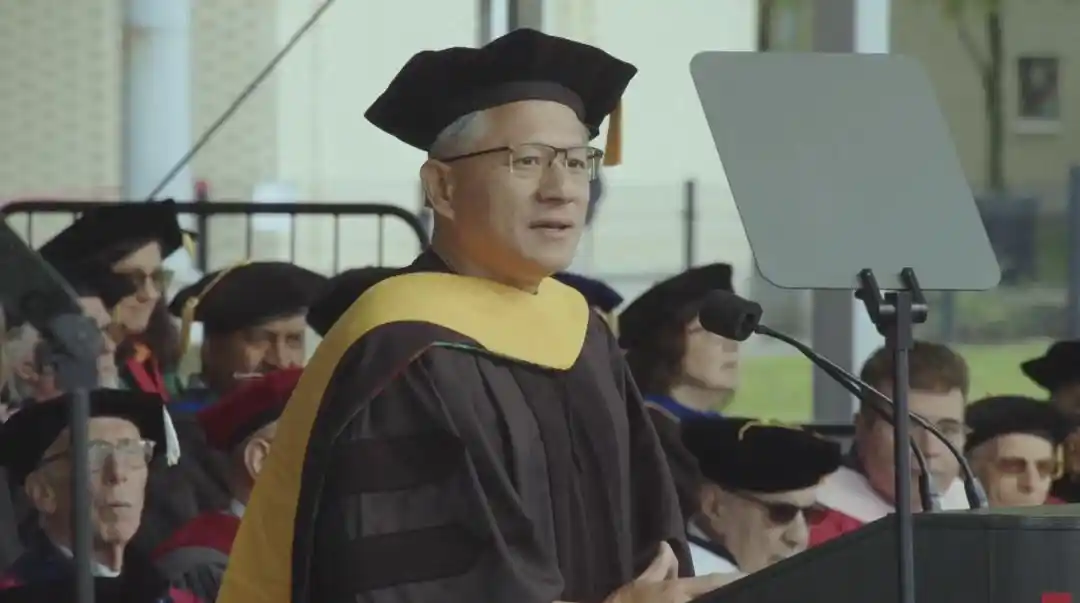
Jensen Huang's Message to Graduates: AI Won't Replace You, But Those Who Excel at Using AI Will

NVIDIA CEO Jensen Huang, addressing 2026 graduates at Carnegie Mellon University, emphasized that AI will not replace people, but those who leverage AI effectively will have an advantage. He delivered this message during a commencement speech where he also received an honorary doctorate, his seventh. Huang reflected on his personal journey as an immigrant, starting from humble beginnings as a dishwasher to co-founding NVIDIA. He shared early struggles, including a near-bankruptcy moment saved by honesty with Sega, highlighting resilience and learning from failure. He positioned the current era as the dawn of the AI revolution, a shift as significant as past computing waves. Huang explained that AI is redefining computing from human-written software to machine learning, creating a new industry focused on manufacturing intelligence. While acknowledging fears about job displacement, he argued that AI amplifies human capabilities rather than replaces human purpose. Tasks may be automated, but the core meaning of professions remains. Huang urged graduates to embrace this transformative time with responsibility and optimism. He stated that AI should democratize technology, bridging gaps and enabling broader participation in creation and problem-solving. His final advice was to actively engage with the opportunity: "So run, don’t walk," and to put their hearts into their work.

marsbit45 хв тому

Jensen Huang's Message to Graduates: AI Won't Replace You, But Those Who Excel at Using AI Will

marsbit45 хв тому

Three Scenarios for BTC's Future Direction and a Duel Between Two Strong Forces | Special Invited Analysis

**Title: Three Scenarios for BTC's Future Trajectory and a Key Duel | Invited Analysis** The market remains at a critical juncture. Over the past week, Bitcoin (BTC) consolidated broadly between $79,500 and $80,600, validating previous technical analysis. The current focus is on whether this marks the start of a new uptrend or a pause within a larger correction. **BTC Multi-Cycle Analysis & Three Possible Scenarios** BTC's daily chart structure, following its peak at $126,200 in October 2025, presents three primary technical scenarios based on Elliott Wave theory: 1. **Bullish Scenario (End of Correction):** The corrective A-B-C wave from $126,200 ended at the $60,000 low in February 2026. The current price action is the start of a major Wave I uptrend. A subsequent Wave II pullback would not break below $60,000. 2. **Bearish Scenario 1 (Complex Correction):** The correction is unfolding as an A-B-C-D-E pattern. The current move from $60,000 is a D-wave rally. After its completion, a final E-wave decline could potentially breach the $60,000 level. 3. **Bearish Scenario 2 (Larger Correction):** The entire move down from $126,200 to $60,000 was a large A-wave. The current rally is a B-wave correction within a larger A-B-C structure, to be followed by a C-wave decline below $60,000. *Analysis suggests Scenario 2 is less probable due to time disproportions between waves. The battle is effectively between the Bullish Scenario (1) and Bearish Scenario (3).* **Key BTC Levels & Weekly Strategy** On the 4-hour chart, BTC trades above a crucial consolidation zone ("Central Pivot C"). * **Key Resistance:** $83,500-$84,500; $89,000-$90,500. * **Key Support:** $78,500-$79,500 (pivot upper bound); $73,500-$75,000; $69,500-$70,500. **Weekly Outlook:** The market direction hinges on BTC's ability to hold above or break below the $78,500-$79,500 support zone. * **Mid-term Strategy:** Neutral/Wait-and-see stance due to unclear direction. * **Short-term Tactics:** Two contingency plans using 30% max capital: * **Plan A (Bullish):** Look for long entries if price holds above $78,500-$79,500 with confirming signals. Initial stop-loss below $78,500. * **Plan B (Bearish):** Consider short positions if price breaks below $73,500-$75,000 with confirming signals. Initial stop-loss above $76,500. **HYPE Analysis & Strategy** HYPE's daily chart shows a seven-segment structure from its January low of $20.46, forming a "rising pivot" zone. * **Key Level to Watch:** $45.76 (previous high). A break above would confirm the bullish structure remains intact. * **Short-term Strategy:** Focus on pivot zone boundaries ($38.41 upper, $34.44 lower). * **Long:** Consider on support near $38.41 with bullish confirmation signals. * **Short:** Consider on a break below $34.44 with bearish confirmation signals. * Position size must be below 30% with strict stop-loss discipline. **Risk Management Reminder:** Always set an initial stop-loss upon entry. Move stop-loss to breakeven at +1% profit, then trail it upwards to lock in profits dynamically. All views are based on technical analysis for informational purposes only and do not constitute investment advice. The market is inherently risky.

Odaily星球日报53 хв тому

Three Scenarios for BTC's Future Direction and a Duel Between Two Strong Forces | Special Invited Analysis

Odaily星球日报53 хв тому

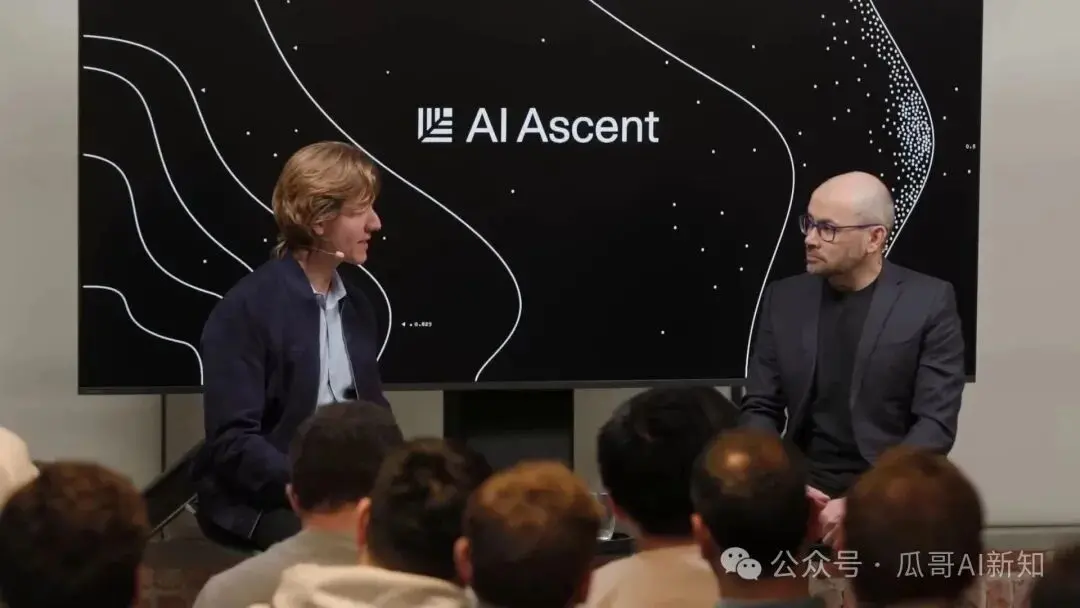
Sequoia Interview with Hassabis: Information is the Essence of the Universe, AI Will Open Up Entirely New Scientific Branches

Demis Hassabis, co-founder and CEO of Google DeepMind and Nobel laureate, discusses the path to AGI and its profound implications in a Sequoia Capital interview. He outlines his lifelong dedication to AI, tracing his journey from game development (e.g., *Theme Park*)—a perfect AI testing ground—to neuroscience and finally founding DeepMind in 2009. He emphasizes the critical lesson of being "5 years, not 50 years, ahead of time" for successful entrepreneurship. Hassabis reiterates DeepMind's two-step mission: first, solve intelligence by building AGI; second, use AGI to tackle other complex problems. He highlights the transformative potential of "AI for Science," particularly in biology where tools like AlphaFold have revolutionized protein folding. He envisions AI-powered simulations drastically shortening drug discovery from years to weeks and enabling personalized medicine. Furthermore, he predicts AI will spawn new scientific disciplines, such as an engineering science for understanding complex AI systems (mechanistic interpretability) and novel fields enabled by high-fidelity simulators for complex systems like economics. He posits a fundamental worldview where information, not just matter or energy, is the essence of the universe, making AI's information-processing core uniquely suited to understanding reality. He defends classical Turing machines as potentially sufficient for modeling complex phenomena, including quantum systems, as demonstrated by AlphaFold. On consciousness, Hassabis suggests first building AGI as a powerful tool, then using it to explore deep philosophical questions. He believes components like self-awareness and temporal continuity are necessary for consciousness but that defining it fully remains an open challenge. He predicts AGI could arrive around 2030 and, once achieved, would be used to probe the deepest questions of science and reality, much as envisioned in David Deutsch's *The Fabric of Reality*.

链捕手1 год тому

Sequoia Interview with Hassabis: Information is the Essence of the Universe, AI Will Open Up Entirely New Scientific Branches

链捕手1 год тому

Торгівля

Спот
Ф'ючерси

Популярні статті

Як купити BAN

Ласкаво просимо до HTX.com! Ми зробили покупку Comedian (BAN) простою та зручною. Дотримуйтесь нашої покрокової інструкції, щоб розпочати свою криптовалютну подорож.Крок 1: Створіть обліковий запис на HTXВикористовуйте свою електронну пошту або номер телефону, щоб зареєструвати обліковий запис на HTX безплатно. Пройдіть безпроблемну реєстрацію й отримайте доступ до всіх функцій.ЗареєструватисьКрок 2: Перейдіть до розділу Купити крипту і виберіть спосіб оплатиКредитна/дебетова картка: використовуйте вашу картку Visa або Mastercard, щоб миттєво купити Comedian (BAN).Баланс: використовуйте кошти з балансу вашого рахунку HTX для безперешкодної торгівлі.Треті особи: ми додали популярні способи оплати, такі як Google Pay та Apple Pay, щоб підвищити зручність.P2P: Торгуйте безпосередньо з іншими користувачами на HTX.Позабіржова торгівля (OTC): ми пропонуємо індивідуальні послуги та конкурентні обмінні курси для трейдерів.Крок 3: Зберігайте свої Comedian (BAN)Після придбання Comedian (BAN) збережіть його у своєму обліковому записі на HTX. Крім того, ви можете відправити його в інше місце за допомогою блокчейн-переказу або використовувати його для торгівлі іншими криптовалютами.Крок 4: Торгівля Comedian (BAN)Легко торгуйте Comedian (BAN) на спотовому ринку HTX. Просто увійдіть до свого облікового запису, виберіть торгову пару, укладайте угоди та спостерігайте за ними в режимі реального часу. Ми пропонуємо зручний досвід як для початківців, так і для досвідчених трейдерів.

450 переглядів усьогоОпубліковано 2024.12.11Оновлено 2025.03.21

Як купити BAN

Обговорення

Ласкаво просимо до спільноти HTX. Тут ви можете бути в курсі останніх подій розвитку платформи та отримати доступ до професійної ринкової інформації. Нижче представлені думки користувачів щодо ціни BAN (BAN).

活动图片