Solana Foundation Launches Developer Platform — TradFi And DeFi Giants Join The Push

bitcoinistОпубліковано о 2026-03-25Востаннє оновлено о 2026-03-25

Анотація

The Solana Foundation has launched the Solana Developer Platform (SDP), an API toolset designed to help corporations and financial institutions build and deploy blockchain-native products. The platform, described as "AI-ready," consolidates key Solana ecosystem infrastructure into a single interface to lower technical barriers and ensure compliance and scalability. SDP is structured around three core API modules: issuance, payments, and trading. The issuance module enables the creation of tokenized deposits, stablecoins under the U.S. GENIUS Act, and real-world assets (RWAs). The payments module supports fiat and stablecoin flows for B2B, B2C, and P2P transactions. A trading module, scheduled for late 2026, will enable atomic swaps and on-chain FX. Major traditional finance players like Mastercard and Western Union are participating in pilot programs. Mastercard will use SDP for stablecoin settlement, while Western Union is testing cross-border payments. The platform integrates with infrastructure partners across node services, wallets, compliance, and ramps, and supports AI coding tools like Claude Code and Codex.

The Solana Foundation announced on Tuesday the Solana Developer Platform (SDP), an application programming interface (API) toolset aimed to assist corporations and financial institutions in developing and deploying blockchain-native products on the newly released platform.

Framed as an “AI-ready” environment, SDP boasts key infrastructure across the Solana ecosystem into a single interface intended to lower technical and operational barriers for institutional builders while ensuring compliance and scale.

Solana Dev. Platform Breakdown

According to the Foundation’s blog post, SDP is organized around three core API modules that together address issuance, payments, and trading use cases.

The issuance module lets organizations create tokenized deposits, stablecoins under the United States’ GENIUS Act framework, and tokenized real-world assets (RWAs).

The payments module supports orchestration of fiat and stablecoin flows — including on-ramps, off-ramps, and on-chain stablecoin transactions — to power business-to-business (B2B), business-to-consumer (B2C), and peer-to-peer (P2P) payment scenarios.

A trading module, which the Foundation says will arrive later in 2026, is intended to enable financial flows such as atomic swaps, vaults, and on-chain FX. At launch, the issuance and payments modules are already live; the trading functionality will follow in a subsequent release, the blog post said.

Catherine Gu, Head of Product, Digital Assets at the Solana Foundation, emphasized that SDP aggregates protocol features such as token extensions for permissioning and privacy and directly integrates with Solana’s developer ecosystem.

She noted the platform’s initial partner integrations and said the level of early interest from enterprises demonstrates strong demand for a simplified, compliant path to building on Solana.

Mastercard And Western Union Join SDP Pilots

Notably, the Foundation revealed that traditional finance (TradFi) giant Mastercard is tapping the platform for stablecoin settlement, and Western Union is experimenting with cross-border payments. Raj Dhamodharan, Executive Vice President, Blockchain & Digital Assets, Mastercard, stated on the matter:

As an early user of Solana Developer Platform, we’re helping enable direct stablecoin settlement for customers on select blockchain networks — beginning with Solana — combining the speed and programmability of blockchain with the reliability, security, and global reach of the Mastercard network.

To meet institutional needs, Solana selected a slate of infrastructure partners across four categories: node infrastructure, wallets, compliance, and ramps.

Node providers such as Alchemy, Helius, QuickNode, and Triton are intended to abstract blockchain complexity and enable no-code or low-code onboarding.

The wallet cohort — including Anchorage Digital, BitGo, Coinbase, Crossmint, Dfns, Dynamic, and others — offers custody and experimentation options.

Compliance partners such as Chainalysis, Elliptic, and TRM aim to ensure know-your-customer (KYC) and Travel Rule requirements are integrated. Ramps like Bridge, BVNK, and MoonPay support the payments module’s on- and off-ramp flows.

The platform also supports out-of-the-box use by artificial intelligence coding tools such as Claude Code by Anthropic and Codex by OpenAI.

The daily chart shows SOL’s price ranging below the key $90 level in the last 24 hours. Source: SOLUSDT on TradingView.com

At the time of writing, the blockchain’s native token, SOL, traded at $89.69, recording losses of 5% in the weekly time frame, according to CoinGecko data.

Featured image from OpenArt, chart from TradingView.com

Трендові криптовалюти

Пов'язані питання

QWhat is the Solana Developer Platform (SDP) and what is its primary purpose?

AThe Solana Developer Platform (SDP) is an application programming interface (API) toolset launched by the Solana Foundation. Its primary purpose is to assist corporations and financial institutions in developing and deploying blockchain-native products on the Solana blockchain by lowering technical and operational barriers while ensuring compliance and scale.

QWhat are the three core API modules that the SDP is organized around?

AThe SDP is organized around three core API modules: an issuance module for creating tokenized deposits, stablecoins, and real-world assets (RWAs); a payments module for orchestrating fiat and stablecoin flows; and a trading module (to be released later in 2026) for enabling financial flows like atomic swaps and on-chain FX.

QWhich two major TradFi companies were named as early partners in the SDP pilot program, and what are their use cases?

AMastercard and Western Union were named as early partners. Mastercard is using the platform for stablecoin settlement, and Western Union is experimenting with cross-border payments.

QWhat are the four categories of infrastructure partners that Solana selected to meet institutional needs for the SDP?

AThe four categories of infrastructure partners are: node infrastructure (e.g., Alchemy, Helius), wallets (e.g., Anchorage Digital, Coinbase), compliance (e.g., Chainalysis, Elliptic), and ramps (e.g., Bridge, MoonPay).

QHow does the Solana Foundation describe the platform in relation to artificial intelligence (AI) tools?

AThe Solana Foundation describes the SDP as an 'AI-ready' environment that supports out-of-the-box use by AI coding tools such as Claude Code by Anthropic and Codex by OpenAI.

Пов'язані матеріали

BitTorrent Launches BTTInferGrid: The Decentralized Infrastructure Layer for Scalable AI Inference

BitTorrent has launched BTTInferGrid, a decentralized GPU computing network designed to meet the surging demand for AI inference workloads. The platform aggregates global idle GPU resources into an open-access, verifiable, and pay-as-you-go infrastructure, aiming to solve the cost, scalability, and supply bottlenecks of traditional centralized cloud providers. BTTInferGrid addresses a key market shift, as industry forecasts indicate over 70% of future AI compute will be for inference—a continuous operational cost. It tackles centralization issues like inflexible resource allocation during volatile demand, prohibitive GPU pricing, and the underutilization of fragmented global compute capacity. The platform establishes a direct corridor between AI developers and idle hardware. On the supply side, it allows providers to monetize underutilized GPUs through tokenized incentives. On the demand side, it offers developers cost-efficient, on-demand inference with on-chain verification. Key differentiators include permissionless access for providers, verifiable service quality through blockchain validation, and a sustainable, demand-driven economic model. Built on BitTorrent's proven DePIN expertise from the BitTorrent File System (BTFS), BTTInferGrid follows a phased roadmap. It begins with network bootstrapping in 2026, focusing on scaling GPU nodes, and aims to evolve into a foundational Web3 AI infrastructure layer by 2028, supporting diverse model architectures and decentralized fine-tuning.

TheNewsCrypto11 хв тому

BitTorrent Launches BTTInferGrid: The Decentralized Infrastructure Layer for Scalable AI Inference

TheNewsCrypto11 хв тому

HTX Research | From U.S. Equities to On-Chain Markets: How Perpetual Contracts Are Reshaping Global Stock Trading

In 2026, the tokenized equity market is transitioning from a fringe experiment to a mainstream segment, with its core driver being the explosive growth of perpetual contracts as an innovative product format. According to CoinLaw data, as of May 2026, the total on-chain market value of the tokenized equity market has surpassed $1.43 billion, with a 30-day growth rate of 25.83% and 267,000 holders—both metrics ranking as the highest growth rates among all RWA assets. Decentralized perpetual exchanges represented by Hyperliquid have surpassed Coinbase International in derivatives trading volume, signaling that on-chain equity derivatives are evolving into a structurally independent financial market with autonomous pricing capabilities and institutional-grade operating mechanisms. We will systematically review the evolutionary logic of the two major product architectures—fully collateralized spot markets and perpetual contracts—analyze the competitive landscape of leading participants such as Hyperliquid and Ondo Finance, empirically validate the overnight price discovery function through on-chain data of Samsung Electronics and SK Hynix perpetual contracts, identify the core risks of this segment, and outline three investment themes: funding rate arbitrage, cross-exchange spread arbitrage, and market maker services.

HTX Learn11 хв тому

HTX Research | From U.S. Equities to On-Chain Markets: How Perpetual Contracts Are Reshaping Global Stock Trading

HTX Learn11 хв тому

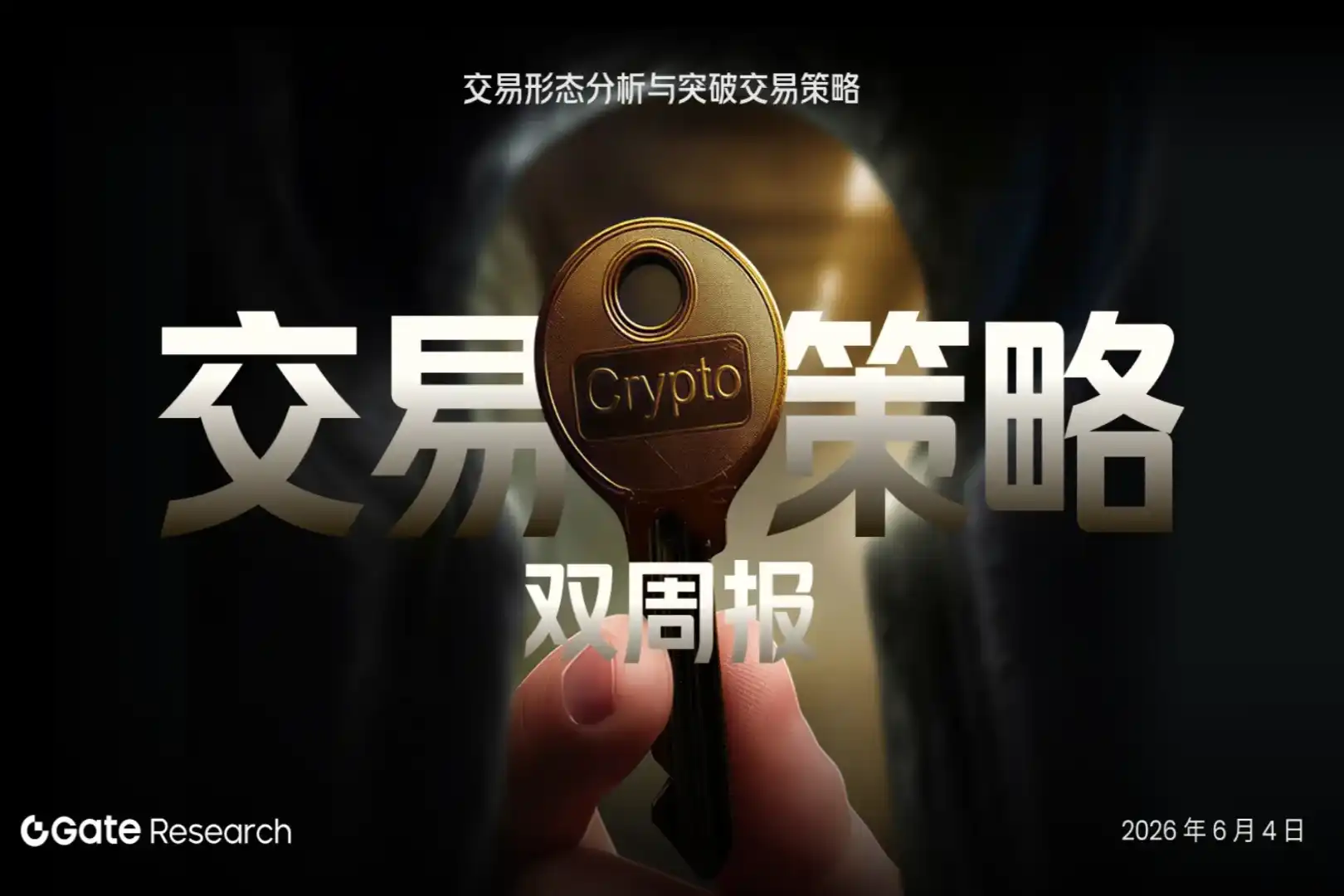
Gate Research Institute: Analysis of Chart Patterns and Breakout Trading Strategies

Gate Research Institute: Chart Pattern Analysis and Breakout Trading Strategies Chart patterns are crucial tools in technical analysis for observing market supply and demand shifts, trend continuations, and reversals. This analysis involves a comprehensive evaluation of trend, volume, support/resistance, time cycles, and breakout validity, not just rote pattern recognition. Patterns are broadly categorized into reversal patterns (e.g., Double Tops/Bottoms, Head and Shoulders) and continuation patterns (e.g., Flags, Triangles, Rectangles). An effective breakout, key for trading, requires clear support/resistance, prolonged consolidation, a prevailing trend backdrop, and volume confirmation. However, breakouts are not guaranteed, as false breakouts are common. Risk must be managed through position sizing, stop-loss orders, pullback confirmations, and profit-taking in stages. Key pattern types discussed include: * **Rectangle Patterns:** Indicate market indecision within parallel support and resistance, with breakouts projecting a move equal to the pattern's width. * **Flag & Pennant Patterns:** Short-term continuation patterns following sharp price moves ("flagpoles"). * **Triangle Patterns:** Symmetrical, Ascending (bullish bias), and Descending (bearish bias) triangles, representing consolidation before a directional move. * **Head and Shoulders Patterns:** Major reversal patterns signaling trend exhaustion. The article details breakout trading strategies, defining valid breakouts by price closing beyond a key level with increased volume and minimal immediate re-entry into the prior range. It contrasts range trading with breakout trading and outlines entry methods (immediate entry, pullback entry, scaling in), stop-loss placement (based on pattern failure), and profit-taking techniques (target-based, structure-based, trend-following). It further classifies breakout outcomes: 1. **Valid Breakouts:** Strong, sustained moves in the breakout direction. 2. **Pullback Breakouts:** Price breaks out, retests the breakout level as support/resistance, then resumes the trend—offering a lower-risk entry. 3. **False Breakouts:** Price briefly breaches a level but quickly reverses back into the prior range, a common risk managed by strict stop-losses. Key validation tools for breakouts include volume analysis, the principle of support/resistance role reversal, and momentum indicators like ATR, Moving Averages, Bollinger Bands, and RSI. In conclusion, while chart patterns and breakout analysis provide a structured framework, their effectiveness relies on multiple confirming factors—trend context, volume, and proper risk management. They should be integrated into a broader trading system rather than used as standalone signals.

marsbit41 хв тому

Gate Research Institute: Analysis of Chart Patterns and Breakout Trading Strategies

marsbit41 хв тому

Joseph Chalom: Ethereum is Becoming the "Settlement Layer of Trust" for Global Finance

In a speech titled "The Industrialization of Trust," Sharplink CEO Joseph Chalom (former BlackRock digital assets head) discussed the future transformation of global finance. Drawing from 20 years at BlackRock, where he led the launch of Bitcoin/ETH ETFs and tokenized funds, Chalom highlighted the immense hidden costs of establishing trust in traditional finance—estimated at over $9.3 trillion annually in the US alone due to fragmented systems, multi-day settlements, and countless reconciliations. He argued that Ethereum is emerging as the global financial "settlement layer for trust," with its robust, decentralized infrastructure securing over $300 billion in on-chain assets and most stablecoins and tokenized assets. The future, he stated, will be driven by three accelerating pillars: stablecoins (evolving beyond crypto gateways to become efficient cross-border payment rails), tokenized assets (enabling 24/7 trading and reshaping capital markets), and DeFi (providing automated, accessible financial services). A potential game-changer, Chalom added, is the fourth pillar: "Agentic Finance," where AI agents autonomously execute programmable financial transactions via smart contracts and stablecoins. He envisions individuals soon having AI-powered "CFOs in their pockets" to optimize idle capital and manage tokenized portfolios. This shift, facilitated by Ethereum's trustless settlement, could multiply on-chain transaction volume 1000x within a year, moving finance toward a seamless, digitized future.

marsbit41 хв тому

Joseph Chalom: Ethereum is Becoming the "Settlement Layer of Trust" for Global Finance

marsbit41 хв тому

Торгівля

Спот
Ф'ючерси

Популярні статті

Як купити PUSH

Ласкаво просимо до HTX.com! Ми зробили покупку Push Protocol (PUSH) простою та зручною. Дотримуйтесь нашої покрокової інструкції, щоб розпочати свою криптовалютну подорож.Крок 1: Створіть обліковий запис на HTXВикористовуйте свою електронну пошту або номер телефону, щоб зареєструвати обліковий запис на HTX безплатно. Пройдіть безпроблемну реєстрацію й отримайте доступ до всіх функцій.ЗареєструватисьКрок 2: Перейдіть до розділу Купити крипту і виберіть спосіб оплатиКредитна/дебетова картка: використовуйте вашу картку Visa або Mastercard, щоб миттєво купити Push Protocol (PUSH).Баланс: використовуйте кошти з балансу вашого рахунку HTX для безперешкодної торгівлі.Треті особи: ми додали популярні способи оплати, такі як Google Pay та Apple Pay, щоб підвищити зручність.P2P: Торгуйте безпосередньо з іншими користувачами на HTX.Позабіржова торгівля (OTC): ми пропонуємо індивідуальні послуги та конкурентні обмінні курси для трейдерів.Крок 3: Зберігайте свої Push Protocol (PUSH)Після придбання Push Protocol (PUSH) збережіть його у своєму обліковому записі на HTX. Крім того, ви можете відправити його в інше місце за допомогою блокчейн-переказу або використовувати його для торгівлі іншими криптовалютами.Крок 4: Торгівля Push Protocol (PUSH)Легко торгуйте Push Protocol (PUSH) на спотовому ринку HTX. Просто увійдіть до свого облікового запису, виберіть торгову пару, укладайте угоди та спостерігайте за ними в режимі реального часу. Ми пропонуємо зручний досвід як для початківців, так і для досвідчених трейдерів.

579 переглядів усьогоОпубліковано 2024.12.13Оновлено 2026.06.02

Як купити PUSH

Обговорення

Ласкаво просимо до спільноти HTX. Тут ви можете бути в курсі останніх подій розвитку платформи та отримати доступ до професійної ринкової інформації. Нижче представлені думки користувачів щодо ціни PUSH (PUSH).

活动图片