Silver Is Soaring, Can Tokenized Silver Amplify Leverage Further?

marsbitОпубліковано о 2026-01-27Востаннє оновлено о 2026-01-27

Анотація

Silver prices have surged dramatically, breaking historical records by reaching over $117 per ounce and accumulating a 517% increase since 2017—outpacing both Bitcoin and gold. With a market cap of approximately $6.18 trillion, silver is the second most valuable asset globally. This rally has spurred interest in tokenized silver as a way to gain exposure, including through leveraged contracts. Two major tokenized silver assets stand out: - **Kinesis Silver (KAG)**, with a market cap of $406 million, is backed by physical silver (1 token = 1 oz), offers global payments and redemption, but carries issuer dependency and regulatory risks. - **iShares Silver Trust (SLV)**, with a $39.5 million market cap, tracks a traditional ETF managed by BlackRock, provides good liquidity and institutional backing, but does not allow physical redemption and incurs management fees. Additionally, leveraged trading is available on platforms like Hyperliquid, Binance (offering up to 20x leverage on XAG/USDT), and Bitget, with significant trading volumes. The surge is driven by factors including Trump’s trade policies, expectations of U.S. interest rate cuts, silver’s new classification as a critical mineral in the U.S., supply constraints, and its role as a hedge amid geopolitical tensions. Analysts suggest the rally may continue due to these structural and macroeconomic tailwinds.

Original|Odaily Planet Daily(@OdailyChina)

Author|Wenser(@wenser 2010)
Silver, this precious metal asset once called "poor man's gold," is sweeping the global market with a storm-like momentum. The reason is none other than its terrifying surge.

Recently, the price of silver once broke through $117 per ounce intraday, hitting a record high. As a result, since the high point of the 2017 crypto cycle, silver has officially surpassed Bitcoin's gain (about 500%) and gold's gain (slightly less than 300%) with a cumulative increase of approximately 517%. According to data from the 8marketcap website, the current price of silver is around $110, with a market capitalization reaching $6.18 trillion, ranking second among global assets, second only to gold. Such an astonishing trend naturally triggers market frenzy. Besides buying silver funds or physical silver through traditional brokers or offline stores, tokenized silver might also be an option, especially the leveraged contracts on exchanges and on-chain Perp DEXs.

Current State of Tokenized Silver: Only 2 Targets Have Relatively Good Liquidity

According to data from the Coingecko website, the overall market capitalization of the tokenized silver sector is temporarily reported at approximately $446 million, with a 24-hour increase of about 5.6%; specifically, the tokenized silver with relatively good liquidity are the following 2 types:

Kinesis Silver (KAG): Market cap temporarily reported at $406 million

Like the gold token KAU, the KAG silver token is launched by Kinesis, a British digital asset utility platform registered in the Cayman Islands. Major trading platforms include Kinesis Money, BitMart, UAE exchange Emirex, and others.

It is understood that KAG is backed by fully insured and regularly audited vaults (globally distributed storage), with each token pegged to 1 ounce of investment-grade silver; it supports global real-time payments; supports physical silver redemption; and has no storage fees.

Its potential risks are similar to those of the Tether company, which issues the XAUT gold token. This token highly depends on the asset credibility of the issuer and faces certain regulatory uncertainties. Furthermore, limited by its small market cap, the market depth is relatively average, and market fluctuations may lead to premiums or discounts, relying more on the trading platform to manage order matching.

Nevertheless, information on the Coingecko website shows that KAG's 24-hour trading volume is about $5.5 million, already ranking second in trading volume in the tokenized silver market.

iShares Silver Trust(SLV): Market cap temporarily reported at $39.5 million

A silver token pegged to the iShares Silver Trust, launched by Ondo Finance, holds the corresponding physical silver through the BlackRock iShares Silver Trust (SLV) ETF.

Its advantages lie in tracking a regulated traditional SLV ETF, having good liquidity, and supporting instant minting or redemption (for users outside the US); combining traditional finance with blockchain convenience; institutional-level endorsement; no need to handle physical silver directly.

Its potential risks include: primarily relying on the asset credibility of issuers like BlackRock and Ondo; does not support physical silver ownership or direct redemption; includes certain ETF fund management fee costs; US users are restricted from trading, and it faces potential securities regulatory restrictions.

Main trading platforms include centralized exchanges such as Gate, Bitmart, Bitget, AscendEX, etc.

It is worth mentioning that SLV also supports contract trading, with leverage up to 10x.

Coingecko website information shows that SLVON's 24-hour trading volume is about $21.2 million, ranking first in trading volume in the tokenized silver market.

Besides the two major silver tokens KAG and SLVON, the silver token Silver rStock (SLVR) launched by Solana生态 stock tokenization platform Remora Market, and the Gram Silver (GRAMS) token pegged to 1 gram of silver launched by Token Teknoloji A.Ş also belong to spot tokens, but their market capitalization and liquidity are extremely low. Compared to KAG and SLVON, the price difference from physical silver is larger, and participation in trading is not recommended.

Silver Leverage Trading Platforms: Hyperliquid, Binance, Bitget, and other exchanges

Besides spot silver tokens, currently many US stock tokenization platforms, on-chain Perp DEXs, CEXs, and DEXs have opened leveraged contract trading related to silver, supporting leverage up to 20x. The following are specific trading platforms for readers' reference:

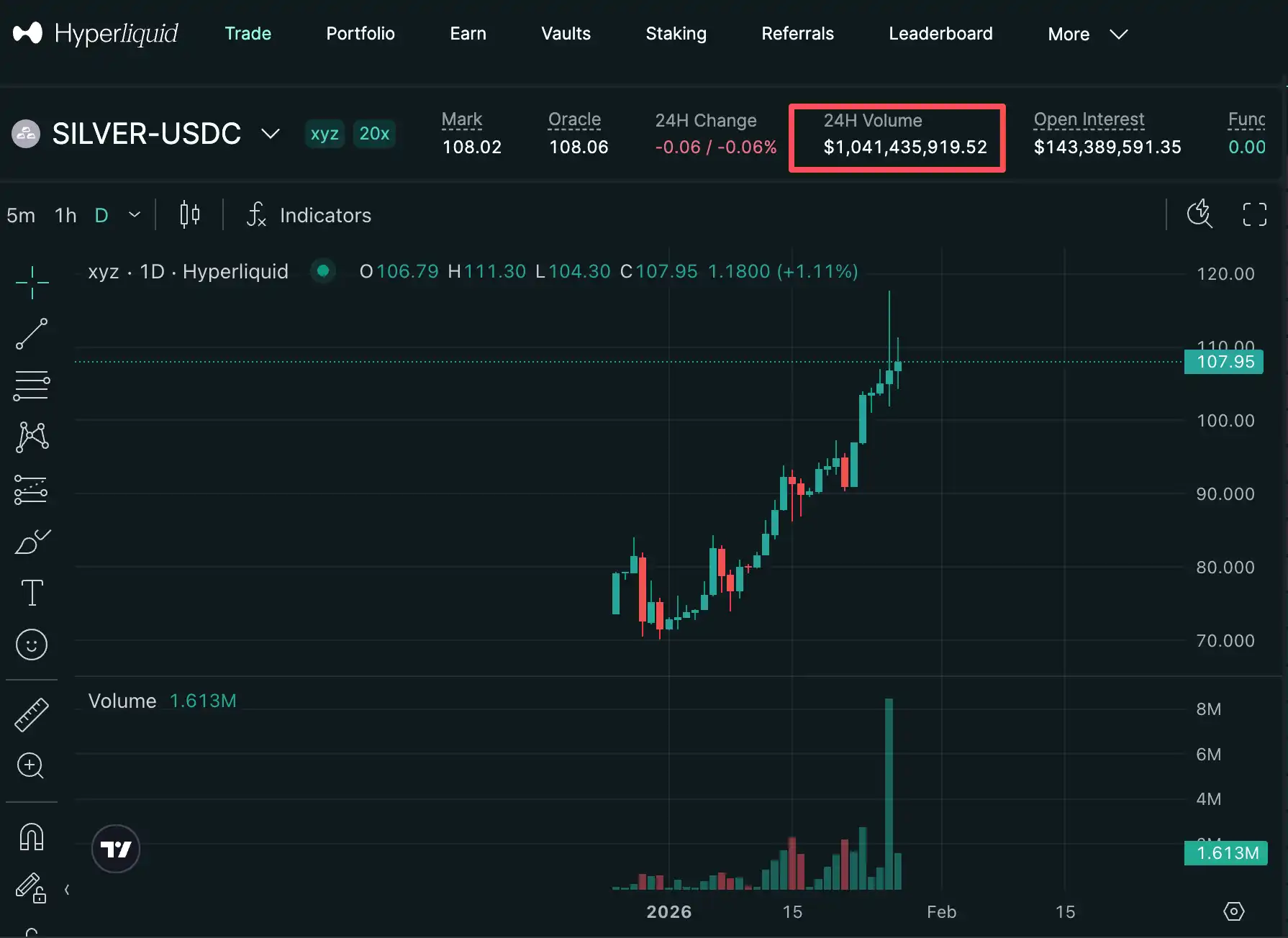
Channel One——Hyperliquid: https://app.hyperliquid.xyz/trade/xyz:SILVER, the Silver/USDC contract trading pair's 24-hour trading volume exceeded $1 billion;
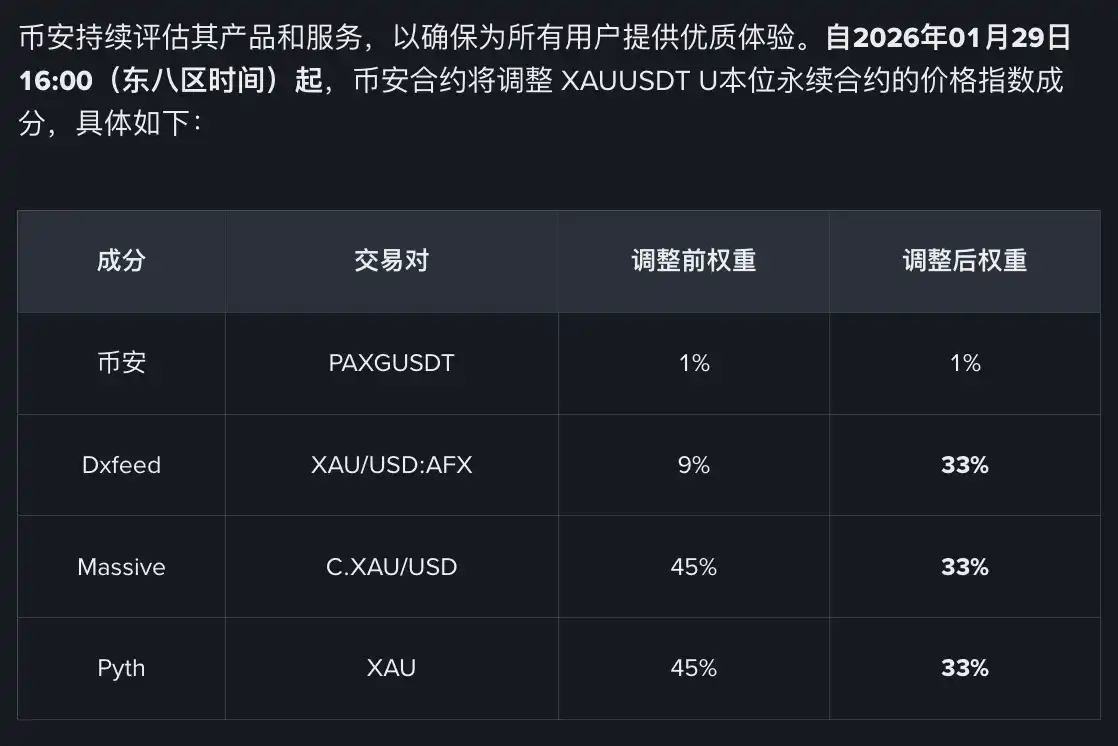
Channel Two——Binance:https://www.binance.com/zh-CN/futures/XAGUSDT, supports leveraged trading for the XAG/USDT trading pair, with leverage up to 20x. Currently, the 24-hour trading volume is $1.32 billion. According to the announcement, this trading pair was officially opened on January 7th; the latest news shows that Binance will change the price index composition of this contract on January 29, 2026.
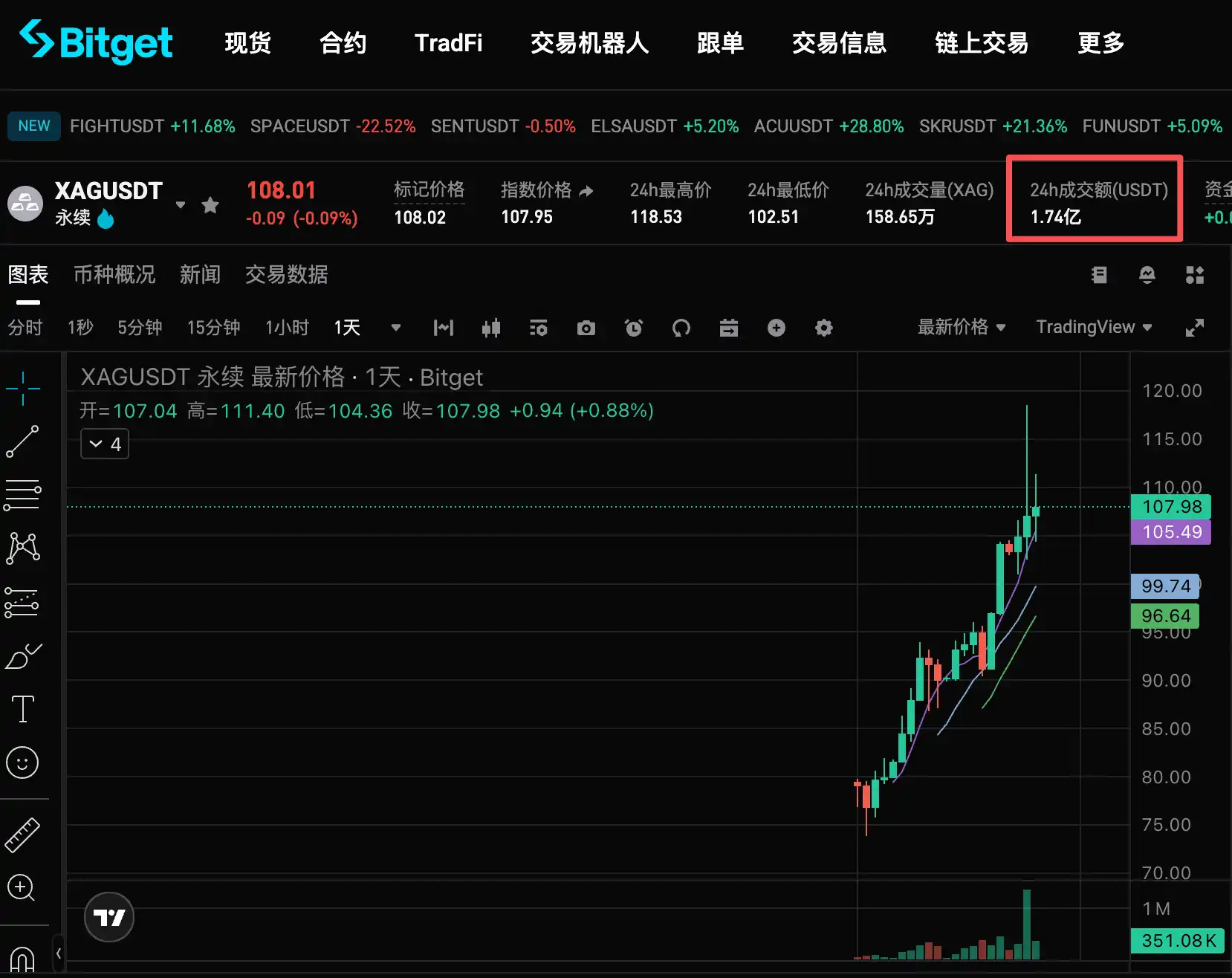
Channel Three——Bitget:https://www.bitget.site/zh-CN/futures/usdt/XAGUSDT, supports leveraged trading for the XAG/USDT trading pair, with leverage up to 20x. Currently, the 24-hour trading volume is $174 million.
Conclusion: Trump's Hawkish Policies and Dovish Rate Preferences Will Be the Best Catalyst for Precious Metals

Looking back, Trump's rise to power leading to tense international political and economic situations, tariff trade wars, and his preference for Federal Reserve rate cuts are the best catalysts for the rise in precious metal prices. Specifically for silver, besides past reasons like supply tightness and its role as an important raw material, risk-off assets and the US attitude are crucial.

J. Safra Sarasin strategist Claudio Wewel pointed out that the continuous surge in silver prices stems from the market's reduced expectations for US rate cuts and silver's newly acquired status as a key mineral. The US Department of the Interior listed silver as a critical mineral in November, increasing the possibility of the US imposing tariffs on this metal. He noted that this exacerbates long-term supply tightness and prompts US importers to accelerate silver purchases. Meanwhile, retail investors, finding it difficult to buy gold at historically high prices, are turning to silver as a safe-haven asset.

In other words, silver's main rise comes from both "scarcity" and "safe-haven nature." Combined with the recently tense Middle East situation again, the price peak for silver may be far from over.


Трендові криптовалюти

Пов'язані питання

QWhat are the two tokenized silver assets with relatively good liquidity mentioned in the article?

AKinesis Silver (KAG) and iShares Silver Trust (SLV).

QWhich platform offers a silver contract with up to 20x leverage and has a 24-hour trading volume of 13.2 billion US dollars?

ABinance, for the XAG/USDT trading pair.

QWhat are the main reasons cited for the surge in silver prices according to the article?

AMarket expectations of reduced US interest rate cuts, its new status as a US critical mineral (increasing potential tariffs), long-term supply tightness, and its role as a risk-off asset for retail investors.

QWhat is the key difference between the KAG and SLV tokenized silver products regarding physical redemption?

AKAG supports physical silver redemption, while SLV does not offer direct physical silver ownership or redemption.

QWhich on-chain Perp DEX is mentioned for trading a silver/USDC perpetual contract with a significant 24-hour volume?

AHyperliquid, for its SILVER/USDC trading pair.

Пов'язані матеріали

After Three Consecutive Quarters of Decline, Can the Crypto Market Find a Window for Stabilization in Q3?

The cryptocurrency market has just concluded its worst-performing quarter since 2022, with total capitalization dropping 12.6% to $2.1 trillion. All core metrics indicate capital is leaving the sector, not just rotating within it. Bitcoin fell 14.2% and Ethereum dropped 25.4% in Q2, breaking their previous correlation with US tech stocks. A key driver is the reversal in US spot Bitcoin ETF flows, which saw a net outflow of approximately $4.67 billion in Q2, including a record monthly outflow near $4.5 billion in June. While recent data suggests long-term holders are accumulating again, sustained ETF outflows mean continued selling pressure. Market focus is now singularly on the Federal Reserve. The upcoming July FOMC meeting is seen as the most critical event for Q3. A dovish signal could support Bitcoin reclaiming a $68,000-$84,000 range, while a hawkish stance might establish a new trading band around $50,000-$56,000. Additionally, regulatory uncertainty persists, with the progress of the crucial *CLARITY Act* stalling in the Senate, reducing its perceived 2026 passage probability to 40-45%. Despite the broad downturn, a few sectors showed growth. Prediction markets saw nominal volume surge 48.7% year-over-year to $113.8 billion, and tokenized collectibles transaction volume rose 143% quarterly to $1.4 billion. The Real-World Asset (RWA) tokenization sector also continued steady growth, now representing ~$28.1 billion in on-chain value. The market's foundation for an extreme crash appears limited, with Bitcoin price hovering near its 200-week moving average. However, the trading paradigm has shifted from narrative-driven speculation to decisions based on price action, policy developments, and interest rate expectations, making a broad sentiment-driven rally unlikely in the near term.

marsbit14 год тому

After Three Consecutive Quarters of Decline, Can the Crypto Market Find a Window for Stabilization in Q3?

marsbit14 год тому

BIT Trading Moment: BTC Still Suppressed by Weekly 200 EMA, Rejection May Restart Decline; Storage and Semiconductors that Surged Last Night Begin Falling in Evening Trading

**Crypto & Stock Market Wrap: Bitcoin Tests Resistance, Stocks Retreat After AI Surge** Bitcoin consolidates around $66,000, facing key resistance near $68,000—an area seen as a major psychological and technical hurdle where previous rallies have failed. Analysts note the cryptocurrency is caught between its 200-week moving average (~$63,333) and 200-week EMA (~$68,328). A clear break above $68k is needed to signal a stronger bullish trend, while a rejection could lead to a retest of $63k support. Market sentiment remains cautious, with low futures open interest pointing to a low-liquidity rebound rather than a full bull market. Bitcoin spot ETFs saw another $203 million inflow. US stock futures pointed lower after a strong Tuesday session led by a massive rebound in semiconductors and memory stocks. The rally was fueled by renewed optimism about AI-driven hardware demand, with Micron, SanDisk, and SK Hynix surging. However, those gains reversed in pre-market trading. Super Micro Computer (SMCI) soared over 20% after hours on strong guidance and a record backlog. Other standouts included Rocket Lab and nuclear energy plays Oklo and X-Energy. Rising oil prices (Brent above $91) and climbing Treasury yields (10-year near 4.64%), however, are reigniting inflation concerns and acting as a headwind for equities. In Asia, markets were mixed. South Korea's KOSPI pared early gains to close slightly higher as semiconductor stocks like SK Hynix gave back initial surges. Japan's Nikkei edged lower as the yen hit a fresh 38-year low against the dollar, raising fears of potential market intervention. Key events to watch include the Samsung Galaxy launch, AMD's AI event, and a slew of major tech earnings from Alphabet, Tesla, and IBM after the close on Wednesday, followed by the ECB meeting and Intel's earnings on Thursday.

marsbit14 год тому

BIT Trading Moment: BTC Still Suppressed by Weekly 200 EMA, Rejection May Restart Decline; Storage and Semiconductors that Surged Last Night Begin Falling in Evening Trading

marsbit14 год тому

Former CFTC Chairman, Circle President Tarbert: Preaching Long-Termism While Cashing Out $30 Million Himself

Former CFTC Chairman and Circle President Heath Tarbert has consistently advocated for a long-term vision in public, urging patience from investors as Circle’s stock price has fallen significantly from its peak. However, it has been revealed that since Circle’s IPO, Tarbert has continuously sold his CRCL shares through pre-arranged trading plans, cashing out approximately $30 million, without making any public market purchases. This contrast between his public messaging and personal actions has drawn criticism. Tarbert joined Circle in July 2023 as Chief Legal Officer, leveraging his regulatory experience to help guide the company through its IPO and expansion. Despite promoting stablecoins as long-term infrastructure, he established a 10b5-1 trading plan just before Circle went public, leading to substantial stock sales over the following year. In March 2026, he initiated another plan to sell more shares. His career trajectory highlights a pattern of moving between high-level regulatory roles and influential positions in the financial sector. After resigning as CFTC Chairman in early 2021, he joined Citadel Securities as Chief Legal Officer just 27 days later, during a period of intense regulatory scrutiny for the firm. He later joined Circle, aiding its efforts to navigate regulatory challenges for its public listing. While Tarbert's expertise in policy and compliance is valuable to companies like Circle, his actions—advocating long-term confidence while personally divesting—raise questions about the alignment between his public statements and his private financial decisions, leaving investors who followed his advice to bear the market risks.

marsbit15 год тому

Former CFTC Chairman, Circle President Tarbert: Preaching Long-Termism While Cashing Out $30 Million Himself

marsbit15 год тому

Gate Research Institute: The 'Wall Street-ization' Wave of Crypto Financial Products – Competition or Integration?

The article titled "Gate Research Institute: Are Crypto Financial Products Sparking a 'Wall Street' Wave—Competition or Convergence?" explores the evolving relationship between the crypto ecosystem and traditional finance (TradFi). The piece begins by reflecting on Bitcoin's original 2009 vision of decentralization, disintermediation, and moving away from banks. It then contrasts this with the 2024 landscape, where key crypto assets like Bitcoin are increasingly held through Wall Street products like ETFs issued by giants like BlackRock. The article questions whether this signifies that TradFi is systematically taking over the rights to issue, price, custody, and distribute crypto financial assets. The core argument is that this is not a zero-sum takeover but rather a bidirectional convergence where each side addresses the other's weaknesses. Crypto offers 24/7 global markets, programmable settlement, and open access but lacks compliant channels, institutional-grade custody, deep fiat liquidity, and mainstream distribution. TradFi possesses these but is constrained by legacy systems, limited operating hours, and slow settlement. Two primary convergence paths are highlighted: * **Path A (CEX to TradFi):** Exemplified by Gate, which has progressed from offering tokenized stocks and CFDs to providing direct, real stock trading (US, Hong Kong, South Korea) within its platform, using USDT. * **Path B (TradFi to Crypto):** Exemplified by Robinhood, which has integrated crypto trading, acquired exchanges like Bitstamp, and is moving traditional assets like stocks onto the blockchain via tokenization and its own Layer 2. Both paths are ultimately competing to become the next-generation, unified financial account—a "super account" where users can seamlessly trade cryptocurrencies, stocks, ETFs, RWA (Real World Assets), and tokenized treasury products in one interface. The growth of RWA and tokenized treasuries (e.g., BlackRock's BUIDL) is presented as the asset-layer fusion, providing stable, yield-bearing assets on-chain and acting as a bridge between the two worlds. In conclusion, the "Wall Street-ization" of crypto is framed as a mutual transformation. Decentralized ideals persist in the protocol layer, while at the application layer, a more efficient, global, and accessible unified capital market is emerging from this convergence. The future competition lies not between crypto exchanges and stockbrokers, but between platforms vying to offer the most comprehensive asset coverage, liquidity, and user experience within a single account.

marsbit15 год тому

Gate Research Institute: The 'Wall Street-ization' Wave of Crypto Financial Products – Competition or Integration?

marsbit15 год тому

Торгівля

Спот

Популярні статті

Як купити T

Ласкаво просимо до HTX.com! Ми зробили покупку Threshold Network Token (T) простою та зручною. Дотримуйтесь нашої покрокової інструкції, щоб розпочати свою криптовалютну подорож.Крок 1: Створіть обліковий запис на HTXВикористовуйте свою електронну пошту або номер телефону, щоб зареєструвати обліковий запис на HTX безплатно. Пройдіть безпроблемну реєстрацію й отримайте доступ до всіх функцій.ЗареєструватисьКрок 2: Перейдіть до розділу Купити крипту і виберіть спосіб оплатиКредитна/дебетова картка: використовуйте вашу картку Visa або Mastercard, щоб миттєво купити Threshold Network Token (T).Баланс: використовуйте кошти з балансу вашого рахунку HTX для безперешкодної торгівлі.Треті особи: ми додали популярні способи оплати, такі як Google Pay та Apple Pay, щоб підвищити зручність.P2P: Торгуйте безпосередньо з іншими користувачами на HTX.Позабіржова торгівля (OTC): ми пропонуємо індивідуальні послуги та конкурентні обмінні курси для трейдерів.Крок 3: Зберігайте свої Threshold Network Token (T)Після придбання Threshold Network Token (T) збережіть його у своєму обліковому записі на HTX. Крім того, ви можете відправити його в інше місце за допомогою блокчейн-переказу або використовувати його для торгівлі іншими криптовалютами.Крок 4: Торгівля Threshold Network Token (T)Легко торгуйте Threshold Network Token (T) на спотовому ринку HTX. Просто увійдіть до свого облікового запису, виберіть торгову пару, укладайте угоди та спостерігайте за ними в режимі реального часу. Ми пропонуємо зручний досвід як для початківців, так і для досвідчених трейдерів.

487 переглядів усьогоОпубліковано 2024.12.10Оновлено 2026.06.02

Як купити T

Обговорення

Ласкаво просимо до спільноти HTX. Тут ви можете бути в курсі останніх подій розвитку платформи та отримати доступ до професійної ринкової інформації. Нижче представлені думки користувачів щодо ціни T (T).

活动图片












