
Silicon Valley AI Landscape Shifts: Karpathy Jumps Ship, Musk Steps In, Son Left Holding the Fort

marsbitОпубліковано о 2026-05-21Востаннє оновлено о 2026-05-21

Анотація

Silicon Valley's AI landscape is shifting as key talent moves and financial pressures mount. Andrej Karpathy, a prominent AI researcher and former OpenAI co-founder, has announced he is joining competitor Anthropic full-time. His departure highlights a talent drain at OpenAI, where most of the original founders have now left. Karpathy, known for his engineering work at Tesla, is expected to help Anthropic develop more efficient model training methods using its Claude AI, challenging OpenAI's current compute-intensive approach. The move coincides with diverging financial paths for the two AI giants. Anthropic is reportedly on track to post its first quarterly profit with $10.9B in sales, while OpenAI, despite a massive $852B valuation and a recent $122B funding round led by SoftBank's Masayoshi Son, faces significant compute costs and potential heavy losses as it pushes for a rapid IPO. Son has invested over $60B in OpenAI, a concentrated bet that has drawn internal criticism over its risk, reminiscent of SoftBank's past losses on WeWork. Elon Musk, an OpenAI co-founder turned rival, is also influencing the dynamic. After losing a lawsuit against OpenAI, Musk's SpaceX leased its massive "Colossus 1" computing center, equipped with over 220,000 Nvidia GPUs, to Anthropic in a deal worth $40-45B. This provides Anthropic with crucial computational resources while pressuring OpenAI. The developments signal a consolidation where only well-capitalized players can compete in founda...

Two pieces of news spread through Silicon Valley almost simultaneously.

One: Anthropic is expected to achieve $10.9 billion in sales this quarter, reaching quarterly profitability for the first time.

Another: OpenAI is accelerating its IPO process, planning to confidentially file its prospectus in the coming weeks at the earliest, with a potential listing in the fall, and a valuation that could reach a trillion dollars.

Upon the news, SoftBank Group's stock price soared nearly 20% intraday, with its market value rising approximately 240 billion RMB in a single day.

One has just touched the profitability line, while the other, still in the red, is rushing to go public. Looking back at the personnel change two days ago, the logic becomes clear—

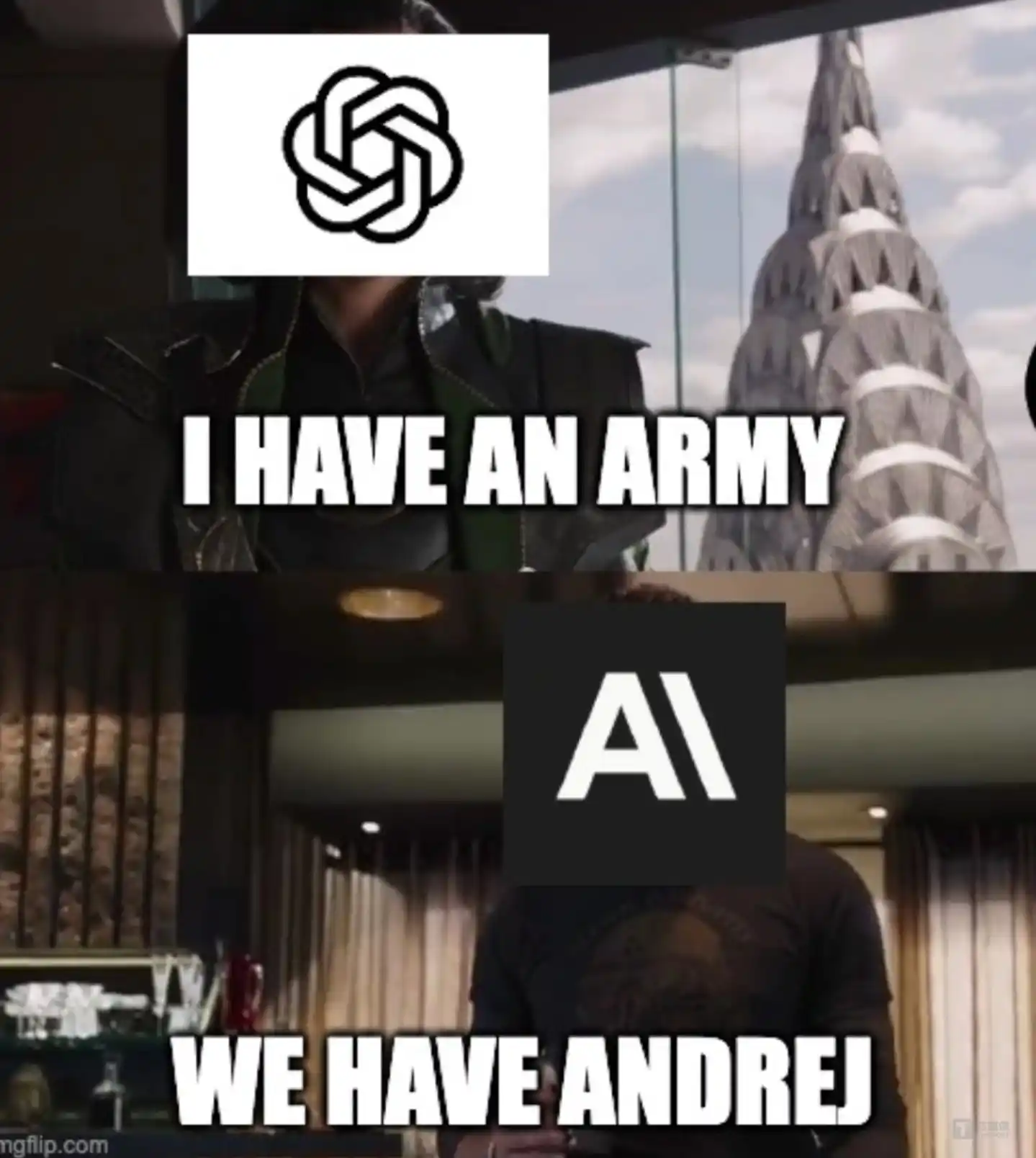
On May 19th, former OpenAI co-founder Andrej Karpathy announced on X: he is joining Anthropic full-time.
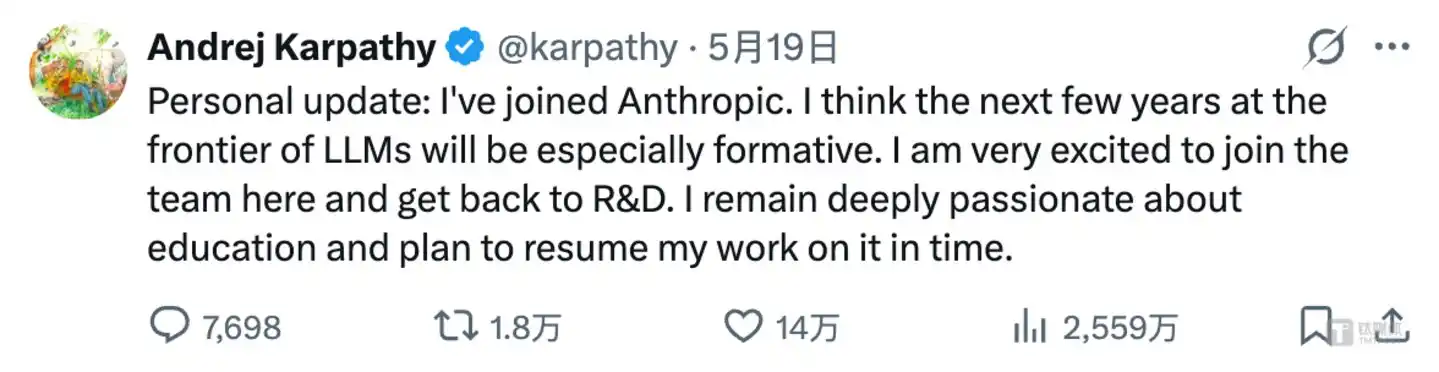
This is no ordinary job change.

Today's OpenAI is already the largest AI company by volume in the capital markets.

It just completed a $122 billion financing round at an $852 billion valuation.

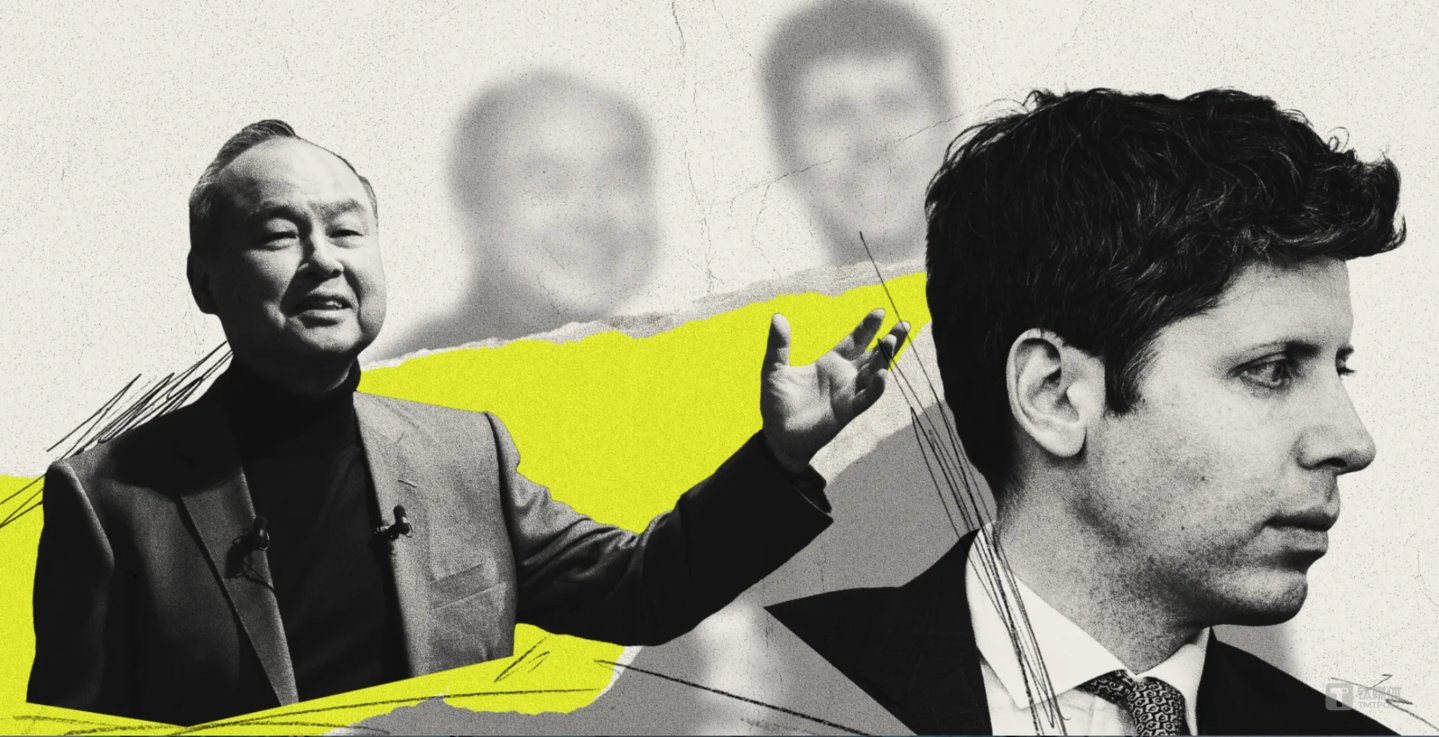
Japan's SoftBank's Masayoshi Son, ignoring internal executive opposition, concentrated over $60 billion to bet on OpenAI.

But inside the company, something else is happening:

Of the 11 co-founders who signed the startup agreement in that humble office back in the day, only two remain—CEO Sam Altman and President Greg Brockman.

Capital is piling up, but core founders are dwindling.

The reasons behind this go beyond a simple explanation of "philosophical differences"; it's more like the result of a clash over strategy, competition for computing power, and a game of giants.

Who is Karpathy? Why Did He Choose Anthropic?

To understand this, one must first grasp Karpathy's position in the AI industry.

In the eyes of top investors, he is not just a technical manager but more like a key figure who can directly influence R&D pace—whichever company he joins, that company's model iteration speed changes.

The 39-year-old Karpathy does have a standout resume.

While pursuing his PhD at Stanford under Fei-Fei Li, he helped create Stanford's first deep learning course.

But what truly made him famous was his five years at Tesla.

He left OpenAI to join Tesla in 2017, and briefly returned to OpenAI in 2023.
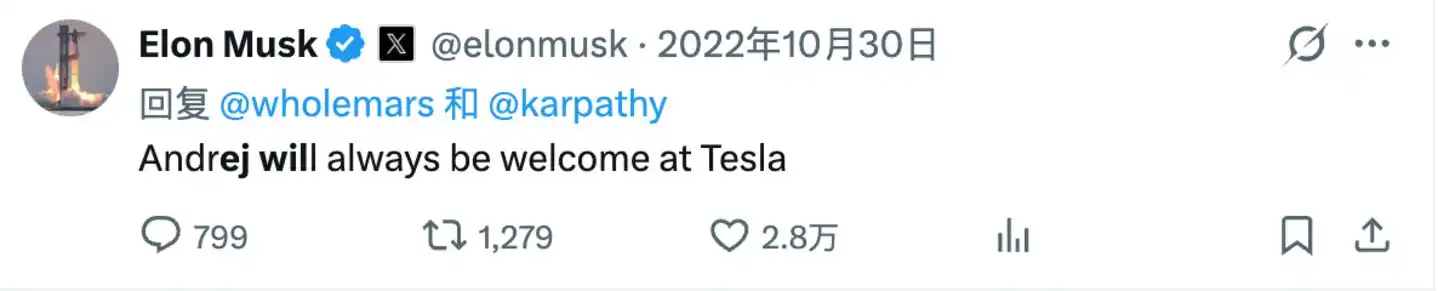
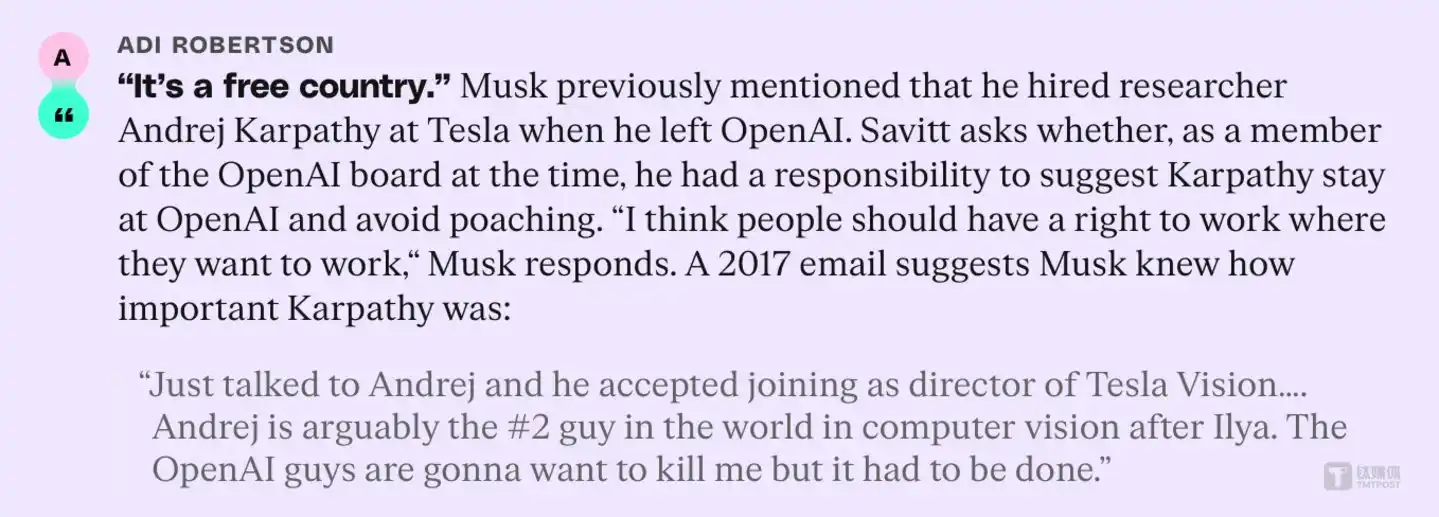
In 2017, Musk, then an OpenAI board member, bypassed OpenAI management and directly recruited Karpathy to Tesla, responsible for AI and autonomous driving vision. Court evidence shows this move displeased OpenAI at the time.
At Tesla, Karpathy did far more than write papers.

He built the autonomous driving engineering system from scratch, including assembling a data labeling team and deploying neural networks onto Tesla's self-designed chips.

The tech circle's trendy concept of "Vibe Coding" in recent years was also popularized by him.

So, what will he do at Anthropic now?

The answer: Join the pre-training team to use Claude to accelerate the pre-training of the next-generation model.
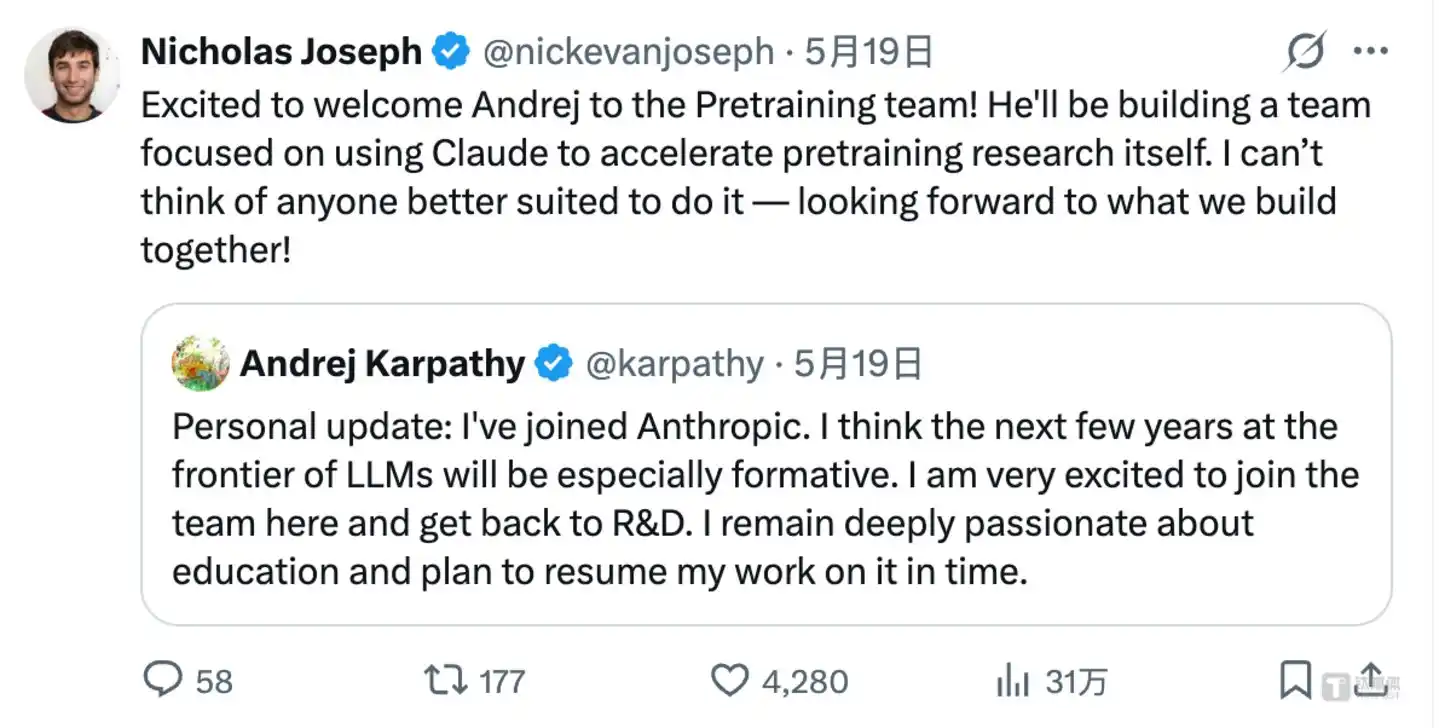
Simply put, OpenAI currently trains large models mainly by brute-forcing computing power—massive amounts of NVIDIA GPUs running simultaneously, competing on who can afford more electricity and hardware costs.

What Karpathy aims to do at Anthropic is to have Claude help accelerate the training process itself.

If this path succeeds, the training cost of large models will drop significantly.

Karpathy's choice actually signals something: from the perspective of those actually doing engineering work, the path of simply burning money on computing power is nearing its end; using models to assist training is a more realistic direction.

Compute Consumption and the "WeWork Shadow"

The successive departure of core talent is often related to the company's operational direction.

Today's OpenAI has transformed from an early non-profit research institution into a company bearing revenue pressure.

As of February 2026, OpenAI's annualized revenue exceeded $25 billion.

But compute costs are growing even faster.

According to a 2024 Reuters report citing insider predictions, OpenAI might face up to $14 billion in losses in 2026, with positive cash flow not expected until 2029. This prediction has not been updated or confirmed.

Compute power is a heavy asset with rapid depreciation. To control losses, OpenAI began cutting unprofitable projects.

The Sora video project was shut down in March this year because it reportedly burned about $1 million per day in server costs, with user growth falling short of expectations.

The OpenAI for Science division, established in 2025, also saw its team split and merged into other product lines.

These adjustments, on one hand, are to comply with the requirements for transitioning to a "Public Benefit Corporation (PBC)" in 2025, and on the other hand, are preparations for the IPO. But for the scientists who joined driven by technological ideals, the company's priorities have changed.

And it is at this moment that Son chose to double down.

Over the past year, SoftBank has channeled over $60 billion into OpenAI through various means.

There is significant internal controversy at SoftBank about this.

Several executives privately believe concentrating this much capital on a single private company is excessively risky.

To raise funds, SoftBank sold off some assets, including NVIDIA shares. Simultaneously, the Vision Fund cut about 20% of its staff, tilting resources towards the AI track.

What SoftBank executives fear is a repeat of the WeWork debacle.

Back then, Son was enamored with WeWork's business story, ultimately losing tens of billions. According to Bloomberg, some insiders used the term "starstruck" to describe Son's attitude towards Altman this time—eerily similar to his attitude towards WeWork's founder back in the day.

After investing $60 billion, SoftBank did not secure a substantive board seat at OpenAI. But Son had already missed the last internet wave; he is unwilling to miss AI again. In his view, these losses are the price to pay for a ticket to "base intelligence."

And when the news of OpenAI's IPO came out, SoftBank's market value rose by 240 billion RMB in a single day—at least for now, this bet hasn't lost.
Musk's Compute Play

The one best at causing trouble in this game is still Musk.

He is one of OpenAI's earliest co-founders and now its most direct competitor.

In May this year, Musk lost his lawsuit against OpenAI for deviating from its original purpose, on grounds of the statute of limitations.

But the trial disclosed much information: the one who originally wanted to turn OpenAI into a for-profit company was none other than Musk himself.

He had calculated the math—Mars colonization needs about $80 billion, and controlling an AGI company was his way to raise funds.

Failing to gain control, he chose to exit, stop funding, and simultaneously poached Karpathy.

Although he lost the lawsuit, Musk soon took action on the compute front.

In early May, Musk announced the merger of xAI into SpaceX. Subsequently, SpaceX leased its Colossus 1 computing center in Memphis, Tennessee—equipped with over 220,000 NVIDIA GPUs—to Anthropic as a whole. SpaceX's IPO prospectus shows the total value of this lease is between $40 and $45 billion.
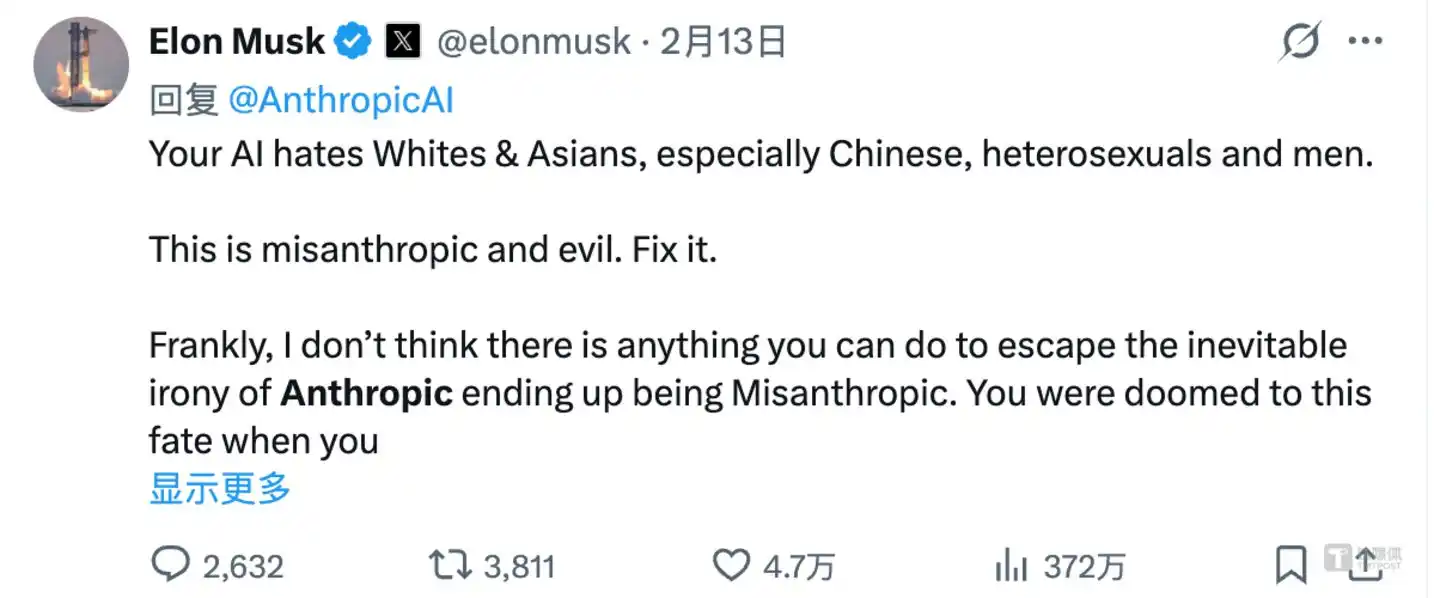

Just months ago, Musk publicly called Anthropic "misanthropic and evil" on X.

But before business interests, positions can be adjusted at any time.

Musk pinpointed OpenAI's weak spot—compute power.

Leasing the computing center to Anthropic, on one hand, generates hefty rent, and on the other hand, indirectly strengthens the power of OpenAI's competitor, putting pressure on OpenAI.

Anthropic's Fearsome Comeback

With ample compute power, Anthropic's performance is indeed accelerating.

In April 2026, Anthropic announced its annualized revenue exceeded $30 billion, surpassing OpenAI (approximately $25 billion) in scale for the first time.

By May 21st, the Wall Street Journal further disclosed: Anthropic is expected to achieve $10.9 billion in sales in the second quarter, reaching quarterly profitability for the first time.

For reference, it took Salesforce over twenty years to reach a comparable revenue scale. Anthropic, from its founding in 2021 to now, took less than five years.
More crucial is cost control.

Anthropic's product line is relatively focused, mainly on enterprise-level code generation and AI agents, without venturing into C-end video generation and other fields. Its model training costs are estimated to be only about one-fourth of OpenAI's.

Higher revenue, lower expenditure—that's Anthropic's current advantage.

For someone like Karpathy, who has long focused on engineering implementation, this difference is persuasive.

From Karpathy's choice to the compute-power game among giants, this round of competition sends a signal: the threshold for large-scale model foundational training is already very high, making it difficult for ordinary entrepreneurs to find opportunities in the general model domain. More pragmatic paths are either to focus on specific B-end scenarios like Anthropic does—such as using AI to solve workflow problems with clear willingness to pay, like code generation; or to find niche opportunities in directions like AI-assisted training, synthetic data, etc. Compute costs determine who can survive this round; that's the most fundamental calculation.

(This article was first published on TMTPost APP, author | Silicon Valley Tech_news, editor | Linshen)


Пов'язані матеріали

Deconstructing the U.S. Stock Quantum Computing Sector: IonQ, Rigetti, D-Wave, Which of These Concept Stocks is Worth Betting On?

**Title:** Analyzing the US Quantum Computing Race: IonQ, Rigetti, D-Wave – Which Concept Stock is Worth Betting On? **Summary:** The podcast discusses the resurgence of quantum computing as a national priority for both the US and China, driven by its potential to break current encryption, revolutionize drug discovery, finance, and logistics. The core challenge is commercializing the technology, which is hampered by high error rates in quantum bits (qubits). Quantum error correction, requiring thousands of physical qubits per reliable logical qubit, is key but years away. The analysis compares three main publicly traded US quantum computing firms: * **IonQ (Ion Trap):** Considered the most financially stable with the fastest commercial progress (2025 revenue: $130M, +202%) and high-quality clients. Its valuation is very high, pricing in significant future growth. * **Rigetti (Superconducting):** Seen as the highest-risk, highest-potential-reward bet. It has the smallest revenue but recently launched a 108-qubit system. Its valuation multiples are extreme, making it highly sensitive to news. * **D-Wave (Quantum Annealing):** Has the most unique positioning with real-world enterprise clients today (e.g., Mastercard, Volkswagen) solving optimization problems. Its recent acquisition moves it into general-purpose quantum computing ("dual-platform"), adding execution risk. Major tech giants like Google, IBM, and Microsoft are also heavily invested, pursuing various technical approaches. Nvidia is positioning itself as the essential bridge between classical and quantum computing. The investment phase is likened to AI in 2018-2020: promising underlying technology with accelerating breakthroughs but a commercial inflection point still 3-7 years away, suggesting potential for a market correction ("bubble washout"). For investors, suggested approaches include gaining exposure through tech giants with quantum divisions (e.g., Google, IBM) or using niche ETFs like WQTM for pure-play quantum exposure, rather than direct stock picks in the highly volatile pure-play companies at this early stage.

marsbit12 хв тому

Deconstructing the U.S. Stock Quantum Computing Sector: IonQ, Rigetti, D-Wave, Which of These Concept Stocks is Worth Betting On?

marsbit12 хв тому

From Parallel Finance to Mainstream Finance: The On-Chain Securities Era Ushers in a Historic Window

From Parallel Finance to Mainstream: The Dawn of On-Chain Securities For over a decade, the crypto industry has operated as a parallel financial system with its own currencies, markets, and assets—from Bitcoin and ICOs to DeFi, NFTs, and memecoins. Despite building a robust internal ecosystem, a wall has separated it from the traditional financial world. That barrier is now crumbling. The industry's first act was one of internal evolution: ICOs streamlined fundraising, DeFi recreated financial services on-chain, and layer-2 networks competed for scalability—all within the crypto bubble. While innovative, this cycle remained closed, with capital and users circulating internally, leading to volatile boom-bust cycles. Even Bitcoin ETFs, while attracting Wall Street capital, merely provided a channel to buy crypto assets without bridging the systems. The next, larger narrative is Real-World Assets (RWA) moving on-chain. This involves tokenizing stocks, bonds, funds, and future cash flows. Blockchain can compress the complex traditional processes of trading, settlement, clearing, and custody into a seamless, automated network operating in seconds. This shift is creating a new financial gateway: the native crypto securities broker. This entity will combine functions of an exchange, broker, bank, and custodian into a unified global financial operating system. Consequently, the next major battleground won't be the "public chain wars" focused on speed and cost, but the competition to build the financial infrastructure capable of hosting high-quality, liquid real-world assets. Access to global equities, index funds, or stakes in companies like SpaceX could erase the boundary between crypto and traditional finance, unlocking a market orders of magnitude larger than crypto's current valuation. In summary, after years of creating a separate financial world, crypto's next decade will be defined by its integration into the existing global financial system, marking the true beginning of its largest growth story.

marsbit33 хв тому

From Parallel Finance to Mainstream Finance: The On-Chain Securities Era Ushers in a Historic Window

marsbit33 хв тому

Wang Chuan: When the Neighbor Old Wang Made 30x on Memory Stocks, How to Avoid Anxiety (Part Six) - The Trap of Commoditized Goods

Wang Chuan: When the Neighbor Lao Wang Made 30x on Storage Stocks, How to Stay Anxiety-Free (Part 6) - The Trap of Commoditized Goods. This essay uses historical and current examples to analyze the cyclical and high-risk nature of the data storage industry. It begins with the 1990s rise and dramatic fall of Iomega, whose stock soared over 160x in 18 months before collapsing 97% from its peak, illustrating the fleeting success of storage "meme stocks." The core problem is that storage products, like DRAM and flash memory, are highly commoditized. This leads to extreme volatility: prices have plummeted over 80% multiple times, and company stocks often crash 95% or go bankrupt. The industry's dynamic is defined by "elastic demand facing heavy-asset, long-cycle, rigid supply." When demand spikes and supply is fixed, prices skyrocket, as seen recently with AI-driven demand for High Bandwidth Memory (HBM). Companies like Sandisk and Micron have reported massive revenue and gross margin jumps (e.g., Sandisk's gross margin rising from 22.5% to 78.3%) despite minimal increases in production volume. However, these high margins are self-defeating. They incentivize massive new capacity investments (hundreds of billions planned from 2026), with supply expected to surge by late 2027. Once new supply meets demand, prices and profits will crash, potentially leading to a scenario where "selling more results in earning less." The article debunks the safety of long-term supply agreements, comparing them to fragile non-aggression pacts easily broken when market conditions shift. It warns that when an industry is highly profitable but trades at low P/E ratios, the risk is greatest, as plummeting prices quickly erase those earnings. Multiple asymmetric risks loom, including economic recession, reduced AI spending, faster-than-expected capacity expansion (especially from Chinese firms), and technological innovations that reduce memory requirements. In conclusion, the storage sector is a cyclical trap where periods of euphoric profits are often precursors to devastating downturns, luring unprepared investors into a "wealth incinerator."

marsbit42 хв тому

Wang Chuan: When the Neighbor Old Wang Made 30x on Memory Stocks, How to Avoid Anxiety (Part Six) - The Trap of Commoditized Goods

marsbit42 хв тому

Wang Chuan: When the neighbor Lao Wang earned thirty times from investing in memory storage stocks, how can you still avoid anxiety (6) - The trap of homogeneous products

The article, "Wang Chuan: How to Remain Unanxious After Neighbor Lao Wang's Thirty-Fold Gain on Storage Stocks (Part 6) - The Trap of Commoditized Goods," analyzes the cyclical and perilous nature of the data storage industry through historical and current case studies. It begins with the example of Iomega, whose Zip drives led to a stock surge of over 160x in the mid-1990s before collapsing over 97% from its peak due to competition from cheaper CD-R technology. This pattern is characteristic of storage, where products like DRAM are highly commoditized, leading to extreme price volatility. The sector has seen prices crash over 80% multiple times, with companies often facing bankruptcy. The core dynamic is "elastic demand facing heavy-asset, long-cycle, rigid supply." High prices attract new capacity, but the long lead time means supply eventually overshoots, causing sharp price corrections. The current AI-driven boom, exemplified by surging demand for High-Bandwidth Memory (HBM), has led to skyrocketing prices and profit margins for companies like SanDisk and Micron, despite relatively flat production volumes. However, the author warns this high-margin environment is self-defeating. The high profits are already triggering massive new capacity investments (hundreds of billions starting 2026), with supply expected to ramp up by late 2027. When supply catches up, total revenue and profits may fall even as more units are sold. Long-term supply agreements offer little protection, as buyers can find ways to renegotiate if market prices drop, similar to fragile political treaties. Key risks include economic downturns, cuts in AI spending, faster-than-expected capacity expansion (especially from Chinese firms), and innovations in chip/algorithm design that reduce memory needs. A critical trap is that at the cycle's peak, storage stocks often appear cheap with low P/E ratios, luring value investors just before an impending downturn where profits evaporate. The conclusion cautions that for commoditized goods like storage, high margins inevitably destroy themselves, and the current asymmetry favors downside risk over further upside. The neighbor's dream of easy wealth from storage stocks is portrayed as a precarious illusion.

链捕手1 год тому

Wang Chuan: When the neighbor Lao Wang earned thirty times from investing in memory storage stocks, how can you still avoid anxiety (6) - The trap of homogeneous products

链捕手1 год тому

Торгівля

Спот
Ф'ючерси

Популярні статті

Як купити ONE

Ласкаво просимо до HTX.com! Ми зробили покупку Harmony (ONE) простою та зручною. Дотримуйтесь нашої покрокової інструкції, щоб розпочати свою криптовалютну подорож.Крок 1: Створіть обліковий запис на HTXВикористовуйте свою електронну пошту або номер телефону, щоб зареєструвати обліковий запис на HTX безплатно. Пройдіть безпроблемну реєстрацію й отримайте доступ до всіх функцій.ЗареєструватисьКрок 2: Перейдіть до розділу Купити крипту і виберіть спосіб оплатиКредитна/дебетова картка: використовуйте вашу картку Visa або Mastercard, щоб миттєво купити Harmony (ONE).Баланс: використовуйте кошти з балансу вашого рахунку HTX для безперешкодної торгівлі.Треті особи: ми додали популярні способи оплати, такі як Google Pay та Apple Pay, щоб підвищити зручність.P2P: Торгуйте безпосередньо з іншими користувачами на HTX.Позабіржова торгівля (OTC): ми пропонуємо індивідуальні послуги та конкурентні обмінні курси для трейдерів.Крок 3: Зберігайте свої Harmony (ONE)Після придбання Harmony (ONE) збережіть його у своєму обліковому записі на HTX. Крім того, ви можете відправити його в інше місце за допомогою блокчейн-переказу або використовувати його для торгівлі іншими криптовалютами.Крок 4: Торгівля Harmony (ONE)Легко торгуйте Harmony (ONE) на спотовому ринку HTX. Просто увійдіть до свого облікового запису, виберіть торгову пару, укладайте угоди та спостерігайте за ними в режимі реального часу. Ми пропонуємо зручний досвід як для початківців, так і для досвідчених трейдерів.

343 переглядів усьогоОпубліковано 2024.12.12Оновлено 2025.03.21

Як купити ONE

Обговорення

Ласкаво просимо до спільноти HTX. Тут ви можете бути в курсі останніх подій розвитку платформи та отримати доступ до професійної ринкової інформації. Нижче представлені думки користувачів щодо ціни ONE (ONE).

活动图片












