Silicon Valley AI Landscape Shifts: Karpathy Jumps Ship, Musk Steps In, Son Left Holding the Fort

marsbitОпубліковано о 2026-05-21Востаннє оновлено о 2026-05-21

Анотація

Silicon Valley's AI landscape is shifting as key talent moves and financial pressures mount. Andrej Karpathy, a prominent AI researcher and former OpenAI co-founder, has announced he is joining competitor Anthropic full-time. His departure highlights a talent drain at OpenAI, where most of the original founders have now left. Karpathy, known for his engineering work at Tesla, is expected to help Anthropic develop more efficient model training methods using its Claude AI, challenging OpenAI's current compute-intensive approach. The move coincides with diverging financial paths for the two AI giants. Anthropic is reportedly on track to post its first quarterly profit with $10.9B in sales, while OpenAI, despite a massive $852B valuation and a recent $122B funding round led by SoftBank's Masayoshi Son, faces significant compute costs and potential heavy losses as it pushes for a rapid IPO. Son has invested over $60B in OpenAI, a concentrated bet that has drawn internal criticism over its risk, reminiscent of SoftBank's past losses on WeWork. Elon Musk, an OpenAI co-founder turned rival, is also influencing the dynamic. After losing a lawsuit against OpenAI, Musk's SpaceX leased its massive "Colossus 1" computing center, equipped with over 220,000 Nvidia GPUs, to Anthropic in a deal worth $40-45B. This provides Anthropic with crucial computational resources while pressuring OpenAI. The developments signal a consolidation where only well-capitalized players can compete in founda...

Two pieces of news spread through Silicon Valley almost simultaneously.

One: Anthropic is expected to achieve $10.9 billion in sales this quarter, reaching quarterly profitability for the first time.

Another: OpenAI is accelerating its IPO process, planning to confidentially file its prospectus in the coming weeks at the earliest, with a potential listing in the fall, and a valuation that could reach a trillion dollars.

Upon the news, SoftBank Group's stock price soared nearly 20% intraday, with its market value rising approximately 240 billion RMB in a single day.

One has just touched the profitability line, while the other, still in the red, is rushing to go public. Looking back at the personnel change two days ago, the logic becomes clear—

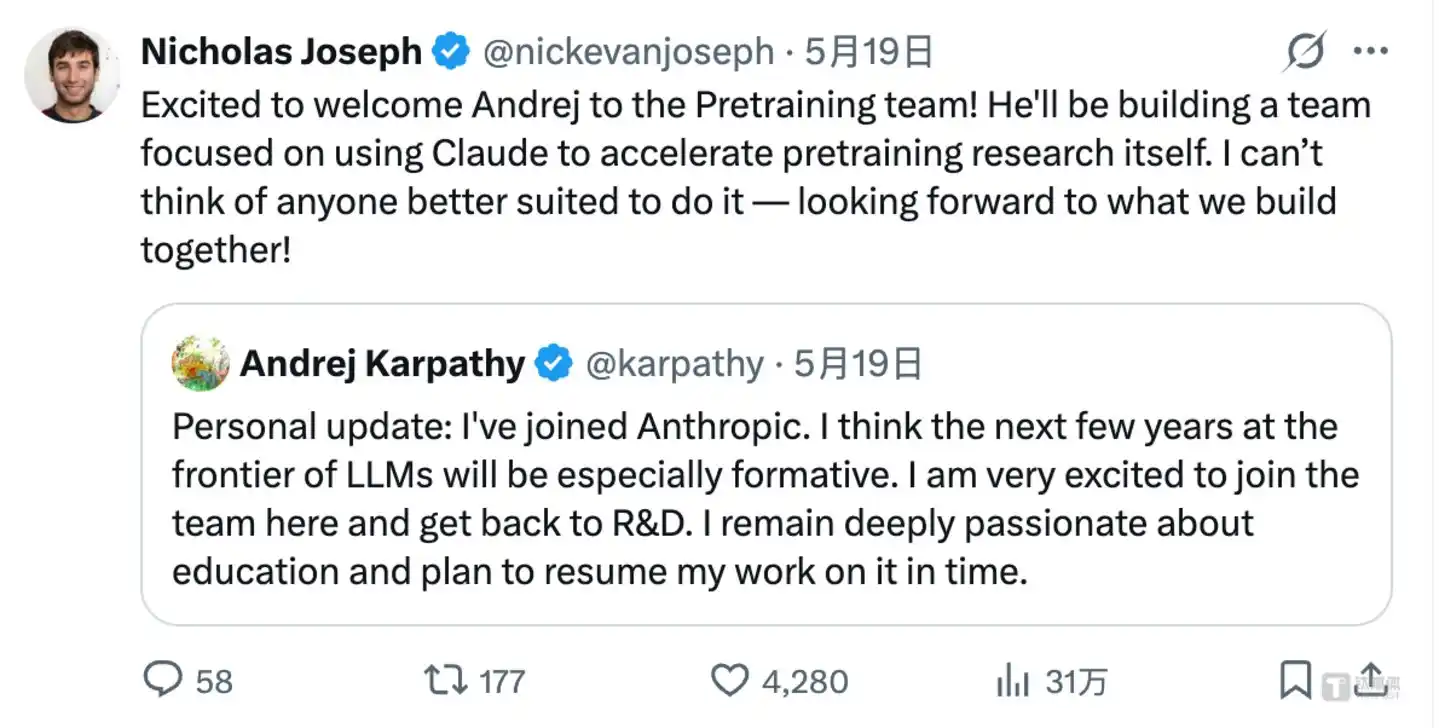
On May 19th, former OpenAI co-founder Andrej Karpathy announced on X: he is joining Anthropic full-time.

This is no ordinary job change.

Today's OpenAI is already the largest AI company by volume in the capital markets.

It just completed a $122 billion financing round at an $852 billion valuation.

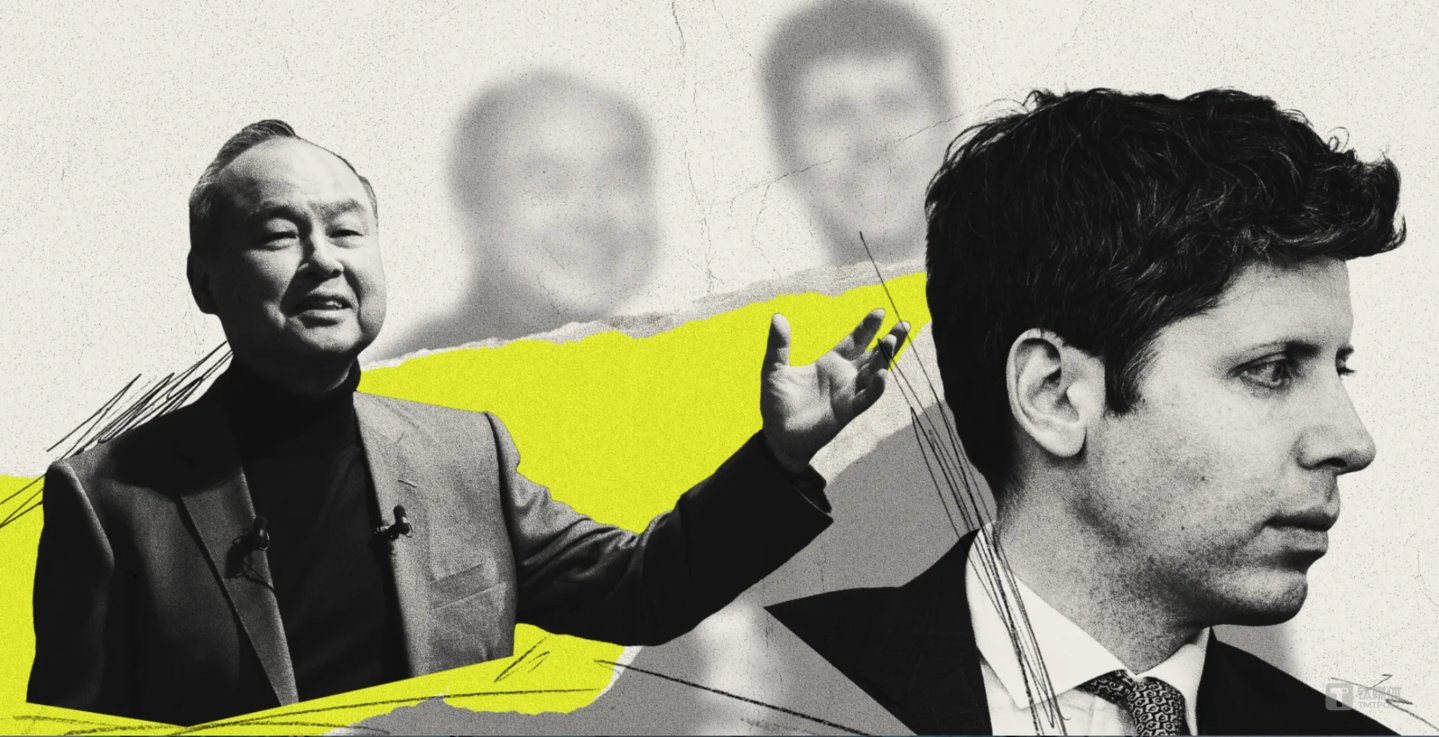
Japan's SoftBank's Masayoshi Son, ignoring internal executive opposition, concentrated over $60 billion to bet on OpenAI.

But inside the company, something else is happening:

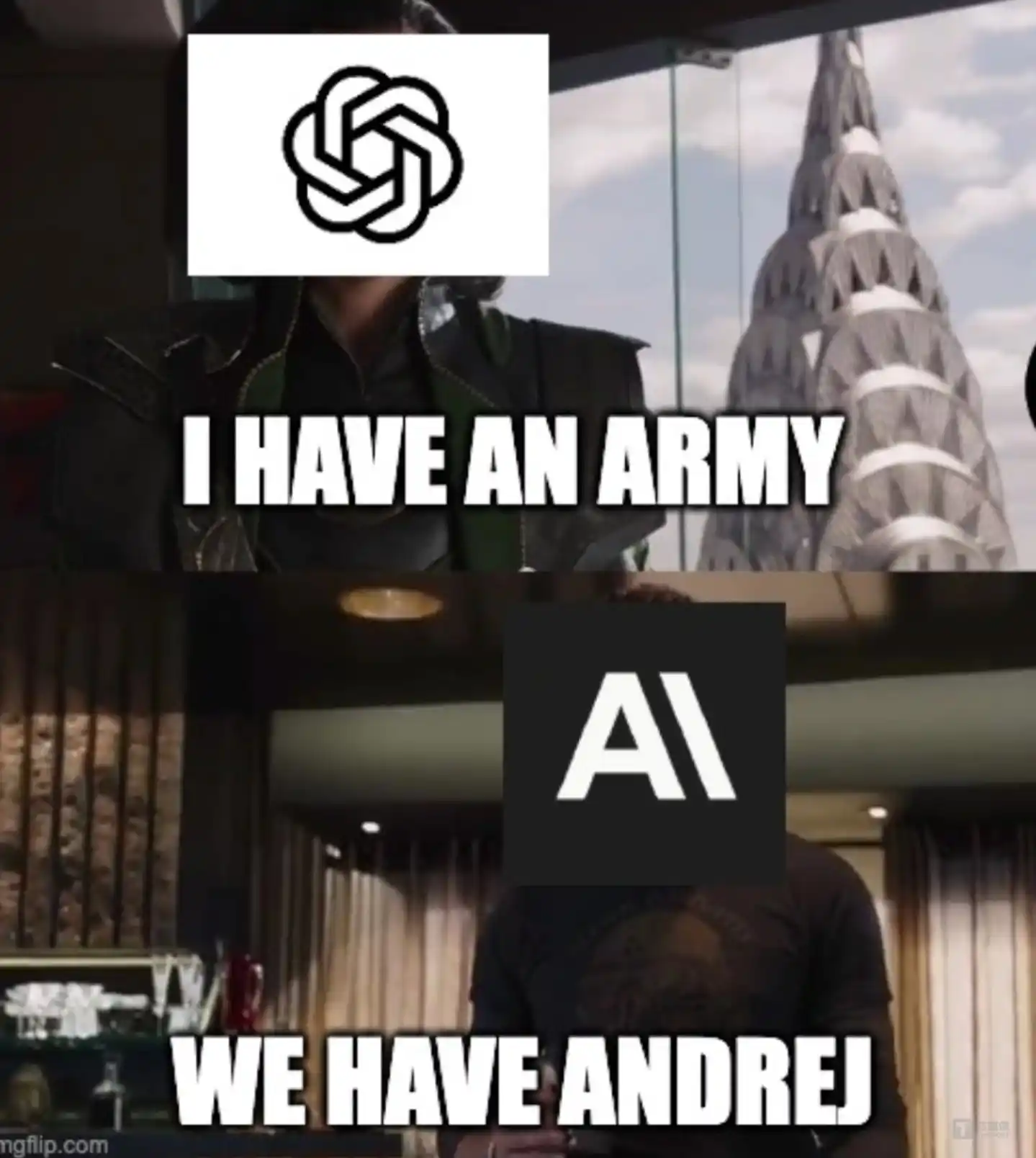
Of the 11 co-founders who signed the startup agreement in that humble office back in the day, only two remain—CEO Sam Altman and President Greg Brockman.

Capital is piling up, but core founders are dwindling.

The reasons behind this go beyond a simple explanation of "philosophical differences"; it's more like the result of a clash over strategy, competition for computing power, and a game of giants.

Who is Karpathy? Why Did He Choose Anthropic?

To understand this, one must first grasp Karpathy's position in the AI industry.

In the eyes of top investors, he is not just a technical manager but more like a key figure who can directly influence R&D pace—whichever company he joins, that company's model iteration speed changes.

The 39-year-old Karpathy does have a standout resume.

While pursuing his PhD at Stanford under Fei-Fei Li, he helped create Stanford's first deep learning course.

But what truly made him famous was his five years at Tesla.

He left OpenAI to join Tesla in 2017, and briefly returned to OpenAI in 2023.

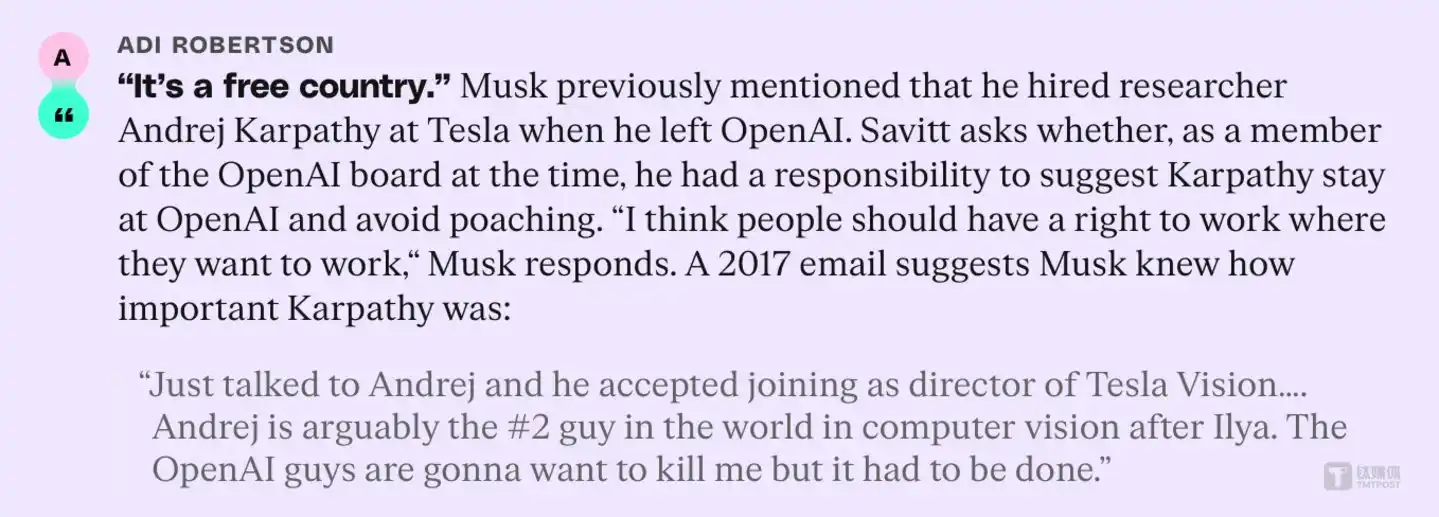
In 2017, Musk, then an OpenAI board member, bypassed OpenAI management and directly recruited Karpathy to Tesla, responsible for AI and autonomous driving vision. Court evidence shows this move displeased OpenAI at the time.
At Tesla, Karpathy did far more than write papers.

He built the autonomous driving engineering system from scratch, including assembling a data labeling team and deploying neural networks onto Tesla's self-designed chips.

The tech circle's trendy concept of "Vibe Coding" in recent years was also popularized by him.

So, what will he do at Anthropic now?

The answer: Join the pre-training team to use Claude to accelerate the pre-training of the next-generation model.
Simply put, OpenAI currently trains large models mainly by brute-forcing computing power—massive amounts of NVIDIA GPUs running simultaneously, competing on who can afford more electricity and hardware costs.

What Karpathy aims to do at Anthropic is to have Claude help accelerate the training process itself.

If this path succeeds, the training cost of large models will drop significantly.

Karpathy's choice actually signals something: from the perspective of those actually doing engineering work, the path of simply burning money on computing power is nearing its end; using models to assist training is a more realistic direction.

Compute Consumption and the "WeWork Shadow"

The successive departure of core talent is often related to the company's operational direction.

Today's OpenAI has transformed from an early non-profit research institution into a company bearing revenue pressure.

As of February 2026, OpenAI's annualized revenue exceeded $25 billion.

But compute costs are growing even faster.

According to a 2024 Reuters report citing insider predictions, OpenAI might face up to $14 billion in losses in 2026, with positive cash flow not expected until 2029. This prediction has not been updated or confirmed.

Compute power is a heavy asset with rapid depreciation. To control losses, OpenAI began cutting unprofitable projects.

The Sora video project was shut down in March this year because it reportedly burned about $1 million per day in server costs, with user growth falling short of expectations.

The OpenAI for Science division, established in 2025, also saw its team split and merged into other product lines.

These adjustments, on one hand, are to comply with the requirements for transitioning to a "Public Benefit Corporation (PBC)" in 2025, and on the other hand, are preparations for the IPO. But for the scientists who joined driven by technological ideals, the company's priorities have changed.

And it is at this moment that Son chose to double down.

Over the past year, SoftBank has channeled over $60 billion into OpenAI through various means.

There is significant internal controversy at SoftBank about this.

Several executives privately believe concentrating this much capital on a single private company is excessively risky.

To raise funds, SoftBank sold off some assets, including NVIDIA shares. Simultaneously, the Vision Fund cut about 20% of its staff, tilting resources towards the AI track.

What SoftBank executives fear is a repeat of the WeWork debacle.

Back then, Son was enamored with WeWork's business story, ultimately losing tens of billions. According to Bloomberg, some insiders used the term "starstruck" to describe Son's attitude towards Altman this time—eerily similar to his attitude towards WeWork's founder back in the day.

After investing $60 billion, SoftBank did not secure a substantive board seat at OpenAI. But Son had already missed the last internet wave; he is unwilling to miss AI again. In his view, these losses are the price to pay for a ticket to "base intelligence."

And when the news of OpenAI's IPO came out, SoftBank's market value rose by 240 billion RMB in a single day—at least for now, this bet hasn't lost.
Musk's Compute Play

The one best at causing trouble in this game is still Musk.

He is one of OpenAI's earliest co-founders and now its most direct competitor.

In May this year, Musk lost his lawsuit against OpenAI for deviating from its original purpose, on grounds of the statute of limitations.

But the trial disclosed much information: the one who originally wanted to turn OpenAI into a for-profit company was none other than Musk himself.

He had calculated the math—Mars colonization needs about $80 billion, and controlling an AGI company was his way to raise funds.

Failing to gain control, he chose to exit, stop funding, and simultaneously poached Karpathy.

Although he lost the lawsuit, Musk soon took action on the compute front.

In early May, Musk announced the merger of xAI into SpaceX. Subsequently, SpaceX leased its Colossus 1 computing center in Memphis, Tennessee—equipped with over 220,000 NVIDIA GPUs—to Anthropic as a whole. SpaceX's IPO prospectus shows the total value of this lease is between $40 and $45 billion.
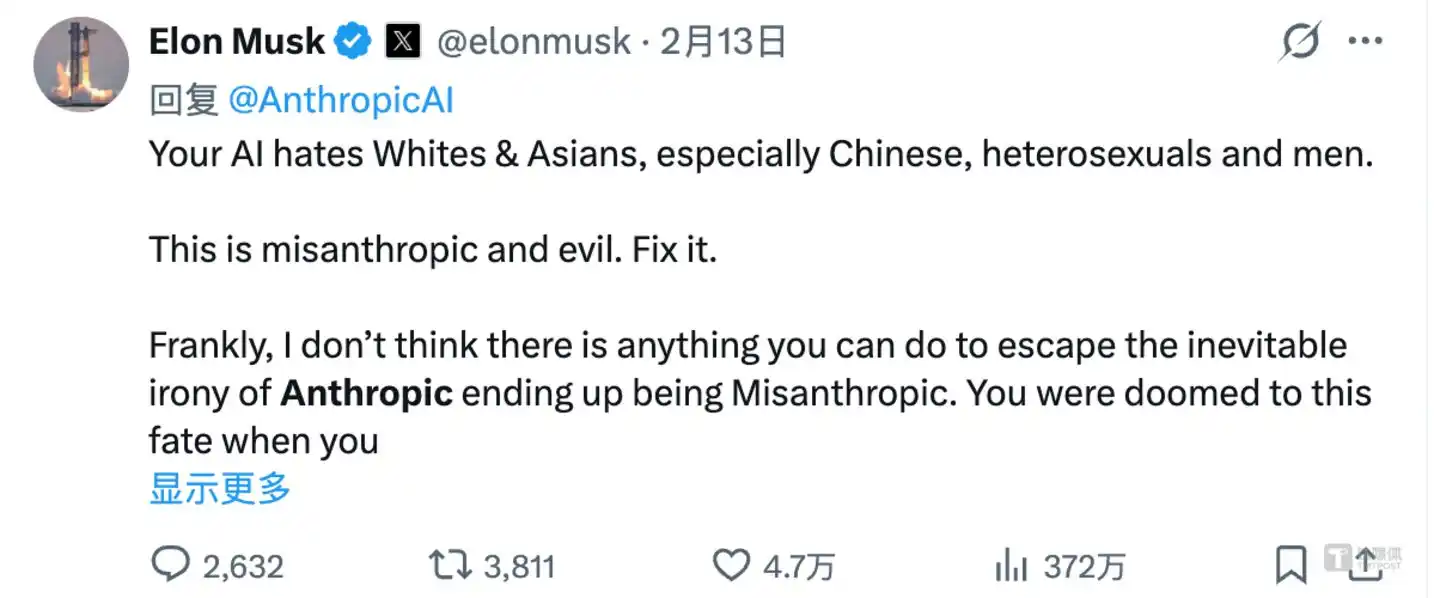

Just months ago, Musk publicly called Anthropic "misanthropic and evil" on X.

But before business interests, positions can be adjusted at any time.

Musk pinpointed OpenAI's weak spot—compute power.

Leasing the computing center to Anthropic, on one hand, generates hefty rent, and on the other hand, indirectly strengthens the power of OpenAI's competitor, putting pressure on OpenAI.

Anthropic's Fearsome Comeback

With ample compute power, Anthropic's performance is indeed accelerating.

In April 2026, Anthropic announced its annualized revenue exceeded $30 billion, surpassing OpenAI (approximately $25 billion) in scale for the first time.

By May 21st, the Wall Street Journal further disclosed: Anthropic is expected to achieve $10.9 billion in sales in the second quarter, reaching quarterly profitability for the first time.

For reference, it took Salesforce over twenty years to reach a comparable revenue scale. Anthropic, from its founding in 2021 to now, took less than five years.
More crucial is cost control.

Anthropic's product line is relatively focused, mainly on enterprise-level code generation and AI agents, without venturing into C-end video generation and other fields. Its model training costs are estimated to be only about one-fourth of OpenAI's.

Higher revenue, lower expenditure—that's Anthropic's current advantage.

For someone like Karpathy, who has long focused on engineering implementation, this difference is persuasive.

From Karpathy's choice to the compute-power game among giants, this round of competition sends a signal: the threshold for large-scale model foundational training is already very high, making it difficult for ordinary entrepreneurs to find opportunities in the general model domain. More pragmatic paths are either to focus on specific B-end scenarios like Anthropic does—such as using AI to solve workflow problems with clear willingness to pay, like code generation; or to find niche opportunities in directions like AI-assisted training, synthetic data, etc. Compute costs determine who can survive this round; that's the most fundamental calculation.

(This article was first published on TMTPost APP, author | Silicon Valley Tech_news, editor | Linshen)


Трендові криптовалюти

Пов'язані матеріали

From Gold to Bitcoin: Fixed Supply + Institutional Frenzy, Might It Repeat the 'Explosive' Price Trend?

"From Gold to Bitcoin: Fixed Supply and Institutional Frenzy May Lead to 'Explosive' Price Rally Analysts suggest Bitcoin's price action could mirror gold's over the past two decades, following the launch of spot Bitcoin ETFs. Gold ETFs, introduced in 2004, drove gold's price surge to a current market cap near $28 trillion. Both gold and Bitcoin are non-yielding stores of value, with prices driven purely by investor sentiment rather than cash flows or credit. Gold ETFs experienced dramatic cycles: explosive growth, painful drawdowns, and slow recoveries, with each cycle reaching higher peaks. Bitcoin ETFs, approved in early 2024, saw rapid institutional adoption but are now facing similar volatility. Recent warnings highlight the risk of significant ETF outflows disrupting the current rebound. BlackRock's IBIT, a leading Bitcoin ETF, has sold nearly 100,000 BTC to meet redemptions while still holding over 733,000. The core parallel is fixed supply: when demand surges, prices explode, but demand is often volatile and wave-like, not steady. Institutional interest, through ETFs and corporate adoption, remains a key support pillar, helping to cushion sell-offs. If Bitcoin captures even a fraction of gold's role as a store of value, its upside potential is immense, though the path will be marked by high volatility. For investors, focusing on long-term trends and managing risk is crucial as this 'price explosion' narrative unfolds."

Foresight News14 хв тому

From Gold to Bitcoin: Fixed Supply + Institutional Frenzy, Might It Repeat the 'Explosive' Price Trend?

Foresight News14 хв тому

Why Is AI Agent Shopping Hard to Popularize?

The article argues that the popular narrative of "AI agent shopping" – equipping AI with a wallet to autonomously handle purchases – is fundamentally flawed and oversimplifies the complexity of shopping. It deconstructs shopping into two core actions: **information retrieval** (standardized, easily automated) and **value judgment** (deeply subjective and human-centric). The narrative mistakenly assumes AI can fully handle both. Value judgment itself has two layers: **evaluation** (assessing options against criteria) and **demand definition** (setting the criteria, weights, and values). The latter is inherently human and dynamic, as preferences are not fixed but constructed during the decision-making process ("constructive preferences"). The real dividing line for automation is not product standardization, but whether the **act of choosing** itself holds experiential value. For mundane purchases (e.g., printer paper), full AI delegation works. For experiential goods (e.g., wine, furniture), the joy of selection is core to consumption, so AI should act as an assistant that narrows options, leaving the final choice to humans. The "AI wallet" concept confuses three separate elements: decision-making, execution, and fund custody. Current payment industry solutions (e.g., from Stripe, Mastercard, Google, Visa) show that limited, scoped payment authorization tokens are sufficient for most consumer scenarios, not full fund custody. The true use case for autonomous AI wallets is in **B2B procurement** and **machine-to-machine (M2M) settlements** for standardized, high-frequency, low-value transactions. The real bottlenecks for AI shopping are not payment technology, but **1) the lack of trusted data sources** (e.g., fake reviews, counterfeit goods) and **2) the impossibility of automating human demand definition**. The conclusion is that the focus should be on safely automating the assessment and filtering process while reserving for humans the rights to define their criteria and enjoy the final act of choice. For experiential goods, the platform's competitive advantage shifts to providing a superior selection experience.

Foresight News1 год тому

Why Is AI Agent Shopping Hard to Popularize?

Foresight News1 год тому

After Nine Months of Shorting, a Full Turn to Long: Renowned Trader Opens Bitcoin Positions Around 64K, Crypto Market Long-Short Divergence Intensifies

After nine months of being short, prominent crypto trader Doctor Profit has closed all his bearish positions and started buying Bitcoin near $64,000, signaling a complete bullish reversal. He argues that structural market changes—such as impending U.S. regulation (CLARITY Act) and institutional adoption via securities tokenization—are rewriting the traditional four-year cycle script, potentially bringing the market bottom forward from the widely expected September/October timeframe. This view finds some technical support from on-chain analyst gumsays, who notes a bullish divergence on Bitcoin's weekly chart has persisted for 147 days, nearing the 161-day duration seen before the 2022 cycle low. However, cycle researcher Jake Pahor presents a counter-argument based on historical data. Analyzing patterns since 2014, he identifies three common features of past bear market bottoms: a ~12-month duration from peak to trough, a sustained period of extreme fear (with a proprietary risk score below 20), and the price falling below Bitcoin's realized price (~$53,000 currently). The current cycle, only nine months from its October 2025 peak, meets none of these conditions. The debate highlights a market torn between "front-running" a potential early bottom driven by new fundamentals and waiting for confirmation through traditional on-chain and sentiment metrics. While Doctor Profit opts for aggressive buying, Pahor maintains a disciplined, tiered accumulation strategy, continuing weekly buys at current risk levels but reserving larger orders for if more extreme fear emerges.

marsbit1 год тому

After Nine Months of Shorting, a Full Turn to Long: Renowned Trader Opens Bitcoin Positions Around 64K, Crypto Market Long-Short Divergence Intensifies

marsbit1 год тому

Senior Trader's Confession: How to Trade Market's False Expectations?

Veteran trader's case study: trading the market's "wrong expectations". This trade centered on a textbook "expectation error" after a weak CPI report. While the market initially priced in broad monetary easing (sending Nasdaq to 30,060), the crucial 30-year real yield hit a 20-year high. This signaled a fractured transmission mechanism: short-term rates eased, but long-term funding costs (vital for tech valuations) refused to fall. The trader executed five short positions on the Nasdaq (NQ) as it fell from 30,060 to 28,768. The core methodology: don't just trade the data, but analyze the market's implied causal chain and identify where it breaks. In this case, the chain was: Weak CPI → Policy Easing → Lower Long-Term Funding Costs → NQ Valuation Expansion. The break occurred between policy easing and long-term rates. The "veto variable" – long-term real yields – refused to confirm the bullish narrative. Trades were structured around "fast variables" (price) temporarily repairing while "slow variables" (funding conditions) remained broken. The article outlines a repeatable framework: 1) Map the market's implied causal chain. 2) Identify the veto variable. 3) Observe if it rejects the narrative. 4) Enter when price still follows the old script. 5) Choose the cleanest asset expression (e.g., short NQ, not broad S&P). 6) Define both invalidation and fulfillment exit conditions. The key insight: Alpha often comes not from an information edge, but from a "reaction function edge" – recognizing when the market is applying an outdated causal logic to new data. The critical question: What causal chain is the market's first reaction relying on, and is that chain still valid today?

marsbit2 год тому

Senior Trader's Confession: How to Trade Market's False Expectations?

marsbit2 год тому

Торгівля

Спот

Популярні статті

Як купити ONE

Ласкаво просимо до HTX.com! Ми зробили покупку Harmony (ONE) простою та зручною. Дотримуйтесь нашої покрокової інструкції, щоб розпочати свою криптовалютну подорож.Крок 1: Створіть обліковий запис на HTXВикористовуйте свою електронну пошту або номер телефону, щоб зареєструвати обліковий запис на HTX безплатно. Пройдіть безпроблемну реєстрацію й отримайте доступ до всіх функцій.ЗареєструватисьКрок 2: Перейдіть до розділу Купити крипту і виберіть спосіб оплатиКредитна/дебетова картка: використовуйте вашу картку Visa або Mastercard, щоб миттєво купити Harmony (ONE).Баланс: використовуйте кошти з балансу вашого рахунку HTX для безперешкодної торгівлі.Треті особи: ми додали популярні способи оплати, такі як Google Pay та Apple Pay, щоб підвищити зручність.P2P: Торгуйте безпосередньо з іншими користувачами на HTX.Позабіржова торгівля (OTC): ми пропонуємо індивідуальні послуги та конкурентні обмінні курси для трейдерів.Крок 3: Зберігайте свої Harmony (ONE)Після придбання Harmony (ONE) збережіть його у своєму обліковому записі на HTX. Крім того, ви можете відправити його в інше місце за допомогою блокчейн-переказу або використовувати його для торгівлі іншими криптовалютами.Крок 4: Торгівля Harmony (ONE)Легко торгуйте Harmony (ONE) на спотовому ринку HTX. Просто увійдіть до свого облікового запису, виберіть торгову пару, укладайте угоди та спостерігайте за ними в режимі реального часу. Ми пропонуємо зручний досвід як для початківців, так і для досвідчених трейдерів.

427 переглядів усьогоОпубліковано 2024.12.12Оновлено 2026.06.02

Як купити ONE

Обговорення

Ласкаво просимо до спільноти HTX. Тут ви можете бути в курсі останніх подій розвитку платформи та отримати доступ до професійної ринкової інформації. Нижче представлені думки користувачів щодо ціни ONE (ONE).

活动图片