Should Bitcoin rush its move to post-quantum cryptography?

ambcryptoОпубліковано о 2026-04-08Востаннє оновлено о 2026-04-08

Анотація

The Bitcoin community is divided on the urgency of migrating to post-quantum cryptography (PQC) by the 2029 deadline. JAN3 founder Samson Mow warns against rushing untested PQC solutions, arguing it could expose Bitcoin to attacks from classical computers, reduce transaction throughput due to larger signature sizes, and potentially introduce hidden backdoors. He advocates for solving the quantum computing (QC) problem later rather than sooner. This debate follows a Google Quantum AI report suggesting quantum processors could break Bitcoin's encryption sooner than previously estimated, potentially requiring only 1,200–1,450 logical qubits. Google urges a PQC upgrade by 2029 to protect nearly 7 million BTC. In contrast, figures like Adam Back and Grayscale's Zach Pandl believe practical quantum computers are still years away, posing no immediate threat. However, they agree efforts to prepare for a post-quantum future should accelerate. The issue is complicated by Bitcoin's history of contentious protocol changes and potential for significant technical trade-offs.

The Bitcoin community is divided on whether there is really a need to rush to meet the 2029 deadline of migrating to a quantum-secure network.

For his part, Samsom Mow, founder of JAN3, an advisory for nation-state BTC adoption, has warned against a hurried push for untested and unverified post-quantum (PQ) solutions. He cautioned that,

Solving the QC problem later rather than sooner is the best course of action.

Source: X/Samson Mow

Mow slammed Coinbase CEO Brian Armstrong’s call for a ‘sooner’ PQ upgrade. He stated that it could expose BTC to attack from current classical computers.

Additionally, the proposed PQ solutions would reduce Bitcoin transactions due to larger block sizes.

PQ signatures will likely be 10-125x larger than current ones, and massively reduce throughput. Possibly paving the way for Blocksize Wars 2.0.

In fact, Solana, one of the fastest blockchains, has reported a potential 90% slowdown if current PQ solutions are implemented.

Finally, Mow pointed out the possibility of the U.S. NSA (National Security Agency) pushing current PQ solutions as standards with hidden ‘backdoors’ to infiltrate future systems.

Google urges fast PQ Bitcoin upgrade before 2029

The renewed debate follows a recent report by Google Quantum AI, which found that Bitcoin and most blockchain encryption could be broken sooner than earlier estimates suggested.

According to the findings, advanced quantum processors may require around 500,000 physical qubits or 1,200–1,450 stable logical qubits to compromise crypto security.

This was contrary to the prior estimates of millions of qubits. Google had urged a PQ upgrade by 2029 to prevent nearly 7 million BTC from being at risk.

In short, there is less than three years before further quantum advancement threatens BTC.

Bitcoin’s history complicates this. Protocol changes often take time and spark disagreement.

In fact, Charles Edwards of Capriole Investment projected that BTC will never reach a new all-time high unless it migrates to PQ.

However, some crypto and cypherpunks like Adam Back still hold that physical quantum computers are years away from hitting the market despite recent advancements.

Grayscale’s head of research, Zach Pandl, reinforced a similar stance and noted,

Investors should not fret. In our view, there is no security threat to public blockchains from quantum computers today. But it’s time to accelerate efforts to prepare for our post-quantum future.
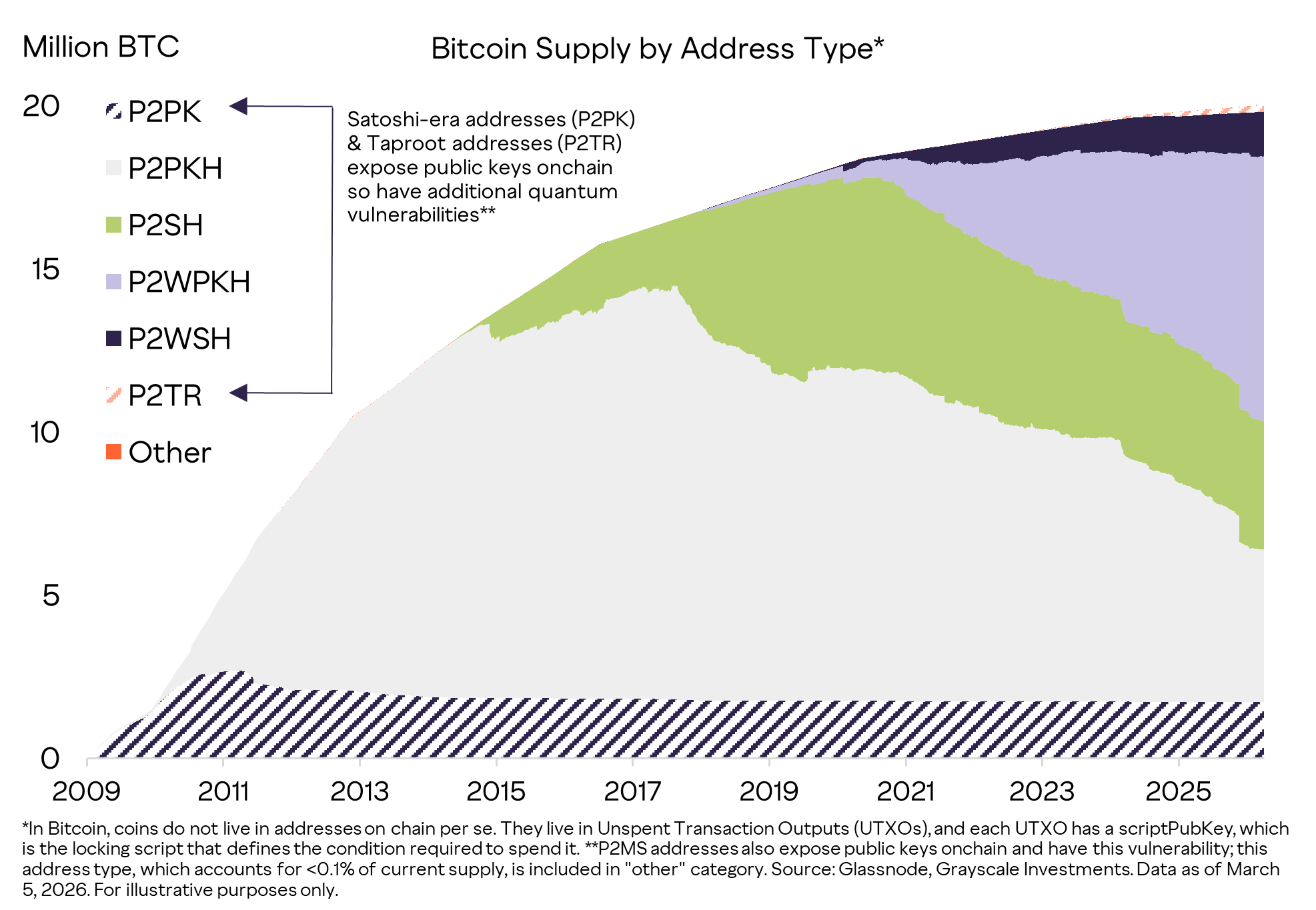
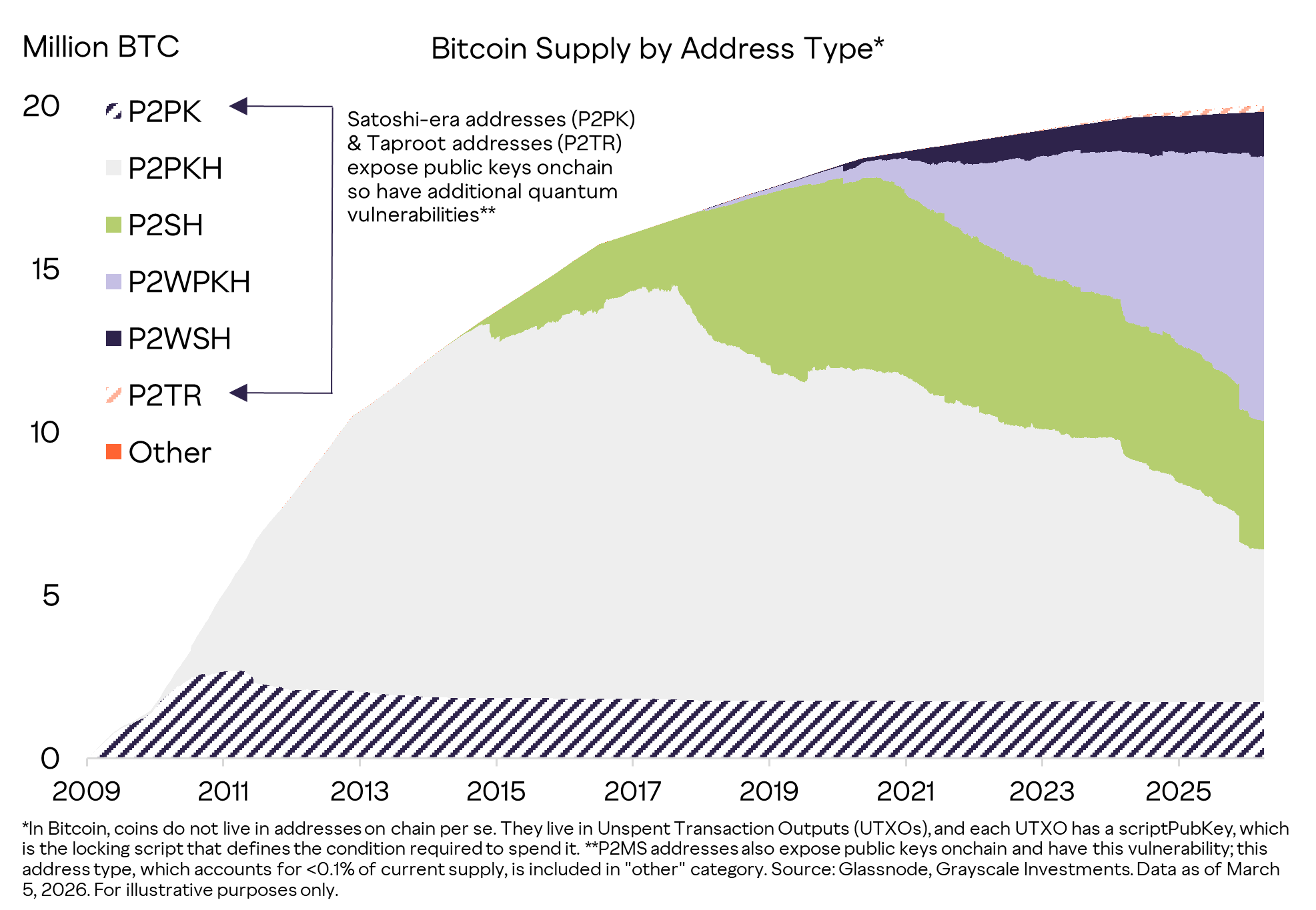
Source: Grayscale

Apart from the Satoshi-era and Taproot wallets, most investors have migrated to relatively more resistant addresses (Segwit, P2WPKH).


Final Summary

  • Jan3’s Samson Mow blasted Coinbase CEO for rushed push for PQ upgrade for Bitcoin, citing transfer speed risks and further attacks.
  • Grayscale said QC was not a problem just yet, but urged players to accelerate PQ upgrades.

Пов'язані питання

QWhat is the main point of disagreement within the Bitcoin community regarding post-quantum cryptography?

AThe Bitcoin community is divided on whether there is a need to rush to meet the 2029 deadline for migrating to a quantum-secure network, with some warning against hurriedly implementing untested solutions.

QAccording to Samson Mow, what are the two main risks of rushing a post-quantum upgrade for Bitcoin?

ASamson Mow warned that a rushed upgrade could expose Bitcoin to attacks from current classical computers and that the proposed solutions would reduce transaction throughput due to significantly larger signature sizes.

QWhat did the Google Quantum AI report find regarding the threat to Bitcoin's encryption?

AThe Google Quantum AI report found that advanced quantum processors may require far fewer qubits than previously estimated (around 500,000 physical or 1,200–1,450 stable logical qubits) to compromise crypto security, urging an upgrade by 2029.

QWhat is the stance of Grayscale's head of research, Zach Pandl, on the quantum computing threat?

AZach Pandl stated that quantum computers pose no security threat to public blockchains today, but he urged the community to accelerate efforts to prepare for a post-quantum future.

QWhat potential negative impact did Samson Mow suggest a post-quantum upgrade could have on Bitcoin's network?

AMow suggested that post-quantum signatures, being 10-125x larger than current ones, would massively reduce transaction throughput and could potentially lead to a 'Blocksize Wars 2.0'.

Пов'язані матеріали

What Are Some Good Paths for Chinese Web3 Entrepreneurship? (Part 5)

This article explores pathways for Chinese Web3 teams to pivot toward AI, building on a previous discussion. It focuses on two specific team profiles: **Security & Risk Control Teams:** These teams, skilled in smart contract auditing, wallet security, and on-chain monitoring, can transition to providing **Agent behavior auditing and AI security governance**. As AI Agents automate tasks, access data, and trigger payments, enterprises will need solutions to monitor permissions, audit logs, control data access, and prevent anomalies—creating a strong B2B demand. **Application & Community-Focused Teams:** Instead of completely rebranding as AI companies, these teams should use AI to **enhance their existing products**. For example, research platforms can use AI to summarize information and identify signals; community tools can automate user support and analysis; and educational products can create personalized learning paths. The key is integrating AI to solve existing user pain points, like information overload or high operational costs. The article also advises against certain AI directions for Chinese Web3 teams, such as building general-purpose large language models (too resource-intensive), creating overly broad Agent platforms (hard to monetize), developing AI traders/automated yield products (high regulatory and risk sensitivity), or simply adding superficial AI features without genuine value. The core conclusion: Successful migration depends not on chasing AI hype, but on **identifying how a team's existing Web3 capabilities—be it in data, payments, security, or user operations—can address real needs in new AI application scenarios.**

marsbit3 год тому

What Are Some Good Paths for Chinese Web3 Entrepreneurship? (Part 5)

marsbit3 год тому

Торгівля

Спот
Ф'ючерси

Популярні статті

Як купити MOVE

Ласкаво просимо до HTX.com! Ми зробили покупку Movement (MOVE) простою та зручною. Дотримуйтесь нашої покрокової інструкції, щоб розпочати свою криптовалютну подорож.Крок 1: Створіть обліковий запис на HTXВикористовуйте свою електронну пошту або номер телефону, щоб зареєструвати обліковий запис на HTX безплатно. Пройдіть безпроблемну реєстрацію й отримайте доступ до всіх функцій.ЗареєструватисьКрок 2: Перейдіть до розділу Купити крипту і виберіть спосіб оплатиКредитна/дебетова картка: використовуйте вашу картку Visa або Mastercard, щоб миттєво купити Movement (MOVE).Баланс: використовуйте кошти з балансу вашого рахунку HTX для безперешкодної торгівлі.Треті особи: ми додали популярні способи оплати, такі як Google Pay та Apple Pay, щоб підвищити зручність.P2P: Торгуйте безпосередньо з іншими користувачами на HTX.Позабіржова торгівля (OTC): ми пропонуємо індивідуальні послуги та конкурентні обмінні курси для трейдерів.Крок 3: Зберігайте свої Movement (MOVE)Після придбання Movement (MOVE) збережіть його у своєму обліковому записі на HTX. Крім того, ви можете відправити його в інше місце за допомогою блокчейн-переказу або використовувати його для торгівлі іншими криптовалютами.Крок 4: Торгівля Movement (MOVE)Легко торгуйте Movement (MOVE) на спотовому ринку HTX. Просто увійдіть до свого облікового запису, виберіть торгову пару, укладайте угоди та спостерігайте за ними в режимі реального часу. Ми пропонуємо зручний досвід як для початківців, так і для досвідчених трейдерів.

328 переглядів усьогоОпубліковано 2024.12.13Оновлено 2026.06.02

Як купити MOVE

Обговорення

Ласкаво просимо до спільноти HTX. Тут ви можете бути в курсі останніх подій розвитку платформи та отримати доступ до професійної ринкової інформації. Нижче представлені думки користувачів щодо ціни MOVE (MOVE).

活动图片