‘Seems bearish’ – Circle slides 17% as Open USD enters the stablecoin race

ambcryptoОпубліковано о 2026-07-01Востаннє оновлено о 2026-07-01

Анотація

Circle's stock (CRCL) plunged 17.5% on June 30, its largest daily drop since March. This sharp decline was triggered by the announcement of a new stablecoin competitor, Open USD (OUSD), backed by a consortium of 140 firms including Visa, Mastercard, and BlackRock. The market reacted bearishly on concerns that OUSD, targeting enterprise treasury and merchant payments, could challenge the market share dominance of Circle's USDC and Tether's USDT. Analysts noted the move could pressure Circle's revenue-sharing agreements and distribution. While Circle's market share had recently grown to 24%, the rise of new competitors like OUSD introduces uncertainty. Despite the sell-off, analysts maintain a consensus price target of $120 for CRCL, implying significant upside.

Circle’s stock, CRCL, dumped 17.5% to $62.63 on the 30th of June, marking the largest daily loss since March. It’s worth noting that in March, the stock fell 20% following a draft proposal to ban stablecoin yield on idle balance.

This raised concerns about likely limited USDC adoption and the potential impact on the second-largest stablecoin issuer’s revenue outlook if the proposal were enacted. The dip on the 30th of June, however, was driven by a new rival in the stablecoin space.
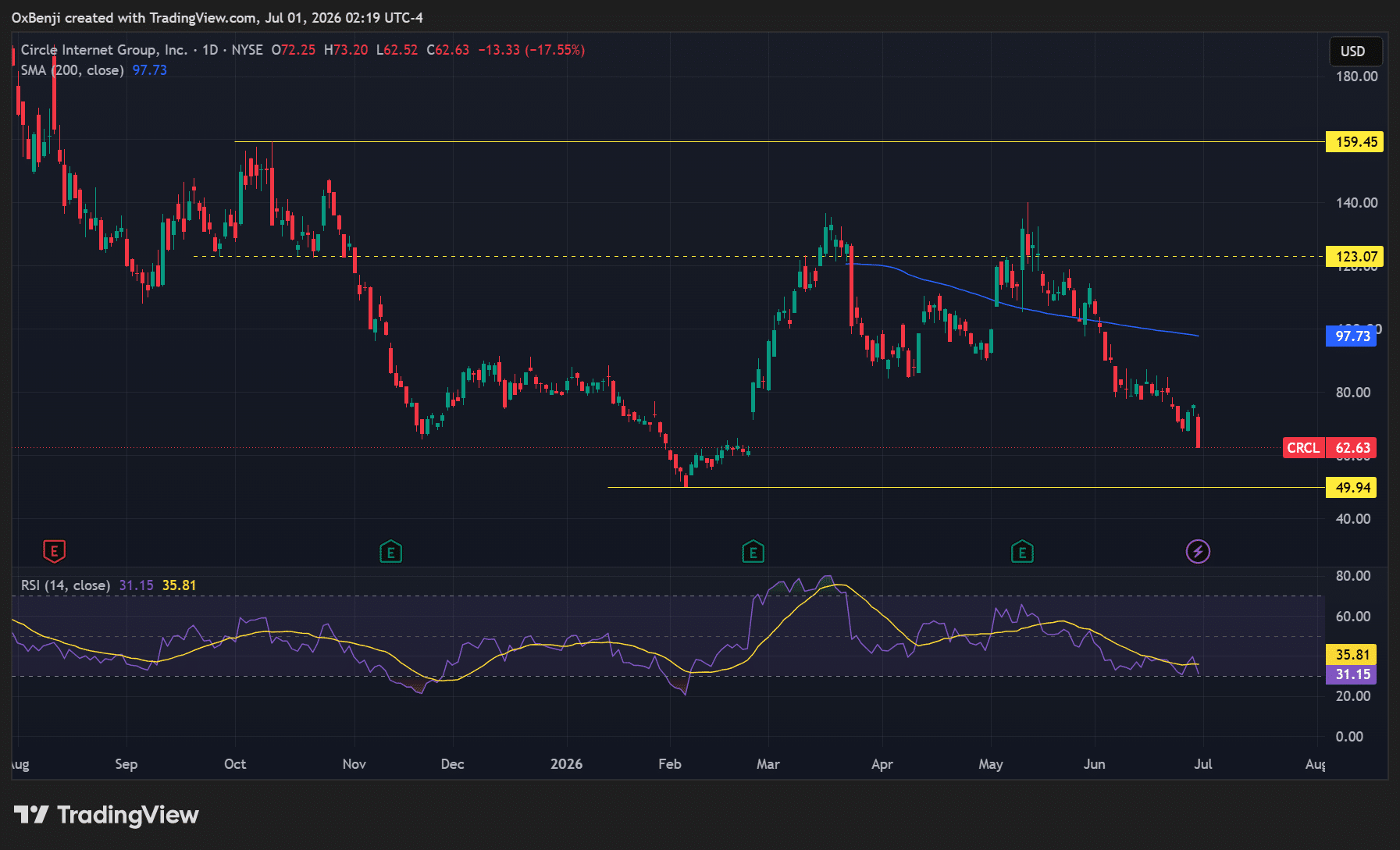
Source: Circle stock price performance, TradingView

Will Open USD challenge Circle, Tether’s dominance?

A consortium of 140 firms, including traditional cross-border payment players such as Visa, Mastercard, BlackRock and Google, launched a new stablecoin, Open USD (OUSD). According to the coalition, reserve earnings will be shared among partners, with zero transfer fees.

The target for OUSD? Enterprise treasury management and merchant payments. While not entirely focused on retail, the two segments are also eyed by both Tether’s USDT and Circle’s USDC.

The new stablecoin will be offered later in the year, and Circle’s stock reaction suggested the market share dominance could be challenged. In fact, Matthew Sigel, head of digital research at asset manager VanEck, echoed this stance as the stock dumped on Tuesday.

$CRCL -13% as Stripe, Coinbase and BlackRock back rival stablecoin ‘Open USD’

Sam Ruskin, an investment associate at crypto-focused venture firm Reciprocal Ventures, also reinforced Sigel’s outlook. He added,

This will either force Circle to continue their revenue share agreements, find new distributors for USDC (although nearly everyone interested in stablecoins today is backing OUSD). Whatever way you cut it, this seems bearish for Circle.

There has been increased competition in the stablecoin market after the GENIUS Act passage in 2025. In fact, over the same period, Tether’s USDT still holds dominance, but its market share shrank from 62% to 59%.
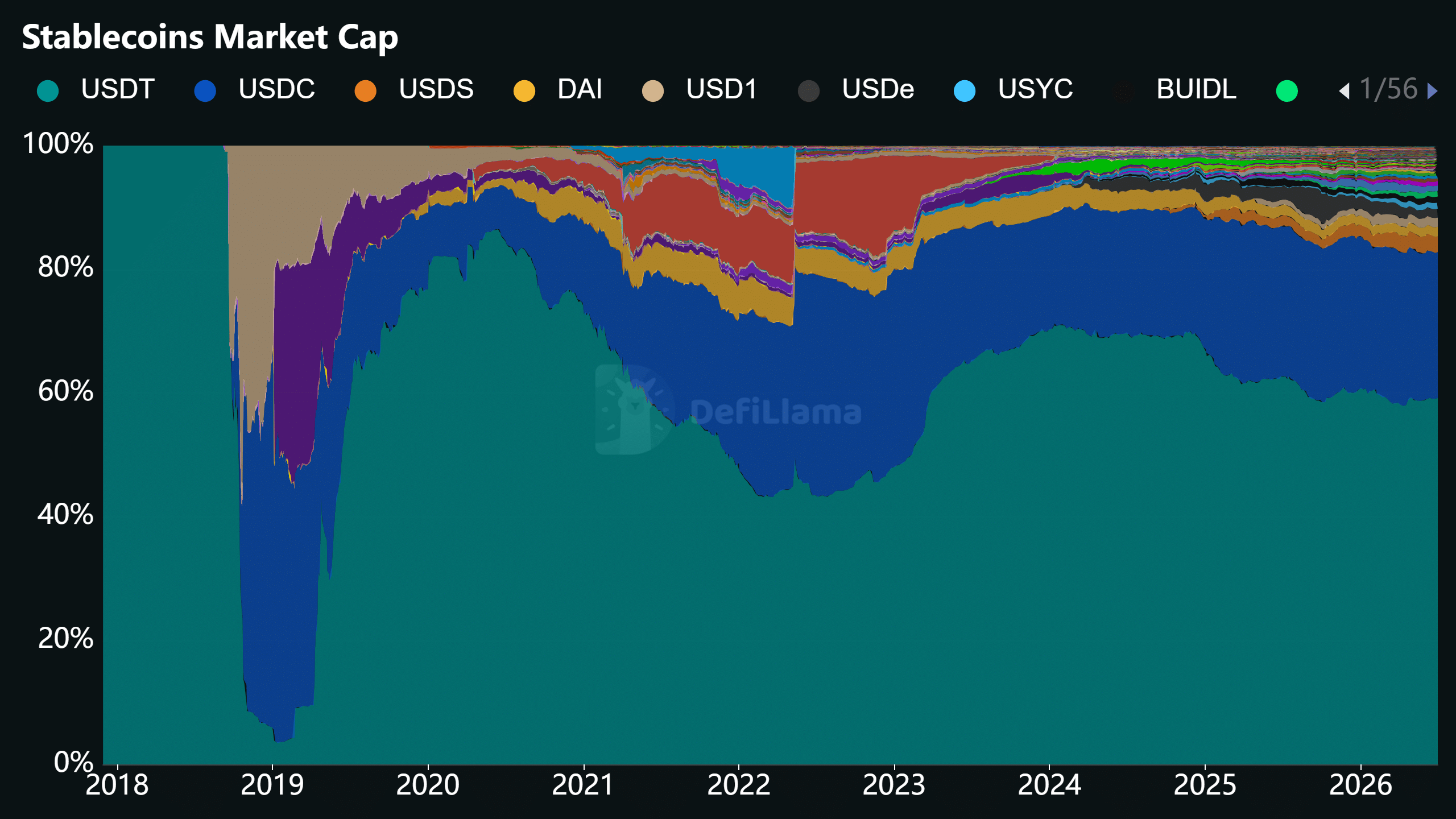
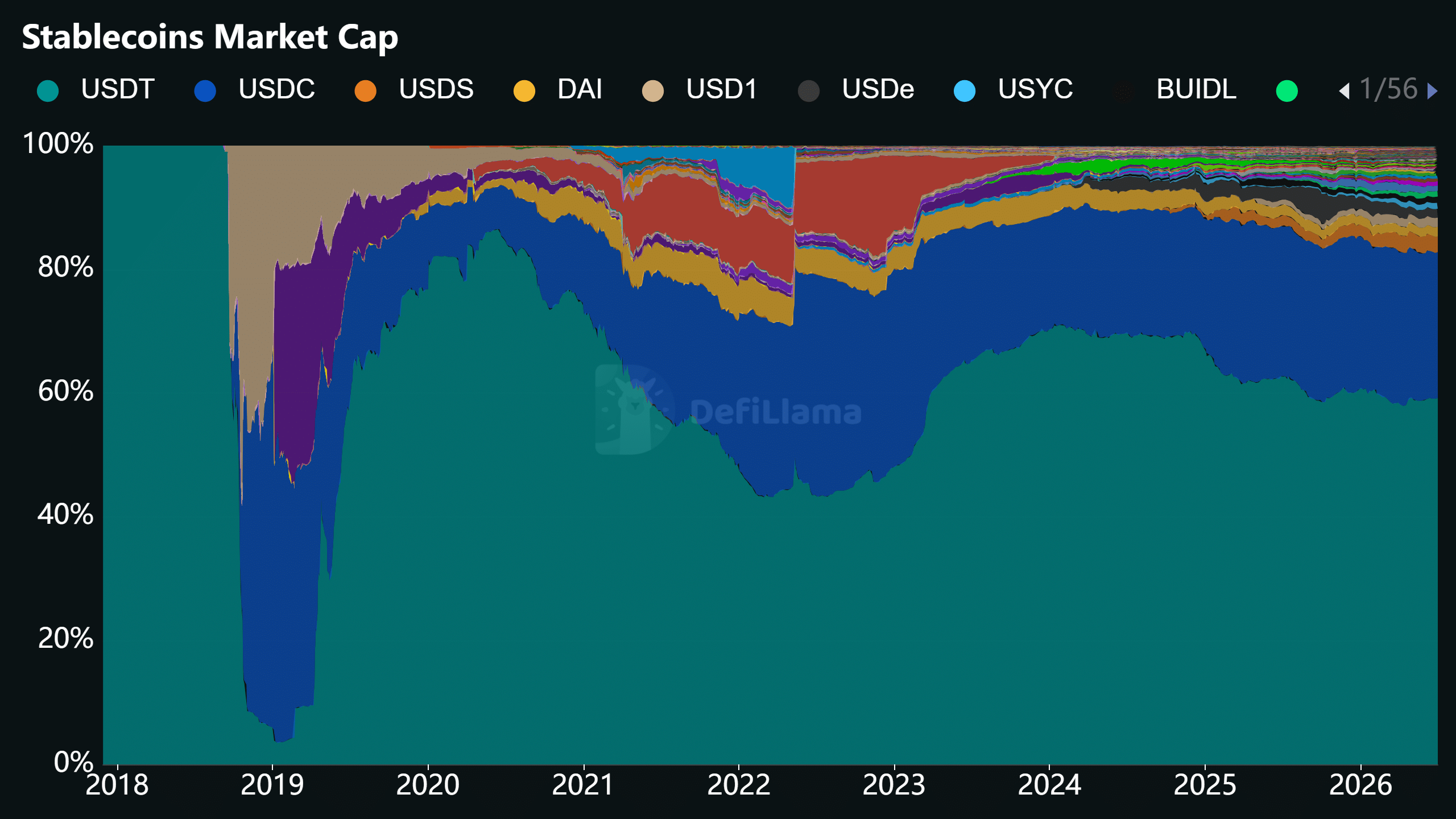
Source: DeFiLlama

On the other hand, Circle’s market share rose from 19% to 25% before easing slightly to 24% in 2026. Whether new competitors will erode that share remains uncertain. Even so, analysts remain bullish on the stock, with a consensus price target of $120, implying roughly 91% upside from current levels.
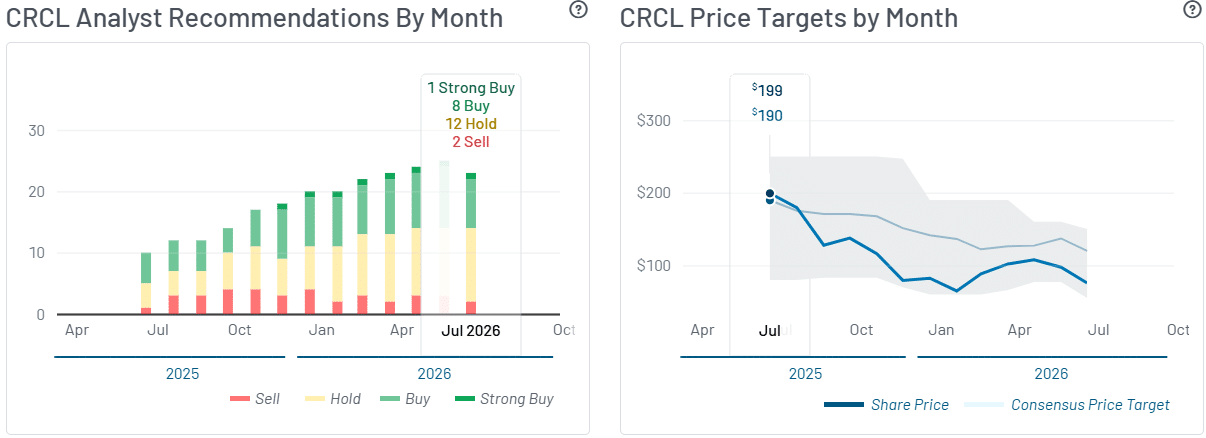
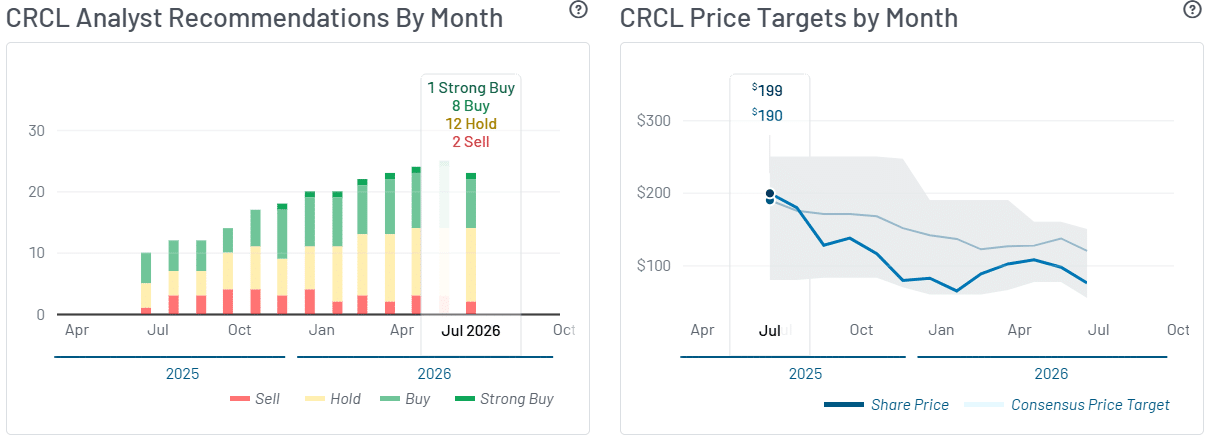
Source: MarketBeat

Final Summary

  • Circle stock, CRCL, saw a massive loss of 17.5% on Tuesday
  • The bearish move followed a new rival, Open USD, backed by Visa and 140 other partners.

Пов'язані питання

QWhy did Circle's stock price drop 17.5% on June 30th?

ACircle's stock price dropped primarily due to the announcement of a new rival stablecoin called Open USD (OUSD), which is backed by a consortium of 140 firms including Visa and Mastercard, posing a potential threat to Circle's market share.

QWhat is Open USD (OUSD) and who is behind it?

AOpen USD (OUSD) is a new stablecoin launched by a consortium of 140 firms, including traditional payment companies like Visa, Mastercard, as well as BlackRock and Google. It aims to target enterprise treasury management and merchant payments.

QWhat was the market reaction to the launch of Open USD, according to analysts mentioned?

AAnalysts like Matthew Sigel and Sam Ruskin viewed the launch as bearish for Circle. They believe it will challenge Circle's market dominance, potentially forcing Circle to renegotiate revenue share agreements or find new distributors, as many interested parties are backing OUSD.

QHow has the stablecoin market share changed for Tether and Circle recently?

AFollowing the GENIUS Act passage in 2025, Tether's USDT dominance shrank from 62% to 59%. Circle's USDC market share initially rose from 19% to 25% but has since eased slightly to 24% in 2026.

QWhat is the consensus price target for Circle's stock (CRCL) despite the recent drop?

AAnalysts remain bullish on Circle's stock with a consensus price target of $120, which implies roughly a 91% upside from its price level at the time of the article.

Пов'язані матеріали

Why 2026 could redefine Ethereum, Solana, Base and Avalanche

Blockchain infrastructure is undergoing a major coordinated transformation, driven by institutional demand for reliability, compliance, and predictable settlement. Over $30 billion in Real-World Assets (RWA) on-chain has exposed network weaknesses. Major blockchains are responding with foundational upgrades, moving beyond incremental speed improvements. Ethereum's "Glamsterdam" upgrade, planned for H1 2026, will significantly increase gas limits and introduce features like PBS (pre-blocked state) for enhanced settlement and parallel execution. Solana's "Alpenglow," targeting a mainnet launch in H2 2026, focuses on reducing finality time dramatically and freeing network resources to improve reliability. Beyond speed, compliance is critical. Base's "Beryl" upgrade in Q3 2026 will introduce a standardized, regulatory-compliant token framework (B20). Avalanche's "Octane" upgrade aims to boost transaction processing and reduce costs for enterprise applications. Even Bitcoin is evolving with the potential activation of OP_CAT by late 2026/early 2027. The competition is shifting. While technical upgrades are widespread, institutions will ultimately allocate capital based on proven execution, operational resilience, and regulatory compatibility during market stress. Ethereum currently leads in tokenized assets, while networks like Base and Solana are strengthening their institutional offerings. The blockchain that best delivers reliable, compliant, and uninterrupted service is poised to attract the greatest share of future institutional capital.

ambcrypto9 хв тому

Why 2026 could redefine Ethereum, Solana, Base and Avalanche

ambcrypto9 хв тому

Tiger Research: Take RWA Tokenization Overseas First

This article discusses the strategic choices facing financial institutions in jurisdictions lacking mature regulatory frameworks for Real-World Asset (RWA) tokenization. With the market growing rapidly, institutions must choose between waiting for local legislation, using regulatory sandboxes, or—the recommended priority—expanding into overseas markets to gain early experience. Successfully launching cross-border RWA tokenization requires meticulous preparation across six key areas: establishing an overseas base (e.g., Hong Kong, Singapore, the U.S.), securing necessary licenses, defining the tokenized asset (with bonds being simpler than non-standard assets), defining the target investor scope, deciding on settlement currencies/payment flows, and designing operational requirements like custody and on-chain governance. The article outlines two primary strategic paths: a direct "onshore" path and a "native on-chain" path. The direct path involves setting up a legal entity and obtaining licenses in a mature jurisdiction like Hong Kong, Singapore, or the U.S., leveraging existing platforms (e.g., DigiFT, Securitize) for efficiency. The alternative native on-chain path involves partnering with compliant, decentralized platforms (e.g., Ondo, Plume Nest) that use structures like offshore SPVs to facilitate tokenization and access DeFi liquidity, offering speed and broader reach but with greater structural complexity. The core argument is that institutions should not wait for perfect domestic regulation. A detailed hypothetical case study illustrates the multi-step, 6-12 month process of launching an overseas tokenized bond. The key takeaway is that the essence of a tokenization business lies not in the technology but in successfully executing the entire sales and operational process. The market is moving forward, and the time to act is now.

marsbit20 хв тому

Tiger Research: Take RWA Tokenization Overseas First

marsbit20 хв тому

Торгівля

Спот
活动图片