SEC Chairman Explains Why NFTs Are Not Securities: 'Like Buying Trading Cards'

marsbitОпубліковано о 2026-03-19Востаннє оновлено о 2026-03-19

Анотація

SEC Chairman Paul Atkins explained in a CNBC interview why NFTs are generally not considered securities, comparing them to collectibles like baseball cards. The SEC recently issued guidance identifying four categories of digital assets not classified as securities: digital commodities, digital tools, digital collectibles (including NFTs), and stablecoins. Atkins emphasized that NFTs are typically "bought and held" assets rather than investment contracts, which are central to the definition of a security. He noted that each asset is evaluated based on its specific facts and circumstances, but digital collectibles are generally viewed as immutable purchases not intended for trading like traditional securities. This reflects a broader shift in the SEC’s approach under Atkins’ leadership, moving away from enforcement-driven regulation toward clearer guidance and a more predictable framework. The change aligns with the Trump administration's crypto-friendly stance, with Atkins criticizing past regulatory missteps that he believes set the U.S. back in crypto innovation.

Author: Sam Bourgi

Compiled by: Deep Tide TechFlow

Deep Tide Introduction: SEC Chairman Paul Atkins further explained in a CNBC interview why NFTs generally do not constitute securities. The SEC recently released an interpretive document listing four categories of digital assets that are not securities: digital commodities, digital instruments, digital collectibles (including NFTs), and stablecoins.

Atkins compared NFTs to baseball cards, emphasizing that such assets are "bought and held" and do not involve investment contracts. This is the latest move by the SEC under Atkins' leadership to shift from "enforcement-driven" to "guidance-driven" regulation.

Full text as follows:

After the U.S. Securities and Exchange Commission (SEC) listed four major categories of digital assets not subject to securities laws, Chairman Paul Atkins further explained why non-fungible tokens (NFTs) generally do not meet the definition of securities.

In a CNBC interview on Wednesday, Atkins reiterated the four categories of digital assets identified in the SEC's recent interpretive document that are typically not considered securities: digital commodities, digital instruments, digital collectibles like NFTs, and stablecoins.

During the interview, host Andrew Ross Sorkin pressed the issue of digital collectibles, noting that depending on their structure, they could more easily be classified as securities.

Atkins responded, "That's true of anything." He emphasized that the SEC's analysis still depends on the specific facts and circumstances of each asset, particularly whether it involves an investment contract under long-standing legal precedent.

Atkins stated that digital collectibles are generally viewed as items to be bought and held, similar to physical collectibles, rather than investment contracts. Investment contracts are a core defining feature of securities.

He said, "These collectibles, like baseball cards, memes, memecoins, NFTs, are things someone buys. It's an immutable purchase...unlike other assets that people trade."
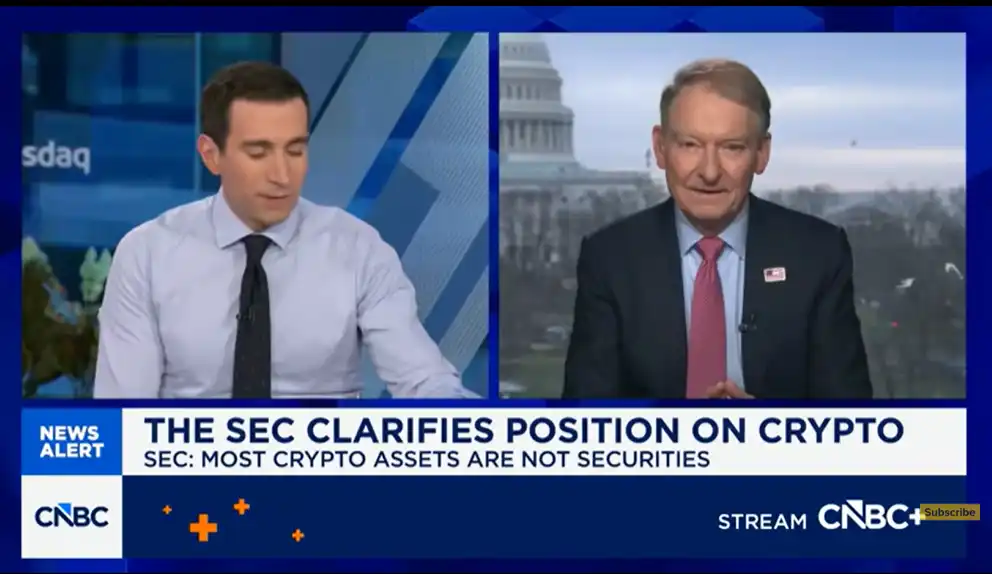
Caption: Paul Atkins interviewed on CNBC. Source: CNBC

SEC Continues to Move Away from "Enforcement-Driven" Crypto Policy

Under Atkins' leadership, the SEC's approach to regulating digital assets has undergone a noticeable adjustment. This shift coincides with the Trump administration, which is more crypto-friendly and took office in early 2025.

Atkins said in the CNBC interview, "We are breaking with the past." He described the SEC's efforts to promote clearer guidance and a more predictable regulatory framework.

Last year, Atkins criticized the SEC's previous reliance on "regulation by enforcement" and promised to move away from this approach. He also noted that tokenization is a key innovation that regulators should support rather than restrict.

Since then, he has repeatedly stated that past regulatory missteps have set the U.S. back by as much as a decade in crypto development and vowed to reverse this situation.


Пов'язані питання

QWhat are the four categories of digital assets that the SEC recently identified as typically not being considered securities?

AThe four categories are digital commodities, digital tools, digital collectibles (including NFTs), and stablecoins.

QHow did SEC Chairman Paul Atkins compare NFTs to explain why they are not securities?

AHe compared NFTs to baseball cards, stating they are 'bought and held' items, similar to physical collectibles, and do not involve investment contracts.

QWhat shift in regulatory approach has the SEC undergone under Chairman Paul Atkins' leadership?

AThe SEC has shifted from an 'enforcement-driven' approach to a 'guidance-driven' one, focusing on clearer guidance and a more predictable regulatory framework.

QAccording to the article, what did Paul Atkins say about the impact of past regulatory mistakes on the U.S. crypto industry?

AHe stated that past regulatory missteps set the U.S. back by as much as a decade in crypto development and vowed to reverse this situation.

QWhat key feature did Atkins emphasize as central to the definition of a security in the context of digital assets?

AHe emphasized that the key feature is whether the asset involves an investment contract under long-standing legal precedent.

Пов'язані матеріали

Bitcoin Boom in Full Swing: Saylor's Latest Statement Fuels Buying Speculation

MicroStrategy's Executive Chairman Michael Saylor has fueled speculation about a new Bitcoin purchase by posting "Bitcoin Drive engaged" on August 2, accompanied by the company's customary purchase tracker. This aligns with his pattern of hinting at treasury changes ahead of weekly reports. The accompanying report showed MicroStrategy's Bitcoin holdings at 843,775 BTC, with an average cost of $75,653 per coin and an unrealized loss of -$10.58B. A similar signal preceded the company's July 27 announcement, strengthening expectations for a treasury update on Monday. However, MicroStrategy's real-time ledger reflects two recent Bitcoin sales totaling 3,588 BTC, reducing holdings from 847,363 BTC to the current 843,775 BTC. The company stated these sales funded preferred stock dividends and replenished its U.S. dollar reserve. Recent reports indicate the company made no Bitcoin purchases the week ending July 26 while increasing its dollar reserve to approximately $3.75B. The company faces financial headwinds after reporting an $8.33B operating loss for Q2 2026, including an $8.32B unrealized loss on its digital assets. Management may sell up to $1.25B more in Bitcoin to meet cash obligations. The expected Monday update will reveal if the "Bitcoin Drive" signal marks a return to accumulation as MicroStrategy balances its massive Bitcoin stash against growing cash commitments.

cryptonews.ru1 год тому

Bitcoin Boom in Full Swing: Saylor's Latest Statement Fuels Buying Speculation

cryptonews.ru1 год тому

Торгівля

Спот
活动图片



