SEC Chair Discloses What’s Next For Crypto Regulation At ETH Denver

bitcoinistОпубліковано о 2026-02-20Востаннє оновлено о 2026-02-20

Анотація

SEC Chair Paul Atkins outlined the agency's upcoming crypto regulatory agenda at ETH Denver. Despite congressional delays on the CLARITY Act, the SEC is advancing its own initiatives through "Project Crypto," a joint effort with the CFTC. Key plans include a formal framework to determine when crypto assets are investment contracts, an "innovation exemption" for limited trading of tokenized securities, and new rules for crypto capital raising. The agency will also issue no-action letters and update custody rules for non-security crypto assets, including stablecoins. Atkins emphasized that the SEC's role is not to react to market downturns but to provide clear rules and disclosures for informed investor decisions.

As momentum in Washington around the proposed CLARITY Act slows, US Securities and Exchange Commission (SEC) Chair Paul Atkins outlined how the agency intends to proceed with crypto regulation, despite congressional delays, at a public appearance this Wednesday at ETH Denver.

Speaking alongside Commissioner Hester Peirce, a longtime advocate for clearer crypto rules, Atkins signaled that the regulator is preparing a broad regulatory push in the months ahead.

SEC Details 2026 Crypto Agenda

Responding to a question about what the industry can expect this year, Atkins said the SEC will continue coordinating with lawmakers while advancing its own agenda through “Project Crypto,” an initiative that is now being jointly carried out with the Commodity Futures Trading Commission (CFTC).

Atkins said the Commission and staff are preparing several initiatives for consideration in the near term. Among them is a formal framework explaining how the SEC determines when a crypto asset involves an investment contract, including how such a contract is created and under what circumstances it may cease to exist.

He also previewed an “innovation exemption” designed to allow limited trading of certain tokenized securities on new types of platforms, with the broader goal of shaping a durable regulatory structure over time.

The agency is also developing a rule proposal intended to create what Atkins called “common-sense” avenues for raising capital through crypto asset sales.

In addition, the SEC plans to issue no-action letters and exemptive orders to provide greater certainty to market participants, including guidance for digital wallets and other user interfaces that may not fall under registration requirements of the Securities Exchange Act.

Custody rules are another priority. Atkins said the SEC is working on rulemaking related to how broker-dealers may safeguard non-security crypto assets, including payment stablecoins.

The Commission is also preparing updates to transfer agent regulations to reflect the growing role blockchain technology can play in maintaining ownership records.

Clear Rules Over Panic

The SEC chair also addressed recent declines in crypto prices, pushing back against the idea that regulators should respond to market downturns. He emphasized that it is not the role of the Commission to react to daily price movements.

Instead, he said, the agency’s responsibility is to ensure investors receive adequate disclosures so they can make informed decisions. Markets, he noted, fluctuate across asset classes, whether stocks, commodities, or digital assets.

Regulators, in his view, should focus on maintaining clear and functional rules that allow investors to decide for themselves whether to buy, sell, or hold.

Lastly, Atkins reiterated that the Commission must continue clarifying how tokenized securities fit within the existing regulatory framework and how intermediaries can trade and custody them for clients.

He stressed that progress will require collaboration and welcomed input from across the spectrum, including critics of the crypto industry.

The 1-D chart shows the total crypto market cap dropping toward $2.2 trillion. Source: TOTAL on TradingView.com

Featured image from OpenArt, chart from TradingView.com

Пов'язані питання

QWhat initiative is the SEC advancing in coordination with the CFTC for crypto regulation?

AThe SEC is advancing its own agenda through 'Project Crypto,' an initiative that is now being jointly carried out with the Commodity Futures Trading Commission (CFTC).

QWhat specific framework is the SEC preparing regarding crypto assets?

AThe SEC is preparing a formal framework explaining how it determines when a crypto asset involves an investment contract, including how such a contract is created and under what circumstances it may cease to exist.

QHow did SEC Chair Paul Atkins address recent crypto market price declines?

AHe pushed back against the idea that regulators should respond to market downturns, emphasizing that it is not the role of the Commission to react to daily price movements, but rather to ensure investors receive adequate disclosures.

QWhat is the purpose of the 'innovation exemption' previewed by the SEC Chair?

AThe 'innovation exemption' is designed to allow limited trading of certain tokenized securities on new types of platforms, with the broader goal of shaping a durable regulatory structure over time.

QWhat are some of the other regulatory priorities the SEC is working on, as mentioned by Atkins?

AOther priorities include developing custody rules for how broker-dealers may safeguard non-security crypto assets, creating 'common-sense' avenues for raising capital through crypto asset sales, and updating transfer agent regulations to reflect the role of blockchain technology.

Пов'язані матеріали

This Week's Key Events Preview | U.S. to Release April CPI Data; U.S. Senate Banking Committee to Review "Digital Asset Market Structure Act of 2025"

Weekly News Preview: Key events for May 12-16 include major economic and crypto industry developments. On Tuesday, May 12, the U.S. will release its April CPI data. Additionally, the gaming blockchain Ronin will begin a 10-hour migration to an Ethereum Layer 2, built on OP Stack with EigenDA for data availability. This aims to leverage Ethereum's security and settle RON's annual inflation below 1%. Base's first independent network upgrade, "Base Azul," is scheduled for mainnet activation on Wednesday, May 13, focusing on security, performance, and developer experience enhancements. Thursday, May 14, sees the U.S. Senate Banking Committee voting on the "Digital Asset Market Structure Act of 2025." In other news, Solana DeFi protocol Carrot will shut down, setting a final withdrawal deadline due to impacts from the Drift exploit. The Moscow Exchange will launch futures trading for Solana, Ripple, and Tron indices (RUB-settled) for qualified investors. Multiple service closures are scheduled for Friday, May 15. Dmail Network will begin winding down due to unsustainable infrastructure costs and failed commercialization. Users must export data before this date. Separately, the Cosmos-based lending blockchain UX Chain will fully shut down. Finally, on Saturday, May 16, gaming infrastructure provider Lattice will wind down operations, with its Redstone Layer 2 network ceasing. Users are urged to withdraw assets, especially from contracts like Uniswap pools, before the shutdown.

链捕手1 год тому

This Week's Key Events Preview | U.S. to Release April CPI Data; U.S. Senate Banking Committee to Review "Digital Asset Market Structure Act of 2025"

链捕手1 год тому

Morning Post | Trump Media Group Releases Q1 Financial Report; Top Three DeFi Applications Return Nearly $100 Million in Revenue to Token Holders in 30 Days; Michael Saylor Shares Bitcoin Tracker Info Again

**Title: Daily Briefing | Trump Media Group Releases Q1 Report; Top 3 DeFi Apps Return Nearly $100M to Token Holders; Michael Saylor Signals Potential Bitcoin Buy** **Summary:** Key developments in the past 24 hours include: * **Economic Outlook:** Goldman Sachs has pushed back its forecast for the next two Federal Reserve interest rate cuts to December 2026 and March 2027, citing persistent inflationary pressures from energy costs. This delayed timeline is expected to tighten liquidity flow into risk assets, including cryptocurrencies. * **DeFi & Revenue:** Data from DefiLlama shows that three leading DeFi applications—Hyperliquid, Pump.fun, and EdgeX—collectively distributed $96.3 million in revenue to their token holders over the last 30 days. This trend highlights a shift in the crypto community's focus towards real protocol earnings and sustainable economic models. * **Corporate Bitcoin Moves:** Michael Saylor, founder of MicroStrategy (note: referred to as 'Strategy' in the text, likely a typographical error), has signaled potential upcoming Bitcoin purchases by posting a "Bitcoin Tracker" update, following a pattern that typically precedes the company's official disclosure of new acquisitions. * **Market Integrity:** Prediction market platform Polymarket announced updates to address platform issues, including identifying and banning clusters of accounts involved in "ghost-fill" activities and implementing measures to prevent bulk account creation. * **Regulation:** The Bank of England Governor warned that stablecoin regulation could lead to tensions between US and international regulators. In South Korea, the National Tax Service has launched a pilot program to entrust seized virtual assets to private custody firms for management. * **Meme Token Trends:** GMGN data lists the top trending meme tokens on Ethereum (e.g., HEX, SHIB), Solana (e.g., FWOG, TROLL), and Base (e.g., SKITTEN, PEPE) over the past day. **Financial Note:** Trump Media & Technology Group reported a Q1 loss of approximately $4 billion, primarily attributed to unrealized losses on its Bitcoin and other digital asset holdings.

链捕手1 год тому

Morning Post | Trump Media Group Releases Q1 Financial Report; Top Three DeFi Applications Return Nearly $100 Million in Revenue to Token Holders in 30 Days; Michael Saylor Shares Bitcoin Tracker Info Again

链捕手1 год тому

Telegram Takes Direct Control of TON, Social Traffic Rewrites the Public Chain Narrative

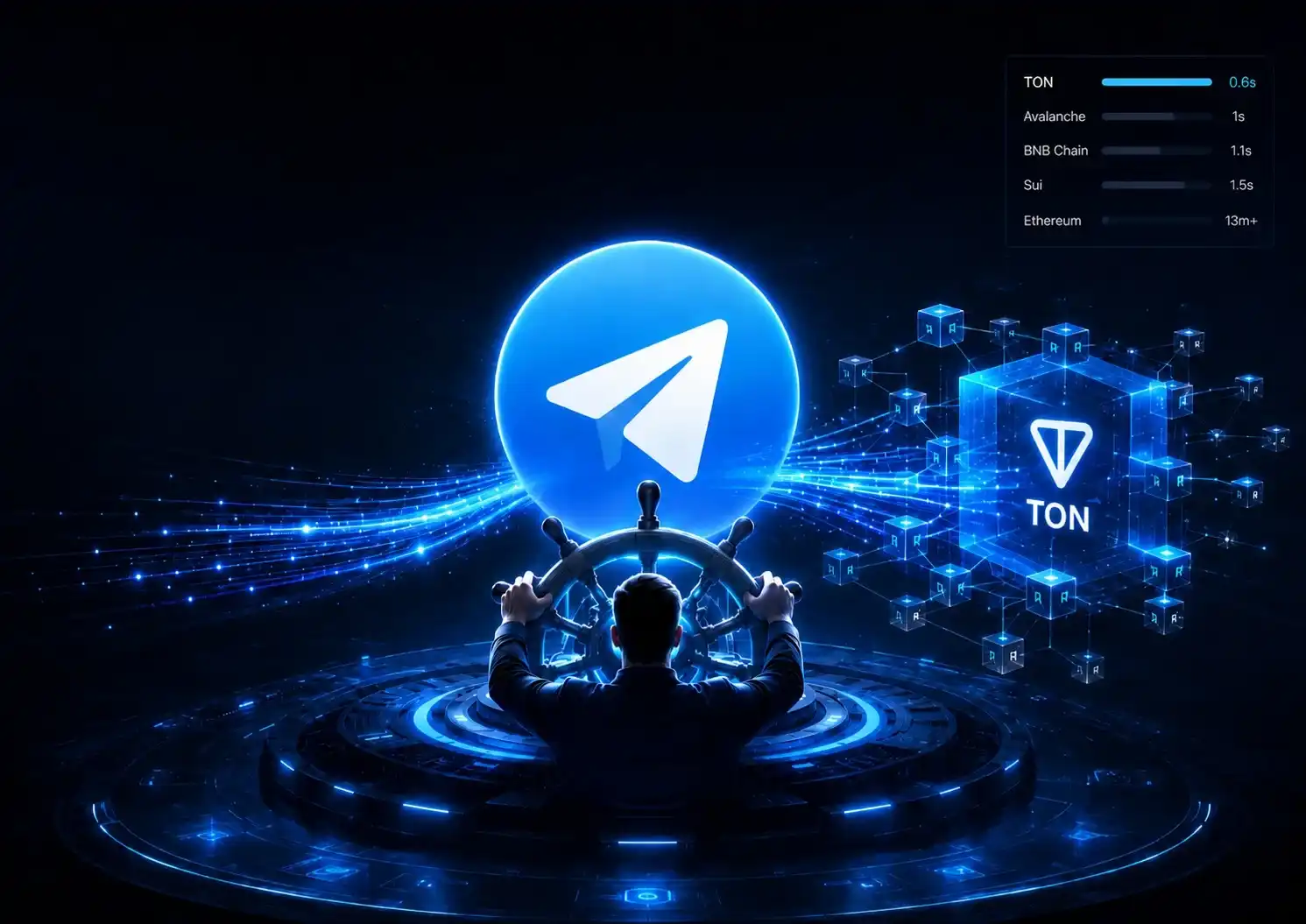
Telegram founder Pavel Durov announced that Telegram will replace the TON Foundation as the core driver and largest validator of The Open Network (TON). Key initiatives include a sixfold reduction in transaction fees, performance upgrades, and improved developer tools within the next few weeks. This marks a strategic shift from Telegram merely providing user access to deeply integrating TON into its platform's core infrastructure. The goal is to transform Telegram's massive social traffic into sustainable on-chain activity. While viral mini-apps like Notcoin have demonstrated Telegram's ability to drive user adoption, TON aims to support frequent, low-value transactions inherent to social platforms—such as tipping, in-app payments, and game rewards. Ultra-low fees and sub-second finality (0.6 seconds) are crucial to making blockchain interactions seamless and nearly invisible within the Telegram user experience. However, Telegram's increased central role raises questions about network decentralization. Durov argues that Telegram's participation will attract more large validators, thereby enhancing decentralization. TON also offers high annual staking rewards (18.8%), aiming to retain capital within its ecosystem. The fundamental challenge for TON is no longer leveraging Telegram's user base, but becoming an indispensable, seamless infrastructure layer for Telegram's everyday applications—moving from an adjacent chain to an embedded utility.

marsbit1 год тому

Telegram Takes Direct Control of TON, Social Traffic Rewrites the Public Chain Narrative

marsbit1 год тому

Торгівля

Спот
Ф'ючерси
活动图片