Scaramucci predicts ‘exponential opportunity’ for crypto at LONGITUDE

cointelegraphОпубліковано о 2025-12-12Востаннє оновлено о 2025-12-12

Анотація

At the LONGITUDE event, Anthony Scaramucci and other industry leaders expressed strong optimism for cryptocurrency in 2026, citing institutional investment and clearer regulations as key drivers. Scaramucci emphasized the potential for blockchain to reduce the $4 trillion spent globally on transaction verification in TradFi, with protocols like Ethereum and Solana offering major efficiency gains. Kristin Smith highlighted regulatory progress in the U.S. and globally, though she noted that trading regulations remain a barrier. Eli Ben-Sasson discussed the rising demand for privacy protocols like Zcash, noting that enterprises seek tailored privacy solutions. Security was also a focus, with Phemex CEO Federico Variola and Ledger's Ian Rodgers addressing risks from social engineering attacks, exemplified by the $1.6B Bybit hack. The event underscored a collective push toward safer, more regulated, and efficient crypto adoption.

Institutional investment and clear-cut regulations are laying the foundation for a strong start to 2026 for the wider cryptocurrency industry.

Industry titans including Anthony Scaramucci, Kristin Smith, Eli Ben-Sasson, Ian Rodgers, Reeve Collins and Joseph Chalom delivered optimistic outlooks for the new year after a year of positive change, particularly in the United States.

Cointelegraph’s latest LONGITUDE event, powered by Phemex, featured alpha-rich panels focused on Solana’s growth, surging interest in privacy protocols and lessons learned from security incidents in 2025.
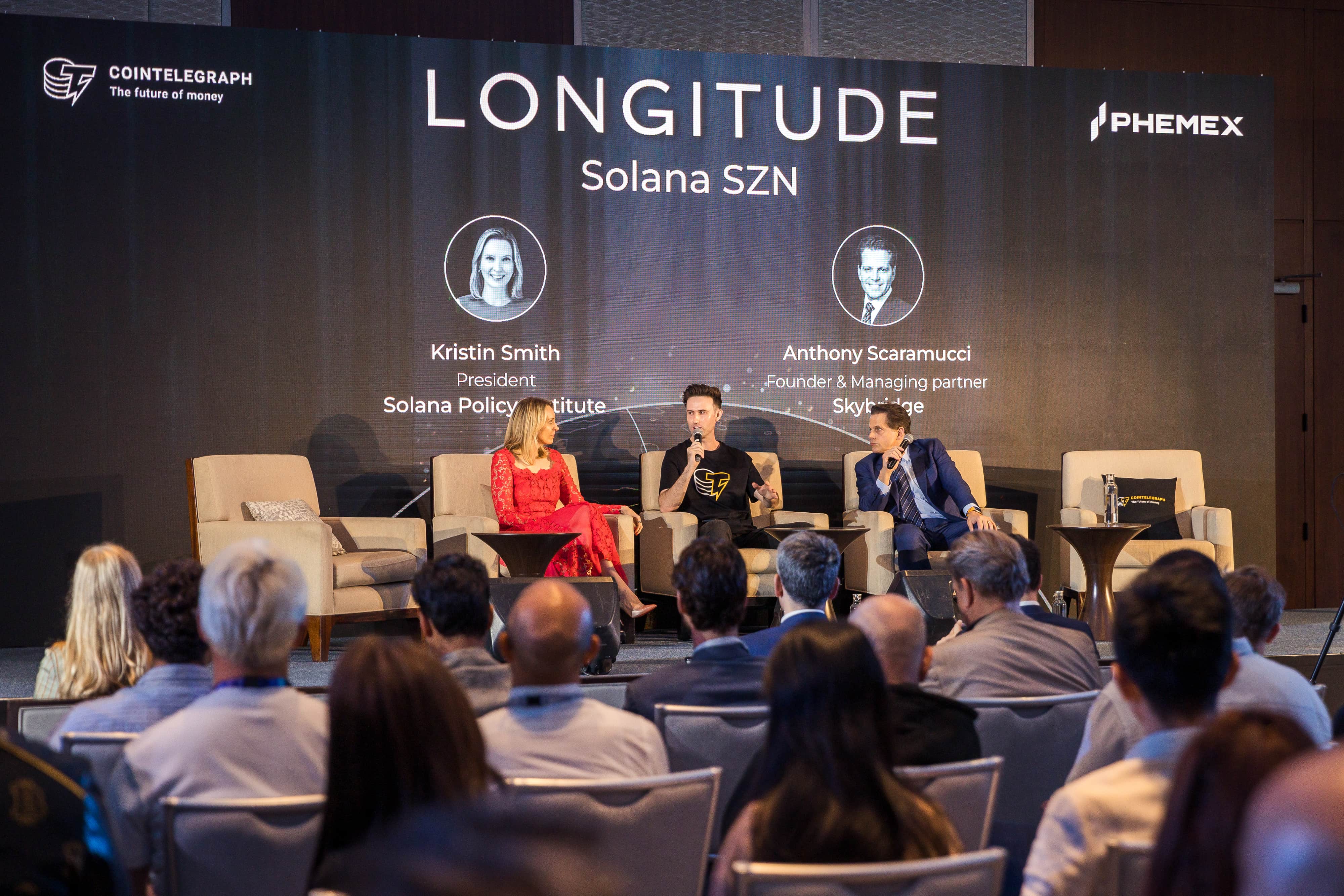
From left, Solana Policy Institute president Kristin Smith, Cointelegraph journalist Ciaran Lyons and SkyBridge founder Anthony Scaramucci.

“There’s been a tremendous amount of progress in 2025, an unprecedented amount,” Smith said. The president of the Solana Policy Institute has been intimately involved in crypto-focused discussions in Washington over the past 18 months.

“I think now that the US is catching up, you’re seeing policymakers around the globe figuring out what they need to do to stay competitive and keep crypto within their borders, which is different than trying to keep crypto outside of their borders.”

Scaramucci said educating policymakers remains a key hurdle to helping the traditional financial system adopt innovative protocols running on blockchain rails.

“Kristin has got to go into those rooms, and she’s got to explain to these people why this regulation needs to get passed so that we can retool the financial system and make the system less expensive and more seamless,” Scaramucci said.

The founder of SkyBridge Capital added that existing TradFi systems currently spend over $4 trillion on transaction verification globally. Shifting to protocols like Ethereum and Solana, which currently rank highest for RWA tokenization and onchain activity, could offer unrivalled efficiency and cost savings.

“That’s credit card fees, wire fees, a whole host of different things. If we were able to adopt Solana and use it in the process of tokenizing assets, you could save probably 75% of that, and that could be transformative for the global economy.”

Again, the major hurdle in recent years has been lagging regulations that have scuppered innovation and the ability for institutions to actively explore using blockchain protocols.

“We can do that today. It’s actually fairly easy to issue a share or a bond on a blockchain. The problem is the regulations don’t make sense when it comes to trading those assets. And so that’s a piece that we’re working on,” Smith said.

Related: Scaramucci family invested over $100M in Trump’s Bitcoin mining firm: Report

Scaramucci delivered a bullish parting message, highlighting the intent of America’s biggest financial institutions, BlackRock, Blackstone and JPMorgan, moving to tokenize assets on blockchain protocols.

“Don’t sit here myopically in 2025 and see this short-sighted opportunity. See the exponential technological opportunity that’s coming.”

Privacy in vogue

StarkWare founder Eli Ben-Sasson, who also co-founded the Zcash protocol, engaged in a thought-provoking fireside chat unpacking why privacy protocols have been in vogue in the latter half of 2025.

“I spent several decades of my life thinking about privacy, both the math and then the productization. Privacy is a spectrum.”

Ben-Sasson weighed in on the massive interest in Zcash (ZEC) in 2025. The privacy-focused cryptocurrency has been around since 2016, but saw a massive surge in value and interest off the back of support from various big names in the industry.

“At one extreme, you have the stuff we did at Zcash, which is resistance money level of privacy. If you need to jump on a plane and the government is pursuing you and you need to be fully you know, off the radar, then you have that,” Ben-Sasson said.
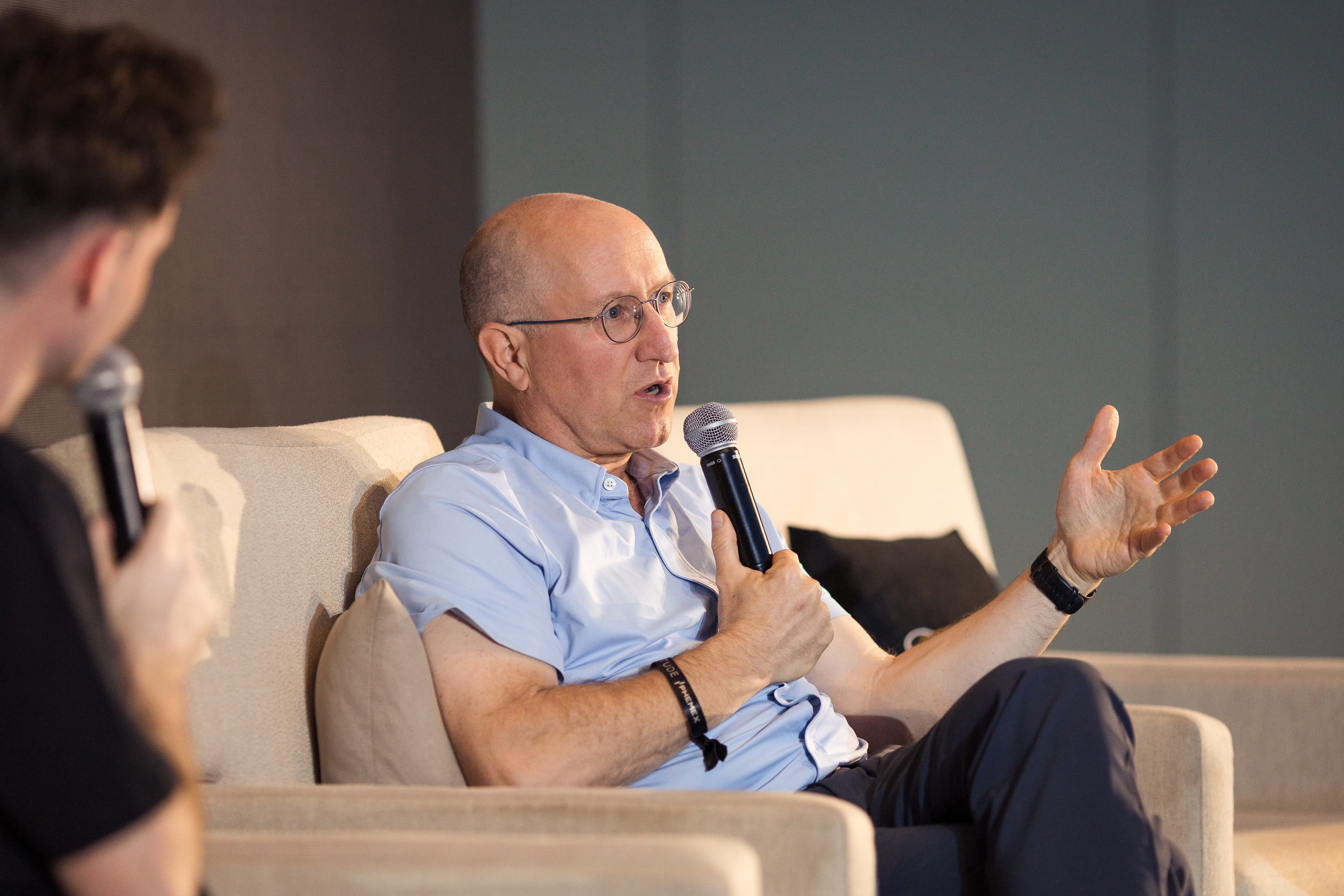
StarkWare co-founder Eli Ben-Sasson.

However, Ben-Sasson said the cost of that luxury is in the user experience. Wallets, programmability and user experience are harder to provide with that level of privacy. The less technical end of the spectrum affords a use case that is in high demand.

Related: Can Zcash’s rise revive the Bitcoin OP_CAT discussion?

“Enterprises come in, and they are going to want a different kind of privacy and also a different kind of privacy from the kind that we did on Zcash. They’re going to want privacy where they, as enterprises, and their customers are shielded away from other customers and from their competitors,” he said.

Security wake-up call

Security was another major talking point at LONGITUDE VII, given the spate of high-profile hacks and security incidents in 2025.
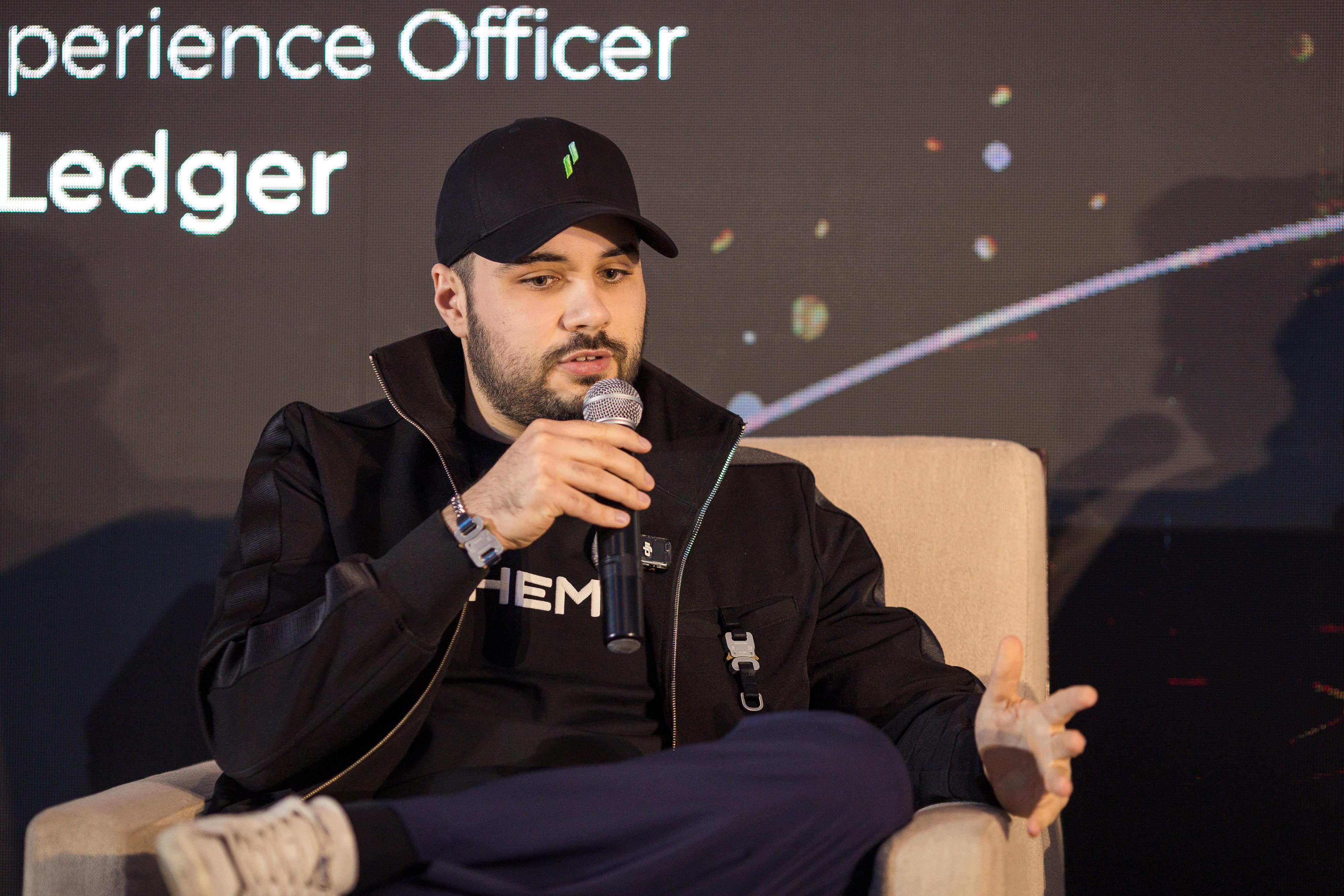
Phemex CEO Federico Variola. Source: Cointelegraph

The theft of $1.6 billion of Ether (ETH) from Bybit in March was a wake-up call for the industry. As Phemex CEO Federico Variola explained, social engineering and unverified access continue to be a major threat to everyday crypto users.

“I think combining the social layer of being a crypto participant with the financial layer, those kind of devices should be never interacting with each other.”

“It’s difficult in crypto because sometimes you need to participate in an airdrop, or like you want your Twitter account to be linked to the MegaETH ICO, for example. Nevertheless, you should be aware that you’re always exposing yourself to significant risk,” Variola said.

Related: Bybit hack: ‘Reckoning’ that led SafeWallet to rearchitect its systems

Ledger’s chief experience officer Ian Rodgers said that the onus is on service providers and infrastructure builders to think critically about the risks their platforms and users face.

“There are there is no way to make a risk go to zero. But it is the responsibility to minimize the risk as much as possible, to think about what is the worst thing that could possibly happen, what could go wrong here,” Rodgers said.

Cointelegraph’s exclusively LONGITUDE events will be back on the calendar in 2026, with editions planned for New York, Paris, Dubai, Hong Kong, Singapore, and Abu Dhabi.


Пов'язані питання

QWhat does Anthony Scaramucci predict for the cryptocurrency industry in 2026?

AAnthony Scaramucci predicts 'exponential opportunity' for crypto, driven by institutional investment and clear regulations, with major financial institutions like BlackRock and JPMorgan moving to tokenize assets on blockchain protocols.

QAccording to Kristin Smith, what is the current regulatory challenge for trading tokenized assets?

AKristin Smith states that while it is easy to issue shares or bonds on a blockchain, the regulations don't make sense for trading those assets, which is a key area being worked on.

QWhy has there been increased interest in privacy protocols like Zcash in 2025?

AEli Ben-Sasson explains that privacy protocols are in vogue due to high demand for different levels of privacy, from resistance-money level privacy for individuals to enterprise-focused privacy shielding customers and competitors.

QWhat was the significance of the $1.6 billion Bybit hack in March 2025?

AThe $1.6 billion Ether theft from Bybit was a wake-up call for the industry, highlighting the major threats of social engineering and unverified access to crypto users.

QHow does Anthony Scaramucci suggest blockchain protocols like Solana could transform the global economy?

AScaramucci suggests that adopting Solana for tokenizing assets could save up to 75% of the over $4 trillion spent globally on transaction verification in TradFi systems, leading to transformative efficiency and cost savings.

Пов'язані матеріали

Global Stock Market's Storm Center: South Korea's Stock Market De-leveraging Is Largely Complete

Storm's Eye: South Korean Market De-leveraging Nears Completion The recent sharp correction in South Korean equities, with the KOSPI index dropping 32% from its June high, has been a key trigger for global tech stock volatility. The core driver was not a fundamental shift but a forced de-leveraging process within the market's unique structure, which is now largely complete. Two main leverage channels amplified the sell-off: 1. **Leveraged ETFs:** Their size, proportionally four times larger than in the U.S., peaked near $50 billion. Their mandatory daily rebalancing mechanism created a vicious cycle of "price drop → forced selling → further drop." Approximately 75% of this excess has been unwound, shrinking to $26 billion, with regulatory curbs now blocking new inflows. 2. **Hedge Fund Leverage:** Using swaps to magnify exposure, hedge funds saw their net long positioning fall by over 50% from peak levels. The most intense phase of this institutional de-leveraging is over. In contrast, **retail margin debt** poses minimal systemic risk. At 0.5% of market cap, it is far lower than in the U.S. or China, lacks automatic triggers, and is concentrated in smaller stocks. The conclusion: the high-leverage structures most prone to "chain-reaction selling" have been substantially cleared. The market is transitioning from a liquidity-driven crash to one priced more on fundamentals. The article argues that the AI trend—centered on Korean memory chips—remains intact. This episode represents a painful but necessary clearing of crowded trades, not the end of the AI revolution. For investors, the key question is conviction in the long-term AI direction; if the trend is real, current volatility is a cost of entry, not a terminal risk.

链捕手21 хв тому

Global Stock Market's Storm Center: South Korea's Stock Market De-leveraging Is Largely Complete

链捕手21 хв тому

The Eternal Fragments of Money: Third-Party Payment Has No First Principle

"The Enduring Fragments of Money: Third-Party Payments Lack a First Principle" Stripe is reportedly attempting to acquire PayPal, marking a significant shift reminiscent of PayPal's merger with the original X.com 30 years ago. The article analyzes Stripe's strategic challenges and the broader payments industry landscape. Despite its initial success with a developer-friendly API model, Stripe missed its optimal IPO window during the pandemic and has since seen its valuation decline. Its attempts to expand through acquisitions and new ventures, particularly in stablecoins (like its OUSD project) and Agent-focused payments (ACP/MPP protocols), have faced headwinds. The author argues that the payment industry remains highly fragmented and is ultimately an adjunct to the traditional banking system. This structure limits the potential for any single player, including Stripe, to achieve complete dominance. While stablecoins and the future rise of autonomous Agent economies present potential growth avenues, they are not yet mainstream and still require integration with the existing financial system. For now, Agent-based transactions are largely used for speculative "volume boosting" rather than substantive business applications. Stripe's current move to acquire PayPal is seen as an attempt to bolster its weak consumer-facing (C-side) business after its stablecoin-focused strategies faltered. Meanwhile, PayPal is described as structurally outdated, unable to revive itself through new products like Venmo or PYUSD. The future of payments may lie not in payments themselves but in value-added services like more efficient settlement networks. The author suggests that companies like Stripe and Circle, which are building their own blockchains (Tempo, Arc) and stablecoins, are positioning themselves to eventually profit from high-efficiency settlement systems. These new networks could potentially bypass some traditional banking layers. In conclusion, the article posits that third-party payment is a perpetually fragmented battlefield where scale alone cannot ensure victory. Players must find new models, focusing on efficiency to compete with the entrenched banking system. Stripe's acquisition of PayPal represents a bet on this uncertain future.

链捕手43 хв тому

The Eternal Fragments of Money: Third-Party Payment Has No First Principle

链捕手43 хв тому

Торгівля

Спот
活动图片