Sam Altman Speaks Out After Molotov Cocktail Thrown at His Home: I Love My Family, and I Believe AI Belongs to Everyone

marsbitОпубліковано о 2026-04-11Востаннє оновлено о 2026-04-11

Анотація

In the aftermath of a molotov cocktail attack on his home, Sam Altman shares a rare family photo, hoping to deter further violence. He reflects on the power of words and narratives, acknowledging the heightened anxiety surrounding AI. Altman outlines his core beliefs: AI is humanity's most powerful tool for empowerment and must be democratized; its development, while carrying legitimate risks, requires a broad societal response and new policies for a safe economic transition. He admits to personal and professional mistakes at OpenAI, including mishandling conflicts, but takes pride in upholding the mission against pressures like Elon Musk's demand for unilateral control. He attributes the "Shakespearean drama" in the AI industry to a "ring of power" dynamic—the dangerous allure of controlling AGI. The only solution, he argues, is to widely share the technology, ensuring democratic systems, not a few labs, retain control and that the democratic process remains more powerful than any company. He calls for de-escalating rhetoric to avoid further real-world harm.

Author: Sam Altman

Compiled by: Deep Tide TechFlow

Deep Tide Insight: Someone threw a Molotov cocktail at Sam Altman's home at 3:45 a.m. He rarely shared a family photo publicly, hoping it might deter the next person from taking such a step. This article is not just a complaint about the attack; it also marks his first comprehensive explanation of his belief in AI: AI must be democratized, a few labs should not decide humanity's future, and the temptation that "once you see AGI, you can't unsee it" fills this field with Shakespearean drama.

This is a photo of my family. I love them more than anything.
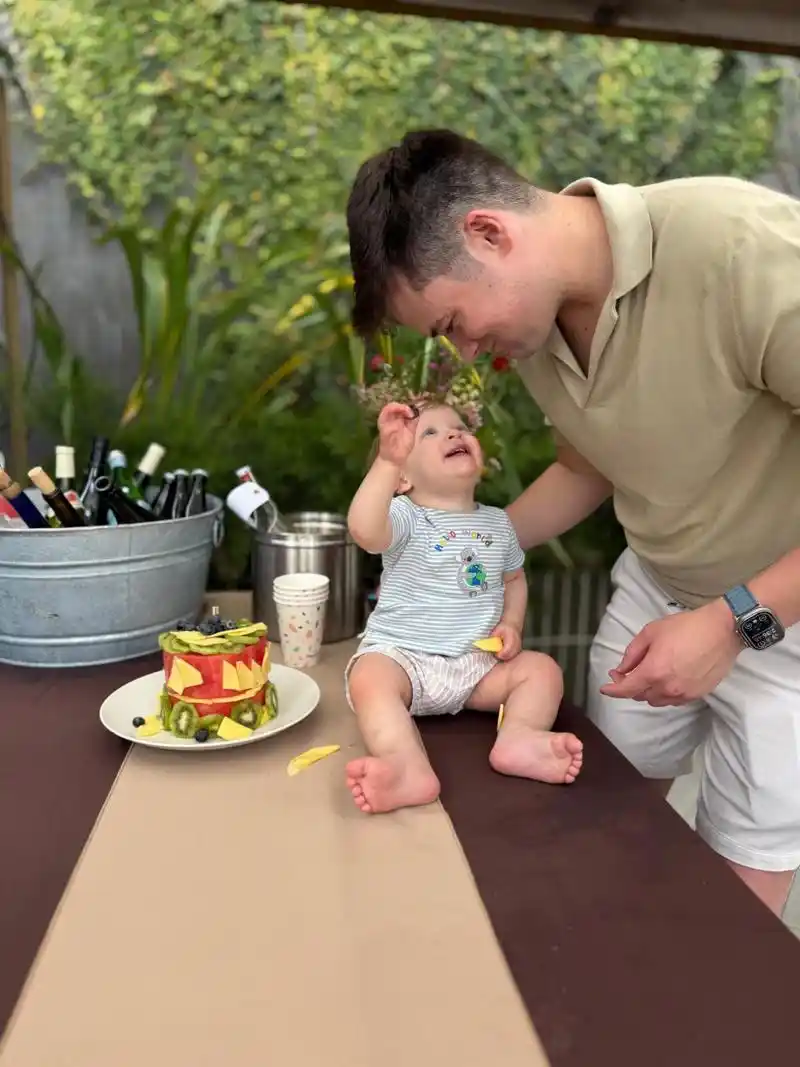
I hope images have power. We usually maintain a fair amount of privacy, but in this case, I'm sharing a photo in the hope that it might discourage the next person from throwing a Molotov cocktail at our home, no matter how they feel about me.

The first person did so last night at 3:45 a.m. Fortunately, it bounced off the house, and no one was hurt.

Words also have power. A few days ago, there was an inflammatory article about me. Yesterday, someone told me they thought the article appeared at a time of extreme anxiety about AI, making my situation more dangerous. I didn't take it seriously at the time.

Now I'm awake in the middle of the night, angry, and realizing I underestimated the power of words and narratives. This seems like a good time to talk about a few things.

First, my beliefs.

Striving for everyone's prosperity, empowering all people, and advancing science and technology are moral imperatives to me.

AI will be the most powerful tool to expand human capabilities and potential. The demand for this tool is essentially limitless; people will do incredible things with it. The world should have an abundance of AI, and we must figure out how to make that happen.

Not everything will go smoothly. Fear and anxiety about AI are justified; we are witnessing the greatest societal change in a long time, perhaps ever. We must get safety right—it's not just about aligning a model. We urgently need a societal response to address new threats. This includes new policies to help navigate difficult economic transitions and reach a better future.

AI must be democratized; power cannot be too concentrated. Control over the future belongs to all people and their institutions. AI needs to empower individuals, and we need to collectively decide our future and new rules. I don't think it's right for a few AI labs to make the most important decisions about our future form.

Adaptability is crucial. We are all learning new things very quickly; some of our beliefs will be right, some will be wrong, and sometimes we need to change our minds rapidly as technology evolves and society changes. No one yet understands the implications of superintelligence, but they will be enormous.

Second, some personal reflections.

When I look back at my work at OpenAI over the first decade, I can point to many things I'm proud of and a bunch of mistakes.

I was thinking about our upcoming trial with Elon and remembering how adamant I was about not agreeing to the unilateral control he wanted over OpenAI. I'm proud of that, proud of the narrow path we walked at the time that allowed OpenAI to continue to exist and all the achievements that followed.

I'm not proud of my avoidance of conflict, which has caused immense pain for me and OpenAI. I'm not proud of how I mishandled the conflict with the previous board, which caused great chaos for the company. I've made many other mistakes in OpenAI's crazy trajectory; I am a flawed person at the center of an exceptionally complex situation, trying to get a little better each year, always working for the mission. We started knowing how high the risks of AI were and how personal disagreements between well-intentioned people I care about would be magnified immensely. But experiencing these intense clashes firsthand and often having to arbitrate them is another thing, and the cost is serious. I am sorry to those I have hurt and wish I could learn faster.

I am also very aware that OpenAI is now a major platform, not a small startup, and we need to operate in a more predictable way now. The past few years have been extremely intense, chaotic, and high-pressure.

Still, what I am most proud of is that we are achieving our mission, which seemed extremely unlikely when we started. Against all odds, we figured out how to build very powerful AI, figured out how to accumulate enough capital to build the infrastructure to deliver it, figured out how to build a product company and business, figured out how to deliver fairly safe and robust services at scale, and more. Many companies say they will change the world; we actually did.

Third, some thoughts about this industry.

My personal takeaway from the past few years, and my view on why there is so much Shakespearean drama between companies in our field, boils down to this: "Once you see AGI, you can't unsee it." It has a real "Ring of Power" dynamic that makes people do crazy things. I don't mean that AGI itself is the ring, but rather the totalitarian philosophy of "being the one who controls AGI."

The only solution I can think of is to move in the direction of widely sharing the technology with people, and no one owning the ring. The two obvious ways to do this are individual empowerment and ensuring democratic systems remain in control.

It is important that the democratic process remains more powerful than companies. Laws and norms will change, but we must work within the democratic process, even if it is messy and slower than we would like. We want to be a voice and a stakeholder, but not own all the power.

Much of the criticism of our industry comes from sincere concerns about the extremely high risks of this technology. This is very valid, and we welcome good-faith criticism and debate. I empathize with anti-tech sentiment; obviously, technology is not always good for everyone. But overall, I believe technological progress can make the future unbelievably good, for your family and mine.

As we have that debate, we should de-escalate the rhetoric and tactics and try to have fewer explosions in fewer homes, both metaphorically and literally.


Пов'язані питання

QWhat was Sam Altman's house targeted with, and what was his response?

ASam Altman's house was targeted with a Molotov cocktail at 3:45 AM. In response, he shared a rare family photo publicly, hoping it would deter future attacks, and expressed his love for his family.

QAccording to Sam Altman, what is the moral obligation regarding AI and technology?

ASam Altman believes it is a moral obligation to work for the prosperity of everyone, empower all people, and advance science and technology.

QWhat does Sam Altman mean by 'democratizing AI' and why is it important?

ADemocratizing AI means ensuring that power is not overly concentrated and that the control of the future belongs to all people and their institutions. It is important because a few AI labs should not make the most important decisions about humanity's future.

QWhat personal reflection did Sam Altman share about his time at OpenAI?

ASam Altman reflected that he is proud of not agreeing to unilateral control demanded by Elon Musk and for OpenAI's achievements, but he is not proud of avoiding conflict, which caused pain, and he apologized for the people he hurt.

QWhat does Sam Altman compare the dynamic of 'once you see AGI you can't unsee it' to, and what is the solution he proposes?

ASam Altman compares the dynamic to the 'Ring of Power' from fiction, which drives people to do crazy things. The solution he proposes is to widely share the technology so that no one owns the 'ring,' through individual empowerment and ensuring democratic systems remain in control.

Пов'язані матеріали

a16z: AI's 'Amnesia', Can Continuous Learning Cure It?

The article "a16z: AI's 'Amnesia' – Can Continual Learning Cure It?" explores the limitations of current large language models (LLMs), which, like the protagonist in the film *Memento*, are trapped in a perpetual present—unable to form new memories after training. While methods like in-context learning (ICL), retrieval-augmented generation (RAG), and external scaffolding (e.g., chat history, prompts) provide temporary solutions, they fail to enable true internalization of new knowledge. The authors argue that compression—the core of learning during training—is halted at deployment, preventing models from generalizing, discovering novel solutions (e.g., mathematical proofs), or handling adversarial scenarios. The piece introduces *continual learning* as a critical research direction to address this, categorizing approaches into three paths: 1. **Context**: Scaling external memory via longer context windows, multi-agent systems, and smarter retrieval. 2. **Modules**: Using pluggable adapters or external memory layers for specialization without full retraining. 3. **Weights**: Enabling parameter updates through sparse training, test-time training, meta-learning, distillation, and reinforcement learning from feedback. Challenges include catastrophic forgetting, safety risks, and auditability, but overcoming these could unlock models that learn iteratively from experience. The conclusion emphasizes that while context-based methods are effective, true breakthroughs require models to compress new information into weights post-deployment, moving from mere retrieval to genuine learning.

marsbit2 год тому

a16z: AI's 'Amnesia', Can Continuous Learning Cure It?

marsbit2 год тому

Торгівля

Спот
Ф'ючерси

Популярні статті

Як купити HOME

Ласкаво просимо до HTX.com! Ми зробили покупку Defi.app (HOME) простою та зручною. Дотримуйтесь нашої покрокової інструкції, щоб розпочати свою криптовалютну подорож.Крок 1: Створіть обліковий запис на HTXВикористовуйте свою електронну пошту або номер телефону, щоб зареєструвати обліковий запис на HTX безплатно. Пройдіть безпроблемну реєстрацію й отримайте доступ до всіх функцій.ЗареєструватисьКрок 2: Перейдіть до розділу Купити крипту і виберіть спосіб оплатиКредитна/дебетова картка: використовуйте вашу картку Visa або Mastercard, щоб миттєво купити Defi.app (HOME).Баланс: використовуйте кошти з балансу вашого рахунку HTX для безперешкодної торгівлі.Треті особи: ми додали популярні способи оплати, такі як Google Pay та Apple Pay, щоб підвищити зручність.P2P: Торгуйте безпосередньо з іншими користувачами на HTX.Позабіржова торгівля (OTC): ми пропонуємо індивідуальні послуги та конкурентні обмінні курси для трейдерів.Крок 3: Зберігайте свої Defi.app (HOME)Після придбання Defi.app (HOME) збережіть його у своєму обліковому записі на HTX. Крім того, ви можете відправити його в інше місце за допомогою блокчейн-переказу або використовувати його для торгівлі іншими криптовалютами.Крок 4: Торгівля Defi.app (HOME)Легко торгуйте Defi.app (HOME) на спотовому ринку HTX. Просто увійдіть до свого облікового запису, виберіть торгову пару, укладайте угоди та спостерігайте за ними в режимі реального часу. Ми пропонуємо зручний досвід як для початківців, так і для досвідчених трейдерів.

211 переглядів усьогоОпубліковано 2025.06.10Оновлено 2025.06.10

Як купити HOME

Обговорення

Ласкаво просимо до спільноти HTX. Тут ви можете бути в курсі останніх подій розвитку платформи та отримати доступ до професійної ринкової інформації. Нижче представлені думки користувачів щодо ціни HOME (HOME).

活动图片