Sam Altman in Conversation with Stripe CEO: The Era Where Ideas Are More Valuable Than Code Has Arrived!

marsbitОпубліковано о 2026-05-15Востаннє оновлено о 2026-05-15

Анотація

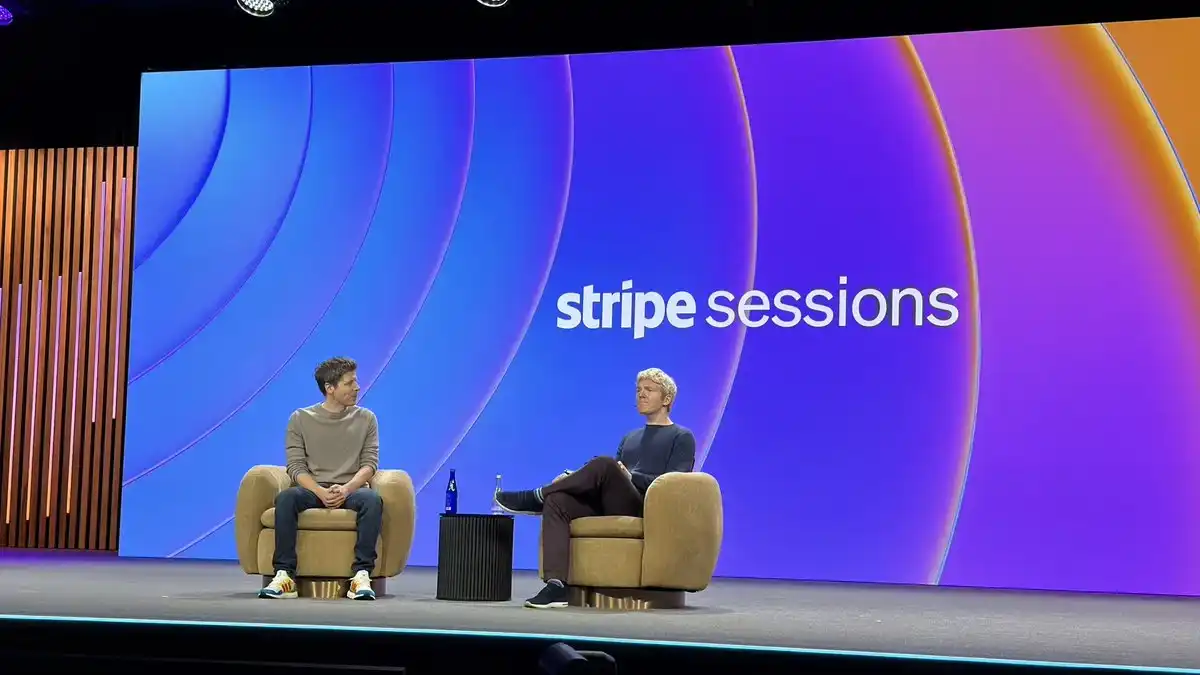
At Stripe's 2026 annual conference, OpenAI CEO Sam Altman joined Stripe CEO Patrick Collison for a fireside chat. Altman shared key insights on the AI revolution, emphasizing that we are in a period of rapid takeoff, with AI capabilities advancing weekly. He outlined OpenAI's evolution from a research lab to a product company and now a large-scale "token factory" – a low-margin, utility-like provider of intelligence. Altman stressed that the most successful AI adopters have CEOs who personally automate workflows, driving organizational change. A significant shift is the rise of the "idea person." Altman now actively invests in founders with deep product insight but no coding skills, as AI tools enable them to build. He advocates for "suspension of disbelief" in investing, planning long-term (e.g., 20-year infrastructure deals) while focusing on a clear 2-year product roadmap. Beyond products, Altman is most excited about AI accelerating scientific discovery, shortening decade-long research cycles in complex diseases and driving breakthroughs in materials science and energy. He predicts the first profitable fusion reactor could emerge within five years, spurred by AI's compute demands. Finally, Altman defended OpenAI's philosophy of iterative public deployment over elite control, believing democratizing AI access is crucial to avoid centralized power and unlock global innovation.

Source: Stripe

On April 30, 2026, OpenAI CEO Sam Altman took the stage at Stripe's annual conference for an in-depth fireside chat with Stripe CEO Patrick Collison.

The two have known each other for nearly two decades, and their conversation covered the inflection point in AI development, OpenAI's management philosophy, changes in the startup ecosystem, and the profound impact of AI on science and humanity's future.
During the conversation, Altman dropped a series of heavyweight viewpoints:

  • We are indeed in the midst of some kind of takeoff. AI is developing very fast; it's a little different every week.

  • OpenAI has undergone three evolutions: from a research lab, to a product company, and now to a large-scale token factory.

  • The revenge of the "Ideas People" is here: I am now willing to invest in people who deeply understand user needs and have product insight but can't write code at all.

  • What excites me most about AI is not products, nor business models, but the potential to accelerate scientific discovery.

We Are in the Midst of Takeoff

When does the Singularity begin?

Patrick Collison offered an interesting perspective in his opening: treat this year as the first year of the Singularity.

In response, Sam Altman said, "We are indeed in the midst of some kind of takeoff." From the second half of last year to the beginning of this year, AI model capabilities broke through a certain tipping point—especially in the field of code generation.

"It's a little different every week, things are moving very fast."

A Shift in Perception

Currently, Codex (OpenAI's programming model branch) is having its "moment."

While the most dedicated users are still programmers, a large number of users without programming backgrounds are also flocking to it, trying to use it to handle all their daily computer-based work.
Altman believes people will undergo a more widespread cognitive shift: realizing how much of their time is wasted on computer drudgery.

Switching messaging apps, copying and pasting content, handling repetitive emails that could obviously be automated—these fragmented tasks are quietly eroding people's focus and work experience. When most people truly realize AI can do this "grunt work" for them, the feeling will be revolutionary.

Who's Really Using AI Well?

It Only Counts if the CEO Gets Hands-On

After observing many enterprise clients, Altman concluded: The companies most successfully applying AI often share a common characteristic—the CEO personally gets hands-on.

Not symbolically announcing "we will embrace AI," but actually building automated workflows themselves, then demanding the team follow. He gave the example of Shopify's CEO: he was one of the earliest hands-on CEOs Altman had seen, directly driving the entire company to integrate AI into all processes.

OpenAI is now trying a new experiment: sending an engineer to directly accompany a company's CEO, helping them automate as many workflows as possible.

If you can make a company's leadership truly feel the power of AI, that feeling will permeate the entire organization like a fractal.

OpenAI's Three Evolutions

Sam Altman candidly shared the management evolution inside OpenAI, which is essentially a microcosm of AI's industrialization path.

Three Stages of Transformation

The first stage, a pure research lab, aiming to figure out how to build AGI when everyone thought it was crazy.

The second stage, while continuing research, needed to learn how to be a product company.

The third stage, which is now being entered: on top of the previous two, building a large-scale token factory. Altman compared it to a new type of utility, like electricity; the world needs massive, cheap, accessible intelligence.

Vision of Low-Margin Infrastructure

Addressing doubts about "will AI giants monopolize everything," Altman used Stripe as a reference point: Stripe and its customers are highly aligned; the more Stripe earns, the better its customers do, a positive infrastructure relationship.

Altman hopes OpenAI can ultimately play a similar role: an intelligence infrastructure provider, even if perpetually low-margin, as long as it's big enough, fast enough, and deeply tied to the success of the world's distributed economy.

He also acknowledged that AI's switching costs are inherently low, making high margins difficult to sustain. The recent large-scale migration of users from competitors to Codex shows that friction for switching will become smaller in the AI era.

Compute Investment: The Most Expensive Infrastructure in History

Regarding massive compute investment, Altman stated: "This will be the most expensive infrastructure project in human history."

Efficiency gains per GPU have exceeded his expectations, but demand growth is even faster. As for how much compute needs to be built? "I don't have a good answer... in some sense, demand is almost unlimited."

OpenAI's Management Philosophy

OpenAI gathers some of the smartest and most unique individuals in the world. Altman revealed his secret is extreme conviction gambling:

  • Concentrate Resources: When training GPT-3, OpenAI threw almost all its compute resources into one project. At the time, people at DeepMind warned this would create a toxic competitive culture; OpenAI's response was: We have conviction, this is the right direction.

  • Shared Vision: Altman believes that even if team members have personal conflicts or clash, their shared belief in "Scale" allows them to sit together and solve problems.

"Directly Managing Hundreds" Communication Style

Asked about any unusual management habits, Altman mentioned: He communicates directly with hundreds of people in the company daily via Slack—not through assistants, but directly himself, with one or two short messages at a time.

This decentralized approach sometimes brings him very valuable information.

The New Paradigm for Startups

"Ideas People" Revenge

Altman developed a deep-seated bias during his YC days: disdain for entrepreneurs who "only have an idea and need a programmer to implement it," thinking it was as absurd as saying "I have a great song idea, just need someone who plays guitar to make it."

But now, "the revenge of the Ideas People has arrived."

Those who deeply understand user needs and have product insight but can't code at all can now quickly build products using AI tools. Altman said he is now very willing to invest in such people.

How to Invest Before the Singularity?

AGI might arrive in three to five years. Is the traditional ten-year investment horizon for venture capital still reasonable?

Altman's answer: Do everything on this timescale with a 'suspension of disbelief.' You can't do nothing just because "the Singularity is coming in three years, we can't see through it." You still have to act as if life will continue.

OpenAI has signed twenty-year power and land agreements but only has a clear grasp of its product roadmap for the next two years.—Make long-term infrastructure investments while staying clear about the near term; that's his answer.

AI is Reshaping Scientific Discovery

What excites Altman most about AI is not products, nor business models, but the potential to accelerate scientific discovery.

He believes this will be this technology's most profound contribution to improving human quality of life.

Tackling Complex Diseases

Through collaboration with the Arc Institute, OpenAI is supporting the use of large biological foundation models like Evo 2 to research complex diseases involving multiple genes, such as cancer and Alzheimer's.
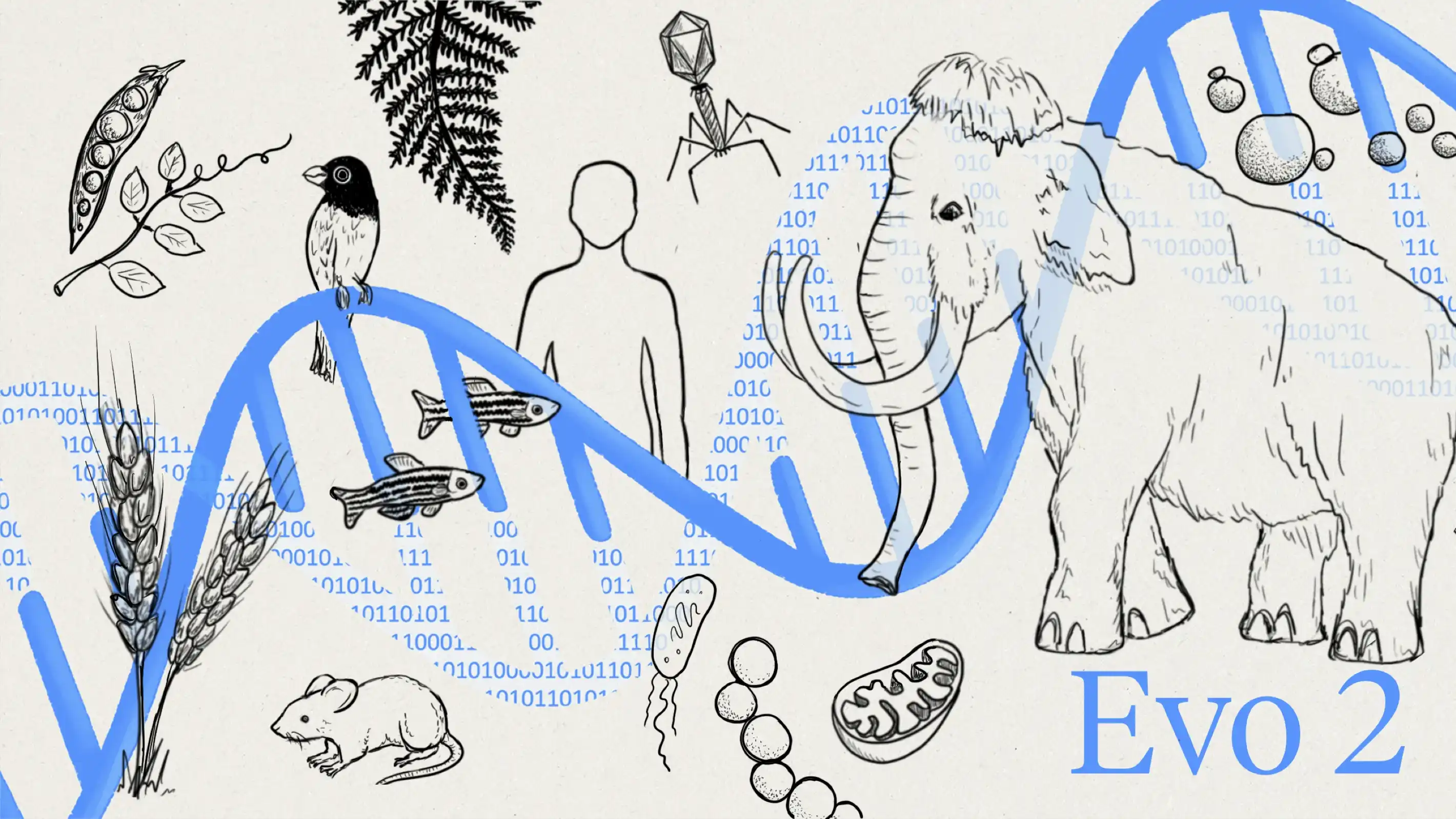
AI is shortening research cycles that originally took ten years down to one year.

Leaps in Energy and Materials

He specifically pointed out a severely underestimated field: materials science.

AI is exceptionally good at finding optimal solutions in vast combinatorial spaces, which will bring breakthroughs in catalyst development, energy efficiency improvements, etc. He expects very rapid progress here, changing all our lives in profound ways.

👉 On energy, Altman boldly predicted: Driven by the demands of AI compute, the first profitable fusion reactor could appear within five years.

Democratization: Sam Altman's Final Stand

At the end of the conversation, Altman discussed the most controversial decision in OpenAI's history: Iterative Deployment.

He recalled that many safety experts advocated locking AI in an "ivory tower," controlled by a select few, before distributing the results to the world.

"That idea made me very uncomfortable." Altman stated: Avoiding concentration of power, making this technology truly belong to the world, is extremely important.

"People will use AI in all sorts of ways, but I believe most people are good, and most will use tools to do amazing things. I think my most important contribution is pushing for this technology to be a democratized technology, accessible and buildable by everyone."


Трендові криптовалюти

Пов'язані питання

QAccording to the article, what is Sam Altman's current stance on investing in founders who lack coding skills?

ASam Altman now expresses a strong willingness to invest in founders who have a deep understanding of user needs and product insight but completely lack coding skills, marking a shift from his earlier bias at Y Combinator. He calls this the 'revenge of the idea people.'

QHow does Sam Altman characterize the current state of AI development in the conversation?

ASam Altman states that 'we are definitely in some kind of takeoff,' with AI developing very rapidly and feeling different week to week, especially after a critical breakthrough in model capabilities from late last year to early this year.

QWhat are the three evolutionary phases that OpenAI has gone through, as described by Sam Altman?

AThe three phases are: 1) A pure research institution focused on figuring out how to build AGI. 2) A phase of learning to be a product company while continuing research. 3) The current phase of building a 'large-scale token factory' or a new type of utility providing abundant, cheap, and accessible intelligence.

QWhat does Sam Altman identify as the most exciting potential of AI, beyond products and business models?

AHe is most excited about AI's potential to accelerate scientific discovery, which he believes will be the technology's most profound contribution to human quality of life, citing progress in complex diseases and material science.

QWhat is the controversial principle that Sam Altman cites as his most important contribution regarding AI's development?

AHe cites 'Iterative Deployment'—the principle of democratizing AI technology by making it widely available for people to use and build upon, rather than keeping it locked in an 'ivory tower' controlled by a small elite, as his most important contribution.

Пов'язані матеріали

After Three Consecutive Quarters of Decline, Can the Crypto Market Find a Window for Stabilization in Q3?

The cryptocurrency market has just concluded its worst-performing quarter since 2022, with total capitalization dropping 12.6% to $2.1 trillion. All core metrics indicate capital is leaving the sector, not just rotating within it. Bitcoin fell 14.2% and Ethereum dropped 25.4% in Q2, breaking their previous correlation with US tech stocks. A key driver is the reversal in US spot Bitcoin ETF flows, which saw a net outflow of approximately $4.67 billion in Q2, including a record monthly outflow near $4.5 billion in June. While recent data suggests long-term holders are accumulating again, sustained ETF outflows mean continued selling pressure. Market focus is now singularly on the Federal Reserve. The upcoming July FOMC meeting is seen as the most critical event for Q3. A dovish signal could support Bitcoin reclaiming a $68,000-$84,000 range, while a hawkish stance might establish a new trading band around $50,000-$56,000. Additionally, regulatory uncertainty persists, with the progress of the crucial *CLARITY Act* stalling in the Senate, reducing its perceived 2026 passage probability to 40-45%. Despite the broad downturn, a few sectors showed growth. Prediction markets saw nominal volume surge 48.7% year-over-year to $113.8 billion, and tokenized collectibles transaction volume rose 143% quarterly to $1.4 billion. The Real-World Asset (RWA) tokenization sector also continued steady growth, now representing ~$28.1 billion in on-chain value. The market's foundation for an extreme crash appears limited, with Bitcoin price hovering near its 200-week moving average. However, the trading paradigm has shifted from narrative-driven speculation to decisions based on price action, policy developments, and interest rate expectations, making a broad sentiment-driven rally unlikely in the near term.

marsbit14 год тому

After Three Consecutive Quarters of Decline, Can the Crypto Market Find a Window for Stabilization in Q3?

marsbit14 год тому

BIT Trading Moment: BTC Still Suppressed by Weekly 200 EMA, Rejection May Restart Decline; Storage and Semiconductors that Surged Last Night Begin Falling in Evening Trading

**Crypto & Stock Market Wrap: Bitcoin Tests Resistance, Stocks Retreat After AI Surge** Bitcoin consolidates around $66,000, facing key resistance near $68,000—an area seen as a major psychological and technical hurdle where previous rallies have failed. Analysts note the cryptocurrency is caught between its 200-week moving average (~$63,333) and 200-week EMA (~$68,328). A clear break above $68k is needed to signal a stronger bullish trend, while a rejection could lead to a retest of $63k support. Market sentiment remains cautious, with low futures open interest pointing to a low-liquidity rebound rather than a full bull market. Bitcoin spot ETFs saw another $203 million inflow. US stock futures pointed lower after a strong Tuesday session led by a massive rebound in semiconductors and memory stocks. The rally was fueled by renewed optimism about AI-driven hardware demand, with Micron, SanDisk, and SK Hynix surging. However, those gains reversed in pre-market trading. Super Micro Computer (SMCI) soared over 20% after hours on strong guidance and a record backlog. Other standouts included Rocket Lab and nuclear energy plays Oklo and X-Energy. Rising oil prices (Brent above $91) and climbing Treasury yields (10-year near 4.64%), however, are reigniting inflation concerns and acting as a headwind for equities. In Asia, markets were mixed. South Korea's KOSPI pared early gains to close slightly higher as semiconductor stocks like SK Hynix gave back initial surges. Japan's Nikkei edged lower as the yen hit a fresh 38-year low against the dollar, raising fears of potential market intervention. Key events to watch include the Samsung Galaxy launch, AMD's AI event, and a slew of major tech earnings from Alphabet, Tesla, and IBM after the close on Wednesday, followed by the ECB meeting and Intel's earnings on Thursday.

marsbit14 год тому

BIT Trading Moment: BTC Still Suppressed by Weekly 200 EMA, Rejection May Restart Decline; Storage and Semiconductors that Surged Last Night Begin Falling in Evening Trading

marsbit14 год тому

Former CFTC Chairman, Circle President Tarbert: Preaching Long-Termism While Cashing Out $30 Million Himself

Former CFTC Chairman and Circle President Heath Tarbert has consistently advocated for a long-term vision in public, urging patience from investors as Circle’s stock price has fallen significantly from its peak. However, it has been revealed that since Circle’s IPO, Tarbert has continuously sold his CRCL shares through pre-arranged trading plans, cashing out approximately $30 million, without making any public market purchases. This contrast between his public messaging and personal actions has drawn criticism. Tarbert joined Circle in July 2023 as Chief Legal Officer, leveraging his regulatory experience to help guide the company through its IPO and expansion. Despite promoting stablecoins as long-term infrastructure, he established a 10b5-1 trading plan just before Circle went public, leading to substantial stock sales over the following year. In March 2026, he initiated another plan to sell more shares. His career trajectory highlights a pattern of moving between high-level regulatory roles and influential positions in the financial sector. After resigning as CFTC Chairman in early 2021, he joined Citadel Securities as Chief Legal Officer just 27 days later, during a period of intense regulatory scrutiny for the firm. He later joined Circle, aiding its efforts to navigate regulatory challenges for its public listing. While Tarbert's expertise in policy and compliance is valuable to companies like Circle, his actions—advocating long-term confidence while personally divesting—raise questions about the alignment between his public statements and his private financial decisions, leaving investors who followed his advice to bear the market risks.

marsbit14 год тому

Former CFTC Chairman, Circle President Tarbert: Preaching Long-Termism While Cashing Out $30 Million Himself

marsbit14 год тому

Gate Research Institute: The 'Wall Street-ization' Wave of Crypto Financial Products – Competition or Integration?

The article titled "Gate Research Institute: Are Crypto Financial Products Sparking a 'Wall Street' Wave—Competition or Convergence?" explores the evolving relationship between the crypto ecosystem and traditional finance (TradFi). The piece begins by reflecting on Bitcoin's original 2009 vision of decentralization, disintermediation, and moving away from banks. It then contrasts this with the 2024 landscape, where key crypto assets like Bitcoin are increasingly held through Wall Street products like ETFs issued by giants like BlackRock. The article questions whether this signifies that TradFi is systematically taking over the rights to issue, price, custody, and distribute crypto financial assets. The core argument is that this is not a zero-sum takeover but rather a bidirectional convergence where each side addresses the other's weaknesses. Crypto offers 24/7 global markets, programmable settlement, and open access but lacks compliant channels, institutional-grade custody, deep fiat liquidity, and mainstream distribution. TradFi possesses these but is constrained by legacy systems, limited operating hours, and slow settlement. Two primary convergence paths are highlighted: * **Path A (CEX to TradFi):** Exemplified by Gate, which has progressed from offering tokenized stocks and CFDs to providing direct, real stock trading (US, Hong Kong, South Korea) within its platform, using USDT. * **Path B (TradFi to Crypto):** Exemplified by Robinhood, which has integrated crypto trading, acquired exchanges like Bitstamp, and is moving traditional assets like stocks onto the blockchain via tokenization and its own Layer 2. Both paths are ultimately competing to become the next-generation, unified financial account—a "super account" where users can seamlessly trade cryptocurrencies, stocks, ETFs, RWA (Real World Assets), and tokenized treasury products in one interface. The growth of RWA and tokenized treasuries (e.g., BlackRock's BUIDL) is presented as the asset-layer fusion, providing stable, yield-bearing assets on-chain and acting as a bridge between the two worlds. In conclusion, the "Wall Street-ization" of crypto is framed as a mutual transformation. Decentralized ideals persist in the protocol layer, while at the application layer, a more efficient, global, and accessible unified capital market is emerging from this convergence. The future competition lies not between crypto exchanges and stockbrokers, but between platforms vying to offer the most comprehensive asset coverage, liquidity, and user experience within a single account.

marsbit14 год тому

Gate Research Institute: The 'Wall Street-ization' Wave of Crypto Financial Products – Competition or Integration?

marsbit14 год тому

Торгівля

Спот

Популярні статті

Як купити ERA

Ласкаво просимо до HTX.com! Ми зробили покупку Caldera (ERA) простою та зручною. Дотримуйтесь нашої покрокової інструкції, щоб розпочати свою криптовалютну подорож.Крок 1: Створіть обліковий запис на HTXВикористовуйте свою електронну пошту або номер телефону, щоб зареєструвати обліковий запис на HTX безплатно. Пройдіть безпроблемну реєстрацію й отримайте доступ до всіх функцій.ЗареєструватисьКрок 2: Перейдіть до розділу Купити крипту і виберіть спосіб оплатиКредитна/дебетова картка: використовуйте вашу картку Visa або Mastercard, щоб миттєво купити Caldera (ERA).Баланс: використовуйте кошти з балансу вашого рахунку HTX для безперешкодної торгівлі.Треті особи: ми додали популярні способи оплати, такі як Google Pay та Apple Pay, щоб підвищити зручність.P2P: Торгуйте безпосередньо з іншими користувачами на HTX.Позабіржова торгівля (OTC): ми пропонуємо індивідуальні послуги та конкурентні обмінні курси для трейдерів.Крок 3: Зберігайте свої Caldera (ERA)Після придбання Caldera (ERA) збережіть його у своєму обліковому записі на HTX. Крім того, ви можете відправити його в інше місце за допомогою блокчейн-переказу або використовувати його для торгівлі іншими криптовалютами.Крок 4: Торгівля Caldera (ERA)Легко торгуйте Caldera (ERA) на спотовому ринку HTX. Просто увійдіть до свого облікового запису, виберіть торгову пару, укладайте угоди та спостерігайте за ними в режимі реального часу. Ми пропонуємо зручний досвід як для початківців, так і для досвідчених трейдерів.

502 переглядів усьогоОпубліковано 2025.07.17Оновлено 2026.06.02

Як купити ERA

Обговорення

Ласкаво просимо до спільноти HTX. Тут ви можете бути в курсі останніх подій розвитку платформи та отримати доступ до професійної ринкової інформації. Нижче представлені думки користувачів щодо ціни ERA (ERA).

活动图片












