Ripple Survey Finds Mass Adoption Momentum — ‘The Digital Asset Revolution Is Happening Now’

bitcoinistОпубліковано о 2026-03-20Востаннє оновлено о 2026-03-20

Анотація

Ripple's 2026 global survey of over 1,000 finance leaders reveals strong momentum for crypto adoption, declaring the "digital asset revolution is happening now." Key findings show 72% believe digital asset solutions are essential to remain competitive. Stablecoins are a leading use case, with 74% citing benefits for cash-flow efficiency and faster settlement. Fintechs are the primary drivers, with many already using digital assets for payments and customer wallets. Interest in asset tokenization is rising, with custody solutions being a top priority (89%). When choosing partners, regulatory clarity (40%) and security (37%) are critical. Most institutions prefer partners that handle integrated custody and compliance to avoid holding stablecoin balances directly.

Ripple on Thursday released findings from a global survey of more than 1,000 finance leaders, and concluded that the “digital asset revolution is happening now.”

The study, conducted at the start of 2026 and spanning banks, asset managers, fintechs, and corporate treasuries, finds strong momentum behind crypto adoption with stablecoins and tokenization emerging as leading use cases.

Ripple Finds Fintechs Driving Crypto Use

According to Ripple, 72% of respondents believe finance leaders must offer a digital asset solution to remain competitive. Among specific applications, stablecoins drew the most enthusiasm.

74% of participants said stablecoins can improve cash‐flow efficiency and unlock trapped working capital in addition to enabling faster settlement—benefits firms see as competitive differentiators.

Fintech firms in the sample stand out as the early adopters and innovators. Ripple’s survey shows fintechs are more likely than banks or corporates to already use digital assets in treasury and payments, and to roll out customer‐facing crypto wallets.

Notably, 31% of fintech respondents said they use stablecoins to collect payments for customers, and 29% accept payments directly in stablecoins. A comparable share relies on third‐party custodians or infrastructure providers to secure assets.

Fintechs are also more inclined to build proprietary solutions—47% prefer in‐house development—while most corporates (74%) expect to partner with external providers for implementation.

Shift Toward Tokenized Assets And Stablecoins

The survey further shows that interest in tokenizing financial assets is rising among banks and asset managers, and that most institutions evaluating tokenization strategies prioritize custody solutions. Of those assessing tokenization partners, 89% ranked digital asset storage and custody as a top priority.

Token servicing and lifecycle management are also highly valued by banks (82%), while asset managers place strong emphasis on primary distribution (80%). Advisory services matter as well: 85% of banks cited pre‐issuance structuring consultancy as important, compared with 76% of asset managers.

When choosing partners, respondents prioritized regulatory clarity (40%), security and safekeeping (37%), compliance capabilities (30%), and price volatility management (29%).

Security certifications and operational support emerged as near‐universal requirements. Ripple reports that 97% of participants regard certifications such as ISO and SOC II as important or very important.

Responsive post‐integration technical support also ranks very high at 88%, reflecting institutions’ operational expectations. Deep industry experience (80%) and financial strength (79%) are additional decisive factors for buyers vetting infrastructure partners.

The survey also highlights a practical preference among institutions exploring stablecoin collections or payments: 57% said they want a partner that offers integrated custody, orchestration, and compliance so the institution itself can avoid holding stablecoin balances.

Ripple framed the results as an early glimpse into broader market alignment around digital assets. “This early preview of Ripple’s 2026 survey reveals a market moving with greater alignment and intention,” the company said.

The daily chart shows XRP price testing the $1.4 support as of Thursday. Source: XRPUSDT on TradingView.com

While Bitcoin (BTC) and Ethereum (ETH) both saw 3% drops over the same period, XRP, the cryptocurrency linked to Ripple, was trading at $1.43 at the time of writing, showing a minor 0.7% retracement over the 24-hour period.

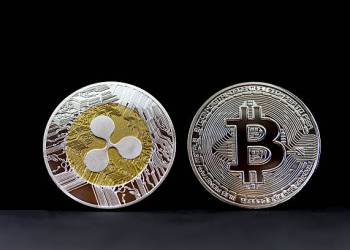
Featured image from OpenArt, chart from TradingView.com

Пов'язані питання

QWhat percentage of respondents in Ripple's survey believe that finance leaders must offer a digital asset solution to remain competitive?

A72% of respondents believe finance leaders must offer a digital asset solution to remain competitive.

QAccording to the survey, which type of firm stands out as the early adopters and innovators in using digital assets for treasury and payments?

AFintech firms stand out as the early adopters and innovators, being more likely than banks or corporates to use digital assets in treasury and payments and to roll out customer-facing crypto wallets.

QWhat is the top priority for 89% of institutions when evaluating tokenization partners?

A89% of institutions evaluating tokenization partners ranked digital asset storage and custody as a top priority.

QWhat are the two most important factors for institutions when choosing a digital asset infrastructure partner, as revealed by the survey?

AThe two most important factors are regulatory clarity (40%) and security and safekeeping (37%).

QWhat practical preference did 57% of institutions express regarding stablecoin collections or payments?

A57% of institutions said they want a partner that offers integrated custody, orchestration, and compliance so they can avoid holding stablecoin balances.

Пов'язані матеріали

Google and Amazon Simultaneously Invest Heavily in a Competitor: The Most Absurd Business Logic of the AI Era Is Becoming Reality

In a span of four days, Amazon announced an additional $25 billion investment, and Google pledged up to $40 billion—both direct competitors pouring over $65 billion into the same AI startup, Anthropic. Rather than a typical venture capital move, this signals the latest escalation in the cloud wars. The core of the deal is not equity but compute pre-orders: Anthropic must spend the majority of these funds on AWS and Google Cloud services and chips, effectively locking in massive future compute consumption. This reflects a shift in cloud market dynamics—enterprises now choose cloud providers based on which hosts the best AI models, not just price or stability. With OpenAI deeply tied to Microsoft, Anthropic’s Claude has become the only viable strategic asset for Google and Amazon to remain competitive. Anthropic’s annualized revenue has surged to $30 billion, and it is expanding into verticals like biotech, positioning itself as a cross-industry AI infrastructure layer. However, this funding comes with constraints: Anthropic’s independence is challenged as it balances two rival investors, its safety-first narrative faces pressure from regulatory scrutiny, and its path to IPO introduces new financial pressures. Globally, this accelerates a "tri-polar" closed-loop structure in AI infrastructure, with Microsoft-OpenAI, Google-Anthropic, and Amazon-Anthropic forming exclusive model-cloud alliances. In contrast, China’s landscape differs—investments like Alibaba and Tencent backing open-source model firm DeepSeek reflect a more decoupled approach, though closed-source models from major cloud providers still dominate. The $65 billion bet is ultimately about securing a seat at the table in an AI-defined future—where missing the model layer means losing the cloud war.

marsbit4 год тому

Google and Amazon Simultaneously Invest Heavily in a Competitor: The Most Absurd Business Logic of the AI Era Is Becoming Reality

marsbit4 год тому

Computing Power Constrained, Why Did DeepSeek-V4 Open Source?

DeepSeek-V4 has been released as a preview open-source model, featuring 1 million tokens of context length as a baseline capability—previously a premium feature locked behind enterprise paywalls by major overseas AI firms. The official announcement, however, openly acknowledges computational constraints, particularly limited service throughput for the high-end DeepSeek-V4-Pro version due to restricted high-end computing power. Rather than competing on pure scale, DeepSeek adopts a pragmatic approach that balances algorithmic innovation with hardware realities in China’s AI ecosystem. The V4-Pro model uses a highly sparse architecture with 1.6T total parameters but only activates 49B during inference. It performs strongly in agentic coding, knowledge-intensive tasks, and STEM reasoning, competing closely with top-tier closed models like Gemini Pro 3.1 and Claude Opus 4.6 in certain scenarios. A key strategic product is the Flash edition, with 284B total parameters but only 13B activated—making it cost-effective and accessible for mid- and low-tier hardware, including domestic AI chips from Huawei (Ascend), Cambricon, and Hygon. This design supports broader adoption across developers and SMEs while stimulating China's domestic semiconductor ecosystem. Despite facing talent outflow and intense competition in user traffic—with rivals like Doubao and Qianwen leading in monthly active users—DeepSeek has maintained technical momentum. The release also comes amid reports of a new funding round targeting a valuation exceeding $10 billion, potentially setting a new record in China’s LLM sector. Ultimately, DeepSeek-V4 represents a shift toward open yet realistic infrastructure development in the constrained compute landscape of Chinese AI, emphasizing engineering efficiency and domestic hardware compatibility over pure model scale.

marsbit5 год тому

Computing Power Constrained, Why Did DeepSeek-V4 Open Source?

marsbit5 год тому

Торгівля

Спот
Ф'ючерси
活动图片