Raising $82.5 Million: What is Superstate, Built by Compound Founder?

marsbitОпубліковано о 2026-01-23Востаннє оновлено о 2026-01-23

Анотація

Superstate, founded by Compound's Robert Leshner, has raised $82.5 million in a Series B round led by Bain Capital Crypto and Distributed Global. The real-world asset (RWA) tokenization platform plans to expand from tokenized treasury products to a full on-chain equity issuance layer on Ethereum and Solana. Launched in 2023, Superstate initially focused on tokenized short-term U.S. government bond funds. It has since introduced additional products, including a crypto carry fund, and registered a digital transfer agent with the SEC. Its “Opening Bell” platform enables compliant, native issuance of tokenized stocks on blockchain networks, with companies like Galaxy and Exodus already participating. Superstate’s AUM now exceeds $1.2 billion. The company aims to bridge traditional finance with on-chain infrastructure, improving settlement speed, liquidity, and capital efficiency. While early adoption is largely institutional, tokenized assets are increasingly integrated into DeFi for collateral and lending, signaling broader functional use in digital finance ecosystems.

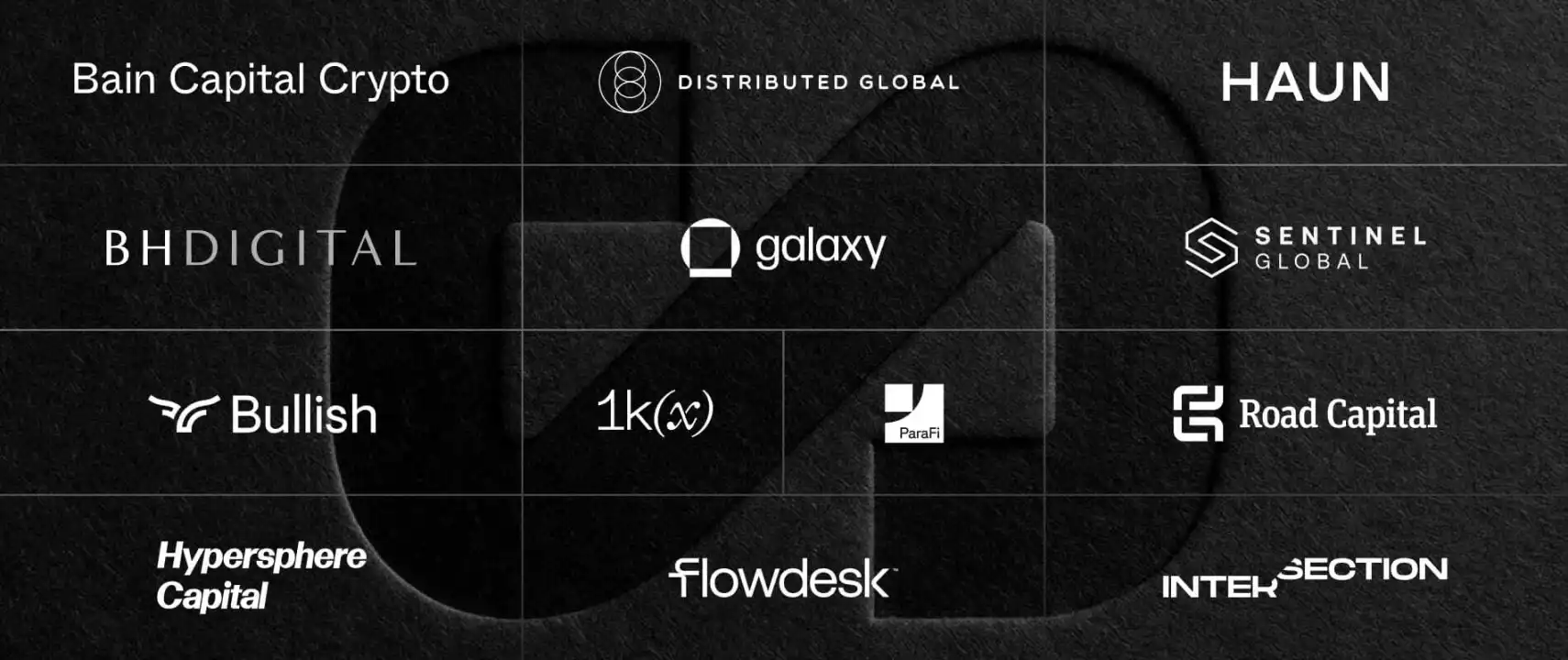
On January 22, Superstate, an RWA tokenized asset management platform founded by Compound creator Robert Leshner, announced the completion of an $82.5 million Series B funding round. The round was led by Bain Capital Crypto and Distributed Global, with participation from Haun Ventures, Brevan Howard Digital, Galaxy Digital, Sentinel Global, Bullish, Hypersphere Capital, Flowdesk, Intersection, and existing investors 1kx, ParaFi, and Road Capital.

Officials stated that this round of funding will be used to expand its business from tokenized treasury products to a fully on-chain stock issuance layer on Ethereum and Solana. Additionally, the company will continue to invest in regulated market infrastructure, including compliant issuance, settlement, and shareholder record-keeping systems, and expand its Opening Bell platform and transfer agent infrastructure to support more issuers and distribution channels.
What is Superstate?

In 2023, Compound founder Robert Leshner filed documents with the U.S. Securities and Exchange Commission (SEC) for his new company "Superstate," which would use Ethereum as an auxiliary record-keeping tool to create a short-term government bond fund. Superstate's fund would invest in "ultra-short-term government securities," including U.S. Treasuries, government agency securities, and other government-backed instruments, and would rely on traditional Wall Street "transfer agents" to maintain ownership records of fund holders.

In June, Superstate announced the completion of a $4 million seed funding round led by ParaFi, Cumberland, and 1kx.

In November of the same year, Superstate completed the first close of its Series A funding round, raising $14 million. The round was co-led by Distributed Global and CoinFund, with participation from Breyer Capital, Galaxy, Arrington Capital, Road Capital, CMT Digital, Folius Ventures, Nascent, Hack VC, Modular Capital, and Department of XYZ.

In February 2024, it launched a tokenized fund holding short-term U.S. Treasuries. In July, Superstate launched a new tokenized fund, the Superstate Crypto Carry Fund (USCC). This fund will use a "cash and carry" investment strategy to generate yield by purchasing spot Bitcoin and Ethereum and holding equivalent short positions or selling BTC and ETH futures to generate returns for holders. The spot assets are held by custody partner Anchorage Digital.

Superstate's Tokenization Development

In March 2025, Superstate announced that its digital transfer agent company, Superstate Services LLC, had registered with the SEC, a move aimed at connecting tokenized assets with the existing financial regulatory framework.

After this, benefiting from the U.S. push for RWA tokenization, Superstate's progress accelerated rapidly. The company first launched the Opening Bell platform, allowing SEC-registered public stocks to be issued and traded directly on blockchain networks, initially supporting Solana. Opening Bell supports the native issuance of compliant, regulated stocks that can interact directly with crypto wallets, DeFi protocols, and on-chain markets.

Subsequently, several companies chose to issue tokenized stocks on Superstate, including Galaxy's tokenized stock GLXY; U.S.-listed self-custody wallet company Exodus also plans to partner with Superstate to create common stock tokens, digitally representing Exodus' Class A shares; Solana treasury company Forward Industries (FORD) intends to tokenize its holdings of Forward Industries common shares. It also plans to partner with Drift, Kamino, and Jupiter Lend (three of the largest lending protocols on Solana) to use the tokenized FORD shares as eligible collateral; Ethereum treasury company SharpLink Gaming partnered with Superstate to issue tokenized stock SBET directly on the Ethereum blockchain.

In late 2025, Superstate launched a new blockchain-based service for conducting issuance programs directly on Ethereum and Solana. This service will enable companies to raise capital by issuing on-chain securities, including tokenized versions of their existing SEC-registered shares or new share classes. The first issuers are expected to go live in 2026. Investors will pay in stablecoins and receive tokenized assets.

The Series B funding round at the beginning of 2026 brings Superstate's total funding to over $100 million. According to its website, its Assets Under Management (AUM) now exceed $1.2 billion.

The Tokenization Process in 2026

The main theme of capital market infrastructure in 2026 is clear: faster settlement, higher liquidity, greater transparency, and lower capital requirements. Tokenization is moving from concept to practice at this time because the on-chain track is pulling issuance, distribution, custody, settlement, and asset reuse into the same set of programmable data and processes, with participants beginning to make decisions based on efficiency and verifiable results.

Incremental on-chain channels will emerge first on the financing side. In the short term, a dual-track model with traditional markets and on-chain markets operating in parallel will be more common. Traditional trading platforms handle deep liquidity, while on-chain markets provide more direct reach, faster distribution and settlement, and more flexible issuance structures. As compliant modules mature, this type of on-chain financing will expand from a few pilot projects to more scenarios like IPOs, additional issuances, and secondary offerings.

The key change on the asset side is the realization of functionality. Truly tokenized stocks and funds will not remain merely holding certificates but will gradually enter the DeFi ecosystem of collateral, lending, and composable strategies, moving traditional assets from isolated account structures to a composable on-chain capital market, thereby improving capital efficiency. However, this will also raise the requirements for compliance, risk control, clearing responsibilities, and technical security.

Stablecoins will become the engine driving demand for tokenized funds. As the scale of stablecoins expands, issuers and holders will have a stronger need for highly liquid, auditable, risk-controlled, and yield-generating on-chain assets. Therefore, tokenized short-duration treasury funds and money market-like products are more likely to become standard components for on-chain cash management and collateral. On the institutional side, custodial DeFi treasuries will become the main entry point, packaging multi-chain, multi-protocol, and 24/7 risk control into usable strategy interfaces, reducing operational and management costs for institutions.

The distribution end will continue to concentrate around super-apps. Wallets and trading platforms integrate payments, trading, yield, investment, and custody into a single product interface, with tokenized assets acting as connectors, helping users manage cash and long-term investments within the same system. For issuers and asset managers, the change in the distribution landscape is more critical. Those who can adapt early to the tokenized form, compliant transfer logic, and on-chain usability will more easily enter the supply pools of these super-apps and capture new growth.

Companies like Superstate may be among the first to reap significant rewards from the U.S. push for RWA tokenization. However, it seems the connection with ordinary investors will remain relatively weak in the short term, as early products are mostly targeted at institutions and accredited investors. Ordinary users primarily access them indirectly through wallets, trading platforms, and other entry points, and what they actually perceive is often not tokenization itself.


Пов'язані питання

QWhat is the founder of Superstate and what is his previous notable project?

AThe founder of Superstate is Robert Leshner, who is also the founder of the well-known DeFi lending protocol, Compound.

QWhat was the total amount raised in Superstate's Series B funding round and who were the lead investors?

ASuperstate raised $82.5 million in its Series B funding round, which was co-led by Bain Capital Crypto and Distributed Global.

QWhat is the primary business focus of Superstate as an RWA tokenization platform?

ASuperstate is a real-world asset (RWA) tokenization platform that focuses on creating tokenized funds, initially for short-term government securities like U.S. Treasuries, and has expanded to an on-chain equity issuance layer for stocks on Ethereum and Solana.

QWhat significant regulatory milestone did Superstate achieve in March 2025?

AIn March 2025, Superstate's digital transfer agent company, Superstate Services LLC, successfully registered with the U.S. Securities and Exchange Commission (SEC).

QWhat is the name of the platform Superstate launched for issuing and trading SEC-registered public stocks directly on a blockchain?

ASuperstate launched the 'Opening Bell' platform, which allows for the direct issuance and trading of SEC-registered public stocks on blockchain networks, with initial support for Solana.

Пов'язані матеріали

Must-Watch Events Next Week|CLARITY Act Could Face Senate Vote; SpaceX, Circle to Report Earnings (8.3-8.9)

**Summary: Key Events and Developments to Watch (August 3-9)** The upcoming week is marked by significant financial disclosures, key legislative deadlines, and notable product updates. **Major Financial Events:** Several companies are scheduled to release their Q2 2026 earnings. American Bitcoin (ABTC) will report on August 3, followed by SpaceX and Hut 8 Mining Corp. on August 4, and Circle on August 5. Notably, a significant portion of SpaceX shares (up to 12% of total shares) will be unlocked on August 6 following their earnings release. **Key Legislative Deadline:** The U.S. Senate faces an August 7 deadline to secure 60 votes for the CLARITY Act, a bipartisan bill aiming to establish a federal regulatory framework for cryptocurrencies. The Senate may hold a full vote on the bill during the week. **Economic Data:** The U.S. July Non-Farm Payrolls report will be released on August 7, providing crucial labor market data. **Technology & Product Updates:** * **Shutdowns:** DeFi portfolio tracker Zapper and wallet app Ctrl Wallet will cease operations on August 3. * **Upgrades:** LayerZero will deprecate its v1 relayers on August 3. XRP Ledger's new version 3.3.0, featuring five new functions, is expected next week. * **AI:** Elon Musk announced that the advanced Grok 4.6 AI model is set for release around August 7. * **Bitcoin:** The BIP-110 forced signaling for a potential Bitcoin network change is scheduled to begin around August 8. **Other Notable Events:** Chinese robotics firm Unitree Tech has set its preliminary price inquiry for its IPO for August 5. South Korean exchange Upbit will delist AQT and AERGO tokens on August 3.

marsbit2 год тому

Must-Watch Events Next Week|CLARITY Act Could Face Senate Vote; SpaceX, Circle to Report Earnings (8.3-8.9)

marsbit2 год тому

Stocks Are Plummeting More Sharply Than Cryptocurrencies. Where Has the Money Gone?

Stock Markets Plunge Deeper Than Cryptocurrencies: Where Did the Money Go? In late July, Seoul's Kospi index triggered circuit breakers for two consecutive days, plummeting over 40% from its June high. The collapse was led by heavyweight stocks like SK Hynix, whose record profits still disappointed investors, and devastating leveraged ETFs, with one major product losing over 83% of its value. This signaled a global, forced deleveraging targeting the most crowded trades. Interestingly, while stocks exhibited extreme volatility akin to crypto markets, Bitcoin rose nearly 15% in July after a prior steep drop. Analysis shows the money fleeing equities did not flow into Bitcoin. Instead, Bitcoin had already absorbed its sell-off in May-June, when U.S. spot Bitcoin ETFs saw historic outflows. The true safe-haven beneficiary was gold, whose price rose over 20% year-on-year, highlighting a decoupling between Bitcoin and gold as "digital gold." The sell-off was a targeted unwinding of leveraged positions in tech and semiconductors, accelerated by broker-dealer risk management and shifts in the AI narrative, including new competition from Chinese memory chipmakers. The retreat path was clear: from high-valuation tech stocks to cash and U.S. Treasuries, then to gold. For Bitcoin to attract sustained institutional inflows, conditions like eased global liquidity pressure, a "soft-landing" Fed rate cut, and U.S. regulatory clarity via legislation like the stalled CLARITY Act are needed. Currently, Bitcoin is not a safe haven but an already-cleared asset. Its low correlation with tech stocks, however, makes it a potential diversification play for institutional portfolios once the storm passes. The money isn't here yet, but the positioning is underway.

marsbit2 год тому

Stocks Are Plummeting More Sharply Than Cryptocurrencies. Where Has the Money Gone?

marsbit2 год тому

In Conversation with Ray Dalio: We Are Currently in an AI Bubble, with 1% of My Portfolio in Bitcoin

Ray Dalio, founder of Bridgewater Associates, warns in an interview that the current AI boom shows classic bubble characteristics, which could lead to significant economic downturns as seen in past cycles like 1929 or 2000. He explains that speculative enthusiasm, fueled by debt and overvaluation, often precedes a crash when rising rates or taxation force asset sales, causing widespread losses and recession. Dalio also outlines his "Big Cycle" theory, describing an approximate 80-year pattern where widening wealth gaps, massive government deficits, and shifting geopolitical power (like China's rise) create internal conflict and global instability. He emphasizes that we are in a late-cycle, transitional phase where traditional powers like the US and UK face decline. For personal wealth protection, Dalio advises diversification beyond cash into assets like stocks, bonds, real estate, and particularly gold, which he prefers over Bitcoin. While he holds about 1% of his portfolio in Bitcoin as a non-printable hard asset, he views gold as more secure from technological or governmental threats. Regarding AI's impact, Dalio believes it will disproportionately benefit capital owners, worsening inequality by replacing both physical and cognitive labor. He suggests that human intuition and emotional intelligence, combined with AI, will be key for future workers. On taxation, Dalio argues that wealth taxes are impractical and risk triggering asset sell-offs, reducing productive investment. He points to the UK as a cautionary example of debt, low productivity, and political strife. Geopolitically, Dalio foresees a more regionalized world, with the US showing weakness in prolonged conflicts like with Iran, akin to past imperial declines. The ideal outcome, he suggests, is coexisting powerful blocs (e.g., Americas, China-Asia Pacific) without major war.

marsbit5 год тому

In Conversation with Ray Dalio: We Are Currently in an AI Bubble, with 1% of My Portfolio in Bitcoin

marsbit5 год тому

Торгівля

Спот
活动图片




