pump.fun's New Feature Brings 'Black Mirror' Into Reality

marsbitОпубліковано о 2026-06-16Востаннє оновлено о 2026-06-16

Анотація

The article begins by recounting a dark fictional story from *Black Mirror* (Season 7, Episode 1 "Common People"), where a man is forced to perform humiliating tasks online to pay for his wife's life-sustaining medical subscription. It then draws a parallel to a new real-world feature on the crypto platform pump.fun called "Pump.fun Go," which allows users to post and complete paid bounty tasks. This feature gained mainstream attention, often negatively, through extreme examples. A prominent case involved a bounty of 40 SOL (~$2,600) offered to permanently tattoo "$bountywork" on one's forehead. An Indian man completed the task, stating the money "changed his life," and later earned significantly more from a related meme coin. Another bounty paid 200 SOL (~$14,000) for a "bounty.fun" forehead tattoo, with the participant simply stating, "We need the money." The article highlights how this system can amplify darkness, citing the dev behind $Bountywork who spent thousands on bounties for attention-grabbing stunts like eating bugs or drinking hot sauce for small sums. It compares this to past tragic live-streaming incidents where people harmed themselves for money, noting regulation cannot stop those in desperate need. However, it also points to positive, altruistic bounties that have emerged, such as organizing anti-work rallies in New York, performing random acts of kindness for strangers, organizing community food drives, or even helping an elderly person cross the street....

Black Mirror Season 7, Episode 1, "Common People," tells this story:

Mike, a welder, and Amanda, a teacher, are a loving couple trying to conceive. Unfortunately, Amanda is diagnosed with an inoperable brain tumor.
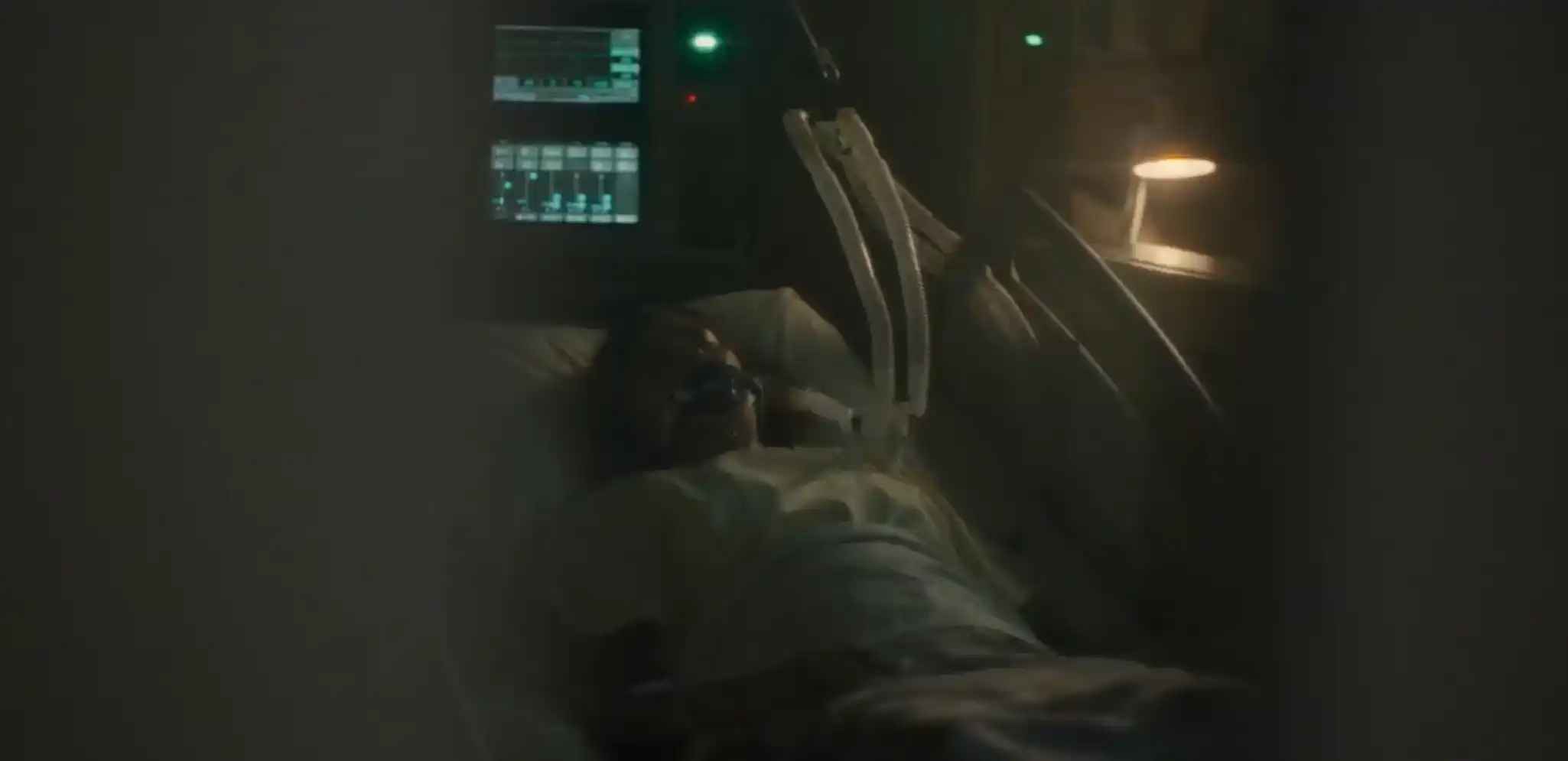
Tech company Rivermind offers a solution: replace the damaged parts with synthetic brain tissue. The surgery is free, but Amanda's life thereafter will depend on the company's servers, with a monthly subscription fee of $300. With no other choice, Mike signs the agreement.
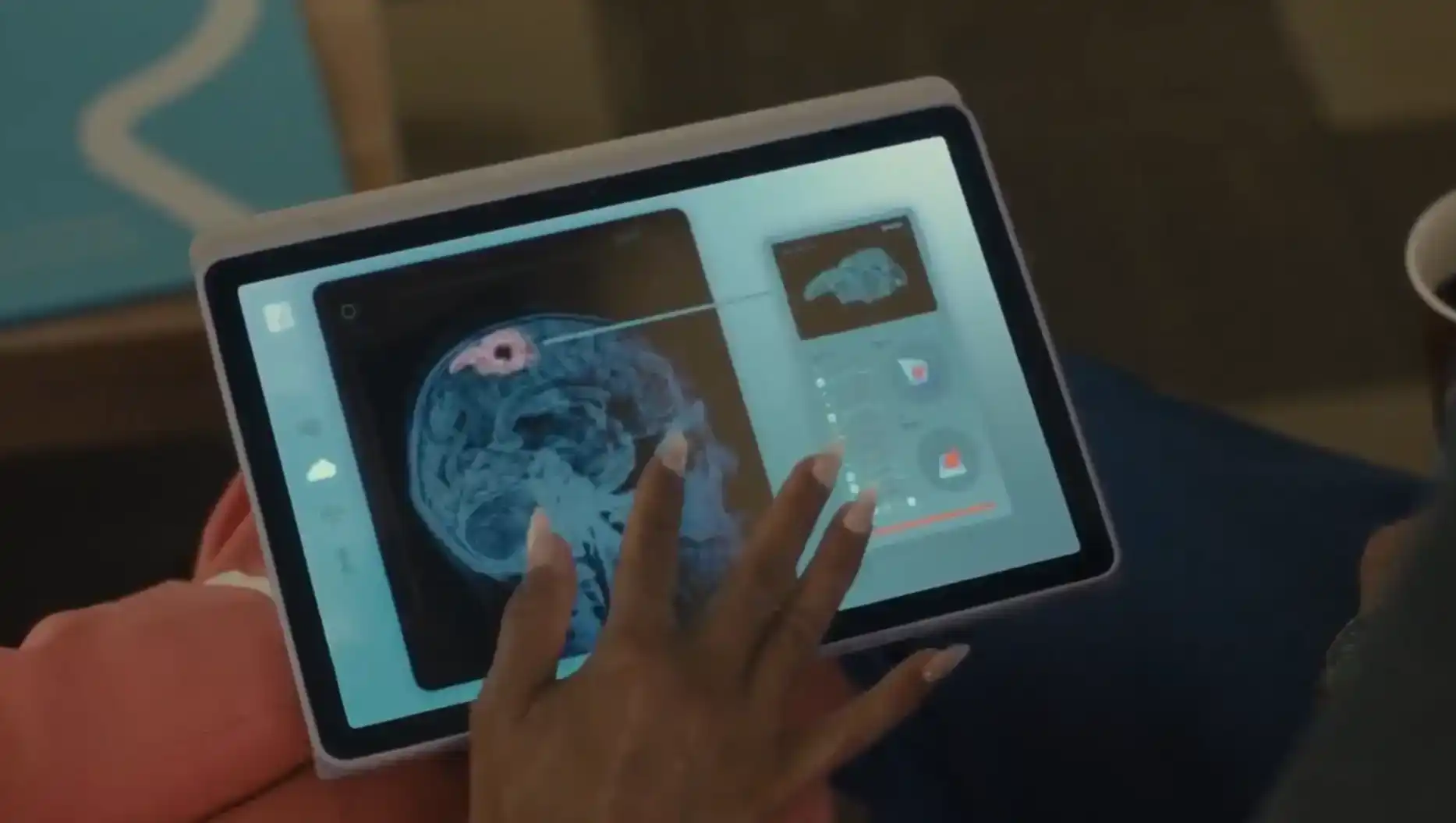
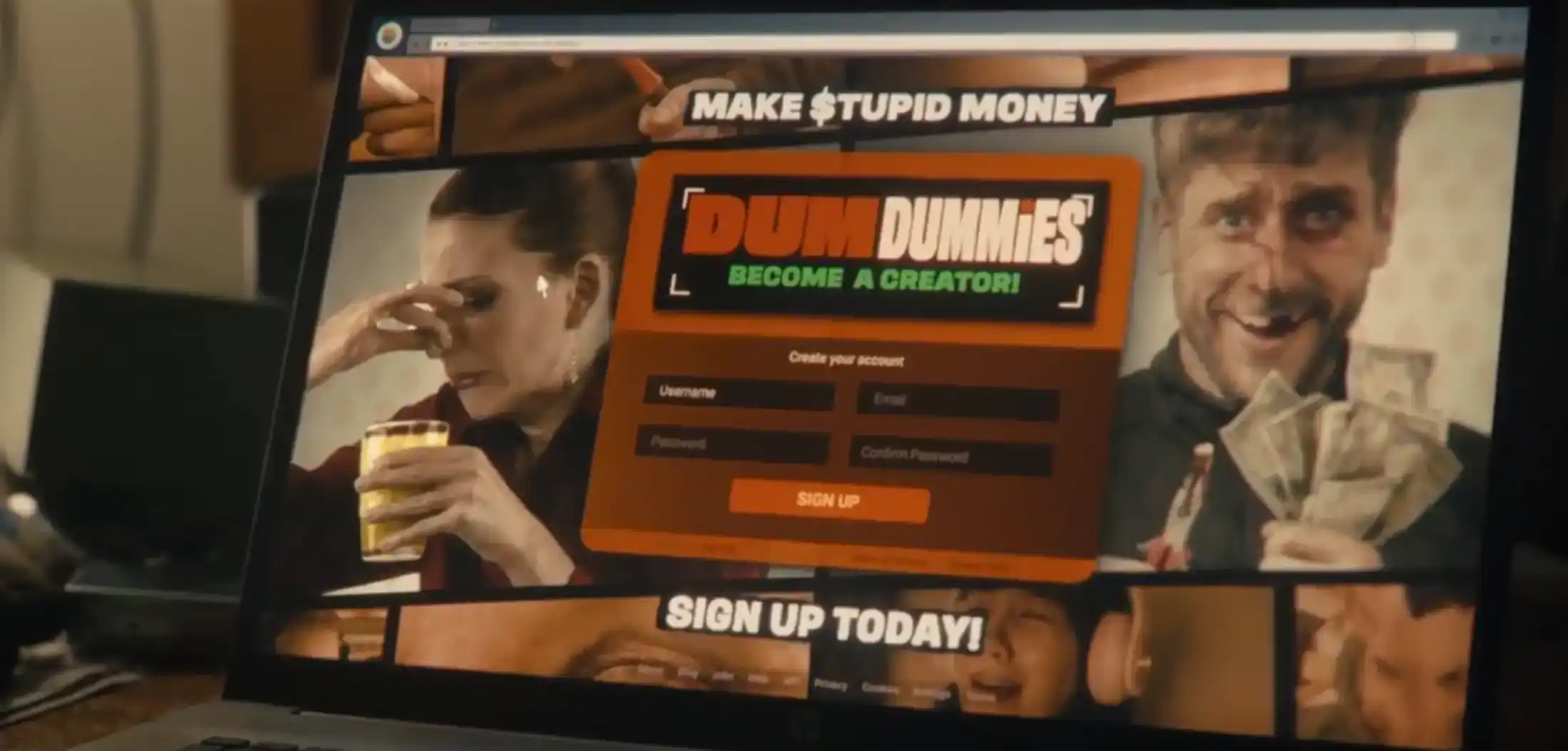
However, the subscription fees keep rising, and when Amanda is conscious, advertisements are involuntarily inserted. To secretly raise money, Mike starts live-streaming on the "Dum Dummies" platform—a website where viewers pay to instruct streamers to perform various humiliating tasks.
When exposed by a colleague, Mike loses his job, and the couple is plunged into despair.

A year later, Mike can no longer afford the premium service that maintains his wife's life. Amanda sleeps 16 hours a day, and her occasional awakenings are only to broadcast ads. Mike uses his last savings to buy 30 minutes of the premium package, allowing Amanda to leave her final words in brief peace.

When the time expires, Mike personally ends Amanda's life. The final shot freezes on the still-live laptop screen, with Mike holding a box cutter, walking into the darkness.
Being forced to sell one's dignity for the right to survive is the aspect that feels most chilling and oppressive in this episode. Therefore, when pump.fun launched a new feature called "Pump.fun Go" earlier this month, many couldn't help but think of this episode.

The story of Black Mirror is not far from our lives; it has even entered them.

$2,600 Is the Price of a Forehead Tattoo

The new pump.fun GO feature allows anyone to post paid bounty tasks on pump.fun.

This did attract the attention of mainstream media, but unfortunately, it touched the public in a negative light yet again.

$Bountywork, a token whose market cap once approached $2.5 million at its peak. Its developer, @ayushquantt, focused on continuously posting new tasks on pump.fun to generate hype for this token.

He succeeded—by offering a bounty of 40 SOL (approximately $2,600) for someone to tattoo $bountywork on their forehead.

An Indian man actually got the tattoo:
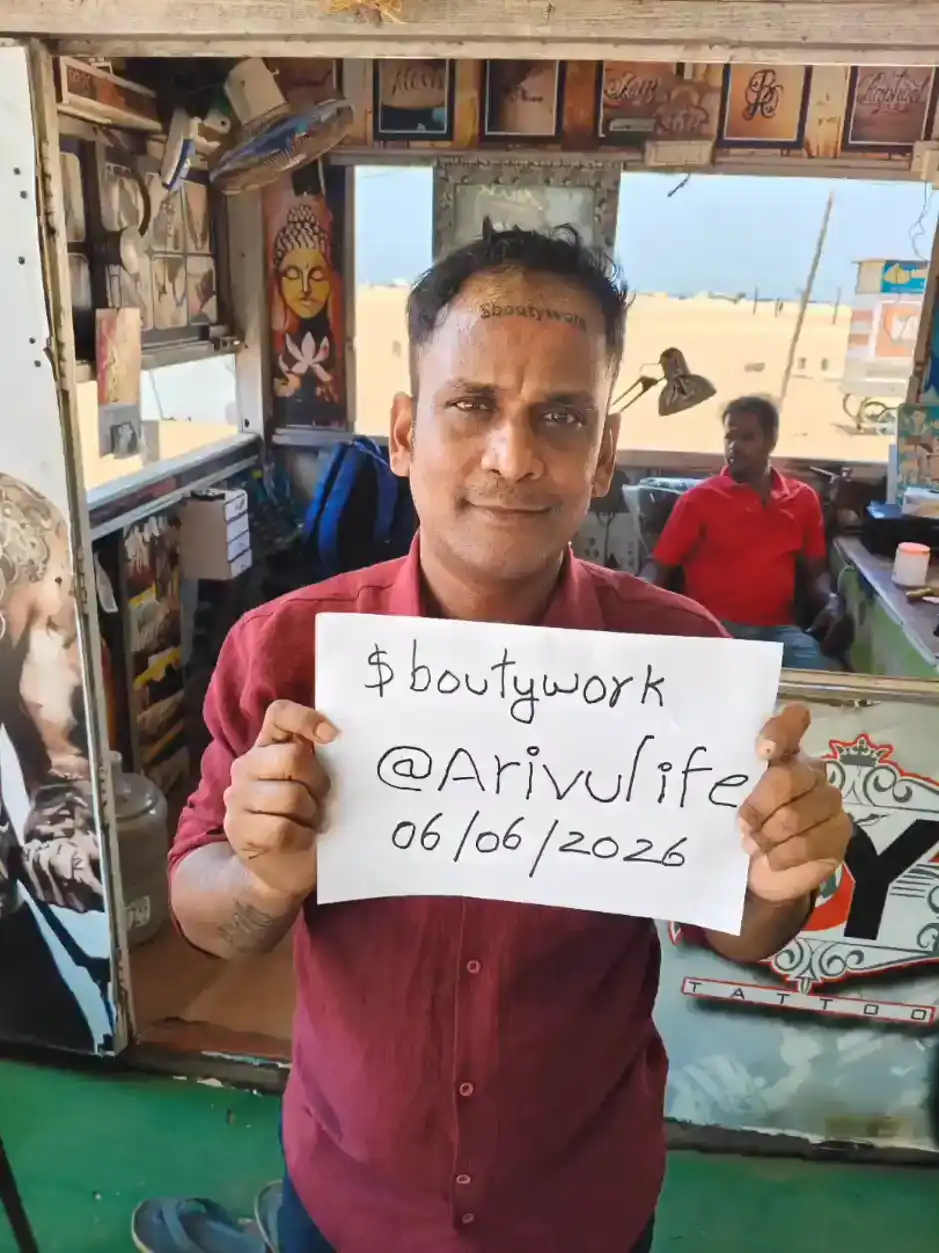
When submitting the full video of his tattooing process for bounty approval, he wrote in his remarks:

"Getting a permanent tattoo on the forehead, which will last a lifetime, is not an easy decision. The process itself was painful. It bled, and I had to endure the discomfort to complete it."

But his submission was rejected by the bounty poster due to a typo in the description—missing an 'n', writing the ticker as $boutywork. And this Indian man had precisely followed the requirements as described.

So, the next day, he went back to add a tattoo of the letter 'n':
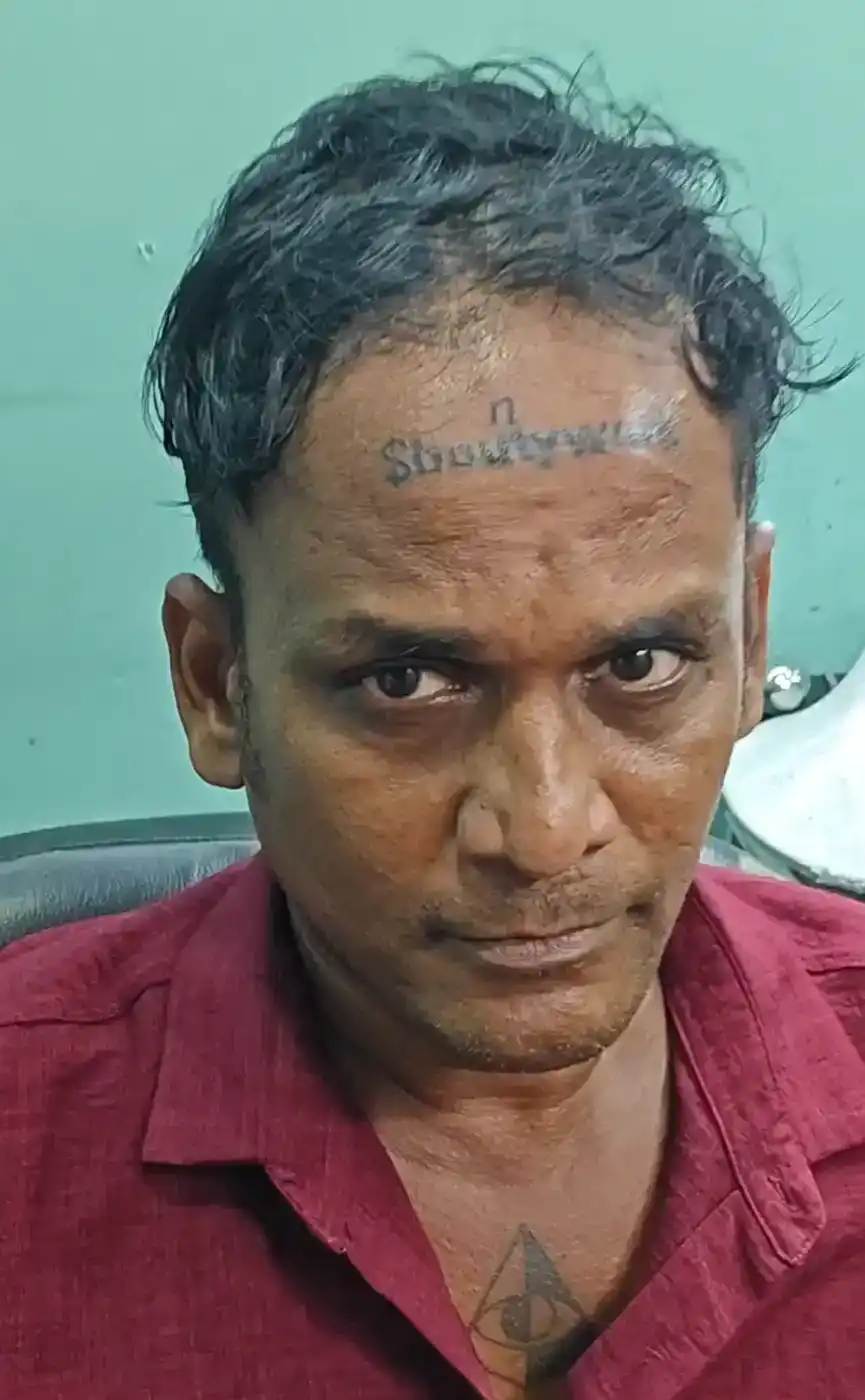
This time, he successfully received the bounty. $2,600 is the price of a forehead tattoo. He said this money changed his life.

But he earned far more than just that $2,600. After his initial bounty approval request was rejected, someone sent him a token called $boutywork, using the incorrect tattoo as the new token's name.

Because the incident had enough traction, this token accumulated over $5 million in trading volume. The creator's revenue from transaction fees was given to him, so he ended up earning about $48,000 in total.

And this wasn't even the highest single bounty earned for completing a tattoo task on pump.fun. Another bounty task posted by @Perporseful, also requiring a forehead tattoo with "bounty.fun," was completed on the same day it was posted. The person eventually received a bounty of 200 SOL (approximately $14,000).
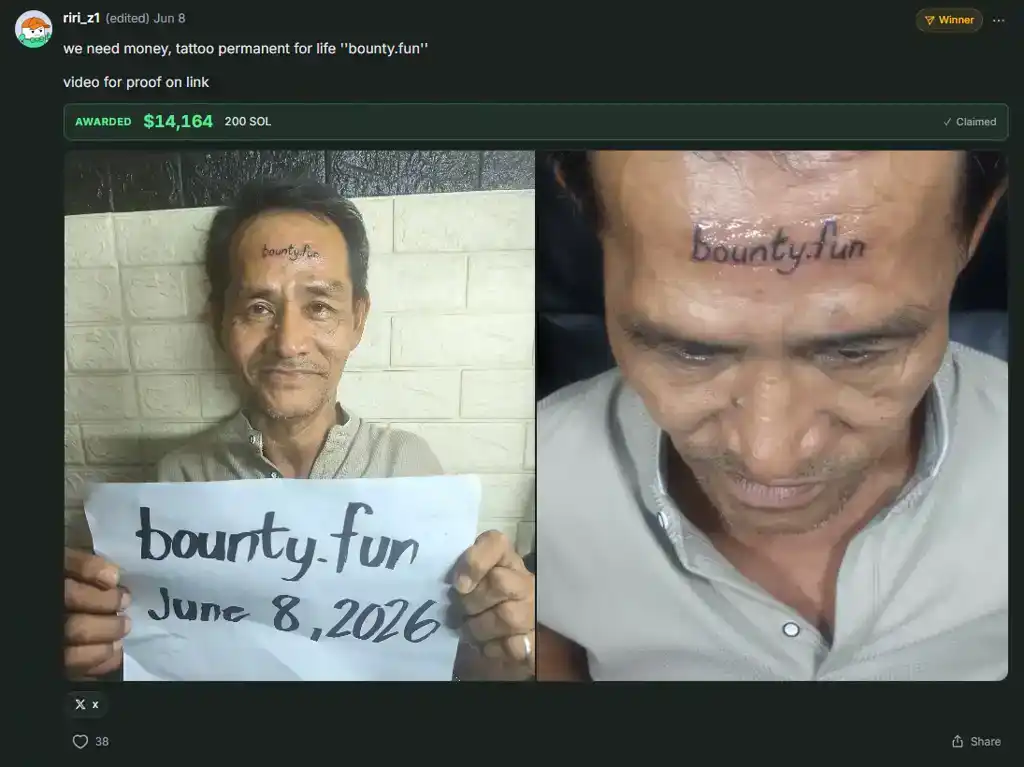
When submitting his tattoo proof for bounty approval, his remark was simple:

"We need money."

Priced Freedom Easily Amplifies Darkness

The hype around the Indian man's forehead tattoo has faded, and $boutywork has basically gone to zero. But the $Bountywork developer is still posting new bounties, trying to replicate this "success." For example, making someone wear a $Bountywork shirt and eat 3 bugs on camera.

Even though the bounty is only 2.5 SOL (about $178), not particularly generous, in the face of "We need money," this is hardly a challenge:

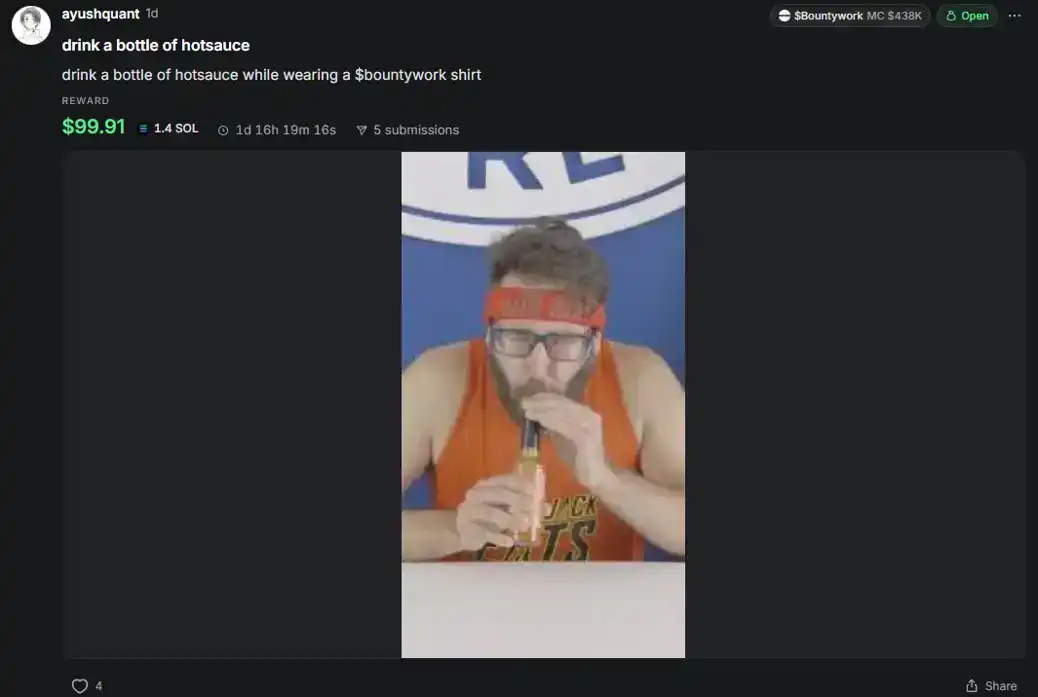
To continuously generate traffic for the $Bountywork token, @ayushquantt has spent $4,500 on various bounties. Besides the bug-eating challenge, there's also one like wearing a $Bountywork shirt and drinking a bottle of hot sauce for a bounty of 1.4 SOL (about $100):
But he has also posted some relatively normal or even heartwarming bounty tasks. For example, gifting a $50 gift card in the name of $Bountywork to someone in need, with a bounty of 1.5 SOL (about $107):
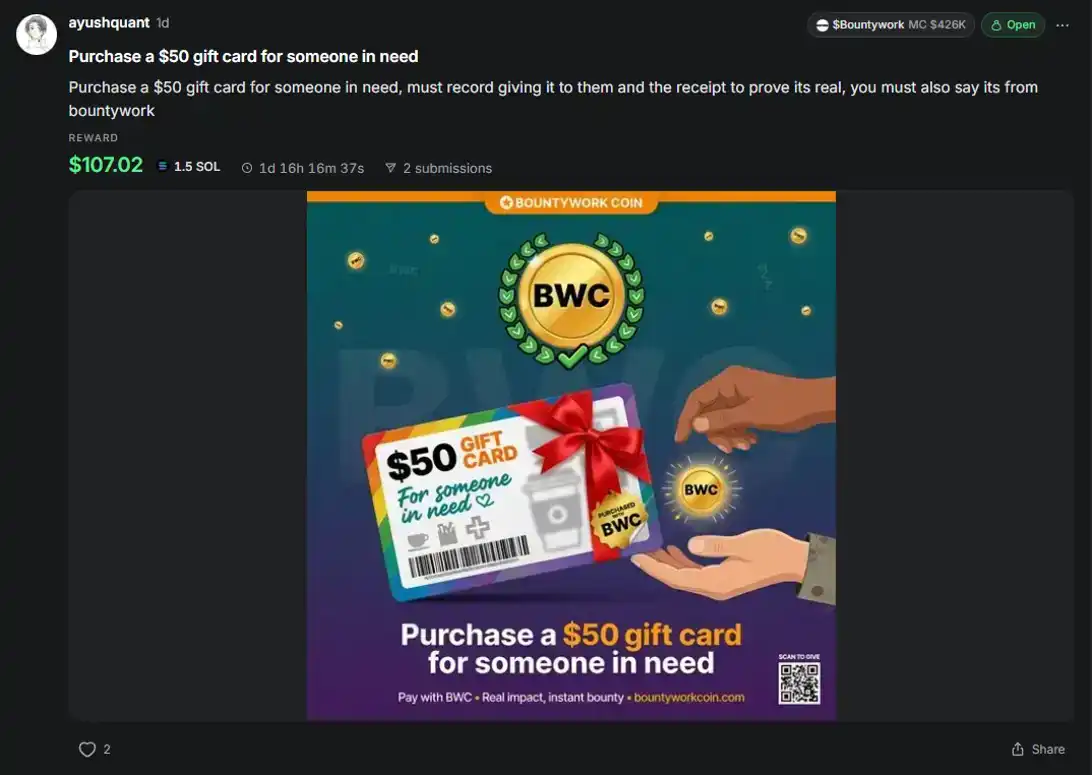
It's difficult to judge the morality of such actions or even the new pump.fun feature. What's very obvious is that gifting a $50 gift card to someone in need barely creates a ripple in terms of traffic, but eating bugs or drinking hot sauce on camera is much more likely to gain attention.

I don't think this means "in an era where traffic equals money, we have all become slaves to traffic." Freedom often reveals itself in a raw, naked form; it's just that you and I have been 'protected' too well. We wouldn't get a forehead tattoo for $2,600 simply because we can still endure monthly salaries of a few thousand, venting our dissatisfaction with work and overtime in group chats and short video apps.

The Black Mirror episode mentioned at the beginning has long entered real life. During the 'wild west' era of live streaming, LiaoLiao Voice was once a popular platform. On December 31, 2018, a streamer with the online name "Da Fei," persuaded by the chat room host Wang and egged on by viewers, consumed a large amount of alcohol again and died of sudden cardiac arrest while out after drinking. In the three months before the incident, "Da Fei" had been live-streaming drinking every day, often drinking alcohol or soybean oil to earn tips.

In one of "Da Fei's" past live streams, he once said after drinking that he couldn't take it anymore and started convulsing. At that time, viewers in the chat room were still egging him on, "Pour what you vomited on your head, add another $300."

Others shouted, "LiaoLiao is finally going to have a death." Unexpectedly, it eventually came true.

Even in 2023-2024, with live streaming regulations becoming more mature, we can still find many cases of deaths due to excessive drinking during PK battles or binge-eating in mukbang streams.

"Desperate for fame," "Why go to such lengths for money?"—these are the final legacies these streamers leave for the internet, topics for after-dinner chatter, gradually disappearing into the massive daily data updates of the internet. Regulatory norms can indeed curb the excessive commodification of people by money, but ultimately cannot stop those on pump.fun who are willing to tattoo their faces for a few thousand dollars.

Because they really need the money.

Light in the Darkness

Although many bounties on pump.fun resemble Black Mirror or the dark web, you can also find some interesting and heartwarming things.

Organize a gathering in New York for people resisting work, promoting "Work is a scam," bounty $15,865. This is the kind of event that energizes a wage slave like me:
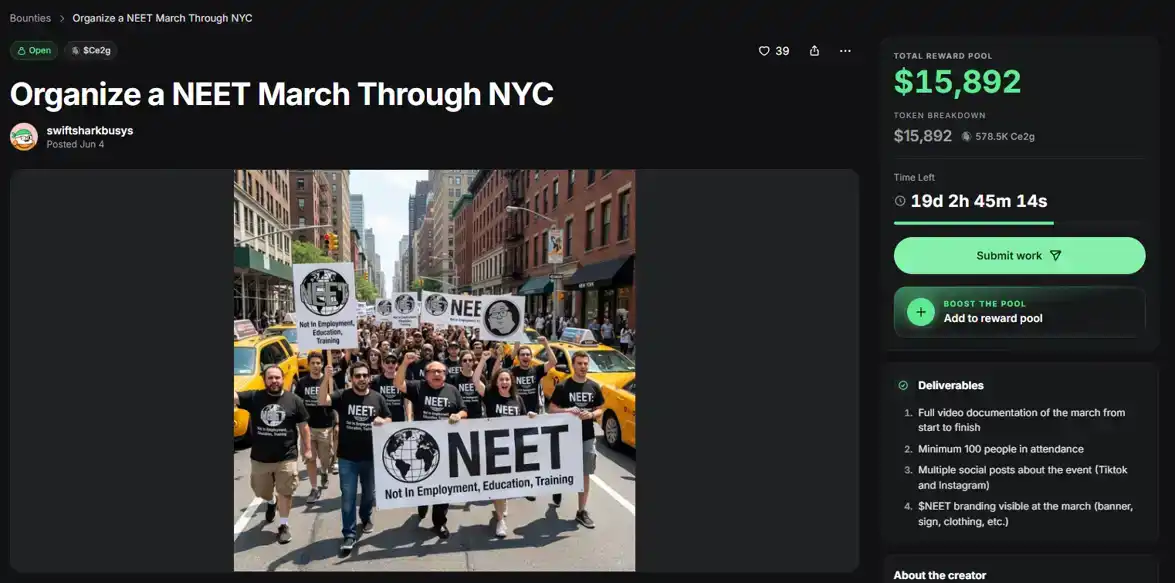
The $neet community has previously self-organized two offline "No Work Gatherings" in the US. If this bounty is completed, it will be the third.

Show kindness to 10 strangers to make their day better. The bounty poster did not specify the method—treat them to a meal, give them flowers, books, buy them coffee, tell them to have a good day. The five best videos each receive a $1,000 bounty:
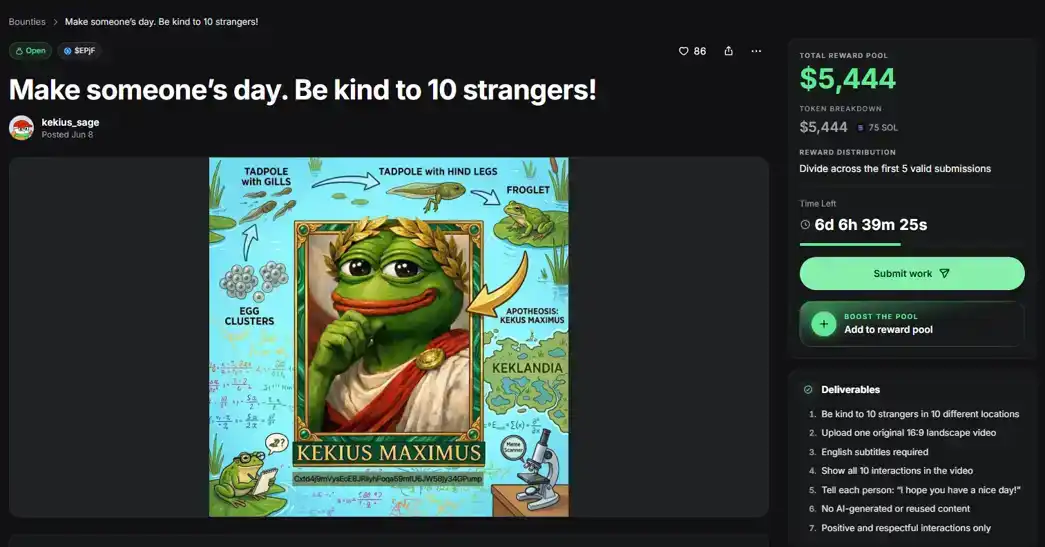
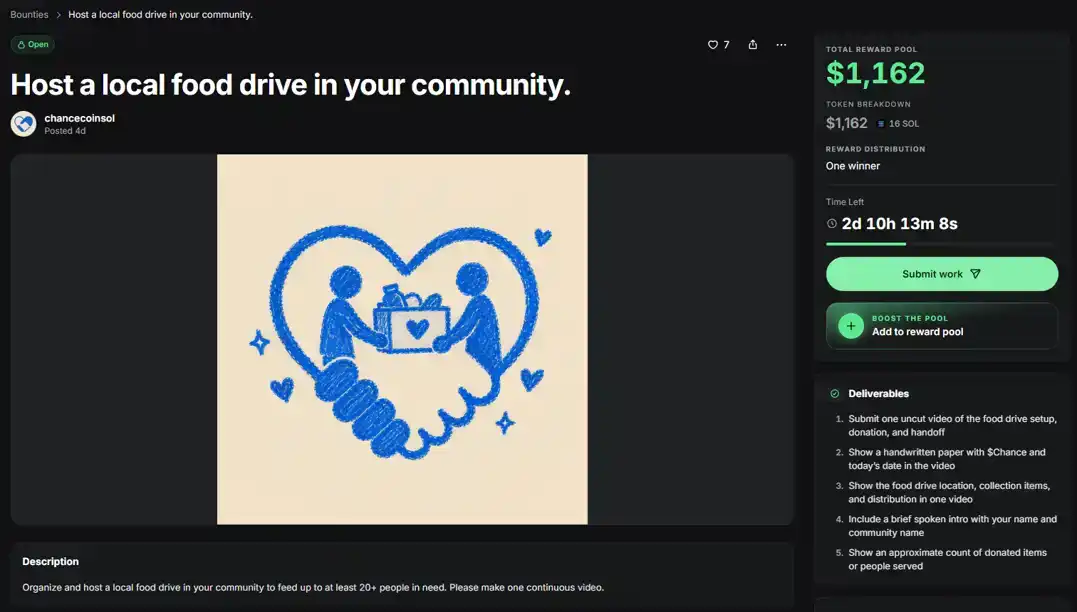
Organize a charity food donation in your local community, providing food to at least 20 people in need, bounty $1,161:
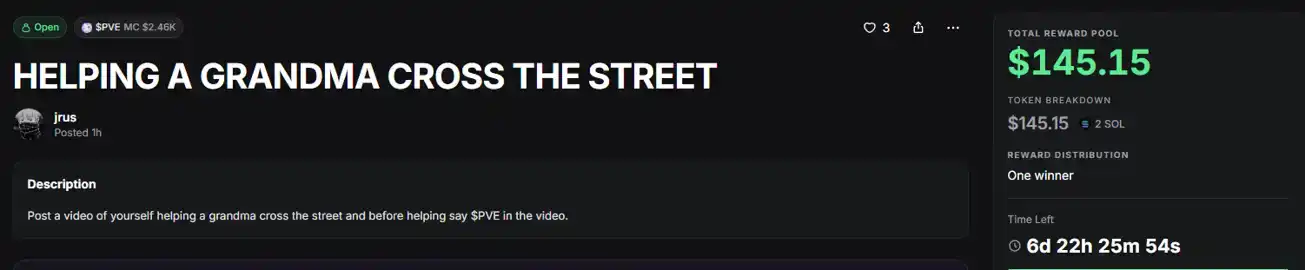
There's even one for helping an old lady cross the street, bounty $145:
The world is vast and full of wonders. We cannot escape the darkness; we can only hope for more light.


Трендові криптовалюти

Пов'язані питання

QWhat is the core function of the new 'Pump.fun Go' feature mentioned in the article, and what real-world phenomenon does it draw a parallel to?

AThe 'Pump.fun Go' feature allows anyone to post and complete paid bounty tasks on the pump.fun platform. The article draws a parallel to the fictional dystopian reality presented in the Black Mirror episode 'Common People', where people are forced to trade their dignity for survival, as well as to real-world extreme live-streaming phenomena where individuals perform degrading or dangerous acts for money.

QAccording to the article, how much money did the Indian man earn in total from the '$bountywork' tattoo incident, and what were the sources?

AThe Indian man earned a total of approximately $48,000. This came from two sources: the initial 40 SOL (around $2,600) bounty for tattooing the correct '$Bountywork' on his forehead, and the creator fees from trading a separate meme coin named '$boutywork' (the incorrect spelling) that was launched based on the incident's viral attention.

QBeyond shock-value stunts like tattooing and eating insects, what are some examples of positive or socially beneficial bounty tasks found on pump.fun mentioned in the article?

AExamples of positive bounty tasks mentioned include: organizing a rally in New York for people rejecting work; performing acts of kindness for 10 strangers; organizing a community food donation for at least 20 people in need; and helping an elderly person cross the street.

QWhat real-life tragedy from the early days of live streaming does the article reference to illustrate that the 'Black Mirror' scenario is not just fiction?

AThe article references the 2018 case of a streamer nicknamed 'Da Fei' on the 'Liaoliao' platform. He frequently livestreamed heavy drinking to earn tips and eventually died of alcohol poisoning after being egged on by his audience and the chat room host.

QWhat is the article's implied critique regarding why some people are willing to perform extreme acts for relatively small bounties on platforms like pump.fun?

AThe article implies that the primary driver is genuine financial desperation, encapsulated in the simple submission note 'We need the money.' It suggests that societal judgment often overlooks this underlying economic necessity, framing such acts merely as a quest for fame or a sign of being 'crazy for attention,' when for some, it's a matter of survival.

Пов'язані матеріали

In Conversation with Ray Dalio: We Are Currently in an AI Bubble, with 1% of My Portfolio in Bitcoin

Ray Dalio, founder of Bridgewater Associates, warns in an interview that the current AI boom shows classic bubble characteristics, which could lead to significant economic downturns as seen in past cycles like 1929 or 2000. He explains that speculative enthusiasm, fueled by debt and overvaluation, often precedes a crash when rising rates or taxation force asset sales, causing widespread losses and recession. Dalio also outlines his "Big Cycle" theory, describing an approximate 80-year pattern where widening wealth gaps, massive government deficits, and shifting geopolitical power (like China's rise) create internal conflict and global instability. He emphasizes that we are in a late-cycle, transitional phase where traditional powers like the US and UK face decline. For personal wealth protection, Dalio advises diversification beyond cash into assets like stocks, bonds, real estate, and particularly gold, which he prefers over Bitcoin. While he holds about 1% of his portfolio in Bitcoin as a non-printable hard asset, he views gold as more secure from technological or governmental threats. Regarding AI's impact, Dalio believes it will disproportionately benefit capital owners, worsening inequality by replacing both physical and cognitive labor. He suggests that human intuition and emotional intelligence, combined with AI, will be key for future workers. On taxation, Dalio argues that wealth taxes are impractical and risk triggering asset sell-offs, reducing productive investment. He points to the UK as a cautionary example of debt, low productivity, and political strife. Geopolitically, Dalio foresees a more regionalized world, with the US showing weakness in prolonged conflicts like with Iran, akin to past imperial declines. The ideal outcome, he suggests, is coexisting powerful blocs (e.g., Americas, China-Asia Pacific) without major war.

marsbit2 год тому

In Conversation with Ray Dalio: We Are Currently in an AI Bubble, with 1% of My Portfolio in Bitcoin

marsbit2 год тому

Daily 7.2 Trillion KRW: Foreign Capital's Record Net Buying on Friday! Wall Street Says Headwinds for Korean Stock Fund Flows Have Subsided

South Korean stock market sees a dramatic shift in fund flows. On July 31, foreign investors made a record net purchase of approximately KRW 7.2 trillion in KOSPI stocks, marking a fundamental reversal from the persistent large-scale net outflows seen in previous months. This contributed to a significant narrowing of foreign net selling in July to KRW 9.8 trillion, down sharply from KRW 48.4 trillion in June and KRW 44.5 trillion in May. Simultaneously, domestic institutional pressure eased. South Korean pension funds and asset managers turned to a net buying position in July, purchasing KRW 1.0 trillion worth of KOSPI shares, contrasting with net sales in May and June. Market volatility is expected to be dampened by new financial regulations. Effective July 31, the Financial Services Commission tightened access for retail investors to single-stock leveraged ETFs by raising the minimum cash deposit requirement. Trading volumes for these products subsequently dropped to about 50% of their monthly average. Citigroup Research maintains its year-end KOSPI target of 10,000 points. The firm cites several supportive factors: the substantial easing of headwinds from capital outflows, a robust fundamental outlook for the semiconductor sector, historically low market valuations, strong economic fundamentals, and the potential for policy support from financial authorities if needed.

marsbit2 год тому

Daily 7.2 Trillion KRW: Foreign Capital's Record Net Buying on Friday! Wall Street Says Headwinds for Korean Stock Fund Flows Have Subsided

marsbit2 год тому

Thanks to Dice Rolls, Bitcoin Keys Are Stored Offline, But Not Everyone Will Do It

The article discusses using dice rolls to generate secure Bitcoin wallet seeds, providing entropy independent of potentially flawed hardware random number generators. It explains that each fair dice roll offers about 2.585 bits of entropy, with around 50 rolls needed for a standard 12-word seed phrase and 99+ recommended for higher security. This method gained attention after a vulnerability was revealed in some Coldcard hardware wallets, where a faulty firmware RNG (dating back to 2021) compromised generated keys. The analysis notes that while a dice-generated main seed was safe from this specific flaw, other Coldcard functions (like creating paper wallets, backup keys, or passwords) could still be vulnerable if they used the defective RNG. The piece argues that while dice-based entropy is technically robust, the manual process is error-prone, tedious, and unrealistic for most new users, who might make mistakes in recording or inputting rolls. It concludes that while manual entropy generation should remain an option for advanced users, the long-term goal is to develop reliable, user-friendly hardware and software that securely generates randomness without requiring specialized knowledge. Coldcard users are advised to check their firmware version and replace any secondary secrets (like paper wallet keys) created with vulnerable devices, while also considering multi-signature setups with devices from different manufacturers for added security.

cryptonews.ru8 год тому

Thanks to Dice Rolls, Bitcoin Keys Are Stored Offline, But Not Everyone Will Do It

cryptonews.ru8 год тому

Торгівля

Спот

Популярні статті

Як купити PEOPLE

Ласкаво просимо до HTX.com! Ми зробили покупку ConstitutionDAO (PEOPLE) простою та зручною. Дотримуйтесь нашої покрокової інструкції, щоб розпочати свою криптовалютну подорож.Крок 1: Створіть обліковий запис на HTXВикористовуйте свою електронну пошту або номер телефону, щоб зареєструвати обліковий запис на HTX безплатно. Пройдіть безпроблемну реєстрацію й отримайте доступ до всіх функцій.ЗареєструватисьКрок 2: Перейдіть до розділу Купити крипту і виберіть спосіб оплатиКредитна/дебетова картка: використовуйте вашу картку Visa або Mastercard, щоб миттєво купити ConstitutionDAO (PEOPLE).Баланс: використовуйте кошти з балансу вашого рахунку HTX для безперешкодної торгівлі.Треті особи: ми додали популярні способи оплати, такі як Google Pay та Apple Pay, щоб підвищити зручність.P2P: Торгуйте безпосередньо з іншими користувачами на HTX.Позабіржова торгівля (OTC): ми пропонуємо індивідуальні послуги та конкурентні обмінні курси для трейдерів.Крок 3: Зберігайте свої ConstitutionDAO (PEOPLE)Після придбання ConstitutionDAO (PEOPLE) збережіть його у своєму обліковому записі на HTX. Крім того, ви можете відправити його в інше місце за допомогою блокчейн-переказу або використовувати його для торгівлі іншими криптовалютами.Крок 4: Торгівля ConstitutionDAO (PEOPLE)Легко торгуйте ConstitutionDAO (PEOPLE) на спотовому ринку HTX. Просто увійдіть до свого облікового запису, виберіть торгову пару, укладайте угоди та спостерігайте за ними в режимі реального часу. Ми пропонуємо зручний досвід як для початківців, так і для досвідчених трейдерів.

616 переглядів усьогоОпубліковано 2024.12.12Оновлено 2026.06.02

Як купити PEOPLE

Обговорення

Ласкаво просимо до спільноти HTX. Тут ви можете бути в курсі останніх подій розвитку платформи та отримати доступ до професійної ринкової інформації. Нижче представлені думки користувачів щодо ціни PEOPLE (PEOPLE).

活动图片












