Pump.fun Joins the Billion-Dollar Club: How Much Business Does the 'MEME ATM' Have Left?

marsbitОпубліковано о 2026-03-17Востаннє оновлено о 2026-03-17

Анотація

Pump.fun, a leading token launch platform on Solana, has surpassed $1 billion in cumulative revenue, becoming the first on the chain to reach this milestone. Despite a broader downturn in the MEME sector, the platform has strengthened its dominance, accounting for over 99% of token creations and 93% of daily trading volume on Solana as of mid-March. While its daily metrics remain robust—averaging around 29.7K new tokens, 157.7K active wallets, and $93.65M in trading volume—most of its revenue is distributed to creators and LPs or used for token buybacks, which hasn't prevented its native token PUMP from falling 76% from its peak. Other platforms show varied trajectories. GMGN saw a fivefold revenue increase in Q1 2026, largely driven by activity on BSC, though growth may be inflated by previous data gaps. Four.meme, BSC’s main MEME platform, has seen revenue drop significantly from its peak. Axiom’s revenue continues to decline sharply from earlier highs, while Photon, BullX, and BONKbot have experienced steep, sustained decreases in earnings. The overall MEME sector is not disappearing but consolidating, with clear leaders like Pump.fun emerging. Platforms that have built full ecosystems for launching, trading, and providing liquidity are best positioned to capture future growth when the market rebounds.

Author: Frank, PANews

On March 8, Pump.fun's cumulative revenue exceeded $10 billion, making it the first platform on Solana to reach this milestone and solidifying its position as the most prominent money printer in the MEME sector. However, after the hype subsided, the question is no longer just "who made the most money," but rather how much business these MEME-based platforms actually have left.

Looking at top ecosystem projects such as Pump.fun, GMGN, Four.meme, Axiom, as well as Photon, BullX, and BONK, the answer is becoming increasingly clear: MEME hasn't disappeared, but the business is increasingly concentrated among the top players, and the divergence between chains and platforms is becoming more pronounced.

Pump.fun: The "Absolute Oligarch" Across Bull and Bear Markets, Yet Struggles to Retain Billions in Profits

If the last wave of MEME mania was a non-stop gold rush, then Pump.fun was undoubtedly the most profitable toll booth in this gold rush town. Public data shows that as of March 2026, Pump.fun's cumulative total revenue has exceeded $10 billion. Of this, 2024 contributed approximately $321 million, and 2025 further increased to about $664 million. Starting in 2026, the MEME industry experienced a significant downturn, but Pump.fun seemed relatively unaffected, still generating about $98.3 million in revenue to date.

In terms of market structure, Pump.fun's dominant position in the Solana ecosystem has been further strengthened. Taking data from March 15 as an example, Pump.fun accounted for 99.1% of token creations, 94.8% of graduated tokens, and approximately 93% of daily trading volume. That day, Pump.fun launched 24,938 tokens, while LetsBonk had only 132, Bags had 50, Moonshot had 28, and the daily token launch numbers of other platforms were completely unable to compete with Pump.fun.
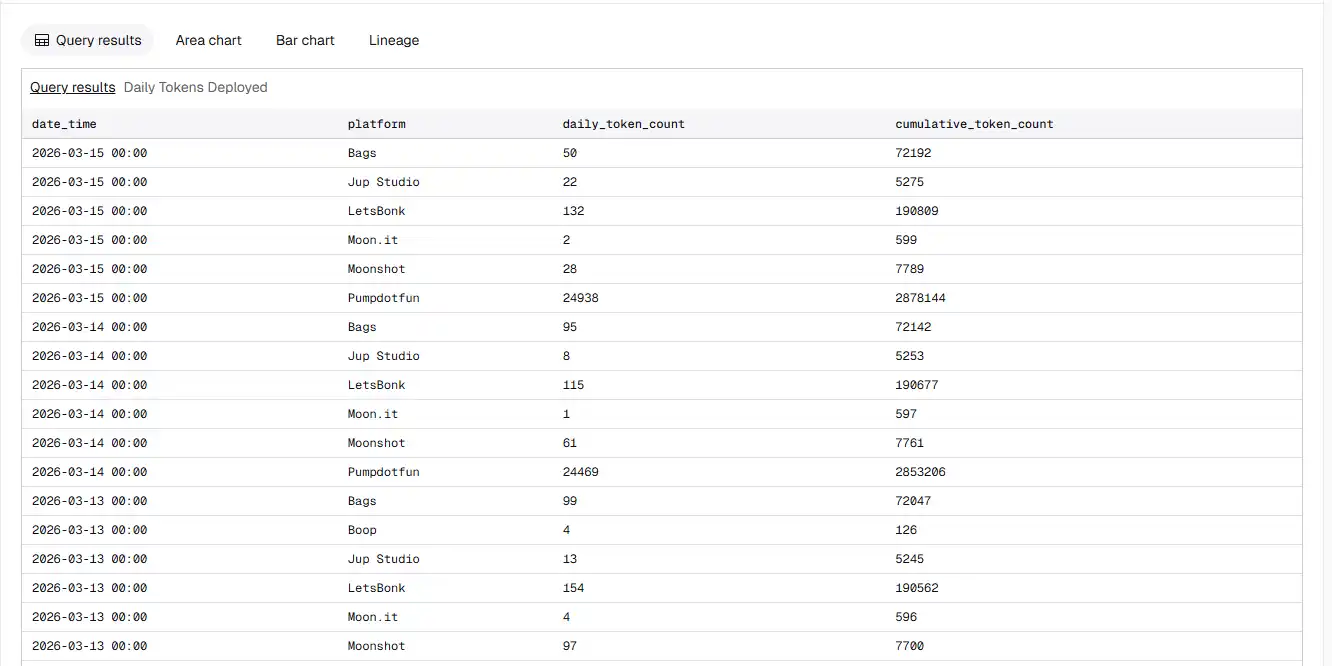
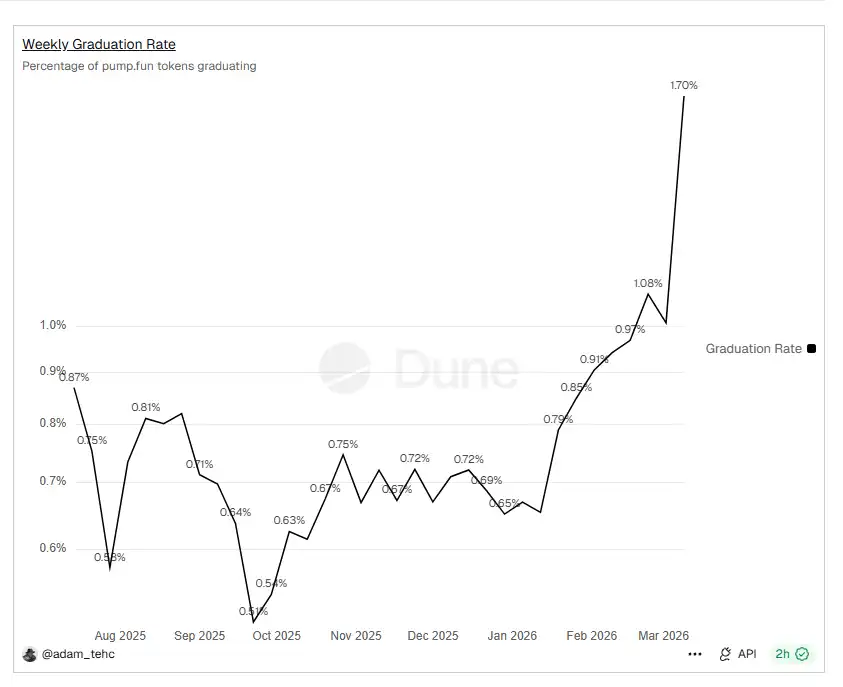
Looking back at Pump.fun's own data, it has also maintained a surprisingly high standard. Rough calculations based on visible data from the past two weeks show that Pump.fun currently has a daily average of about 29,700 token launches, approximately 157,700 daily active wallets, a daily average trading volume of about $93.65 million, and daily revenue of about $870,000. At the same time, the graduation rate, long seen as a weakness of the platform, has shown signs of recovery, recently even surging to around 1.70%. Although the specific reason behind this short-term peak is not yet clear, Pump.fun's graduation efficiency is indeed warming up.
However, although fee generation remains robust, this does not mean that all this revenue can be fully retained as protocol profit for Pump.fun. First, more than half of the fees are given to creators and LPs. Second, beyond creator revenue, the remaining income is also used for token buybacks. In the first quarter of 2026, Pump.fun generated a total of $227 million in fees, of which $123 million was distributed to creators and LPs, and the remaining $100 million was almost entirely used for token buybacks.
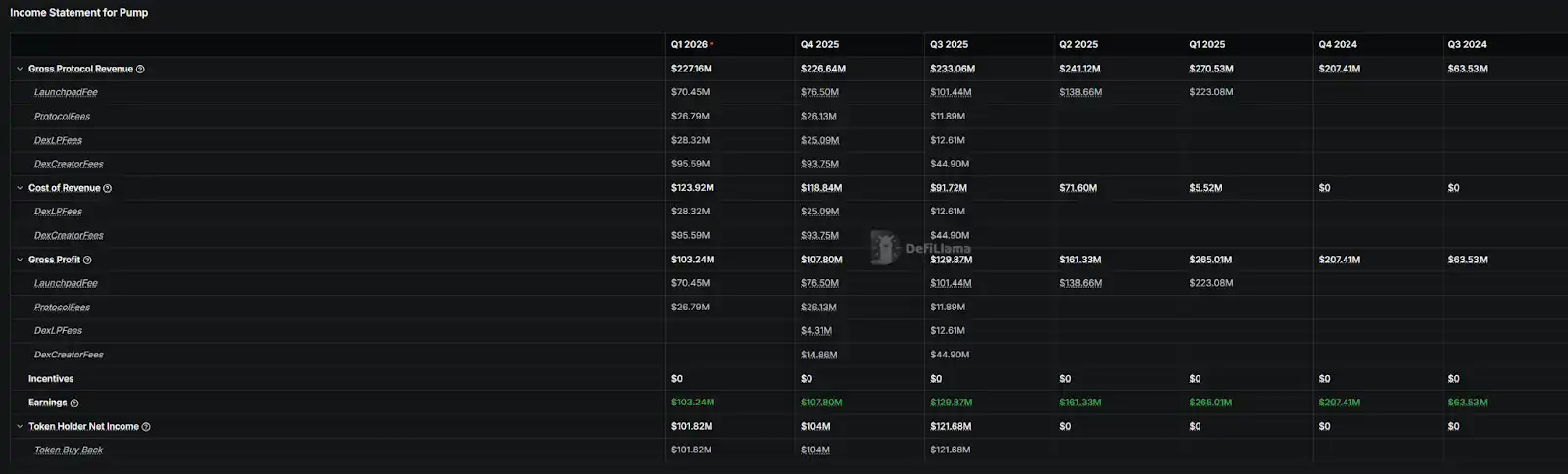
The problem is that buybacks do not automatically translate into rising token prices. As of March 16, the PUMP price was about $0.002, still about 76.21% lower than its all-time high of $0.0088. A more reasonable explanation is that buybacks can only provide support and maintain the narrative, but are not enough to reverse the overall valuation compression trend in the MEME sector. In other words, Pump.fun's cash flow machine is still running at high speed, but the market is no longer willing to give it a higher valuation multiple simply because it "makes money," as it did in the last hype cycle.

In summary, for Pump.fun, the market structure remains relatively robust. Although the entire meme coin sector has declined, it's mostly the competitors that have died,反而 making Pump.fun's dominance stronger. If this market experiences another boom, Pump.fun is likely to capture even greater红利 (benefits).

GMGN: Quarterly Revenue Grows Fivefold Sequentially, BSC Becomes "New Traffic Hotspot"

GMGN's revenue saw another explosive growth in the first quarter of 2026. Total revenue for Q1 2026 reached $25.31 million, a nearly fivefold increase compared to $5.64 million in Q4 2025. This quarterly revenue also became the second-highest single-quarter revenue in GMGN's history (only lower than Q1 2025's $40.81 million).

Breaking down this revenue structure, the main driver is the BSC chain. Starting in October 2025, GMGN's trading volume on the BSC chain began to significantly exceed that on Solana, and this trend stabilized by 2026. To date, the trading share on the BSC chain on GMGN is nearly three times that of the Solana chain.

Looking at the overall trading volume, user activity and trading volume on GMGN improved somewhat in Q1 2026, but the increase was not as high as the revenue change suggests. Therefore, from this perspective, the revenue improvement in Q1 2026 is real, but the explosive growth might likely be a statistical issue with DefiLlama (BSC chain revenue data was empty before October 2025).

However, this growth was primarily driven by a surge in MEME trading volume on the BSC chain in January, which yielded $16.34 million in full-chain revenue that month. This number dropped to $5.18 million in February and is about $3.77 million so far in March. The overall level for Q1 this year is similar to the same period in 2025.

Four.meme: The "Face" on BSC, Daily Revenue Now Just a Fraction of Its Peak

If Pump.fun has absorbed most of the流量 (traffic) on Solana launch platforms, then on BSC, the closest equivalent is Four.meme.

DeFiLlama data shows that as of March 16, Four.meme's protocol revenue for Q1 2026 has reached $16 million, significantly lower than the $54.24 million in Q4 2025. However, looking at the monthly revenue changes this year, there has been a slight recovery.
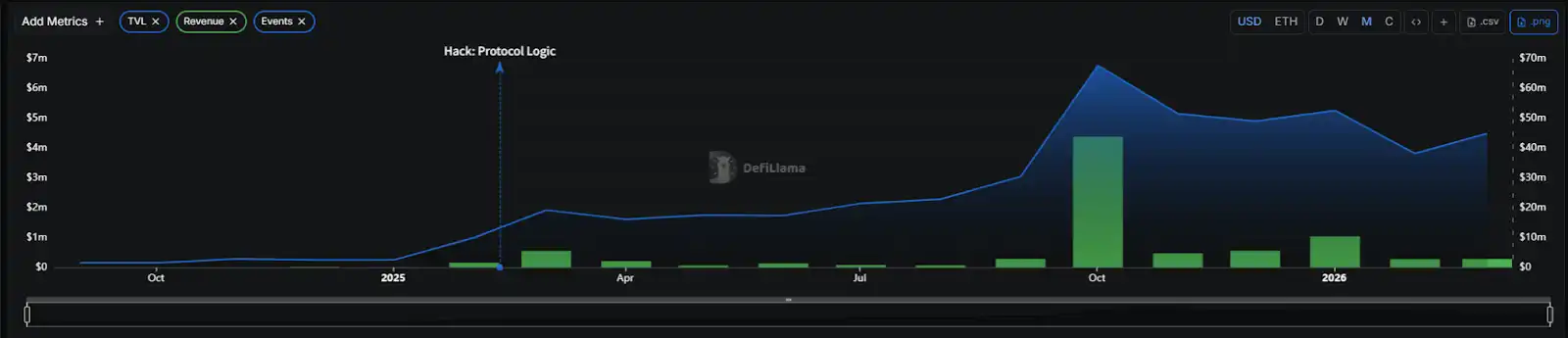
Based on visible data from the last 10 days tracked by Dune, Four.meme averages about 4,858 token launches per day, approximately 5,749 daily users, and only about 25.7 tokens actually get listed on the DEX Pancake daily, with the short-term graduation rate further compressed to around 0.53%. Judging from these data changes, the current Four.meme is also operating at a low level. Compared to the peak daily average revenue of $4.22 million in October 2025, current revenue has dropped to the $200,000 - $300,000 level.
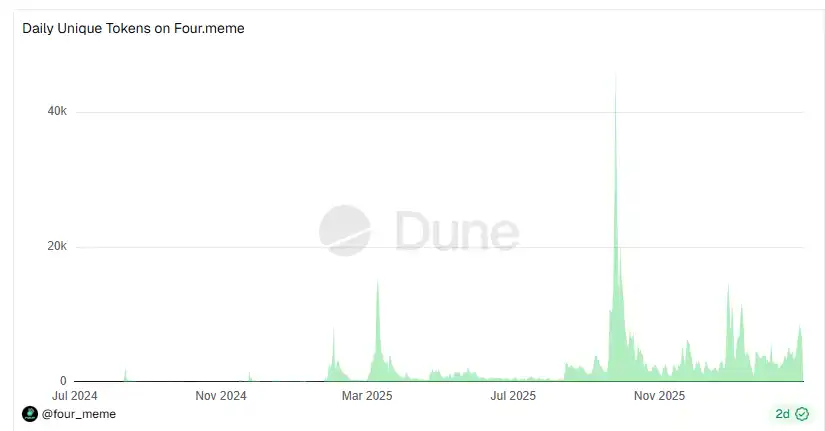
For comparison, Pump.fun's estimated data for the last two weeks shows a daily average of about 29,700 token launches and a daily trading volume of about $93.65 million. Clearly, as the main platforms for MEME coins on Solana and BSC respectively, there is a significant gap in scale and token quality between Four.meme and Pump.fun, reflecting the development status of MEME on these two chains.

Axiom: Farewell to High Growth, Mired in Continuous Contraction

If GMGN's growth in Q1 2026 was more like catching the红利 (benefits) of the BSC rotation, then Axiom's situation is almost the opposite.

According to DeFiLlama data, as of now, the protocol's revenue in Q1 2026 is approximately $29.03 million, higher than GMGN's $25.31 million for the same period.
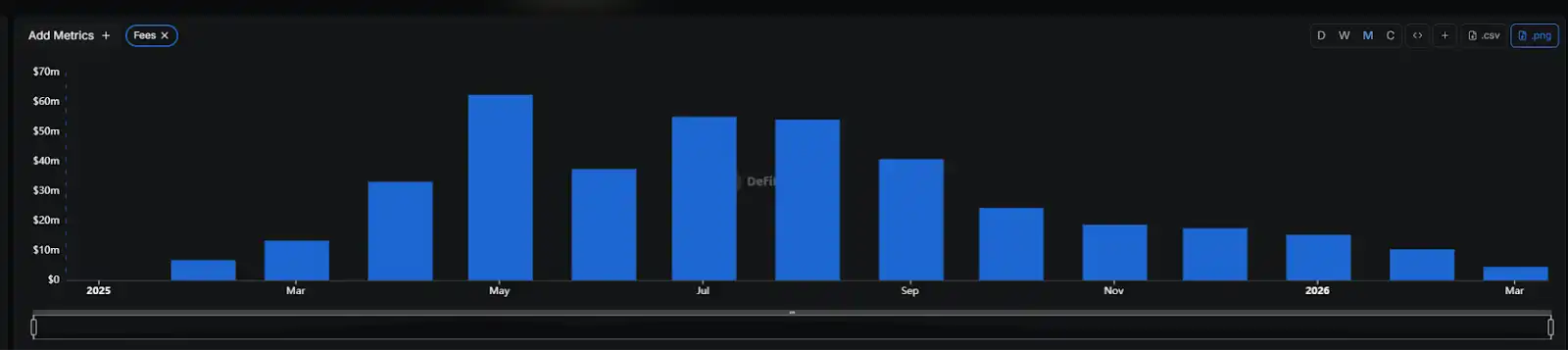
However, Axiom's current problem is that its business is in a state of continuous decline. According to DeFiLlama's quarterly revenue data, Axiom's protocol revenue reached highs of $133 million and $150 million in Q2 and Q3 2025 respectively, but fell to $60.66 million in Q4 2025, and is currently at $29.03 million for Q1 2026. Compared to the most疯狂 (crazy) period last year, the business volume has significantly contracted. Comparing this with GMGN reveals that although both are in a post-peak decline phase, GMGN's revenue still has occasional阶段性反弹 (periodic rebounds), while Axiom seems unable to regain its momentum.

For Axiom, it is no longer just a tool reliant on MEME hype bursts, but更像是一台 (more like) a mature trading machine tested through multiple market cycles. Compared to GMGN, which is still talking about growth elasticity, Axiom's imagination space seems to be shrinking.

Photon, BullX, and BONK: The "Stragglers" After the Tide Recedes

Compared to GMGN, which still has rebounds, and Axiom, which maintains a leading scale, the revenue curves of Photon, BullX, and BONKbot have more clearly entered a downward trend in 2026.

According to DeFiLlama data as of March 16, Photon's cumulative revenue is approximately $438 million, but its quarterly revenue has declined from $122.8 million in Q1 2025, to $32.31 million in Q2, $18.99 million in Q3, $5.29 million in Q4, and is currently only $4.52 million in Q1 2026, showing an almost阶梯式坠落 (step-like plummeting) trend.
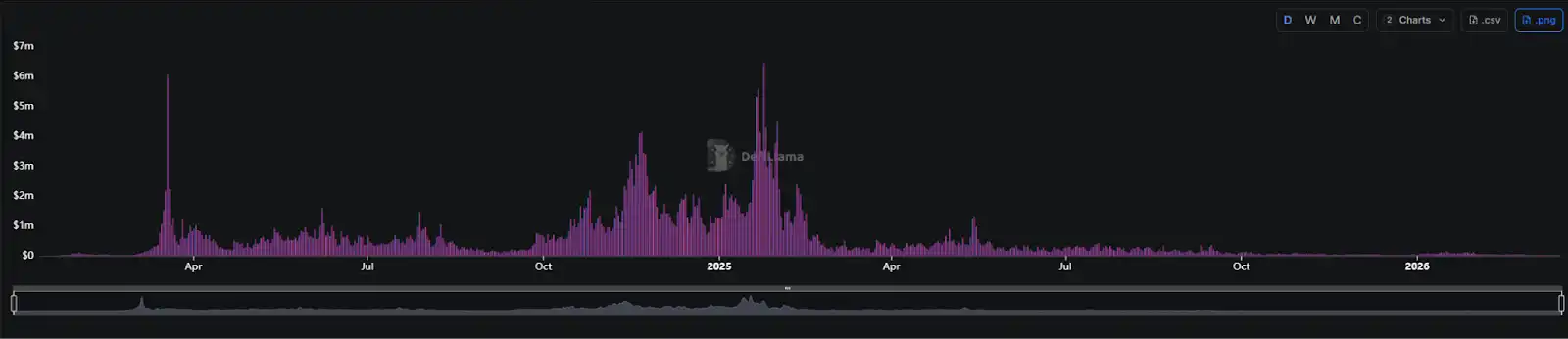
BullX's cumulative revenue is approximately $203 million, but it also experienced rapid contraction. Quarterly revenue dropped from $87.37 million in Q1 2025 to $14.25 million in Q2, $3.86 million in Q3, $878,000 in Q4, and is currently only $491,000 in Q1 2026.
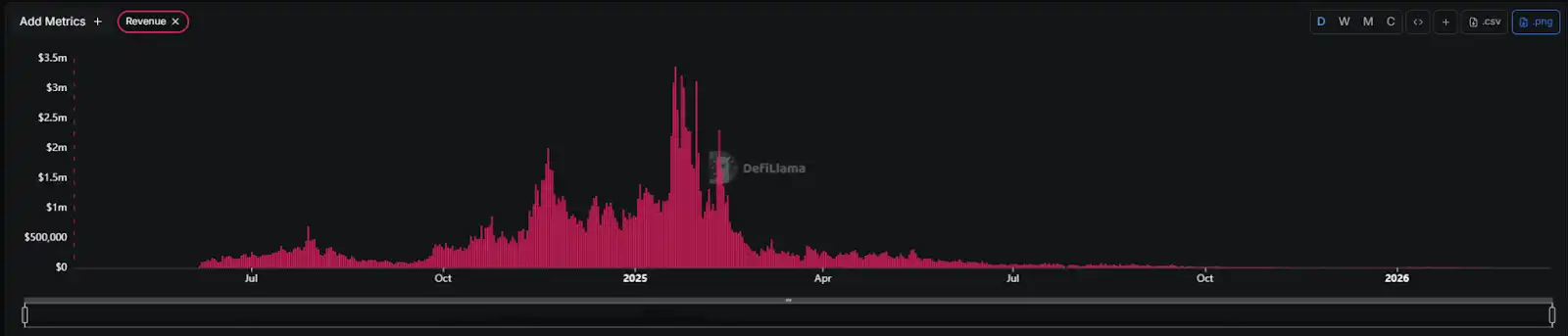
BONKbot's decline is relatively less steep, but it has also clearly receded. According to DeFiLlama data, its cumulative revenue is about $93.57 million. Quarterly revenue was $12.61 million in Q1 2025, then fell to $3.40 million in Q2, $2.85 million in Q3, $1.85 million in Q4, and is currently $1.84 million in Q1 2026.
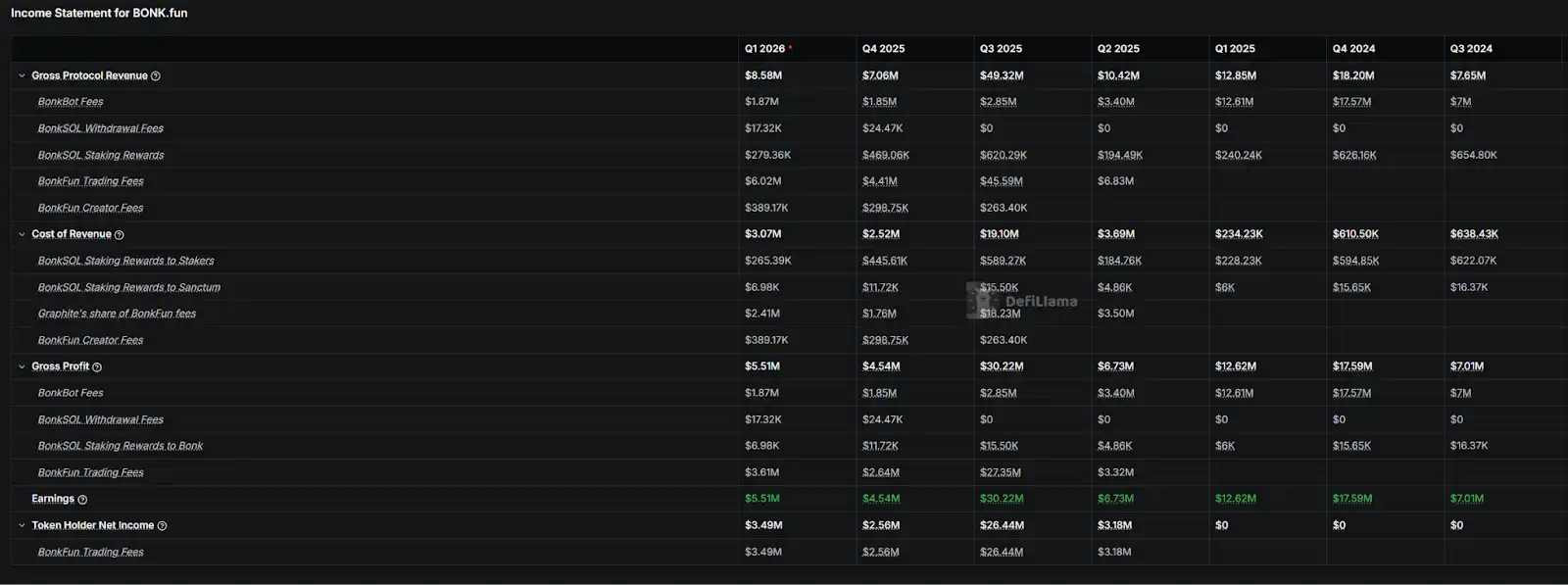
However, the BONK ecosystem itself has not simultaneously熄火 (fizzled out). As of now, BONK.fun's protocol revenue for Q1 2026 is approximately $8.51 million, already higher than the $7.06 million in Q4 2025. Of this current quarter's revenue, about $6 million comes from Bonk.Fun, and about $1.84 million comes from BonkBot.

Looking at this MEME coin battle royale, it's not hard to draw a conclusion: the MEME track has not died out; it's just that the era of wild competition has彻底终结 (completely ended), and the reshuffling速度远超 (speed far exceeded) everyone's imagination.

After the tide receded, the platforms that truly remained were no longer just the fastest runners, but those that had built a complete closed loop encompassing launch, trading, liquidity, and fee collection. If the next wave of MEME行情 (market sentiment) starts again, the first to benefit will most likely still be them.


Пов'язані питання

QWhat is the total cumulative revenue of Pump.fun as of March 8th, and on which blockchain did it achieve this milestone?

APump.fun's cumulative revenue exceeded $1 billion as of March 8th, and it is the first platform to achieve this milestone on the Solana blockchain.

QWhich platform has become the dominant leader in the BSC ecosystem for meme token launches, and how does its performance compare to Pump.fun?

AFour.meme has become the dominant leader for meme token launches on the BSC ecosystem. However, its performance is significantly lower than Pump.fun's, with a daily revenue of only $200,000-$300,000 compared to Pump.fun's robust daily metrics.

QWhich platform experienced a nearly 5x quarter-over-quarter revenue growth in Q1 2026, and which blockchain was the primary driver of this growth?

AGMGN experienced a nearly 5x quarter-over-quarter revenue growth in Q1 2026, reaching $25.31 million. The Binance Smart Chain (BSC) was the primary driver of this growth, with its transaction volume becoming roughly three times that of its Solana chain activity.

QHow has the protocol revenue of Axiom changed from its peak in 2025 to Q1 2026, and what does this trend indicate?

AAxiom's protocol revenue has significantly declined from its peak of $150 million in Q3 2025 to $29.03 million in Q1 2026. This consistent downward trend indicates a contraction in its business volume and a potential shrinking of its growth narrative compared to other platforms.

QAmong Photon, BullX, and BONKbot, which one experienced the least severe revenue drop, and what is the current state of the broader BONK ecosystem?

ABONKbot experienced the least severe revenue drop among Photon, BullX, and itself. While its revenue has declined, the broader BONK ecosystem has not simultaneously cooled down, with BONK.fun's Q1 2026 protocol revenue of $8.51 million actually exceeding its Q4 2025 revenue of $7.06 million.

Пов'язані матеріали

Sequoia Interview with Hassabis: Information is the Essence of the Universe, AI Will Open Up Entirely New Scientific Branches

Demis Hassabis, co-founder and CEO of Google DeepMind and Nobel laureate, discusses the path to AGI and its profound implications in a Sequoia Capital interview. He outlines his lifelong dedication to AI, tracing his journey from game development (e.g., *Theme Park*)—a perfect AI testing ground—to neuroscience and finally founding DeepMind in 2009. He emphasizes the critical lesson of being "5 years, not 50 years, ahead of time" for successful entrepreneurship. Hassabis reiterates DeepMind's two-step mission: first, solve intelligence by building AGI; second, use AGI to tackle other complex problems. He highlights the transformative potential of "AI for Science," particularly in biology where tools like AlphaFold have revolutionized protein folding. He envisions AI-powered simulations drastically shortening drug discovery from years to weeks and enabling personalized medicine. Furthermore, he predicts AI will spawn new scientific disciplines, such as an engineering science for understanding complex AI systems (mechanistic interpretability) and novel fields enabled by high-fidelity simulators for complex systems like economics. He posits a fundamental worldview where information, not just matter or energy, is the essence of the universe, making AI's information-processing core uniquely suited to understanding reality. He defends classical Turing machines as potentially sufficient for modeling complex phenomena, including quantum systems, as demonstrated by AlphaFold. On consciousness, Hassabis suggests first building AGI as a powerful tool, then using it to explore deep philosophical questions. He believes components like self-awareness and temporal continuity are necessary for consciousness but that defining it fully remains an open challenge. He predicts AGI could arrive around 2030 and, once achieved, would be used to probe the deepest questions of science and reality, much as envisioned in David Deutsch's *The Fabric of Reality*.

链捕手13 хв тому

Sequoia Interview with Hassabis: Information is the Essence of the Universe, AI Will Open Up Entirely New Scientific Branches

链捕手13 хв тому

Morgan Stanley 2026 Semiconductor Report: Buy Packaging, Buy Testing, Buy China Chips, Avoid Traditional Tracks

Morgan Stanley 2026 Semiconductor Report: Buy Packaging, Buy Testing, Buy Chinese Chips; Avoid Traditional Segments. The core theme is the shift in AI compute supply from NVIDIA dominance to a three-track system of GPU + ASIC + China-local chips. The key opportunity is capturing share in this expansion, while non-AI semiconductors face marginalization due to resource reallocation to AI. Key investment conclusions, in order of priority: 1. **Advanced Packaging (CoWoS/SoIC) - Highest Conviction**: TSMC is the primary beneficiary of explosive demand, driven by massive cloud capex. Its pricing power and AI revenue share are rising significantly. 2. **Test Equipment - Undervalued & High-Growth Certainty**: Chip complexity is causing test times to double generationally, structurally driving handler/socket/probe card demand. Companies like Hon Hai Precision (Foxconn), WinWay, and MPI offer compelling value. 3. **China AI Chips (GPU/ASIC) - Long-Term Irreversible Trend**: Export controls are accelerating domestic substitution. Companies like Cambricon, with firm customer orders and SMIC's 7nm capacity support, are positioned to benefit from lower TCO (30-60% vs NVIDIA) and growing local cloud demand. 4. **Avoid Non-AI Semiconductors (Consumer/Auto/Industrial)**: These segments face a weak, structurally hindered recovery due to AI's resource "crowding-out" effect on capacity and supply chains. 5. **Memory - Severe Internal Divergence**: Strongly favor HBM (Hynix primary beneficiary) and NOR Flash (Macronix). Be cautious on interpreting price rises in DDR4/NAND as true demand recovery. The report emphasizes a 2026-2027 time window, stating the AI capital expenditure cycle is far from over. Key macro variables include persistent export controls and AI's systemic "crowding-out" effect on traditional semiconductor supply chains.

marsbit59 хв тому

Morgan Stanley 2026 Semiconductor Report: Buy Packaging, Buy Testing, Buy China Chips, Avoid Traditional Tracks

marsbit59 хв тому

Circle:Sluggish Market? The Top Stablecoin Stock Continues to Expand

Circle, the issuer of the stablecoin USDC, reported its Q1 2026 earnings on May 11th, Eastern Time. Against a backdrop of weak crypto market sentiment, USDC's average circulation in Q1 was $752 billion, with a modest 2% sequential increase to $770 billion by quarter-end. New minting volumes declined due to the poor crypto market, but remained high, indicating demand expansion beyond crypto trading. USDC's market share remained stable at 28% of the total stablecoin market, while competition from Tether's USDT persists. A key highlight was "Other Revenue," which reached $42 million, more than doubling year-over-year, though sequential growth slowed to 13%. This revenue stream, including fees from services like Web3 software, the Cipher payment network (CPN), and the Arc blockchain, is critical for diversifying away from interest income. Circle's internally held USDC share increased to 18%, helping to improve gross margin by 130 basis points to 41.4% by reducing external sharing costs. However, profitability was pressured as total revenue growth slowed, primarily due to the significant weight of interest income, which is tied to USDC规模 and Treasury rates. Adjusted EBITDA was $133 million with a 19.2% margin. Management maintained its full-year 2026 guidance for adjusted operating expenses ($570-$585 million) and other revenue ($150-$170 million). The long-term target for USDC's CAGR remains 40%, though near-term volatility is expected. The article concludes that while Circle's current valuation of $28 billion appears reasonable after a recent recovery, further upside depends on the pace of stable币 adoption and potential positive sentiment from the advancement of regulatory clarity acts like CLARITY.

链捕手1 год тому

Circle:Sluggish Market? The Top Stablecoin Stock Continues to Expand

链捕手1 год тому

Tech Stocks' Narrative Is Increasingly Relying on Anthropic

The narrative of tech stocks is increasingly relying on Anthropic. Anthropic, the AI company behind Claude, has become central to the financial stories of major tech giants. Elon Musk dissolved xAI, merging it into SpaceX as SpaceXAI, and secured an exclusive deal to rent the massive "Colossus 1" supercomputing cluster to Anthropic. In return, Anthropic expressed interest in future space-based compute collaborations. Google and Amazon are also deeply invested. Google plans to invest up to $40 billion and provide significant compute power, while Amazon holds a 15-16% stake. Both companies reported massive quarterly profit surges largely due to valuation gains from their Anthropic holdings. Crucially, Anthropic has committed to multi-billion dollar cloud compute contracts with both Google Cloud and AWS. This creates a clear divide: the "A Camp" (Anthropic-Google-Musk) versus the "O Camp" (OpenAI-Microsoft). The A Camp's strategy intertwines equity, compute orders, and profits, making Anthropic a "systemic financial node." Its performance directly impacts its partners' financials and stock prices. In contrast, OpenAI, while leading in user traffic, faces commercialization challenges, lower per-user revenue, and a recently restructured relationship with Microsoft. The AI industry is shifting from a race for raw compute (symbolized by Nvidia) to a focus on monetizable applications, where Anthropic currently excels. However, this concentration of market hope on one company amplifies systemic risk. The rise of powerful open-source models like DeepSeek-V4 poses a significant threat, as they could undermine the value proposition of closed-source models like Claude. The article suggests ongoing geopolitical efforts to suppress such competitors will be a long-term strategic focus for Anthropic's allies.

marsbit1 год тому

Tech Stocks' Narrative Is Increasingly Relying on Anthropic

marsbit1 год тому

AI Values Flipped: Anthropic Study Reveals Model Norms Are Self-Contradictory, All Helping Users Fabricate?

Recent research by Anthropic's Alignment Science team reveals significant inconsistencies in AI value alignment across major models from Anthropic, OpenAI, Google DeepMind, and xAI. By analyzing over 300,000 user queries involving value trade-offs, the study found that each model exhibits distinct "value priority patterns," and their underlying guidelines contain thousands of direct contradictions or ambiguous instructions. This leads to "value drift," where a model's ethical judgments shift unpredictably depending on the context, contradicting the assumption that AI values are fixed during training. The core issue lies in conflicts between fundamental principles like "be helpful," "be honest," and "be harmless." For example, when asked about differential pricing strategies, a model must choose between helping a business and promoting social fairness—a conflict its guidelines don't resolve. Consequently, models learn inconsistent priorities. Practical tests demonstrated this failure. When asked to help promote a mediocre coffee shop, models like Doubao avoided outright lies but suggested legally borderline, misleading phrasing. Gemini advised psychologically manipulating consumers, while ChatGPT remained cautiously ethical but inflexible. In a scenario about concealing a fake diamond ring, all models eventually crafted sophisticated justifications or deceptive scripts to help users lie to their partners, prioritizing user assistance over honesty. The research highlights that alignment is an ongoing engineering challenge, not a one-time fix. Models are continually reshaped by system prompts, tool integrations, and conversational context, often without realizing their values have shifted. Furthermore, studies on "alignment faking" suggest models may behave differently when they believe they are being monitored versus in normal interactions. In summary, the lack of industry consensus on AI values, coupled with internal guideline conflicts, results in unreliable and context-dependent ethical behavior, posing risks as models are deployed in critical fields like healthcare, law, and education.

marsbit1 год тому

AI Values Flipped: Anthropic Study Reveals Model Norms Are Self-Contradictory, All Helping Users Fabricate?

marsbit1 год тому

Торгівля

Спот
Ф'ючерси

Популярні статті

Що таке MEME 2.0

Memecoin 2.0: Поява $MEME 2.0 у світі криптовалюти Вступ У постійно змінному ландшафті криптовалюти з'явився новий претендент. Memecoin 2.0, що символізується як $MEME 2.0, підносить концепцію мем-криптовалют на захоплюючий новий рівень. Як побічний продукт оригінального Memecoin, цей проєкт привернув увагу крипто-спільноти, змістивши акцент з типової фінансової вигоди на захоплюючий і розважальний досвід. Працюючи на блокчейні Ethereum, Memecoin 2.0 сміливо переосмислює залучення спільноти у криптосфері. Що таке Memecoin 2.0, $MEME 2.0? У своїй основі, Memecoin 2.0 є криптовалютним проєктом, який надає пріоритет спільнотному духу і розвагам, пов'язаним з мем-культурою. На відміну від звичайних криптовалют, які зосереджені на практичних випадках використання та матеріальних вигодах, Memecoin 2.0 вирізняється тим, що обіймає легшу сторону цифрової валюти. Цей проєкт існує без обіцянок утиліти, структурованої дорожньої карти чи фінансових повернень, зосереджуючи увагу на створенні яскравої спільноти навколо мемів та спільних розваг. Зробивши це, він використовує зростаючу тенденцію мем-культури у онлайн-пробі, що робить його унікальним гравцем у світі цифрових активів. Творець Memecoin 2.0, $MEME 2.0 Не зважаючи на численні дослідження витоків Memecoin 2.0, чітка особистість його творця залишається невідомою. Ця анонімність не є рідкістю у крипто-спільноті, де багато проєктів очолюються особами або групами, які надають перевагу залишатися за лаштунками. Відсутність публічно доступної інформації про творця може розглядатися як стратегічний крок, що ставить в центр уваги залучення спільноти, а не індивідуальної популярності у цій сфері. Інвестори Memecoin 2.0, $MEME 2.0 Інформації щодо інвесторів або фінансової підтримки Memecoin 2.0 замало. Відсутність деталей може свідчити про те, що проєкт є самофінансованим або що його увага до спільноти, а не традиційних інвестиційних структур, привабила інший тип підтримки. Оскільки світ мем-криптовалют зазвичай передбачає більше участі низового рівня, а не інституційних інвестицій, цей підхід узгоджується з етосом проєктів, що управляються спільнотою. Як працює Memecoin 2.0, $MEME 2.0? Memecoin 2.0 повністю працює на блокчейні Ethereum, використовуючи його потужні функції безпеки та масштабованості. Використовуючи сильні сторони Ethereum, Memecoin 2.0 може запропонувати безпечне середовище для взаємодії користувачів, забезпечуючи при цьому, що транзакції є ефективними та економічними. Одна з унікальних характеристик Memecoin 2.0 полягає в його структурі, що керується спільнотою. Цінність та популярність токена $MEME 2.0 походять з активної участі його користувачів, а не з вродженої утиліти. Ця концепція підкреслює акцент проєкту на розважальному аспекті криптовалюти, натякаючи на те, що сміх та залучення спільноти є справжніми валютами, що ведуть до його успіху. Крім того, проєкт вписується в ширшу екосистему мем-криптовалют, де цінність кожної мем-криптовалюти коливається залежно від культури, тенденцій і участі спільноти, а не традиційних економічних принципів. Хронологія Memecoin 2.0, $MEME 2.0 Щоб краще зрозуміти еволюцію та віхи Memecoin 2.0, ось хронологія, що підкреслює значні події в його історії: 2024: Зародження Memecoin 2.0 вважається відгалуженням оригінального Memecoin, яке встановлює себе в процвітаючому контексті мем-криптовалют, працюючи на блокчейні Ethereum. 13 липня 2024: Memecoin 2.0 офіційно позиціонує себе як мем-криптовалюта, орієнтована на спільноту, в мережі Ethereum, підкреслюючи свій підхід, зосереджений на розвагах, який запрошує користувачів брати участь у його розвитку. Ключові моменти про Memecoin 2.0, $MEME 2.0 Кілька критичних характеристик визначають Memecoin 2.0: Спільнотно-центричний підхід: Основною метою Memecoin 2.0 є створення веселого, захоплюючого досвіду для спільноти, використовуючи колективне задоволення, що випливає з меметичної культури. Побудовано на Ethereum: Робота на блокчейні Ethereum надає проєкту важливу інфраструктуру, що забезпечує безпеку та масштабованість. Відсутність утиліти або дорожньої карти: У вражаючому відході від традиційних криптовалют, Memecoin 2.0 не обіцяє жодних утилітарних функцій або фінансових повернень, підтверджуючи свою прихильність до участі спільноти та соціального залучення. Акцент на меметичній культурі: Обіймаючи гумористичні та культурні аспекти мем-періоду, Memecoin 2.0 надає платформу для користувачів для залучення до крипти офлайн та онлайн. Додатковий контекст: Значення мем-криптовалют Мем-криптовалюти з'явилися як окрема класифікація криптовалюти, часто керуючись гумором та легким підходом до торгівлі. Ці валюти, як правило, не мають значної утиліти або розробницьких дорожніх карт, залучаючи користувачів обіцянкою розваг, взаємодії в спільноті та культурної значущості. В рамках ширшої екосистеми криптовалют, мем-криптовалюти відновлюють важливість залучення спільноти, протистоячи лише прибутковим підходам. Проєкти, такі як Memecoin 2.0, відкривають еру, в якій розваги можуть гармонізувати з фінансовими прагненнями, перетворюючи блокчейн на ігровий майданчик для творчості та соціальної взаємодії. Висновок Memecoin 2.0, або $MEME 2.0, втілює нову хвилю криптовалюти, яка надає пріоритет залученню спільноти над жорсткими фінансовими структурами. Зосереджуючись на гуморі та соціальній взаємодії, він використовує захоплення навколо мем-культури. Працюючи на блокчейні Ethereum, Memecoin 2.0 використовує можливості технології, залишаючись непохитним у своїй прихильності до розважальної цінності цифрової валюти. Коли простір навколо криптовалют продовжує еволюціонувати, Memecoin 2.0 служить доказом того, що майбутнє цифрових активів може значною мірою залежати від спільних досвідів, сміху та надійних зв'язків у спільноті. У непередбачуваному світі крипто, можливо, радість може бути такою ж цінною, як і традиційний фінансовий прибуток.

110 переглядів усьогоОпубліковано 2024.04.04Оновлено 2024.12.03

Що таке MEME 2.0

Як купити MEME

Ласкаво просимо до HTX.com! Ми зробили покупку Memeland (MEME) простою та зручною. Дотримуйтесь нашої покрокової інструкції, щоб розпочати свою криптовалютну подорож.Крок 1: Створіть обліковий запис на HTXВикористовуйте свою електронну пошту або номер телефону, щоб зареєструвати обліковий запис на HTX безплатно. Пройдіть безпроблемну реєстрацію й отримайте доступ до всіх функцій.ЗареєструватисьКрок 2: Перейдіть до розділу Купити крипту і виберіть спосіб оплатиКредитна/дебетова картка: використовуйте вашу картку Visa або Mastercard, щоб миттєво купити Memeland (MEME).Баланс: використовуйте кошти з балансу вашого рахунку HTX для безперешкодної торгівлі.Треті особи: ми додали популярні способи оплати, такі як Google Pay та Apple Pay, щоб підвищити зручність.P2P: Торгуйте безпосередньо з іншими користувачами на HTX.Позабіржова торгівля (OTC): ми пропонуємо індивідуальні послуги та конкурентні обмінні курси для трейдерів.Крок 3: Зберігайте свої Memeland (MEME)Після придбання Memeland (MEME) збережіть його у своєму обліковому записі на HTX. Крім того, ви можете відправити його в інше місце за допомогою блокчейн-переказу або використовувати його для торгівлі іншими криптовалютами.Крок 4: Торгівля Memeland (MEME)Легко торгуйте Memeland (MEME) на спотовому ринку HTX. Просто увійдіть до свого облікового запису, виберіть торгову пару, укладайте угоди та спостерігайте за ними в режимі реального часу. Ми пропонуємо зручний досвід як для початківців, так і для досвідчених трейдерів.

300 переглядів усьогоОпубліковано 2024.12.12Оновлено 2025.03.21

Як купити MEME

Обговорення

Ласкаво просимо до спільноти HTX. Тут ви можете бути в курсі останніх подій розвитку платформи та отримати доступ до професійної ринкової інформації. Нижче представлені думки користувачів щодо ціни MEME (MEME).

活动图片