Polymarket trading figures are being ‘double-counted ’: Paradigm

cointelegraphОпубліковано о 2025-12-09Востаннє оновлено о 2025-12-09

Анотація

According to a Paradigm researcher, reported trading activity and volume on the prediction market platform Polymarket have been significantly inflated due to a data bug causing double-counting. The issue stems from Polymarket's complex onchain data, which emits redundant "OrderFilled" events for both makers and takers in a single trade. Major dashboards, including DefiLlama and Dune Analytics, mistakenly counted these as separate trades. This error impacts both notional and cashflow volume metrics. The discovery raises questions about Polymarket's recently reported success, including a $9 billion valuation from ICE based on potentially overstated volume figures. The researcher calls for more consistent and transparent reporting standards as prediction markets mature.

Some of the reported trading activity and volume of prediction market platform Polymarket may be significantly higher than actual reality due to a “data bug,” according to a researcher at Paradigm.

“It turns out almost every major dashboard has been double-counting Polymarket volume not related to wash trading,” said Storm, a researcher at the venture capital firm.

Storm explained that this was because “Polymarket’s onchain data contains redundant representations of each trade.”

“Polymarket’s onchain data is quite complex, and this has led to widespread adoption of flawed accounting methods.”

When trades occur on Polymarket, the system emits multiple “OrderFilled” events: one set for makers, who have existing orders, and another for takers, who execute the trade.

These events describe the same trade from different perspectives, not separate trades. However, many major dashboards have been combining them, counting the same volume twice.

Polymarket has been seen as a rare crypto success recently, as spot and derivatives markets have been in turmoil. The discovery that its headline metric may be incorrect across many dashboards could dent some of its perceived success.

Polymarket’s complex blockchain data

The researcher went on to explain that the accounting bug “inflates both types of volume metrics commonly used for prediction markets, notional volume and cashflow volume.”

“Polymarket’s data has been notoriously confusing for crypto data analysts ... the data has too many layers of interacting complexity to untangle using just a block explorer.”

Related: Polymarket plans to use in-house market maker to trade against users: Report

This complexity arises because Polymarket trades can be simple swaps or they can be “splits” and “merges” where both parties exchange cash for opposing positions.

The smart contracts emit redundant events for tracking purposes, and standard blockchain explorers don’t make this distinction clear, the researcher stated.

Cointelegraph contacted Polymarket for comment, but did not receive an immediate response.

Polymarket volumes using different metrics. Source: Paradigm

Polymarket is valued at $9 billion

The Intercontinental Exchange (ICE) valued the prediction platform at $9 billion this week, according to reports, citing $25 billion in trading volume, which could now be in question.

In September, it was reported that Polymarket was preparing for a US launch at a $10 billion valuation. In October, Bloomberg reported that it was looking to raise funds at a valuation between $12 billion and $15 billion.

Meanwhile, Dune Analytics reported that the platform achieved a monthly record of $3.7 billion in trading volume in November, but this may be double the actual figure if Paradigm’s research is correct.

“DefiLlama, Allium, Blockworks and many Dune dashboards were double-counting,” said the researcher.

Prediction markets are rapidly evolving into a critical financial sector, “and as the category matures, the industry should converge on consistent, transparent, and objective reporting standards,” the researcher concluded.

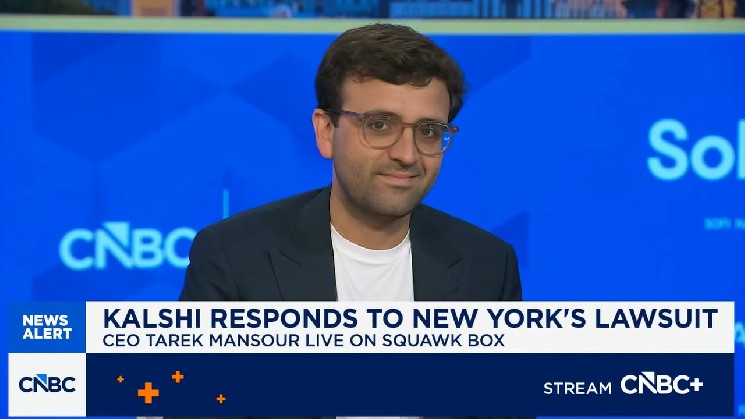
Magazine: XRP’s ‘now or never’ moment, Kalshi taps Solana: Hodler’s Digest

Пов'язані питання

QWhat is the main issue with Polymarket's trading figures as reported by Paradigm?

AThe main issue is that many major dashboards have been double-counting Polymarket's trading volume due to a data bug, where redundant 'OrderFilled' events for the same trade are incorrectly summed.

QWhy does Polymarket's onchain data cause this double-counting problem?

APolymarket's onchain data is complex and emits multiple 'OrderFilled' events for a single trade—one set for makers and another for takers—which describe the same trade from different perspectives but are often counted as separate transactions.

QWhich specific metrics are inflated by this accounting bug?

AThe bug inflates both notional volume and cashflow volume, which are the two common types of volume metrics used for prediction markets.

QWhat potential impact could this discovery have on Polymarket's perceived success and valuation?

AThe discovery could dent Polymarket's perceived success, as its reported trading volume—which was cited in its $9 billion valuation by ICE and previous fundraisers—may be significantly overstated, potentially raising questions about its true market activity.

QWhich data platforms were mentioned as double-counting Polymarket volume?

ADefiLlama, Allium, Blockworks, and many Dune dashboards were specifically mentioned as platforms that were double-counting the volume.

Пов'язані матеріали

Crypto Miners' Big AI Gamble: Valuations Enter Differentiation Stage, Comeback Fight Proves Tough

Crypto Mining Firms' AI Bet: Valuation Divergence and a Challenging Transformation Facing declining profitability in crypto mining, mining companies are pivoting to AI infrastructure, capitalizing on their existing power resources, land, and data center expertise to offer GPU compute power. This transition narrative has boosted their stock prices significantly, with firms like Hut 8 and Bitfarms seeing gains over 100% year-to-date, far outpacing Bitcoin. This has led to a market valuation split, with pioneers like CoreWeave reaching a $62.8B market cap, while others remain below $5B. The market currently prioritizes growth potential over short-term profits, which remain under pressure due to heavy capital expenditures for AI build-outs and crypto asset volatility. However, the transformation is a high-stakes gamble. Bitcoin mining profitability is shrinking, with the average production cost around $63,707 and miner margins contracting. While AI offers a more lucrative long-term path, it requires massive investment—estimated at a $500B near-term funding gap. Success now hinges on execution: delivering on contracted power capacity, securing quality tenants like major cloud providers, and managing the immense financial burden. The valuation focus is shifting from mere power capacity to project delivery, future cash flows, and tenant quality, making this a difficult but critical turnaround attempt.

链捕手5 хв тому

Crypto Miners' Big AI Gamble: Valuations Enter Differentiation Stage, Comeback Fight Proves Tough

链捕手5 хв тому

Analysis of the Latest Portfolio Adjustment by the "Top Player" in the U.S. Stock Market: $9 Billion Short on NVIDIA, Shifting Focus to Power and Memory Sectors

AI investor Leopold Aschenbrenner has made a significant portfolio shift, taking a $9 billion nominal short position against top AI infrastructure stocks like NVIDIA, ASML, and Oracle. Simultaneously, he is redirecting capital towards what he sees as the next critical bottlenecks in the AI boom: power, memory, and data center networking, alongside private investments in AI model companies like Anthropic. This move is interpreted not as a call that the AI bubble has burst, but as a rotation within the infrastructure stack. The analysis highlights NVIDIA's recent $25 billion bond issuance as a potential signal, questioning why a cash-rich company would seek external debt despite high profits and increased dividends/buybacks. The core investment thesis is that the initial, crowded "picks and shovels" trade in semiconductors is maturing. The next wave of capital is expected to flow into the physical and logistical constraints of AI expansion: electricity supply, memory chip capacity, data center construction, and enabling technologies like optical networking (fiber) for high-bandwidth communication, where copper remains crucial for short distances. Aschenbrenner's substantial (approx. 20% of fund) private stake in Anthropic is noted as a key part of his strategy—investing directly in the "mine" (AI models) rather than just the "shovels." The discussion concludes that while certain segments may be overvalued, the overarching AI infrastructure demand driven by real product usage remains robust. The most promising long-term investments are seen in essential, non-sexy infrastructure—particularly energy and power companies—whose demand is viewed as a global constant irrespective of AI's cyclicality.

marsbit26 хв тому

Analysis of the Latest Portfolio Adjustment by the "Top Player" in the U.S. Stock Market: $9 Billion Short on NVIDIA, Shifting Focus to Power and Memory Sectors

marsbit26 хв тому

BIT Research: Liquidity is Disappearing, Will Bitcoin Replay the Bottoming Pattern of 2022?

The crypto market is currently in an adjustment phase driven by policy expectations and liquidity shifts. Despite a brief rebound fueled by geopolitical easing and SpaceX's strong IPO performance, unexpectedly hawkish signals from new Fed Chair Kevin Warsh have removed anticipated easing support. Concurrently, stablecoin liquidity is shrinking, with insufficient new capital inflows, pushing the market into a typically quiet summer period. Pricing lacks catalysts for a sustained rally. Daily trading volume has significantly contracted, stablecoin growth has slowed markedly, and the supportive effect of Strategy's (formerly MicroStrategy) STRC preferred stock-financed Bitcoin purchases is fading. Amid policy uncertainty, seasonal weakness, and liquidity contraction, Bitcoin faces near-term downward pressure. Warsh's hawkish pivot and refusal to provide a clear policy outlook have increased risk premiums, historically unfavorable for Bitcoin. Technically, the trend remains bearish below $73,700, with $62,446 as critical support. A break below could accelerate declines, though a prolonged consolidation phase, similar to 2022's bottoming process, is possible. Liquidity is a core constraint. Current daily volume is around $500 billion, roughly 25% of the peak during the July-Oct 2025 rally. The 12-month growth rates for USDT and USDC have fallen to ~20%, with 6-month growth near zero, indicating weak new inflows. Bitcoin ETF and Strategy-driven inflows have also weakened, with a 30-day rolling net outflow. With inflation at 4.2% above the Fed's target, combined hawkish policy, seasonal factors, and liquidity shortages challenge Bitcoin's ability to hold above $60,000. However, this adjustment phase may be forming a cyclical low this summer, potentially setting the stage for the next bull cycle.

marsbit55 хв тому

BIT Research: Liquidity is Disappearing, Will Bitcoin Replay the Bottoming Pattern of 2022?

marsbit55 хв тому

Who Makes the Best Use of Claude Code? The Answer Might Not Be Programmers

Claude Code Usage Report Summary (Based on ~400k sessions) Core Finding: In agentic programming with Claude Code, a clear division of labor has emerged: humans primarily decide *what* to build (planning decisions), while Claude decides *how* to build it (execution decisions). Key Insights: 1. **Effectiveness is not limited to programmers.** In code-generation tasks, success rates for users in non-technical fields (law, finance, management, research) are nearing those of software engineers. What matters most is the user's domain expertise and understanding of the problem to be solved. 2. **Domain expertise drives success and efficiency.** Sessions where users exhibited "expert" proficiency in the task's domain saw verified success rates double compared to "novice" sessions. Experts also delegated more work per instruction, with Claude executing more actions and producing more output. 3. **AI is amplifying, not replacing, domain knowledge.** Claude Code lowers the *implementation* barrier, not the *judgment* barrier. The value of knowing the "what" and "why" is increasing relative to just knowing the "how" to code. 4. **Usage is evolving.** Over a 7-month period (Oct '25 - Apr '26), the share of sessions for debugging halved, while use for software operations, data analysis, and non-code writing roughly doubled. The estimated economic value of typical tasks increased by ~25%. Conclusion: The data suggests coding agents are making programming background less critical for completing technical tasks. However, they reward and amplify deep domain understanding. The ability to successfully direct an AI agent stems more from mastery of a specific field than from coding skill itself. The primary gains come from being competent in a domain; deep specialization adds only marginal additional advantage. This may signal a shift where software creation becomes integrated into various professions.

marsbit1 год тому

Who Makes the Best Use of Claude Code? The Answer Might Not Be Programmers

marsbit1 год тому

Торгівля

Спот
Ф'ючерси
活动图片