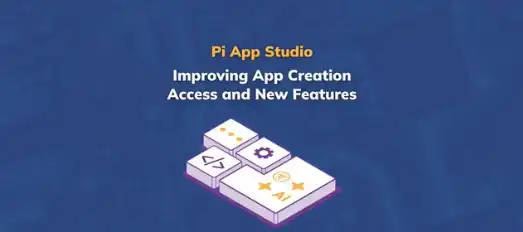
Pi Network App Studio Releases 2026 Feature Update: Creator Campaigns, Payment Functions, and Expanded Access

marsbitОпубліковано о 2026-01-24Востаннє оновлено о 2026-01-24

Анотація

Pi Network has announced the first 2026 update for Pi App Studio, introducing key features to foster a more inclusive and sustainable app creation environment. The update enables Pioneers to easily integrate Pi payments into their applications without any coding or technical background, currently supporting Test-Pi transactions. A new ad-supported option also allows users to deploy app iterations by watching ads instead of paying Pi, lowering barriers for those with low Pi balances or who haven’t migrated to Mainnet. Additionally, Pi Network launched a creator campaign and feedback survey, offering 5 Pi credits each to the first 1,000 qualified respondents to use for app creation. The collected feedback will guide future improvements to the platform. These enhancements collectively expand accessibility, encourage active participation, and support the integration of Pi cryptocurrency into practical, utility-driven applications. By reducing both technical and cost barriers, Pi App Studio empowers users of all backgrounds to turn creativity into application ownership and contribute to the long-term growth of the Pi ecosystem.

Pi Network announced the first 2026 update for Pi App Studio, introducing community creator campaigns, new payment integration features, and expanded app creation access, aiming to help more Pioneers experiment, iterate, and build practical applications to enhance Pi's utility. This update supports a more inclusive and sustainable app creation environment for the Pi ecosystem.

Core Feature Upgrades

Pioneers can now easily integrate Pi payment functions through App Studio without programming or technical background, currently supporting Test-Pi transactions. This feature simplifies the complex payment integration process into non-technical interactive steps, allowing creators to enable payment functionality by mentioning "Pi payment" in prompts when customizing applications. This innovation enables non-technical users to benefit from Pi payment integration like developers, supporting the sustainable development of App Studio applications.

Simultaneously, an ad-supported app creation option is introduced, allowing Pioneers to deploy application iterations by watching ads without paying Pi, particularly benefiting users who have not migrated to Mainnet or have insufficient Pi balances. This feature becomes available when a user's App Studio balance falls below 0.25 Pi. Although ad revenue cannot fully cover the actual costs of application generation and deployment, this subsidized measure aims to expand access and increase creative participation while preventing platform abuse.

Community Incentive Program

Pi Network has also launched a creator campaign and feedback survey, inviting Pioneers to participate in the survey, share feedback, and recommend App Studio applications they find useful. The first 1,000 qualified respondents will receive 5 Pi credits specifically for application creation and customization within App Studio. The collected feedback will guide future improvements to App Studio features and tools, ensuring the platform continuously meets creators' needs.

Significance for Ecosystem Development

These updates collectively expand the accessibility of Pi App Studio, encourage active usage, and help better integrate Pi cryptocurrency into the application experiences within the Pi ecosystem. By lowering technical barriers and cost obstacles, Pi Network provides a truly user-friendly application creation platform for all users, regardless of their technical background. By collecting feedback, enabling easy payment integration, and expanding app creation access, Pi App Studio continues to drive the creation of applications with genuine utility and use cases in 2026, helping Pioneers transform creativity into application and online business ownership, supporting the long-term development and practical application of the Pi ecosystem.

Пов'язані питання

QWhat are the key new features introduced in the Pi App Studio 2026 update?

AThe key new features include community creator campaigns, new payment integration capabilities, and expanded app creation access. These are designed to help more Pioneers experiment, iterate, and build utility apps to enhance Pi's utility.

QHow does the new Pi payment integration feature in App Studio work for non-technical users?

AThe Pi payment integration is simplified into non-technical, interactive steps. Creators can enable it by mentioning 'Pi payment' in their prompts when customizing an app, allowing non-technical users to benefit from the feature without coding knowledge. It currently supports Test-Pi transactions.

QWhat is the purpose of the ad-supported app creation option in the update?

AThe ad-supported option allows Pioneers to deploy app iterations by watching ads instead of paying Pi. This is particularly beneficial for users who have not migrated to Mainnet or have insufficient Pi balances. It aims to broaden access and increase creative participation while preventing platform abuse.

QWhat incentive does the Creator Campaign and Feedback Survey offer to participants?

AThe first 1,000 qualified respondents to the feedback survey will receive 5 Pi credits. These credits are dedicated to app creation and customization within the App Studio. The collected feedback will also guide future improvements to the platform's features and tools.

QWhat is the overall goal of these updates for the Pi ecosystem in 2026?

AThe overall goal is to create a more inclusive and sustainable app creation environment. By lowering technical and cost obstacles, the updates encourage active use, better integrate Pi cryptocurrency into app experiences, and support the long-term development and real-world application of the Pi ecosystem through the creation of apps with genuine utility.

Пов'язані матеріали

Who Captures Value in Web 2.5?

Title: Who Captures Value in Web 2.5? Summary: For most of financial history, moving money was difficult and slow. Cryptocurrencies and stablecoins promised faster, cheaper transfers. However, their true potential is realized not by replacing traditional finance but by acting as an efficient, invisible settlement layer beneath it—a hybrid model called "Web 2.5." This fusion combines the regulation and familiar interfaces of traditional finance with the low-cost, programmable, always-on settlement of crypto. The critical question is: where does value accumulate in this new system? The answer lies in the coordination or "translation" layer that bridges the two financial worlds. History shows that the middleman connecting systems often captures immense value, as seen with Visa or SWIFT. This layer controls the flow of funds and can extract fees, collect float interest, and wield significant power (e.g., sanctions). Now, four main models are competing to become this dominant translation layer: protocols (like Chainlink), market utilities, banking cooperatives, and central bank clubs. For instance, Chainlink, in partnership with a consortium of banks, is piloting real-time FX settlement. SWIFT is building its own blockchain-based ledger layer. The Bank for International Settlements is testing tokenized central bank reserves. Ultimately, Web 2.5 is more promising than a purely decentralized utopia because it doesn't require abandoning existing systems. Instead, crypto becomes a commoditized, hidden infrastructure enabling faster, cheaper transactions within the traditional financial framework. The winning coordination layer will hold the power and capture the economic value in this new landscape.

链捕手3 год тому

Who Captures Value in Web 2.5?

链捕手3 год тому

Торгівля

Спот
活动图片