Philippines blocks Coinbase, Gemini amid wider crackdown on unlicensed VASPs

cointelegraphОпубліковано о 2025-12-24Востаннє оновлено о 2025-12-24

Анотація

Amid a wider crackdown on unlicensed virtual asset service providers (VASPs), the Philippines has blocked access to major global cryptocurrency exchanges Coinbase and Gemini. The National Telecommunications Commission directed local internet service providers to restrict access to 50 platforms flagged by the central bank for operating without authorization. This action signifies a regulatory shift from informal tolerance to strict enforcement, making local licensing mandatory for market access. The country had previously banned Binance and identified other unlicensed exchanges like OKX, Bybit, and KuCoin. Meanwhile, regulated entities are expanding crypto services, with partnerships enabling stablecoin payroll and banking-integrated crypto trading.

Internet service providers (ISPs) in the Philippines began blocking major crypto trading platforms as regulators moved to enforce local licensing rules on crypto service providers.

Users reported that as of Tuesday, access to global cryptocurrency exchanges Coinbase and Gemini was unavailable in the Philippines. Cointelegraph independently confirmed that both platforms were inaccessible across multiple local ISPs.

A report by the Manila Bulletin said the ISP blocks followed an order from the National Telecommunications Commission, which directed providers to restrict access to 50 online trading platforms flagged by the Bangko Sentral ng Pilipinas (BSP), the central bank, as operating without authorization.

The central bank did not publish a full list of the platforms hit by the order. However, the change signals an ongoing shift by local regulators from informal tolerance to enforcement, making local licensing the deciding factor for crypto market access in the Philippines.
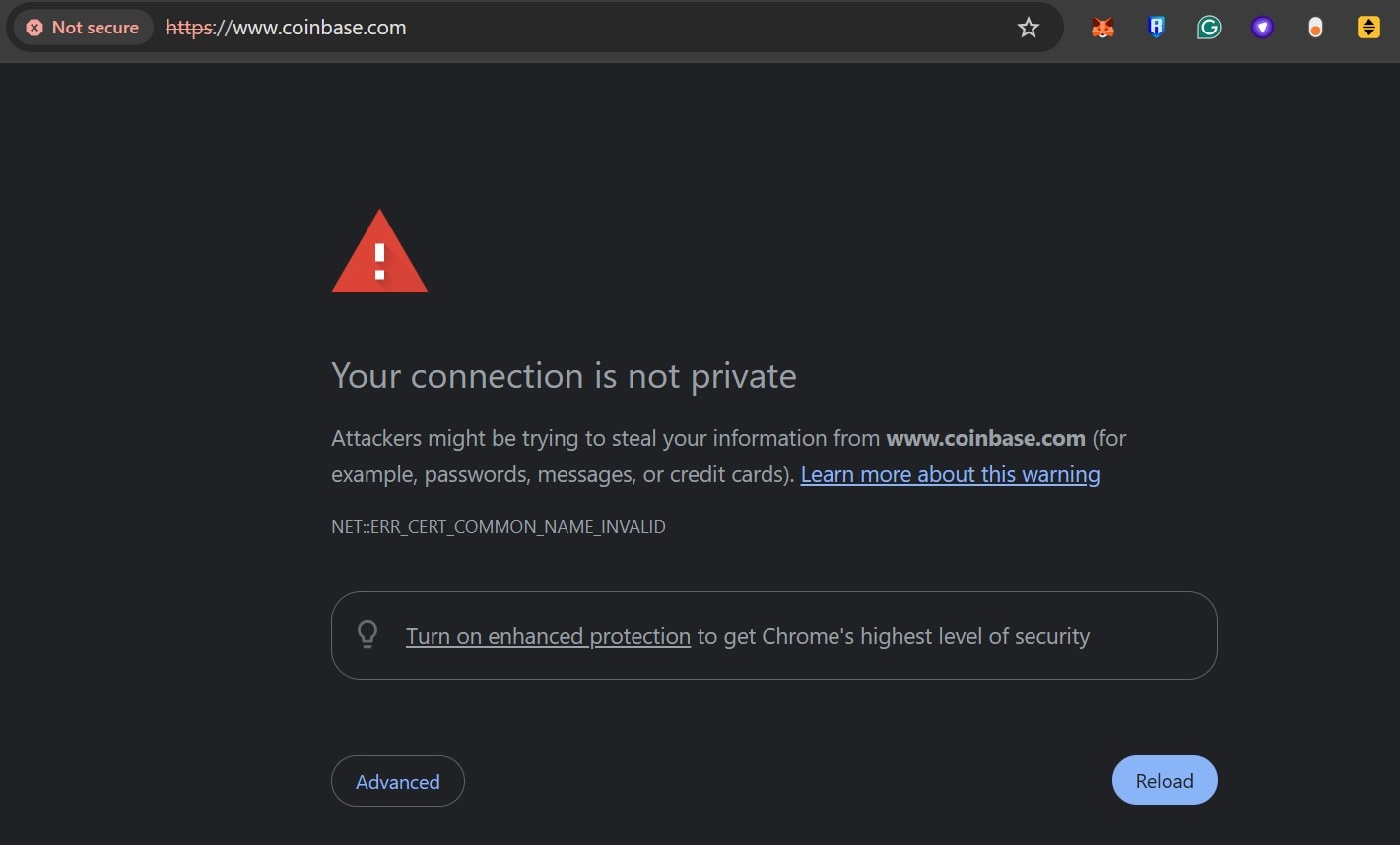
Crypto exchange Coinbase is now inaccessible in the Philippines. Source: Cointelegraph

Coinbase, Gemini join Binance in Philippines access block

While the Philippines has only recently blocked Coinbase and Gemini, the country has made enforcement moves against unlicensed crypto exchanges in the past.

In December 2023, the country started a 90-day countdown, giving Binance time to comply with local regulations before enforcing a ban on the crypto trading platform.

The Philippines Securities and Exchange Commission (SEC) said the period was meant to allow Filipinos to remove their funds from the exchange.

On March 25, 2024, the NTC ordered local ISPs to block Binance. Nearly a month later, the SEC ordered Apple and Google to block the exchange’s application from their stores.

After the ban was enforced, the Philippines SEC said it could not endorse ways for Filipinos to retrieve their funds.

More recently, the SEC identified 10 exchanges, including OKX, Bybit and KuCoin, operating without licenses.

Related: Grab deepens stablecoin push with StraitsX Web3 wallet and settlements

Regulated players roll out crypto products

While the country cracks down on unregulated platforms, compliant companies have been rolling out crypto-related infrastructure in the country.

On Nov. 19, regulated crypto exchange PDAX partnered with payroll provider Toku to let remote workers receive their salaries in stablecoins. This allows workers to convert earnings to pesos without wire fees or delays.

On Dec. 8, digital bank GoTyme rolled out crypto services in the Philippines following a partnership with US fintech firm Alpaca. With the rollout, 11 crypto assets can be bought and stored through the platform's banking application.

Magazine: Sei wallets in Xiaomi, Bhutan’s gold on Solana: Asia Express

Пов'язані питання

QWhy did the Philippines block access to Coinbase and Gemini?

AThe Philippines blocked access to Coinbase and Gemini because the National Telecommunications Commission, acting on an order from the central bank (BSP), directed ISPs to restrict access to these and other platforms flagged for operating without a local license.

QWhich government bodies were involved in the enforcement action against unlicensed crypto exchanges?

AThe enforcement action involved the Bangko Sentral ng Pilipinas (BSP), which flagged the unlicensed platforms, and the National Telecommunications Commission (NTC), which ordered internet service providers to block them. The Securities and Exchange Commission (SEC) was also involved in actions against other exchanges like Binance.

QWhat was the previous major enforcement action taken against an unlicensed crypto exchange in the Philippines before Coinbase and Gemini?

APrior to blocking Coinbase and Gemini, the Philippines enforced a ban on Binance. This process began with a 90-day countdown in December 2023 and culminated in the NTC ordering ISPs to block the platform in March 2024, followed by the SEC ordering its removal from app stores.

QWhat is the significance of this crackdown for the regulatory environment in the Philippines?

AThe crackdown signifies a major shift in the Philippines' regulatory stance, moving from informal tolerance to strict enforcement. It establishes local licensing as the decisive factor for crypto market access, prioritizing consumer protection and regulatory compliance.

QDespite the crackdown, what crypto-related services are being launched by compliant companies in the Philippines?

ACompliant companies are rolling out new services. Regulated exchange PDAX partnered with Toku to enable salaried payments in stablecoins, and digital bank GoTyme, in partnership with Alpaca, launched a service allowing users to buy and store 11 different crypto assets through its banking app.

Пов'язані матеріали

Real-life 'Black Mirror' Pumpfun Go: 40 Yuan to Lick Toilets, 14,000 USD for a Logo Tattoo on the Forehead

The article discusses the controversial new platform "Pumpfun Go," a bounty task platform launched by the meme coin platform Pump.fun. Its slogan is "Pay anyone to do anything." The platform allows users to anonymously post tasks with cryptocurrency rewards, which are held in escrow until completion and verification. The piece highlights extreme and disturbing tasks that have gained notoriety, such as licking a gas station toilet floor for roughly $5.63, eating live insects, getting a company logo tattooed on one's forehead for $14,000, and even a now-removed $700,000 bounty for suicide. These tasks are often linked to promoting specific meme coins by generating shocking, attention-grabbing content. While some tasks involve community-building or charity, critics, including New York Governor Kathy Hochul, condemn the platform for exploiting economic desperation and encouraging humiliating or dangerous behavior. They argue it mirrors dystopian narratives from shows like "Black Mirror" and movies like "Nerve," where online dares escalate for viewers' entertainment. Supporters and some participants counter that the platform provides much-needed income opportunities for the financially struggling. One user claimed the bounty money far exceeded his monthly salary. The article concludes by questioning the morality of a system where the wealthy pay for spectacle and the poor trade dignity for survival, reflecting a long history of public consumption of others' suffering. It suggests hope may lie in future technological abundance freeing people from such desperate choices.

marsbit6 хв тому

Real-life 'Black Mirror' Pumpfun Go: 40 Yuan to Lick Toilets, 14,000 USD for a Logo Tattoo on the Forehead

marsbit6 хв тому

Faked Trades, Clone Websites, 1105 Videos: Polymarket Under CFTC Scrutiny

The U.S. Commodity Futures Trading Commission (CFTC) has launched a wide-ranging investigation into prediction market platform Polymarket. The probe, triggered by a Wall Street Journal report, focuses on allegations of systematic marketing fraud. The report revealed Polymarket allegedly hired dozens of student content creators to post over 1,100 videos showing fake, profitable trades on cloned websites, without disclosing the paid relationships. These videos, with over 140 million views, were pivotal to user growth. Simultaneously, the National Association of Consumer Advocates (NACA) filed a lawsuit in Washington D.C., accusing Polymarket and its executives of deceptive advertising targeting college students. The suit details off-campus promotions and payments made through the CMO's personal PayPal account to influencers who failed to disclose sponsorships. The investigation places CFTC Chairman Michael Selig in a difficult position, as he has been a vocal advocate for prediction markets and is currently suing multiple states to assert federal jurisdiction over them. This case tests the CFTC's dual role as both promoter and enforcer. This marks Polymarket's second major clash with the CFTC. After a 2022 settlement and U.S. ban, it regained approval to operate in September 2025, secured a $20 billion investment, and saw its valuation soar. The current crisis, compounded by a recent $3.1 million front-end supply chain attack, represents the platform's most severe multi-front challenge since its founding.

Foresight News8 хв тому

Faked Trades, Clone Websites, 1105 Videos: Polymarket Under CFTC Scrutiny

Foresight News8 хв тому

Real-Life 'Black Mirror' Pumpfun Go: 40 Yuan to Lick a Toilet, $14,000 to Tattoo a Logo on Your Forehead

Pumpfun Go, a bounty task platform launched by the meme coin platform Pump.fun, is facing intense controversy. The platform's slogan "Pay anyone to do anything" has manifested in real-world tasks where participants perform increasingly extreme or demeaning acts for cryptocurrency rewards. These tasks range from licking a gas station toilet floor for roughly $5.63 to getting a permanent "bounty.fun" logo tattooed on one's forehead for $14,000. Other completed challenges include eating live insects and quitting a job on camera. The highest-value active bounty offers approximately $560,000 for climbing Mount Everest and placing a bet on a specified platform. While some tasks involve promoting meme coins or community events, the platform has drawn widespread criticism for incentivizing the exploitation of economic desperation. Participants, often citing "we need money" as their motivation, complete these tasks for sums that can far exceed their regular income. Critics, including New York Governor Kathy Hochul, have condemned Pumpfun Go as a dystopian system that commodifies human dignity and preys on the vulnerable. Supporters argue it provides a novel income opportunity for those in need. The debate highlights deeper societal issues around power, inequality, and the historical human fascination with spectacles of humiliation. The platform's existence raises questions about the ethical limits of anonymous online markets and the persistent reality where financial need forces individuals to trade their dignity for survival.

Odaily星球日报15 хв тому

Real-Life 'Black Mirror' Pumpfun Go: 40 Yuan to Lick a Toilet, $14,000 to Tattoo a Logo on Your Forehead

Odaily星球日报15 хв тому

Торгівля

Спот
活动图片