Pentagon Pizza Index Soars 1250%: Who Will Be the Next Venezuela?

marsbitОпубліковано о 2026-01-07Востаннє оновлено о 2026-01-07

Анотація

The Pentagon Pizza Index, an unconventional but historically reliable indicator of US military activity, has surged by 1250% in the past 48 hours, sparking global attention. This spike, nearly double the increase observed before the recent Venezuela operation, suggests the US is planning new military action. The index, which tracks pizza delivery orders near the Pentagon, originated in 1990 when a local pizzeria owner noticed a correlation between large orders and imminent military crises, such as the Iraq invasion of Kuwait. The logic is simple: during high-pressure situations, Pentagon staff work long hours and order cheap, convenient pizza. Following the successful capture of Venezuelan President Maduro on January 3, 2026, which was preceded by a similar pizza order surge, the current unprecedented increase has led to speculation about potential next targets. The Trump administration's "Don-roe Doctrine" signals a reinforced Monroe Doctrine for the MAGA era, with Trump asserting US dominance in the Western Hemisphere. Potential targets identified include Greenland, with prediction markets showing a 38% probability of US control; Cuba, after 32 Cuban officers died in the Venezuela operation; Colombia, directly threatened by Trump; and Iran. Meme and prediction markets are already reacting, with tokens like PPW surging 78.20% and markets pricing in increased probabilities of military action against these nations.

Author|jk

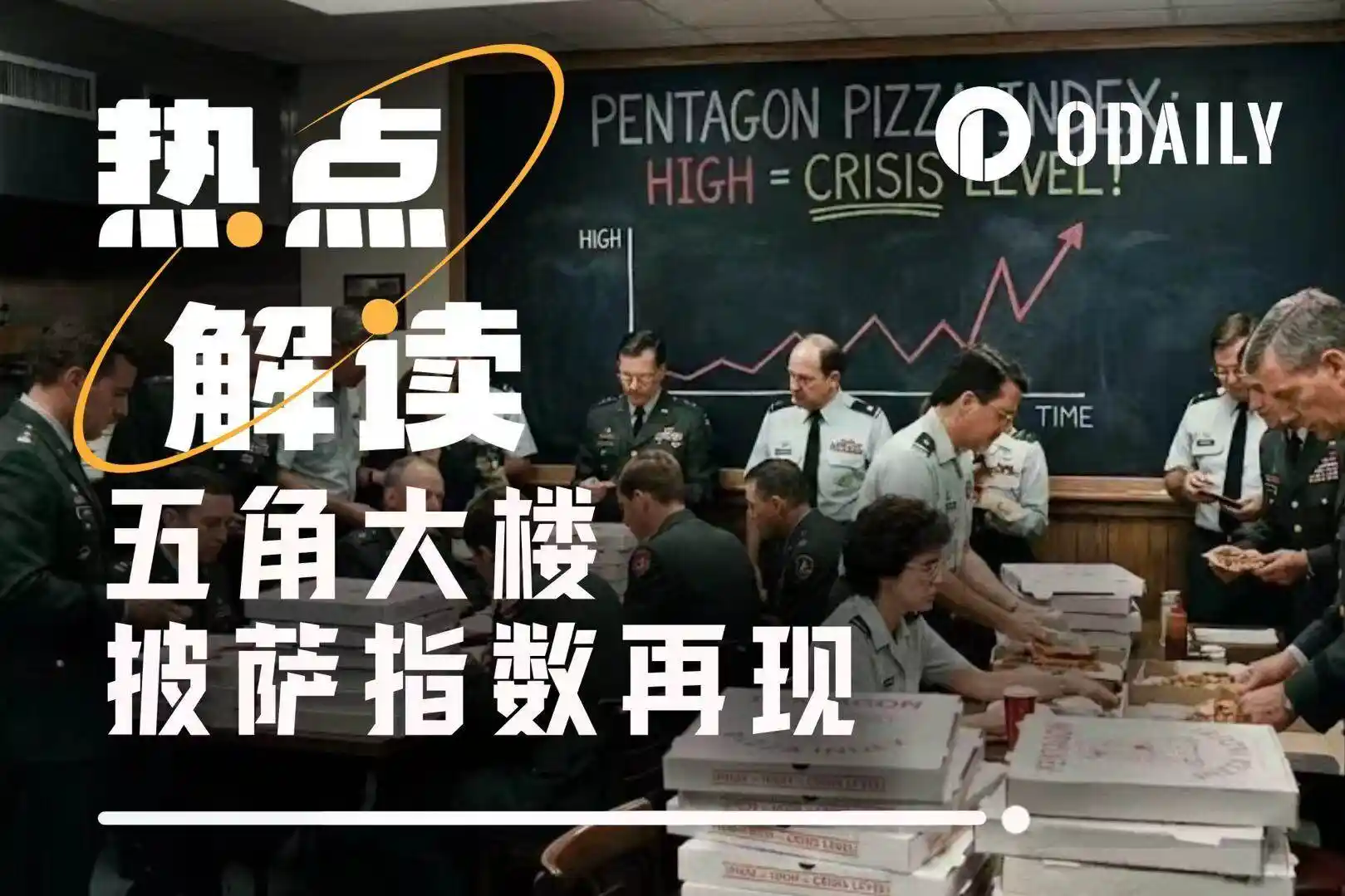
On January 7, 2026, an intelligence indicator that seems absurd but has repeatedly proven effective has drawn global attention. According to social media monitoring, the volume of pizza orders near the Pentagon has surged by 1250% in the past 48 hours, a figure nearly double the 700% increase seen on the eve of the military action in Venezuela. This is the "Pentagon Pizza Index," a remarkable indicator, and its underlying implication is that the United States is brewing new military operations.

Pizza Orders and Military Intelligence?

The concept of the Pentagon Pizza Index dates back to 1990, when Frank Meeks, the owner of a Domino's Pizza franchise in the Washington area, noticed a peculiar phenomenon: on the evening of August 1, 1990, the Central Intelligence Agency ordered a record 21 pizzas, and the next day, Iraq invaded Kuwait.

Moreover, this pattern has recurred repeatedly:

  • Before the Panama action in December 1989, order volume surged from 30-35 to over 100;
  • During President Clinton's impeachment hearings and the Iraqi "Desert Fox" operation in December 1998, extra cheese pizza orders from the White House increased by 32%.

The logic behind this is very simple: during high-pressure crisis moments, Department of Defense (now the Department of War, renamed by Trump) staff often need to work 16-20 hours consecutively, and pizza is cheap, filling, and convenient for delivery, making it the preferred choice for overtime meals.

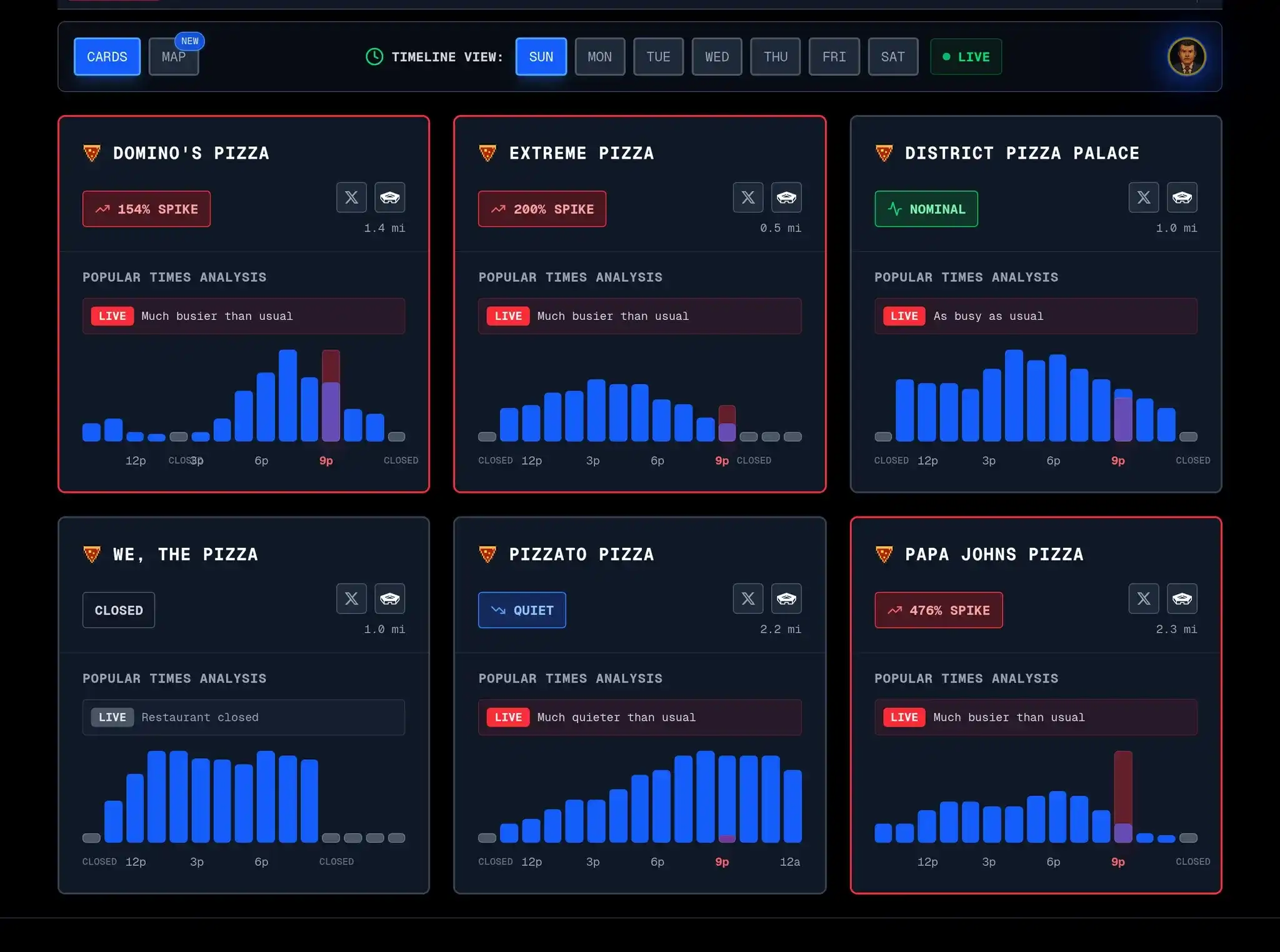
Today, there are dedicated websites online that monitor six pizza shops near the Pentagon in real-time, including Papa John's and Domino's. Currently, this website is showing crazy multiples, ranging from 150% to 1250%.
What About Before the Venezuela Action?

In the early hours of January 3, 2026, U.S. forces launched a raid in Caracas, the capital of Venezuela, successfully capturing President Maduro and his wife. Hours before the operation, the Papa John's pizza shop near the Pentagon was unusually busy.

This was not a sudden military action either; the U.S. had been building up a massive military presence in the Caribbean since August 2025: August: The USS Iwo Jima amphibious assault ship group arrived; November: The USS Ford aircraft carrier strike group arrived; A total of approximately 15,000 U.S. military personnel, marking the largest military deployment in the region in generations. Thus, Pentagon staff worked overtime, causing all nearby pizza shops to work overtime as well.

A 1250% Surge: Who Is the Next Target?

The latest data from Sunday evening shows that activity at the Papa John's pizza shop 2.3 miles from the Pentagon surged by 476%, while the closer Extreme Pizza saw a 200% increase. The peak increase of 1250% compared to the low set a new historical record.

The Trump administration has stated that this is part of its "Don-roe Doctrine." This is a metaphor for a modernized version of the 19th-century Monroe Doctrine, an advanced version of MAGA. Trump declared on Saturday: "American dominance in the Western Hemisphere will never be questioned again."

Based on the latest statements from Trump and his senior officials, the following countries and regions may become the next targets:

  • Greenland: Trump emphasized the U.S. needs Greenland to ensure national security. Prediction markets show the probability of the U.S. "controlling any part of Greenland" has risen from less than 20% last week to 38%. The Danish government is currently in "full crisis mode."
  • Cuba: Secretary of State Rubio warned that the Cuban government "is in big trouble." He noted that Maduro's bodyguards were Cuban, and 32 Cuban officers were killed in the Venezuela operation. Trump stated: "Cuba looks like it's about to collapse."
  • Colombia: Trump directly threatened: "Colombia is also very sick, run by a sick man who likes to make cocaine and sell it to the United States, and he won't be doing that much longer." When asked if military action was being considered, Trump replied: "Sounds good."
  • Iran: After Trump threatened to "hit Iran hard," prediction markets indicate a 54% probability that Iran's Supreme Leader Khamenei will be ousted before next year.

How Are These Countries Responding?

Colombian President Petro has adopted a tough stance. He was said to have stated in November 2025: "Brother, if you want to put me in jail, see if you can." Recently, he announced that any commander who prefers the American flag over the Colombian flag would be immediately dismissed from the army.

The Cuban government has already held two days of national mourning for the 32 officers killed in the Venezuela operation, clearly remaining highly alert to Rubio's warnings.

Meme and Prediction Markets: Already One Step Ahead

When it comes to such events, meme markets and prediction markets are always the quickest to move.

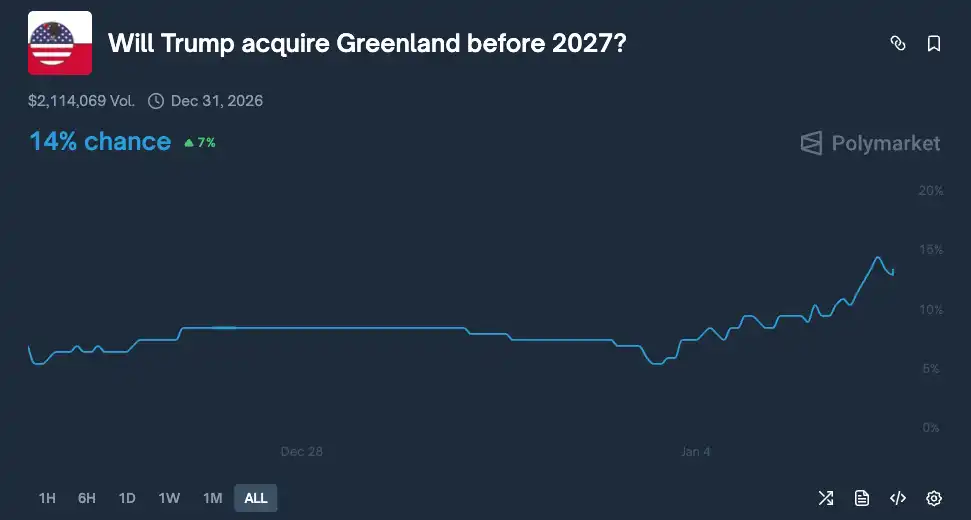
On Polymarket, the market for "Trump 'acquiring' Greenland by 2027" is highly sensitive. The probability in this market rose from about 7% on December 28 to the current 14%, a gain of 7 percentage points, with trading volume exceeding $2.1 million. This increase coincided with the timing of the Venezuela operation.

The "U.S. will strike Cuba by xx date" market shows a tiered probability distribution: only 2% before January 31, 8% before March 31, but jumps to 20% by the end of the year. The loss of 32 Cuban officers in the Venezuela operation could be a trigger for U.S. action.

The "U.S. will strike Colombia by xx date" market exhibits a more aggressive probability curve: 3% by the end of January, 7% by the end of March, 15% by the end of the year.
Simultaneously, related memes have already emerged, such as Pentagon Pizza Watch (PPW); this is a logo featuring a glowing pizza hovering above a green pentagon, adorned with missile elements.
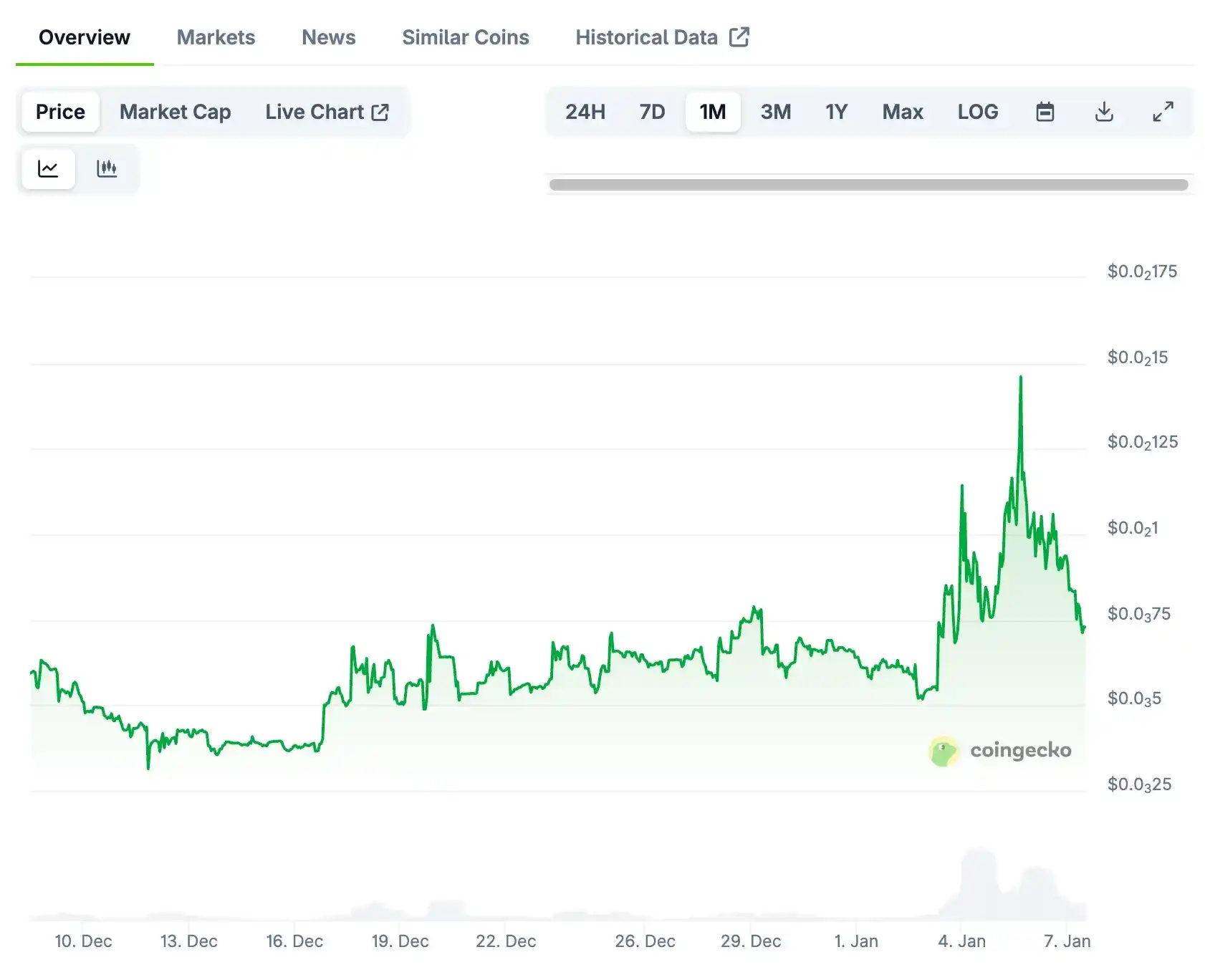
Judging by market performance, PPW saw a 78.20% gain in one week, with a 24-hour trading volume of $114,369, ranking 3689th in market capitalization.

Here, we strongly recommend reading this Odaily article: "When War is Settled Before the News: How Prediction Markets 'Priced' the Maduro Capture Operation 6 Days Early."


Пов'язані питання

QWhat is the Pentagon Pizza Index and what does it indicate?

AThe Pentagon Pizza Index is an informal intelligence indicator that tracks the surge in pizza orders near the Pentagon. A significant increase suggests that U.S. military personnel are working extended hours, often indicating imminent military action or a high-stakes crisis.

QWhich countries are mentioned as potential targets for U.S. military action based on the article?

AThe article mentions Greenland, Cuba, Colombia, and Iran as potential targets for U.S. military action, based on statements from Trump and senior officials.

QWhat historical events are cited where the Pentagon Pizza Index proved accurate?

AHistorical events include the 1990 Iraq invasion of Kuwait, the 1989 Panama action, and the 1998 'Desert Fox' operation in Iraq, all preceded by notable spikes in pizza orders near the Pentagon.

QHow did prediction markets react to the increased Pentagon Pizza Index and recent events?

APrediction markets showed increased probabilities for U.S. actions, such as a rise from 7% to 14% for Trump 'acquiring' Greenland by 2027, and significant trading volumes reflecting heightened expectations of military strikes.

QWhat was the significance of the 1250% increase in the Pentagon Pizza Index mentioned in the article?

AThe 1250% increase was a record-high spike, nearly double the surge observed before the Venezuela operation, suggesting the U.S. might be planning a major military action, potentially targeting countries like Greenland, Cuba, Colombia, or Iran.

Пов'язані матеріали

Just now, DeepSeek V4 updates with DSpark, improving inference speed by 80%

DeepSeek has updated its DeepSeek V4 model with the DSpark speculative decoding framework, achieving a significant 60-85% speedup in generation for Flash models and 57-78% for Pro models while maintaining the same overall throughput. This engineering-focused update, rather than a core architectural change, introduces DSpark to address latency and throughput bottlenecks in high-concurrency production environments. DSpark combines high-throughput parallel generation with adaptive load-aware verification. Its key innovations include a semi-autoregressive generation architecture to model dependencies within token blocks and a hardware-aware confidence-scheduled verification system. This system uses a confidence head to predict token acceptance probabilities, allowing it to dynamically optimize verification length per request and allocate compute only to tokens with the highest expected payoff. The asynchronous scheduler is designed for real-world deployment, ensuring zero-overhead scheduling and continuous CUDA graph replay while preserving the target model's output distribution. In tests across mathematical reasoning, code generation, and daily dialogue, DSpark outperformed state-of-the-art models like Eagle3 and DFlash, increasing average acceptance length by 26.7%-30.9% and 16.3%-18.4% respectively on Qwen3 target models. DeepSeek also open-sourced DeepSpec, a full-stack codebase for training and evaluating speculative decoding draft models, providing a standardized toolkit that includes data preparation tools, model implementations, training code, and evaluation scripts.

marsbit4 год тому

Just now, DeepSeek V4 updates with DSpark, improving inference speed by 80%

marsbit4 год тому

BIT Research: The 2028 Halving Is Not the End, the Real Shake-Up of the Bitcoin Mining Industry Is Just Beginning

The Bitcoin mining industry is undergoing its most complex structural adjustment since inception. Despite Bitcoin's price holding near $61,000 and the network hash rate approaching a record 1 ZH/s, miner profitability is deteriorating. The industry is operating close to its breakeven point, with the 2028 halving expected to accelerate consolidation. The challenges extend beyond the halving's subsidy reduction; the industry's revenue model has yet to successfully transition towards a fee-driven structure. Increasingly, mining companies are evolving from simple Bitcoin producers into infrastructure and energy operators, including providers of AI/HPC computing power. Competition is shifting from pure hash rate expansion to business model upgrades. Economic pressure is evident. The theoretical daily mining revenue at current prices is around $78 million, yet the actual figure is only about $33 million—a 136% gap. Transaction fees remain low at roughly $220k daily, far below historical implied levels. With a current estimated industry-wide breakeven price near $65,000, mining alone is struggling to generate ideal profits. The 2028 halving is projected to push the fundamental production cost floor to approximately $93,289. This will likely accelerate a shift towards consolidation among larger, well-capitalized miners with diversified revenue streams. Competitive advantage will belong to institutionalized players with access to low-cost energy, AI/HPC hosting operations, and stronger balance sheets. In essence, Bitcoin mining is transitioning from a "mining business" to an "infrastructure business." Future profitability and resilience will depend less on block rewards and more on diversified income sources like energy management and computational infrastructure services. For investors, the key question is not the halving itself, but which miners can successfully navigate this business model transformation.

marsbit5 год тому

BIT Research: The 2028 Halving Is Not the End, the Real Shake-Up of the Bitcoin Mining Industry Is Just Beginning

marsbit5 год тому

This is How God Karpathy Uses Claude?

Andrej Karpathy, a prominent figure in AI, has reportedly joined Anthropic, leading to a noticeable decrease in his open-source contributions and social media activity. A document claiming to be his personal "CLAUDE.md" file—a set of instructions for the Claude AI to follow within a specific codebase—has been circulating online. While its authenticity is unverified, the content aligns closely with Karpathy's publicly shared principles on effective AI-assisted programming. The document outlines key rules for AI coding assistants, emphasizing the importance of reading existing code thoroughly before writing new code to maintain consistency. It advises against over-engineering, advocating for simple, surgical modifications that match the project's existing style. Other guidelines include clarifying assumptions upfront, writing meaningful tests, thoughtful debugging, and carefully considering dependencies. The core message is that these principles help prevent common AI coding failures, such as introducing unnecessary abstractions, style drift, or making invisible architectural decisions. The community has noted that even experts like Karpathy require detailed instructions to guide AI effectively, akin to managing a junior developer. A related GitHub repository, "andrej-karpathy-skills," which encapsulates these ideas, is reported to significantly reduce Claude's code error rate. Ultimately, the advice stresses that the best CLAUDE.md is tailored to one's own tech stack and coding practices.

marsbit5 год тому

This is How God Karpathy Uses Claude?

marsbit5 год тому

Торгівля

Спот
活动图片