Overnight, Crypto Moguls Were Severely Mocked by 'Vanity Fair'

marsbitОпубліковано о 2026-03-18Востаннє оновлено о 2026-03-18

Анотація

Crypto industry leaders, including Cathie Wood (ARK Invest), Olaf Carlson-Wee (Polychain), and Michael Novogratz (Galaxy Digital), faced widespread mockery after a Vanity Fair cover story portrayed them in an unflattering light. The article, titled “Crypto’s True Believers Demand to Be Taken Seriously,” depicted the billionaires as eccentric and out-of-touch—highlighting their interests in alien life, extreme survivalism, and going barefoot, while questioning their influence on global power structures. Industry insiders criticized the piece for reinforcing negative perceptions. A former fashion photographer noted the deliberately demeaning composition of the photos, such as camera angles that diminished Wood’s stature and shadowy, unflattering shots of Novogratz. The coverage was seen as a deliberate attempt to ridicule the crypto elite rather than engage with the industry seriously. The incident sparked broader reflection: some argued that seeking validation from traditional media contradicts crypto’s original anti-establishment ethos. As one founder noted, “We weren’t built for Vanity Fair or Forbes. We were built to rebel against everything they represent.” The episode underscores the tension between crypto’s growing political influence and its struggle for cultural legitimacy.

Author: Gu Yu, ChainCatcher

Overnight, a group photo of crypto moguls flooded the X timelines of all crypto practitioners, accompanied by overwhelming ridicule and criticism.

The protagonists in the picture include industry heavyweights such as ARK Invest CEO Cathie Wood, Polychain founder Olaf Carlson-Wee, and Galaxy Digital founder Michael Novogratz, but this still couldn't stop the storm, which even intensified.
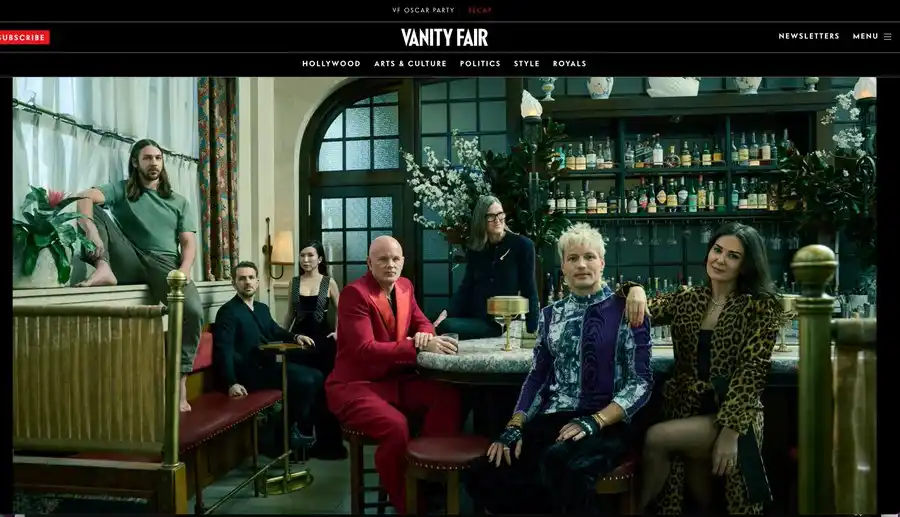
Upon closer examination of this group photo, it can be identified as a work from the venerable celebrity magazine 'Vanity Fair,' published in the latest issue's cover story 'Cryptocurrency's True Believers Demand to Be Taken Seriously.'

Through close observation of the industry's core circle, this article delves into how, after enduring multiple rounds of regulatory storms and market crashes, the crypto industry is attempting to redefine the global power landscape in 2026 through massive political donations and a 'messianic' grand narrative.

Although the stories of crypto industry moguls have already appeared in a series of traditional magazines like 'Fortune' and 'The New York Times,' 'Vanity Fair,' as a media outlet deeply versed in celebrity culture, clearly has a more 'sinister' reporting perspective. The article doesn't dwell much on complex industry trends but instead spends considerable ink on the starkly contrasting private life details of these 'power restructurers.'

In the author's portrayal, these billionaires are depicted as a group of eccentrics who are both detached from reality and eager to dominate it: on one hand, they discuss the future of human civilization in mansions in Puerto Rico; on the other hand, they are obsessed with searching for extraterrestrial life, practicing extreme survivalism, and even often going barefoot in public.

Triple Crown Digital partner Noelle Acheson commented on this, saying, 'We can laugh (and indeed we want to laugh) at 'Vanity Fair's' photos, at the awkward poses and perplexing character portrayals... but the deeper question is: Is this how the mainstream media views the cryptocurrency industry? If so, we have a lot of work to do.'

In the view of most industry insiders, this article not only fails to positively portray cryptocurrency practitioners but also highlights stereotypes about the crypto industry.

Tally co-founder Dennison Bertram further revealed that this article is 'Vanity Fair' magazine deliberately mocking cryptocurrency and its related figures, with both text and photos filled with deep disdain and sarcasm. Before getting involved in cryptocurrency, he had worked as a fashion photographer for over a decade.

He analyzed Cathie Wood's individual portrait as an example: 'Here, Cathie Wood is deliberately made to appear small. The camera looks down on her, and the composition deliberately downplays her stature. The messy curtains, her crossed ankles, and the intentionally placed luggage cart all contribute to the deliberately created冷酷无情 (cold and ruthless) effect in the frame. Could there be a more mean-spirited visual effect than this?'

Looking at Michael Novogratz's photo: 'His eyes are squinted, looking fierce. Why? Because he's wearing glasses. He's holding them, almost invisible. His face is deliberately cast in shadow, appearing very menacing. Again, it's a mess, everything is crooked, nothing is整齐划一 (neat and uniform). Is this a positive image? I don't think so at all.'
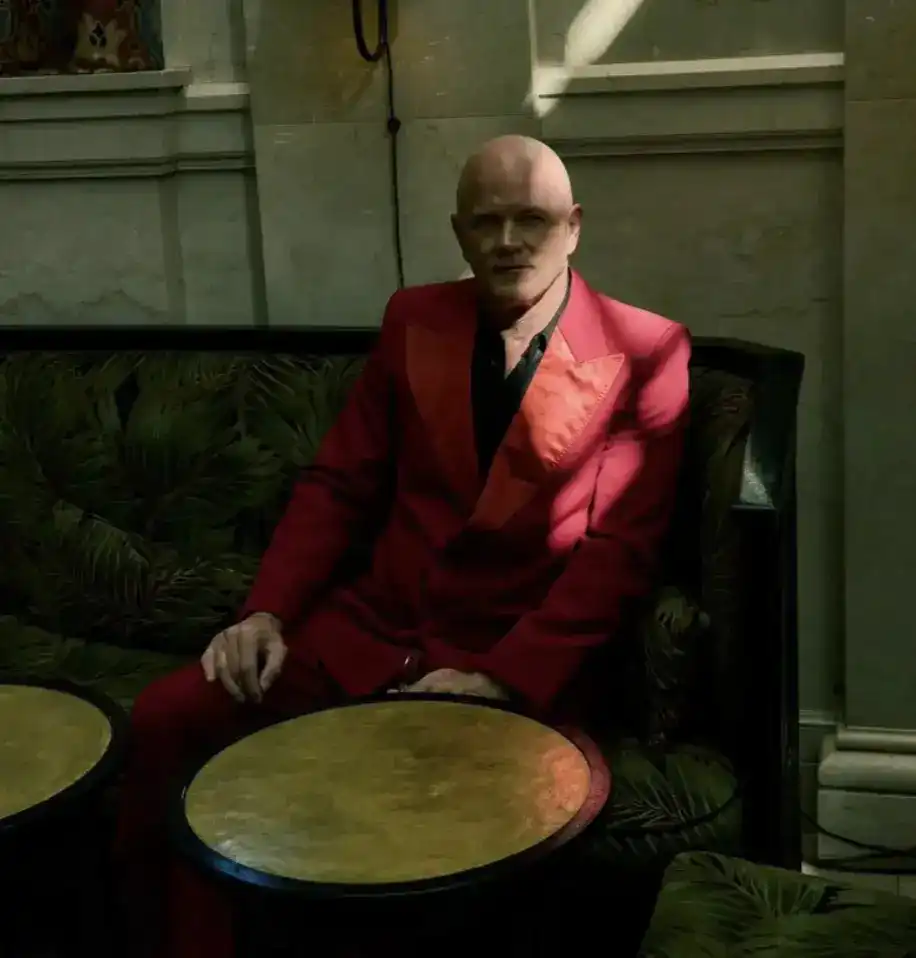
A group of moguls who rose to the top through the crypto industry, originally attempting to seek more recognition and support from the outside world through 'Vanity Fair' magazine, unexpectedly fell into a huge 'trap' and ended up appearing as clown-like figures in the public eye. This is undoubtedly a painful lesson.

At this point, the very act of seeking validation in mainstream magazines has itself become an object of criticism. Nozomi founder Jinelle D'Lima believes that Satoshi Nakamoto and the cypherpunks never sought approval. 'The key point is, you don't need their approval: capital flows don't need it, the network runs without it, everything operates without it. We weren't built to cater to 'Vanity Fair' or 'Forbes.' We were built to resist everything they represent: gatekeepers, the establishment, and those who decide what is legitimate and what is illegal.'

'Now we're on the cover. Could it be any more ironic? This isn't like us. We were never supposed to be these people.' Jinelle D'Lima said.

The reason 'Vanity Fair's' report has become a vortex of controversy is that it reveals an awkward predicament for the crypto industry: Even though the industry attempts to exchange astronomical political donations and 'capitulation' to the mainstream financial system for 'serious treatment' from mainstream circles, within the aesthetic and value systems of mainstream culture, these new elites are still viewed as a subcultural group with cult-like overtones.

This PR disaster might be telling everyone: the true power of the crypto industry has never been in the mainstream media coverage, but in the code that can run just fine without needing to be 'taken seriously'.


Пов'язані питання

QWhat was the main criticism from the crypto community regarding Vanity Fair's article and photos?

AThe crypto community criticized Vanity Fair for portraying industry leaders in a mocking and disrespectful manner, using unflattering photos and emphasizing eccentric personal details rather than serious industry trends, which reinforced negative stereotypes.

QHow did Dennison Bertram analyze the photographic techniques used in Cathie Wood's portrait?

ADennison Bertram, a former fashion photographer, analyzed that Cathie Wood was deliberately made to appear small through a top-down camera angle, cluttered background with messy curtains, crossed ankles, and a luggage cart, creating a冷酷无情 (cold and ruthless) visual effect.

QWhat deeper issue did Noelle Acheson raise about the Vanity Fair coverage?

ANoelle Acheson raised the concern that if this is how mainstream media perceives the cryptocurrency industry, then there is still significant work to be done to improve its image and understanding among traditional outlets.

QAccording to Jinelle D'Lima, what is seeking validation from mainstream magazines like Vanity Fair contrary to?

AJinelle D'Lima stated that seeking validation from mainstream magazines contradicts the original ethos of crypto pioneers like Satoshi Nakamoto and cypherpunks, who built the industry to resist gatekeepers, institutions, and those who decide legitimacy, rather than to seek their approval.

QWhat lesson did the Vanity Fair incident teach the crypto industry about its power and acceptance?

AThe incident highlighted that the crypto industry's true power lies in its code and decentralized operation, which function without needing validation from mainstream media or traditional financial systems, and that seeking acceptance from these circles may result in misrepresentation and ridicule.

Пов'язані матеріали

Must-Watch Events Next Week|CLARITY Act Could Face Senate Vote; SpaceX, Circle to Report Earnings (8.3-8.9)

**Summary: Key Events and Developments to Watch (August 3-9)** The upcoming week is marked by significant financial disclosures, key legislative deadlines, and notable product updates. **Major Financial Events:** Several companies are scheduled to release their Q2 2026 earnings. American Bitcoin (ABTC) will report on August 3, followed by SpaceX and Hut 8 Mining Corp. on August 4, and Circle on August 5. Notably, a significant portion of SpaceX shares (up to 12% of total shares) will be unlocked on August 6 following their earnings release. **Key Legislative Deadline:** The U.S. Senate faces an August 7 deadline to secure 60 votes for the CLARITY Act, a bipartisan bill aiming to establish a federal regulatory framework for cryptocurrencies. The Senate may hold a full vote on the bill during the week. **Economic Data:** The U.S. July Non-Farm Payrolls report will be released on August 7, providing crucial labor market data. **Technology & Product Updates:** * **Shutdowns:** DeFi portfolio tracker Zapper and wallet app Ctrl Wallet will cease operations on August 3. * **Upgrades:** LayerZero will deprecate its v1 relayers on August 3. XRP Ledger's new version 3.3.0, featuring five new functions, is expected next week. * **AI:** Elon Musk announced that the advanced Grok 4.6 AI model is set for release around August 7. * **Bitcoin:** The BIP-110 forced signaling for a potential Bitcoin network change is scheduled to begin around August 8. **Other Notable Events:** Chinese robotics firm Unitree Tech has set its preliminary price inquiry for its IPO for August 5. South Korean exchange Upbit will delist AQT and AERGO tokens on August 3.

marsbit1 хв тому

Must-Watch Events Next Week|CLARITY Act Could Face Senate Vote; SpaceX, Circle to Report Earnings (8.3-8.9)

marsbit1 хв тому

Stocks Are Plummeting More Sharply Than Cryptocurrencies. Where Has the Money Gone?

Stock Markets Plunge Deeper Than Cryptocurrencies: Where Did the Money Go? In late July, Seoul's Kospi index triggered circuit breakers for two consecutive days, plummeting over 40% from its June high. The collapse was led by heavyweight stocks like SK Hynix, whose record profits still disappointed investors, and devastating leveraged ETFs, with one major product losing over 83% of its value. This signaled a global, forced deleveraging targeting the most crowded trades. Interestingly, while stocks exhibited extreme volatility akin to crypto markets, Bitcoin rose nearly 15% in July after a prior steep drop. Analysis shows the money fleeing equities did not flow into Bitcoin. Instead, Bitcoin had already absorbed its sell-off in May-June, when U.S. spot Bitcoin ETFs saw historic outflows. The true safe-haven beneficiary was gold, whose price rose over 20% year-on-year, highlighting a decoupling between Bitcoin and gold as "digital gold." The sell-off was a targeted unwinding of leveraged positions in tech and semiconductors, accelerated by broker-dealer risk management and shifts in the AI narrative, including new competition from Chinese memory chipmakers. The retreat path was clear: from high-valuation tech stocks to cash and U.S. Treasuries, then to gold. For Bitcoin to attract sustained institutional inflows, conditions like eased global liquidity pressure, a "soft-landing" Fed rate cut, and U.S. regulatory clarity via legislation like the stalled CLARITY Act are needed. Currently, Bitcoin is not a safe haven but an already-cleared asset. Its low correlation with tech stocks, however, makes it a potential diversification play for institutional portfolios once the storm passes. The money isn't here yet, but the positioning is underway.

marsbit2 хв тому

Stocks Are Plummeting More Sharply Than Cryptocurrencies. Where Has the Money Gone?

marsbit2 хв тому

In Conversation with Ray Dalio: We Are Currently in an AI Bubble, with 1% of My Portfolio in Bitcoin

Ray Dalio, founder of Bridgewater Associates, warns in an interview that the current AI boom shows classic bubble characteristics, which could lead to significant economic downturns as seen in past cycles like 1929 or 2000. He explains that speculative enthusiasm, fueled by debt and overvaluation, often precedes a crash when rising rates or taxation force asset sales, causing widespread losses and recession. Dalio also outlines his "Big Cycle" theory, describing an approximate 80-year pattern where widening wealth gaps, massive government deficits, and shifting geopolitical power (like China's rise) create internal conflict and global instability. He emphasizes that we are in a late-cycle, transitional phase where traditional powers like the US and UK face decline. For personal wealth protection, Dalio advises diversification beyond cash into assets like stocks, bonds, real estate, and particularly gold, which he prefers over Bitcoin. While he holds about 1% of his portfolio in Bitcoin as a non-printable hard asset, he views gold as more secure from technological or governmental threats. Regarding AI's impact, Dalio believes it will disproportionately benefit capital owners, worsening inequality by replacing both physical and cognitive labor. He suggests that human intuition and emotional intelligence, combined with AI, will be key for future workers. On taxation, Dalio argues that wealth taxes are impractical and risk triggering asset sell-offs, reducing productive investment. He points to the UK as a cautionary example of debt, low productivity, and political strife. Geopolitically, Dalio foresees a more regionalized world, with the US showing weakness in prolonged conflicts like with Iran, akin to past imperial declines. The ideal outcome, he suggests, is coexisting powerful blocs (e.g., Americas, China-Asia Pacific) without major war.

marsbit3 год тому

In Conversation with Ray Dalio: We Are Currently in an AI Bubble, with 1% of My Portfolio in Bitcoin

marsbit3 год тому

Daily 7.2 Trillion KRW: Foreign Capital's Record Net Buying on Friday! Wall Street Says Headwinds for Korean Stock Fund Flows Have Subsided

South Korean stock market sees a dramatic shift in fund flows. On July 31, foreign investors made a record net purchase of approximately KRW 7.2 trillion in KOSPI stocks, marking a fundamental reversal from the persistent large-scale net outflows seen in previous months. This contributed to a significant narrowing of foreign net selling in July to KRW 9.8 trillion, down sharply from KRW 48.4 trillion in June and KRW 44.5 trillion in May. Simultaneously, domestic institutional pressure eased. South Korean pension funds and asset managers turned to a net buying position in July, purchasing KRW 1.0 trillion worth of KOSPI shares, contrasting with net sales in May and June. Market volatility is expected to be dampened by new financial regulations. Effective July 31, the Financial Services Commission tightened access for retail investors to single-stock leveraged ETFs by raising the minimum cash deposit requirement. Trading volumes for these products subsequently dropped to about 50% of their monthly average. Citigroup Research maintains its year-end KOSPI target of 10,000 points. The firm cites several supportive factors: the substantial easing of headwinds from capital outflows, a robust fundamental outlook for the semiconductor sector, historically low market valuations, strong economic fundamentals, and the potential for policy support from financial authorities if needed.

marsbit3 год тому

Daily 7.2 Trillion KRW: Foreign Capital's Record Net Buying on Friday! Wall Street Says Headwinds for Korean Stock Fund Flows Have Subsided

marsbit3 год тому

Торгівля

Спот
活动图片




