OpenSea Insider Trading Case Ends Without A Retrial – Details

bitcoinistОпубліковано о 2026-01-24Востаннє оновлено о 2026-01-24

Анотація

Former OpenSea product manager Nathaniel Chastain will not face a retrial for insider trading after federal prosecutors dropped the case. This follows an appeals court overturning his earlier conviction, citing incorrect jury instructions. Prosecutors reached a deferred prosecution agreement, leading to the dismissal of charges. As part of the deal, Chastain will forfeit approximately 15.98 ETH and has already served a three-month prison sentence. The case, the first insider trading prosecution involving NFTs, highlights a legal gap between traditional fraud statutes and digital assets. The ruling may influence how confidential information is treated as property in future crypto-related cases.

Nathaniel Chastain, a former product manager at OpenSea, will not face a retrial after federal prosecutors chose to drop their re-review of his insider trading case.

Reports say the US Attorney’s Office reached a deferred prosecution agreement with Chastain that will lead to dismissal of the charges once the agreement runs its course.

What Prosecutors Decided

Prosecutors told a Manhattan federal court they would not retry Chastain following an appeals court ruling that tossed his earlier conviction.

Under the deferred prosecution deal, the government will dismiss the case about a month after notifying the court, and Chastain has agreed to forfeit roughly 15.98 ETH tied to the trades. He has already served three months in prison from his original sentence.
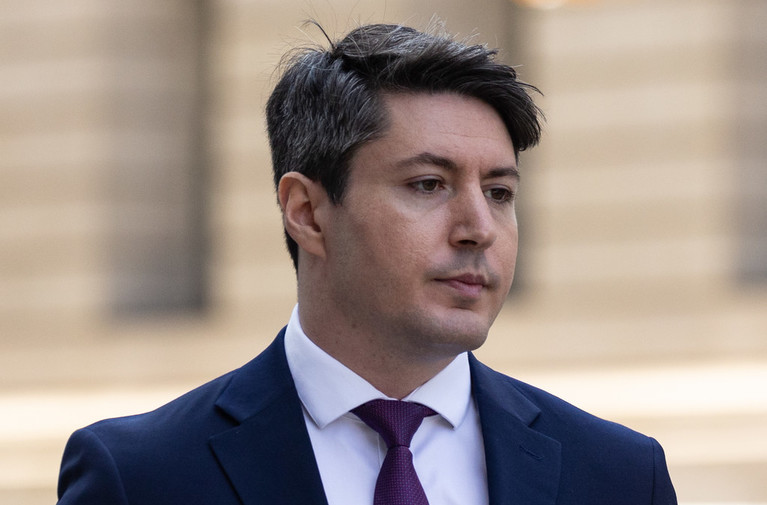
Nathaniel Chastain, former product manager at OpenSea, arrives at federal court in New York, US, on Tuesday, Aug. 22, 2023. Photo: Yuki Iwamura/Bloomberg

How The Appeals Court Changed The Case

According to the US Court of Appeals for the Second Circuit, the jury in the first trial had been given the wrong instructions about what the wire fraud law covers.

The judges said confidential information only counts as property under the statute when it has commercial value to the employer, and jurors might otherwise convict someone for behavior that is unethical but not criminal. That legal point is at the heart of the reversal.

Reports note that prosecutors had called the matter the first-ever insider trading case tied to NFTs. Now, lower courts and enforcement teams will have to think carefully before using traditional fraud laws to police activity in NFT markets.

The ruling highlights a gap between old statutes and new kinds of online goods, which may push lawmakers to give clearer rules for how to treat confidential business signals related to crypto platforms.

BTCUSD currently trading at $88,903. Chart: TradingView

OpenSea: The Case’s Earlier Chapters

Chastain was first charged in mid-2022 after prosecutors said he bought certain NFTs before they were featured on OpenSea’s homepage, then sold them after prices rose.

He was convicted at trial in 2023 of wire fraud and money laundering and received a sentence that included three months behind bars. The US Attorney’s Office originally described the scheme as a novel use of insider knowledge in digital markets.

With the deferred prosecution agreement in place for OpenSea, prosecutors can close this chapter without a new trial.

Chastain’s forfeiture of crypto assets and his already served time mean the government has secured some remedy, while the appellate decision leaves open big questions about when private business information can be treated as property for federal fraud charges.

Legal teams, judges, and regulators are likely to keep a close eye on how similar cases are handled in the future.

Featured image from Getty Images, chart from TradingView

Пов'язані питання

QWhy was Nathaniel Chastain's conviction overturned by the appeals court?

AThe appeals court overturned the conviction because the jury in the first trial was given incorrect instructions. The judges ruled that confidential information only qualifies as property under the wire fraud statute when it has commercial value to the employer, and the previous instructions could have led to a conviction for unethical but not criminal behavior.

QWhat is the outcome of the deferred prosecution agreement for Nathaniel Chastain?

AUnder the deferred prosecution agreement, the government will dismiss the case about a month after notifying the court. In exchange, Chastain has agreed to forfeit approximately 15.98 ETH and has already served his three-month prison sentence from the original conviction.

QWhat was Nathaniel Chastain originally convicted of in relation to his actions at OpenSea?

ANathaniel Chastain was originally convicted in 2023 of wire fraud and money laundering. Prosecutors alleged he used insider knowledge to purchase NFTs before they were featured on OpenSea's homepage and then sold them for profit after their prices increased.

QWhy is this case considered significant for the NFT market and legal enforcement?

AThis case is significant because it was the first-ever insider trading case tied to NFTs. The appellate ruling highlights a gap between traditional fraud laws and new digital goods, indicating that courts and enforcement teams must carefully consider how to apply old statutes to NFT market activity, potentially pushing for clearer regulations.

QWhat did Nathaniel Chastain agree to forfeit as part of his deal with prosecutors?

AAs part of the deferred prosecution agreement, Nathaniel Chastain agreed to forfeit approximately 15.98 ETH, which was tied to the trades he made using insider information while he was a product manager at OpenSea.

Пов'язані матеріали

Anthropic Starts Poaching Scientists? $27K Weekly Onsite Stipend to Fix Claude's Expert-Level Errors

Anthropic has launched a new STEM Fellow program, offering $3,800 per week for a three-month, in-person residency in San Francisco. The role targets experts from science, technology, engineering, and mathematics (STEM) fields—machine learning experience is helpful but not required. Instead, Anthropic values scientific judgment and a willingness to learn quickly. Fellows will work with Claude models and internal tools under the guidance of an Anthropic researcher. Example projects include a materials scientist identifying errors in Claude’s reasoning or a climate scientist integrating atmospheric modeling software with Claude. The goal is to have experts "tell Claude where it's wrong" and improve its scientific capabilities. This initiative is part of Anthropic’s broader strategy to strengthen its scientific ecosystem, following earlier programs like the AI Safety Fellows and AI for Science programs. The company acknowledges that current AI models, while powerful, still produce high-confidence errors and lack end-to-end research autonomy. The program aims to embed domain expertise directly into model development, turning scientists into "high-level reviewers" for AI. Anthropic CEO Dario Amodei has previously emphasized AI’s potential to accelerate scientific breakthroughs, particularly in biology and healthcare. The company believes that the next phase of AI competition will depend not on scaling parameters, but on integrating human expertise to refine model accuracy and reliability.

marsbit30 хв тому

Anthropic Starts Poaching Scientists? $27K Weekly Onsite Stipend to Fix Claude's Expert-Level Errors

marsbit30 хв тому

On the Eve of X Money's Launch, Musk Dismantles the Referee First

"X Money Launches After Dismantling Regulator: Musk's 9-Day Power Play" In February 2025, a team from the "Department of Government Efficiency" (DOGE), led by Elon Musk, entered the Consumer Financial Protection Bureau (CFPB) headquarters. Shortly after, the CFPB was effectively dismantled—its funding frozen, activities suspended, and nearly 90% of staff laid off. This move came just nine days after X announced a partnership with Visa and as X Money prepared to launch. The article contrasts this with the decade-long regulatory battles faced by companies like Coinbase and PayPal. Coinbase spent over $75 million in political contributions and endured a major SEC lawsuit to operate legally. PayPal complied with strict state and federal rules for its stablecoin PYUSD, including 100% reserve requirements and monthly audits. However, Musk’s approach was different. After the CFPB introduced a rule placing large digital payment apps under federal oversight, Musk tweeted "Delete CFPB." Within months, the rule was revoked by Congress. Meanwhile, DOGE operatives gained "god-tier" access to CFPB databases, potentially obtaining sensitive competitive information from rivals like Apple, Google, and PayPal. The article also highlights a "suspicious exemption clause" in the GENIUS Act, which allows private companies like X to issue stablecoins with fewer restrictions. Senator Elizabeth Warren questioned whether Musk, who was a senior presidential advisor during the Act’s drafting, influenced this clause. X Money offers a 6% APY on deposits, despite FDIC warnings that stablecoin users are not insured. As X Money launches to 600 million monthly users, the article questions the fairness of a system where Musk can bypass regulations that others spent years and millions to comply with. The dismantling of the CFPB and the alleged regulatory advantages raise concerns about the future of equitable rule-making in the U.S. financial system.

marsbit38 хв тому

On the Eve of X Money's Launch, Musk Dismantles the Referee First

marsbit38 хв тому

Торгівля

Спот
Ф'ючерси
活动图片