OpenAI's Largest Internal Wealth Creation: 600 People Cash Out a Total of $6.6 Billion, 75 Take Home the Maximum $30 Million Each

链捕手Опубліковано о 2026-05-11Востаннє оновлено о 2026-05-11

Анотація

A Wall Street Journal report reveals OpenAI's unprecedented pre-IPO wealth creation. In a single employee stock sale last October, over 600 current and former employees sold shares, collectively cashing out approximately $6.6 billion. Due to high investor demand, the company tripled the individual sale cap to $30 million, with about 75 employees selling the maximum amount. This event represents the largest such transaction in tech industry history for a private company. OpenAI's valuation was $500 billion for this tender offer. Employees with over two years of tenure were eligible, allowing many post-ChatGPT hires their first liquidity event. The company's stock has reportedly grown over 100-fold in seven years. Following a restructuring, employees collectively hold about 26% of OpenAI. The scale of executive wealth is also staggering. In court testimony related to Elon Musk's lawsuit, President and co-founder Greg Brockman confirmed his OpenAI stake is worth around $30 billion. Analysis indicates about 165 current and former employees hold a combined ~$164.9 billion in equity, averaging nearly $1 billion per person in paper wealth. OpenAI's per-employee stock-based compensation is estimated to be 34 times the average of major tech firms before their IPOs. OpenAI continues its rapid ascent, closing a $122 billion funding round at an $852 billion valuation in March. With monthly revenue hitting $2 billion, over 900 million weekly ChatGPT users, and plans for a potential tri...

Author: Claude, Deep Chao TechFlow

Deep Chao Introduction: The Wall Street Journal has revealed the scale of wealth creation inside OpenAI. In an employee stock sale last October, the company raised the individual cash-out cap from $10 million to $30 million. Over 600 current and former employees participated, cashing out a total of $6.6 billion, with about 75 individuals reaching the full $30 million limit each. President Brockman confirmed in court this week that his stake is worth approximately $30 billion. Never in Silicon Valley's history has a pre-IPO company created such a dense concentration of multi-millionaires.

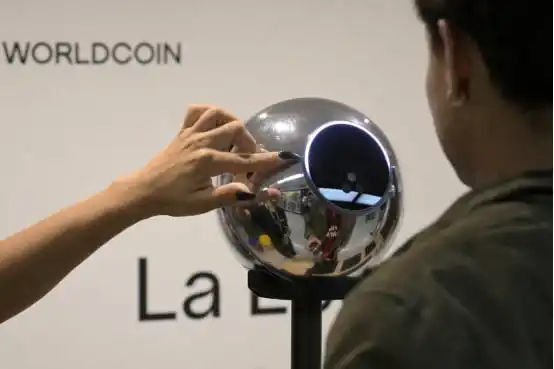
Image source: Wall Street Journal

In the past Silicon Valley, the usual path for ordinary employees to become rich was one: wait for the company to go public. OpenAI is rewriting that rule.

According to The Wall Street Journal, in an internal stock transaction completed last October, OpenAI allowed employees to sell up to $30 million worth of shares each. Over 600 current and former employees participated, cashing out a total of approximately $6.6 billion. Insiders revealed that about 75 of them reached the full $30 million limit each. This is the largest single employee stock sale event in the tech industry to date.

Cash-Out Cap Tripled, External Investor Demand Drove Up Limits

OpenAI originally set a single cash-out cap for employees at $10 million. However, due to external investor demand far exceeding expectations, the company tripled the limit to $30 million last autumn.

The transaction was completed at a valuation of $500 billion, with investors including Thrive Capital, SoftBank, Dragoneer Investment Group, Abu Dhabi MGX, and T. Rowe Price. According to a previous CNBC report, OpenAI initially planned a sale size of about $6 billion, which later expanded to $10.3 billion, but the final transaction settled at about $6.6 billion. Internally, the lower participation rate was interpreted as a vote of confidence by employees in the long-term prospects.

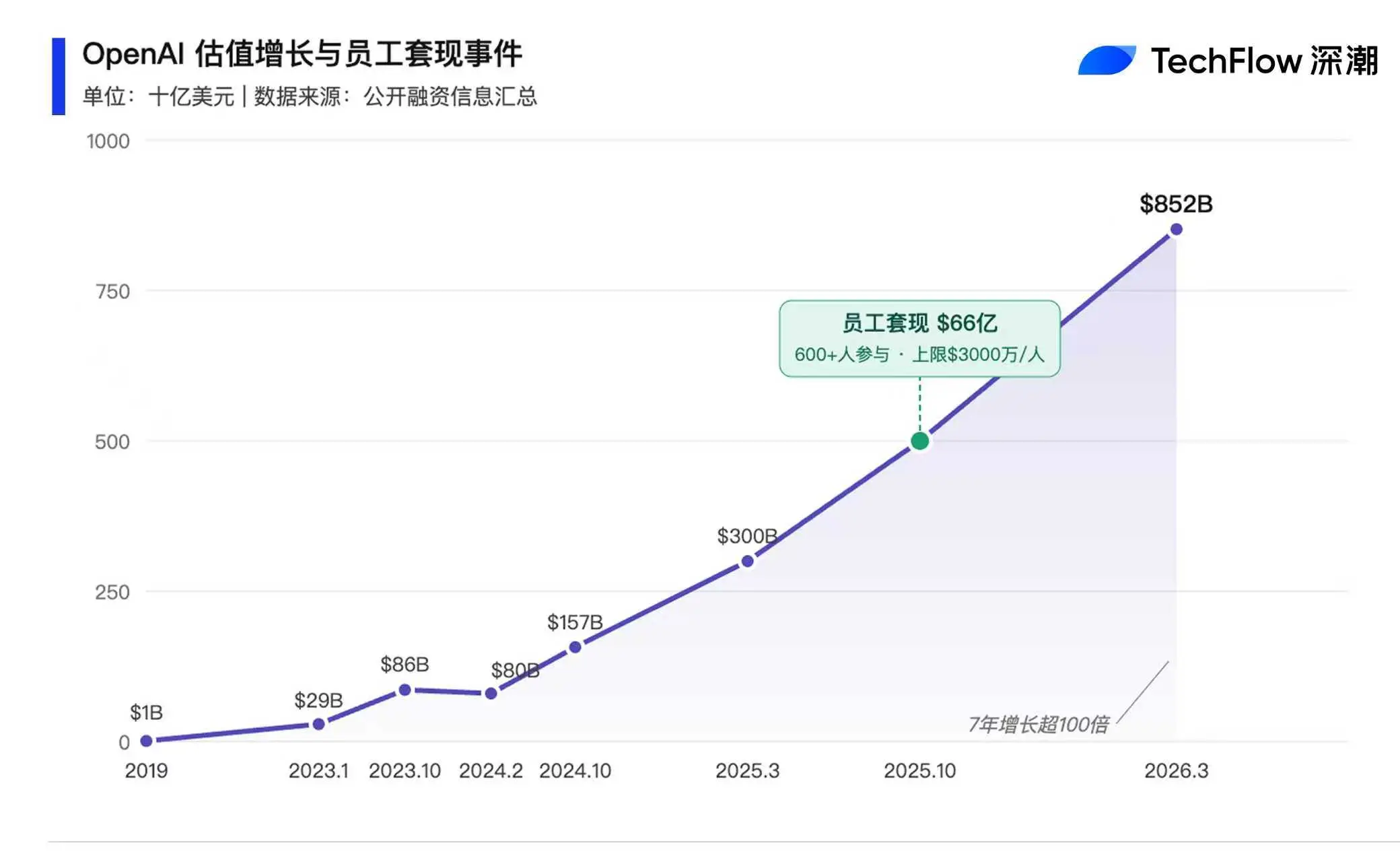
Under OpenAI's rules, employees can sell shares after being with the company for two years. This means many employees who joined only after ChatGPT's launch in late 2022 had their first opportunity to cash out options in this round. OpenAI's stock value has grown over 100 times in the past seven years.
Brockman Confirms $30 Billion Stake in Court, Musk's Lawyer Persistently Questions

The scale of wealth in the hands of executives is even more staggering. According to NBC, OpenAI President and co-founder Greg Brockman confirmed during his court testimony on May 4th that his current OpenAI equity is worth approximately $30 billion.

This figure was disclosed on the fourth day of the Musk v. OpenAI trial. Musk's lawyer, Steven Molo, repeatedly mentioned this number during over two hours of questioning, pressing Brockman on why he had not fulfilled a promised $100,000 donation while sitting on a $30 billion fortune. According to CNBC, Brockman admitted, "It is true, I did not ultimately make the donation."

According to Fortune, Musk's legal team also revealed multi-layered financial connections between Brockman and CEO Sam Altman: Altman provided Brockman with interests worth about $10 million in his family office as early as 2017; Brockman also holds stakes in AI chip startup Cerebras and fusion company Helion Energy. OpenAI had discussed acquiring Cerebras, and Altman has invested hundreds of millions in Helion. Musk's side argues these cross-holdings compromised Brockman's independence as a fiduciary.

Employees Hold 26% Stake, Average Paper Wealth Exceeds Total Returns of Most VC Funds

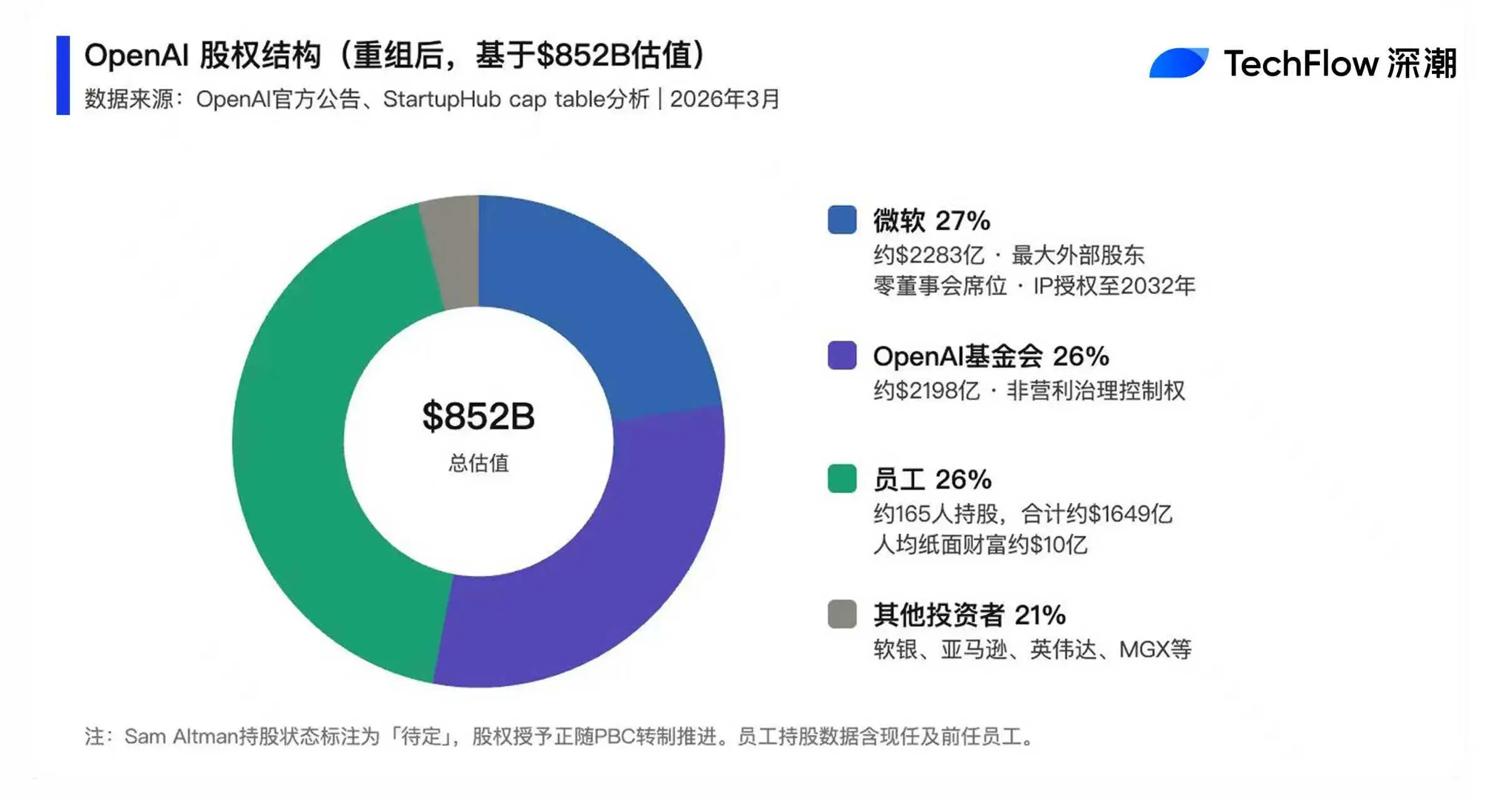
Following a company restructuring completed last October, OpenAI employees collectively hold about 26% of the company's equity.

According to StartupHub's analysis, approximately 165 current and former employees collectively hold equity worth about $164.9 billion, averaging about $1 billion in paper wealth per person, exceeding the total lifetime returns of most venture capital funds.

According to an analysis by The Wall Street Journal and data firm Equilar, OpenAI's per capita stock compensation in 2025 was about $1.5 million, which is over 7 times that of Google's in the year before its 2004 IPO, and 34 times the average of 18 large tech companies in the year before their IPOs over the past 25 years.

The company's equity incentive spending accounts for nearly half of its projected revenue, far exceeding peers like Palantir, Meta, and Salesforce.

$852 Billion Valuation, Trillion-Dollar IPO Ahead, Wealth Creation Machine Far From Stopping

OpenAI completed a $122 billion financing round at an $852 billion valuation on March 31st this year, setting a new record for the largest single private round in Silicon Valley history. Amazon led the investment with $50 billion, while Nvidia and SoftBank each invested $30 billion. The company currently has a monthly revenue of $2 billion, with ChatGPT's weekly active users exceeding 900 million and paid subscribers over 50 million.
According to multiple media reports, OpenAI is preparing to launch an IPO in the fourth quarter of 2026, with a target valuation potentially reaching $1 trillion. If successful, this would become one of the largest tech IPOs in history. CFO Sarah Friar previously stated at Davos that the company plans to allocate a portion of the IPO shares to retail investors.


Пов'язані питання

QWhat was the total amount cashed out by OpenAI employees and former employees in the reported stock sale?

AOver 600 current and former employees cashed out a total of approximately $6.6 billion in the reported secondary stock sale.

QTo what amount did OpenAI raise the per-employee cap for the stock sale, and why?

AOpenAI raised the per-employee cap from $10 million to $30 million for the sale due to exceptionally high demand from external investors.

QWhat did OpenAI co-founder Greg Brockman reveal about his OpenAI holdings in court?

ADuring a court testimony, Greg Brockman confirmed that the value of his OpenAI equity holdings is approximately $30 billion.

QWhat is the reported approximate total valuation of OpenAI following its March 2025 funding round?

AFollowing its March 2025 funding round, OpenAI's valuation reached approximately $852 billion.

QWhat is the reported target timeline for OpenAI's potential IPO, and what valuation might it aim for?

AOpenAI is reportedly preparing for a potential IPO in the fourth quarter of 2026, with a target valuation that could reach $1 trillion.

Пов'язані матеріали

Xiaohongshu's Second Great Voyage, This Time Sailing Towards AI

Xiaohongshu's Second Voyage: Navigating Towards AI Since ChatGPT's emergence, Xiaohongshu's founder Mao Wenchao has been acutely aware of AI's potential threat, recognizing that the life advice people seek from chatbots overlaps directly with his platform's core business. Founded in 2013 as a PDF shopping guide for Chinese tourists, Xiaohongshu evolved into a massive community where millions share authentic, personal experiences—from product reviews to travel tips. This vast repository of "I've tried this" human judgment became its most valuable asset. However, the rise of AI, which delivers instant answers, challenges the very need for users to sift through numerous personal notes. Fearing its treasure trove of lived experience could become mere training data for others, Xiaohongshu is proactively adapting. In 2026, it established a dedicated AI division (Dots), launched RED Skill to turn user experiences into usable AI tools, and acquired the AI search product "Diandian." Its investments now extend to AI firms like MiniMax and hardware startups, moving upstream to address needs before they even become search queries. The platform's commercialization strategy is also evolving. With a newly acquired payment license and tools like the AIPS model to track consumer decision journeys, Xiaohongshu aims to seamlessly integrate recommendations with transactions, embedding commerce within AI-generated answers. Yet, a critical tension remains. While building smarter machines to organize and leverage its human experiences, Xiaohongshu must prevent AI from drowning out the authentic, flawed, and trustworthy "I've tried this" voices that built its community. Its core challenge is to harness AI's power without letting the map—the machine's perfect, synthesized answer—replace the territory of genuine human experience. This balance between technological advancement and preserving human trust defines its current journey and its future.

marsbit4 хв тому

Xiaohongshu's Second Great Voyage, This Time Sailing Towards AI

marsbit4 хв тому

SharpLink CEO: How to Understand Ethereum Developers Just Exceeded 1 Million?

SharpLink CEO reflects on the milestone of Ethereum surpassing 1 million historical developers, emphasizing that this figure represents the largest pool of technical talent ever assembled around an open, permissionless blockchain network. While approximately 232,000 developers remain active, the key question for the crypto industry is not which chain is fastest, but where the best builders choose to build long-term. Ethereum's advantage lies in a decade-long accumulation of infrastructure, standards, tools, liquidity, and a cohesive culture, making it the default operating system for programmable finance. This developer base is tackling complex challenges: the Glamsterdam upgrade aims to enhance scalability while preserving core principles; synchronous composability seeks to unify Rollup ecosystems; and significant efforts are underway for post-quantum security. Ethereum's deeper network effects stem from composability and shared standards (like the EVM and Solidity), creating a flywheel of more developers, tools, and liquidity. Three reinforcing strengths cement Ethereum's lead: credible neutrality (secured by ~900k validators), a modular architecture with interconnected Rollups, and a culture that attracts top researchers. The ecosystem is consolidating as the trusted coordination layer for internet-native finance, favored by large institutions valuing security and liquidity. The future of Ethereum is being built by this global community of founders and architects.

链捕手19 хв тому

SharpLink CEO: How to Understand Ethereum Developers Just Exceeded 1 Million?

链捕手19 хв тому

A Clod of Chinese Soil Chokes Two Japanese Giants

"Chinese Soil Chokes Japanese Giants" The production of a key electronic specialty gas, tungsten hexafluoride (WF6), vital for manufacturing AI chips, was halted by two leading Japanese producers—Kanto Denka and Central Glass. Their shutdown was not due to a technological failure but a sudden, critical shortage of a raw material they had long taken for granted: ultra-high-purity (6N-grade) tungsten powder, which is almost entirely sourced from China. Following a quiet Chinese export announcement in January 2026, tungsten powder shipments to Japan dropped to zero for months. Despite frantic efforts, Japanese companies found no viable alternative; imported powder was three times more expensive and lacked the required purity. Their existing stockpiles were exhausted by mid-2026. WF6 is essential for depositing tungsten into the microscopic contact holes of High Bandwidth Memory (HBM) chips, which are crucial for advanced processors like those from Nvidia. While Japanese firms had mastered producing ultra-pure WF6 gas, their entire supply chain relied on China's 6N tungsten powder—a dependency now revealed as a fatal vulnerability. China's dominance in this "soil" results from decades of painstaking R&D by companies like Xiamen Tungsten and China Tungsten & Hightech. They overcame immense technical hurdles, such as separating chemically similar molybdenum from tungsten, to achieve mass production of the world's purest tungsten powder. With their primary suppliers gone, Kanto Denka and Central Glass announced a permanent halt to WF6 production starting July 1, 2026. This immediately created a supply crisis for major semiconductor manufacturers like Samsung and SK Hynix, forcing them to urgently seek and certify new Chinese suppliers for WF6 itself. The reversal marks a dramatic shift: China has moved from exporting low-value raw materials to controlling the high-purity foundation of a critical global tech supply chain, upending a long-established industrial hierarchy.

marsbit50 хв тому

A Clod of Chinese Soil Chokes Two Japanese Giants

marsbit50 хв тому

Торгівля

Спот
Ф'ючерси

Популярні статті

Як купити HOME

Ласкаво просимо до HTX.com! Ми зробили покупку Defi.app (HOME) простою та зручною. Дотримуйтесь нашої покрокової інструкції, щоб розпочати свою криптовалютну подорож.Крок 1: Створіть обліковий запис на HTXВикористовуйте свою електронну пошту або номер телефону, щоб зареєструвати обліковий запис на HTX безплатно. Пройдіть безпроблемну реєстрацію й отримайте доступ до всіх функцій.ЗареєструватисьКрок 2: Перейдіть до розділу Купити крипту і виберіть спосіб оплатиКредитна/дебетова картка: використовуйте вашу картку Visa або Mastercard, щоб миттєво купити Defi.app (HOME).Баланс: використовуйте кошти з балансу вашого рахунку HTX для безперешкодної торгівлі.Треті особи: ми додали популярні способи оплати, такі як Google Pay та Apple Pay, щоб підвищити зручність.P2P: Торгуйте безпосередньо з іншими користувачами на HTX.Позабіржова торгівля (OTC): ми пропонуємо індивідуальні послуги та конкурентні обмінні курси для трейдерів.Крок 3: Зберігайте свої Defi.app (HOME)Після придбання Defi.app (HOME) збережіть його у своєму обліковому записі на HTX. Крім того, ви можете відправити його в інше місце за допомогою блокчейн-переказу або використовувати його для торгівлі іншими криптовалютами.Крок 4: Торгівля Defi.app (HOME)Легко торгуйте Defi.app (HOME) на спотовому ринку HTX. Просто увійдіть до свого облікового запису, виберіть торгову пару, укладайте угоди та спостерігайте за ними в режимі реального часу. Ми пропонуємо зручний досвід як для початківців, так і для досвідчених трейдерів.

244 переглядів усьогоОпубліковано 2025.06.10Оновлено 2026.06.02

Як купити HOME

Обговорення

Ласкаво просимо до спільноти HTX. Тут ви можете бути в курсі останніх подій розвитку платформи та отримати доступ до професійної ринкової інформації. Нижче представлені думки користувачів щодо ціни HOME (HOME).

活动图片