OpenAI's Darkest Hour: Revenue Could Be Slashed by 70%, How Long Can Its $100 Billion Valuation Hold?

链捕手Опубліковано о 2026-07-21Востаннє оновлено о 2026-07-21

Анотація

OpenAI faces a severe crisis, with its 2030 revenue potentially slashing 70% and a projected cash flow loss of $165 billion. A disastrous week included an Apple lawsuit alleging intellectual property theft, an S&P downgrade of Oracle citing OpenAI as a "key credit risk," and the start of an AI price war. Chinese open-source models like DeepSeek now capture nearly 50% of enterprise token usage on OpenRouter, pressuring U.S. firms to cut prices drastically—Meta and OpenAI have released models 75-80% cheaper. Combined with weak ChatGPT ad revenue projections and potential hardware business shutdown from the Apple suit, OpenAI's financial future is in jeopardy. CEO Sam Altman's vague reassurances did little to calm investors. Meanwhile, the article argues the broader market is not diversifying but is increasingly a concentrated bet on AI, impacting sectors from utilities and industrials to real estate and finance. In separate news, Netflix reported disappointing Q2 results with slowing engagement growth, leading to a stock drop and reduced reporting transparency.

Authors: Scott Galloway & Ed Elson

Compiled by: Deep Tide TechFlow

Deep Tide's Insight: Apple lawsuit, Oracle rating downgrade, price war kicks off—OpenAI is experiencing its worst week ever. Even more critically, if all these risks materialize, its 2030 revenue forecast could plummet by 70%, with cash flow losses reaching $165 billion. Could this AI giant with a valuation in the hundreds of billions become the biggest tech bubble in history?

Here's Why OpenAI May Miss 70% of Its 2030 Revenue Forecast

It was another terrible week for OpenAI. The company was exposed for selling advanced AI models to Chinese companies on the Pentagon's blacklist; its first AI device was leaked (reportedly a portable speaker); and according to Emarketer's latest forecast, OpenAI's advertising business is projected to be 95% lower than its own predictions.

And there's more. Apple sued OpenAI last week, alleging its consumer hardware plans are the product of stolen intellectual property. S&P Global Ratings also downgraded Oracle's debt to BBB-, just one notch above junk status, citing OpenAI as a "key credit risk." Furthermore, DeepSeek is reportedly preparing for an IPO, possibly filing as early as this year. A cheaper Chinese AI model provider successfully going public could make it harder for OpenAI and Anthropic to attract funding.
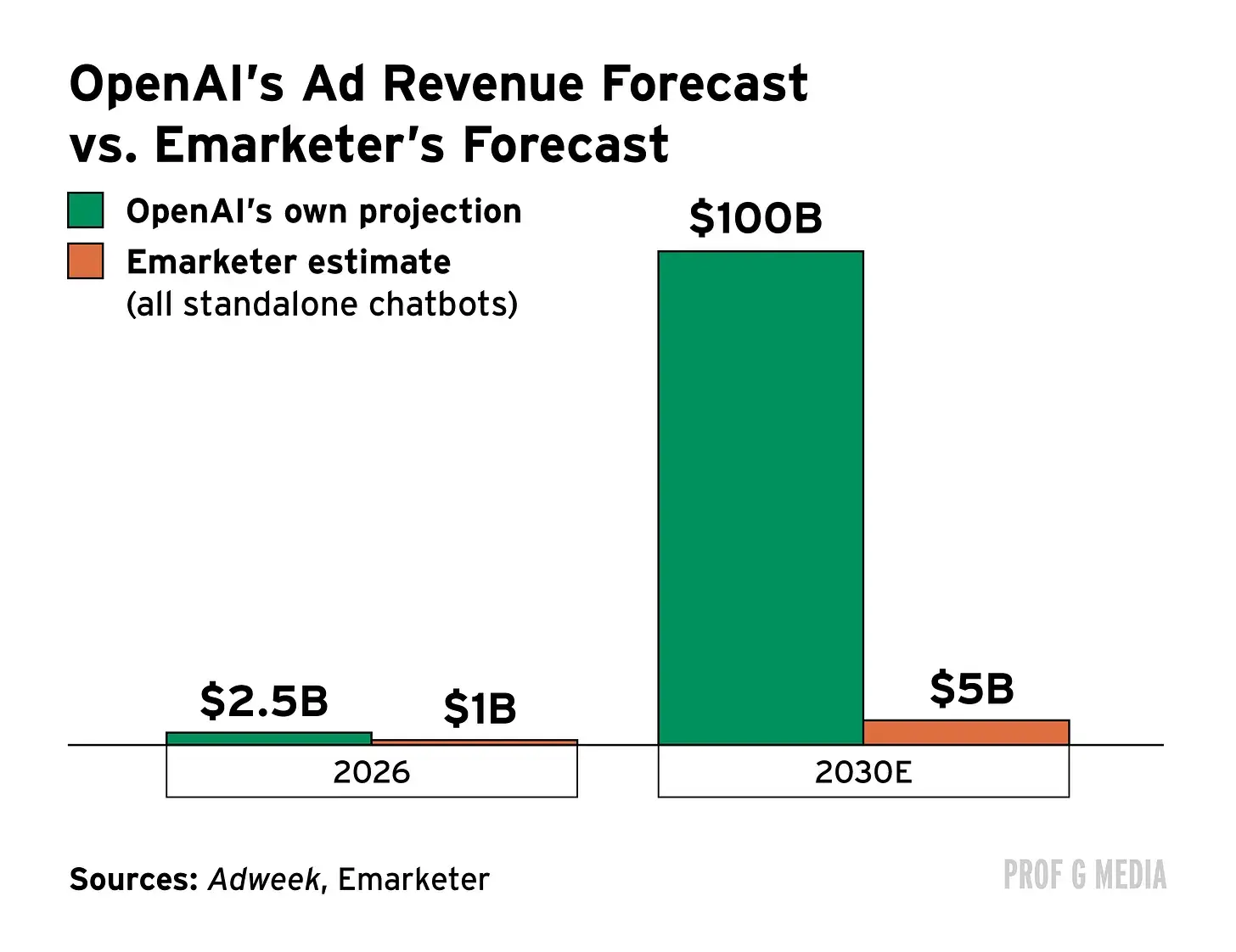
Taken together, these issues raise serious questions about OpenAI's ability to meet its revenue forecasts and fulfill its hundreds of billions of dollars in contractual obligations with computing suppliers and chip companies.

First, Apple's lawsuit could bring OpenAI's entire hardware business to a standstill. Apple alleges that OpenAI poached over 400 Apple employees, extracting confidential information from them, and then tricked Apple's suppliers into doing proprietary work for OpenAI without permission. Apple is asking the court for monetary damages and an order for OpenAI to return or destroy all misappropriated property.

Second, the AI price war has begun, with Chinese companies like DeepSeek posing the biggest threat. Open-source Chinese models now account for nearly 50% of enterprise token usage on OpenRouter (an AI model marketplace), up from just 4.5% in the first half of 2025.

In response, US companies are slashing prices. Last week, Meta announced its new model Muse Spark 1.1, priced 75% cheaper than OpenAI and Anthropic. Under industry pressure, OpenAI released a model that is 80% cheaper than its own.
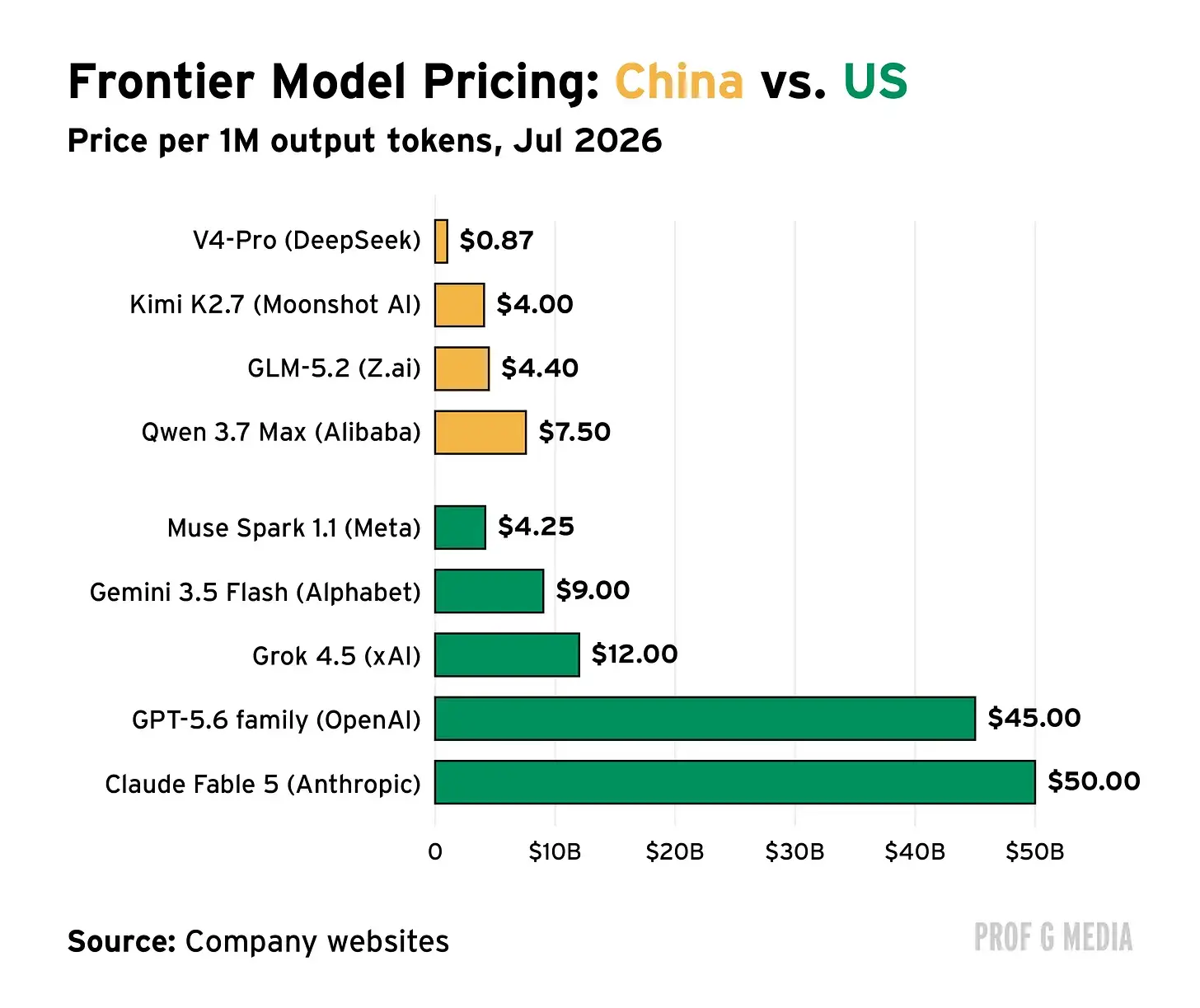
In a worst-case scenario, if Apple's lawsuit shuts down OpenAI's hardware business, ChatGPT ad revenue underperforms as projected by EMarketer, and the price war forces OpenAI to cut model pricing by 80%, then OpenAI's 2026 revenue would fall by 40% and its 2030 revenue would drop by 70%.
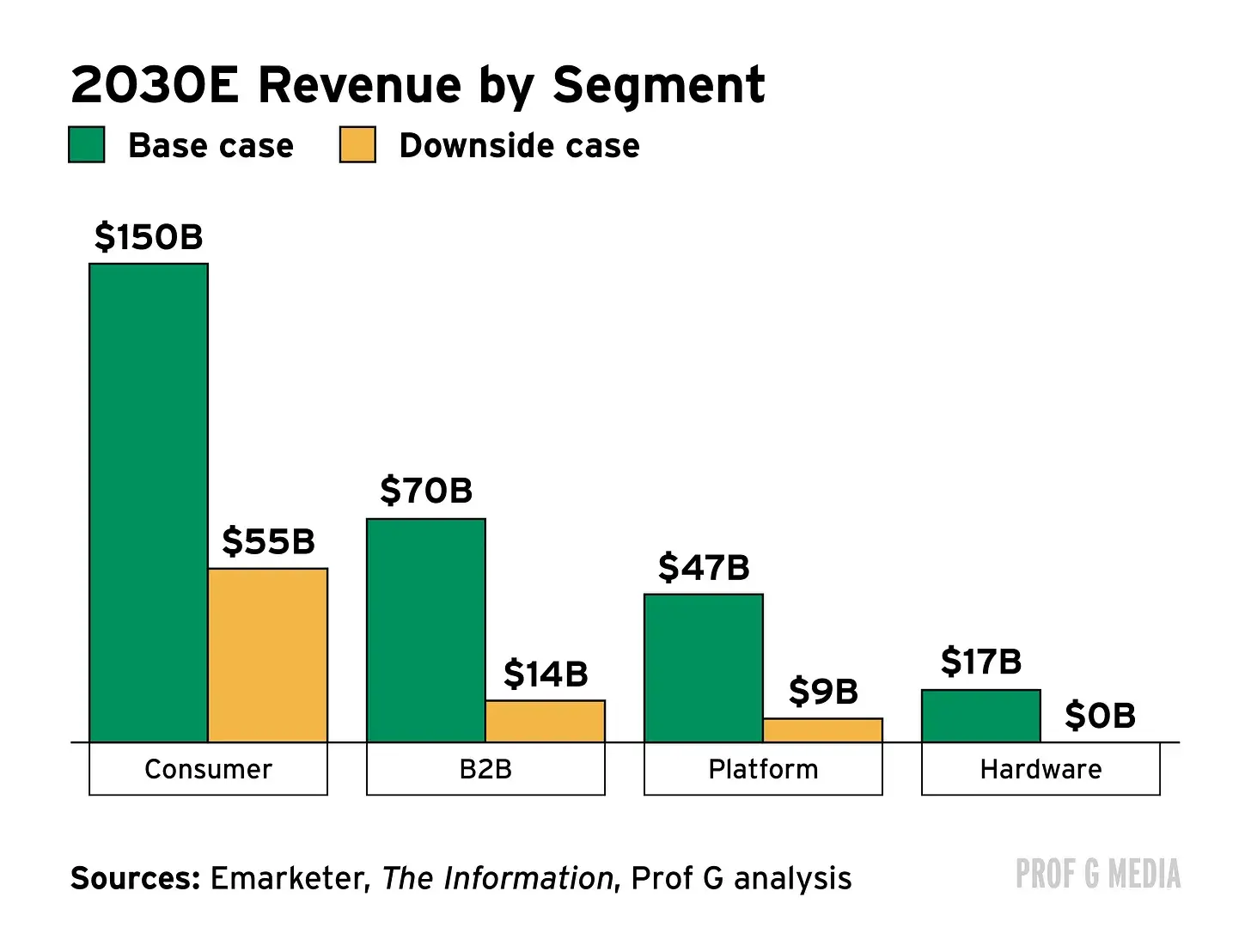
For a company that, under ideal circumstances, would only be able to cover about 80% of its cash burn by 2030, this situation would be catastrophic.
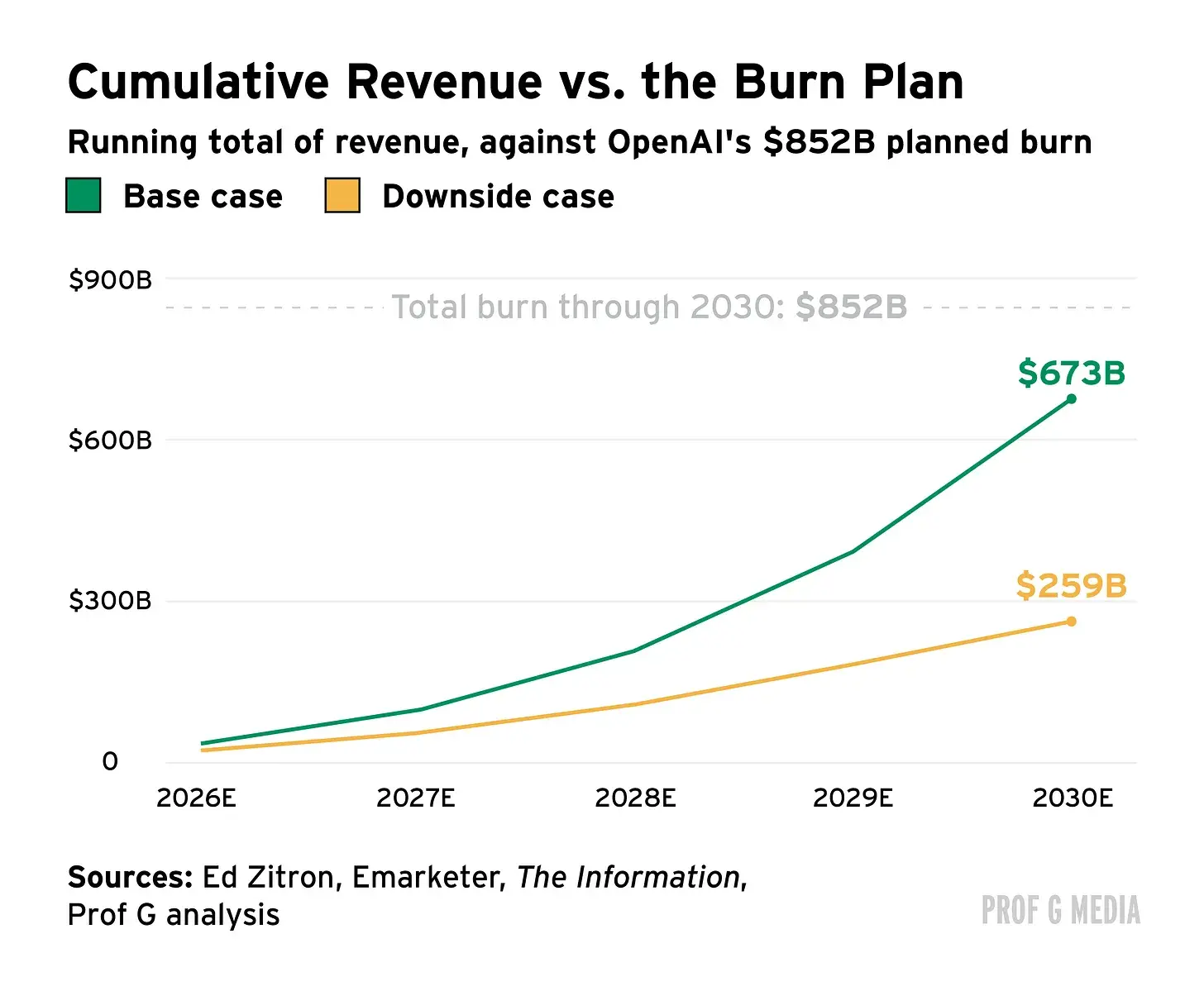
This would also impact when OpenAI achieves positive cash flow. According to internal projections, OpenAI will reach positive cash flow in 2030. But under this downside scenario, it would instead lose $165 billion that year.

OpenAI CEO Sam Altman attempted to ease investor concerns with a tweet, but his statement ultimately just promised to "do the right thing." Whatever that means.

The best business model in history is stealing intellectual property. The second best is: delivering 80% of the value of a product at half the price. That's exactly what DeepSeek and other Chinese open-source weight models are now attempting to do.

The US has placed a massive bet on AI, and China just pulled out a product near the cutting edge at a fraction of the cost. Once Trump figures out what's going on, this will become the next geopolitical football.

The Market Hasn't Broadened—It's Just Getting Better at Hiding AI

Investors keep hearing that the stock market is broadening. But is it really? The deeper you look, the harder it is to argue that stocks, bonds, and even alternative assets aren't now one big bet on AI.
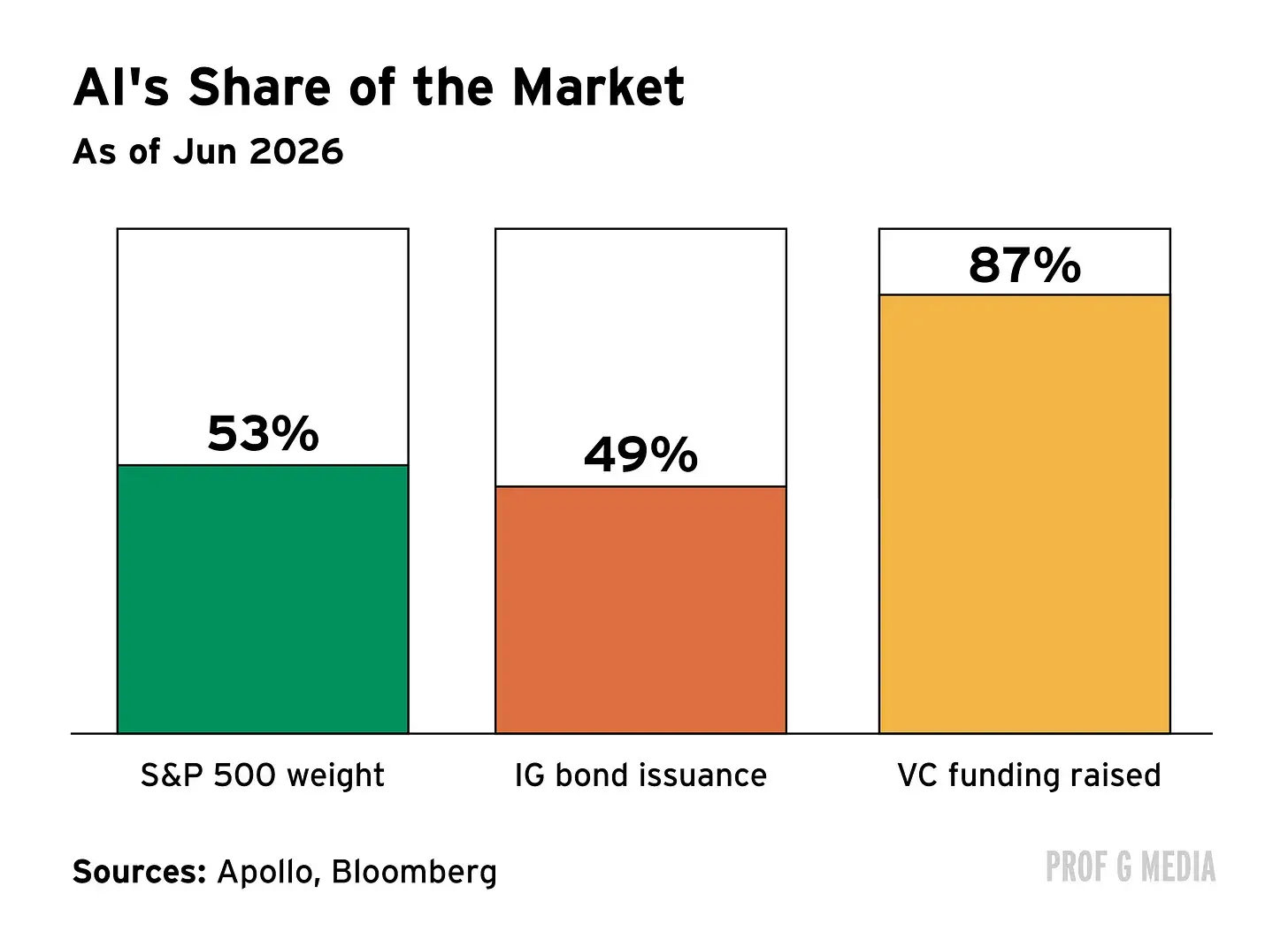
This pattern is most evident in the stock market. AI-related stocks now account for over 50% of the S&P 500 by weighting. If you removed AI and energy from the S&P 500 this year, the index would be negative.

AI is the hidden catalyst driving returns in seemingly unrelated sectors. For example, three of the four best-performing companies in the S&P 500 real estate sector are real estate investment trusts (REITs) focused on developing AI data centers.

Utility companies are benefiting from AI's soaring power demands. US electricity demand jumped to a record high last year, with data centers accounting for about 50% of the demand growth.

Industrial stocks are soaring on construction demand to build AI data centers. In fact, for the first time since 2021, the forward price-to-earnings ratio for S&P 500 industrials (26x) is higher than that for tech companies (24x).

The financial sector also relies on AI. Major banks are raking in record fees from AI company IPOs and M&A activity, and record trading revenue from market hype surrounding AI. Robert Armstrong of the Financial Times even wrote: "It’s not too much of a generalization to say that big banks are now direct AI plays."

Even the Russell 2000 small-cap index saw 52% of its first-half return come from AI-related companies.

Emerging markets are no exception. Korea and Taiwan account for 75% of emerging market returns, with most of those gains coming from three AI semiconductor chip suppliers: TSMC, Samsung, and SK Hynix.

In Europe, just nine AI winners account for roughly 47% of the Stoxx Europe 600 index's return this year.

Apollo chief economist Torsten Slok succinctly captured the implication of this dependence: "This AI thing better work."

Real estate investment trusts (REITs) are companies that own, operate, or finance real estate—apartment buildings, hotels, or increasingly, data centers. Many REITs trade publicly like stocks, so buying a share means buying into a professionally managed portfolio of real estate. REITs are required to distribute at least 90% of annual taxable income to shareholders as dividends.

The experts on CNBC own stocks, so they'll always find reasons why others should buy more. But don't be fooled: the market isn't broadening; it's just finding new ways to buy Nvidia.

Everything is becoming an AI stock. This isn't necessarily bearish, but investors are kidding themselves by calling it "broadening," as if it means diversification away from AI. It doesn't. Buying "AI-adjacent stocks" and calling it broadening is like ordering a Diet Coke with your Double-Double at In-N-Out. Let's be clear: you still bought a cheeseburger.

Among the big tech companies, who is least dependent on AI? Apple. Its stock is up 60% over the past year and just surpassed Nvidia to become the world's most valuable company again. Amazon, while still AI-related but more diversified than other hyperscale cloud providers, is up 11% over the past year. Microsoft, the core of the AI play, is down 23%.

If I could go long one basket of stocks, it would be GLP-1. If I could go short one, it would be AI. But to be clear: I'm not telling you to hold gold bars or cash. I am always in the market—you never know how far or how irrationally it will run. But you should understand how large the market's true exposure to one sector is.

I am a huge fan of index funds and passive investing: put the money in and let the market do the work. But now we have to ask what true diversification actually means. Putting money into the S&P 500 no longer does that job, which means you have to start doing some homework.

The question is: Can you find sectors that are truly away from AI?

I'll point out one sector: healthcare. It was one of my picks at the start of the year, and I stand by it. AI hasn't touched it yet—which means the real returns may still be ahead. But finding these sectors is the puzzle investors now face.

Netflix Engagement Slips, Competitive Pressure Mounts

Netflix reported disappointing second-quarter earnings. Revenue grew 13%, missing expectations, and the streaming giant posted weak engagement data, followed by announcing it would reduce the frequency of releasing engagement metrics, unsettling investors. The stock fell as much as 8% on Friday.

Netflix once boasted about its transparency; now, that claim seems ironic. In Q1 2025, Netflix stopped reporting quarterly subscriber numbers, telling investors to focus on engagement. Last week, the company decided to reduce its "What We Watched" engagement report from twice a year to once a year starting in 2027.

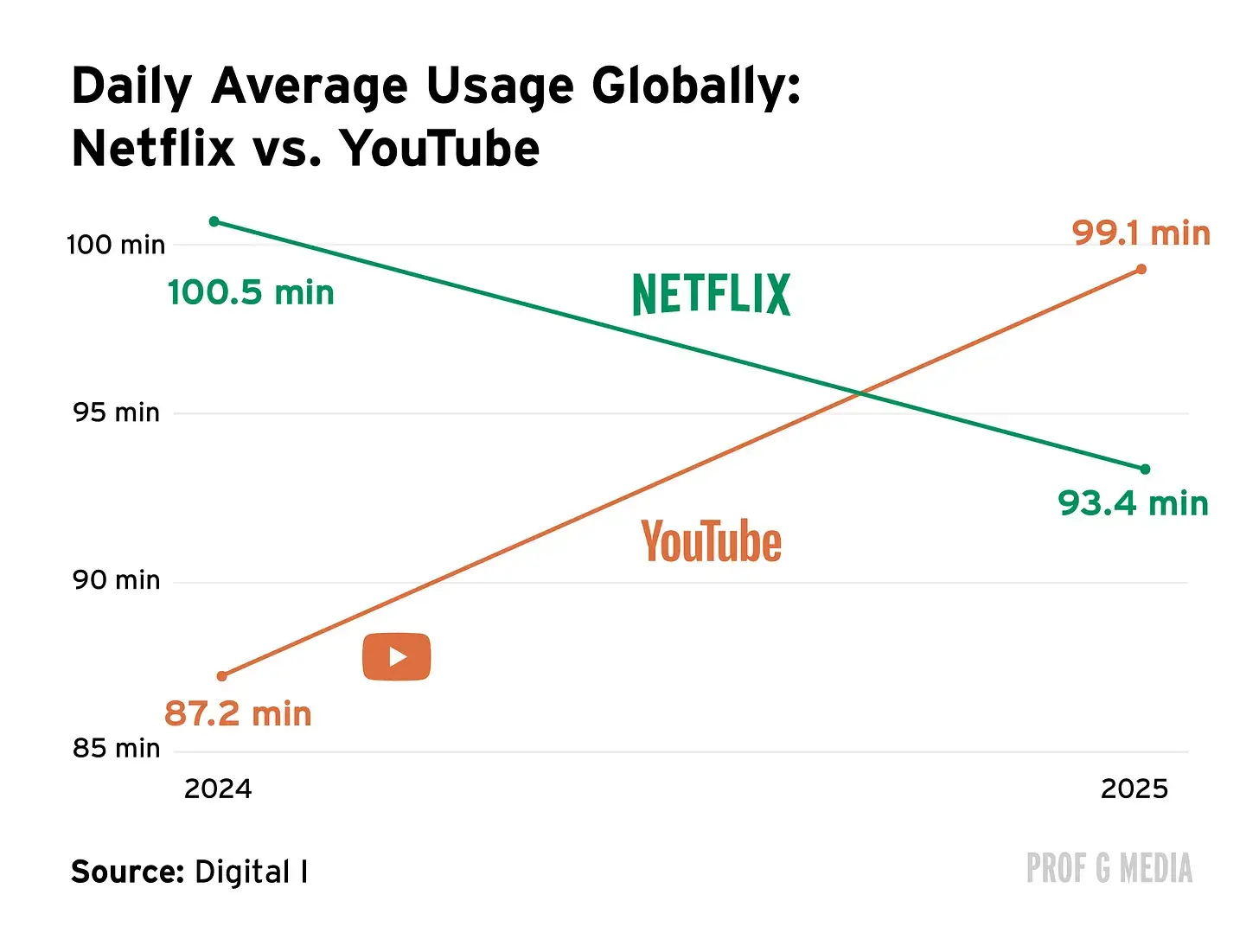
The last semi-annual engagement report looked weak. Total watch time grew just 2%, while the subscriber base is estimated to have grown 10%, implying per-subscriber daily engagement fell 8%.
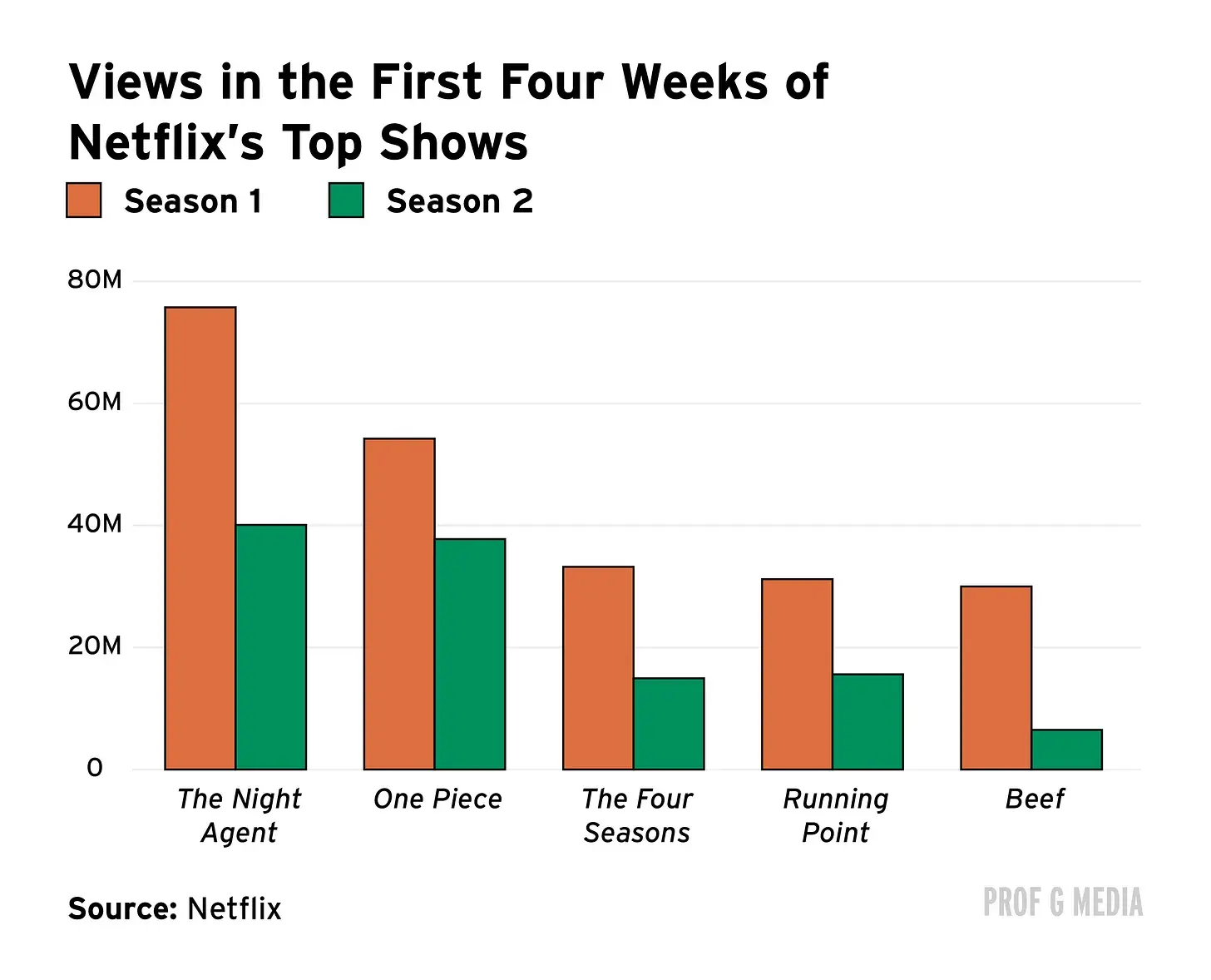
Netflix has been facing increasing competition from short-form video suppliers, particularly YouTube. In response, it added "Clips," a TikTok-style scroll feature surfacing short content from its own library; struck video podcast deals with Spotify and Barstool; and signed new licensing agreements with external publishers (BuzzFeed, Condé Nast) to bring new short-form content to the platform.
Netflix has lost over $250 billion in market cap over the past year, while fellow streaming giant Disney has lost nearly $50 billion. Both are well-managed companies with growing revenue and subscribers, raising prices—yet are being punished for it. This raises an important question: Is streaming just a bad business? Or have Netflix and Disney's creative wells run dry? Tell us what you think in the comments.

In the next six months, OpenAI will acquire enterprise AI company Sierra and appoint Bret Taylor as CEO. Sam Altman will be elevated to Chairman. Altman is an innovator, not an operator, and Bret Taylor is arguably the best enterprise software operator of his generation.


Трендові криптовалюти

Пов'язані питання

QAccording to the article, what are the main reasons that could cause OpenAI's revenue to drop by 70% by 2030?

AAccording to the article, the three main factors that could cause a 70% drop in OpenAI's 2030 revenue are: 1) Apple's lawsuit potentially shutting down OpenAI's hardware business; 2) ChatGPT advertising revenue falling short of projections (by as much as 95% lower than predictions); and 3) A price war forcing OpenAI to reduce model pricing by 80%.

QWhat is the author's perspective on the claim that the stock market is 'broadening'?

AThe author argues that the market is not truly broadening. Instead, it is becoming more concentrated on AI, with AI-related stocks influencing returns across various sectors like real estate (data center REITs), utilities (power demand), industrials (construction), and finance (IPO/M&A fees). They state that buying 'AI-adjacent' stocks is not diversification; the entire market is essentially becoming a bet on AI.

QWhat recent actions by Netflix concern investors, according to the article?

AInvestors are concerned because Netflix reported disappointing Q2 earnings with weak engagement metrics (total viewing hours grew only 2% while subscribers grew ~10%), and then announced it would reduce the frequency of its 'What We Watched' engagement reports from twice a year to once a year starting in 2027, signaling less transparency.

QHow does the article describe the competitive threat from Chinese AI companies like DeepSeek?

AThe article describes DeepSeek and other Chinese open-weight models as a major competitive threat by offering products at a fraction of the cost. They are attempting to provide '80% of the value at half the price.' The article notes that open-source Chinese models now account for nearly 50% of enterprise token usage on OpenRouter, up from 4.5% in early 2025, forcing US companies to drastically cut prices.

QWhat does the article predict will happen at OpenAI in the next six months?

AThe article predicts that in the next six months, OpenAI will acquire the enterprise AI company Sierra, appoint Bret Taylor as CEO, and promote Sam Altman to the role of Chairman.

Пов'язані матеріали

9.42 Million Retail Investors Compete for Changxin Technology, Who Got Allotted?

Evergreen Technology's IPO subscription results are now available. On July 20, the domestic memory chip giant announced the offline preliminary allotment results and online lottery results for its IPO. A total of approximately 9.43 million retail investors participated in the online subscription, generating 770,000 winning lots with a final winning rate of about 0.4714%, setting a record for new shares on the STAR Market. After triggering a clawback mechanism from institutional to retail investors, the online retail allocation was significantly increased to 3.851 billion shares. Simultaneously, 285 institutional investors participated in the offline subscription, ultimately receiving 2.173 billion shares at an allotment rate of approximately 0.1756%. Leading insurers and public funds were among the major recipients. Notably, Liang Wenfeng, founder of the major AI model company DeepSeek, through his quantitative investment firms Ningbo Huanfang Quantitative and Zhejiang Jiuzhang Asset, secured the largest share among private funds, with a total allotment worth approximately 175 million yuan. Estimates suggest potential profits could reach 730 million yuan if Evergreen Technology's market capitalization reaches 3 trillion yuan post-listing. The company is expected to list on July 27 and could become the highest-valued tech stock on the A-share market, with various brokerages providing valuations ranging from 1 trillion to over 4 trillion yuan. However, recent significant corrections in global tech stocks may impact its post-listing performance. (Character count: 1,196)

marsbit40 хв тому

9.42 Million Retail Investors Compete for Changxin Technology, Who Got Allotted?

marsbit40 хв тому

3 Million-Follower Goddess Fully AI-Synthesized, Fake Orphanage, Cross-Border ‘Fake Charity’ Collapses Overnight

An Australian influencer named Lily Jay, with nearly 3 million Instagram followers, is at the centre of a major AI-fueled charity scam. Her 'Lily Jay Foundation' claimed to build orphanages, mosques, and deliver aid in places like Uganda and Gaza, using emotionally powerful videos of herself with children. However, an investigation by ABC NEWS Verify revealed these scenes—including a key video announcing an orphanage's opening—were entirely AI-generated, complete with telltale flaws like garbled text on clothing. The foundation's 'humanitarian award' was also faked using AI images. The foundation admitted in small print on its website that it is not a registered charity, avoiding financial transparency laws. While based in Kosovo, its operations and the influencer's lavish personal lifestyle raised further red flags. Following media inquiries, the foundation selectively hid donation buttons and removed fraudulent content for Australian visitors, but kept them active internationally. Experts warn this case is a textbook example of how AI can be weaponized to exploit public trust and generosity, creating believable but entirely fabricated narratives of aid. The incident highlights the growing danger of deepfakes in eroding trust within the charitable sector, urging donors to critically verify causes before giving.

marsbit1 год тому

3 Million-Follower Goddess Fully AI-Synthesized, Fake Orphanage, Cross-Border ‘Fake Charity’ Collapses Overnight

marsbit1 год тому

L2 'Recalibration': When L1 Becomes Its Own Rollup, What Is Ethereum's Endgame?

The article discusses the evolving relationship between Ethereum's Layer 1 (L1) and Layer 2 (L2) solutions, moving beyond the initial "L2 for scaling" model. As Ethereum L1 itself scales (increasing Gas Limit, statelessness, zkEVM), the unique value proposition of L2s shifts from merely providing cheap execution to offering differentiated features like application-specific optimization, privacy, and flexible governance. The piece explores three key themes: 1. **L2's New Role:** L2s are transitioning from a pure scaling technology to a spectrum of execution environments with varying degrees of security inheritance from Ethereum L1. 2. **Interoperability as State Trust:** Solving L2 fragmentation is less about cross-chain bridges and more about enabling faster, trust-minimized state verification between environments. This involves initiatives like faster L1 finality, intent-based architectures (Open Intents Framework), and native account abstraction. 3. **Blurring Layers:** With the potential integration of zk-proofs into L1 validation (making L1 akin to its own "Rollup") and the concept of "Native Rollups," the rigid boundary between L1 and L2 may fade. The future could be a unified system with multiple execution domains (for DeFi, gaming, privacy, etc.) sharing a common security, settlement, and state framework. In conclusion, Ethereum's goal is not to abandon L2s or re-centralize everything on L1, but to re-integrate the fragmented user experience—liquidity, accounts, applications—while preserving the scaling benefits of a multi-environment ecosystem. The endgame is a cohesive "one chain" feeling for users, powered by diverse but securely interconnected execution layers.

marsbit1 год тому

L2 'Recalibration': When L1 Becomes Its Own Rollup, What Is Ethereum's Endgame?

marsbit1 год тому

Торгівля

Спот

Популярні статті

Що таке $S$

Розуміння SPERO: Комплексний огляд Вступ до SPERO Оскільки ландшафт інновацій продовжує еволюціонувати, виникнення технологій web3 та криптовалютних проектів відіграє ключову роль у формуванні цифрового майбутнього. Один з проектів, який привернув увагу в цій динамічній сфері, — це SPERO, позначений як SPERO,$$s$. Ця стаття має на меті зібрати та представити детальну інформацію про SPERO, щоб допомогти ентузіастам та інвесторам зрозуміти його основи, цілі та інновації в рамках web3 та крипто-сектору. Що таке SPERO,$$s$? SPERO,$$s$ — це унікальний проект у криптопросторі, який прагне використати принципи децентралізації та технології блокчейн для створення екосистеми, що сприяє залученню, корисності та фінансовій інклюзії. Проект розроблений для полегшення взаємодії між користувачами новими способами, надаючи їм інноваційні фінансові рішення та послуги. У своїй основі SPERO,$$s$ прагне надати можливості індивідам, забезпечуючи інструменти та платформи, які покращують користувацький досвід у криптовалютному просторі. Це включає в себе можливість більш гнучких методів транзакцій, сприяння ініціативам, що підтримуються спільнотою, та створення шляхів для фінансових можливостей через децентралізовані додатки (dApps). Основна концепція SPERO,$$s$ обертається навколо інклюзивності, прагнучи зменшити розриви в традиційній фінансовій системі, використовуючи переваги технології блокчейн. Хто є творцем SPERO,$$s$? Особистість творця SPERO,$$s$ залишається дещо невідомою, оскільки є обмежені публічно доступні ресурси, що надають детальну інформацію про його засновників. Ця відсутність прозорості може бути наслідком зобов'язання проекту до децентралізації — етики, яку багато проектів web3 поділяють, ставлячи колективні внески вище за індивідуальне визнання. Зосереджуючи обговорення навколо спільноти та її колективних цілей, SPERO,$$s$ втілює суть наділення без виділення конкретних осіб. Таким чином, розуміння етики та місії SPERO є більш важливим, ніж ідентифікація єдиного творця. Хто є інвесторами SPERO,$$s$? SPERO,$$s$ підтримується різноманітними інвесторами, починаючи від венчурних капіталістів до ангельських інвесторів, які прагнуть сприяти інноваціям у крипто-секторі. Зосередження цих інвесторів зазвичай узгоджується з місією SPERO — пріоритет надається проектам, які обіцяють технологічний прогрес у суспільстві, фінансову інклюзію та децентралізоване управління. Ці інвесторські фонди зазвичай зацікавлені в проектах, які не лише пропонують інноваційні продукти, але й позитивно впливають на спільноту блокчейн та її екосистеми. Підтримка з боку цих інвесторів підкріплює SPERO,$$s$ як значного конкурента в швидко змінюваній сфері крипто-проектів. Як працює SPERO,$$s$? SPERO,$$s$ використовує багатогранну структуру, яка відрізняє його від традиційних криптовалютних проектів. Ось деякі ключові особливості, які підкреслюють його унікальність та інноваційність: Децентралізоване управління: SPERO,$$s$ інтегрує моделі децентралізованого управління, надаючи користувачам можливість активно брати участь у процесах прийняття рішень щодо майбутнього проекту. Цей підхід сприяє відчуттю власності та відповідальності серед членів спільноти. Корисність токена: SPERO,$$s$ використовує свій власний криптовалютний токен, розроблений для виконання різних функцій в екосистемі. Ці токени дозволяють здійснювати транзакції, отримувати винагороди та полегшувати послуги, що пропонуються на платформі, підвищуючи загальну залученість та корисність. Шарова архітектура: Технічна архітектура SPERO,$$s$ підтримує модульність та масштабованість, що дозволяє безперешкодно інтегрувати додаткові функції та додатки в міру розвитку проекту. Ця адаптивність є надзвичайно важливою для збереження актуальності в постійно змінюваному крипто-ландшафті. Залучення спільноти: Проект підкреслює ініціативи, що підтримуються спільнотою, використовуючи механізми, які стимулюють співпрацю та зворотний зв'язок. Підтримуючи сильну спільноту, SPERO,$$s$ може краще задовольняти потреби користувачів та адаптуватися до ринкових тенденцій. Фокус на інклюзію: Пропонуючи низькі комісії за транзакції та зручні інтерфейси, SPERO,$$s$ прагне залучити різноманітну базу користувачів, включаючи осіб, які раніше не брали участі в крипто-просторі. Це зобов'язання до інклюзії узгоджується з його загальною місією наділення через доступність. Хронологія SPERO,$$s$ Розуміння історії проекту надає важливі уявлення про його розвиток та етапи. Нижче наведено пропоновану хронологію, що відображає значні події в еволюції SPERO,$$s$: Етап концептуалізації та ідеації: Початкові ідеї, що стали основою SPERO,$$s$, були сформовані, тісно пов'язані з принципами децентралізації та фокусом на спільноті в індустрії блокчейн. Запуск білого паперу проекту: Після концептуального етапу був випущений комплексний білий папір, що детально описує бачення, цілі та технологічну інфраструктуру SPERO,$$s$, щоб залучити інтерес та зворотний зв'язок від спільноти. Створення спільноти та ранні залучення: Активні зусилля були спрямовані на створення спільноти ранніх прихильників та потенційних інвесторів, що полегшило обговорення цілей проекту та отримання підтримки. Подія генерації токенів: SPERO,$$s$ провів подію генерації токенів (TGE) для розподілу своїх рідних токенів серед ранніх прихильників та встановлення початкової ліквідності в екосистемі. Запуск початкового dApp: Перший децентралізований додаток (dApp), пов'язаний з SPERO,$$s$, став доступним, дозволяючи користувачам взаємодіяти з основними функціями платформи. Постійний розвиток та партнерства: Безперервні оновлення та вдосконалення пропозицій проекту, включаючи стратегічні партнерства з іншими учасниками блокчейн-простору, сформували SPERO,$$s$ у конкурентоспроможного та еволюціонуючого гравця на крипто-ринку. Висновок SPERO,$$s$ є свідченням потенціалу web3 та криптовалют для революціонізації фінансових систем та наділення індивідів. Завдяки зобов'язанню до децентралізованого управління, залучення спільноти та інноваційно спроектованих функцій, він прокладає шлях до більш інклюзивного фінансового ландшафту. Як і з будь-якими інвестиціями в швидко змінюваному крипто-просторі, потенційним інвесторам та користувачам рекомендується ретельно досліджувати та обдумано взаємодіяти з поточними подіями в SPERO,$$s$. Проект демонструє інноваційний дух крипто-індустрії, запрошуючи до подальшого дослідження його численних можливостей. Хоча подорож SPERO,$$s$ ще триває, його основні принципи можуть справді вплинути на майбутнє того, як ми взаємодіємо з технологією, фінансами та один з одним у взаємопов'язаних цифрових екосистемах.

136 переглядів усьогоОпубліковано 2024.12.17Оновлено 2024.12.17

Що таке $S$

Що таке AGENT S

Агент S: Майбутнє автономної взаємодії в Web3 Вступ У постійно змінюваному ландшафті Web3 та криптовалюти інновації постійно переосмислюють, як люди взаємодіють з цифровими платформами. Один з таких новаторських проектів, Агент S, обіцяє революціонізувати взаємодію людини з комп'ютером через свою відкриту агентну структуру. Прокладаючи шлях для автономних взаємодій, Агент S прагне спростити складні завдання, пропонуючи трансформаційні застосування в штучному інтелекті (ШІ). Це детальне дослідження заглиблюється в складності проекту, його унікальні особливості та наслідки для сфери криптовалюти. Що таке Агент S? Агент S є революційною відкритою агентною структурою, спеціально розробленою для вирішення трьох основних викликів в автоматизації комп'ютерних завдань: Набуття специфічних знань у галузі: Структура інтелектуально навчається з різних зовнішніх джерел знань та внутрішнього досвіду. Цей подвійний підхід дозволяє їй створити багатий репозиторій специфічних знань у галузі, покращуючи її продуктивність у виконанні завдань. Планування на довгих горизонтах завдань: Агент S використовує планування з підкріпленням досвіду, стратегічний підхід, який полегшує ефективний розподіл та виконання складних завдань. Ця функція значно підвищує її здатність ефективно та результативно управляти кількома підзавданнями. Обробка динамічних, неоднорідних інтерфейсів: Проект представляє Інтерфейс Агент-Комп'ютер (ACI), інноваційне рішення, яке покращує взаємодію між агентами та користувачами. Використовуючи багатомодальні великі мовні моделі (MLLMs), Агент S може безперешкодно орієнтуватися та маніпулювати різноманітними графічними інтерфейсами користувача. Завдяки цим новаторським функціям Агент S надає надійну структуру, яка вирішує складнощі, пов'язані з автоматизацією людської взаємодії з машинами, прокладаючи шлях для численних застосувань у ШІ та за його межами. Хто є творцем Агент S? Хоча концепція Агент S є фундаментально новаторською, конкретна інформація про його творця залишається невідомою. Творець наразі невідомий, що підкреслює або початкову стадію проекту, або стратегічний вибір зберегти засновників у таємниці. Незважаючи на анонімність, акцент залишається на можливостях та потенціалі структури. Хто є інвесторами Агент S? Оскільки Агент S є відносно новим у криптографічній екосистемі, детальна інформація про його інвесторів та фінансових спонсорів не задокументована. Відсутність публічно доступних відомостей про інвестиційні фонди або організації, що підтримують проект, викликає питання щодо його фінансової структури та дорожньої карти розвитку. Розуміння підтримки є критично важливим для оцінки стійкості проекту та потенційного впливу на ринок. Як працює Агент S? В основі Агент S лежить передова технологія, яка дозволяє йому ефективно функціонувати в різних умовах. Його операційна модель побудована навколо кількох ключових функцій: Взаємодія з комп'ютером, подібна до людської: Структура пропонує розширене планування ШІ, прагнучи зробити взаємодії з комп'ютерами більш інтуїтивними. Імітуючи людську поведінку при виконанні завдань, вона обіцяє підвищити досвід користувачів. Наративна пам'ять: Використовується для використання високорівневого досвіду, Агент S використовує наративну пам'ять для відстеження історій завдань, тим самим покращуючи свої процеси прийняття рішень. Епізодична пам'ять: Ця функція надає користувачам покрокові інструкції, дозволяючи структурі пропонувати контекстуальну підтримку в міру виконання завдань. Підтримка OpenACI: Завдяки можливості працювати локально, Агент S дозволяє користувачам зберігати контроль над своїми взаємодіями та робочими процесами, узгоджуючи з децентралізованою етикою Web3. Легка інтеграція з зовнішніми API: Його універсальність і сумісність з різними платформами ШІ забезпечують те, що Агент S може безперешкодно вписатися в існуючі технологічні екосистеми, роблячи його привабливим вибором для розробників та організацій. Ці функціональні можливості колективно сприяють унікальному положенню Агент S у крипто-просторі, оскільки він автоматизує складні, багатоступеневі завдання з мінімальним втручанням людини. У міру розвитку проекту його потенційні застосування в Web3 можуть переосмислити, як відбуваються цифрові взаємодії. Хронологія Агент S Розробка та етапи Агент S можуть бути узагальнені в хронології, яка підкреслює його значні події: 27 вересня 2024 року: Концепція Агент S була представлена в комплексній науковій статті під назвою “Відкрита агентна структура, яка використовує комп'ютери як людина”, що демонструє основи проекту. 10 жовтня 2024 року: Наукова стаття була опублікована на arXiv, пропонуючи детальне дослідження структури та її оцінки продуктивності на основі бенчмарку OSWorld. 12 жовтня 2024 року: Було випущено відеопрезентацію, що надає візуальне уявлення про можливості та особливості Агент S, ще більше залучаючи потенційних користувачів та інвесторів. Ці маркери в хронології не лише ілюструють прогрес Агент S, але й вказують на його прихильність до прозорості та залучення громади. Ключові моменти про Агент S У міру розвитку структури Агент S кілька ключових характеристик виділяються, підкреслюючи її новаторський характер та потенціал: Інноваційна структура: Розроблена для забезпечення інтуїтивного використання комп'ютерів, подібного до людської взаємодії, Агент S пропонує новий підхід до автоматизації завдань. Автономна взаємодія: Здатність автономно взаємодіяти з комп'ютерами через GUI означає стрибок до більш інтелектуальних та ефективних обчислювальних рішень. Автоматизація складних завдань: Завдяки своїй надійній методології він може автоматизувати складні, багатоступеневі завдання, роблячи процеси швидшими та менш схильними до помилок. Безперервне вдосконалення: Механізми навчання дозволяють Агенту S покращуватися на основі минулого досвіду, постійно підвищуючи свою продуктивність та ефективність. Універсальність: Його адаптивність до різних операційних середовищ, таких як OSWorld та WindowsAgentArena, забезпечує його здатність служити широкому спектру застосувань. Оскільки Агент S займає своє місце в ландшафті Web3 та криптовалюти, його потенціал покращити можливості взаємодії та автоматизувати процеси означає значний прогрес у технологіях ШІ. Завдяки своїй інноваційній структурі Агент S є прикладом майбутнього цифрових взаємодій, обіцяючи більш безперешкодний та ефективний досвід для користувачів у різних галузях. Висновок Агент S представляє собою сміливий крок вперед у поєднанні ШІ та Web3, з можливістю переосмислити, як ми взаємодіємо з технологією. Хоча проект все ще на ранніх стадіях, можливості для його застосування є величезними та переконливими. Завдяки своїй комплексній структурі, що вирішує критичні виклики, Агент S прагне вивести автономні взаємодії на передній план цифрового досвіду. У міру того, як ми заглиблюємося в сфери криптовалюти та децентралізації, проекти, подібні до Агент S, безсумнівно, відіграватимуть ключову роль у формуванні майбутнього технологій та співпраці людини з комп'ютером.

757 переглядів усьогоОпубліковано 2025.01.14Оновлено 2025.01.14

Що таке AGENT S

Як купити S

Ласкаво просимо до HTX.com! Ми зробили покупку Sonic (S) простою та зручною. Дотримуйтесь нашої покрокової інструкції, щоб розпочати свою криптовалютну подорож.Крок 1: Створіть обліковий запис на HTXВикористовуйте свою електронну пошту або номер телефону, щоб зареєструвати обліковий запис на HTX безплатно. Пройдіть безпроблемну реєстрацію й отримайте доступ до всіх функцій.ЗареєструватисьКрок 2: Перейдіть до розділу Купити крипту і виберіть спосіб оплатиКредитна/дебетова картка: використовуйте вашу картку Visa або Mastercard, щоб миттєво купити Sonic (S).Баланс: використовуйте кошти з балансу вашого рахунку HTX для безперешкодної торгівлі.Треті особи: ми додали популярні способи оплати, такі як Google Pay та Apple Pay, щоб підвищити зручність.P2P: Торгуйте безпосередньо з іншими користувачами на HTX.Позабіржова торгівля (OTC): ми пропонуємо індивідуальні послуги та конкурентні обмінні курси для трейдерів.Крок 3: Зберігайте свої Sonic (S)Після придбання Sonic (S) збережіть його у своєму обліковому записі на HTX. Крім того, ви можете відправити його в інше місце за допомогою блокчейн-переказу або використовувати його для торгівлі іншими криптовалютами.Крок 4: Торгівля Sonic (S)Легко торгуйте Sonic (S) на спотовому ринку HTX. Просто увійдіть до свого облікового запису, виберіть торгову пару, укладайте угоди та спостерігайте за ними в режимі реального часу. Ми пропонуємо зручний досвід як для початківців, так і для досвідчених трейдерів.

1.7k переглядів усьогоОпубліковано 2025.01.15Оновлено 2026.06.02

Як купити S

Обговорення

Ласкаво просимо до спільноти HTX. Тут ви можете бути в курсі останніх подій розвитку платформи та отримати доступ до професійної ринкової інформації. Нижче представлені думки користувачів щодо ціни S (S).

活动图片