On-Chain Economy: Past, Present, and Future

marsbitОпубліковано о 2026-03-06Востаннє оновлено о 2026-03-06

Анотація

On-Chain Economy: Past, Present, and Future In 2014, before "Web3" became synonymous with blockchain and crypto assets, the core vision revolved around smart contracts and their potential to enable a self-managing decentralized network. This early idea evolved into the concept of a Smart Economy, where autonomous economic coordination could flourish. Today, Web3 is rapidly growing, largely driven by decentralized finance (DeFi). Stablecoins serve as global settlement tools, and crypto assets have reshaped public understanding of money. Beneath these developments lies a fundamental improvement in financial efficiency. At the same time, AI has moved from abstract concept to daily reality. While many see AI as a productivity tool, its deeper role is that of a new financial efficiency paradigm. By increasing productivity, AI raises the value of attention even during non-working hours, making it a natural core component of the next-generation on-chain economy. The future on-chain economy will be defined by three core features: 1. Minimal human involvement: Humans act as intent providers, while AI handles analysis, execution, and feedback. 2. Complete trustlessness: Systems must be fully secure and trustless. 3. Extreme efficiency: AI will push capital utilization to unprecedented levels. Key enabling technologies include rapidly evolving AI models, intent-based AI agents, agent networks, privacy-preserving tech like ZKP and FHE, enhanced security components, and sustainable m...

In 2014, before "Web3" became exclusively associated with blockchain and crypto assets, blockchain was simply blockchain itself. People were deeply fascinated by the future potential unlocked by smart contracts.

Our early vision of the on-chain economy eventually crystallized into the concept of the Smart Economy. We envisioned a decentralized network capable of autonomously managing task completion, with smart contracts serving as the key, unlocking unprecedented possibilities for economic collaboration.

As we rapidly move into the third decade of the 21st century, the current Web3 ecosystem is booming, with decentralized finance (DeFi) as its core driver. Stablecoins have become a mainstream global settlement solution, breaking geographical barriers; payment finance (PayFi) is permeating daily life. Regardless of the depth of public understanding, crypto assets have profoundly reshaped mass financial perception.

Beneath the surface of these developments, the most profound structural progress is the leap in financial efficiency.

Meanwhile, artificial intelligence, a long-familiar technology that remained largely conceptual, has finally materialized into everyday reality over the past two years. Powered by the continuous emergence and iteration of large language models, it has deeply integrated into our work and lives.

For most people, AI is a productivity tool: designers save time, content creators automate copy polishing, and programmers significantly increase coding efficiency.

But in our view, AI is far more than a productivity booster; it is a new paradigm of financial efficiency.

Human labor always incurs costs, and human attention is inherently limited. As AI increases productivity per unit of time, it simultaneously raises the value of attention during non-working hours. Therefore, we believe AI is naturally compatible with blockchain and should become a core component of the next generation on-chain economy.

Three Core Characteristics of the Next Generation On-Chain Economy

  1. Minimized Human Participation: In on-chain economic activities, humans will primarily act as intent providers, while the system autonomously completes the analysis, execution, and feedback loop based on intent. Taking decentralized finance (DeFi) as an example: the so-called "composability" initially required users to invest significant effort in validating strategy combinations; in the new on-chain economy, AI will autonomously handle reasoning and planning.
  2. Fully Trustless: Asset security is the foundation of usability. In the Web3 space, security issues have always loomed like a sword of Damocles. The next-generation economy must completely eliminate user security concerns, creating a truly trustless system.
  3. Extremely Efficient: As mentioned earlier, every technological revolution is accompanied by a leap in efficiency. Web3 has already significantly surpassed traditional finance in transaction and settlement efficiency, but there remains huge potential in capital utilization. The deep integration of AI will elevate capital efficiency to unprecedented heights.

Core Components Supporting These Structural Features

  1. Rapidly iterating AI foundation models (new architectures and open-source models emerge almost daily)
  2. Intent-centric AI agents that accurately interpret and execute user intent
  3. An AI agent network enabling communication and collaboration between agents, forming synergistic clusters
  4. Privacy-preserving computation technologies (e.g., Zero-Knowledge Proofs ZKP / Fully Homomorphic Encryption FHE) to ensure data security without a centralized trust mechanism
  5. Foundational security components providing maximum asset protection (e.g., Trusted Execution Environments TEE and retrospective verification)
  6. Sustainable monitoring systems that continuously supervise economic activity, possessing self-diagnostic and self-correcting capabilities

The synergy of these elements will give birth to a truly organic, evolvable, and self-driven on-chain economy—we define this as the true Intelligent-Sensing Economy.

All of this is far more than just building a faster system or rearranging a set of instruments.

The on-chain economy has never been merely a stacking of technologies. More accurately, it is a collective narrative about value creation, distribution, and perception, concerning collaboration, order, and consensus.

With the deep integration of AI agents, AI is no longer just an external efficiency tool but becomes an intrinsic structural component—possessing intent, logic, preferences, and even goals.

This structural change is far more profound than the technological progress itself. We are moving from a human-activity-centric on-chain system towards a collaborative intelligence-driven network architecture.

Consequently, the economy begins to exhibit coherent, life-like characteristics beyond just a combination of rules and incentives: perceiving external data, responding internally, adjusting parameters, and reorganizing iteratively under pressure.

The Intelligent-Sensing Economy we speak of does not refer to the birth of emotion or consciousness, but rather the gradual perfection of the internal information-action feedback loop. This means synergy no longer relies on external scheduling but can emerge naturally from within the system. This marks a directional shift in the infrastructure of human civilization—from simply "governing an economy" to "embedding intelligence into the economy".

We often discuss the on-chain economy from the perspectives of structural design and financial efficiency, but perhaps what is truly worth rethinking is: when a system possesses the ability for continuous autonomous learning, adaptation, and self-coordination, should we still simply define it as an "economy"? Or is it evolving into a new form of life?


Пов'язані питання

QWhat was the initial vision for the on-chain economy before the term 'Web3' became synonymous with blockchain and crypto assets?

AThe initial vision was crystallized as the 'Smart Economy' concept, which envisioned a decentralized network capable of autonomously managing tasks, with smart contracts being the key to unlocking unprecedented possibilities for economic collaboration.

QAccording to the article, what is the most profound structural progress beneath the development of the current Web3 ecosystem?

AThe most profound structural progress is the leapfrog improvement in financial efficiency.

QWhat are the three core characteristics of the next generation on-chain economy as outlined in the article?

AThe three core characteristics are: 1. Minimal human participation (humans as intent providers), 2. Complete trustlessness (eliminating user security concerns), and 3. Ultimate efficiency (unprecedented capital efficiency through deep AI integration).

QWhat core components are identified as necessary to support the structural features of the next-generation on-chain economy?

AThe core components are: rapidly iterating AI foundation models, intent-centric AI agents, an AI agent network for collaboration, privacy computing technologies (like ZKP/FHE), foundational security components (like TEE), and a sustainable monitoring system with self-diagnosis and correction capabilities.

QHow does the article define the 'Sensory Economy' that emerges from the synergy between AI and blockchain?

AThe 'Sensory Economy' is defined as a truly organic, evolvable, and self-driven on-chain economy. It is characterized by an internal information-action feedback loop that allows for coordination to emerge naturally from within the system, rather than relying on external scheduling, marking a directional shift in human civilization's infrastructure.

Пов'язані матеріали

Polymarket's "2028 Presidential Election" Volume King Is... LeBron James???

An article from Odaily Planet Daily, authored by Azuma, discusses a peculiar phenomenon observed on the prediction market platform Polymarket regarding the "2028 US Presidential Election" event. Despite having a real-time probability of less than 1%, unlikely candidates such as NBA star LeBron James (with $48.41 million in trading volume), celebrity Kim Kardashian ($33.84 million), and even ineligible figures like Elon Musk ($23.14 million) and New York City Mayor Zohran Mamdani ($18.39 million) account for approximately 70% of the total trading volume. In contrast, high-probability candidates like Vice President JD Vance ($10.58 million), California Governor Gavin Newsom ($15.71 million), and Secretary of State Marco Rubio ($9.32 million) have significantly lower trading activity. The article explains that this counterintuitive trend is not driven by irrational speculation but by rational strategies. Polymarket offers a 4% annualized holding reward for certain markets, including the 2028 election, to maintain long-term pricing accuracy. This yield exceeds the current 5-year US Treasury rate (3.98%), attracting large investors ("whales") to hold "NO" shares on low-probability candidates for risk-free returns. Additionally, some users utilize a platform feature that allows converting a set of "NO" shares into corresponding "YES" shares for better liquidity or pricing efficiency, rather than directly buying "YES" shares for their preferred candidates. Thus, the seemingly absurd trading activity is strategically motivated.

marsbit1 год тому

Polymarket's "2028 Presidential Election" Volume King Is... LeBron James???

marsbit1 год тому

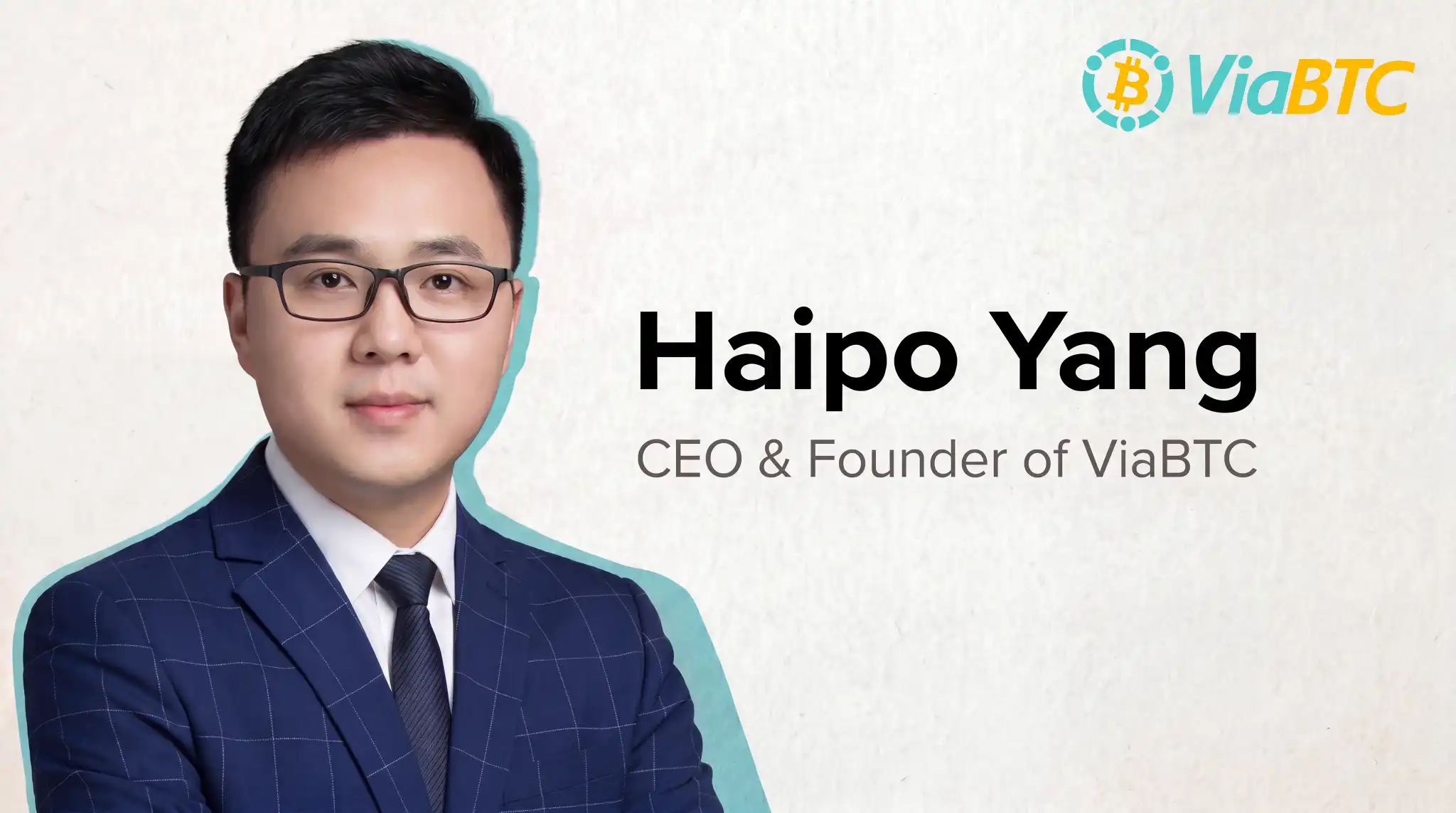
Dialogue with ViaBTC CEO Yang Haipo: Is the Essence of Blockchain a Libertarian Experiment?

"ViaBTC CEO Yang Haipo: Blockchain as a Hardcore Libertarian Experiment" In a deep-dive interview, ViaBTC CEO Yang Haipo reframes the essence of blockchain, arguing it is not merely a new technology or infrastructure but a hardcore libertarian experiment. This experiment, born from the 2008 financial crisis and decades of cypherpunk ideology, tests a fundamental question: to what extent can freedom and self-organization exist without centralized trust? The discussion highlights the experiment's verified outcomes. On one hand, it has proven its core value of censorship resistance, providing critical financial lifelines for entities like WikiLeaks and individuals in hyperinflationary or sanctioned countries via tools like stablecoins. However, Yang points out a key paradox: the most successful product, USDT, is itself a centralized compromise, showing users prioritize a less-controlled pipeline over pure decentralization. On the other hand, the experiment has exposed the severe costs of this freedom—a "dark forest" without safeguards. Events like the collapses of LUNA, Celsius, and FTX, resulting in massive wealth destruction and prison sentences for founders, underscore the system's fragility and the inherent risks of an unregulated environment. Yang observes that despite decentralized protocols, human nature inevitably recreates centralized power structures, speculative frenzies, and narrative-driven cycles (from ICOs to Meme coins), where emotion and belonging often trump technological substance. Looking forward, he believes blockchain's future is significant but niche. Its real value lies in serving specific, real-world needs for financial sovereignty and bypassing traditional controls, not as a universal infrastructure replacing all centralized systems. For the average participant, Yang's crucial advice is to cultivate independent judgment. True freedom is not holding a crypto wallet, but possessing a mind resilient to groupthink and narrative hype in a high-risk, often irrational market.

marsbit1 год тому

Dialogue with ViaBTC CEO Yang Haipo: Is the Essence of Blockchain a Libertarian Experiment?

marsbit1 год тому

Торгівля

Спот
Ф'ючерси
活动图片