Author: Liang Yu Edited by: Zhao Yidan
In early March 2026, a piece of news sent shockwaves through both the traditional finance circle and the cryptocurrency industry.
According to a March 5th report by Sina Finance, Intercontinental Exchange (ICE), the parent company of the New York Stock Exchange, has made a strategic investment in cryptocurrency exchange OKX, valuing OKX at $25 billion post-investment. As part of the deal, ICE will secure a seat on OKX's board of directors, although the specific investment amount and terms have not been disclosed.
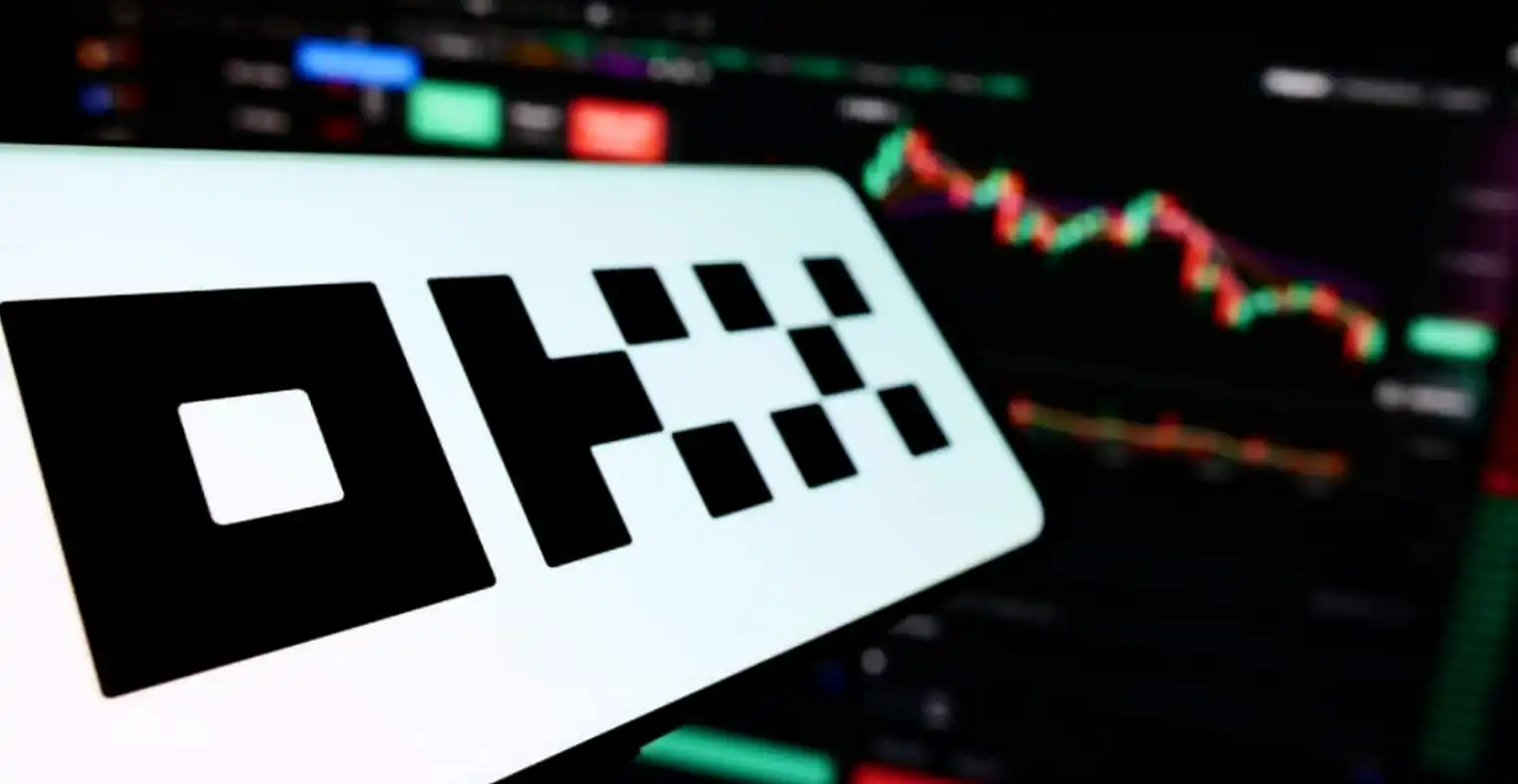
This is not a simple financial investment. According to statements released by both parties, the core elements of the collaboration include: OKX will provide ICE with real-time cryptocurrency price data from its platform, which ICE plans to use to launch US-regulated crypto futures contracts; simultaneously, the two parties plan to launch a new feature in the second half of 2026 allowing OKX users to trade tokenized stocks and derivatives listed on the NYSE. Affected by this news, according to OKX market data, its platform token OKB's price surged rapidly, reaching $121.35 at one point, a 24-hour increase of 58.77%.
Against the backdrop of multiple fluctuations in the cryptocurrency market and ongoing regulatory uncertainties, the parent company of the world's oldest stock exchange choosing to place a heavy bet on a private cryptocurrency exchange at this time makes the significance of this deal far exceed what the headline can cover. It is not only the latest handshake between Wall Street and the crypto world but may also signal that the real-world asset (RWA) tokenization track is moving from the "proof-of-concept" stage into a new phase of "substantive implementation" led by traditional financial infrastructure giants.
I. ICE's "Open Strategy" and OKX's "Springboard"
To understand the deeper meaning of this deal, we must first clarify a question: What is ICE really after? The answer may lie in a series of strategic moves ICE has made in recent years.
ICE's interest in the digital asset space is not new. According to an October 2025 report by Investing.com, ICE invested up to $2 billion in the blockchain-based prediction market platform Polymarket, valuing the latter at $8 billion. At the time, ICE stated it planned to "become the global distributor of Polymarket's event-driven data" and collaborate with Polymarket on tokenization projects. Viewing these two investments together, ICE's strategic blueprint becomes clearer: it is systematically building a digital asset infrastructure system encompassing "alternative data + prediction markets + crypto trading execution."
So, what role does OKX play in this blueprint? First, it's about acquiring data value. ICE obtaining authorization for OKX's real-time cryptocurrency price data may seem ordinary but is actually profound. The pricing of traditional financial derivatives (like futures, ETFs) highly depends on the price discovery mechanism of the underlying assets. Mastering authoritative real-time pricing data for crypto assets means ICE can pave the way for launching more compliant crypto derivatives in the future. As ICE Vice President of Strategic Planning Michael Blaugrund stated in an interview: "On-chain infrastructure will become a key component of trade clearing, settlement, and capital formation. Our plan is to ensure we either develop our own capabilities to provide these solutions or find leading companies globally that are building these cutting-edge capabilities."
Second, it's about expanding user reach. OKX has over 120 million accounts globally, with its user base primarily distributed outside the US. This naturally complements the NYSE—as a traditional stock exchange, the NYSE does not have a direct consumer-facing application. ICE Chairman and CEO Jeffrey Sprecher explicitly stated in the announcement: "The strategic relationship with OKX will expand global retail investors' access to ICE's premier regulated markets." In other words, OKX will become an important gateway for ICE products to reach a new generation of investors.
For OKX, the value of this deal is equally significant. OKX, formerly OKEx, was founded by Star Xu in 2017. The company has had a曲折 (tortuous) history with regulatory compliance. According to a Zhitong Caijing report, about a year ago, the operator of OKX, one of the largest cryptocurrency exchanges, pleaded guilty to a felony and agreed to pay approximately $504 million in fines after prosecutors accused it of handling over $1 trillion in US customer transactions without a license. In this context, receiving ICE's endorsement holds special meaning. OKX Global Managing Partner Haider Rafique stated in an interview that this investment and ICE's decision to join the board "is a positive signal that we are charting a different path. We want to partner with other companies that operate within regulatory frameworks."
Therefore, this "marriage" is essentially a two-way empowerment: ICE gains a data entry point and distribution channel into the crypto world, while OKX gains a passport into the hallowed halls of traditional financial compliance. The two are fusing their DNA, as Blaugrund said, "This will make both institutions stronger."
II. How Will Tokenized Stocks Go Mainstream?
If the data cooperation and board seat are the "appetizers" of this deal, then the real main course is undoubtedly the planned launch of tokenized stock and derivative trading in the second half of 2026.
According to The TRADE报道 (report), pending regulatory approval, OKX will provide its users with access to ICE's US futures and NYSE tokenized stock markets. The two companies plan to evaluate joint initiatives in market structure design, settlement and risk management, data, and institutional access to digital assets. This means that in the future, OKX users might be able to buy and sell tokenized versions of stocks listed on the NYSE directly on the crypto trading platform.
This is not fantasy. The NYSE announced earlier this year that it is building a platform to enable 24/7 trading of tokenized stocks and exchange-traded funds. Its competitor, Nasdaq Inc., is also seeking regulatory approval to trade tokenized stocks on its exchange. The convergence of these two traditional exchanges suggests that asset tokenization is accelerating from a long-sloganized concept into the underlying architecture of the real-world financial system.
So, what can tokenized stocks bring? First, a revolutionary extension of trading hours. Traditional stock trading is limited by exchange opening times, while the crypto market's 24/7 trading nature will completely change the trading habits of US stocks. Investors can react instantly to breaking news on weekends, late at night, at any moment. This ability to trade around the clock holds obvious appeal for investors in a globalized context.
Second, the imaginative space for asset composability. In the crypto world, tokenized stocks can serve as a new asset class, integrated into the decentralized finance (DeFi) ecosystem. They can be used as collateral in lending protocols, incorporated into liquidity mining strategies, and even become the underlying assets for synthetic derivatives. These are innovative possibilities that traditional brokers and exchanges cannot offer.
Third, the potential improvement in market efficiency. Traditional exchanges monetize trading activity through fees, but these fees can somewhat affect the efficiency of price formation. If tokenized assets can leverage blockchain technology to achieve more efficient clearing and settlement, it could lower transaction costs and increase market liquidity.
In terms of market size, the potential of RWA tokenization can no longer be ignored. According to the "2026 Crypto Industry Outlook Report" released by 21Shares, the total value locked (TVL) in tokenized real-world assets is predicted to reach $500 billion in 2026. Furthermore, according to ARKM Research data, as of early March 2026, the real-world asset market size on the Ethereum chain alone has exceeded $15 billion, accounting for 58% of the global RWA market, with the tokenized gold market size exceeding $4 billion. These numbers indicate that RWA tokenization is gradually moving away from a niche status and penetrating mainstream finance.
ICE's entry will bring the most scarce resources to this track: compliance and credibility. For a long time, the core dilemma facing RWA tokenization has been: assets are on-chain, compliance is off-chain. How to ensure that holders of on-chain tokens truly have legal rights to the off-chain assets? How to handle regulatory conflicts across different jurisdictions? These issues have no simple technical solutions; they require institutional-level trust endorsement. ICE, as one of the most strictly regulated and mature exchange operators globally, its participation will set a benchmark for the entire industry that will be closely watched and even emulated.
III. The Game Under the Table: Regulation, Competition, and Potential Risks
Any innovation comes with risks, and tokenized stocks are no exception. Beneath the surface of win-win cooperation, many questions remain unanswered.
First is the issue of regulatory definition. Are tokenized stocks securities or commodities? This definition will determine the applicable regulatory framework. The division of jurisdiction between the US Securities and Exchange Commission (SEC) and the Commodity Futures Trading Commission (CFTC) has long been a gray area in crypto asset regulation. The Trump administration recently urged lawmakers to pass the Clarity Act, which aims to establish clear regulatory oversight for digital assets, but specific rule implementation will take time. Does ICE's participation imply some tacit understanding with regulators? Or is this itself an attempt to demonstrate a feasible model to regulators? These questions have no clear answers yet.
Second is the issue of market infrastructure compatibility. When the NYSE is closed, its tokenized version continues trading on OKX. This "price discovery" mechanism could trigger complex chain reactions. If the price of a tokenized stock fluctuates violently on the crypto market, will it inversely affect the NYSE's opening price the next day? How will the arbitrage mechanism between the two markets operate? Who is responsible for maintaining the price peg between the two markets? These are technical questions that need to be answered in the market structure design.
Third is the complexity of risk叠加 (overlay). Tokenized stocks叠加 (overlay) the risks of traditional markets (changes in company fundamentals, macroeconomic factors) with the risks of crypto markets (price volatility, smart contract vulnerabilities, hacker attacks). While enjoying the convenience of 24/7 trading, investors also need to face more complex security considerations. For retail investors accustomed to the protection mechanisms of traditional brokers, entering the crypto world to trade tokenized stocks means taking on a series of new responsibilities themselves, such as private key custody and smart contract risks.
Furthermore, there is the博弈 (game) of profit distribution. How will ICE and OKX share profits in this new business? Who controls the users? Who controls the asset issuance rights? This "frenemy" relationship requires a delicate balancing mechanism. The cooperation model when ICE invested in Polymarket might offer some clues: ICE became the global distributor of Polymarket's event-driven data, packaging blockchain-native prediction data into formats familiar to traditional financial institutions and delivering it to the trading screens they already use. This "data layer monetization" model preserves Polymarket's zero-commission structure while creating a new revenue stream for ICE. The cooperation between ICE and OKX might evolve in a similar direction.
From a broader competitive landscape, ICE is not the only traditional exchange布局 (laying out) tokenization. Nasdaq CEO Adena Friedman has stated that the exchange plans to introduce innovations like tokenization and 24/7 trading directly into its core stock market, not limited to附属 (subsidiary) businesses. She also pointed out that the previous lack of regulatory rules was the main obstacle to a comprehensive layout, and only when the regulatory rules of traditional and crypto markets converge can mainstream institutions introduce compliant tokenized securities services for clients under the principle of "investor protection first." This means that the cooperation between ICE and OKX might be just the beginning, with more marriages between traditional exchanges and crypto platforms likely to follow.
IV. The Two-Way Convergence of Wall Street and the Crypto World
Looking back from a longer historical perspective, ICE's investment in OKX might be seen as a watershed moment. It marks a critical turning point where cryptocurrency and Wall Street move from "confrontation" to "integration."
Over the past decade-plus, the cryptocurrency industry has been trying to prove it can build a parallel world independent of the traditional financial system. The birth of Bitcoin itself carried distrust of centralized financial institutions. However, the industry's development trajectory shows that a completely parallel world is难以持久 (difficult to sustain); the real opportunity lies in deep integration with the traditional financial system.
ICE's布局 (layout) clearly shows the path of this integration: it is not simply introducing crypto assets into traditional exchanges, nor letting the crypto world evolve on its own, but selectively combining the infrastructure of the crypto world (trading execution, price discovery, user reach) with the core advantages of traditional finance (regulatory compliance, institutional trust, clearing efficiency) to create a new market structure.
OKX founder Star Xu's description of this cooperation prospect is profound: "This relationship brings together OKX's digital asset execution technology with ICE's regulated market technology—both have high-performance matching engines and transparent order books—helping to establish a more reliable market structure, connect digital assets and stocks, strengthen cross-market price formation, and meet institutional-level risk and compliance standards." The keywords in this statement are "connect" and "cross-market"—the future financial world might no longer be a dichotomy of "traditional finance" and "crypto finance," but a unified, multi-layered, 24/7 global market.
For readers of the RWA Research Institute, the cooperation between ICE and OKX raises several questions worth持续关注 (continuous attention): As Wall Street giants begin laying tracks to the crypto world, how should entrepreneurs and builders find their place? Will tokenized stocks gain widespread acceptance first in a bull market or a bear market? How will regulators in different jurisdictions respond to this new type of cross-market product?
The answers might only become clear after the new product真正推出 (truly launches) in the second half of 2026. But one thing is certain: RWA tokenization has stepped out of the ivory tower of concepts and is becoming an organic component of the real-world financial system. As BlackRock CEO Larry Fink stated in his shareholder letter earlier this year: "Every stock, every bond, every fund, every asset, can be tokenized." When the parent company of the NYSE starts betting on this vision with real money, we might be standing at the starting point of a new round of financial innovation.
The task left for the industry and regulators is: how to embrace innovation while ensuring investor protection is not absent and risk prevention is not missing. After all, every innovation in financial history must eventually find its balance point on the scale of "efficiency" and "security."