‘No Token Issuance’ Statement Fails to Curb Frenzy, ClawdBot Trapped in Crypto Kidnapping Dilemma

比推Опубліковано о 2026-01-27Востаннє оновлено о 2026-01-27

Анотація

ClawdBot, an open-source AI assistant, gained massive traction with over 40,000 GitHub stars and a rapidly growing Discord community. Despite its technical success, it became the center of an unsolicited meme coin frenzy when a token named CLAWD was launched without authorization, reaching a market cap of $16 million. The founder, Peter Steinberger, explicitly stated he would never issue a token and condemned the harassment and scams targeting the project. His account was even hijacked by crypto scammers attempting to force a token launch. Steinberger, a retired entrepreneur whose previous company received a €100 million investment, has no financial incentive to engage in crypto speculation. The incident highlights a shift in meme coin culture from seeking legitimacy through technical projects to aggressively “adopting” viral trends through coercion and scams, potentially harming genuine open-source development.

Author: Curry, Deep Tide TechFlow

Original Title: ClawdBot Founder Says Never Issuing Tokens, Meme Trenches Go Crazy


On January 25th, an open-source AI assistant called ClawdBot went viral.

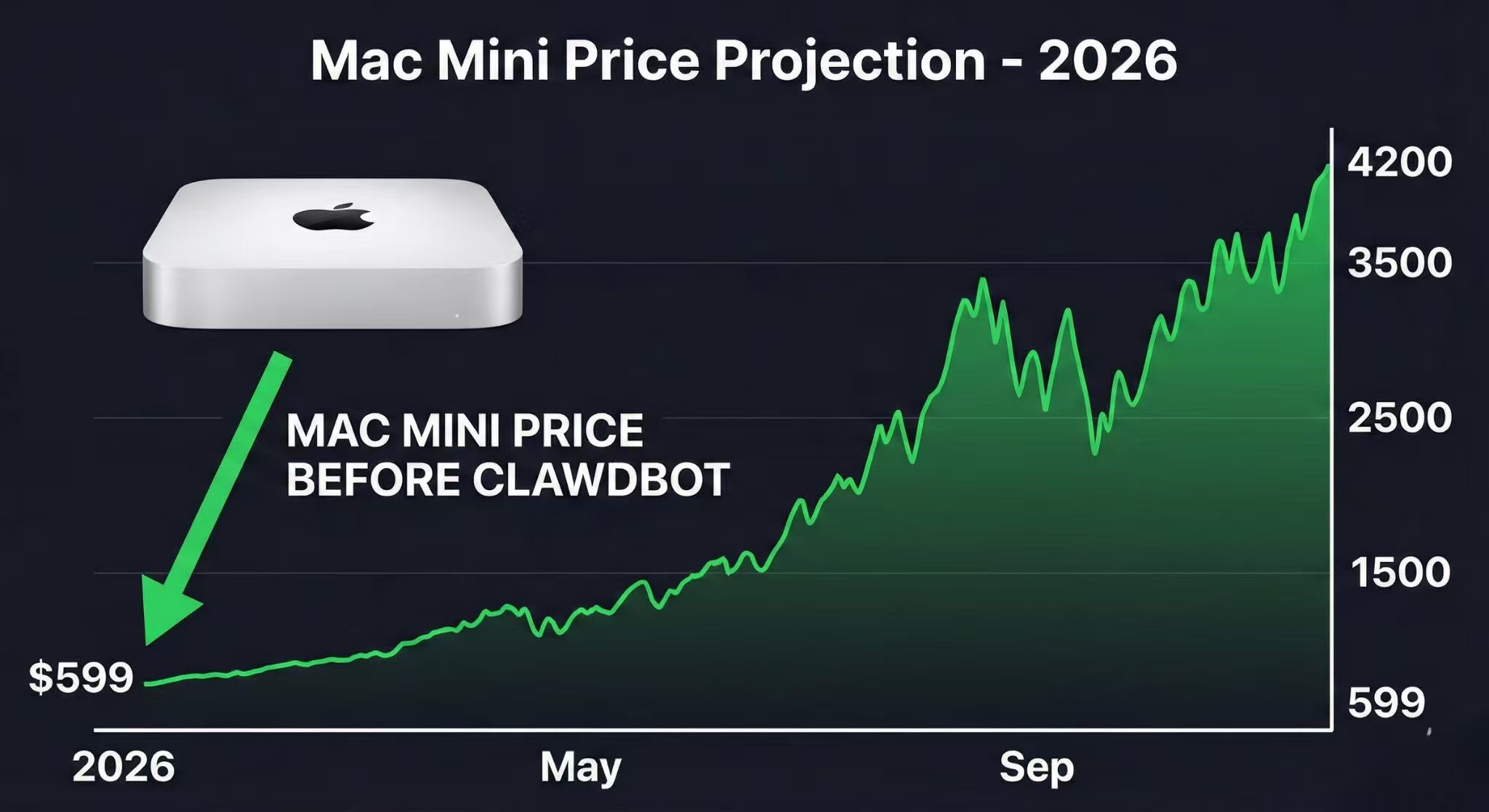
You might have seen it extensively on Twitter and various media platforms at home and abroad over the past couple of days. The project's GitHub stars surpassed 40,000, and foreigners joked that Mac minis would sell out because of it, as it needs to run 24/7, and a brand new Mac, free of other tasks, versatile and capable, is a good choice.
Simultaneously, nearly ten thousand people flooded into the project's Discord community.

ClawdBot founder Peter Steinberger also tweeted, saying he hardly looks at code anymore, letting AI write it all;

This sparked another phenomenon-level technical topic on Twitter after Dan Koe's viral inspirational piece "How to Fix Your Life in a Day" – "How to Quickly Deploy ClawdBot".

Naturally, attention brings liquidity, and the crypto friends smelled it and came.

The同名 Meme token CLAWD was actually launched on the 25th, with its market cap once soaring to $16 million. Everything looked familiar: a trending AI project, a同名 token, early players getting rich. The only problem was:

The founder said he wouldn't issue a token.

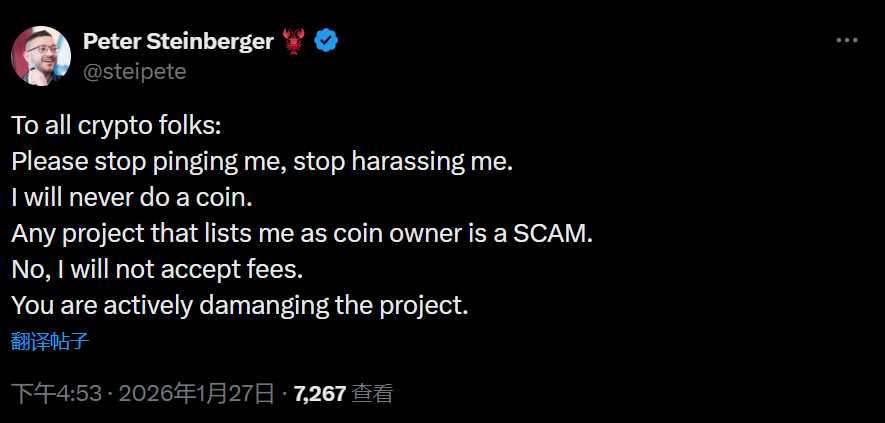
On January 27th, Peter Steinberger posted a statement on Twitter:

"Stop DMing me. Stop harassing me. I will never issue a token. Any project listing me as a token owner is a scam. No, I don't accept any fees. You are damaging the project".
On the same day, he posted another tweet:

Any GitHub folks who can help me get my account back? It's been hijacked by crypto scammers.

You won't issue a token, I'll DM you to issue it. You still won't, then I'll hijack your account and issue it for you.

Unlike the poor devs in the Meme trenches desperately waiting for an official move, this developer who created ClawdBot doesn't seem to be short of money.

I looked into his background. Peter previously founded a company called PSPDFKit, developing PDF tools.

In 2021, Insight Partners invested €100 million in this company, which at the exchange rate then was roughly:

$116 million.

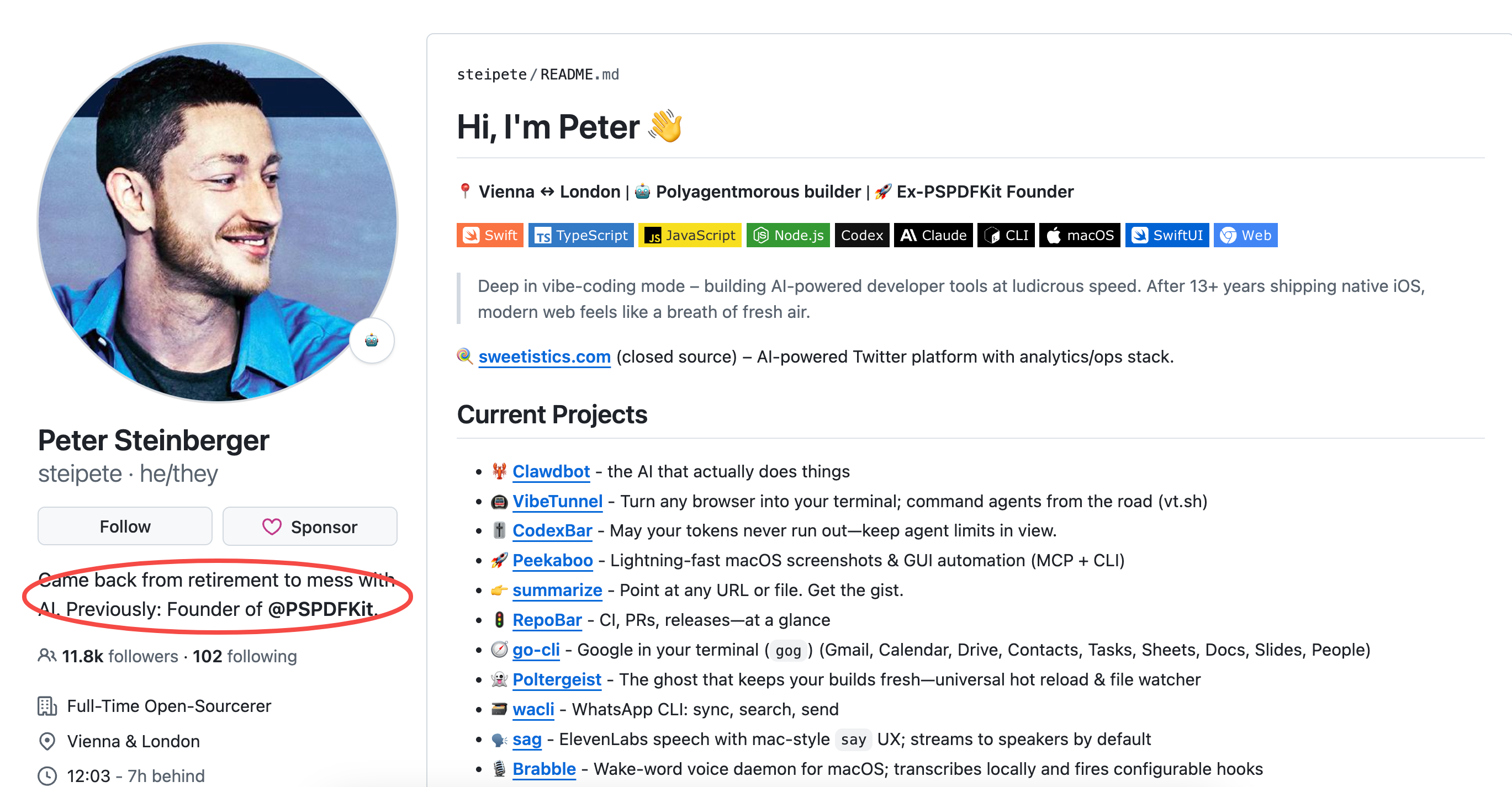
After the investment was completed, Peter and his co-founder retired. In his own words, he "came back from retirement to mess with AI", now returning from retirement to fiddle with AI.
A person who retired by making products really doesn't need your token profits.

But the brothers in the Meme trenches need it.

This is the most interesting part of the story. In the crypto world's perception, "who wouldn't want to make money" is the first principle. A project goes viral, issuing a token is a matter of course.

If you don't issue, you're either pretending or waiting for a better time, even if the project has little to do with crypto.

So people will DM, harass, even hijack accounts to issue tokens through scams.

Remember when AI Meme first got hot the year before last and last year, the routine was like this:

First, have a technical project or product prototype, then the team announces they will issue a token, the community follows up, the narrative is self-consistent. This is called "technical legitimacy": you have something, so you qualify to issue.

Now it's changed.

Now, upon seeing the hype, first抢注 a同名 token, then wait for "official adoption". If adopted, everyone is happy; if not, keep speculating. Anyway, retail investors can't tell which is real.

In the Meme trenches, this "forced adoption" model is becoming the norm.

Whether it's Chinese Meme or overseas Meme, seeking mention,暗示, or endorsement from an official role in a hot topic is an action that will never stop.

It's just that this initiative is a bit too wolf-like.

Before, Meme was about "creating gods", finding a founder with a technical background, packaging them as the next Vitalik; later it was "蹭神" (rubbing against gods), naming projects after Elon, Trump.

Now it's "绑神" (kidnapping gods), if you don't cooperate, I'll hijack your account.

From active god-making to passive kidnapping, the narrative cycle of AI Meme might really be at its end.

Peter Steinberger said something in the tweet statement above that is truly worth pondering: you are damaging the project.

An open-source, free AI assistant that anyone can use is being forced to spend energy dealing with this nonsense because of harassment from the crypto circle.

I wonder if he will shut down the project because of this, or simply make the code private. Only know that if it really comes to that, the ones who lose the most certainly won't be those speculating on tokens.

The ones who lose the most are the ordinary developers who actually want to use this tool.

But does that matter?

In the crypto world, making money is what matters.


Twitter:https://twitter.com/BitpushNewsCN

BitPush TG Discussion Group:https://t.me/BitPushCommunity

BitPush TG Subscription: https://t.me/bitpush

Original link:https://www.bitpush.news/articles/7606372

Пов'язані питання

QWhat is the founder of ClawdBot and what is his background?

AThe founder of ClawdBot is Peter Steinberger. He previously co-founded a company called PSPDFKit, which developed PDF tools. In 2021, the company received a €100 million (approximately $116 million at the time) investment from Insight Partners, after which Peter retired. He has since returned from retirement to work on AI projects like ClawdBot.

QWhy did the ClawdBot project gain significant attention on January 25th?

AClawdBot, an open-source AI assistant, gained significant attention because its GitHub repository surpassed 40,000 stars, and its Discord community grew to nearly 10,000 members. It became a trending topic on Twitter, with discussions on how to quickly deploy it, and it was humorously suggested that Mac minis might sell out due to the project's requirement to run 24/7.

QHow did the cryptocurrency community react to the popularity of ClawdBot?

AThe cryptocurrency community quickly capitalized on ClawdBot's popularity by launching a meme token named CLAWD on the same day it went viral. The token's market capitalization briefly reached $16 million. Despite the founder's clear statement that he would never issue a token, some individuals resorted to harassing him and even hijacking his social media accounts in an attempt to force or fake an official endorsement.

QWhat was Peter Steinberger's response to the token and the harassment from the crypto community?

APeter Steinberger explicitly stated on Twitter that he would never issue a token and denounced any projects listing him as a token owner as scams. He expressed frustration over the harassment, stating that such actions were damaging the project. He also reported that his GitHub account was hijacked by crypto scammers.

QWhat does the article suggest about the current state of AI-related meme tokens?

AThe article suggests that the narrative cycle for AI-related meme tokens may be ending. It describes a shift from projects building legitimacy through technology and official token launches ('造神' or 'making a god') to simply蹭神' or 'rubbing against a god' by using famous names, and now to '绑神' or 'kidnapping a god,' where communities harass or hijack accounts of legitimate projects to force association. This behavior risks harming genuine open-source projects and their communities.

Пов'язані матеріали

Will the Fed Definitely Raise Interest Rates in September? How Will Crypto and U.S. Stocks Withstand the Pressure?

The market's expectation for a September Fed rate hike surged dramatically in early August, jumping from under 50% to over 80% within a week. This shift followed a contentious July FOMC meeting, where a 9-3 vote to hold rates revealed growing dissent from hawkish members advocating for an immediate hike to combat persistent inflation. The primary catalyst for this repricing is rising oil prices, driven by renewed geopolitical tensions around the Strait of Hormuz, which threaten global supply. Energy costs directly influence inflation metrics, making the upcoming July CPI report (due August 12th) a critical data point. If it shows inflation reaccelerating, the probability of a September hike will solidify. For Bitcoin and crypto assets, this is typically bearish news. Bitcoin continues to behave as a high-beta, liquidity-sensitive risk asset. A rate hike raises the opportunity cost of holding non-yielding assets and could drive capital toward money markets, pressuring crypto prices in the short term. However, historical patterns suggest that if a hike is perceived as the end of a tightening cycle rather than the start, any negative price impact may be brief. U.S. stocks, particularly crypto-linked equities like Coinbase and growth-oriented tech stocks, are also vulnerable. Higher rates increase discount rates in valuation models, putting pressure on high-multiple companies. This coincides with a pivotal tech earnings season where investor focus has shifted from massive AI capital expenditure to tangible revenue and cash flow generation. Companies with negative cash flow and weak growth narratives could face heightened volatility if borrowing costs rise in September. In summary, a September Fed hike has evolved into a mainstream market scenario. Key factors to watch are oil prices, the July CPI report, and Fed communications, which will determine the final decision and its impact on volatile crypto and equity markets.

marsbit10 хв тому

Will the Fed Definitely Raise Interest Rates in September? How Will Crypto and U.S. Stocks Withstand the Pressure?

marsbit10 хв тому

A 'Overlooked' Market Event: Joint US-Japan-South Korea Intervention, Rare US Treasury Involvement, and Bessent's Quiet 'Market Rescue'?

Summary: The United States, Japan, and South Korea executed their largest coordinated foreign exchange intervention in nearly 30 years. The action targeted depreciation pressure on the Japanese yen and South Korean won. This move is seen as a significant effort by the US to stabilize the financial markets of its key allies and prevent the spillover of risks. Key details: * Japan reportedly intervened on July 30 using approximately 8.45 trillion yen (about $52.8 billion). South Korean authorities also intervened that day, selling dollars to support the won. * Notably, the US Treasury Department intervened directly in yen markets for the first time in roughly 30 years. The New York Fed, reportedly acting on behalf of the Treasury, sold euros to buy yen via Goldman Sachs and Morgan Stanley on July 31. Analysts view the use of the euro-yen pair as a way to alleviate yen pressure without adding selling pressure to the US dollar. * Prior to the action, the New York Fed conducted "rate checks" on both USD/JPY and EUR/JPY, a newer signaling tool that falls between verbal and physical intervention. The intervention is interpreted as going beyond traditional currency stabilization. Analysts, such as Michael Hartnett of Bank of America, suggest it resembles a "Price Keeping Operation" for the AI era. The core US objectives are perceived to be: 1. Preventing rapid yen depreciation from triggering a sharp rise in Japanese government bond yields. 2. Containing financial stress from spreading across Asian markets like South Korea and Japan. 3. Reducing the risk of disorderly capital flows impacting the US bond market. This coordinated action underscores the importance of Japan and South Korea as critical partners in the US semiconductor and AI supply chain. Stabilizing their financial markets is seen as vital to mitigating risks to the broader tech industry and the US market itself. The intervention coincides with market pressures, including the KOSDAQ index hitting a low since October 2022. While seen as a move to control volatility, some analysts caution it may not fundamentally reverse existing market trends.

marsbit14 хв тому

A 'Overlooked' Market Event: Joint US-Japan-South Korea Intervention, Rare US Treasury Involvement, and Bessent's Quiet 'Market Rescue'?

marsbit14 хв тому

Will the Federal Reserve Definitely Raise Interest Rates in September? How Will Cryptocurrencies and US Stocks Bear the Pressure?

In early August 2024, market expectations for a September Federal Reserve rate hike surged dramatically, from below 50% to over 80%, driven by renewed inflation concerns. This shift followed a contentious July FOMC meeting where a 9-3 vote to hold rates revealed a growing hawkish faction advocating for an immediate hike, citing prolonged above-target inflation. The key catalyst is escalating conflict near the Strait of Hormuz, which has pushed oil prices up approximately 20% in July, threatening to reignite inflation. The next critical data point is the July CPI report on August 12th; a hot reading could solidify hike expectations. For crypto assets, particularly Bitcoin, this represents near-term pressure. Bitcoin continues to exhibit high-beta, risk-on characteristics, making it sensitive to tightening liquidity and higher opportunity costs. However, historical precedent suggests that if a hike is perceived as the cycle's end rather than its start, the negative impact may be brief, with markets quickly pivoting to anticipate future rate cuts. U.S. stocks, especially crypto-linked equities like Coinbase and high-valuation tech stocks, face amplified volatility. Higher rates increase discount rates in valuation models, pressuring growth stocks. This coincides with a pivotal tech earnings season where investor focus has shifted from massive AI capital expenditures to demonstrable revenue and cash flow generation. Companies with negative cash flows and weak growth narratives could see severe pressure if a September hike materializes, as financing costs would rise. Key indicators to watch include oil prices, upcoming inflation data, and Fed commentary at events like the Jackson Hole symposium.

Odaily星球日报14 хв тому

Will the Federal Reserve Definitely Raise Interest Rates in September? How Will Cryptocurrencies and US Stocks Bear the Pressure?

Odaily星球日报14 хв тому

Торгівля

Спот
活动图片





