"No Questions Asked, Cash Accepted": A Record of Cryptocurrency Street Trading in Montenegro

marsbitОпубліковано о 2025-12-10Востаннє оновлено о 2025-12-10

Анотація

In Montenegro, cryptocurrency transactions operate in a regulatory vacuum, with unverified intermediaries facilitating anonymous cash-for-crypto exchanges on the streets of Podgorica. A BIRN investigation documented a typical transaction: 70 USDT swapped for €60 cash in minutes, with no questions asked about fund origins. These over-the-counter (OTC) deals, often arranged via Telegram groups, bypass banks and legal oversight. Blockchain analysis revealed one trader’s wallet handled millions in transactions over a year, with a quarter flagged as medium-to-high risk—including ties to frozen or sanctioned funds. Traders include locals and foreigners from Russia, Ukraine, and Turkey, who rely on cash exchanges due to banking access barriers. Despite 2025 anti-money laundering amendments requiring KYC checks for transactions over €1,000, enforcement remains absent. Montenegro’s EU-aligned crypto laws are pending, aiming to regulate service providers and enable tax oversight. For now, the gray market thrives, unregistered and unchecked.

In Montenegro, cryptocurrency trading remains in a regulatory vacuum. People conduct transactions through offline cash dealings and unverified intermediaries to circumvent legal oversight.

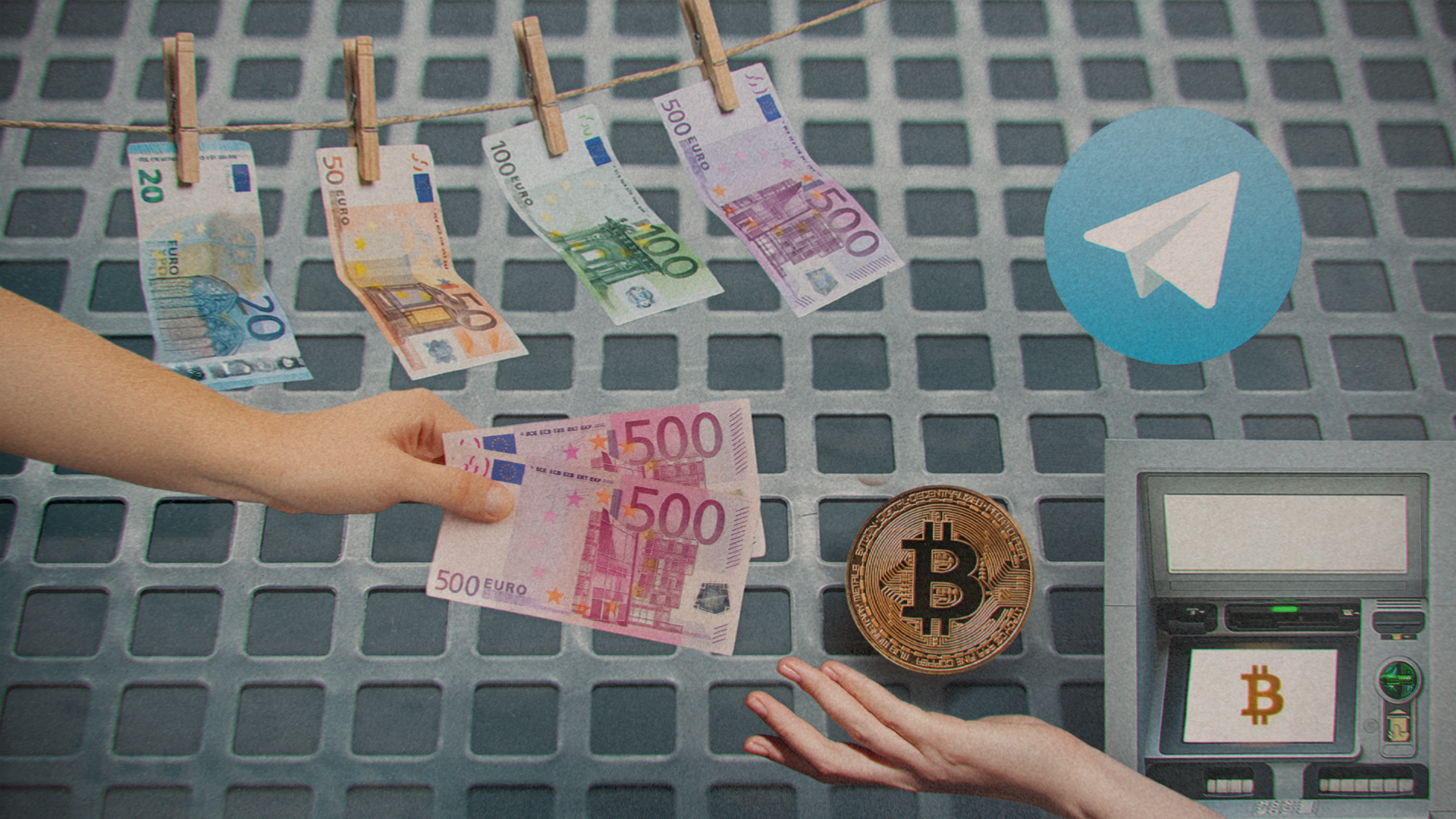
A trader posts an advertisement on social media, and both parties arrange the transaction details via chat software—within just a few minutes, 70 USDT is transferred from one crypto wallet to another, while 60 euros in cash are exchanged on the bustling streets of Podgorica (the capital of Montenegro). A fee of 5 euros is charged, with no questions asked and no inquiries about the source of funds.

After the transaction is completed, both parties quickly shake hands and depart. The trader mentions that he has other clients waiting for his services.

This scene is a true portrayal of Montenegro's cryptocurrency "gray area": cryptocurrencies are exchanged for cash outside the purview of legal regulation, with undercurrents flowing.
Anonymity, Cash, and High Risks

In fact, although Montenegro has promised to enact digital asset regulatory laws since 2020, they have yet to materialize.

While transferring funds from bank accounts to crypto trading platforms is not illegal in itself, cryptocurrencies cannot be converted into fiat currency through banks or registered exchange institutions.

At this point, intermediary platforms, Telegram groups, and online forums become the main channels for transactions—so-called "over-the-counter" (OTC) trading. Transactions are typically completed offline, with cryptocurrencies and cash exchanged directly and without any identity verification.

According to statistics from the blockchain forensics and crypto risk assessment platform "Global Ledger," the crypto wallet address involved in BIRN's transaction handled transactions worth millions of euros between October 2024 and October 2025. The largest single incoming transaction was $440,000, while the largest outgoing transaction exceeded $500,000.

Most of these transactions were conducted through well-known crypto platforms such as Binance and Gate.io, with about 75% of the activity occurring on low-risk platforms. However, a quarter of the transactions were classified as medium to high risk, including dealings with "frozen funds" (assets linked to frozen or sanctioned wallets) and entities sanctioned by the U.S. Financial Crimes Enforcement Network (FinCEN). Global Ledger rated the risk level of the trader's crypto wallet as "medium."

"In Podgorica, ask anyone involved in cryptocurrencies—everyone has their own 'dealer,'" said Ivan Jolicic, developer of Montenegro's digital currency Perper and a crypto expert. These dealers are not only locals but also include many expatriates from Russia, Ukraine, and Turkey.

"Participants include local crypto investors as well as foreigners, especially Russians, Ukrainians, and Turks. For them, this is the only way to make a living in Montenegro," Jolicic told BIRN. "They need to cover their living expenses in Montenegro, but banks are either unwilling or outright refuse to open accounts for them."

Another crypto trader active in the Balkans declined a request from a journalist to exchange 70 euros for Bitcoin, stating that their transaction threshold was "no less than 10,000 euros per transaction."

Russian-Language Telegram Groups Become Trading Hubs

BIRN's investigation found that multiple Telegram channels and online forums operate crypto exchange services in the Balkans or specifically for Montenegro. These groups range from a few dozen to several thousand members, with content including exchange amounts, rates, fees, and specific transaction locations.

A Russian-language Telegram group named "Обмен Валют Montenegro" (Montenegro Currency Exchange) has over 7,000 members and specializes in direct exchanges of cryptocurrencies for cash.
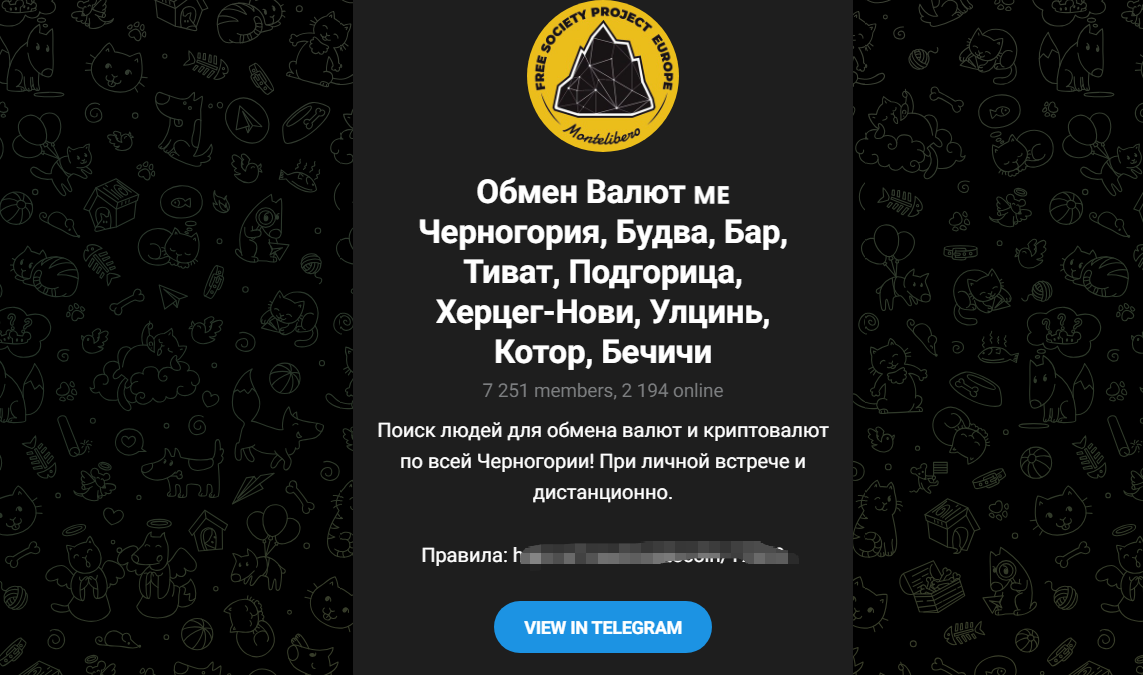
The group advises users to "only conduct transactions in person in public places and take necessary precautions," but also allows transactions through verified traders—these traders must submit passport information for group verification to receive a certified badge.

The group's logo and administrator usernames include the "Montelibero" community symbol. This community, located in Pecurice near the port city of Bar in Montenegro, was established by Russians in 2021. It claims to be a "free society" based on anarcho-capitalist principles and has issued its own cryptocurrency, EURMTL.

Victor Korb, a member of the Montelibero community council, denied any association between the community and the Telegram group: "Questions about others using the Montelibero project identifier should be directed to the users themselves."

Montenegro's tax authorities stated that, due to the lack of a legal basis, they are unable to tax such transactions.

"Until digital assets and their transactions are regulated by law, we cannot take any action," responded the Montenegrin Tax Authority. "Once the legal framework is established, the tax authorities will take all measures within their jurisdiction."

Although the process is slow, there has been preliminary progress.

In February 2025, the parliament passed an amendment to the "Anti-Money Laundering and Counter-Terrorist Financing Law," adding a "Register of Crypto-Asset Service Providers" and requiring "Know Your Customer" (KYC) verification for every crypto transaction exceeding 1,000 euros.

The Montenegrin Capital Market Committee (an independent securities and capital market regulatory body) was required to establish the register by mid-December 2025.

"Individuals or entities providing cryptocurrency-to-cash exchange services through social media operate in an unregulated 'gray area,'" the committee stated. "If service providers are unregistered and do not comply with the law, their activities may be deemed illegal—especially if there is suspicion of money laundering, unauthorized provision of financial services, or evasion of regulatory measures."

However, Jolicic remains skeptical. He believes that the registration requirements contradict the logic of the current gray market operations: "Those engaged in over-the-counter crypto trading must register and perform KYC verification for every client—but currently, no one is doing this. The law remains vague, and I believe these activities are inherently suspect under anti-money laundering regulations."

Legislative Revisions Imminent

BIRN previously exposed cases in Montenegro where cryptocurrencies were used to purchase real estate and vehicles, but such transactions were not incorporated into the tax or legal systems.

Due to the lack of a legal framework, authorities cannot even accurately track crypto assets held by public officials.

In mid-2023, the European Commission, the executive body of the EU, adopted the "Markets in Crypto-Assets Regulation" (MiCA), establishing a unified framework for digital asset regulation in the EU.

In September 2025, Montenegrin Prime Minister Milojko Spajic announced plans to draft digital asset laws in line with EU standards, and the Ministry of Finance has initiated public consultations on the relevant draft.

The proposed amendment to the "Credit Institutions Law" will, for the first time, define the concept of "digital assets," allowing credit institutions to provide crypto-related services (including digital token custody, trading platform operation, and transaction intermediation). The amendment to the "Tax Administration Law" will align Montenegrin law with the EU's "Directive on Automatic Exchange of Information on Crypto-Assets."

The Ministry of Finance stated that this will enable Montenegrin tax authorities to automatically exchange digital asset information with EU member states and other countries. Crypto service providers will need to collect and maintain user data (including accounts, transactions, and crypto income) and submit formal reports to the national service provider register.

"Regarding the taxation of crypto assets, we emphasize that once the digital asset regulatory law takes effect, the Ministry of Finance will amend tax laws to clarify the tax treatment of digital assets," the ministry responded.


Пов'язані питання

QWhat is the current regulatory status of cryptocurrency transactions in Montenegro?

ACryptocurrency transactions in Montenegro exist in a regulatory vacuum, with no specific digital asset laws yet implemented, allowing unregulated over-the-counter (OTC) cash exchanges to operate outside legal oversight.

QHow do OTC cryptocurrency transactions typically occur on the streets of Podgorica?

AOTC transactions involve parties agreeing on details via chat apps, transferring crypto between wallets, and exchanging cash in person on busy streets—often with no identity verification or questions about fund origins, completed within minutes.

QWhat risks are associated with the unregulated crypto-to-cash exchanges in Montenegro?

ARisks include medium-to-high risk wallet activities (per Global Ledger analysis), potential ties to frozen/sanctioned funds, anonymity enabling money laundering, and lack of consumer protection or legal recourse.

QWhich group facilitates a significant portion of crypto exchanges in Montenegro via Telegram?

ARussian-language Telegram groups like 'Обмен Валют Montenegro' (with 7,000+ members) serve as key hubs, offering crypto-cash exchanges often linked to foreign nationals (e.g., Russians, Ukrainians, Turks) who face banking access barriers.

QWhat legislative steps is Montenegro taking to regulate digital assets?

AMontenegro amended its Anti-Money Laundering Law in February 2025 to require KYC for transactions over €1,000 and plans EU-aligned laws (e.g., MiCA standards) to define digital assets, establish crypto service provider registries, and enable tax information exchange with the EU.

Пов'язані матеріали

Bloomberg Uncovered: How Do China's Wealthy Circumvent the Annual $50,000 Limit to Transfer Assets?

**Summary: How Wealthy Chinese Circumvent $50,000 Annual Foreign Exchange Limits** Despite China's strict capital controls, including an annual $50,000 per person foreign exchange quota, an estimated $150 billion in funds still leaves the country annually via various gray and underground channels. This report outlines the evolution of China's "capital wall" and the methods used to bypass it. **The Evolving Capital Controls:** * **Foundation (1994):** The system of "current account convertibility with strict capital account controls" was established. * **Quota Set (2007):** The $50,000 individual annual forex purchase limit was formalized. * **Crackdown Begins (2015-2017):** Following market volatility, enforcement tightened. Banks were required to scrutinize transactions, and channels like using UnionPay cards for Hong Kong insurance premiums or buying overseas property were blocked. * **Digital & Legal Upgrades (2024-2026):** Enhanced algorithms now flag suspicious patterns (e.g., "smurfing"). The Common Reporting Standard (CRS) provides Chinese tax authorities with data on citizens' offshore accounts. Unlicensed cross-border brokers have been targeted. **Five Primary Methods for Moving Capital:** 1. **Underground Banking / "Hawala" (Duiqiao):** The largest-scale method. No money crosses borders. Clients pay RMB to a domestic account; an overseas associate deposits equivalent foreign currency into the client's offshore account. Risks include high fees, account freezes, and legal penalties. 2. **"Smurfing" or "Ant Moving":** Using multiple individuals' $50,000 quotas to pool funds for one offshore recipient. Increasingly detected by anti-money laundering algorithms. 3. **Trade Invoice Manipulation:** Businesses over-invoice imports or under-invoice exports via offshore shell companies, creating a pretext to transfer excess funds abroad under the guise of trade. 4. **Channel Migration:** After a crackdown on internet brokers, funds flow toward more compliant but costly channels like major banks' cross-border wealth management services or Qualified Domestic Institutional Investor (QDII) quotas. 5. **Structural Arrangements:** High-net-worth individuals use complex, high-cost legal structures involving offshore trusts, insurance, and investment migration programs to transfer asset ownership. **Regulatory Response: Focusing on People, Not Just Money** The current strategy extends oversight from enterprises to **individual residents**. Tools like CRS allow retroactive visibility into offshore assets. Cryptocurrencies, once seen as a potential loophole, are now actively monitored and prosecuted as an illegal channel. The underlying driver remains: with significant wealth concentrated among millions of affluent households seeking diversification amid domestic economic shifts, the incentive to move assets offshore persists despite regulatory barriers.

marsbit19 хв тому

Bloomberg Uncovered: How Do China's Wealthy Circumvent the Annual $50,000 Limit to Transfer Assets?

marsbit19 хв тому

Ethereum's Ballmer Moment: As Everyone Is Bearish, the Circulating Supply Is Disappearing

"Ethereum's Ballmer Moment: Circulation Shrinks Amid Bearish Sentiment" Amid widespread bearish sentiment, with prominent figures like Bankless founder David Hoffman selling ETH and young developers flocking to Solana, some argue Ethereum is entering its "Ballmer era"—akin to Microsoft's perceived stagnation under Steve Ballmer. While surface-level criticisms about slow protocol development, cautious leadership, and competitive pressure are valid, underlying fundamentals tell a different story. Approximately 30% of ETH is staked, major holders like BitMine are accumulating, and spot ETFs continue to absorb supply. Regulatory clarity, including the SEC/CFTC's March ruling on staking rewards and the potential passage of the CLARITY Act, is transforming crypto from a regulatory threat into a legitimized framework. This institutionalization, alongside a shrinking circulating supply (with net issuance around 0.23% annually), creates significant buy-side pressure independent of fee-based value capture. The broader crypto total addressable market is expanding through regulated stablecoins, tokenized assets, and institutional adoption. While public chains face competition from permissioned alternatives, the winning model appears to be permissioned assets settling on public chains like Ethereum and Solana. The author advocates a non-maximalist, barbell strategy: holding ETH for its institutional role and supply squeeze, SOL for consumer/throughput trends, BTC as a macro hedge, and a basket of next-gen L1s. Key bullish drivers for ETH include rapid circulation shrinkage, potential Q2 staked ETF approvals, regulatory tailwinds solidifying its role as a default settlement layer, and the optionality of an eventual "Satya moment" leadership shift. Despite bearish consensus, the current setup—where crypto is "not hot" and regulatory groundwork is being laid—presents a compelling investment opportunity. The crypto cycle's focus may have shifted to AI, but blockchain infrastructure is gaining a legal and institutional foothold precisely while attention is elsewhere.

marsbit19 хв тому

Ethereum's Ballmer Moment: As Everyone Is Bearish, the Circulating Supply Is Disappearing

marsbit19 хв тому

Claude Code Introduces Dynamic Workflows: Enabling AI to Form Teams and Collaborate

Claude Code introduces dynamic workflows, enabling AI to coordinate teams of specialized agents for complex tasks. This transforms Claude from a code assistant into a programmable workbench. Workflows address key limitations of single-agent systems: agentic laziness (premature task completion), self-preferential bias (favoring own outputs), and goal drift (losing sight of original objectives). The system allows Claude to dynamically create execution frameworks using JavaScript. It can split tasks, dispatch parallel agents for isolated work (e.g., in separate worktrees), implement adversarial validation, run tournaments, and synthesize results. This multi-agent approach is valuable for tasks requiring deep research, factual verification, code migration, root cause analysis, large-scale triage, and qualitative sorting. Key patterns include: classify-and-route, fan-out-and-synthesize, adversarial verification, generate-and-filter, tournaments, and loop-until-done. While token usage is higher, workflows excel where tasks resemble programming—needing problem decomposition, isolated context, hypothesis testing, and handling many details. They extend Claude Code's utility beyond technical work to areas like business plan review, resume screening, and naming brainstorm. The feature is not a universal solution but points to a future where AI tool competitiveness depends on organizing reliable, reusable, and auditable execution flows for complex goals.

marsbit1 год тому

Claude Code Introduces Dynamic Workflows: Enabling AI to Form Teams and Collaborate

marsbit1 год тому

Торгівля

Спот
Ф'ючерси

Популярні статті

Як купити BILL

Ласкаво просимо до HTX.com! Ми зробили покупку Billions Network (BILL) простою та зручною. Дотримуйтесь нашої покрокової інструкції, щоб розпочати свою криптовалютну подорож.Крок 1: Створіть обліковий запис на HTXВикористовуйте свою електронну пошту або номер телефону, щоб зареєструвати обліковий запис на HTX безплатно. Пройдіть безпроблемну реєстрацію й отримайте доступ до всіх функцій.ЗареєструватисьКрок 2: Перейдіть до розділу Купити крипту і виберіть спосіб оплатиКредитна/дебетова картка: використовуйте вашу картку Visa або Mastercard, щоб миттєво купити Billions Network (BILL).Баланс: використовуйте кошти з балансу вашого рахунку HTX для безперешкодної торгівлі.Треті особи: ми додали популярні способи оплати, такі як Google Pay та Apple Pay, щоб підвищити зручність.P2P: Торгуйте безпосередньо з іншими користувачами на HTX.Позабіржова торгівля (OTC): ми пропонуємо індивідуальні послуги та конкурентні обмінні курси для трейдерів.Крок 3: Зберігайте свої Billions Network (BILL)Після придбання Billions Network (BILL) збережіть його у своєму обліковому записі на HTX. Крім того, ви можете відправити його в інше місце за допомогою блокчейн-переказу або використовувати його для торгівлі іншими криптовалютами.Крок 4: Торгівля Billions Network (BILL)Легко торгуйте Billions Network (BILL) на спотовому ринку HTX. Просто увійдіть до свого облікового запису, виберіть торгову пару, укладайте угоди та спостерігайте за ними в режимі реального часу. Ми пропонуємо зручний досвід як для початківців, так і для досвідчених трейдерів.

257 переглядів усьогоОпубліковано 2026.05.07Оновлено 2026.06.02

Як купити BILL

Що таке ATWO

I. Вступ до проектуArena Two - це децентралізована інтерактивна платформа, яка дозволяє фанатам грати активну, токенізовану роль у результатах подій в реальному часі. На відміну від традиційних моделей трансляції, які зменшують фанатів до пасивних глядачів, Arena Two використовує технологію блокчейн, щоб дозволити фанатам безпосередньо голосувати в реальному часі та впливати на результати на полі.II. Інформація про токенНазва токена: ATWO(Arena Two)III. Пов'язані посиланняВебсайт:https://arenatwo.com/Експлорери:https://basescan.org/token/0x499D35eBE6cEe9B2Ac35Fd003fcBbeeB9CFc7B32Twitter:https://x.com/arenatwoXПримітка: Вступ до проекту взято з матеріалів, опублікованих або наданих офіційною командою проекту, які є лише для довідки і не є інвестиційною порадою. HTX не несе відповідальності за будь-які прямі або непрямі збитки, що виникають внаслідок цього.

146 переглядів усьогоОпубліковано 2026.05.18Оновлено 2026.06.02

Що таке ATWO

Як купити ATWO

Ласкаво просимо до HTX.com! Ми зробили покупку Arena Two (ATWO) простою та зручною. Дотримуйтесь нашої покрокової інструкції, щоб розпочати свою криптовалютну подорож.Крок 1: Створіть обліковий запис на HTXВикористовуйте свою електронну пошту або номер телефону, щоб зареєструвати обліковий запис на HTX безплатно. Пройдіть безпроблемну реєстрацію й отримайте доступ до всіх функцій.ЗареєструватисьКрок 2: Перейдіть до розділу Купити крипту і виберіть спосіб оплатиКредитна/дебетова картка: використовуйте вашу картку Visa або Mastercard, щоб миттєво купити Arena Two (ATWO).Баланс: використовуйте кошти з балансу вашого рахунку HTX для безперешкодної торгівлі.Треті особи: ми додали популярні способи оплати, такі як Google Pay та Apple Pay, щоб підвищити зручність.P2P: Торгуйте безпосередньо з іншими користувачами на HTX.Позабіржова торгівля (OTC): ми пропонуємо індивідуальні послуги та конкурентні обмінні курси для трейдерів.Крок 3: Зберігайте свої Arena Two (ATWO)Після придбання Arena Two (ATWO) збережіть його у своєму обліковому записі на HTX. Крім того, ви можете відправити його в інше місце за допомогою блокчейн-переказу або використовувати його для торгівлі іншими криптовалютами.Крок 4: Торгівля Arena Two (ATWO)Легко торгуйте Arena Two (ATWO) на спотовому ринку HTX. Просто увійдіть до свого облікового запису, виберіть торгову пару, укладайте угоди та спостерігайте за ними в режимі реального часу. Ми пропонуємо зручний досвід як для початківців, так і для досвідчених трейдерів.

65 переглядів усьогоОпубліковано 2026.05.18Оновлено 2026.06.02

Як купити ATWO

Обговорення

Ласкаво просимо до спільноти HTX. Тут ви можете бути в курсі останніх подій розвитку платформи та отримати доступ до професійної ринкової інформації. Нижче представлені думки користувачів щодо ціни A (A).

活动图片