No Holiday Break|What Have Crypto KOLs Been Talking About in the Last 24 Hours?

比推Опубліковано о 2026-02-18Востаннє оновлено о 2026-02-18

Анотація

This article summarizes discussions from crypto KOLs on X (formerly Twitter) over the past 24 hours during the Chinese New Year period. Key topics include: - Reflections on the Spring Festival and the growing role of AI, especially its prominence in the Spring Festival Gala. - Kraken Exchange launching an official Chinese account, with executives greeting the community in Chinese. - An analysis of the evolution of crypto listing cycles, arguing that "narratives are dead, utility prevails." The piece discusses different eras—from early chaos, to IEOs, the rise of Airdrops, and the current balance between VCs, projects, and retail. He Yi from Binance commented on the industry’s maturation and shifting dynamics. - Market sentiment discussions, noting that in a bull market, even unrelated news is seen as positive, while in bear markets, all news is perceived negatively. Some expect Bitcoin to consolidate around $60k–$70k for a while. - Humorous community comments about Justin Sun (often referred to as "Sun Ge" or "Sun Cut"), poking fun at his reputation and anecdotal stories. The article includes multiple screenshots of tweets and disclaims that the opinions expressed are personal and not investment advice.

Dear readers, may the Year of the Horse bring you great fortune!

This Bingwu Spring Festival, we wish you: ever-rising portfolios, a mindset as steady as a galloping horse, and profits racing like a track sprint!

Let’s take a look at what KOLs in the crypto space have been hotly discussing over the past 24 hours—

Note: The following content is compiled from the X platform, representing personal opinions only. It does not represent the stance of this platform and should not be considered investment advice.

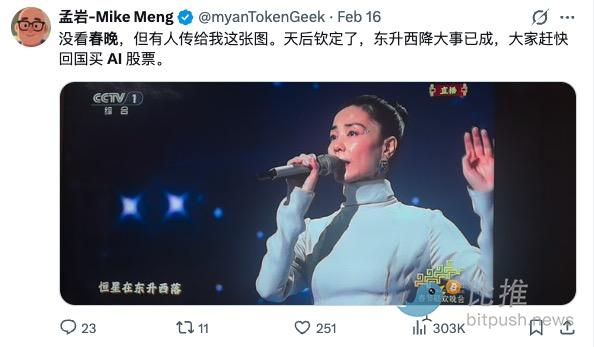
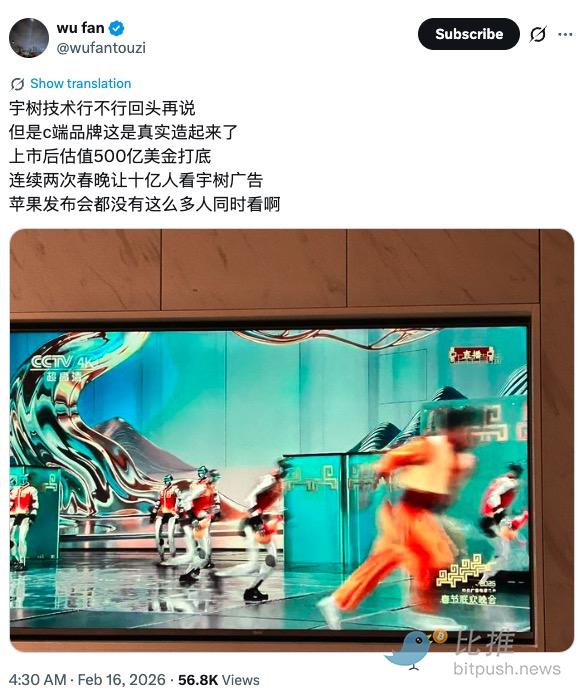
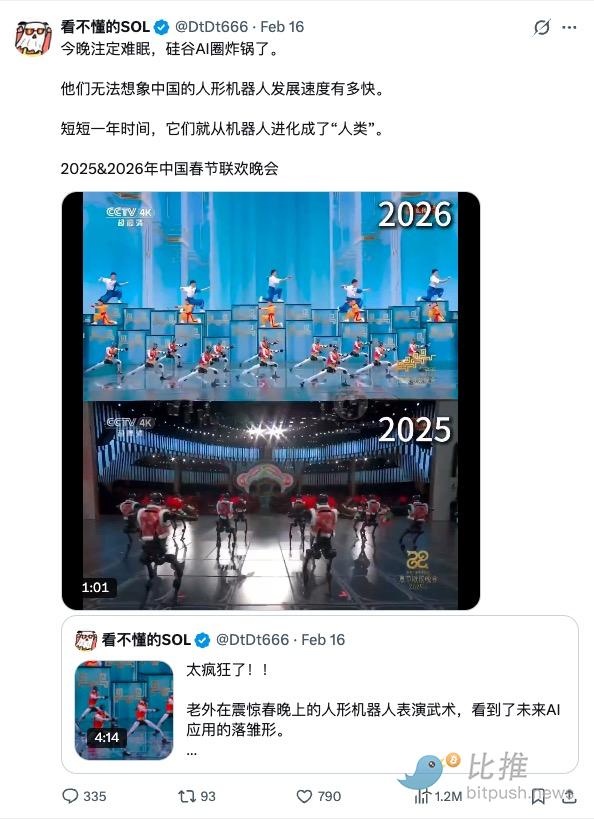
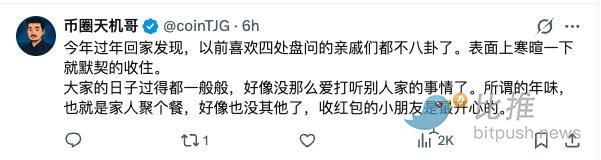
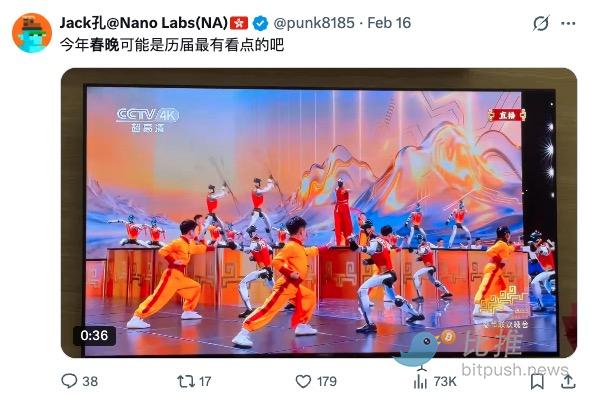
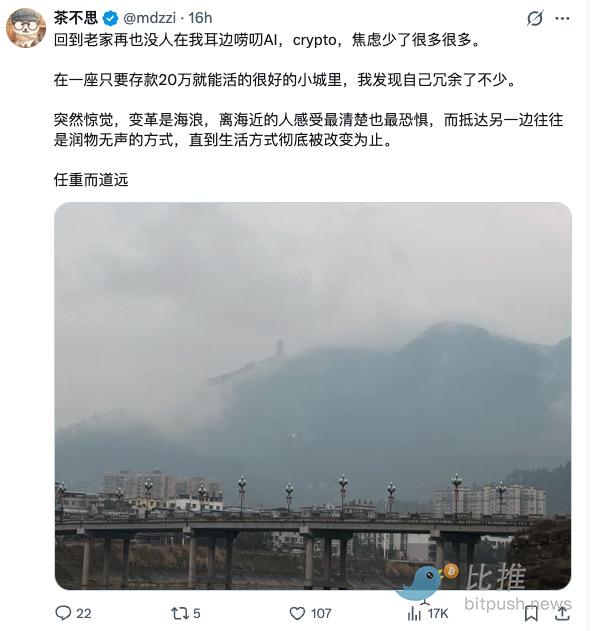
New Year Reflections, and When AI Takes Center Stage at the Spring Festival Gala
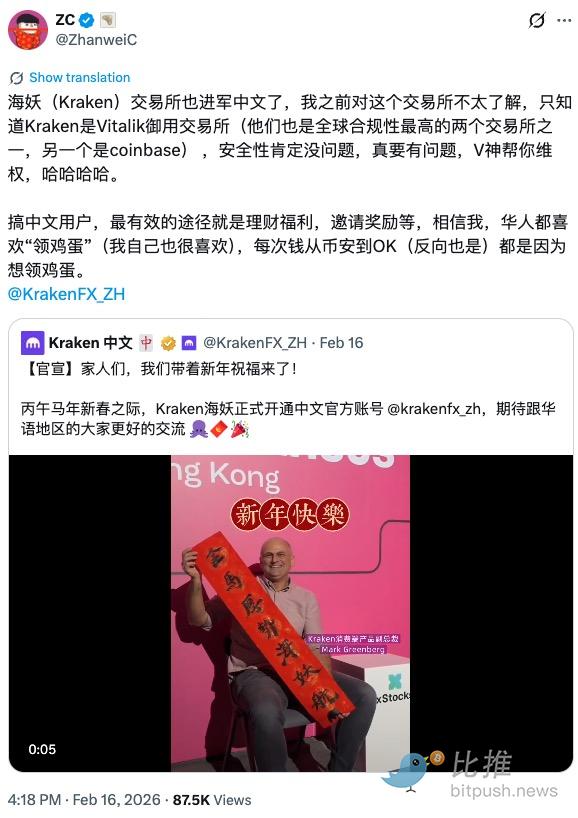
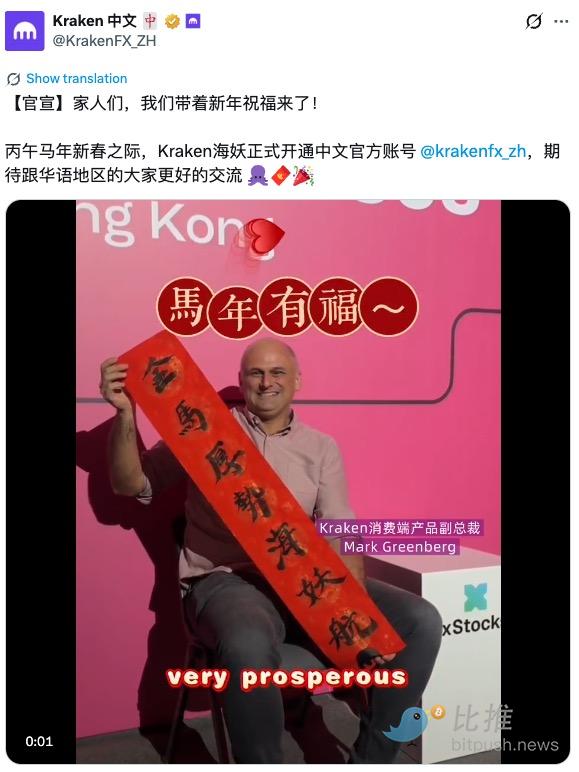
Kraken Exchange Launches Chinese Account, Executives Extend New Year Greetings in Chinese
The Evolution of Listing Cycles: “Narratives Are Dead, Utility Reigns”

Article link: https://www.bitpush.news/articles/7612622

Author’s note: “As an old-timer in crypto who’s anti-VC, this sentiment really resonates with us—do you know how long it took for the crypto community to reclaim pricing power? So today, from the perspective of a seasoned veteran, I’ve strung together these phases to help newcomers understand the journey. This is a hearty dish for you to savor during boring family visits or while traveling. It’s worth reading again and again.”
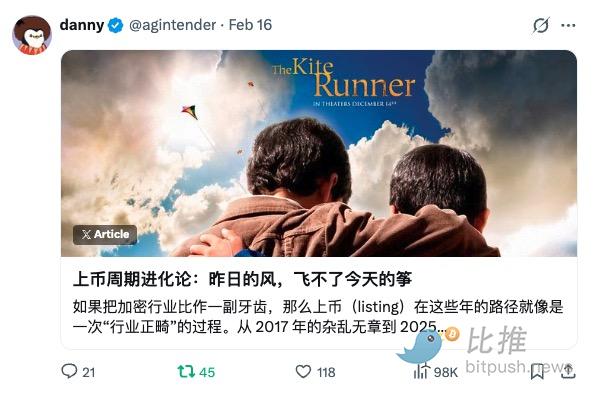
He Yi’s repost comment:

“From an exchange’s perspective, the first phase was the wild west era where many projects cashed out and left. Binance began restricting investors & project teams from unlocking tokens based on milestones or timelines.

The second IEO era emerged because liquidity was concentrated, giving Binance more leverage to advise projects on low-price TGEs to benefit retail investors, without charging listing fees—a win-win logic. Coupled with the bear market introducing longs, shorts, and leverage, this became the ‘golden age’ everyone reminisces about.

The third era saw AMMs revolutionize DEXs, the rise of VCs, and the professionalization of industry KOLs and institutions. This diluted CEXs’ pricing power and introduced compliance standards, leading to airdrops.

The fourth era is marked by further institutional professionalization among players. Exchanges evolved from early curation to CEXs integrating wallets and enabling trading of any on-chain token, giving rise to ‘the eggs every generation must claim’—Alpha, intended to balance VC & institutional, project, and retail interests.

For any emerging industry, it’s a process of feeling our way forward. Most people lack faith in the industry’s long-term prospects, hence ‘not looking long-term.’ It’s like many don’t believe we can cross this river, but only those who believe can make it to the other shore.”

Market Discussions
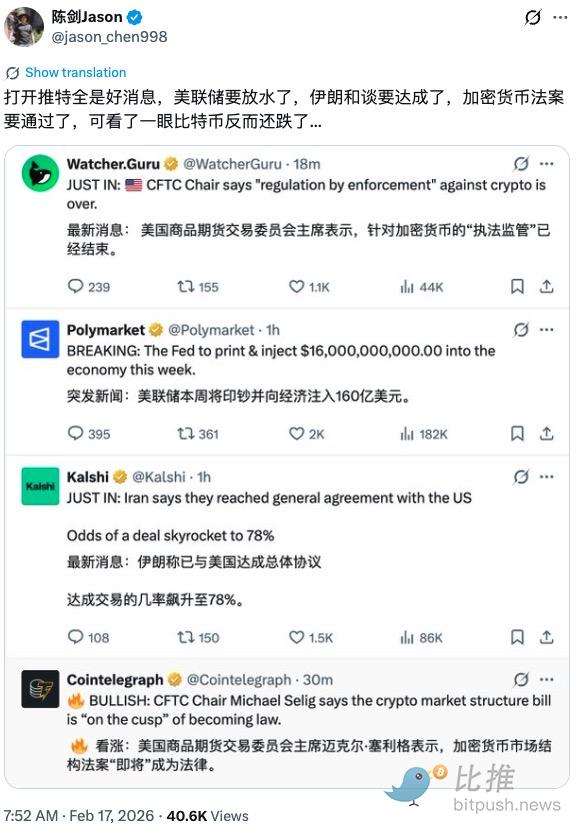
Popular replies:

In a bear market, any news is bearish; in a bull market, even unrelated news is bullish;

When Bitcoin ETFs were approved, the price didn’t rise—it actually dropped from 44k to 38k, but later hit 120k. Probably now it’ll hover around 60k-70k for a long time;

It’s these positive factors that pushed it past 70k; otherwise, it would’ve dropped to 60k already.

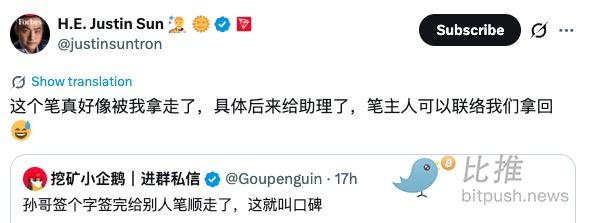
The Charm of “Sun Studies”
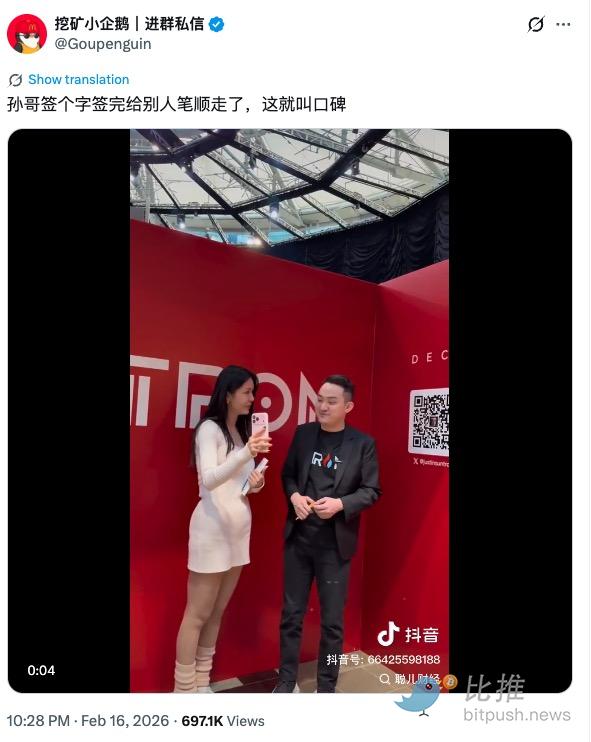
Popular replies:

A joke: you think he’s just borrowing a pen, but when you look back, your wallet’s gone too. Then Brother Sun invites you to dinner under the pretext of returning it, and you end up losing the meal on top of it;

His never-miss-a-trick nature is etched in his genes;

I heard that last time Sun Cut was interviewed in Hong Kong, he pocketed two glass cups on his way out;


Original article link: https://www.bitpush.news/articles/7612688

Пов'язані питання

QWhat is the main topic discussed by crypto KOLs in the past 24 hours according to the article?

AThe main topics include Chinese New Year reflections, AI's role in the Spring Festival Gala, Kraken Exchange opening a Chinese account and executives greeting in Chinese, the evolution of token listing cycles, market discussions, and the 'charm of Sun Studies' (referring to Sun Yuchen's influence).

QWhich exchange opened a Chinese account and had executives send New Year greetings in Chinese?

AKraken Exchange opened a Chinese account and had its executives send New Year greetings in Chinese.

QWhat is the core argument in the 'Token Listing Cycle Evolution Theory' mentioned in the article?

AThe core argument is 'Narrative is dead, utility stands,' highlighting a shift from speculative narratives to practical utility in token listings, with insights into the industry's phases from wild growth to institutional professionalism.

QHow did the community react to market discussions, as per the popular replies in the article?

AThe community noted that in a bear market, any news is seen as negative, while in a bull market, even unrelated news is perceived as positive. They also discussed Bitcoin's price consolidation around $60,000-$70,000 after ETF approval.

QWhat is the community's humorous take on 'Sun Studies' (孙学) in the article?

AThe community humorously commented on Sun Yuchen's reputation, joking that he might take advantage of situations, such as 'taking wallets' or even pocketing glass cups after an interview, reflecting his opportunistic character.

Пов'язані матеріали

Low Investment Isn't Apple's Immunity Pass

While Meta and Google face investor scrutiny over ballooning AI capital expenditures, Apple's minimal AI investment has paradoxically become a strength. Its market cap recently reclaimed the global top spot, surpassing $5 trillion. The irony is deep: Apple's own AI efforts have lagged, with "Apple Intelligence" delayed and core talent lost, forcing reliance on partners like Google Gemini and Alibaba's Qianwen. Its Q3 FY2026 (Q2 CY) earnings initially seemed stellar. Revenue hit $109.4B (up 16% YoY), with iPhone and Mac sales, growing 22% and 29% respectively, driving most of the growth. However, the stock fell over 8% post-earnings. The primary concern was a weaker Q4 revenue growth forecast of 9-11%, below expectations, due to looming supply chain constraints. Apple is feeling the indirect cost of the AI boom. Soaring memory and chip prices, fueled by massive data center investments from Microsoft, Amazon, and others, are forcing Apple to raise Mac and iPad prices significantly. The upcoming iPhone launch is also expected to see substantial price hikes. Despite avoiding heavy AI infrastructure spending—its capital expenditures are actually down 28%—Apple cannot escape the industry-wide supply and cost pressures. While Apple's operating cash flow remains robust, its substantial R&D spending (up 32% YoY) has yet to yield major AI breakthroughs. As Tim Cook prepares to step down as CEO, Apple faces a challenging transition: balancing its premium hardware success against the strategic and cost pressures of the AI era it has so far cautiously navigated.

marsbit18 хв тому

Low Investment Isn't Apple's Immunity Pass

marsbit18 хв тому

PA Graphics Explanation | One Chart to Understand the Major Web3 Events in August 2026

**PANews Crypto Calendar: Key Web3 Events in August 2026** PANews introduces its revamped crypto calendar, featuring comprehensive coverage, flexible filtering, and easy export options. The market in August will be shaped by multiple key events across macroeconomics, regulation, tokenomics, and project developments: * **Macro & Policy:** Key US economic data releases (July Non-Farm Payrolls, CPI), the Federal Reserve meeting minutes, and the Jackson Hole Economic Symposium will be in focus. On the regulatory front, the US Senate plans to release a new draft of the *CLARITY Act*, while the EU's expanded crypto ban against Belarus comes into effect. * **Token Unlocks:** Significant token unlocks are scheduled for assets including ENA, AVAX, CONX, ZRO, and KAITO, which may influence market volatility. * **Project Updates & Shutdowns:** Several services, including Exchange Art, Ctrl Wallet, Zapper, NFTfi, and Summer.fi, are set to cease operations or undergo major adjustments. Users are advised to manage their assets accordingly. * **Corporate Activity:** Q2 earnings reports from companies like SpaceX, Circle, and Nvidia are due. Unitree Robotics will initiate its IPO subscription on the STAR Market, and Moonshot AI plans to begin a Pre-IPO financing round. * **Industry Events:** Major conferences such as Bitcoin Asia 2026 and the 2026 Digital Expo will take place. The overarching market narrative for August will revolve around macroeconomic expectations, regulatory developments, token unlock schedules, and ongoing industry consolidation.

marsbit28 хв тому

PA Graphics Explanation | One Chart to Understand the Major Web3 Events in August 2026

marsbit28 хв тому

Wall Street's Most Famous 'Cassandra' Now Has His Sights Set on Nvidia

Michael Burry, the famed "Big Short" investor, has once again captured Wall Street's attention with a series of short positions against major tech and semiconductor stocks, most notably Nvidia. In late June and July, through his "Cassandra Unchained" newsletter, Burry disclosed short bets against Nvidia, Tesla, Applied Materials, Caterpillar, the SOXX semiconductor ETF, and later, Micron Technology. His core thesis revolves around potential distortions in the AI infrastructure boom, specifically questioning whether extended depreciation schedules (e.g., 6 years vs. a realistic 2-3 years for AI chips) by cloud giants like Microsoft and Google artificially inflate profits. He also raises concerns about possible "off-balance-sheet circular financing," where chip demand might be propped up by vendor-backed funding to clients. Nvidia's stock experienced volatility following these disclosures, briefly dipping but largely holding near Burry's reported entry points, leaving his positions roughly flat or slightly underwater as of late July. This move is part of a pattern for Burry, whose track record since his legendary 2008 bet is mixed. He has faced notable losses, such as on Tesla in 2021, while scoring on broader market turns like the 2020 pandemic crash. His methodology focuses intensely on free cash flow and scrutinizing original financial documents to spot overvaluation and structural risks, but it often struggles with timing the market. The article contrasts Burry's stance with other prominent investors. Steve Eisman, another "Big Short" figure, is not shorting Nvidia, citing strong fundamentals but expressing nervousness about sustainability. Jim Chanos agrees with the broad "accounting mismatch" concern—comparing it to the dot-com bubble—but targets financial leverage in private equity firms rather than the chip stocks themselves. While Nvidia's short interest remains relatively low at 1.3-1.4% of float, the massive stock size means absolute short losses have been significant, exceeding $5 billion earlier this year. The piece concludes that for ordinary investors, the key takeaway is not replicating specific short bets but learning from the critical frameworks these investors use: questioning rosy accounting, identifying structural vulnerabilities, and maintaining skepticism during market euphoria, even if pinpointing the exact catalyst for a downturn remains elusive.

marsbit53 хв тому

Wall Street's Most Famous 'Cassandra' Now Has His Sights Set on Nvidia

marsbit53 хв тому

Weekly Selection丨Epic Stock Market Volatility, Changxin Tech's IPO Reshapes Storage Landscape, Saylor Aims to Re-Anchor STRC Around September 8th

PANews Weekly Digest: Market Turmoil, Tech Breakthroughs, and Crypto Developments. The week saw significant volatility across global markets. South Korea's KOSPI index experienced extreme turbulence, including multiple trading halts, largely driven by sharp declines in AI hardware stocks like SK Hynix. In contrast, China's Changxin Xinqiao (CXC) achieved a landmark IPO with a market cap surpassing 4 trillion yuan, marking a major success for the domestic DRAM industry after a decade of losses. In the crypto and Web3 space, several key narratives emerged. AI is driving demand for new infrastructure, with projects like AI agent wallets and programmable payments gaining traction, attracting interest from firms like Coinbase. The Bitcoin mining sector is pivoting, with companies like MARA focusing on energy management as electricity becomes a core AI-era asset. Meanwhile, the RWA (Real World Assets) sector faces a "utilization puzzle," with hundreds of billions in on-chain assets remaining dormant. Notable market movements included a historic single-day surge of over 17% for the KOSPI index and a significant migration of $16.5 billion in staked ETH within the Lido ecosystem. Michael Saylor announced a target to re-peg the STRC stablecoin around September 8th. Other highlights include discussions on Ethereum's ambitious 2030 roadmap for scaling and privacy, analysis showing high protocol revenues not always translating to token price gains, and warnings from Citi about potential extreme commodity price shocks by late 2026.

marsbit58 хв тому

Weekly Selection丨Epic Stock Market Volatility, Changxin Tech's IPO Reshapes Storage Landscape, Saylor Aims to Re-Anchor STRC Around September 8th

marsbit58 хв тому

When the Market Begins to Question AI Capex: A Full Analysis of Q2 Earnings Reports from Five Tech Giants

In late July 2026, five major US tech giants—Alphabet, Intel, Microsoft, Meta, and Apple—released their Q2 earnings reports. While all companies exceeded revenue and profit expectations, driven by strong AI-related business growth, investor reactions diverged sharply due to concerns over escalating AI capital expenditures (capex) and their impact on free cash flow. Alphabet reported strong revenue growth and a surging cloud business, but its stock fell after announcing a doubled year-on-year capex and negative quarterly free cash flow for the first time. Intel posted its strongest revenue growth in over 15 years, but its stock experienced volatile trading after significantly raising its full-year capex guidance. Microsoft saw its stock surge after beating estimates and, crucially, lowering its capex forecast while projecting positive free cash flow. Meta faced the most severe sell-off as its profits declined despite revenue beats, with free cash flow plunging over 90% and its capex guidance raised. Apple reported record June-quarter results, but its stock plummeted after providing Q4 revenue guidance that fell short of expectations, citing supply chain constraints and forex headwinds. The overall takeaway is that the market's focus has shifted from validating AI demand to scrutinizing the timeline for returns on massive AI investments. Companies demonstrating a clearer path to managing capex and preserving free cash flow, like Microsoft, were rewarded, while those signaling continued aggressive spending faced investor skepticism.

Odaily星球日报1 год тому

When the Market Begins to Question AI Capex: A Full Analysis of Q2 Earnings Reports from Five Tech Giants

Odaily星球日报1 год тому

Торгівля

Спот
活动图片