Nigeria Introduces New Rules To Track and Tax Cryptocurrency Transactions

TheNewsCryptoОпубліковано о 2026-01-13Востаннє оновлено о 2026-01-13

Анотація

Nigeria has introduced new regulations under its Tax Administration Act 2025, requiring cryptocurrency exchanges operating in the country to track and report all user transactions. Platforms must collect users’ Tax Identification Number (TIN) and National Identification Number (NIN), linking crypto activity to real identities and tax records. Exchanges are mandated to submit detailed user and transaction data—including personal information, transaction values, and suspicious activity reports—to tax authorities regularly and retain records for at least seven years. Non-compliance results in significant fines and potential license suspension. With Nigeria processing around $92 billion in crypto annually, the government aims to curb tax evasion, increase revenue, and align with international standards like the OECD Crypto Asset Reporting Framework (CARF). The move ends anonymity for crypto transactions and imposes greater accountability on users to declare income.

Nigeria has now officially started tracking crypto transactions by linking the people’s tax IDs. This is the part of the Nigeria Tax Administration Act 2025, which took effect along with the global crypto tax 2026. This means now crypto is no longer informal, and it has come under the government radar with full visibility.

New Law Forces Nigerian Crypto Platforms to Track and Report All User Activity

The Act is basically tracking all the people’s transactions through crypto exchanges that are operating in Nigeria. These exchanges must now collect users’ Tax Identification Number (TIN) and National Identification Number (NIN) and should report every crypto transaction to tax authorities. This means that the crypto transactions are directly connected to the real identities and tax records.

After collecting the required documents, the Exchanges must submit Username, address, phone, email, TIN, NIN, Transaction date, Value, Total sales, Balance, and the report of large or suspicious transactions. They should keep these records for at least 7 years. They should share these data regularly with the tax authorities. If the crypto platforms don’t follow the rules, then the exchanges will be charged 10 million Nigerian Naira in the first month and 1 million Nigerian Naira for every additional month. If this continues from the exchanges, there is the possibility of licence suspension or shutdown.

Nigeria processed about $92 billion in crypto transactions in one year, which is one of the world’s biggest crypto markets. So the government wants to stop crypto tax evasion and increase tax revenue. This can also improve its tax-to-GDP ratio and bring crypto into the formal tax system.

Nigeria’s System aligns with the OECD Crypto Asset Reporting Framework(CARF), which allows countries to share crypto tax data and to track cross-border crypto activity. With tens of billions of dollars flowing into Nigeria through crypto, it is very hard for the regulators to ignore.

This move from the government shows that crypto in Nigeria is no longer anonymous, and every major transaction can now be traced to a person. For the users, this act brings them less legal uncertainty and more responsibility to declare crypto income.

Highlighted Crypto News:

TKF Report Highlights Uncollected TDS in India from Offshore VDA Trading

TagsCrypto TaxCryptocurrency

Пов'язані питання

QWhat is the main purpose of Nigeria's new Tax Administration Act 2025 regarding cryptocurrency?

AThe main purpose is to track cryptocurrency transactions and bring them under government visibility by linking them to people's tax IDs, thereby preventing tax evasion and increasing tax revenue.

QWhat personal identification numbers must Nigerian crypto exchanges collect from users according to the new law?

ACrypto exchanges must collect users' Tax Identification Number (TIN) and National Identification Number (NIN).

QWhat are the financial penalties for crypto exchanges that fail to comply with the new regulations in Nigeria?

AExchanges will be charged 10 million Nigerian Naira in the first month of non-compliance and 1 million Nigerian Naira for every additional month, with possible license suspension or shutdown.

QHow does Nigeria's new crypto tax system align with international standards?

AIt aligns with the OECD Crypto Asset Reporting Framework (CARF), which allows countries to share crypto tax data and track cross-border crypto activity.

QWhat specific user data and transaction details must crypto exchanges report to Nigerian tax authorities?

AExchanges must report Username, address, phone, email, TIN, NIN, transaction date, value, total sales, balance, and the report of large or suspicious transactions, and keep these records for at least 7 years.

Пов'язані матеріали

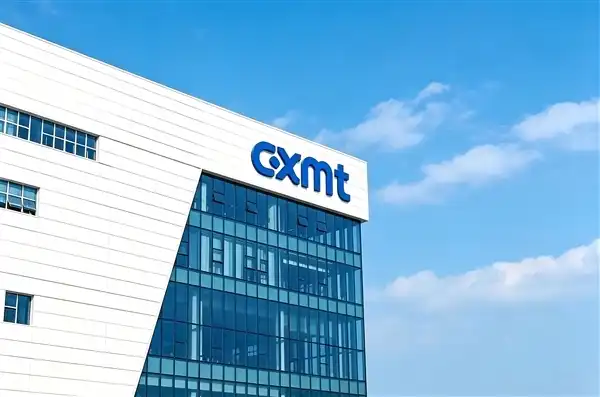
Hyperliquid Pre-IPO Contract Priced CXMT at $7.2, Foreign Capital Engaging with China's Storage Narrative via DeFi

Hyperliquid, a blockchain-based perpetual contracts platform, has launched a pre-IPO contract for Chinese memory chipmaker Changxin Technology (CXMT) ahead of its STAR Market debut. Priced at 7.2 USDC (approx. $7.2) per share, the contract implies a market cap of about $500 billion, exceeding the official IPO valuation of roughly $80 billion and sitting at the upper end of analyst estimates. This marks the first time such a crypto derivative has targeted a STAR Market listing. It provides global investors, particularly those unable to meet China's 500,000 yuan ($69,000) investment threshold for the STAR Market, a direct avenue to gain exposure to the "China storage substitution" narrative. The 24/7 tradable, leveraged contract also fills a gap for those seeking to hedge or speculate around the A-share listing, which operates under T+1 settlement and restricts short-selling. Changxin Technology, the world's fourth-largest DRAM supplier, is raising nearly $8 billion in one of Asia's largest IPOs this year, buoyed by a DRAM super-cycle and strategic shifts by major competitors. While the Hyperliquid contract offers a novel parallel pricing mechanism, the lack of direct arbitrage with the underlying A-shares may lead to persistent price divergence. Nevertheless, its emergence underscores significant international interest in China's key semiconductor players.

marsbit56 хв тому

Hyperliquid Pre-IPO Contract Priced CXMT at $7.2, Foreign Capital Engaging with China's Storage Narrative via DeFi

marsbit56 хв тому

The 'Great Divergence' of the Crypto Market in 2026: BTC Bear Market, but BlackRock, Franklin Templeton, and JPMorgan Are Simultaneously Doing One Thing

"2026 Crypto Market 'Great Divergence': BTC Bearish, But BlackRock, Franklin, JPMorgan Are Simultaneously Building Infrastructure." In July 2026, amidst BTC struggling at $62K, seven key events signal a profound shift: the 'Great Divergence' between price action and underlying infrastructure development. Franklin Templeton's CIO notes a "big disconnect" between price and fundamentals. Meanwhile, major institutions are advancing real-world blockchain adoption: BlackRock, Goldman Sachs, and JPMorgan join a UK government-backed tokenization taskforce targeting repo and gilts; Hyundai pilotes USDT for cross-border trade settlement; Bolivia considers integrating USDT into its national payment system; and Robinhood's new blockchain sees rapid adoption. This activity represents a quiet infrastructure bull market, driven by institutional strategy and long-term regulatory roadmaps, not short-term crypto price cycles. The core narrative is shifting from speculative price action to foundational utility. Infrastructure development—focused on upgrading traditional finance, enabling real-world payments, and tokenizing assets—is now decoupled from BTC's volatility. Historical parallels (e.g., dot-com bust/AWS birth, 2018 crypto winter/DeFi Summer) show that infrastructure built during downturns often becomes the next cycle's "toll booth." The critical question is no longer "Will BTC drop further?" but "Who will own the tolls when this new infrastructure is complete?" While BTC remains a key liquidity anchor, the valuation logic for crypto's real-world utility is increasingly separate from its most traded asset's price.

marsbit1 год тому

The 'Great Divergence' of the Crypto Market in 2026: BTC Bear Market, but BlackRock, Franklin Templeton, and JPMorgan Are Simultaneously Doing One Thing

marsbit1 год тому

Торгівля

Спот
活动图片