New Claude models will embed invisible watermarks in generated text

cryptonews.ruОпубліковано о 2026-08-11Востаннє оновлено о 2026-08-11

Анотація

Anthropic has announced that starting from August 2, 2026, new Claude models deployed in the European Union will incorporate machine-readable invisible watermarks into generated text. This measure will apply globally wherever Claude is offered, including via its API, applications, and through partners like AWS, Google Cloud, and Microsoft Foundry. The watermarking mechanism for text is distinct from file provenance. For text, invisible watermarks will be woven directly into the model's responses without altering meaning, quality, or readability, and are designed to persist through copying and pasting and partially through editing. This system is separate from the C2PA standard. For files (e.g., .png, .jpg), Claude already attaches C2PA-compliant metadata signatures to indicate AI origin. Models released before August 2, 2026 (including the current Claude Opus 5) are in a transitional period and do not embed text watermarks, though Anthropic is working to add support. Currently, there are no public tools to detect these text watermarks; Anthropic states it is developing such tools and will release technical details later. The timing aligns with the EU AI Act's Article 50, which from August 2, 2026, mandates labeling of AI-generated content, with potential fines for non-compliance. A key technical question remains regarding the watermark's resilience to paraphrasing or translation by other AI models, which in other industry experiments has significantly reduced detection acc...

Anthropic has revealed a previously unpublished detail: starting from August 2, 2026, new Claude models launched in the European Union will support machine-readable watermarking of generated text from their release. This applies to future releases—no models have been released after this date yet, the latest currently remains Claude Opus 5, released on July 24. This is stated in a Help Center article updated on August 10, 2026. The rule will apply not only in the EU, but everywhere Claude is offered—in the API, the Claude app, Claude Code, Claude Cowork, Claude Tag, as well as with partners like AWS, Google Cloud, and Microsoft Foundry.

Text and files are two different mechanisms

For text, Anthropic will use invisible watermarks that will be woven directly into the model's response, without changing its meaning, quality, or readability. Since the marker will become part of the text itself, it will persist during copy-pasting and partially—even after editing. This mechanism is not related to the C2PA standard.

For files—for example, .svg, .png, and .jpg—a different, already operational mechanism applies: Claude attaches signed provenance metadata according to the open C2PA (Coalition for Content Provenance and Authenticity) standard. Such a signature indicates that the file was processed by Claude and allows detection of tampering with the metadata after the fact. Support for this feature depends on the specific platform.

Old models without text labels

The text rule only applies to new versions of Claude. Models released before August 2, 2026—meaning all currently available models, including Claude Opus 5—are in a transitional period and do not embed the text watermark. Anthropic says it is working on adding watermarking support for them as well, and documentation will be updated as it becomes available.

Text cannot be verified yet

Anthropic states that it is working on separate tools that will allow users and third parties to detect text watermarks. The company promises to reveal details of the detection mechanism in technical documentation later—such a tool does not currently exist. Websites like c2pa.org or contentcredentials.org are not suitable for this: they verify metadata in files, not text watermarks.

An important nuance: even when detection becomes available, the presence of a watermark will not be definitive proof that the author of the text is specifically Claude, as the model is often used for editing, translating, or summarizing others' content. The absence of a watermark will also prove nothing.

AI Opinion

From the perspective of macroeconomic regulation, the coincidence of dates does not seem accidental. The European Union, from August 2, 2026, has introduced the mandatory requirements of Article 50 of the AI Act on labeling AI-generated content, and the European Commission already on July 20 approved the final clarifications for this norm, providing for fines of up to €15 million or 3% of the company's global turnover for violations of transparency. The launch of Claude's text watermark precisely on this day, it appears, is not a technical coincidence but a compliance response to a specific regulatory deadline.

A technical aspect not revealed in the article is the resilience of such watermarks to paraphrase and translation via another model. Industry experiments with text markers have shown that paraphrasing significantly reduces detection accuracy, and translating text to another language often removes the marker entirely. Whether Claude's invisible watermark will remain detectable after processing by a third-party AI is a question to which only the company itself currently knows the answer.

end-content
Пов'язані питання

QWhat will Anthropic start embedding in Claude's generated text in the EU from August 2, 2026?

AAnthropic will embed machine-readable, invisible watermarks into the generated text of new Claude models in the EU from that date. This will apply everywhere Claude is offered.

QHow is content marking for generated text different from that for generated files like images?

AFor text, invisible watermarks are woven into the response itself. For files (e.g., .png, .jpg), Claude attaches provenance metadata using the open C2PA standard, which is a separate, already functional mechanism.

QWill older Claude models like Claude Opus 5 have the text watermarking feature?

ANo. Models released before August 2, 2026, including Claude Opus 5, are in a transition period and do not embed text watermarks. Anthropic is working to add support for them later.

QAccording to the article, what is a current limitation regarding the detection of these text watermarks?

AAs of the article's writing, there are no public tools available for users or third parties to detect the text watermarks. Anthropic is developing separate detection tools and promises to release technical details later.

QWhy does the article suggest the timing of Claude's watermark launch (August 2, 2026) is likely not a coincidence?

AThe European Union's AI Act Article 50, mandating the labeling of AI-generated content with potential fines for non-compliance, came into force on the same date. The launch appears to be a compliance response to this regulatory deadline.

Пов'язані матеріали

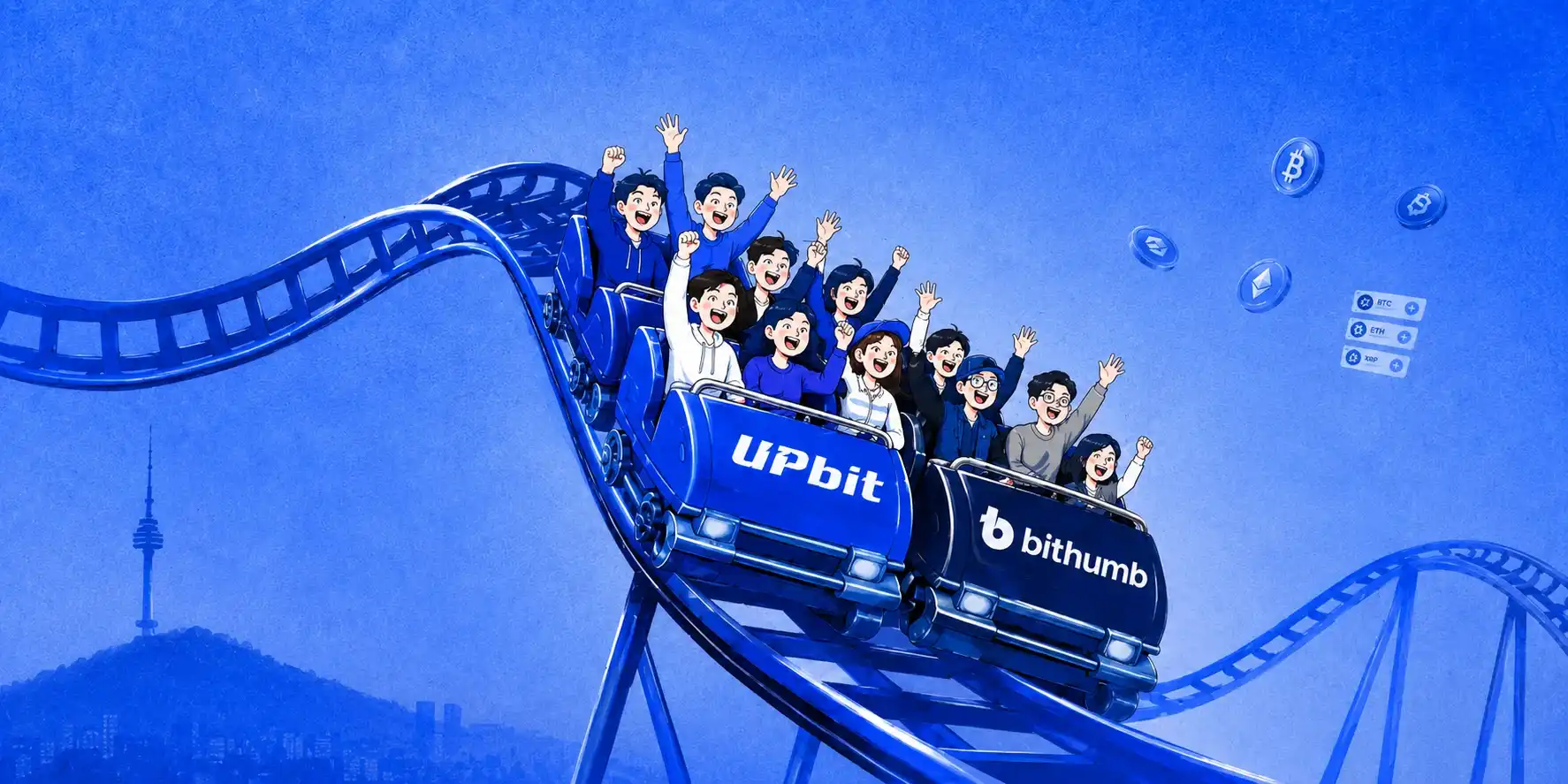
Trading Volume Halved: Korea's Two Major Crypto Exchanges Launch Listing Wars

As South Korea's stock market cools from its peak summer performance, leading cryptocurrency exchanges Upbit and Bithumb are intensifying their competition to list new digital assets. Following a significant slump in crypto trading volume during the first half of 2025—with total volume across five major KRW-based exchanges falling nearly 50% year-on-year as capital flooded into equities—the two exchanges have sharply increased their listing pace since July. In just over a month, both Upbit and Bithumb have each added 17 new KRW-trading pairs, far exceeding their average of 6-10 listings per month earlier in the year. This acceleration coincides with a decline in the Korean Composite Stock Price Index's (KOSPI) daily trading volume and a reduction in the proportion of retail investor participation in stocks. Analysts suggest that with the stock market's "wealth effect" diminishing, crypto exchanges are now competing more aggressively for the limited attention and risk capital of local retail investors. The newly listed assets are already contributing significantly to trading activity on the platforms. On Upbit, for example, several coins listed since July now rank among its top-traded assets by volume, collectively accounting for nearly 20% of its 24-hour trading volume recently. However, this surge in new listings appears to be primarily redistracting existing capital within the shrunken crypto market rather than attracting substantial new inflows. Consequently, the strategies of the two dominant exchanges, which together control about 96% of the KRW crypto trading market, are becoming increasingly similar, with both rushing to list the same trending assets to prevent the other from capturing all available trading demand.

marsbit2 хв тому

Trading Volume Halved: Korea's Two Major Crypto Exchanges Launch Listing Wars

marsbit2 хв тому

Behind a 26-Year-Old Hong Kong Trader's $150 Million Loss: A South Korean Stock Market 'Great Escape'

In 2026, the South Korean stock market, propelled by the AI boom's demand for high-performance memory chips, witnessed a dramatic rally and subsequent crash, illustrating the perils of excessive leverage, structural market flaws, and retail investor frenzy. The initial surge was driven by soaring share prices of memory giants Samsung Electronics and SK Hynix. This "once-in-a-lifetime" wealth creation story captivated local Korean retail investors, many of whom invested heavily using leverage, and attracted global capital through products like Hong Kong-listed leveraged ETFs. However, the market's heavy reliance on these two stocks and widespread leverage created systemic fragility. The turning point came in June 2026. A series of circuit-breaker halts triggered a vicious cycle of forced liquidations, leading to a steep market plunge. The collapse erased fortunes, leaving many leveraged retail investors in debt. It also exposed a high-profile case in Hong Kong where a 26-year-old trader, using unauthorized company funds and double leverage on a SK Hynix ETF, incurred massive losses of HKD 150 million. Analysis points to key factors behind the extreme volatility: the overwhelming dominance of two stocks in the KOSPI index, a culture of rampant retail leverage, and a fundamental mispricing where investors treated cyclical semiconductor stocks as perpetual growth stories. As the market entered a volatile consolidation phase, seasoned investors emphasized core risk management principles: avoiding leverage, understanding industry cycles, maintaining a margin of safety, and being wary of extreme market consensus. The episode serves as a stark reminder that high returns are inextricably linked to high risk, especially when amplified by leverage.

marsbit12 хв тому

Behind a 26-Year-Old Hong Kong Trader's $150 Million Loss: A South Korean Stock Market 'Great Escape'

marsbit12 хв тому

Торгівля

Спот
活动图片