Netherlands To Amend Controversial 36% Tax On Unrealized Crypto, Stock Gains

bitcoinistОпубліковано о 2026-02-26Востаннє оновлено о 2026-02-26

Анотація

Dutch Finance Minister Eelco Heinen has announced that the Netherlands will revise its controversial tax reform bill, which proposed a 36% tax on unrealized gains from crypto, stocks, and other investments. The legislation, known as the Actual Return in Box 3 Act and set to take effect in 2028, has faced strong criticism from lawmakers and investors who argue it is unfair and could drive wealth out of the country. Heinen acknowledged the need for amendments and stated that the government will reexamine the bill with the House of Representatives and the Senate, potentially leading to a complete rewrite if necessary. The current system, which taxes assumed returns, was ruled unsustainable by the Supreme Court, prompting the proposed overhaul.

Dutch financial authorities have revealed that the reform bill to tax unrealized gains on crypto, stocks, and other investments will be revised following criticism from lawmakers and local investors.

Dutch Finance Minister To Revise Tax Overhaul

On Wednesday, the Minister of Finance of the Netherlands, Eelco Heinen, announced that the recently passed bill to tax unrealized gains on crypto and other assets will be reviewed and amended to address multiple concerns brought by the Senate and crypto investors.

“I don’t think the law can go through as it stands,” Heinen told local news outlet RTL Nieuws. “I think something has simply gone wrong here, and the current law needs to be amended.”

The Netherlands plans to overhaul its tax system on January 1, 2028. The proposed system, known as the Actual Return in Box 3 Act, is set to tax investors 36% on the change in value of their crypto and other assets each year, even if these have not been sold.

According to the report, the Dutch finance minister noted that there’s still time to amend the controversial tax overhaul, as it will not be enacted until 2028.

Moreover, he revealed that he has already discussed the bill’s upcoming revision with his state secretary, adding that they are set to examine the legislation and potential amendments with lawmakers.

“We have agreed that we will go back to the drawing board, engage in discussions with the House of Representatives and the Senate, and see how we can amend the law,” he stated.

Heinen also opened the door to a complete rewrite of the crypto tax bill if amendments in certain areas don’t suffice to address the concerns. Nonetheless, he shared that he doesn’t yet know which option will be necessary as they are “just going to have the conversation.”

The Unrealized Crypto, Stock Gains Tax Debate

The new system has been heavily criticized by local investors, who have expressed concerns about being unfairly taxed on their crypto and other assets. Some have argued that the legislation could push wealth out of the country, as crypto investors and other high-net-worth individuals could consider relocating to other jurisdictions with friendlier tax frameworks.

Under the new Box 3 system, the government will calculate tax by comparing the value of an asset at the beginning and end of the year, and the income earned during this period. As a result, both realized and unrealized gains on cryptocurrencies, stocks, bonds, and similar investments will be included.

Only real estate and shares in startups will be exempt from the new system, as they will be taxed when profit is made. Meanwhile, income from these assets will continue to be taxed in the year it is received.

For context, the old Box 3 system taxed investors based on the assumed returns of assets, a practice the Supreme Court ruled unfair and unsustainable after the Dutch state lost several court cases, with every year of delay costing the treasury hundreds of millions, RTL Nieuws detailed.

Since then, lawmakers have been developing the proposed new model that they consider more accurate. However, some reports noted that the government ignored previous concerns and still decided to advance the bill with some adjustments.

Notably, the Dutch House of Representatives passed the legislation two weeks ago, advancing it to the Senate for consideration. RTL Nieuws highlighted that the Dutch Senate, which has yet to discuss the reform plan, also shares similar concerns as investors.
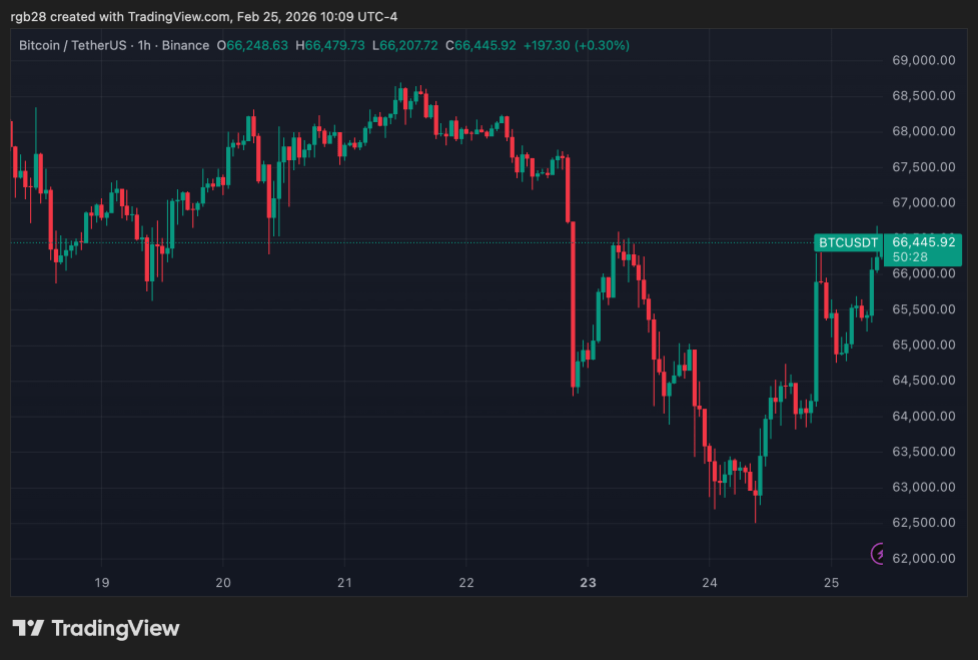
Bitcoin (BTC) trades at $66,445 in the one-week chart. Source: BTCUSDT on TradingView


Пов'язані питання

QWhy is the Netherlands planning to amend the controversial tax on unrealized crypto and stock gains?

ADutch Finance Minister Eelco Heinen announced a review and amendment of the tax overhaul due to criticism from lawmakers and local investors, acknowledging that the current law cannot proceed as it stands and something has gone wrong.

QWhat is the proposed tax rate on unrealized gains under the Actual Return in Box 3 Act?

AThe proposed system would impose a 36% tax on the change in value of crypto and other assets each year, even if they have not been sold.

QWhen is the new tax system scheduled to be implemented in the Netherlands?

AThe tax overhaul is planned to take effect on January 1, 2028.

QWhat are the main concerns raised by investors regarding the unrealized gains tax?

AInvestors are concerned about being unfairly taxed on unsold assets, which could lead to wealth leaving the country as high-net-worth individuals might relocate to jurisdictions with more favorable tax frameworks.

QHow did the old Box 3 system differ from the proposed new model?

AThe old Box 3 system taxed investors based on assumed returns of assets, which was ruled unfair by the Supreme Court, while the new model aims to tax actual returns, including both realized and unrealized gains.

Пов'язані матеріали

In Conversation with Ray Dalio: We Are Currently in an AI Bubble, with 1% of My Portfolio in Bitcoin

Ray Dalio, founder of Bridgewater Associates, warns in an interview that the current AI boom shows classic bubble characteristics, which could lead to significant economic downturns as seen in past cycles like 1929 or 2000. He explains that speculative enthusiasm, fueled by debt and overvaluation, often precedes a crash when rising rates or taxation force asset sales, causing widespread losses and recession. Dalio also outlines his "Big Cycle" theory, describing an approximate 80-year pattern where widening wealth gaps, massive government deficits, and shifting geopolitical power (like China's rise) create internal conflict and global instability. He emphasizes that we are in a late-cycle, transitional phase where traditional powers like the US and UK face decline. For personal wealth protection, Dalio advises diversification beyond cash into assets like stocks, bonds, real estate, and particularly gold, which he prefers over Bitcoin. While he holds about 1% of his portfolio in Bitcoin as a non-printable hard asset, he views gold as more secure from technological or governmental threats. Regarding AI's impact, Dalio believes it will disproportionately benefit capital owners, worsening inequality by replacing both physical and cognitive labor. He suggests that human intuition and emotional intelligence, combined with AI, will be key for future workers. On taxation, Dalio argues that wealth taxes are impractical and risk triggering asset sell-offs, reducing productive investment. He points to the UK as a cautionary example of debt, low productivity, and political strife. Geopolitically, Dalio foresees a more regionalized world, with the US showing weakness in prolonged conflicts like with Iran, akin to past imperial declines. The ideal outcome, he suggests, is coexisting powerful blocs (e.g., Americas, China-Asia Pacific) without major war.

marsbit1 год тому

In Conversation with Ray Dalio: We Are Currently in an AI Bubble, with 1% of My Portfolio in Bitcoin

marsbit1 год тому

Daily 7.2 Trillion KRW: Foreign Capital's Record Net Buying on Friday! Wall Street Says Headwinds for Korean Stock Fund Flows Have Subsided

South Korean stock market sees a dramatic shift in fund flows. On July 31, foreign investors made a record net purchase of approximately KRW 7.2 trillion in KOSPI stocks, marking a fundamental reversal from the persistent large-scale net outflows seen in previous months. This contributed to a significant narrowing of foreign net selling in July to KRW 9.8 trillion, down sharply from KRW 48.4 trillion in June and KRW 44.5 trillion in May. Simultaneously, domestic institutional pressure eased. South Korean pension funds and asset managers turned to a net buying position in July, purchasing KRW 1.0 trillion worth of KOSPI shares, contrasting with net sales in May and June. Market volatility is expected to be dampened by new financial regulations. Effective July 31, the Financial Services Commission tightened access for retail investors to single-stock leveraged ETFs by raising the minimum cash deposit requirement. Trading volumes for these products subsequently dropped to about 50% of their monthly average. Citigroup Research maintains its year-end KOSPI target of 10,000 points. The firm cites several supportive factors: the substantial easing of headwinds from capital outflows, a robust fundamental outlook for the semiconductor sector, historically low market valuations, strong economic fundamentals, and the potential for policy support from financial authorities if needed.

marsbit1 год тому

Daily 7.2 Trillion KRW: Foreign Capital's Record Net Buying on Friday! Wall Street Says Headwinds for Korean Stock Fund Flows Have Subsided

marsbit1 год тому

Thanks to Dice Rolls, Bitcoin Keys Are Stored Offline, But Not Everyone Will Do It

The article discusses using dice rolls to generate secure Bitcoin wallet seeds, providing entropy independent of potentially flawed hardware random number generators. It explains that each fair dice roll offers about 2.585 bits of entropy, with around 50 rolls needed for a standard 12-word seed phrase and 99+ recommended for higher security. This method gained attention after a vulnerability was revealed in some Coldcard hardware wallets, where a faulty firmware RNG (dating back to 2021) compromised generated keys. The analysis notes that while a dice-generated main seed was safe from this specific flaw, other Coldcard functions (like creating paper wallets, backup keys, or passwords) could still be vulnerable if they used the defective RNG. The piece argues that while dice-based entropy is technically robust, the manual process is error-prone, tedious, and unrealistic for most new users, who might make mistakes in recording or inputting rolls. It concludes that while manual entropy generation should remain an option for advanced users, the long-term goal is to develop reliable, user-friendly hardware and software that securely generates randomness without requiring specialized knowledge. Coldcard users are advised to check their firmware version and replace any secondary secrets (like paper wallet keys) created with vulnerable devices, while also considering multi-signature setups with devices from different manufacturers for added security.

cryptonews.ru6 год тому

Thanks to Dice Rolls, Bitcoin Keys Are Stored Offline, But Not Everyone Will Do It

cryptonews.ru6 год тому

Торгівля

Спот
活动图片




