MrBeast, the Most Generous KOL, Sets His Sights on Teenagers' Digital Wallets

marsbitОпубліковано о 2026-02-10Востаннє оновлено о 2026-02-10

Анотація

MrBeast, the renowned YouTube creator with over 466 million subscribers, has expanded into fintech through his company Beast Industries by acquiring Step, a mobile banking app designed for teenagers. Step offers FDIC-insured banking services via Evolve Bank & Trust, including savings accounts and Visa cards. This move follows a $200 million equity investment from Ethereum treasury firm BitMine in January 2026, with plans to integrate DeFi into future financial services. Previously, MrBeast faced allegations of profiting over $10 million through alleged pump-and-dump schemes involving low-market-cap cryptocurrencies like SUPER and PMON, where he promoted tokens before selling them during price surges. Despite these controversies, MrBeast aims to create financial educational content and provide youth with financial tools he lacked. His company has also filed a trademark for "MrBeast Financial," indicating intentions to offer crypto trading and payment processing services.

Original Author: ChandlerZ, Foresight News

On February 9, Beast Industries, owned by renowned YouTube creator MrBeast, announced its acquisition of Step, a mobile banking app for teenagers, marking its entry into the fintech sector. This move follows the company's recent announcement of a $200 million equity investment from Ethereum treasury firm BitMine, representing its first concrete action since the funding round.

Step is an all-in-one financial management application designed to help young people begin their financial journey through a digital banking platform. The company has long offered a range of services tailored for teenagers and young adults, including savings accounts, credit-building Visa cards that function like debit cards, and cash advances. Step itself is not a bank but provides banking services through a partnership with Evolve Bank & Trust, a member of the FDIC.

Neither company disclosed the terms of the transaction. In 2022, Step reported raising $500 million in equity and debt financing from institutional investors such as General Catalyst, companies like Stripe, and individual investors including TikTok influencer Charli D'Amelio.

Expanding Beyond YouTube

MrBeast, whose real name is Jimmy Donaldson, has evolved from a single creator into the core of a commercial organization spanning content, consumer goods, and offline experiences. Public data shows he has over 466 million YouTube subscribers, with his main channel and multi-language matrix covering an extensive audience, placing his communication efficiency and user mobilization capabilities at the top of global internet platforms.

The influencer began planning his entry into the fintech sector several months ago. In October 2025, Beast Holdings, LLC filed a trademark application for "MrBeast Financial" with the U.S. Patent and Trademark Office. The company plans to offer cryptocurrency trading services, crypto payment processing, and crypto trading via DEXs, among other services.

Although a trademark application only represents a预设的业务边界 and does not directly equate to product launch, with regulatory approvals and business implementation still requiring time, it nonetheless marks the first time MrBeast's intentions in finance and crypto have been formally documented.
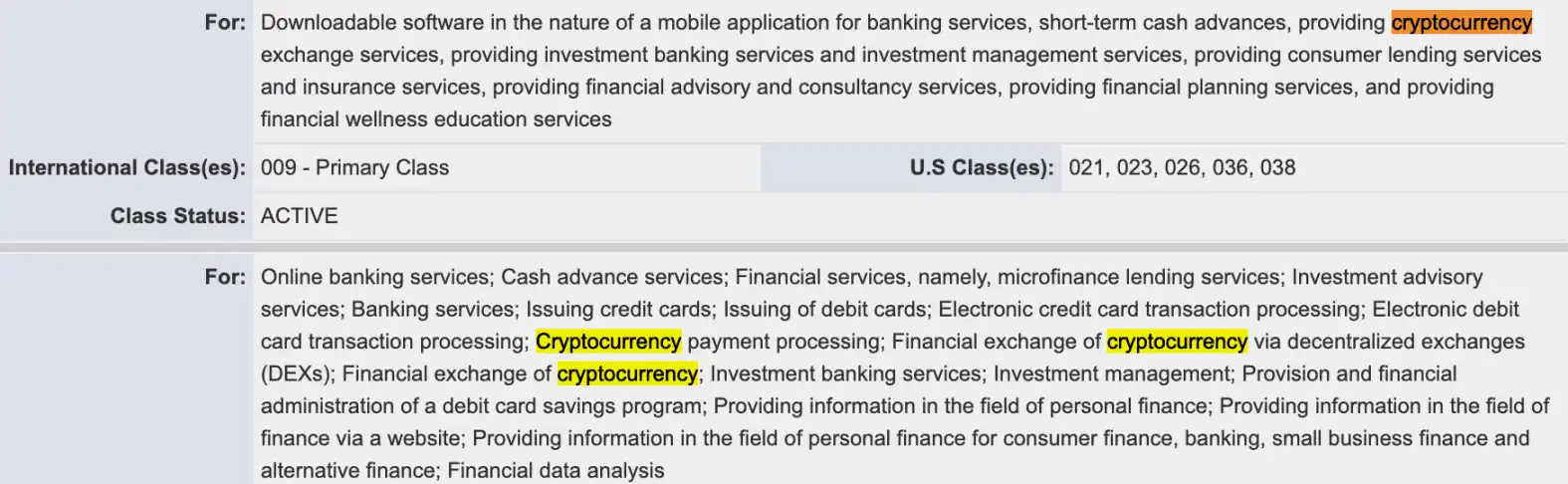
Going back a month earlier, in January 2026, Ethereum treasury company BitMine announced a $200 million equity investment in Beast Industries, with the transaction expected to be completed around January 19, 2026. Beast Industries CEO Jeff Housenbold stated that future collaborations would explore introducing DeFi into their financial services platform. The two parties plan to explore integrating DeFi into the upcoming financial services platform. Beast Industries is an entertainment and consumer goods company founded by renowned YouTube creator MrBeast.

MrBeast has frequently discussed his personal financial situation, viewing the acquisition of Step as an opportunity to "provide millions of young people with the financial foundation I never had." As the company prepares to enter the financial industry, MrBeast expressed his desire to create videos about finance, such as "educating people on how to invest and showing them what a Roth IRA is."

Previously Accused of Profiting Over $10 Million Through Crypto Pump-and-Dump Schemes

This is not MrBeast's first foray into the crypto space. On October 11, 2024, on-chain detective SomaXBT publicly released a chain investigation. The investigation alleged that MrBeast participated in several Initial DEX Offerings (IDOs) and token promotion activities, profiting significantly from代言后 token price surges.

The projects involved included SuperFarm (SUPER), Polychain Monsters (PMON), SPLYT (SHOPX), and others. Some tokens experienced price drops of over 90% after MrBeast sold his holdings.
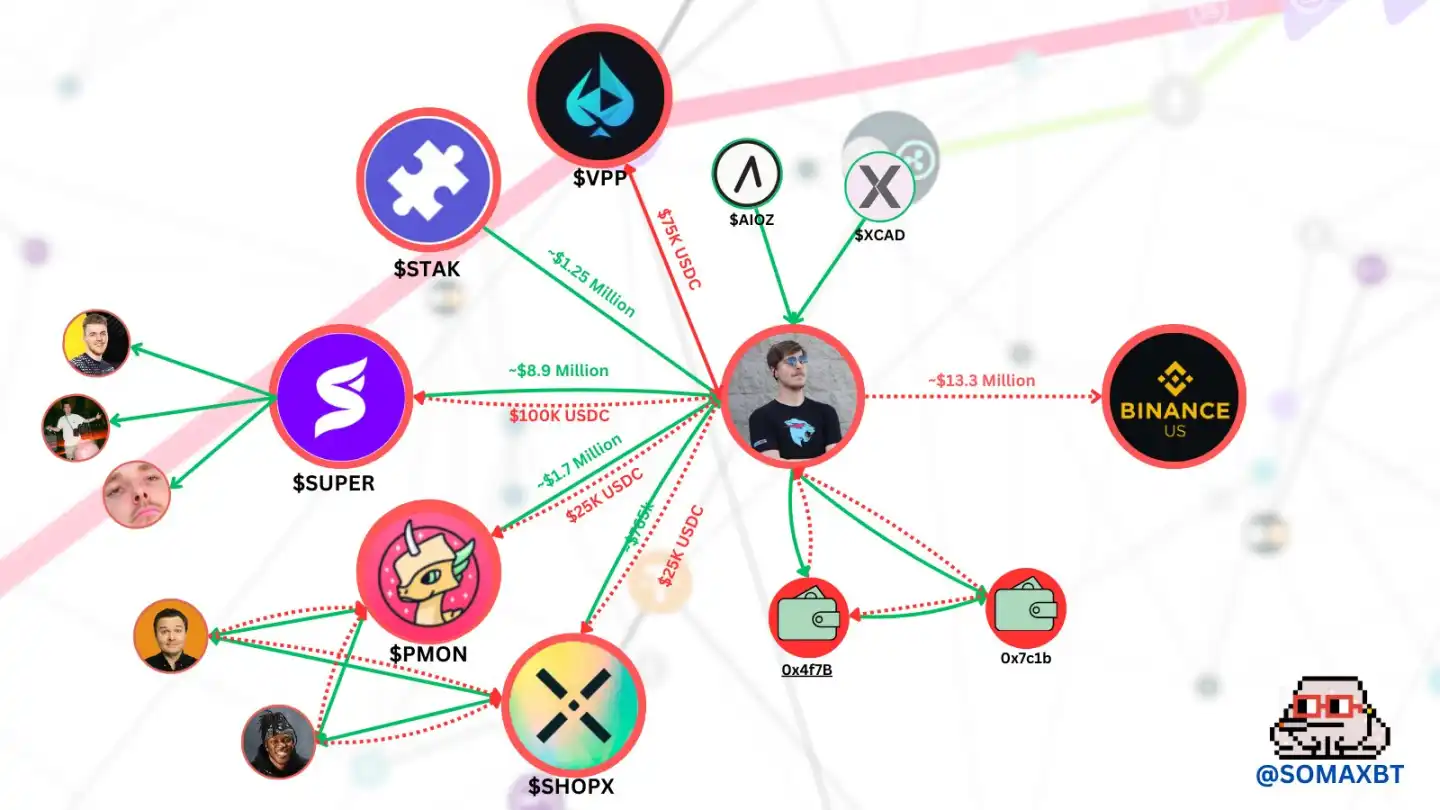
SomaXBT detailed multiple cases. Using the SUPER token, a project backed by Elliot Trades, as an example:

According to SomaXBT, MrBeast invested $100,000 in the project and received 1 million SUPER tokens in return. After his investment, the token price surged. MrBeast transferred his SUPER tokens to an alternate wallet on March 30, 2021, where they were sold through a series of transactions totaling 1,900 ETH (approximately $3.7 million at the time). MrBeast received additional SUPER tokens based on a vesting contract, which he later sold for $5.5 million, bringing his total revenue from the project to approximately $9 million.

SomaXBT's investigation also highlighted MrBeast's involvement with Polychain Monsters (PMON), another low-market-cap token project. In this case, MrBeast invested $25,000 and received 25,000 PMON tokens. On March 31, 2021, his wallet transferred these tokens to another wallet, where they were sold through a series of transactions, netting a profit of 685 ETH (approximately $1.3 million).

The investigation also discussed projects like SHOPX, STAK, and VPP under the same pattern, alleging that after MrBeast completed the accused sell-offs, these tokens experienced significant price corrections, with some falling over 90% from their peaks. It characterized this as a "pump-and-dump" scheme, emphasizing that influencer promotions combined with low-liquidity tokens amplify volatility and transfer risk to retail investors.
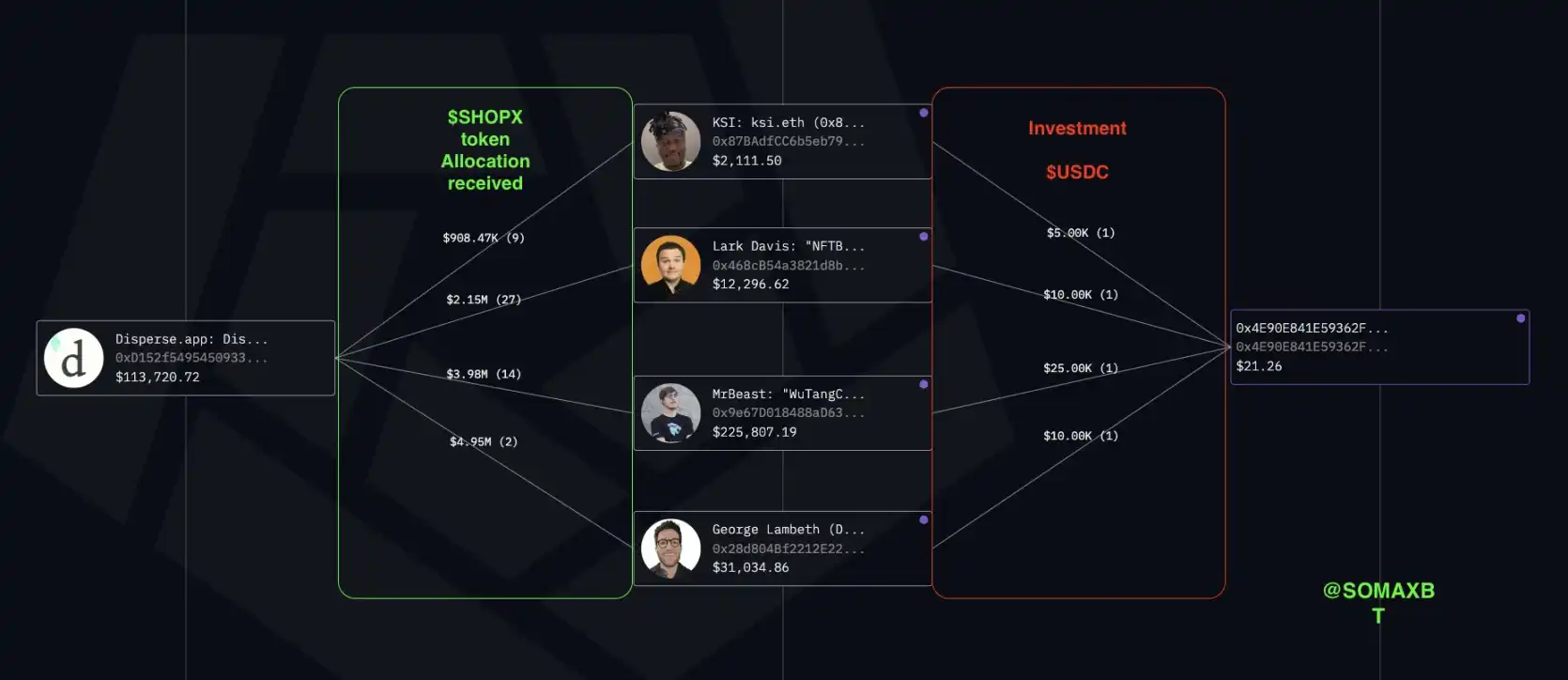
Additionally, in September 2025, MrBeast accumulated 705,821 ASTER tokens, worth approximately $1.28 million at the time.

In summary, Beast Industries has made a key move in establishing its financial entry point. Crypto-related capabilities are still in the planning and exploration stages, and historical on-chain controversies may continue to affect the trust threshold for its financial and crypto businesses.


Пов'язані питання

QWhat is the main business move announced by MrBeast's Beast Industries on February 9th?

ABeast Industries announced it has acquired Step, a mobile banking app for teenagers, marking its entry into the fintech sector.

QWhat specific financial services does the Step app provide to its young audience?

AStep provides a suite of services including savings accounts, a credit-building card that functions like a debit card, and cash advances. It offers these banking services through a partnership with the FDIC-insured Evolve Bank & Trust.

QWhat was the significant investment that preceded the acquisition of Step, and which company made it?

APrior to the acquisition, Beast Industries received a $200 million equity investment from BitMine, an Ethereum treasury company.

QAccording to the on-chain investigation by SomaXBT, what controversial practice was MrBeast accused of in the crypto space?

AMrBeast was accused of participating in 'pump and dump' schemes, where he promoted low-market-cap tokens and sold his allocated tokens after their prices surged, allegedly profiting over $10 million and leaving retail investors with significant losses.

QWhat future financial content does MrBeast express an interest in creating for his audience?

AMrBeast expressed an interest in creating videos that educate people on how to invest and explain financial concepts like a Roth IRA.

Пов'язані матеріали

Agent Race Ends, Super Workbench Takes Over

The era of fragmented AI agents is ending. Over the past month, China's tech giants—Tencent, Alibaba, and ByteDance—have simultaneously shifted strategy: instead of launching new, standalone AI agents, they are consolidating their various agent projects into unified "super workbenches." Tencent integrated its QClaw teams into WorkBuddy, a strategic product hailed as a potential third flagship after QQ and WeChat. Alibaba is merging its QoderWork, Wukong, and MuleRun agents into a new "Qianwen Office" platform under DingTalk's leadership. ByteDance rebranded its TRAE SOLO coding agent to TRAE Work, signaling a broader focus on workflow collaboration. This convergence marks a pivotal industry consensus. The initial exploration phase, where companies rapidly built numerous overlapping agents for different scenarios, proved costly and inefficient. With open-source tools eroding technical barriers, competition has shifted from agent creation to resource consolidation and cost control. Historically, platform wars are won not by creating more products, but by simplifying them—as seen with browsers unifying web access and super-apps consolidating services. Now, the "super workbench" aims to become the unified AI entry point for work. This reflects a deeper market realization: the primary audience for AI is no longer just programmers (a market in the tens of millions) but all knowledge workers (a market of billions). The real opportunity lies in augmenting everyday tasks—managing emails, documents, data, and meetings—across the entire workday. The core battleground is becoming control over the primary AI entry point that employees use daily. Tencent's WorkBuddy leverages WeChat and Tencent Docs; Alibaba's Qianwen Office taps into DingTalk's organizational data; ByteDance's TRAE Work integrates with Feishu's workflows. Whoever owns this "super workbench" gains strategic control over orchestrating enterprise data and APIs. This shift is redefining enterprise software. Traditional SaaS applications, valued for their user interfaces, will recede into the background. Their core functionalities will be exposed as standardized "Skills" or APIs for the super workbench's agents to invoke. Software value will shift from selling user seats to charging based on API calls and outcomes delivered. The evolution of agents is moving through clear stages: first as novel standalone products, then as consolidated primary work entry points, and finally as pervasive, invisible capabilities embedded into the digital fabric. The recent moves by major tech firms signal the transition from the first stage into the second, accelerating toward the third. In the end, the most successful agent technology may become invisible—like electricity or the HTTP protocol—a fundamental, unnamed infrastructure powering work itself.

marsbit9 хв тому

Agent Race Ends, Super Workbench Takes Over

marsbit9 хв тому

Michael Saylor: 110 Reasons to Oppose BIP-110

Michael Saylor presents 110 arguments against Bitcoin Improvement Proposal (BIP) 110, a soft fork aimed at restricting certain non-monetary data storage uses (like inscriptions) on the Bitcoin blockchain. He acknowledges the proponents' valid concerns—such as node costs, fee pressure, and preserving Bitcoin's monetary focus—but fundamentally disagrees with the proposed solution. Saylor argues that BIP 110 represents a dangerous precedent of using consensus rules to enforce value judgments on transaction validity, moving away from Bitcoin's core principles of neutrality and permissionless innovation. His key objections are organized into eleven categories: 1) It violates neutrality and hard consensus by banning currently valid transactions. 2) It fails to meet the high burden of proof required for a consensus change, lacking concrete data on the alleged crisis. 3) Its seven bundled technical restrictions are overly broad, targeting generic script functionalities and blocking future upgrade paths. 4) It sacrifices compatibility and future optionality by closing off designed upgrade hooks. 5) Its temporary rules add significant complexity (grandfathering, expiry states) without sufficient justification. 6) The economic and security impacts, particularly on miner revenue and fee markets, are uncertain and unmodeled. 7) Superior, market-based tools (fee markets, relay/mining policies) already exist to manage blockchain load. 8) It stifles innovation by creating a chilling effect for developers. 9) Its modified activation mechanism (55% threshold, forced signaling) is aggressive and risks network splits. 10) The precedent it sets—using consensus to suppress disliked but legal uses—is more dangerous than the problem it aims to solve. 11) A better path exists: improving measurements, refining resource-based policies, and allowing market forces to work. Saylor concludes that Bitcoin's strength lies in its neutral rules, open markets, and hard consensus. Changing these foundational elements to target specific use cases is an unnecessary and risky "iatrogenic" intervention. He advocates for guarding Bitcoin's neutrality rather than acting as its redeemer.

marsbit24 хв тому

Michael Saylor: 110 Reasons to Oppose BIP-110

marsbit24 хв тому

Торгівля

Спот
活动图片

