Move Language Creator Joins Anthropic, Crypto Industry Losing Gatekeepers in Bulk

marsbitОпубліковано о 2026-08-07Востаннє оновлено о 2026-08-07

Анотація

The founder of Move, Sam Blackshear, is leaving the blockchain industry to join Anthropic for AI safety research. As the creator of Sui’s foundational programming language, his departure highlights a broader trend of key technical leaders—referred to as "gatekeepers"—exiting crypto for AI. Examples include former OpenSea CTO Alex Atallah and several senior Ethereum Foundation researchers. This talent drain coincides with a sharp decline in crypto development activity, with GitHub commits dropping ~75% and active developers falling by half across major chains since early 2025. Meanwhile, AI-related repositories and investments are surging, with firms like Paradigm and Framework Ventures shifting capital toward AI. The outflow of core security experts raises concerns as AI-powered threats become more sophisticated. A recent $70M exploit involving a hardware wallet vulnerability, which an AI assistant identified in minutes, illustrates this growing risk. The article questions how the crypto ecosystem will defend against future "black swan" events as its defining technical guardians depart.

Author: David, TechFlow

On August 5th, Sam Blackshear posted on X, announcing his departure from Mysten Labs to join Anthropic and conduct defensive security research related to AI.

This name might be unfamiliar to many, but what he created, you've most likely heard of. Move, the underlying programming language for the Sui blockchain, was his creation.

Around 2018, while at Meta during Zuckerberg's Libra stablecoin project, Blackshear was part of the core technical team, specifically designing a new programming language for the project: Move.

Libra later renamed to Diem, and eventually, the entire stablecoin project was halted by regulators. But the Move language survived.
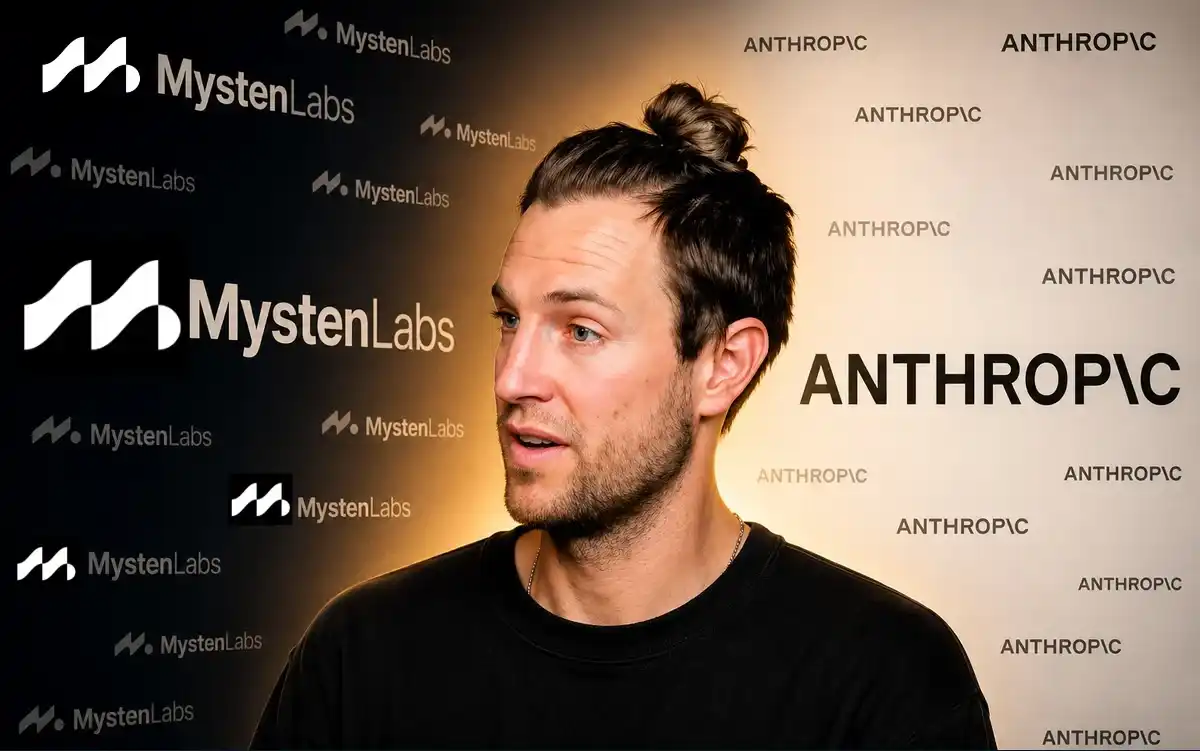
In September 2021, Blackshear and four former Meta colleagues co-founded Mysten Labs, bringing Move out of Meta's ruins and building a new public blockchain, Sui, around it. Moreover, from conception to his departure, he had invested over eight years in this language.

I imagine most readers, in a crypto market that has already turned bearish, don't have a distinct feel for personnel changes.

So, how can one understand the weight of this brain drain?

How secure a blockchain is, what it can and cannot do, largely depends on the design of its underlying language. Blackshear's role in Sui and Move can be roughly compared to that of Vitalik in Ethereum and Solidity.

These kinds of individuals, within a crypto project, are not easily measured by job titles.

They might be the language designers, the decision-makers for protocol evolution direction, those who determine the flow of funds... In more common terms, these are a batch of crypto projects' "gatekeepers," defining how high an ecosystem can grow.

Now, such individuals are visibly moving into the AI industry. Blackshear is not an isolated case.

AI, a Brave New World

Before Blackshear left, there was a revealing moment.

During a roundtable discussion on project security this April, he recounted something that also highlights the exceptional appeal AI holds for crypto industry tech leaders:

He had written an analysis tool during his Facebook days. Later, he wanted to migrate it to Move and use it to scan Move code for potential vulnerabilities; this kind of migration work used to be done entirely manually, his own words were "it would take a very, very long time."

Later, he gave this task to Claude.

Claude automatically completed the migration and flagged a batch of potential vulnerabilities. Blackshear's reaction to the result was, "whoa, we've entered a new world."

I find this detail significant.

Do you have this feeling: when someone hears about how great AI is on social media, it's hard to be genuinely moved internally; it's only when you're doing your most skilled, most routine work that you discover AI can solve problems unexpectedly, even exceeding your own level.

Therefore, tech leaders leaving crypto projects for AI is both a career plan and a genuine belief in its vast potential.

Similar things are happening to more crypto practitioners.

In February this year, Tomasz Stańczak, co-executive director of the Ethereum Foundation, announced his resignation, less than a year into the role. Stańczak previously founded Nethermind, one of the most important clients in the Ethereum ecosystem, and he himself was a core participant in the evolution direction of the Ethereum protocol layer.

When leaving, he wrote in his blog, "I now know that Agentic systems and AI-assisted discovery are reshaping the world." This is another "gatekeeper." Only what he guarded wasn't language security, but the direction of Ethereum protocol upgrades.

As for those who left earlier, you are surely not unfamiliar either.

OpenSea co-founder Alex Atallah resigned as CTO in 2022 during the peak of the NFT boom, later founded the AI model aggregation platform OpenRouter, now valued at $500 million;

Leopold Aschenbrenner, who came from the FTX Future Fund, authored that 165-page "Situational Awareness" paper, now manages a multi-billion dollar AI investment fund, though recently suffering significant losses, he continues developing in another circle;

His former colleague Avital Balwit, also left the FTX system, is now chief of staff to Anthropic CEO Dario Amodei.

These individuals, dispersed across different projects, different roles, and different time points of departure from crypto, the work in their hands happens to be what the AI industry currently lacks the most.

So, rather than saying they are "fleeing" crypto, it's more like pieces of a puzzle being pulled out of a system with slowing growth and plugged into another system spinning faster.

The Exodus of Technology and Capital

The earlier points were about specific individuals; now, let's look at data.

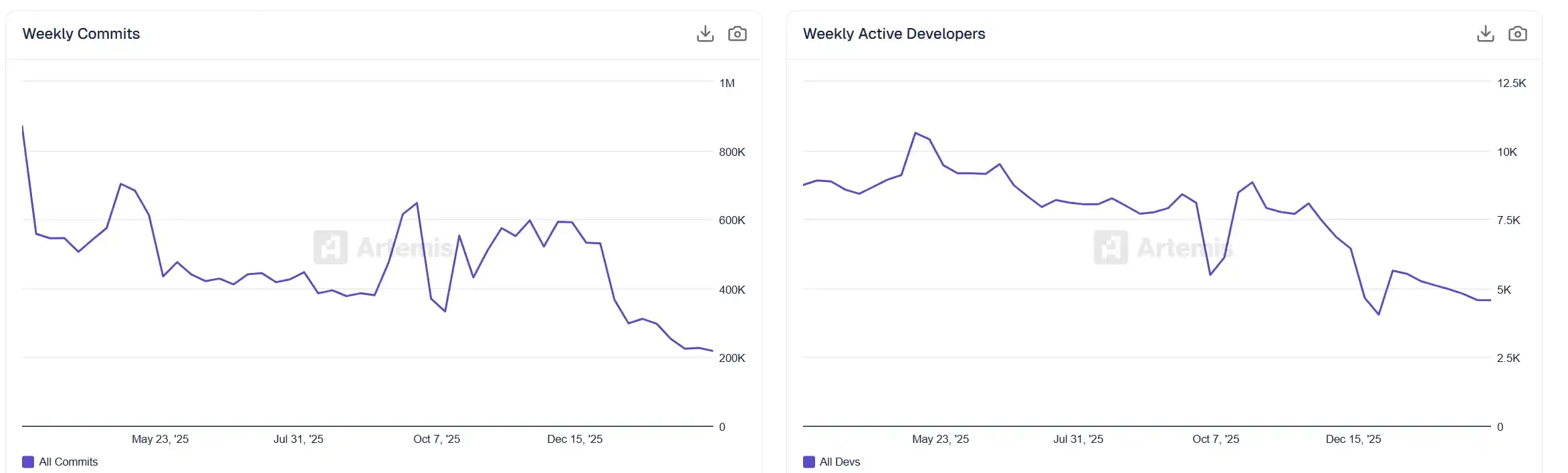
According to Artemis analytics platform data from March this year, the weekly code commits for crypto projects on GitHub dropped from about 850,000 in early 2025 to about 210,000.

A 75% decrease.

During the same period, weekly active developers dropped from about 8,700 to 4,600, more than halved. Ethereum developers decreased by 34% in three months, Solana by 40%, and BNB Chain's code commits plummeted by 85%.

This is not a problem of any single chain; almost all ecosystems are bleeding.

And the GitHub platform as a whole is growing. In 2025, approximately 36 million new developers were added, and platform-wide code commits increased by 25% year-on-year. According to GitHub's Octoverse report, the increment mainly flowed to AI projects, with over 4.3 million AI-related code repositories, and imports of large language model SDKs increased by 178% in a year.
Omar, an investor at Dragonfly, believes the reasons for this situation are: industry attention shifting to AI, declining token prices reducing economic incentives for developers, and some teams moving from open-source to closed-source development—the code hasn't disappeared, you just can't see it on GitHub.

So, more accurately, the crypto industry isn't "dying," it's shrinking. The periphery is dispersing, core teams are tightening. But the problem is, the type of gatekeepers mentioned in the previous chapter are not from the periphery; they are from the core.

This year, at least 9 senior researchers and leadership members left the Ethereum Foundation, with 5 concentrated in May. The protocol research team was almost hollowed out, while Vitalik has, in a sense, become Ethereum's last "gatekeeper," still controlling the core direction of the project's development.

And those who left had various reasons: disagreements over internal governance, salary issues, dissatisfaction with the L2 roadmap. Regardless of the reason, these positions are now vacant.

Meanwhile, the direction of capital is also changing.

According to a Bloomberg report in July, Paradigm closed its $1.2 billion new fund, for the first time expanding its investment scope to include AI and robotics. Managing partner Palmedo said, "There's too much happening out there, it's hard to pretend not to see it."
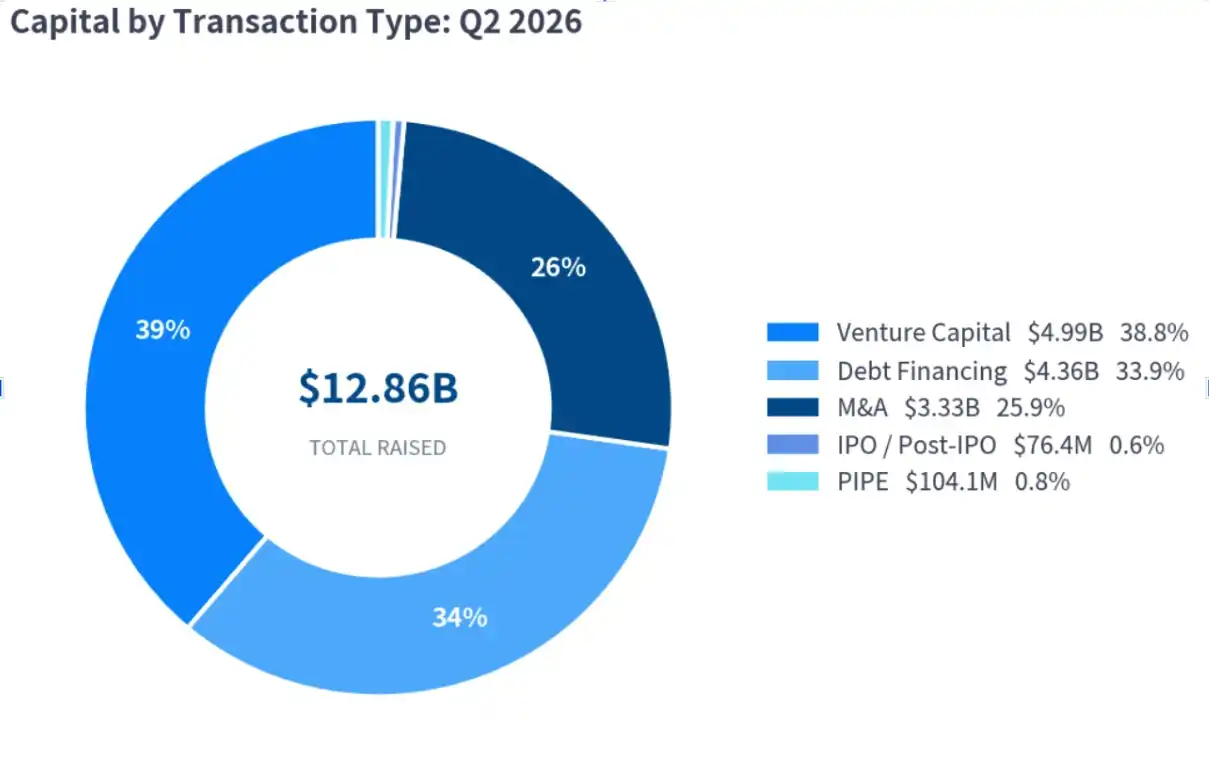
Chart: In Q2 this year, total crypto financing amounted to $12.8 billion

Source: cryptorank

Actually, it's not just Paradigm. Framework Ventures raised $400 million last month to invest in AI and robotics; Haun Ventures raised $1 billion in May, incorporating AI for the first time. According to Crunchbase data, global VC investments in H1 2026 reached $510 billion, with OpenAI and Anthropic accounting for over 40% of that. During the same period, the total financing for the entire crypto industry was less than 5% of that figure.

The people writing code are leaving, and the money paying their salaries is also changing direction.

Black Swans Behind the Unmanned Gate

The crypto industry has never been safe, but recent incidents have been especially dense.

On July 30th, the hardware wallet Coldcard exposed a firmware vulnerability; 1,196 wallets were emptied within 41 minutes, with losses exceeding 1,082 BTC, approximately $70 million. This vulnerability had been hidden in the code for over five years, undiscovered.

Afterward, a Reddit developer fed Coldcard's open-source code to Claude Code with the instruction "Check for vulnerabilities." Eight minutes later, Claude audited and identified the issue.

Dragonfly managing partner Haseeb Qureshi said on social media that approximately "$2 worth of AI compute" could have prevented this attack.

So, looking at it together, the crypto industry is entering an awkward situation:

Security threats are escalating, AI-driven attack methods are becoming more sophisticated, and the batch of people who define security boundaries and audit underlying code in the industry are being picked off one by one by the AI industry.

Those who remain may have to rely on AI for code auditing and project development in the future. This is a seemingly efficient but actually quite slapdash approach. Without someone who truly understands the system providing oversight, is something built purely by AI secure?

Many are asking when the bull market will come. But in an environment where gatekeepers are leaving in bulk, perhaps the more pertinent question is: what method will be needed to guard against the next black swan?


Трендові криптовалюти

Пов'язані питання

QWho is Sam Blackshear and what significant contribution did he make to the cryptocurrency industry?

ASam Blackshear is the creator of the Move programming language, which is the foundational language for the Sui blockchain. He originally designed Move while at Meta for the Libra (later Diem) stablecoin project.

QAccording to the article, what is a major factor attracting key technical talent away from crypto to AI?

AA major factor is the personal, impactful experience where AI tools (like Claude) demonstrate superior capability in solving complex, specialized technical problems that these experts work on, making AI seem like a more promising and transformative field.

QWhat does the data from Artemis and GitHub show about developer activity in crypto versus AI?

AThe data shows a sharp decline in crypto developer activity, with weekly code commits dropping ~75% and active developers halving from early 2025 to March. In contrast, GitHub overall grew, with AI projects being a primary driver, seeing a 178% increase in LLM SDK imports.

QHow did the Coldcard wallet incident in July demonstrate a new security challenge for crypto?

AThe Coldcard incident, where a hidden 5-year-old firmware vulnerability led to a $70 million loss, demonstrated that AI tools like Claude Code can now rapidly audit and find such vulnerabilities (in this case, in 8 minutes), highlighting both the growing sophistication of threats and the potential/dependency on AI for defense.

QWhat is the core dilemma or 'awkward situation' the article suggests the crypto industry is facing?

AThe core dilemma is that while security threats are becoming more advanced (often AI-driven), the industry's key 'gatekeepers'—the experts who define security standards and audit foundational code—are leaving for AI. This forces the remaining ecosystem to potentially rely on AI tools for security and development without deep human oversight, raising safety concerns.

Пов'язані матеріали

Google's Decade-Long AI Power Struggle Concludes, Pichai Gracefully Consolidates Control

A decade of internal AI rivalry at Google has concluded with CEO Sundar Pichai consolidating power through a masterful, bloodless reorganization. The key moves saw Demis Hassabis, DeepMind's visionary founder, step down as CEO of Google DeepMind to become Alphabet's Chief Scientist, focusing on long-term AGI. Concurrently, Google's legendary technical leader Jeff Dean departed with his team to start a new venture, in which Google invested. This restructuring marks the end of a long-standing divide between the research-focused DeepMind and the product-oriented Google Brain. Pichai's strategy, beginning with their 2023 merger under Hassabis, gradually centralized control. While Hassabis gained public acclaim for Gemini's progress and a Nobel Prize, Pichai quietly elevated Koray Kavukcuoglu, a pragmatic engineering veteran, to oversee daily operations. The catalyst was mounting pressure in 2026 as Gemini's development timelines slipped, causing stock declines. Hassabis, more passionate about pure research and his AI drug discovery company Isomorphic Labs, grew weary of the commercial grind. His graceful "promotion" effectively removed him from operational control. Pichai handled both transitions with characteristic finesse: granting Hassabis a prestigious, future-focused role to prevent a defection to rivals (as happened with former DeepMind co-founder Mustafa Suleyman), and investing in Dean's new company to keep his pioneering work within Google's orbit. The outcome is a fundamental shift: control of Google's AI future has passed from brilliant scientist-visionaries to professional managers and engineers like Kavukcuoglu and Pichai himself. It signals Pichai's bet that the AI race has entered an industrial phase won by systemic execution, organizational efficiency, and stable delivery, rather than lone genius. The era of scientists directly managing core AI is over at Google, replaced by a machine-like division of labor where the CEO decides who decides.

marsbit1 год тому

Google's Decade-Long AI Power Struggle Concludes, Pichai Gracefully Consolidates Control

marsbit1 год тому

OpenAI Executive: Tools Like Codex, Only Two Months Left to Shine

In a candid statement, OpenAI's product and platform lead, Thibault Sottiaux, predicts that tools like Codex will become "primitive" within 2-3 months. He highlights that the current paradigm of running AI agents (Harness frameworks) locally on laptops is hitting fundamental limits as next-generation models demand more from their environments. The core limitations are threefold: 1) Local hardware constraints on compute and memory when agents handle concurrent subtasks; 2) The impracticality of requiring machines to stay online for long-duration tasks; and 3) The inability of lightweight local setups to manage the massive parallel context and toolchains of advanced models. The solution, Sottiaux suggests, is a shift towards "cloud-native infrastructure." The future lies in "light local command, heavy cloud execution," where developers use their devices as control panels. Complex tasks like code refactoring, testing, and automation will be offloaded to dynamic, parallel cloud clusters (e.g., isolated sandbox containers), with results streamed back. This evolution is already underway, with examples like Anthropic orchestrating 16 Claude instances across 2000 cloud sessions to build a C compiler. The competition will thus move from raw model capability to which platform can most effectively unlock a model's full potential through sophisticated, system-level Harness engineering.

marsbit2 год тому

OpenAI Executive: Tools Like Codex, Only Two Months Left to Shine

marsbit2 год тому

Conversation with Blockchain Capital Partners: The Next Bull Market May Be Right in Front of Us

In a recent Bankless podcast, Blockchain Capital partners Aleks Larsen and Spencer Bogart discussed the crypto market's evolution from infrastructure to applications. They noted that widespread stablecoin adoption has built significant on-chain liquidity, boosting revenues for lending and trading protocols. The partners defended the "buyback and burn" token model, explaining its current effectiveness in aligning incentives and establishing credibility with holders, despite past debates on capital efficiency. Addressing the sentiment divide in crypto, they highlighted positive catalysts like regulatory clarity and institutional entry, even during the bear market. Aleks compared the industry's current state to the 2003-2004 internet era—post-"broadband transition" with cheap block space, awaiting mainstream adoption through applications like stablecoins and prediction markets. They observed a shift from "fat protocol" to "fat application," where value now accrues more at the application layer than the base infrastructure, a sign of a maturing ecosystem. Drawing parallels to AI, they noted similarities in early hype cycles but emphasized crypto's transparent, token-driven market corrections versus AI's private market adjustments. On Real World Assets (RWA), Spencer projected stablecoin market cap to reach trillions by 2030, detailing its multiplier effect on on-chain economic activity. For stock tokenization, he outlined two approaches: permissionless but legally indirect models and compliant, direct ownership channels, suggesting they can coexist in "sidecar" models alongside pure DeFi. The conversation concluded that while the industry's ethos evolves with institutional adoption, crypto's core promise of upgrading global financial infrastructure for greater efficiency remains intact and is steadily progressing.

marsbit3 год тому

Conversation with Blockchain Capital Partners: The Next Bull Market May Be Right in Front of Us

marsbit3 год тому

Торгівля

Спот

Популярні статті

Як купити MOVE

Ласкаво просимо до HTX.com! Ми зробили покупку Movement (MOVE) простою та зручною. Дотримуйтесь нашої покрокової інструкції, щоб розпочати свою криптовалютну подорож.Крок 1: Створіть обліковий запис на HTXВикористовуйте свою електронну пошту або номер телефону, щоб зареєструвати обліковий запис на HTX безплатно. Пройдіть безпроблемну реєстрацію й отримайте доступ до всіх функцій.ЗареєструватисьКрок 2: Перейдіть до розділу Купити крипту і виберіть спосіб оплатиКредитна/дебетова картка: використовуйте вашу картку Visa або Mastercard, щоб миттєво купити Movement (MOVE).Баланс: використовуйте кошти з балансу вашого рахунку HTX для безперешкодної торгівлі.Треті особи: ми додали популярні способи оплати, такі як Google Pay та Apple Pay, щоб підвищити зручність.P2P: Торгуйте безпосередньо з іншими користувачами на HTX.Позабіржова торгівля (OTC): ми пропонуємо індивідуальні послуги та конкурентні обмінні курси для трейдерів.Крок 3: Зберігайте свої Movement (MOVE)Після придбання Movement (MOVE) збережіть його у своєму обліковому записі на HTX. Крім того, ви можете відправити його в інше місце за допомогою блокчейн-переказу або використовувати його для торгівлі іншими криптовалютами.Крок 4: Торгівля Movement (MOVE)Легко торгуйте Movement (MOVE) на спотовому ринку HTX. Просто увійдіть до свого облікового запису, виберіть торгову пару, укладайте угоди та спостерігайте за ними в режимі реального часу. Ми пропонуємо зручний досвід як для початківців, так і для досвідчених трейдерів.

418 переглядів усьогоОпубліковано 2024.12.13Оновлено 2026.06.02

Як купити MOVE

Обговорення

Ласкаво просимо до спільноти HTX. Тут ви можете бути в курсі останніх подій розвитку платформи та отримати доступ до професійної ринкової інформації. Нижче представлені думки користувачів щодо ціни MOVE (MOVE).

活动图片