Compiled by: ChainCatcher
Key News:
- Former FTX Law Firm and Auditor Agree to Pay $66 Million to Settle Fraud Allegations
- StablR Stablecoin Depegs After Attack, Attacker Profited Approximately $2.8 Million
- Ethereum Foundation Frequently Criticized, Researcher Defends Its Mission is to Build Protocol, Not Pump ETH
- Multiple CFTC Officials Who Questioned Prediction Market Regulation Suspended and Forced to Resign
- US Congress Reintroduces Bitcoin Reserve Bill, Republicans Plan to Push for Accumulating 5% of Global Bitcoin
- Michael Saylor: This Week's Buy Was Bonds, Not Bitcoin
What Happened in the Past 24 Hours?
US Congress Reintroduces Bitcoin Reserve Bill, Republicans Plan to Push for Accumulating 5% of Global Bitcoin
Meme Top Charts
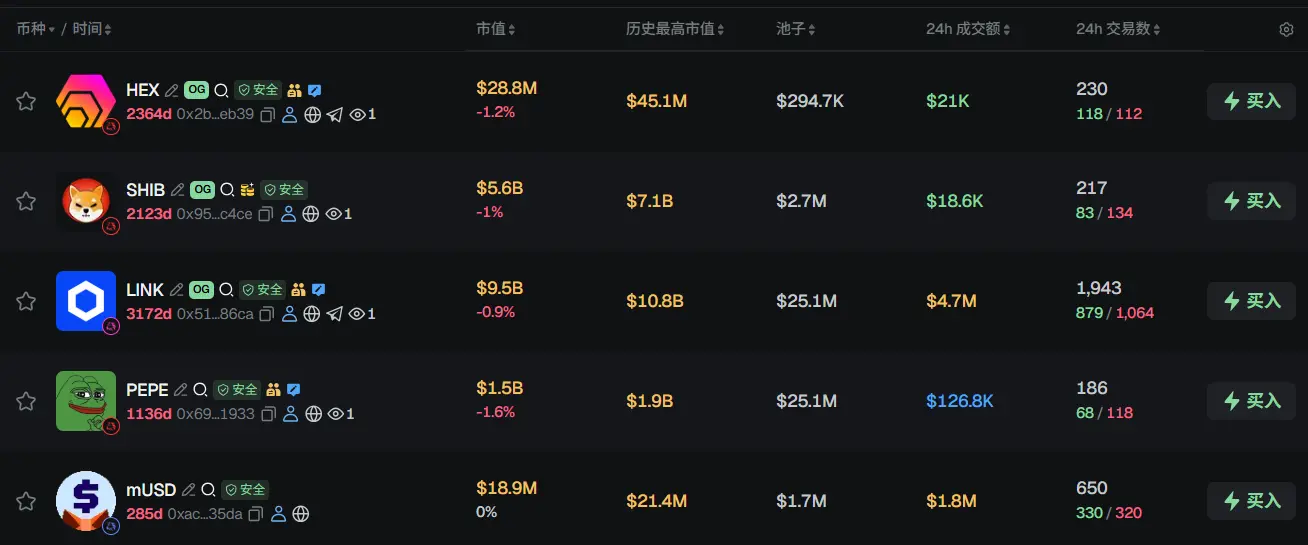
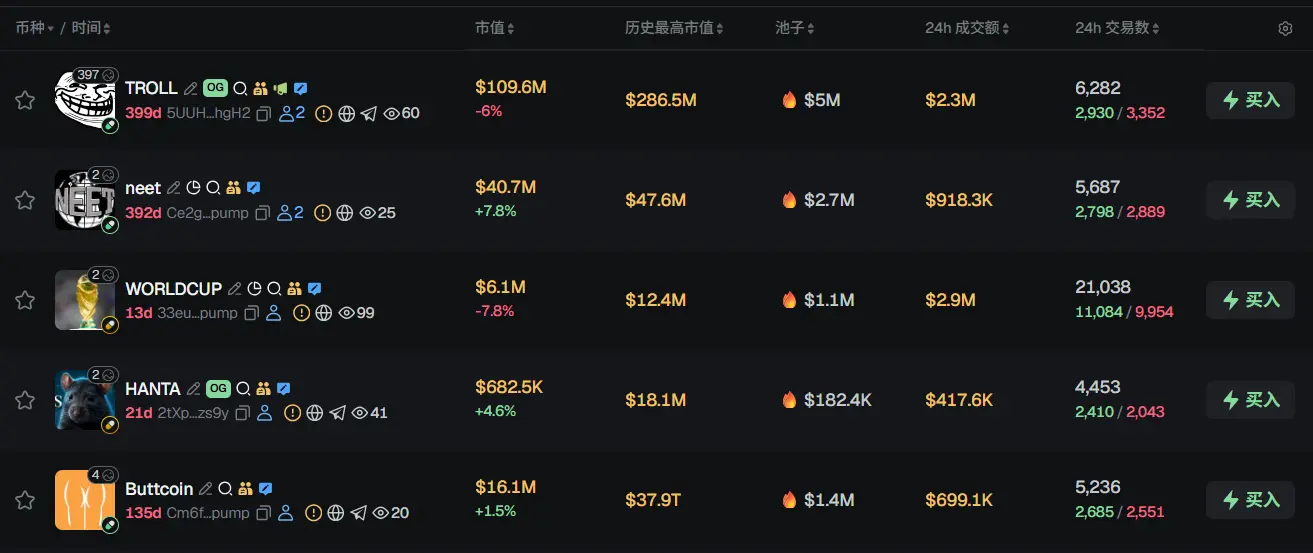
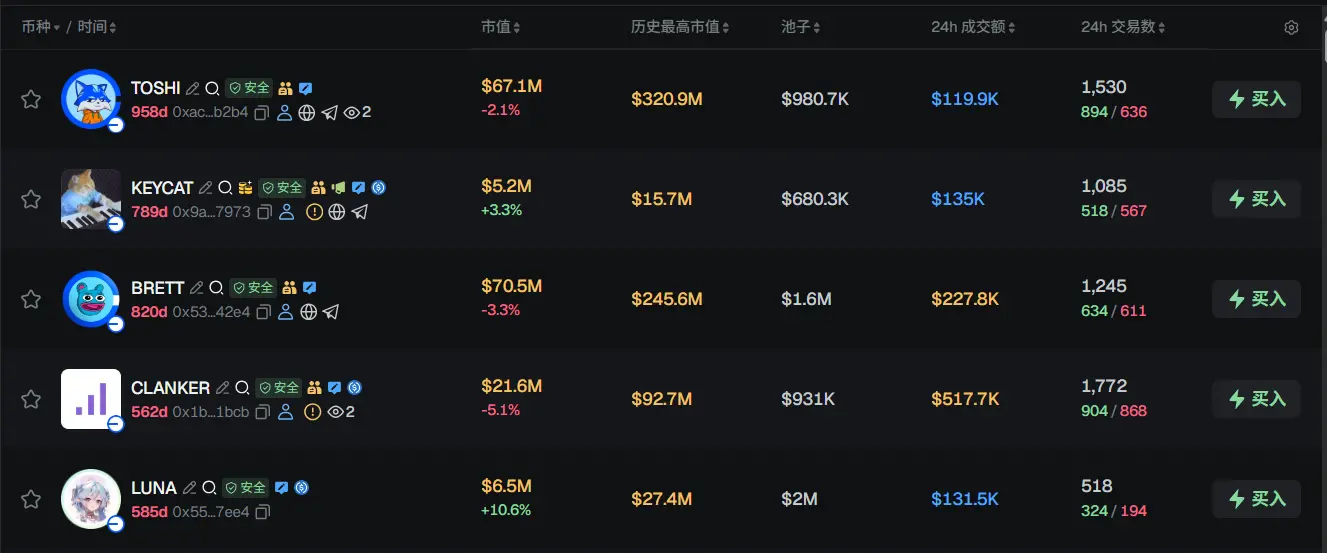
According to meme token tracking and analysis platform GMGN market data, as of May 25th, 09:00,
Top 5 popular ETH tokens in the past 24h are: HEX, SHIB, LINK, PEPE, mUSD
Top 5 popular Solana tokens in the past 24h are: TROLL, neet, WORLDCUP, HANTA, Buttcoin
Top 5 popular Base tokens in the past 24h are: TOSHI, KEYCAT, BRETT, CLANKER, LUNA
What are the Must-Read Articles in the Past 24 Hours?
a16z: 7 Charts to Understand How Tokenization Changes the Nature of Assets
Tokenized Assets, also known as 'Real World Assets (RWA)', are changing the form of assets, how they flow, and how the financial system is built.
Just last month, the tokenized asset market size surpassed $30 billion, currently hovering around $34 billion (excluding stablecoins). This scale is roughly equivalent to a regional bank or a top-tier university endowment fund. While still very small compared to the global financial system, it is already large enough to have real impact.
Just two years ago, the tokenized asset market was less than $3 billion, but then the market underwent dramatic changes: the US GENIUS Act brought a clearer regulatory framework for stablecoins, institutional-grade on-chain infrastructure matured, and a large number of financial institutions began deploying blockchain technology almost simultaneously. It was under the push of these factors that the tokenized asset market grew 10-fold in less than two years.
Decoding the Secret to Hyperliquid's Success Through a Five-Layer Financial Stack
The construction of institutional-grade financial infrastructure often follows a pattern. You don't start with the most expressive product and then work backwards.
You start with the settlement layer, prove it works under stress, and then unlock all the features that depend on it.
The New York Stock Exchange didn't add derivatives before it had a well-functioning stock market. The Chicago Mercantile Exchange didn't launch options before it launched futures.
This order is not arbitrary. The order of the foundational layers determines the possibilities of the superstructure.
Hyperliquid understands this well.


















