Morning Post | Bitmine Plans to Raise $300 Million Through Preferred Stock Issuance; Polymarket Accuses Kalshi of Commercial Espionage

链捕手Опубліковано о 2026-06-05Востаннє оновлено о 2026-06-05

Анотація

ChainCatcher's Daily Crypto Brief: Key developments from the past 24 hours include significant funding moves, regulatory actions, and market predictions. Bitmine announced a $300 million preferred stock fundraising. Polymarket accused rival prediction platform Kalshi of corporate espionage, citing numerous suspicious coincidences in product launches, a claim Kalshi strongly denied. The U.S. Department of Justice, in a joint "Disruption Week" anti-fraud operation with companies like Coinbase and Meta, froze over $3.8 million in cryptocurrency linked to scams. In infrastructure news, Macau completed its integration with the multi-central bank digital currency bridge, mBridge, aiming to build efficient cross-border payment channels. Cosmos Labs acquired the block explorer Mintscan. Market-wise, Geoffrey Kendrick, Standard Chartered's Head of Digital Assets Research, stated Bitcoin is nearing a bottom around $63,000, maintaining a year-end target of $100,000. He noted stability in U.S. spot Bitcoin ETF holdings. Ahead of SpaceX's anticipated IPO, internal insiders at Rocket Lab (RKLB) sold over $18.41 million in stock. In tokenization, Goldman Sachs partnered with Apex and Archax to launch a tokenized real estate fund. The meme token tracker GMGN reported the top trending tokens: on Ethereum, HEX, SHIB, LINK, PEPE, mUSD; on Solana, TROLL, swarms, WORLDCUP, neet, Buttcoin; and on Base, PEPE, toby, ODDS, ELSA, SKI.

Compiled by: ChainCatcher


Key News:

  • Bitmine Announces Plan to Raise $300 Million Through Issuing Preferred Stock
  • Polymarket Accuses Kalshi of Commercial Espionage, Citing Too Many 'Coincidences' in Product Launches
  • U.S. DOJ Collaborates with Coinbase, Meta, and Others in Anti-Scam Operation, Freezing Over $3.8 Million in Crypto Assets
  • Macao Completes System Integration with Multilateral Central Bank Digital Currency Bridge mBridge, Building an Efficient and Secure Cross-Border Payment Channel
  • Cosmos Labs Acquires Block Explorer Mintscan
  • Goldman Sachs Partners with Apex and Archax to Launch Tokenized Real Estate Fund

What were the key events of the past 24 hours?

Macao Completes System Integration with Multilateral Central Bank Digital Currency Bridge mBridge, Building an Efficient and Secure Cross-Border Payment Channel

U.S. DOJ Collaborates with Coinbase, Meta, and Others in Anti-Scam Operation, Freezing Over $3.8 Million in Crypto Assets

ChainCatcher news, according to a report by The Block, the U.S. Department of Justice stated that in the joint anti-scam operation codenamed "Disruption Week," private sector participants froze over $3.8 million in cryptocurrency assets related to scams. Participating institutions included Coinbase, Meta, Google, Microsoft, SpaceX, TRM Labs, among others.

The operation also led to the arrest of seven scam operators by Thai police and the identification of multiple scam platforms handed over to U.S. authorities for investigation. According to FBI data, reported losses from cryptocurrency investment scams in 2025 grew by 24% year-over-year, exceeding $7.2 billion.

Standard Chartered's Head of Digital Assets Research: Bitcoin 'Bottom is Near,' Maintains Year-End $100,000 Target

ChainCatcher news, according to a report by The Block, Geoffrey Kendrick, Head of Digital Asset Research at Standard Chartered, stated that Bitcoin's "bottom has almost arrived" following the recent sharp decline, and the current range around $63,000 is a "buying zone." He pointed out that holdings of U.S. spot Bitcoin ETFs have remained largely flat overall since February, with no concentrated redemptions as feared, indicating that the funds are more "structurally stable."

Kendrick expects that after Strategy, which triggered recent selling pressure, sold 32 BTC, it may follow historical precedent by repurchasing 10 times or even 100 times that amount, potentially signaling a confirmation of a cyclical low. He also noted that Bitcoin still faces downside risks of falling below $60,000 but believes averaging into purchases is preferable to trying to time the exact bottom. The bank maintains its year-end targets of $100,000 for Bitcoin and $4,000 for Ethereum.

Ahead of SpaceX's IPO, Rocket Lab (RKLB) Insiders Cash Out Over $18.41 Million in Stock

ChainCatcher news, according to a report by Barron's, ahead of SpaceX's IPO, Rocket Lab insiders collectively sold over 124,000 shares, cashing out more than $18.41 million. This included the company's General Counsel Arjun Kampani, Vice President of Space Systems Brad Clevenger, COO Frank Klein, and Alex Slusky, head of Vector Capital, the entity behind the SPAC that took the company public.

The company's stock price had previously risen significantly due to industry optimism fueled by SpaceX's valuation increase. On Monday this week, Rocket Lab's (RKLB) stock price once fell by 15% to $122.39.

Polymarket Accuses Kalshi of Commercial Espionage, Citing Too Many 'Coincidences'

ChainCatcher news, prediction market platform Polymarket believes its competitor Kalshi may have engaged in commercial espionage against its New York office and employees. A Polymarket marketing executive confirmed the company is conducting an internal investigation, stating there were "too many coincidences" and suspecting Kalshi had ill intentions.

Reports indicate that Polymarket internally compiled a file named "Copycat," documenting about a dozen suspicious incidents. These included Polymarket's original plan to launch a free grocery pop-up event on February 12, while Kalshi launched a similar event approximately 9 days earlier. Additionally, Polymarket planned to announce its perpetual contract product plans on April 21, but about an hour before the announcement, tech media The Information reported that Kalshi was also preparing to launch a similar product.

Polymarket employees also expressed concern that the office of Paradigm, a venture capital firm backing Kalshi, is located opposite their workplace, posing a risk of employees' computer screens being viewed. It is reported that Polymarket installed window films on some office windows this spring.

In response, a Kalshi spokesperson denied all allegations, calling Polymarket's suspicions "pathetic and bordering on delusional."

Meme Token Hotlist

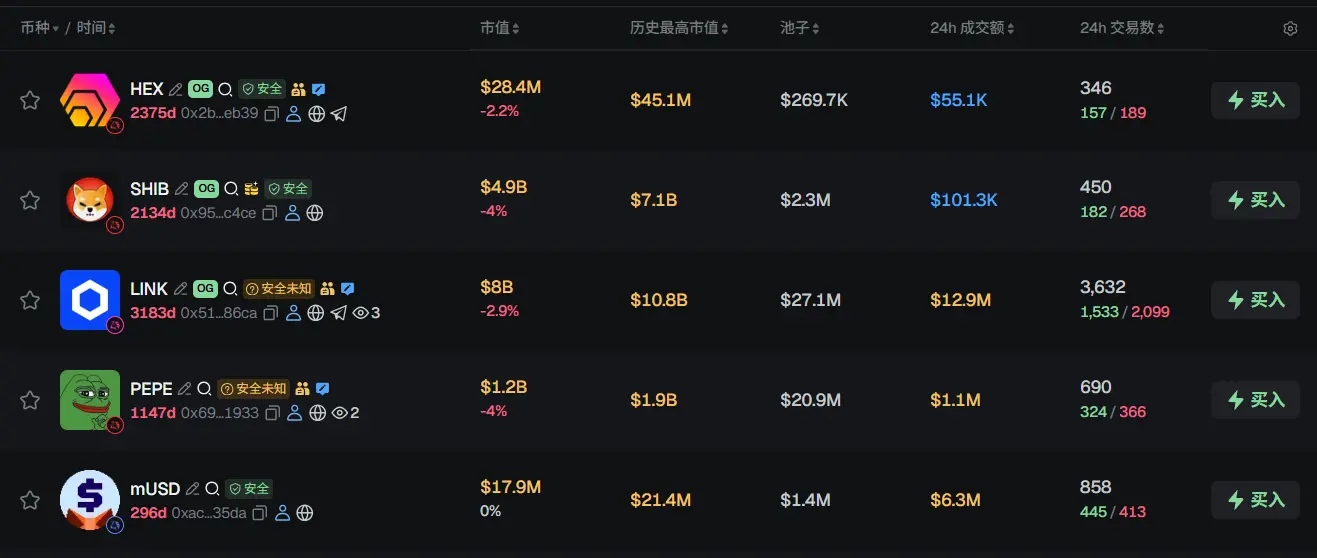
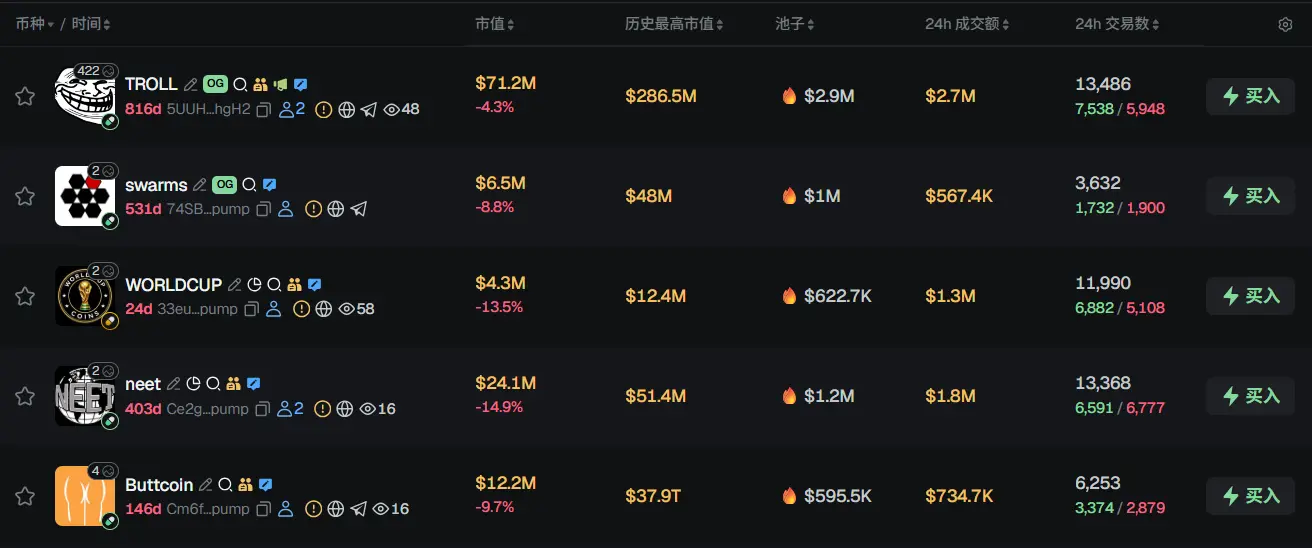
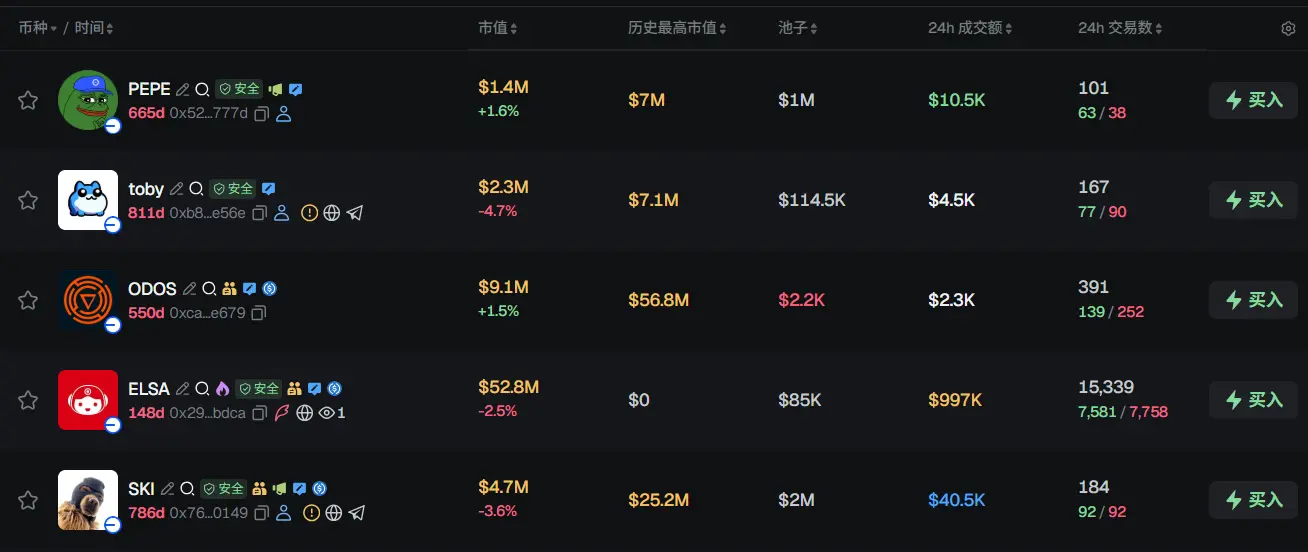
According to data from the meme token tracking and analysis platform GMGN, as of 09:00 on June 5th,

The top five popular tokens on ETH in the past 24h were: HEX, SHIB, LINK, PEPE, mUSD.
The top five popular tokens on Solana in the past 24h were: TROLL, swarms, WORLDCUP, neet, Buttcoin.
The top five popular tokens on Base in the past 24h were: PEPE, toby, ODDS, ELSA, SKI.
Пов'язані питання

QWhat significant fundraising initiative has Bitmine announced, and how much does it aim to raise?

ABitmine has announced the issuance of preferred stock aiming to raise 300 million US dollars.

QWhat action has the US Department of Justice taken in collaboration with companies like Coinbase and Meta, and what was the outcome?

AThe US Department of Justice conducted a joint anti-fraud operation named 'Disruption Week' with companies including Coinbase, Meta, Google, Microsoft, SpaceX, and TRM Labs. The operation resulted in the freezing of over 3.8 million US dollars in cryptocurrency assets linked to scams.

QAccording to Geoffrey Kendrick of Standard Chartered Bank, what is the outlook for Bitcoin's price and what are his specific targets?

AGeoffrey Kendrick, Head of Digital Assets Research at Standard Chartered Bank, stated that Bitcoin's bottom is nearly in place after recent declines and considers the current price around 63,000 USD a 'buying range'. He maintains a year-end target of 100,000 USD for Bitcoin and 4,000 USD for Ethereum.

QWhat allegations has Polymarket made against its competitor Kalshi, and how has Kalshi responded?

APolymarket has accused its competitor Kalshi of potential corporate espionage, citing 'too many coincidences' in similar product launches and activities. Kalshi has denied all allegations, calling Polymarket's suspicions 'pathetic and bordering on delusional'.

QWhat major development has been completed regarding Macao and the mBridge system, and what is its purpose?

AMacao has completed system integration with the multilateral central bank digital currency bridge, mBridge. The purpose is to establish an efficient and secure cross-border payment and settlement channel.

Пов'язані матеріали

U.S. Government Bans Foreign Nationals from Using Fable 5, Anthropic Issues Rebuttal

U.S. Government Bans Foreign Access to Fable 5, Anthropic Issues Rebuttal On June 12th, the U.S. government ordered AI company Anthropic to immediately suspend all foreign access—including foreign nationals within the U.S. and Anthropic's own foreign employees—to its newly released Fable 5 and Mythos 5 AI models, citing national security concerns. This forced Anthropic to temporarily disable access to both models for all users globally, as it cannot technically differentiate user nationality at scale. The models, released just three days prior, represent Anthropic's highest public capability tier. Fable 5 is the first publicly available model from the advanced "Mythos" family, while Mythos 5 is a less-restricted version for approved cybersecurity and critical infrastructure partners. The government's directive was reportedly triggered by claims from another company that it could "jailbreak" Mythos 5, raising alarm within the Trump administration. Anthropic, in a detailed public statement, strongly challenged this rationale. The company argues the demonstrated "jailbreak" is a narrow, non-generalized technique that merely involves identifying minor, known software vulnerabilities—a capability common to other publicly available models like OpenAI's GPT-5.5 and routinely used by cybersecurity defenders. Anthropic stated it has complied with the order but disagrees with the government's standard, warning that applying it industry-wide would halt all new frontier model deployments. The company criticized the lack of a transparent, fact-based legal process and expressed confidence the situation stems from a misunderstanding. It is working to restore access and will release more technical details within 24 hours. Other Anthropic models remain unaffected.

链捕手17 хв тому

U.S. Government Bans Foreign Nationals from Using Fable 5, Anthropic Issues Rebuttal

链捕手17 хв тому

The Revelation from the Raydium Theft Incident: New DeFi Vulnerabilities Lurking in Forgotten Old Contracts

**Raydium Exploit Reveals DeFi's Hidden Risk: Forgotten "Zombie" Contracts** A recent attack on Raydium's deprecated V3 AMM pools resulted in a loss of approximately $1.34 million. The hacker exploited pools that were no longer supported by Raydium's current UI or SDK but remained fully functional and accessible on-chain. This incident highlights a critical, often overlooked category of risk in DeFi: inactive or legacy smart contracts that projects fail to properly decommission. Since March 2025, there have been at least 8 publicly reported attacks targeting such abandoned contracts, with total losses around $10.8 million. Including older pools and deprecated features, the count rises to 10 incidents with roughly $22.5 million in losses. These "zombie contracts" represent a lifecycle management failure rather than a code vulnerability, yet they are typically misclassified under general "code bug" categories in security reports, masking the true scale of the problem. The root cause is that projects often merely document a contract as "deprecated" without taking essential technical steps to secure it: withdrawing remaining assets, disabling external call functions, and implementing ongoing monitoring. These forgotten, under-monitored components become prime targets for attackers. To address this, the industry needs to recognize "zombie contracts" as a distinct risk category and establish standardized decommissioning protocols. Essential steps should include: 1) a formal retirement announcement, 2) removal of all front-end integrations, 3) withdrawal of locked assets, 4) disabling key contract functions, 5) ongoing security monitoring, 6) clear user communication, and 7) a post-mortem analysis. The value of a DeFi project lies not only in its current TVL but also in the security of its historical codebase, which has now become a new attack surface.

Foresight News2 год тому

The Revelation from the Raydium Theft Incident: New DeFi Vulnerabilities Lurking in Forgotten Old Contracts

Foresight News2 год тому

Robots Begin to 'Consume Data': The Hidden Production Chain from Indian Data Factories to Billion-Dollar Humanoid Robots

Robots have started to 'consume data,' driving the formation of a new industrial supply chain focused on producing training data for embodied AI. Unlike large language models, which are trained on vast internet text corpora, embodied AI models face a 'data desert' in the physical world. This has created a massive demand for first-person perspective video data (Ego Data), captured by workers wearing cameras in places like Indian garment factories. Companies like Neocambrian AI are establishing 'data factories' where workers perform standardized tasks (e.g., sorting clothes, kitchen organization) to generate thousands of hours of video. Research, such as NVIDIA's EgoScale, demonstrates that scaling this human demonstration data predictably improves robot performance, particularly for dexterous manipulation. This has validated a training path combining large-scale human data for pre-training with smaller amounts of robot-specific data for fine-tuning. The value of different data types varies significantly, forming a 'data pyramid.' The base consists of low-cost, large-scale internet and Ego Data. Higher layers include more expensive motion-capture data (e.g., from data gloves), simulation/synthetic data, and the most costly and scarce layer: real robot teleoperation data. This demand has spawned a layered ecosystem of data suppliers: low-cost data factories, motion capture and alignment specialists, robot-native teleoperation service providers, simulation data companies, and platforms aiming for data standardization. Robot companies themselves are adopting a 'layered procurement' strategy: outsourcing generic Ego Data while building in-house capabilities for robot-specific adaptation data and the critical deployment/failure data generated in real-world applications. The industry is shifting focus from hardware and basic mobility to the data pipelines required for general-purpose capability. While parallels exist to data labeling companies like Scale AI in the LLM boom, the physical complexity of robot data—involving action success ambiguity and sim-to-real gaps—requires more integrated solutions for data collection, annotation, and a continuous feedback loop. The race is on to build the data engines that will teach robots to operate reliably in the unstructured real world.

marsbit4 год тому

Robots Begin to 'Consume Data': The Hidden Production Chain from Indian Data Factories to Billion-Dollar Humanoid Robots

marsbit4 год тому

Торгівля

Спот
Ф'ючерси
活动图片