MiCA strikes again? Revolut to drop USDT as Circle gains momentum

ambcryptoОпубліковано о 2026-07-04Востаннє оновлено о 2026-07-04

Анотація

Europe's largest fintech platform Revolut will delist Tether's USDT stablecoin, halting deposits by the end of July and removing it entirely by August 31. This move is widely attributed to compliance with the EU's new MiCA crypto regulatory framework, which aims to block non-compliant stablecoins. Tether's CEO has criticized MiCA as "dangerous," arguing its reserve requirements could destabilize European banks, and has opted not to seek approval. In contrast, Circle's USDC, which is MiCA-compliant, is gaining significant momentum. Visa data shows USDC's transfer volume doubled that of USDT in June, reaching $1.21 trillion, with a notable shift towards Euro-based stablecoins also observed. The delisting by Revolut and other EU platforms may further accelerate this trend, though USDT maintains a dominant position in overall market supply.

Europe’s largest fintech platform, Revolut, will drop Tether’s USDT by 31st of August. However, USDT deposits will be disabled from the platform by the end of this month.

The tech giant informed users that those who fail to transfer their funds by the end of August will have their USDT automatically exchanged to fiat.

The move is likely informed by regulatory pressure, according to analyst Max Karpis. He noted,

Revolut is delisting USDT on 31 Aug 2026 (regulatory/risk reasons). Not long ago, they expanded support to include zero-fee transfers and 1:1 USDT/USDC swaps. Now a reversal. Compliance hits again.

EU’s crypto regulatory framework, MiCA, is now in effect. Hence, the move is likely to block non-compliant stablecoins and tokens.

Tether CEO deems MiCA as ‘dangerous’ for stablecoins

Interestingly, Tether CEO Paolo Ardoino has been open about not seeking MiCA approval. In fact, he argued that the regulation is “bad” and “dangerous” for stablecoins.

The problem I have with MiCA is that it’s very dangerous for stablecoins. What will happen next year is that a few banks in Europe will go belly up because of MiCA’s requirement that 60% of stablecoin reserves be kept in uninsured cash deposits in European banks.

He also noted that only small banks accept crypto firms, as major ones like UBS are unwilling to accept stablecoin business. For Ardoino, this would be risky as a +20% redemption on USDT could quickly trigger a banking crisis.

He believes that MiCA is designed to position the Digital Euro to control fund flows. Hence, he opted to keep USDT safe for emerging markets that rely heavily on it.

Whether the same risk applies to Circle’s USDC or Euro stablecoin EURC is not clear. However, Circle has MiCA approval and seems to have benefited last month as the MiCA transition period came to an end.

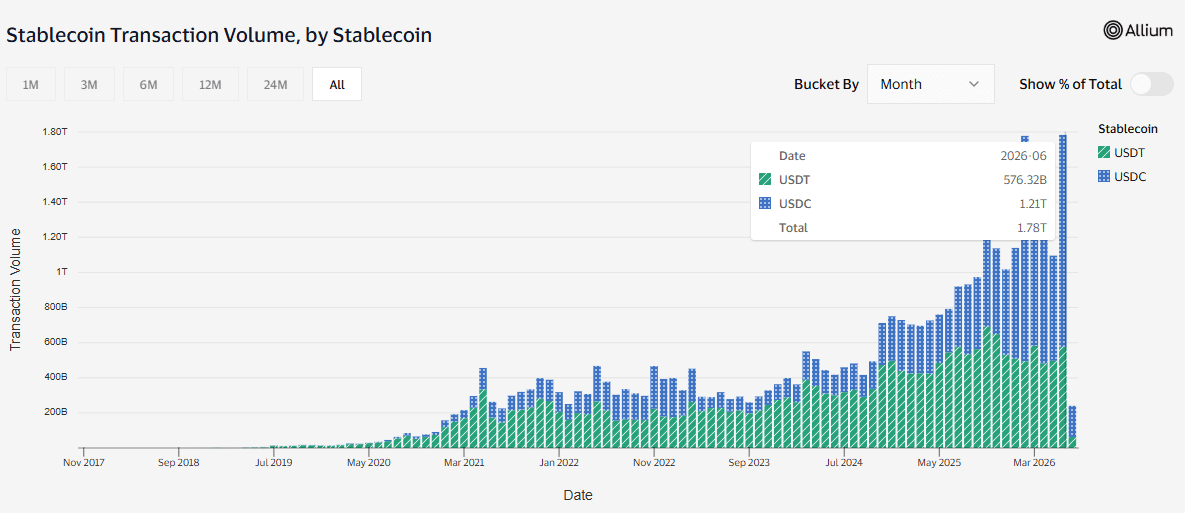
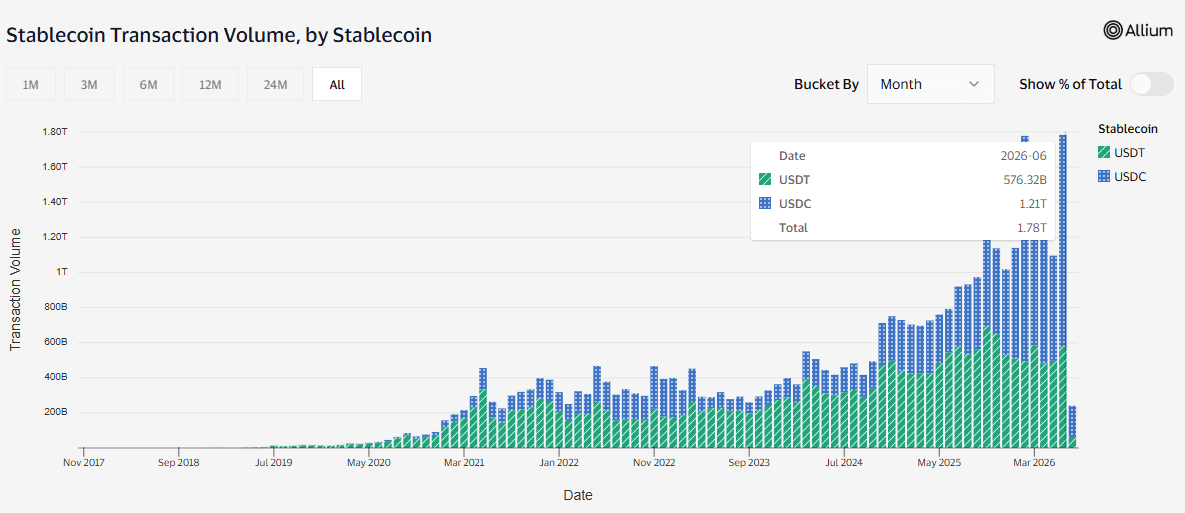
According to Visa data, USDC saw $1.21T in transfer volume in June, doubling Tether’s USDT. This was the second highest monthly transfer volume following February’s record $1.28T amid growing adoption across most blockchains.
Source: Visa

In fact, less than a week into July, USDC’s volume was 3x that of USDT, underscoring a likely shift tied to the MiCA framework. Users across the EU or those sending money to the continent may be opting for USDC instead of USDT.

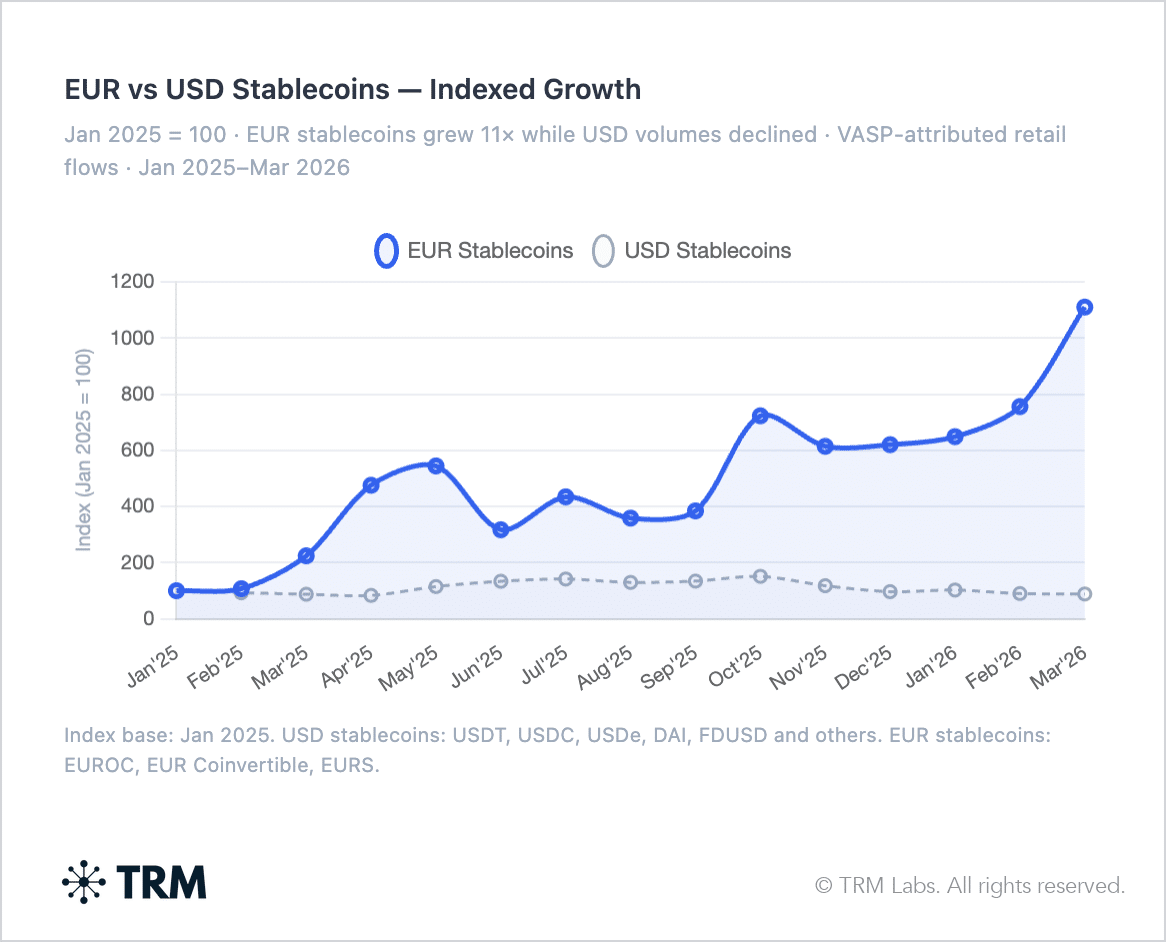
The shift was also evident across US dollar and Euro-based stablecoins. The latter grew 11x while USD-based stablecoin volumes shrank.
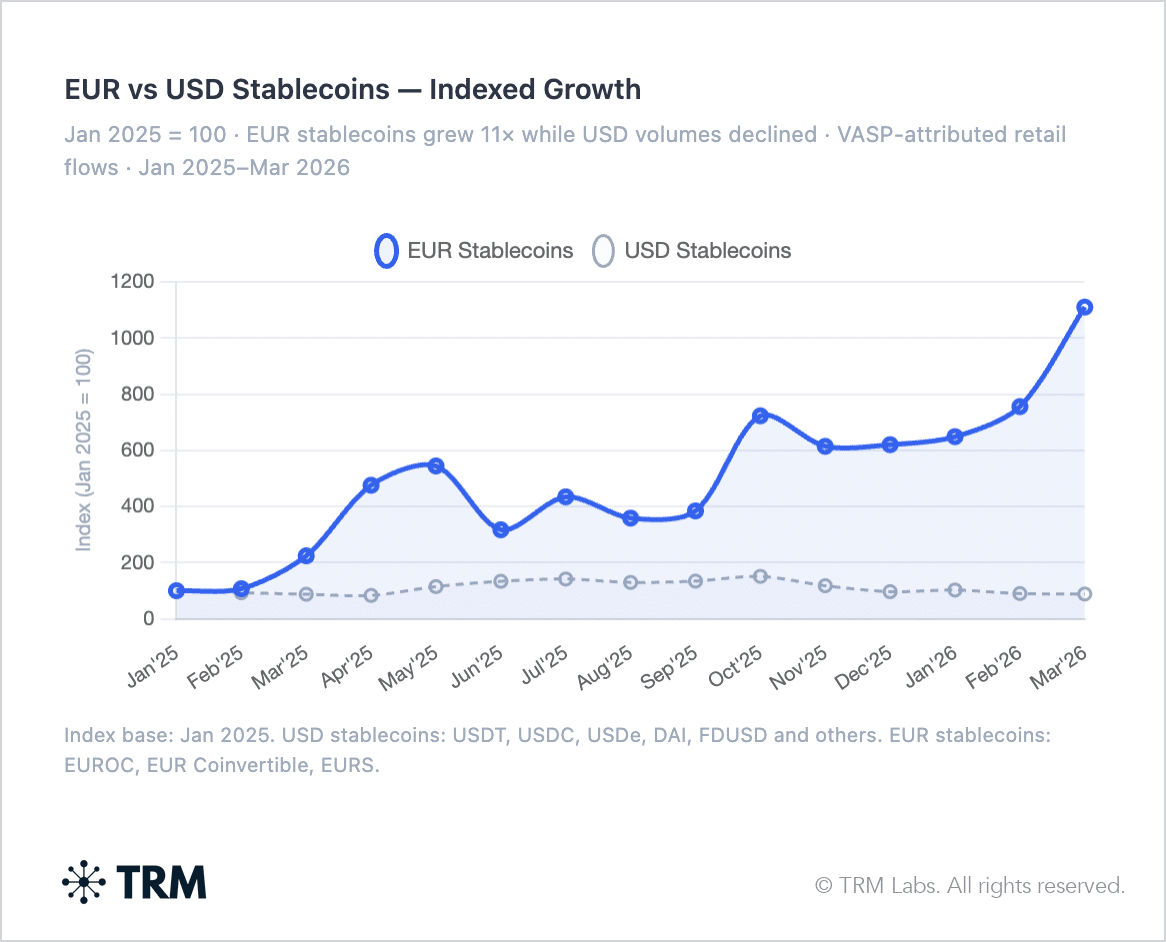
Source: TRM Labs

Tether’s USDT still dominates the stablecoin market in terms of supply though. It remains to be seen whether Circle will close the gap as Revolut and other EU platforms continue to delist USDT.


Final Summary

  • Revolut will delist USDT by August 31st and stop accepting deposits from the stablecoin by the end of July.
  • USDC transfer volume hit $1.21T, doubling Tether’s USDT, further underscoring MiCA’s impact on stablecoin adoption.


Пов'язані питання

QWhat is the key deadline and action that Revolut is taking regarding Tether's USDT stablecoin?

ARevolut will stop accepting USDT deposits by the end of July 2026 and will completely delist Tether's USDT from its platform by August 31, 2026. Users who fail to transfer their USDT funds by the end of August will have them automatically exchanged to fiat currency.

QAccording to the analyst Max Karpis, what is the primary reason behind Revolut's decision to delist USDT?

AAccording to analyst Max Karpis, Revolut's decision is primarily due to regulatory and risk reasons, specifically in response to compliance pressures, which he attributes to the EU's MiCA regulatory framework now being in effect.

QWhat are the main criticisms of the MiCA regulation expressed by Tether's CEO, Paolo Ardoino?

ATether CEO Paolo Ardoino criticizes MiCA as being 'bad' and 'dangerous' for stablecoins. He argues that its requirement for 60% of stablecoin reserves to be held as uninsured cash deposits in European banks could lead to bank failures, especially if there is a large-scale redemption event like a +20% redemption of USDT. He also believes it is designed to favor the Digital Euro and control fund flows.

QHow has Circle's USDC stablecoin reportedly been affected by the implementation of MiCA, according to the Visa data mentioned in the article?

AAccording to Visa data cited in the article, USDC's transfer volume reached $1.21 trillion in June 2026, doubling that of Tether's USDT. Furthermore, in early July, USDC's volume was three times that of USDT, indicating a significant shift in adoption likely tied to MiCA compliance.

QBeyond USDT and USDC, what broader trend in stablecoin usage was observed in the EU market as the MiCA transition period ended?

AThe article shows a broader shift towards Euro-based stablecoins. While USD-based stablecoin volumes shrank, Euro-based stablecoin volumes grew by 11 times, indicating a significant move towards euro-denominated stablecoins within the EU market following the MiCA framework's implementation.

Пов'язані матеріали

Famous Trader Speaks Out After Rally: "Bitcoin Needs Another Level for Further Growth"

After a period of dormancy, the crypto market showed a strong upward trend, with Bitcoin ($BTC) briefly surpassing $69,000 and Ethereum (ETH) rising above $2,100. Market capitalization grew to around $2.4 trillion. This surge has reignited speculation that Bitcoin's bear market may be nearing its end. Trader Killa, known for accurate bear market predictions, stated that BTC has begun recovering from its lows. He warned investors might miss the next rally by waiting for a "perfect bottom." Killa maintains a long-term Bitcoin target above $150,000 and suggested the traditional four-year market cycle might change. He identified the 200-day moving average near $69,500 as a critical level. A sustained break above it could confirm a return to a bull phase. Bitcoin recently faced resistance around this level, underscoring its technical importance. Institutional voices also express optimism. Matt Hougan, CIO of Bitwise, noted that blockchain-based yield-generating assets are being revalued, with some protocols poised for higher market caps. A Bitwise Europe report highlighted renewed institutional demand, citing inflows into ETPs, high long-term holder balances, and stable corporate treasury demand. Hougan further stated Bitcoin is becoming more resilient to negative news. He estimated that even a 1-2% allocation from major wealth managers like Morgan Stanley could channel hundreds of billions of dollars into the crypto sector.

cryptonews.ru5 хв тому

Famous Trader Speaks Out After Rally: "Bitcoin Needs Another Level for Further Growth"

cryptonews.ru5 хв тому

What to Expect from Bitcoin's Price After Today's Sharp Surge? Only One Hurdle Left to Overcome!

Bitcoin ($BTC) surged sharply after the U.S. Treasury Department announced expanded liquidity support for the long-term bond market, triggering one of the largest short liquidations since October 2020. According to Michael Nagye, founder of The DeFi Report, the timing of Bitcoin's jump followed the Treasury's announcement of enhanced long-term bond buyback operations starting in September. Nagye views this as a second "moderate quantitative easing" measure implemented recently to alleviate pressure on long-term Treasury yields. He noted that gold reacted first to the macroeconomic shift, followed by Bitcoin. However, a significant portion of Bitcoin's move was attributed to short liquidations and market positioning changes rather than new, sustained spot demand. As Bitcoin approaches the $68,000-$69,000 range, key technical levels are back in focus: $68,500 (short-term holder cost basis), $68,800 (21-week moving average), and $69,100 (200-day moving average). The current price action is seen as crucial in determining whether the uptrend will continue. While the rally is notable given the Treasury's actions, Nagye emphasized it remains largely liquidation-driven at this stage. The key question now is whether sustainable market demand will emerge to support further gains. If Bitcoin can break through and convert the $68,500-$69,100 resistance zone into support, it could pave the way for a new bullish rally.

cryptonews.ru55 хв тому

What to Expect from Bitcoin's Price After Today's Sharp Surge? Only One Hurdle Left to Overcome!

cryptonews.ru55 хв тому

LATEST NEWS: Long-awaited Fed meeting minutes released! Here's what you absolutely need to read

The Federal Reserve has released the highly anticipated minutes from its Federal Open Market Committee (FOMC) meeting held on July 28-29. The minutes revealed that while most Fed officials supported holding the federal funds rate steady at 3.50-3.75%, a minority advocated for a 25-basis-point increase. A key consensus was that interest rates may need to remain high for longer, and further hikes could be necessary if inflation does not continue to decline. Inflation concerns were central to the discussion. Officials broadly agreed that risks to inflation remain elevated, with some noting that current financial conditions might not be sufficiently restrictive to bring inflation back to the Fed's 2% target. They observed that price increases have been broad-based across many categories of goods and services. The minutes noted that financial conditions had tightened between meetings, partly driven by market expectations of tighter Fed policy. Some officials viewed this market-driven tightening as having already done some of the Fed's work. Staff economic forecasts saw little change in inflation outlook but a slightly downgraded growth forecast. Other points included assessments of financial stability, with some officials flagging a potential sharp correction in AI-related stocks as a risk. The minutes also covered operational topics, such as the effective handling of a payment system glitch and a proposal—though not adopted—to reduce the number of annual policy meetings. The committee affirmed its commitment to maintaining the phrase "will ensure price stability" in its policy statement.

cryptonews.ru2 год тому

LATEST NEWS: Long-awaited Fed meeting minutes released! Here's what you absolutely need to read

cryptonews.ru2 год тому

Торгівля

Спот
活动图片