Memecoin Millionaires Line Up For Trump’s Exclusive Luncheon

bitcoinistОпубліковано о 2026-04-25Востаннє оновлено о 2026-04-25

Анотація

A crypto investor paid only $500 to attend an exclusive luncheon with former President Donald Trump at Mar-a-Lago, reflecting a significant decline in enthusiasm compared to previous events. The TRUMP memecoin has lost over 93% of its value since its peak, falling from around $45 to under $3. Despite the collapse, nearly 300 top holders are expected to attend the gathering, which critics argue is an attempt to buy access to the president. Notable attendees include key figures from the industry like Tether CEO Paolo Ardoino and Bitcoin advocate Anthony Pompliano. However, Tron founder Justin Sun, the largest holder of the token, is absent amid a lawsuit against a crypto platform co-founded by Trump’s sons. Ethics watchdogs have raised concerns about conflicts of interest and lack of financial transparency.

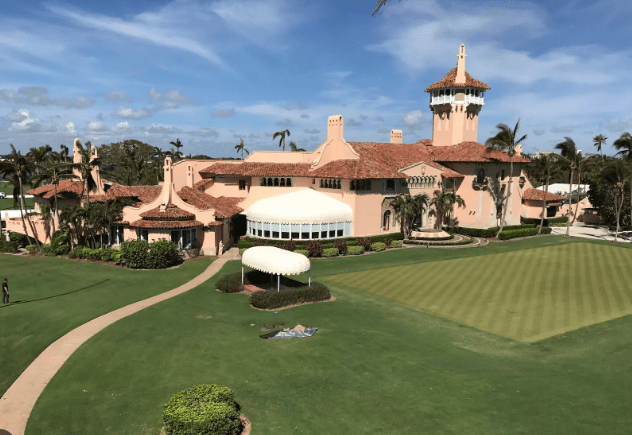
A crypto investor who paid just $500 got a seat at the table. That detail alone tells you something about the crowd gathering at Mar-a-Lago on Saturday.

A Token That Lost 93% Of Its Value

Morten Christensen, who attended a similar event in 2025 after a $1,200 bet on US President Donald Trump’s memecoin, scored his way back in for a fraction of that cost.

He’s candid about the mood shift. “Trump is much less liked right now than he was after inauguration,” Christensen told Bloomberg.

“With the whole year of tariffs, crypto is bleeding, his reputation within the crypto community is not as good.”

The TRUMP token, officially called Official Trump, has dropped more than 93% from its all-time high of roughly $45 to under $3.
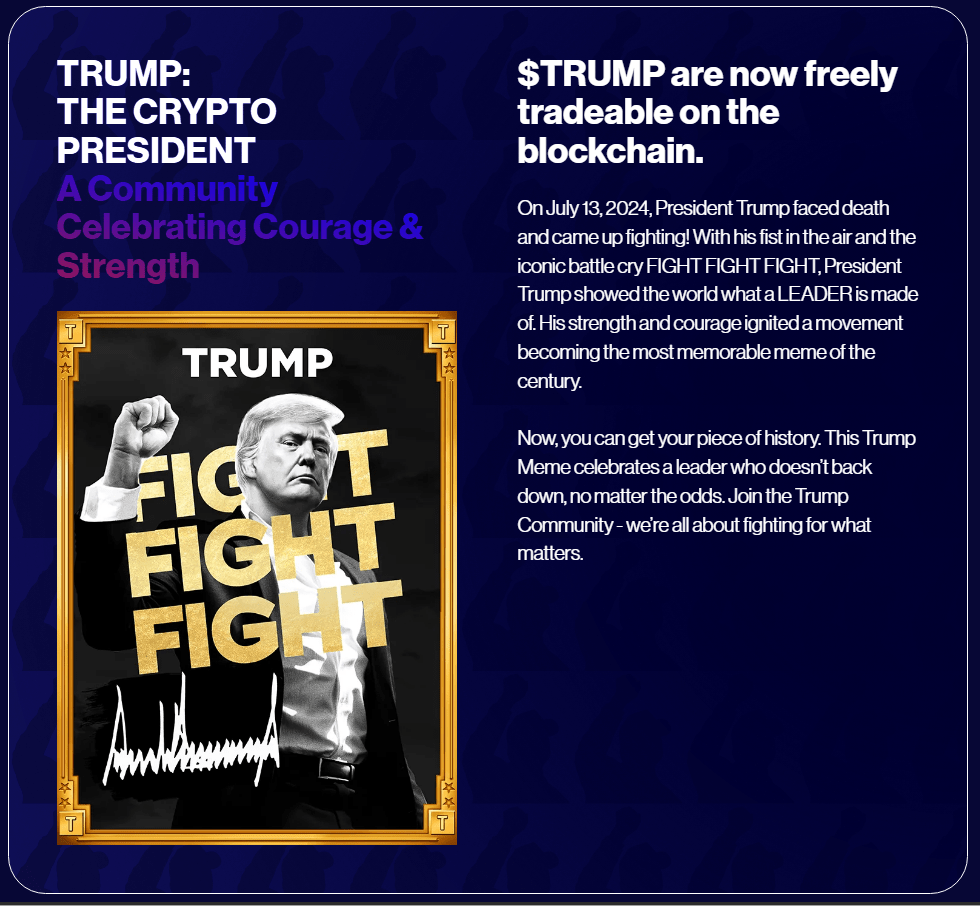
Source: gettrumpmemes.com

Despite that collapse, up to 297 top holders of the coin are expected to join Trump at his Florida estate for what organizers are calling the “Memecoin Millionaires Line Up for Trump’s Exclusive Luncheon” — a private gathering that critics say is really about buying face time with a sitting president.

The guest list reads like a who’s who of crypto finance: Tether CEO Paolo Ardoino, Upbit founder ChiHyung Song, Bitcoin advocate Anthony Pompliano, and Anchorage Digital CEO Nathan McCauley are all reported to be attending.

TRUMPUSDT currently trading at $2.56. Chart: TradingView

The Absent Name At The Top Of The Leaderboard

One name is conspicuously missing from the confirmed list. Tron founder Justin Sun sits atop the TRUMP memecoin leaderboard with 2.4 billion points — more than anyone else — yet no public confirmation of his attendance has been made.

That silence comes after Sun filed a lawsuit this week against World Liberty Financial, the crypto platform co-founded by Trump’s sons.
Sun alleges the platform froze his tokens and threatened to destroy them without valid reason. He described himself as an “ardent supporter” of Trump while blaming unnamed project team members for acting against the president’s values.

Ethics Watchdogs Raise Conflict Of Interest Concerns

Lawmakers and nonpartisan watchdog groups have criticized the Saturday gathering, arguing that Trump is using a financial product he personally profits from to offer access to the presidency.

The nonprofit Citizens for Responsibility and Ethics in Washington went further, pointing out in a Friday post that crypto wallets linked to the TRUMP token have moved money in ways that make it hard to trace how much the president is earning.

Featured image from Getty Images, chart from TradingView

Пов'язані питання

QWhat is the main reason critics are concerned about Trump's exclusive luncheon for memecoin holders?

ACritics argue that Trump is using a financial product he personally profits from to offer access to the presidency, raising conflict of interest concerns.

QHow much has the TRUMP memecoin dropped from its all-time high?

AThe TRUMP token has dropped more than 93% from its all-time high of roughly $45 to under $3.

QWhy is Justin Sun's absence from the event notable despite his large holdings?

AJustin Sun sits atop the TRUMP memecoin leaderboard with 2.4 billion points but hasn't confirmed attendance, following his lawsuit against World Liberty Financial, a crypto platform co-founded by Trump's sons.

QWhat does Morten Christensen say about Trump's current standing in the crypto community?

AChristensen states that Trump is much less liked now than after inauguration, citing tariffs, crypto market decline, and a damaged reputation within the crypto community.

QWhich prominent crypto figures are reported to be attending the luncheon?

AReported attendees include Tether CEO Paolo Ardoino, Upbit founder ChiHyung Song, Bitcoin advocate Anthony Pompliano, and Anchorage Digital CEO Nathan McCauley.

Пов'язані матеріали

Agents Take Over Traffic Distribution Power: What Are Tencent, ByteDance, and Alibaba Competing For?

In the race to dominate the AI era's entry point, China's tech giants—Tencent, ByteDance, and Alibaba—are aggressively deploying AI Agents to control the future of traffic distribution. Alibaba is pursuing a dual-track "closed loop + openness" strategy. Its Qianwen app is evolving into a super-Agent integrated across its ecosystem (Taobao, Alipay, etc.) to handle complex tasks like travel planning. Concurrently, it is opening its platform to external brands (Luckin Coffee, KFC) and has launched a B2B Agent platform, "Wukong," targeting enterprise automation. Its other flagship, Quark, aims to be an "AI super search box" for information and tasks. ByteDance is executing an omnipresent "sprawl strategy." Its Doubao app boasts over 300 million monthly active users and is evolving into a default AI entry point for daily life, with plans for paid versions and e-commerce integration. Its core weapon is the Kouzi platform, a visual "AI assembly factory" for developers to build custom Agents. ByteDance is also pushing hardware integration, collaborating on AI phones and developing smart glasses to embed Doubao everywhere. Tencent is playing its long-held "ultimate card" by quietly embedding an AI Agent directly into WeChat. This Agent, accessible via a swipe, can understand user commands and automatically execute tasks by calling upon WeChat's millions of mini-programs (e.g., finding and ordering coffee). This leverages WeChat's unparalleled 1.4-billion-user ecosystem to position the app as an AI-powered "service operating system," a move that could dramatically reshape the competitive landscape. The core battleground is shifting from competing for "user screen time" to competing to be the "default execution layer" for user intent. The business model is evolving from an "attention economy" to an "intent economy," where the Agent that can most efficiently fulfill a user's need gains control over service access and token flow. This represents a fundamental change in how users connect with digital services, making the fight for the Agent入口 (entry point) a pivotal moment for redefining industry leadership in the AI age.

marsbit44 хв тому

Agents Take Over Traffic Distribution Power: What Are Tencent, ByteDance, and Alibaba Competing For?

marsbit44 хв тому

From Banning Doubao to Embracing Honor: Why Did WeChat Suddenly 'Change Its Face'?

The article explores the sudden shift in WeChat's strategy towards AI assistants from mobile phone manufacturers, transitioning from strict opposition to active collaboration. For over a year, WeChat fiercely resisted attempts by phone AI assistants (like ByteDance's Doubao in late 2025) to control its features via GUI automation ("simulated clicking"), citing security and data control concerns. This stance created a significant barrier for system-level AI integration. Now, Tencent has initiated A2A (Agent-to-Agent) partnerships with major phone brands like Honor, Xiaomi, OPPO, and vivo. This model allows a phone's system AI (e.g., Honor's YOYO) to parse a user's voice command and send a structured request directly to WeChat's own internal AI agent via secure APIs. WeChat then executes the action (e.g., sending a message) and returns the result. The article attributes Tencent's "change of face" to strategic pressure. While leading in social app usage, Tencent trails rivals like ByteDance and Alibaba in standalone AI app popularity. WeChat, with its vast mini-program ecosystem, is Tencent's key asset for an AI comeback. The upcoming WeChat AI agent aims to handle tasks like booking and payments within the app. However, phone system assistants remain the primary AI entry point for most users. The A2A collaboration allows Tencent to extend WeChat's AI reach to this crucial system layer while maintaining control over its core functions and data. For phone manufacturers, embracing A2A is a pragmatic move. The GUI route proved unviable due to WeChat's blocks. A2A offers a compliant path to integrate a vital service, enhancing their AI assistants' usefulness. It allows them to focus on developing their own AI ecosystems for other services while cooperating on WeChat access. The collaboration is framed as a mutual, strategic necessity: Tencent gains a distribution channel, and manufacturers gain a key functionality. The partnership relies on a "dual authorization" mechanism for security, requiring both user and app consent for each action. While questions about long-term data privacy practices remain, experts note A2A is more secure and compliant than GUI automation. Ultimately, this cooperation is seen as a tentative, calculated truce. Tencent's long-term goal is to make WeChat an AI-powered "service OS." Phone manufacturers aim to make their system AI the central user interface. Their paths may converge or clash in the future, but for now, the A2A deal represents the opening chapter in the battle for the AI-era user入口, driven by necessity and strategic calculus on both sides.

marsbit2 год тому

From Banning Doubao to Embracing Honor: Why Did WeChat Suddenly 'Change Its Face'?

marsbit2 год тому

Торгівля

Спот
Ф'ючерси
活动图片