Original | Odaily Planet Daily (@OdailyChina)
Author | jk
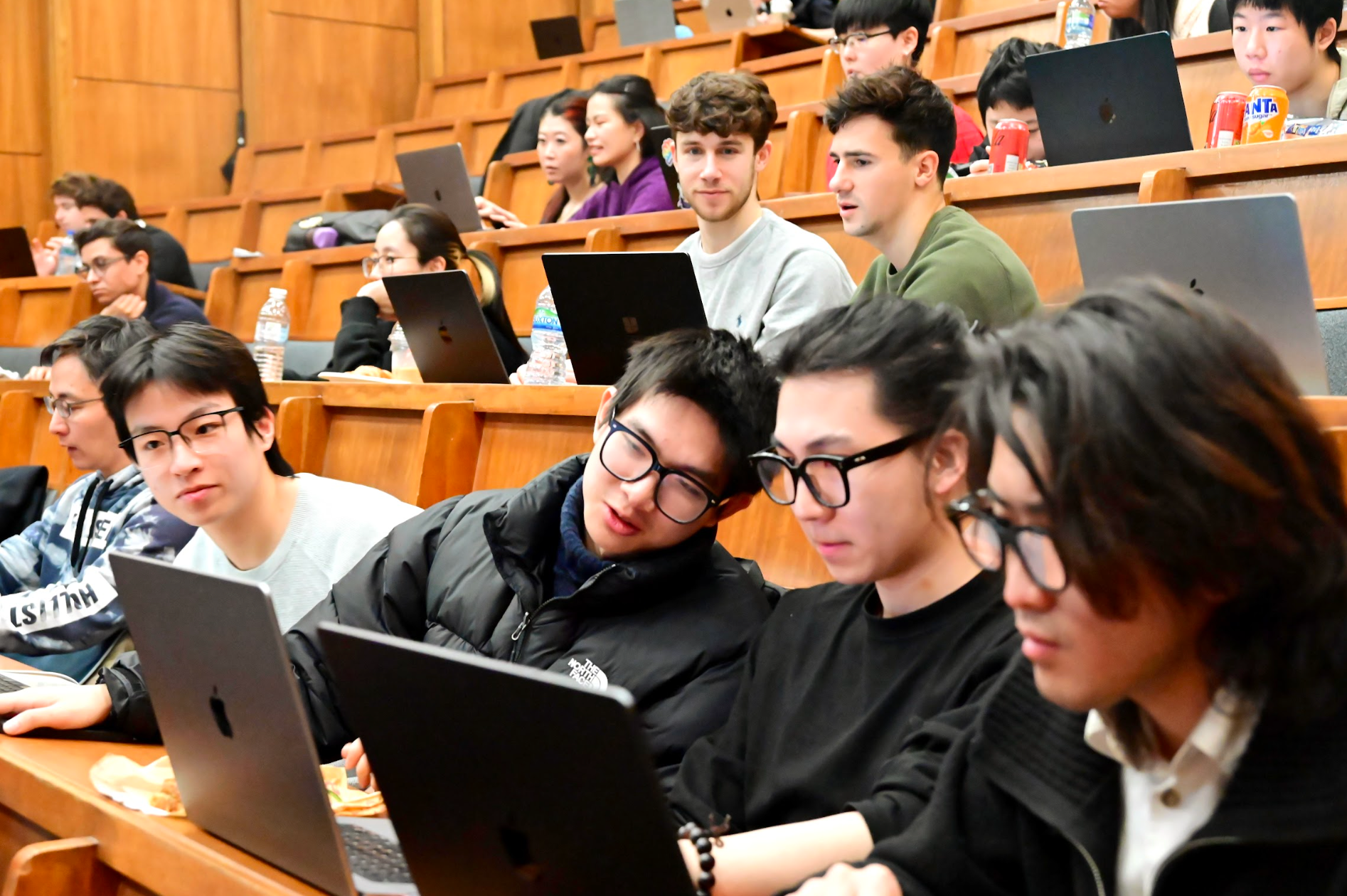
In March 2026, the UK AI Agent Hackathon 2026, initiated by the Imperial College London Blockchain Association, was held in London. This hackathon, centered on the OpenClaw technical framework, attracted over 1,200 registered participants. On Demo Day, it set a record with 5,000 real-time online viewers and once topped the global trending list on platform X.
It was regarded by many participants as the "world's first University OpenClaw Hackathon". OpenClaw's father, Peter Steinberger, personally flew to London for this hackathon.
Which Projects Were the Most Interesting?
On March 7th, participating teams from multiple universities showcased the prototype products they built within a week, covering a vast landscape from agriculture to biosecurity, and from urban governance to DeFi protection. Here are 6 projects worth focusing on:
AgroMind: Satellite Data + AI Agent, Making Agricultural Risk Hedging a Reality
AgroMind integrates satellite crop monitoring, meteorological data, and market signals to build a prediction and automatic hedging system for agricultural supply chain risks, with its core scenario being an automatic hedging workflow.
The information gap in the agricultural supply chain has always been about money. The sharp fluctuations in commodity prices often stem from climate hazards buried in a certain production area months ago, and the market only reacts when the news breaks. AgroMind aims to fill this gap. It combines satellite crop monitoring, meteorological data, and market signals. When satellite images show early signs of drought stress in a soybean production area in Brazil, before any official report, the system is already running. It checks the user's inventory and current market volatility, drafts a hedging plan, and, if conditions are suitable, directly places orders on the commodity exchange. This is less of an AI tool and more of an analyst watching the satellite images for you, except it doesn't sleep.
ClawBio: The Hugging Face of Bioinformatics
Bioinformatics has a long-standing problem: top-tier analysis tools and knowledge are largely locked within a few universities and a handful of pharmaceutical companies, inaccessible to ordinary researchers. What ClawBio wants to do is, by analogy, quite understandable—replicate what Hugging Face did for AI models in the field of bioinformatics. It is an open repository of biological skills, storing verified, reproducible analysis skills that any Agent can directly call upon, including toxin screening and hazardous biological function identification. One interesting scenario: a user takes a photo of a drug package, the Agent calls ClawBio's skills to query the local genomic archive, and returns a personalized medication dosage card within seconds. Data is processed entirely locally, not uploaded to any server. This "Local-First" approach is particularly sensitive in healthcare scenarios and is necessary for privacy.
BioSentinel: End-to-End Automation from Pathogen Identification to Drug Candidates
BioSentinel's ambition is even greater. Its starting point is global public health data. The system continuously scrapes information from sources like WHO, CDC, and CIDRAP. Once an emerging threat is identified, it automatically locates the pathogen's target protein, then calls upon computational biology tools like RFdiffusion and ProteinMPNN to design potentially effective therapeutic binding molecule candidates. Each candidate molecule is screened against toxin databases before proceeding to the next step, ensuring nothing dangerous is inadvertently created. The entire process can be driven by a chat interface. Researchers don't need to run commands one by one; they just state the requirement clearly, and the Agent schedules the tools itself. This significantly lowers the barrier in computational biology.
"London Neural System": From Smart City to "Thinking City"
The starting point of this project is simple: London generates a massive amount of sensor data daily—traffic, air quality, infrastructure status—but this data is largely siloed. No one truly knows the real-time state of the city at any given moment.
The project team used OpenClaw to simultaneously接入 (access) real-time traffic flow, air quality sensors, and financial market data monitoring. If air quality suddenly drops in a certain district, the system doesn't just log it in the background; it proactively pushes low-pollution route suggestions to nearby schools and commuters. If a streetlight or sensor fails somewhere, the system's response time is much faster than waiting for manual reporting. The team's long-term goal is to open this framework to local governments, integrating it with existing city systems rather than starting from scratch.
Highstreet AI: Creating "Digital Employees" for London's Street Shops
The vast majority of AI products are designed with tech companies in mind, not the small seafood restaurant on Kingston Street. Highstreet AI aims to address this very gap.
It targets small and medium-sized enterprises that receive orders via email, WhatsApp messages, and phone calls simultaneously every day but have no IT system. Highstreet's solution is to deploy a set of collaborative Agents: one负责 (responsible for) understanding the incoming demand, one checking real-time inventory, one drafting invoices and payment links, and finally giving the owner an "approve" button on the dashboard.
The human only needs to do that final confirmation step. Highstreet claims that this system can save a shop owner over 10 hours per week without requiring any technical knowledge.
AlphaMind AI: Bringing Institutional-Grade Investment Logic to Retail Investors
There is a deep moat between retail investors and institutional investors, not entirely due to the difference in capital, but more due to analytical capability and response speed.
AlphaMind is a product designed to bridge this gap. Users can compare their investment portfolio with public holdings like Warren Buffett's, but the system doesn't just show a comparison chart. It uses OpenClaw's Agent to analyze your asset concentration risk across multiple brokers and exchanges, then automatically executes rebalancing operations. Its positioning is: past tools tell you what happened, AlphaMind tells you why, and then handles it for you.
"Lobster Godfather" Peter Steinberger Attends in Person
In November, Austrian developer Peter Steinberger released a project called "Clawdbot." You could send it messages via Telegram or WhatsApp, and it would help you manage your calendar, handle emails, run scripts, and even browse the web. No one anticipated that this project would sweep the global AI community within just two months. OpenClaw went viral at the end of January 2026. On February 14th, Steinberger announced he was joining OpenAI to promote the development of next-generation personal AI Agents, while the OpenClaw project was transferred to an independent open-source foundation for continued operation. It was this developer, who had just become a central figure in the AI world, who came to London for this hackathon.
This trip to London almost didn't happen. The organizers revealed that Peter encountered visa issues just before departure. "The whole team basically panicked," and it was only resolved perilously two days before the event started. After the visa was secured, he specifically changed his flight to ensure he could attend all agendas as planned. When he first walked into the Imperial College classroom, he just kept his head down, staring at his phone, diligently taking notes and preparing his speech, without any air of an "AI internet celebrity."
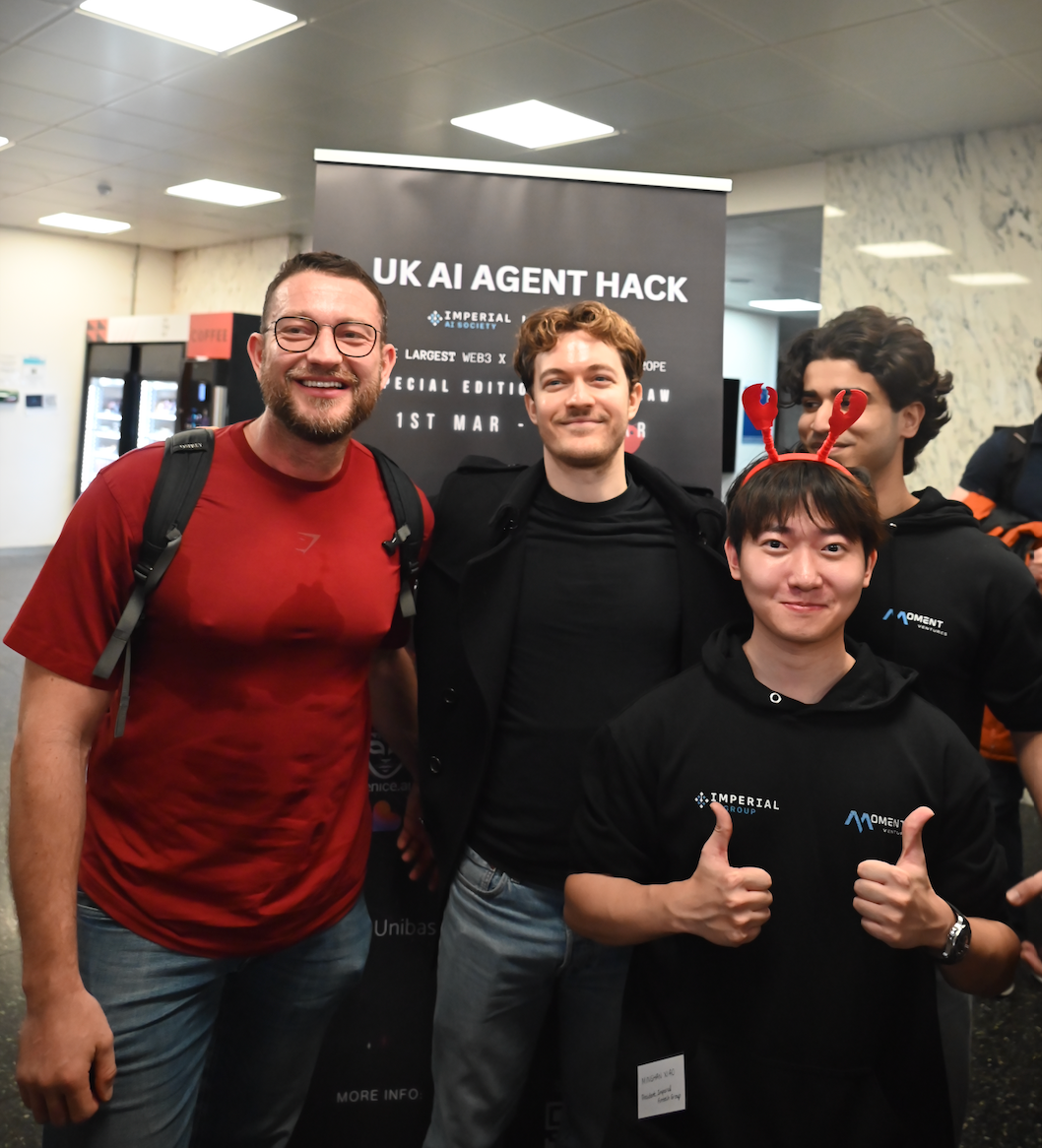
Peter at this hackathon
At the subsequent Sequoia venture capital party, a developer who couldn't get a ticket stood outside the venue in the London rain. Peter noticed, didn't hesitate, and went straight over to talk to him. When asked grand questions like "How will the explosion of Agents change the future of foundational large models?", his answer was blunt and honest: "I don't know. I'm better at using the tools at hand to build interesting things." The speech was originally scheduled for 30 minutes, but the atmosphere was so good, and the audience's questions kept coming, Peter stayed for over two hours. The organizers said afterwards, "This meant a lot to us. To be fair, we owe him an apology."
When Peter left London, he left behind a sentence: "You don't go looking for meaning, you create it." Perhaps this is the sentence everyone who wants to make a difference in the AI era needs to hear the most.
OpenClaw × Web3: Huge Potential, but Security is the Biggest Constraint
Steinberger himself has little fondness for the crypto circle, but the submission list for this hackathon formed a clear contrast with his personal stance. On the DoraHacks project page, several directions where Web3 could be concretely implemented appeared.
- Agent Identity and Sovereignty was the most frequent proposition. clawOS is built on the Nostr protocol, with each Agent holding an independent identity and wallet, not relying on any platform; Cortex.OS attempts to solve the black box problem of AI in Web3, making every step of the Agent's decision traceable on-chain.
- Directly Managing Money is another direction. Trading Narwhal and Vibe4Trading are both betting on Agents升级 (upgrading) from assisting with watching the market to directly executing trades, although the OpenClaw architecture itself is not friendly to private keys.
- Governance and Public Oversight also spawned several interesting projects: WatchDog uses 6 autonomous Agents to continuously scan UK government contracts for anomalies; CivicLift allows citizens to interact with local governments through Agents; GreenClaw is building a multi-Agent collaborative urban security operations center.
But from beginning to end, security remains the hardest hurdle for OpenClaw to enter Web3. Agents can access your files, APIs, and system, but nothing is monitoring what they are actually doing. In scenarios involving real assets, everyone needs to be very cautious when using OpenClaw.






