Market Cautious Ahead of Nonfarm Payrolls and U.S.-Iran Deal, Memory Chip Stocks Lead U.S. Market Decline, Western Digital Drops 13%, Crude Oil Strengthens

marsbitОпубліковано о 2026-08-07Востаннє оновлено о 2026-08-07

Анотація

U.S. markets closed lower amid pre-nonfarm payrolls caution and heightened geopolitical tensions. Renewed Middle East risks, specifically a reported stringent draft agreement for the Strait of Hormuz and Iranian military action nearby, drove crude oil prices sharply higher. Brent crude surged over 5% to near $83.50/barrel, reigniting inflation concerns and boosting expectations for Federal Reserve rate hikes. Treasury yields rose, with the 10-year up 5 basis points to 4.66%, further pressured by a large $25 billion corporate bond issuance from Google. The S&P 500, Dow Jones, and Nasdaq Composite all declined, with the Dow falling over 0.8%. Storage chip stocks led losses after disappointing earnings forecasts, with Western Digital plunging more than 13%. Other notable decliners included AppLovin and Datadog following weak results or guidance. The "Magnificent Seven" tech stocks showed mixed performance, slightly masking broader market weakness. Trading activity was subdued ahead of Friday's key nonfarm payrolls report. The dollar strengthened alongside yields, while gold was flat after an intraday spike. European equities, however, edged higher, with the STOXX 600 hitting a new record close.

Authors:Bao Yilong, Zhang Yaqi, Li Jia

Geopolitical risks reignited, a surge in oil prices reignited inflation pressure, and U.S. stocks closed lower under pressure, with market focus shifting to Friday's Nonfarm Payrolls report.
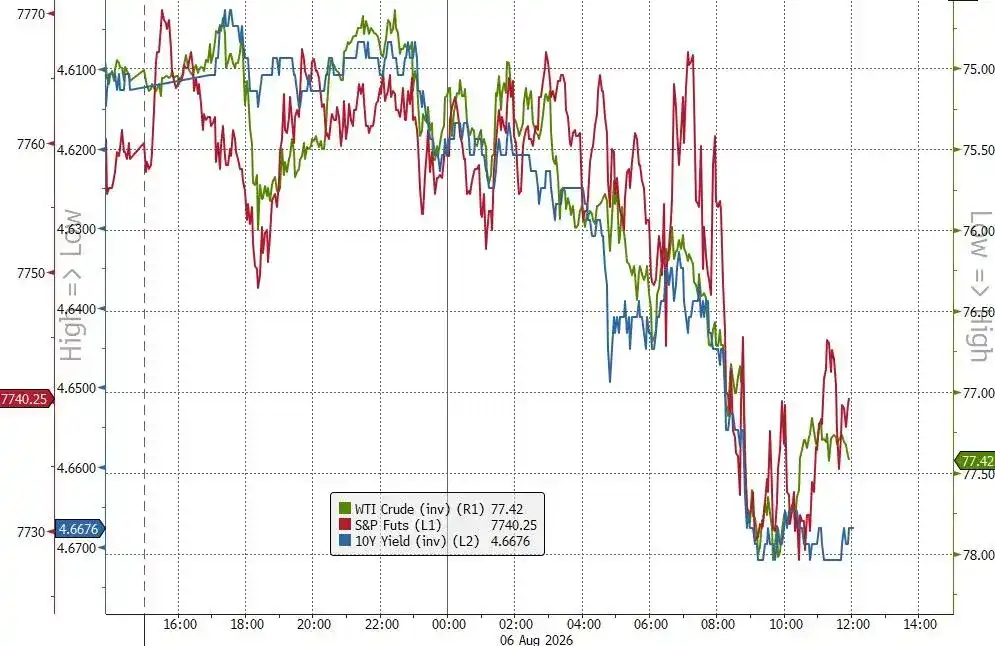
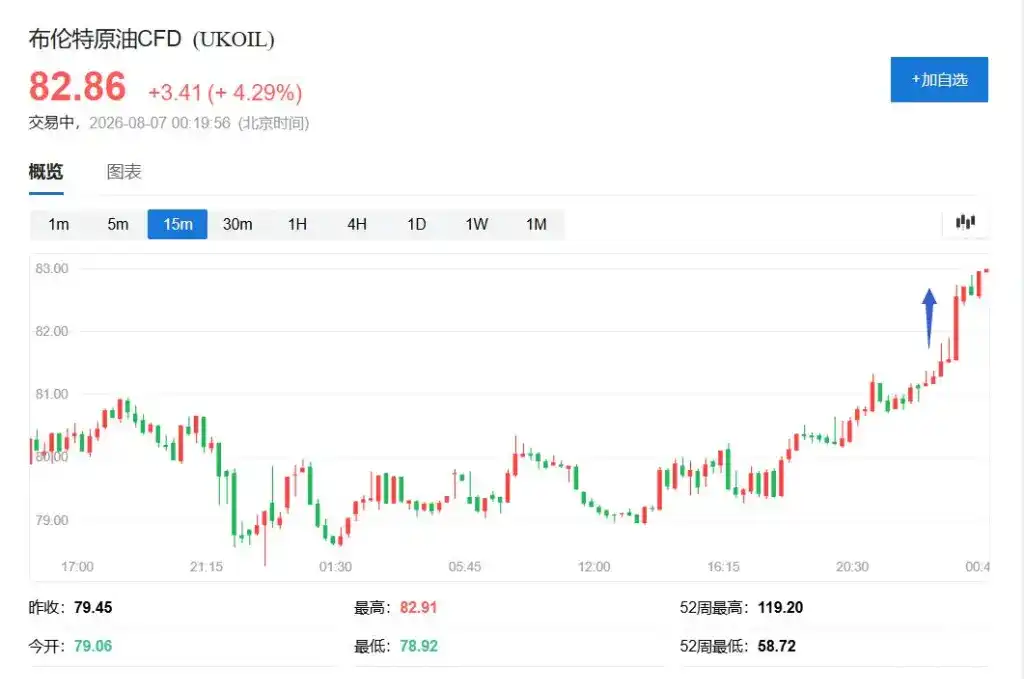
Iranian state media disclosed a draft management plan for the Strait of Hormuz, the content of which was more stringent than market expectations. Brent crude rose to $83 per barrel during the session, breaking the previous downtrend formed by optimistic expectations for U.S.-Iran negotiations.

Rising oil prices rekindled inflation concerns, and market expectations for a Fed rate hike within the year subsequently heated up. U.S. Treasury yields rose across the board, the dollar strengthened, and the three major U.S. stock indices all closed lower.

The S&P 500 index fell for a second consecutive session, with the Dow leading the declines, dropping more than 0.8%. Memory chip stocks SanDisk and Western Digital plunged due to disappointing earnings outlooks, becoming one of the biggest drags on the index.

Meanwhile, Google's issuance of $25 billion in corporate bonds created additional pressure on the U.S. Treasury market with its massive new supply, pushing the yield on the 10-year U.S. Treasury note up 5 basis points to 4.66%.

Wall Street News previously mentioned that significant new details emerged about the new navigation agreement for the Strait of Hormuz, which Iran and Oman plan to sign, indicating Iran seeks to control the strait. Moreover, Iran has already taken action to strike "enemy targets" near the strait.

Iran's FARS News Agency reported on Thursday, local time, that Iran's parliament is reviewing the agreement. According to the agreement, U.S. and Israeli vessels would be banned from passing through the Strait of Hormuz, and countries that have "caused damage to Iran" would also be unable to obtain passage permits for the strait.

After the above news emerged, market concerns about global energy transportation risks rapidly escalated. Towards the end of early U.S. trading on Thursday, international crude oil futures expanded their gains significantly. U.S. WTI crude once rose above $78 per barrel, up nearly 4% on the day; Brent crude approached $83 per barrel, up over 4% intraday.
Meanwhile, another FARS report stated that the Iranian navy had struck "hostile targets" at the entrance to the strait. According to CCTV News, around 21:40 local time on the 6th, two explosions were heard on Iran's Qeshm Island.

Iran said the explosions resulted from strikes on enemy targets near the entrance to the Strait of Hormuz, and the results of this operation would be announced to the public within the next few hours. The combination of the above messages caused the market's assessment of strait transit risks to switch rapidly from "a deal in sight" to "an unclear outlook."

After the news of Iran's strike on enemy targets emerged, international crude oil advanced further, hitting new intraday highs. Brent crude approached $83.50, up nearly 5.1% from Wednesday's close, reclaiming ground above its 50-day moving average. WTI crude rose above $78.30, up over 4.1% from Wednesday's close.
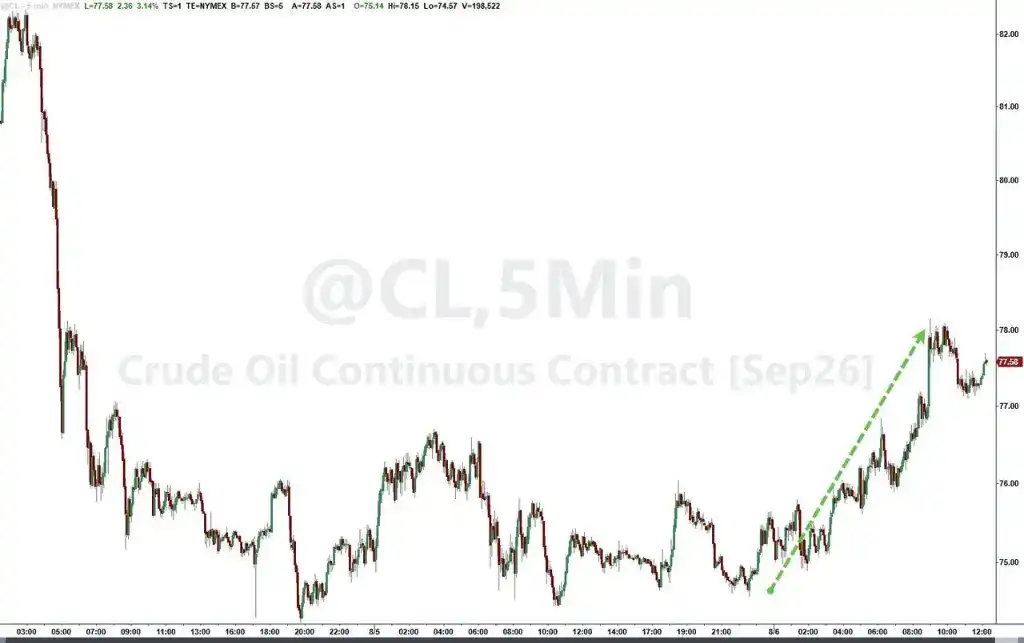
According to calculations by Goldman Sachs' energy research team, around $80 per barrel for Brent crude is within a reasonable fair value range, and it expects oil prices to remain between $80 and $90 per barrel until the new U.S.-Iran agreement is confirmed or the situation escalates significantly.

U.S. Stocks Fell for a Second Consecutive Day

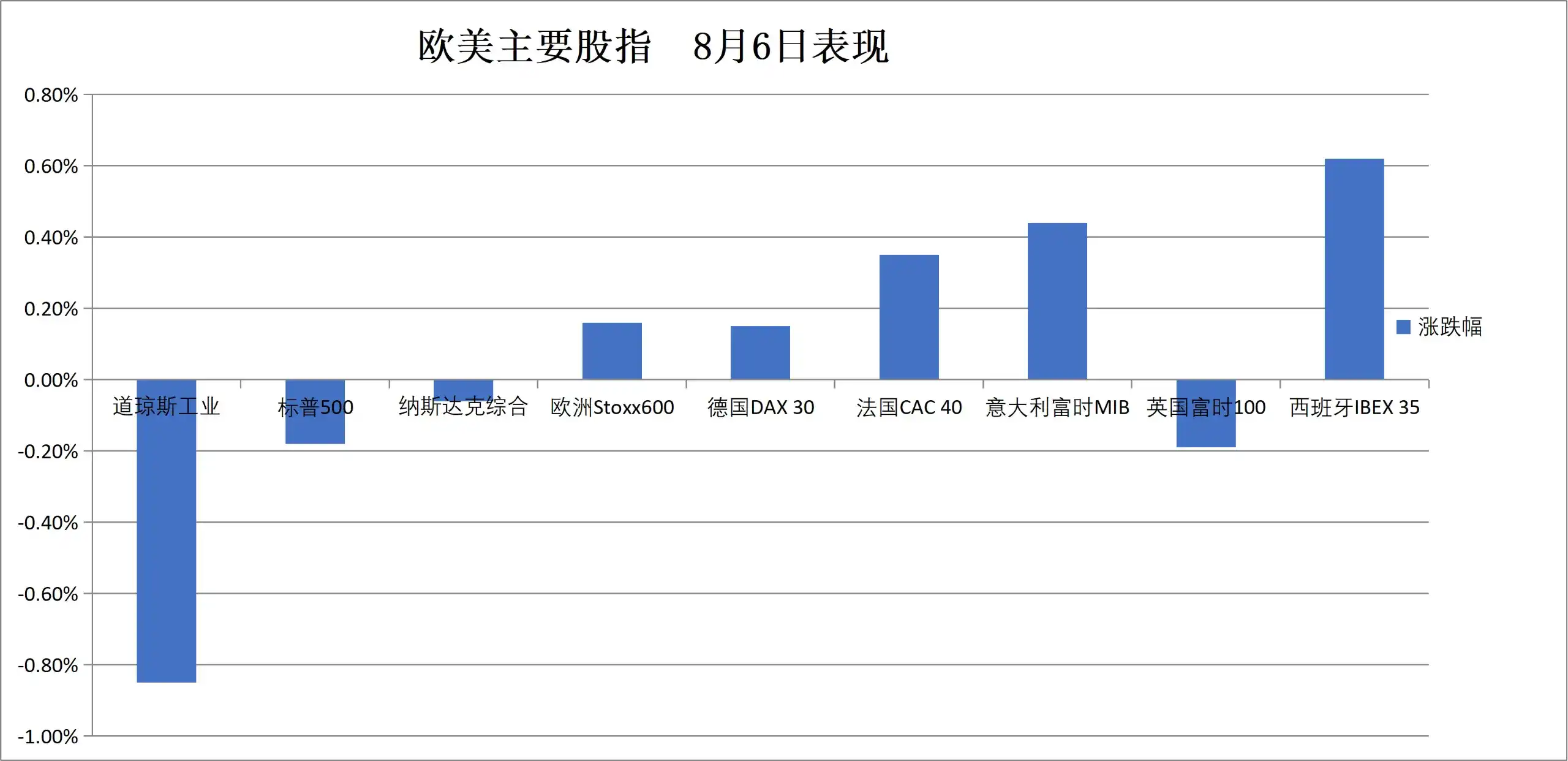
All three major U.S. stock indices closed slightly lower, with the S&P 500 down 0.18%, the Nasdaq down 0.06%, and the Dow down 0.83%.
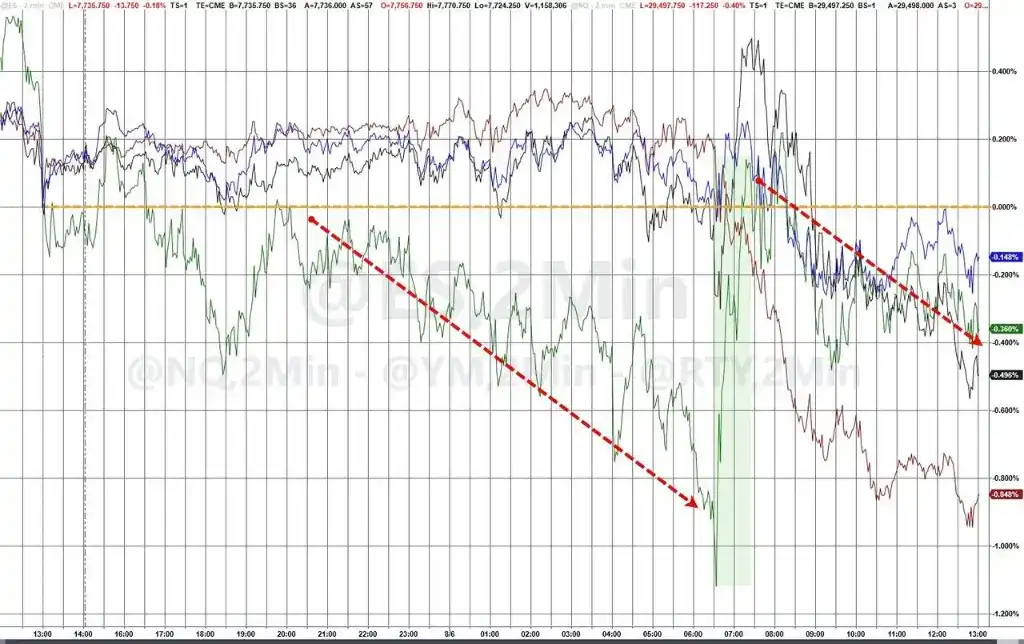
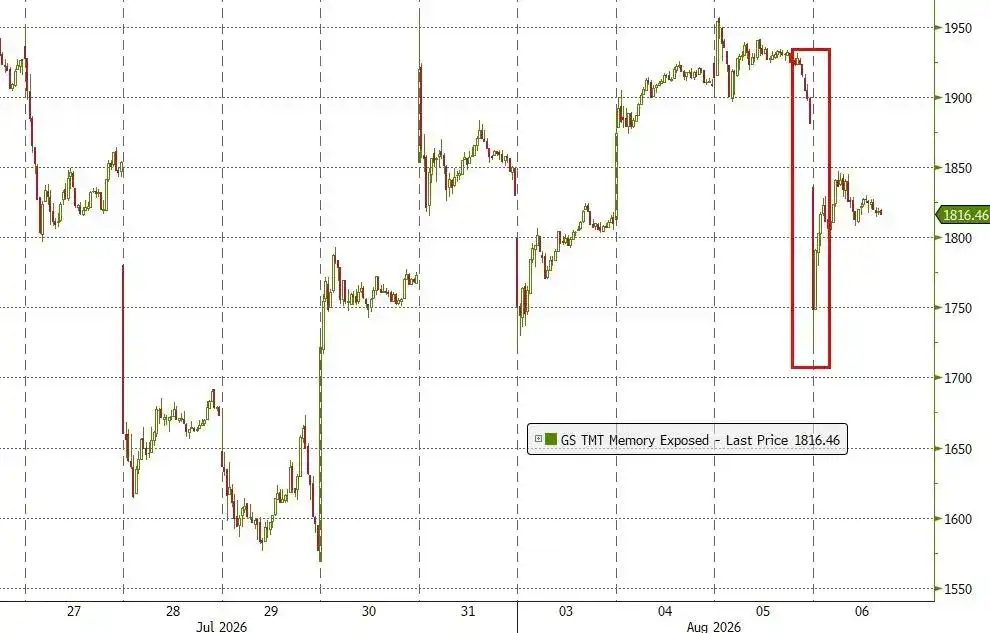
Beyond macro pressures, downward earnings expectations at the micro level further weighed on sentiment. SanDisk and Western Data both plunged due to disappointing earnings guidance, dragging down memory chip stocks. Western Digital fell over 13%, SanDisk dropped 6.8%, and SK Hynix declined about 5%.
The marketing platform AppLovin fell sharply after its quarterly revenue missed Wall Street expectations, while cloud security company Datadog also plunged 19% after its Q3 revenue growth expectations slowed.

However, looking at the overall earnings season, among the 382 S&P 500 companies that have reported, 84.8% exceeded analyst expectations, well above the historical average of 68% since 1994.

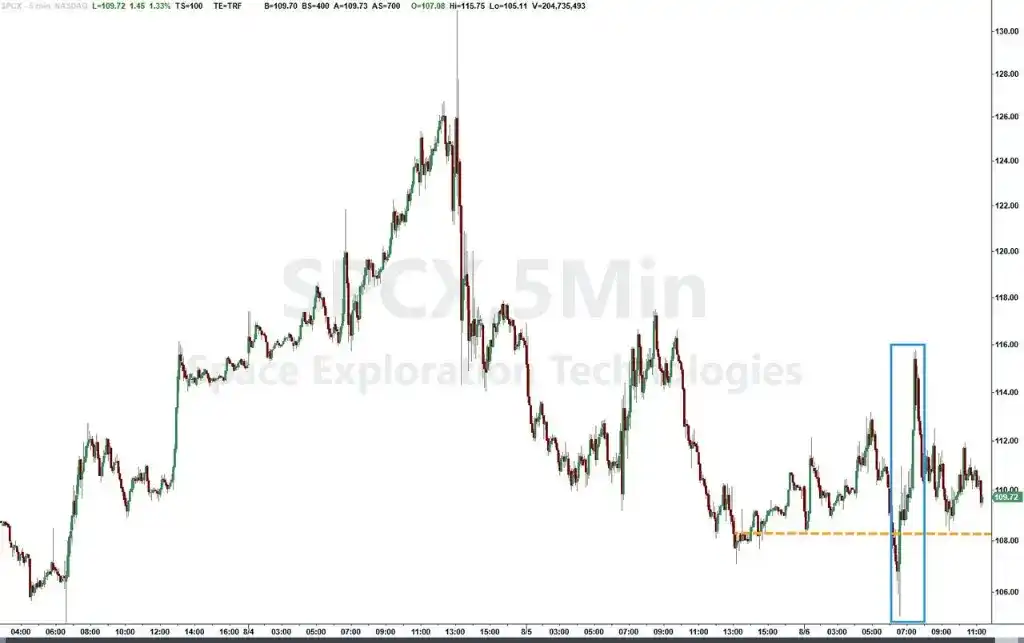
In the closely watched SpaceX, its stock erased early session losses and ended higher after its lock-up period expired. Wall Street News previously mentioned, the first batch of 911.5 million restricted shares of SpaceX became unlocked, but the stock price rose 6.14% instead of falling, with trading volume hitting 250 million shares, a one-and-a-half-month high.
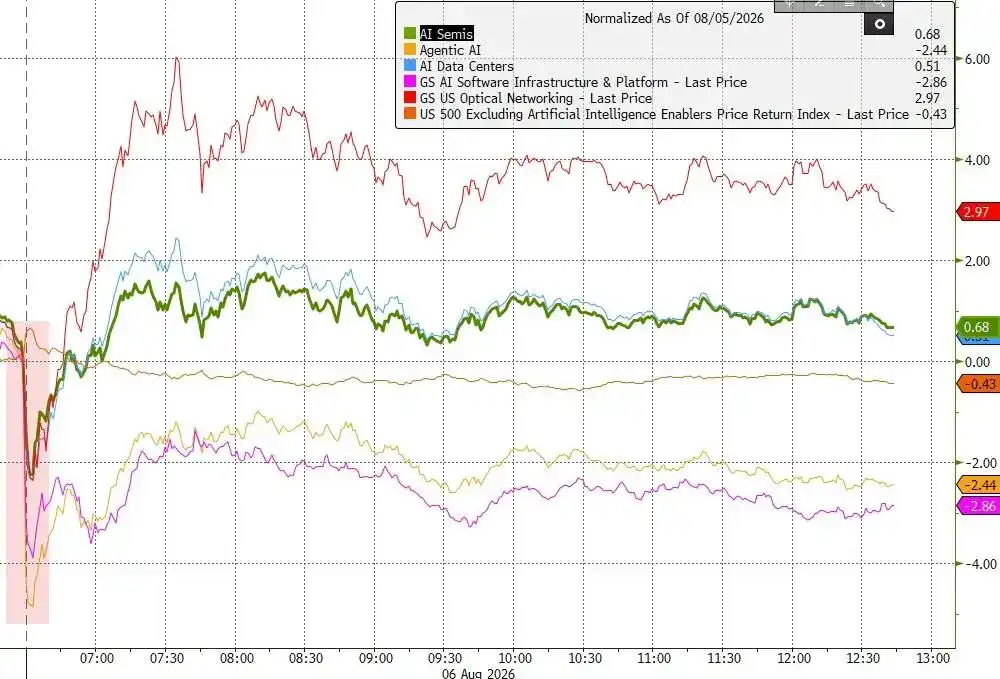
Stock prices of leading artificial intelligence companies were mixed, with the S&P Except AI Index falling on the day.
Narrow gains from the "Magnificent Seven" tech giants masked broader weakness today.
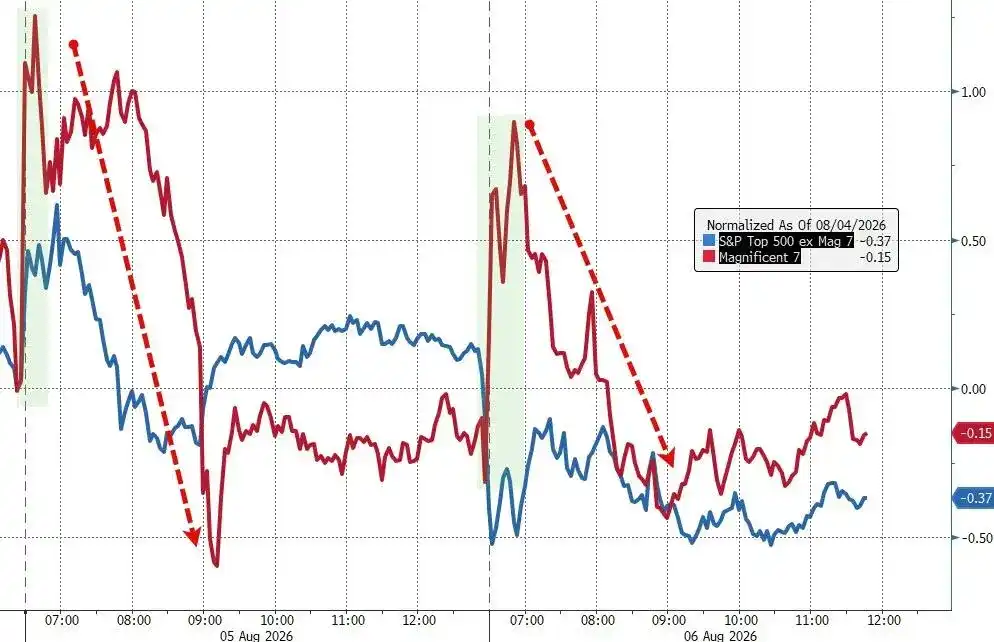
Notably, significant divergence emerged in intraday trading behavior: hedge funds turned buyers of tech stocks, while long-term funds sold off heavily in the information technology and healthcare sectors.

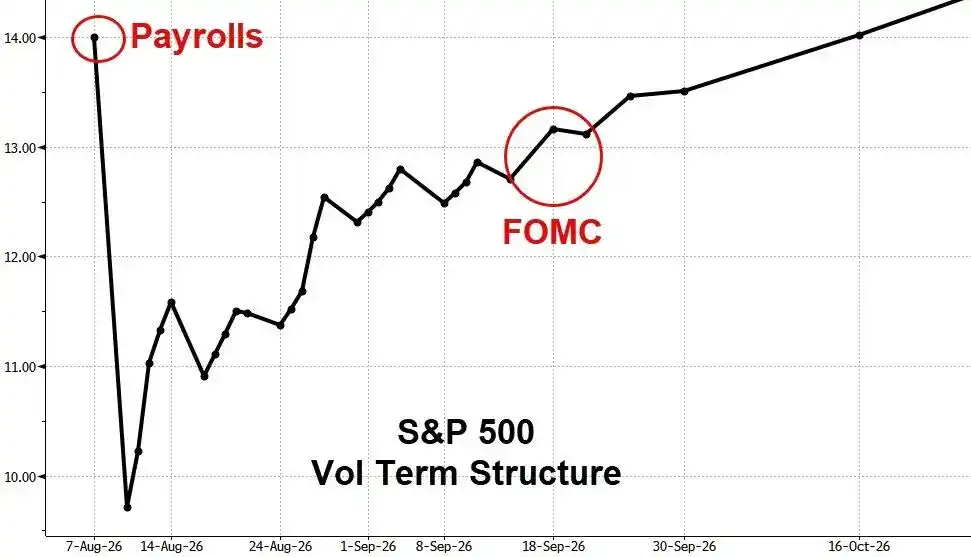
Data from Goldman Sachs' trading desk showed overall activity at just 4 out of 10 points, with total volume 12% below the 5-day moving average, indicating the market chose to wait-and-see ahead of tomorrow's Nonfarm Payrolls. Volatility similarly hinted the market was bracing for tomorrow's potential chaos.
Apart from rising oil prices, Google's announcement of a $25 billion bond issuance, with its high-yield subsidy attracting one of the largest subscription orders for AI-related bonds this year, further increased supply pressure on the U.S. Treasury market, pushing yields up 5 to 7 basis points on the day.
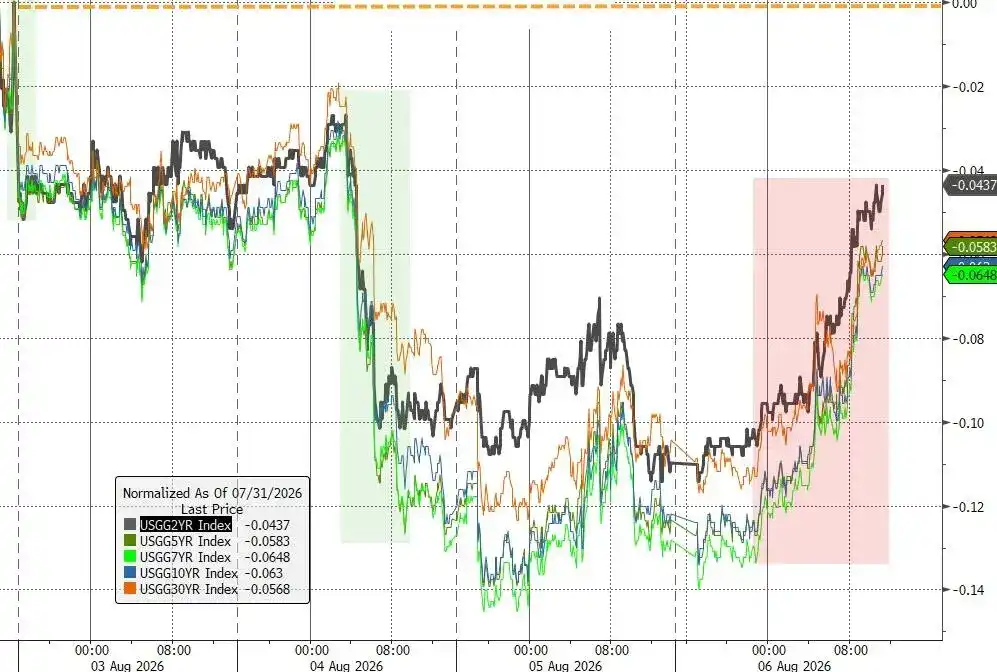
Nevertheless, the 10-year yield remained at relatively low levels for the week. The interest rate futures market's pricing for a Fed rate hike subsequently heated up, with the probability of a hike this year rising significantly.
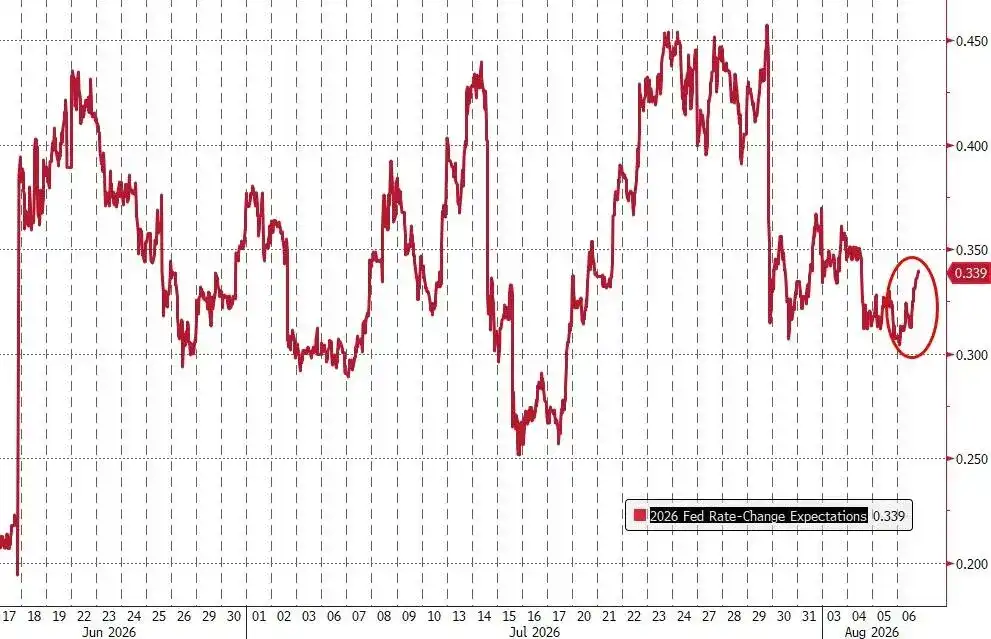
Vail Hartman of BMO Capital Markets said the latest data continues to reflect resilience in the labor market, further reinforcing the market's expectation that inflation will dominate the Fed's September decision.

Uncertainty surrounding the Fed's policy framework also weighed on market sentiment. According to the *Financial Times*, Fed Chair Warsh is expected to clarify the policy thinking behind his shift away from forward guidance at the Jackson Hole conference later this month.

Molly Brooks, U.S. rates strategist at TD Securities, said:

The Fed may indeed need to prove the credibility of its inflation-fighting stance through an actual rate hike.

Bloomberg macro strategist Michael Ball noted that recent policy signals are relatively clear: interest rates remain the primary tool, and the September meeting remains a "live meeting"; balance sheet adjustments are a longer-term issue.

U.S. weekly initial jobless claims released Thursday rose slightly but remained below 200,000 for a third consecutive week. Another report showed second-quarter productivity growth was faster than expected, reflecting businesses' active efforts to hedge against rising costs.

Friday will bring the July Nonfarm Payrolls report. The market expects 80,000 new jobs added for the month, higher than June's below-expectation 57,000. This data will directly influence Fed path pricing.

Clark Bellin of Bellwether Wealth said:

Given the market's considerable gains since last week, Friday's employment report is even more important for the market. For the market to continue moving higher, it needs a report that is neither too hot nor too cold.

Bellin also noted that the labor market remains resilient under the dual pressures of high interest rates and AI-driven productivity gains, with many businesses choosing to retain their existing workforce even as AI investments are gradually implemented.

Ulrike Hoffmann-Burchardi of the UBS Chief Investment Office warned:

Near-term risks persist, particularly if U.S. data remains strong, oil prices continue to fuel inflation concerns, or the market continues to price in a more hawkish Fed rate hike path.

Movements in Other Major Asset Classes

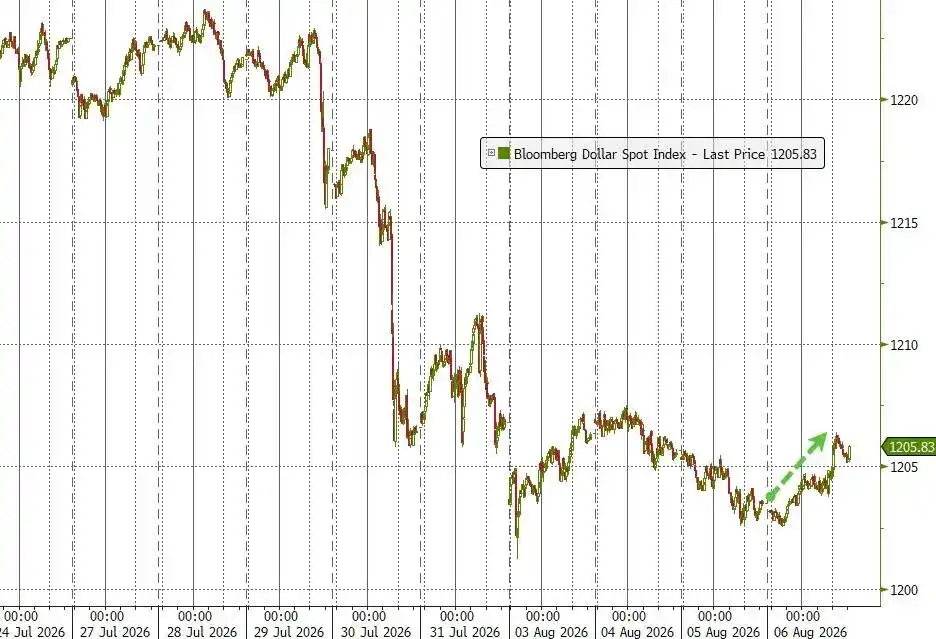
The dollar rebounded, supported by rising yields.
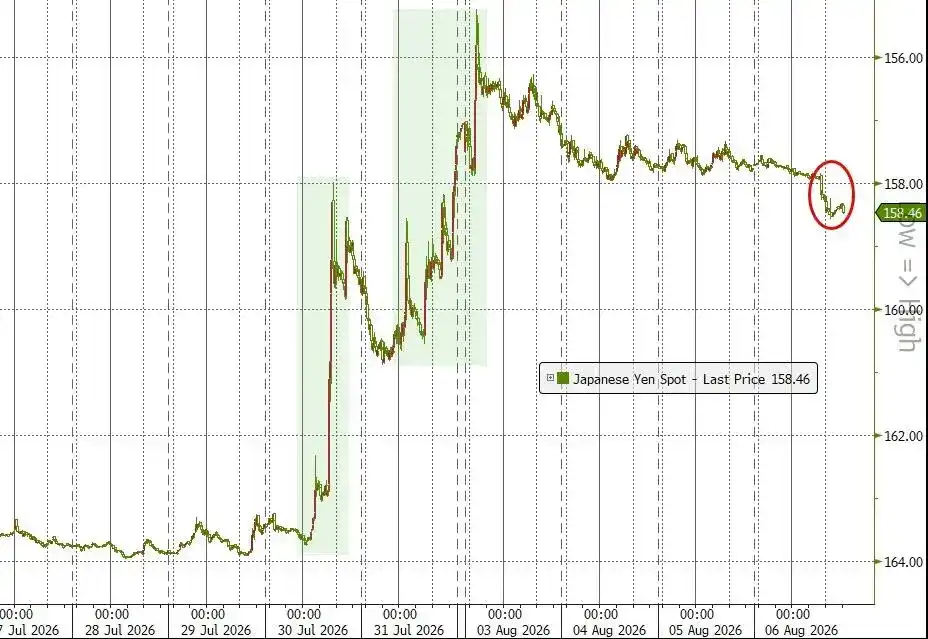
The yen continued to weaken, returning above 158 per dollar, gradually fading the impact of intervention.
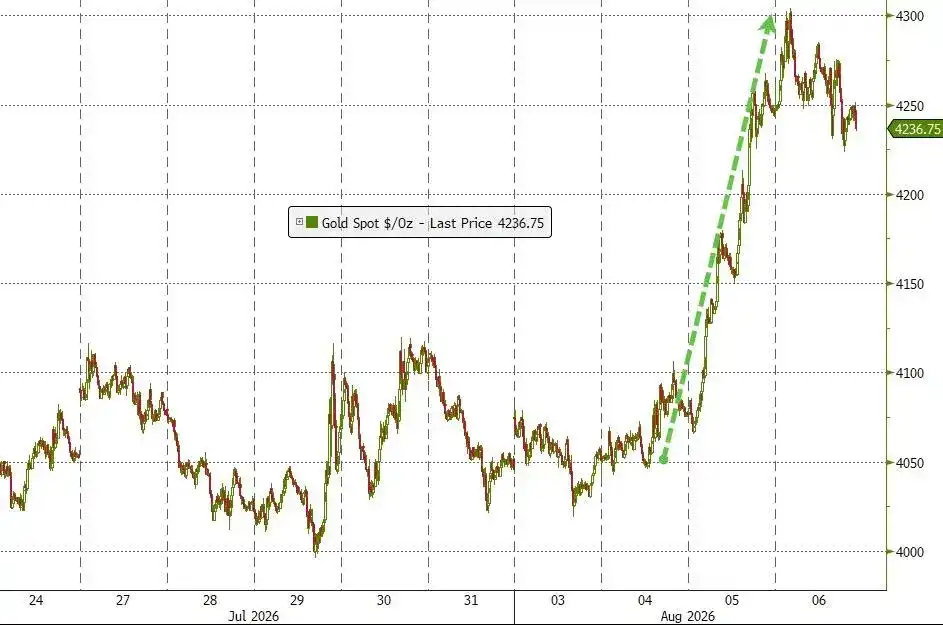
Gold briefly broke above $4,300 during the session but subsequently retreated, ultimately closing flat compared to the previous day.
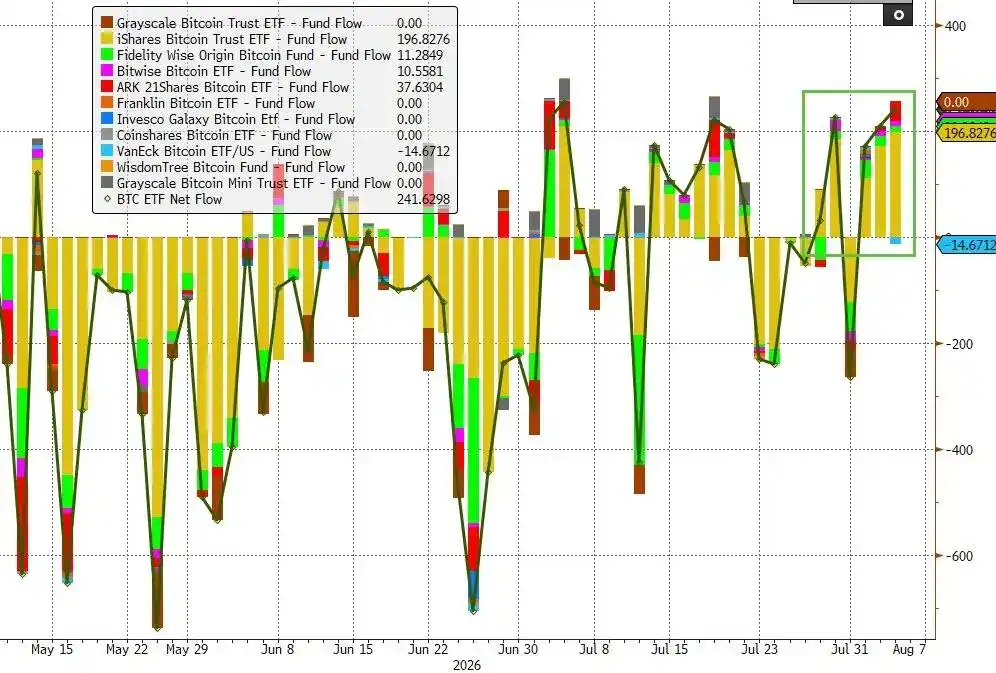
Driven by a week of continuous inflows into U.S. spot Bitcoin ETFs, Bitcoin repeatedly tested near the $65,000 level but failed to break above it today.
On Thursday, the three major U.S. stock indices closed collectively lower, with the Dow down 0.85%, the S&P 500 down 0.18%, and the Nasdaq down 0.06%. Memory chip stocks fell sharply, with Western Digital down over 13%. The Wind U.S. Tech 7 Giants Index rose 0.23%, with Microsoft up over 2%.

Major U.S. Stock Indices:

  • The S&P 500 closed down 13.59 points, or 0.18%, at 7709.96 points.

  • The Dow Jones Industrial Average closed down 464.02 points, or 0.85%, at 53885.10 points.

  • The Nasdaq closed down 15.087 points, or 0.06%, at 26348.352 points. The Nasdaq 100 closed down 114.457 points, or 0.39%, at 29373.334 points.

  • The Russell 2000 closed down 0.58%, at 3001.547 points.

  • The VIX volatility index closed down 4.24%, at 15.14. It rose slightly from European open to U.S. open, holding steady near the 16 level, then continued to decline.

U.S. Stock Sector ETFs:

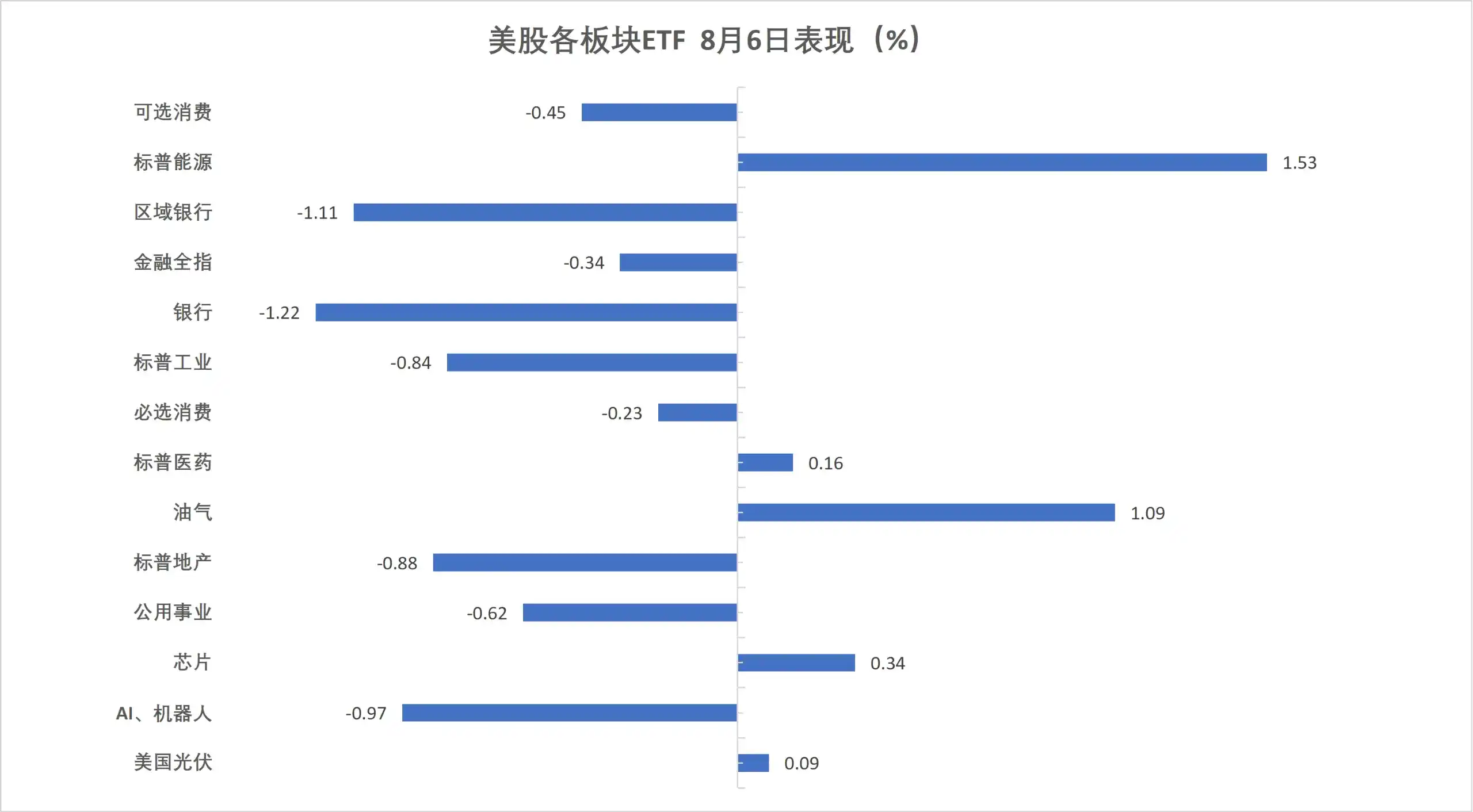
  • U.S. stock sector ETFs mostly closed lower. The Global Airlines ETF fell 2.65%, the Internet Index ETF, Banking ETF, and Regional Banking ETF fell up to 1.36%, the Global Tech Index ETF fell 0.41%, and the Technology Sector ETF fell 0.31%.

(August 6 - U.S. Stock Sector ETFs)

The Magnificent Seven:

  • The Wind U.S. Tech 7 Giants (Magnificent 7) Index rose 0.23%.

  • Microsoft up 2.54%, Apple up 0.45%, Meta up 0.19%, Nvidia down 0.10%, Amazon down 0.14%, Tesla down 0.63%, Alphabet (GOOGL) down 1.29%.

Chip Stocks:

  • The Philadelphia Semiconductor Index closed up 39.81 points, or 0.33%, at 12048.693 points.

  • TSMC ADR up 0.98%, AMD up 1.50%.

Chinese Concept Stocks:

  • The Nasdaq Golden Dragon China Index closed up 0.27%, at 6570.30 points, recovering overall after a lower opening.

  • Among popular Chinese stocks, Zai Lab closed up 13.7%, Jinko Solar up 2.8%, Daqo New Energy up 2.2%, NetEase up 1.7%, ASE Technology up 1.4%, Canadian Solar up 0.6%, Tencent down 1.3%, Alibaba down 1.4%.

Other Individual Stocks:

  • Circle slightly down 0.01%.

Europe's STOXX 600 index continued to set a new closing record high, showing an "n"-shaped intraday pattern. Italian stocks hit a new closing record high.

Pan-European Stocks:

  • Europe's STOXX 600 index closed up 0.16%, at 658.19 points.

  • The Eurozone STOXX 50 index closed up 0.39%, at 6502.56 points, setting a new closing record high after one session.

National Indices:

  • Germany's DAX 30 index closed up 0.05%, at 26140.13 points.

  • France's CAC 40 index closed up 0.35%, at 8699.71 points, setting a new closing record high for a third consecutive session.

  • The UK's FTSE 100 index closed down 0.19%, at 10867.89 points.

    (August 6 - Performance of Major European and U.S. Indices)

Sectors and Individual Stocks:

  • Among Eurozone blue chips, Deutsche Telekom closed up 6.31%, Hermès up 5.17%, ASML Holding up 1.92% (third-best performer), Airbus closed down 1.16% (fourth-worst performer), and Koninklijke Ahold Delhaize down 1.36%.

  • Among all components of the STOXX 600, WPP closed up 28.62%, SBM Offshore up 11.93%, Hikma Pharmaceuticals up 8.15% (third-best performer), with Deutsche Telekom the sixth-best performer.
Трендові криптовалюти

Пов'язані питання

QWhat were the main reasons for the decline in the U.S. stock market on the day reported in the article?

AThe main reasons were: 1) Geopolitical risk resurfacing as details of a stricter-than-expected draft Iran-Oman Strait of Hormuz management agreement emerged and reports of Iran striking targets near the strait, causing oil prices to surge and reigniting inflation fears. 2) This led to increased market expectations for Fed rate hikes, pushing Treasury yields higher and strengthening the dollar. 3) Weakness in specific sectors, particularly memory chip stocks like Western Digital (down over 13%) and SanDisk due to disappointing earnings outlooks. 4) Pressure on the bond market from a large $25 billion corporate bond issuance by Google.

QHow did the Iran-related news impact crude oil prices, and what was the market's reaction?

AThe Iran-related news caused crude oil prices to surge sharply. After reports of the strict draft agreement and Iran's military actions near the Strait of Hormuz, Brent crude rose to near $83.50 per barrel (up nearly 5.1% from the previous close), and WTI crude rose above $78.30 (up over 4.1%). The market's perception rapidly shifted from expecting a deal to 'uncertain prospects,' intensifying concerns about global energy transport risks and fueling inflation worries.

QWhich specific stocks or sectors led the losses in the U.S. market according to the article?

AMemory chip stocks led the losses. Western Digital fell over 13%, and SanDisk (referred to as '闪迪') fell 6.8%. Other significant losers included cloud security company Datadog, which fell 19% after its Q3 revenue growth forecast slowed, and marketing platform AppLovin, which fell due to missing quarterly revenue expectations. The broader storage chip sector, including SK Hynix (down about 5%), was a major drag on the indices.

QWhat key economic data was the market focused on for the next day (Friday), and why was it important?

AThe market was focused on the upcoming U.S. non-farm payrolls (NFP) report for July. Its importance stemmed from its potential to directly influence Federal Reserve policy path pricing. Analysts noted that after significant market gains, the report was crucial for continued upward momentum. The market needed a data point that was 'not too hot, not too cold'—strong enough to support the economy but not so strong as to force more aggressive Fed tightening, especially with renewed inflation concerns from rising oil prices.

QWhat was the overall market sentiment and trading activity like ahead of the major economic data release?

AMarket sentiment was cautious and trading activity was subdued ahead of the NFP report. According to Goldman Sachs trading desk data, overall market activity was rated only 4 out of 10, with total trading volume 12% below the 5-day average, indicating a 'wait-and-see' approach. Market volatility also suggested traders were preparing for potential volatility following the data release. Hedge funds were buying tech stocks while long-only funds were selling in sectors like IT and healthcare, showing divergent views.

Пов'язані матеріали

Launch Event Turned into a Make-up Ceremony? Why Hasn't Pools.trade Produced a High-Market-Cap Meme Coin Yet?

The article discusses the launch of Pools.trade, Uniswap's new token launch platform on Robinhood Chain, designed as a Meme coin launchpad. Despite generating high initial trading volumes (over $1.5 billion before the official frontend launch), the platform has yet to produce a high-market-cap Meme coin. The piece highlights two primary reasons for this. First, it outlines Pools.trade's features: it offers Instant and Crowd Launch modes, locks liquidity permanently in Uniswap v4 pools, and charges a low 0.25% transaction fee (compared to 1% on competitors like Pons and Flap), with most fees reinvested into liquidity. Second, it identifies a key problem: a lack of perceived fairness. The two most notable coins on the platform, FRONG (a "frog mascot" coin) and POOLS (a platform namesake), were both minted days before Uniswap's official countdown began. This "pre-minting" or "insider" controversy has dampened community FOMO (Fear Of Missing Out) and trust, causing their market caps to fall from peaks of $18 million and $4 million, respectively. The article argues that fairness is foundational for Meme coin success, and its absence has hindered viral growth. In conclusion, while Pools.trade benefits from Uniswap's existing user base and Robinhood Chain's popularity, its current lack of a fair-launch, high-engagement narrative has prevented a breakout hit. However, the author suggests that with its inherent traffic, such a success might not be far off.

Odaily星球日报6 хв тому

Launch Event Turned into a Make-up Ceremony? Why Hasn't Pools.trade Produced a High-Market-Cap Meme Coin Yet?

Odaily星球日报6 хв тому

Real Vision Founder: When Machines Take Over the Global Economy, Cryptocurrency Becomes Their Sole Payment Channel

In approximately two years, the vast majority of global economic activity will be conducted without direct human involvement, according to Raoul Pal, founder of Real Vision. This new economy will be driven by billions of autonomous AI agents executing trades, hedging, and clearing amongst themselves in milliseconds—far faster than human perception. This shift is driven by a fundamental crisis in the old economy: shrinking workforces and stagnant productivity in aging Western societies. Unable to generate organic growth, governments resort to debt and currency debasement. The proposed solution is a new, silicon-based labor force. However, this machine economy cannot function on human banking systems. Banks are ill-suited for machines, requiring human identity verification, struggling with sub-cent transactions, and operating too slowly with weekend closures. In contrast, blockchain technology offers instantaneous, borderless settlements 24/7, with programmable money and precision to 18 decimal places. It is the only viable payment rail for machines. The core of this transformation is tokenization—converting real-world assets and data into machine-readable, tradable packets. This goes far beyond tokenizing stocks or bonds; it encompasses data, identity, energy, storage, and compute, creating entirely new markets where machines buy and sell information. While some fear job losses, Pal argues the focus is misplaced. The real disruption is to the human wage system, which historically priced scarce human labor. When silicon labor becomes abundant and cheap, compensation mechanisms must change. Wealth will flow to the owners of the machines and the foundational infrastructure they run on—the blockchain networks. For the first time, this infrastructure is globally accessible. Pal's conclusion: individuals should seek to own a part of this foundational layer, as it will capture the value of the coming machine-driven economic singularity.

marsbit2 год тому

Real Vision Founder: When Machines Take Over the Global Economy, Cryptocurrency Becomes Their Sole Payment Channel

marsbit2 год тому

Company Managing $2.8 Billion in Bitcoin Makes Optimistic Statement About BTC!

Dylan LeClair, CFO of MetaPlanet, commented on the recent sharp sell-offs in crypto markets and growing criticism towards Bitcoin-holding companies. He compared the current pessimism to the 2022 crash, suggesting price corrections and liquidations have set the stage for Bitcoin's next growth phase. LeClair acknowledged that the recent BTC price drop created negative perceptions of corporate balance sheet holdings but called this a cyclical phenomenon. He referenced similar criticism faced by MicroStrategy in 2021/22, noting that while such companies can underperform BTC during downturns due to leveraged structures, the long-term trend reverses. He argued that for Bitcoin to reach a multi-trillion-dollar asset class, integration with traditional capital markets is essential, and retail "cold storage" alone is insufficient. Addressing criticism from some Bitcoin purists, LeClair defended the use of equities and debt instruments as necessary bridges to attract institutional capital with varying risk tolerances. LeClair suggested the market may have bottomed, citing institutional funds rotating from Bitcoin-related assets into AI stocks at the end of Q2, creating artificial selling pressure. He downplayed exaggerated fears like quantum computing threats, predicting that once sellers are exhausted, Bitcoin will surge sharply without significant news catalysts.

cryptonews.ru5 год тому

Company Managing $2.8 Billion in Bitcoin Makes Optimistic Statement About BTC!

cryptonews.ru5 год тому

Capital is Moving from Cryptocurrency Speculation to Tokenized RWA Assets

In 2026, tokenized real-world assets (RWA) became one of the fastest-growing areas in crypto. Investors, weary of market volatility, are shifting capital from speculative crypto trading towards assets offering stable yield. These include tokenized government bonds (e.g., T-bills), private credit, real estate income, commodities, and money market funds. Data shows a clear preference for transparent, regulated products. Deposits into RWA protocols more than tripled year-on-year, reaching $7.4 billion in Q2, while spot trading activity surged 220%. The total on-chain value of tokenized RWAs exceeded $30 billion in 2026, more than doubling from the previous year, and approached $38 billion by August. RWA acts as a bridge between traditional finance and blockchain, not a replacement. It allows banks and asset managers to launch regulated products on public blockchains, while DeFi users gain access to previously unavailable real-world assets. Blockchain provides 24/7 settlements, transparency, programmability, and lower fees, while traditional finance contributes capital, regulation, and proven products. Tokenized private credit remains the largest RWA category (over $7 billion on-chain), benefiting from blockchain's cost reduction and transparency. Treasury bills are the fastest-growing institutional segment, driven by higher interest rates. Tokenized commodities, especially gold, are expanding, combining asset safety with blockchain trading ease. Real estate, though smaller, is also growing steadily. Tokenization is increasingly viewed as core financial infrastructure.

cryptonews.ru5 год тому

Capital is Moving from Cryptocurrency Speculation to Tokenized RWA Assets

cryptonews.ru5 год тому

Торгівля

Спот

Популярні статті

Як купити CHIP

Ласкаво просимо до HTX.com! Ми зробили покупку USD.AI (CHIP) простою та зручною. Дотримуйтесь нашої покрокової інструкції, щоб розпочати свою криптовалютну подорож.Крок 1: Створіть обліковий запис на HTXВикористовуйте свою електронну пошту або номер телефону, щоб зареєструвати обліковий запис на HTX безплатно. Пройдіть безпроблемну реєстрацію й отримайте доступ до всіх функцій.ЗареєструватисьКрок 2: Перейдіть до розділу Купити крипту і виберіть спосіб оплатиКредитна/дебетова картка: використовуйте вашу картку Visa або Mastercard, щоб миттєво купити USD.AI (CHIP).Баланс: використовуйте кошти з балансу вашого рахунку HTX для безперешкодної торгівлі.Треті особи: ми додали популярні способи оплати, такі як Google Pay та Apple Pay, щоб підвищити зручність.P2P: Торгуйте безпосередньо з іншими користувачами на HTX.Позабіржова торгівля (OTC): ми пропонуємо індивідуальні послуги та конкурентні обмінні курси для трейдерів.Крок 3: Зберігайте свої USD.AI (CHIP)Після придбання USD.AI (CHIP) збережіть його у своєму обліковому записі на HTX. Крім того, ви можете відправити його в інше місце за допомогою блокчейн-переказу або використовувати його для торгівлі іншими криптовалютами.Крок 4: Торгівля USD.AI (CHIP)Легко торгуйте USD.AI (CHIP) на спотовому ринку HTX. Просто увійдіть до свого облікового запису, виберіть торгову пару, укладайте угоди та спостерігайте за ними в режимі реального часу. Ми пропонуємо зручний досвід як для початківців, так і для досвідчених трейдерів.

717 переглядів усьогоОпубліковано 2026.04.21Оновлено 2026.06.02

Як купити CHIP

Обговорення

Ласкаво просимо до спільноти HTX. Тут ви можете бути в курсі останніх подій розвитку платформи та отримати доступ до професійної ринкової інформації. Нижче представлені думки користувачів щодо ціни CHIP (CHIP).

活动图片