Mapping the New Finance Ecosystem: Nine Major Sectors in a 'Hundred Regiments Battle', with Tokenization, Stablecoins, and Neo-Banks as the Main Battlefields

marsbitОпубліковано о 2026-01-19Востаннє оновлено о 2026-01-19

Анотація

Andy, founder of The Rollup, outlines the landscape of Neo Finance in 2026, identifying it as the fastest-growing sector in the global financial system. The ecosystem comprises nine major segments, including over 100 projects, with tokenization, stablecoins, and neobanking highlighted as the primary growth areas. Tokenization of real-world assets like bonds and commodities is gaining significant traction. Stablecoins remain the top entry point for new users, with yield-bearing variants growing exponentially. Neobanks are leveraging DeFi infrastructure to offer consumer-friendly banking experiences with superior yields. The article emphasizes that outdated crypto practices are fading, and a new financial era driven by utility and adoption is emerging.

Author: Andy, Founder of The Rollup

Compiled by: Felix, PANews

Andy, the founder of The Rollup, recently published an article discussing the market landscape of Neo Finance in 2026, pointing out that Neo Finance will become the fastest-growing sector in the global financial system. Below are the details.

The Neo Finance sector will give birth to more true 'billion-dollar unicorn' companies than ever before. It is poised to become the fastest-growing sector in the global financial system for years, and even decades, to come.

Below is the market landscape for Neo Finance in 2026, covering nine major segments and over 100 ecosystem projects:
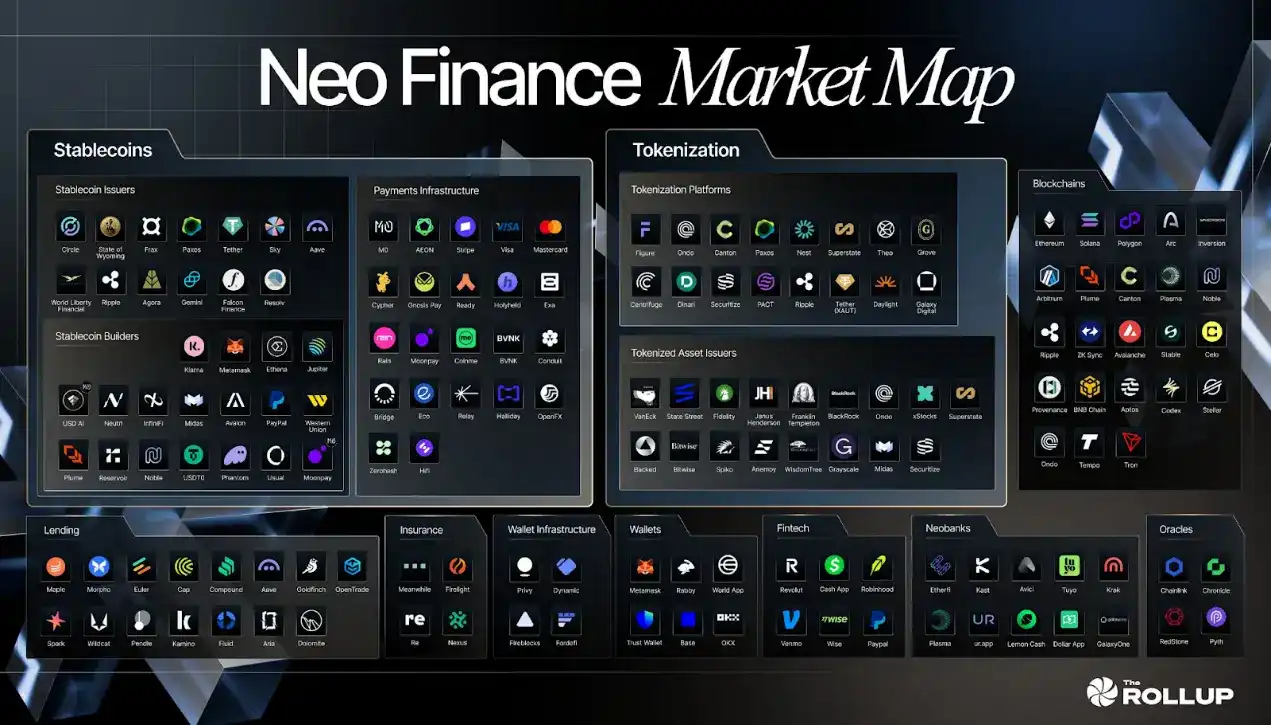
The combination of front-end consumer-grade user experience and back-end efficient DeFi infrastructure will provide users with a 'bank-like experience' that is both familiar and far superior to traditional banking.

Users' savings can be traded and transferred globally and are available 24/7. A simple example: a user's 'checking account' could earn a 5% annual interest rate, compared to 0.25% from a traditional bank.

Driven by teams focusing on different parts of the technology stack, the Neo Finance market has the potential to fundamentally change how the world interacts with money.

Let's take a look at some key areas in the market map.

Tokenization

Tokenization is the process of bringing real-world assets (such as treasury bonds, stocks, commodities, credit, money markets, etc.) on-chain.

The infrastructure and tokenization agent layer includes: Figure, Ondo Finance, Paxos, Centrifuge, Superstate Inc, Midas, Grove Finance, Nest, Dinari, Securitize, and other companies.
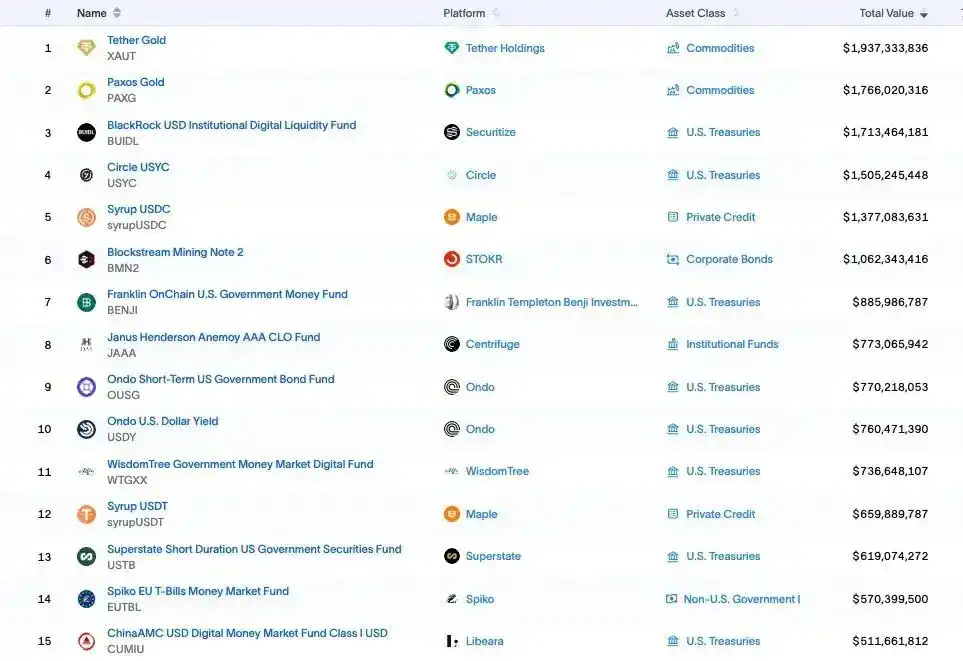
Tokenization has been discussed for years, but 2025 is the year it truly begins to scale.

Stablecoins

Stablecoins are by far the most successful crypto product, with 90% of new finance customers preferring stablecoins as their first point of contact with cryptocurrency.

The stablecoin issuer sector is booming, with numerous companies emerging, such as: Circle, Paxos, Tether, and Sky.

Meanwhile, yield-bearing stablecoins (or 'yield coins') like $sUSDS, $sUSDe, $BUIDL, $USYC, and $syrupUSDC have seen exponential growth over the past 18 months, with a supply exceeding $13 billion.
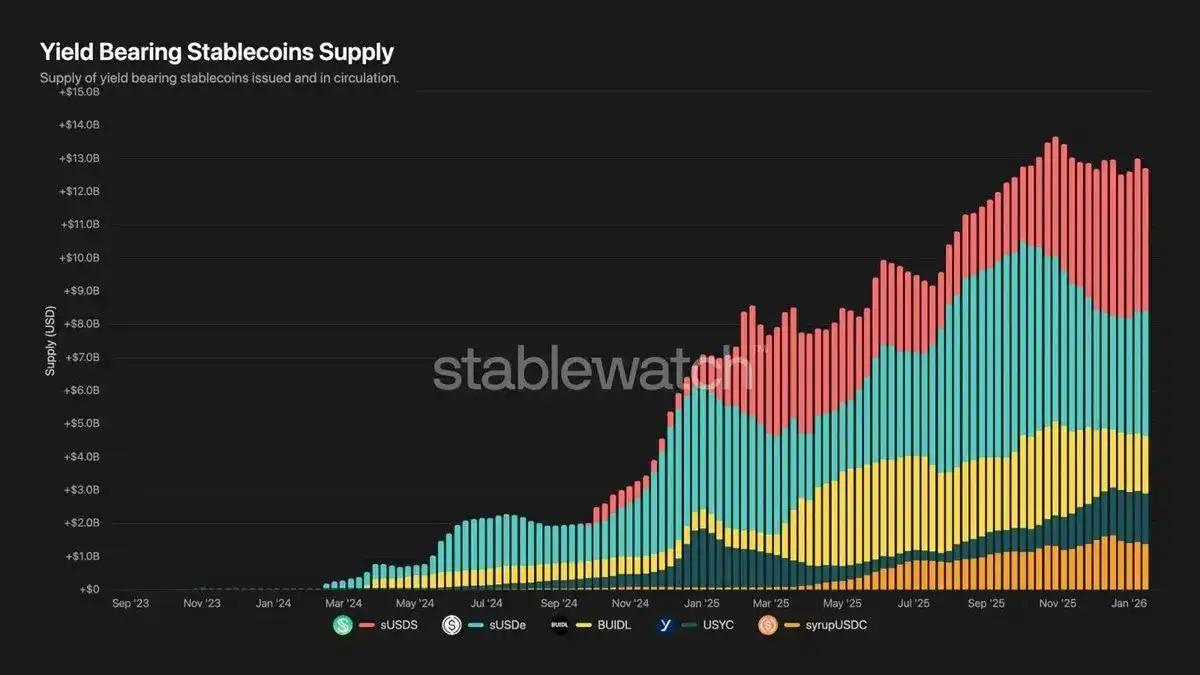
Users no longer have to choose between stability and yield as they did in the CeDeFi space during 2020-2022; now they can have both.

Neo-Banks

In the neo-bank sector, many teams are emerging, such as ether.fi, KAST, Tuyo, Galaxy, and others. These teams are leveraging DeFi backends to build consumer-facing 'bank-like' experiences from the ground up.
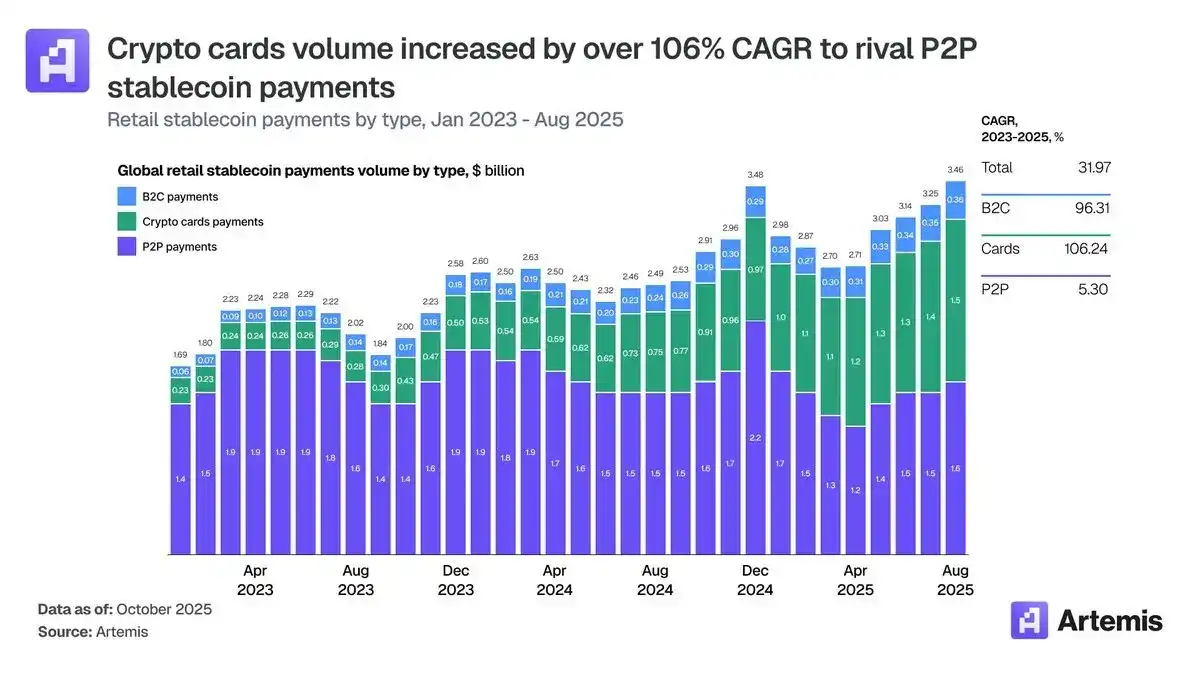
Remember the 'DeFi Mullet'? (PANews Note: Refers to a front-end with a TradFi user-friendly interface and a back-end powered by DeFi underlying technology) It's still here, and the data proves it.

Tokenization, stablecoins, and neo-banks are the three key areas of focus currently, expected to see the most significant growth in 2026 and beyond.

Beyond this, the crypto market is facing a harsh reality: old strategies are failing.

High FDV, low circulating supply launches aimed at dumping on retail; protocols lacking value accrual pathways; alt DEXs on 'ghost' chains; VC-backed projects where founders cash out hundreds of millions before achieving any PMF (Product-Market Fit).

All these plays are outdated, and this trend will continue.

In fact, I got into crypto after reading 'The Truth Machine' in 2017. Back then, I was almost certain this technology would reshape finance. Somehow, it feels like we veered off the original mission. Nine years later, we are closer than ever to that dream becoming a reality.

Everything is in place, the opportunity is here. Welcome to the era of Neo Finance.

Related reading: Nihilism and Vicious Cycles: Why Should We Oppose Over-Financialization?

Пов'язані питання

QWhat are the three main areas of focus in the Neo Finance ecosystem according to the article, and why are they significant?

AThe three main areas are tokenization, stablecoins, and neobanks. They are significant because they are expected to drive the most substantial growth in 2026 and beyond, combining consumer-friendly front-end experiences with efficient DeFi back-end infrastructure to revolutionize how the world interacts with money.

QHow does the article describe the current state and growth of 'yield stablecoins'?

AThe article states that yield stablecoins (or 'yield coins') like $sUSDS, $sUSDe, $BUIDL, $USYC, and $syrupUSDC have experienced exponential growth over the past 18 months, with their supply exceeding $13 billion.

QWhat is the 'DeFi Mullet' concept mentioned in the article, and what does it refer to?

AThe 'DeFi Mullet' refers to a business model where the front-end offers a user-friendly interface familiar to traditional finance (TradFi) users, while the back-end is powered by decentralized finance (DeFi) infrastructure.

QWhat outdated practices in the crypto market does the article claim are no longer effective?

AThe article claims that outdated practices include high Fully Diluted Valuation (FDV) with low circulating supply to sell to retail investors, protocols with no path to value accrual, alt-DEXs on 'ghost' chains, and venture-backed projects where founders cash out millions before achieving any Product-Market Fit (PMF).

QWhat major shift does the article suggest happened in 2025 regarding tokenization?

AThe article suggests that 2025 was the year when tokenization, the process of putting real-world assets like treasuries and stocks on-chain, truly began to scale and see mass adoption after being discussed for many years.

Пов'язані матеріали

While Everyone Says NFTs Are 'Dead', the Art World is Quietly Completing an 'On-Chain Renaissance'

While many declare NFTs "dead" and dismiss them as overhyped JPEGs, a significant institutional shift is quietly underway within the art world, signaling a "on-chain renaissance." Traditional art, a ~$60B market, is stagnant, aging, and highly concentrated, facing a massive $80 trillion generational wealth transfer to digital-native heirs. Contrary to the narrative, leading institutions have been building infrastructure for digital and on-chain art. Major museums like MoMA, the Centre Pompidou, LACMA, and the Guggenheim have acquired seminal NFT works into their permanent collections. Top galleries like Pace, Gagosian, and Hauser & Wirth have launched NFT platforms or accepted crypto, with Pace giving a solo show to generative artist Tyler Hobbs. Auction houses Sotheby's and Christie's operate dedicated on-chain sales platforms. This follows a historical pattern where every major art movement—from Impressionism to Pop Art—was initially mocked before institutional acceptance. NFT art, only 7-12 years old, is progressing faster. Auction data shows resilience, with works by Beeple ($69.3M), Pak (~$91M), and Dmitri Cherniak ($6.2M in a bear market) achieving high prices. A new cohort of collectors (e.g., FlamingoDAO, PleasrDAO) and "Medici" figures like Cozomo de' Medici are accumulating foundational works. The core argument is that NFTs represent not a speculative asset class but a new ownership system for digital culture, solving provenance issues through immutable, timestamped blockchain records. The medium has survived the speculative crash and is being institutionalized. The bet isn't on short-term price rallies but on the long-term cultural significance of on-chain art as the defining medium for the next generation of collectors.

marsbit37 хв тому

While Everyone Says NFTs Are 'Dead', the Art World is Quietly Completing an 'On-Chain Renaissance'

marsbit37 хв тому

Jensen Huang's Message to Graduates: AI Won't Replace You, But Those Who Excel at Using AI Will

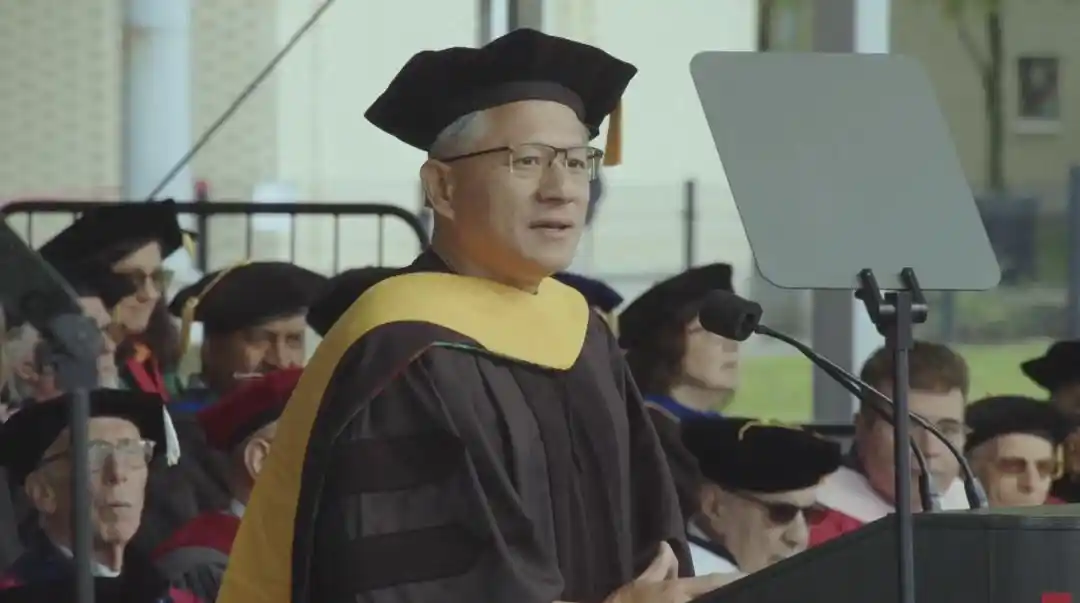
NVIDIA CEO Jensen Huang, addressing 2026 graduates at Carnegie Mellon University, emphasized that AI will not replace people, but those who leverage AI effectively will have an advantage. He delivered this message during a commencement speech where he also received an honorary doctorate, his seventh. Huang reflected on his personal journey as an immigrant, starting from humble beginnings as a dishwasher to co-founding NVIDIA. He shared early struggles, including a near-bankruptcy moment saved by honesty with Sega, highlighting resilience and learning from failure. He positioned the current era as the dawn of the AI revolution, a shift as significant as past computing waves. Huang explained that AI is redefining computing from human-written software to machine learning, creating a new industry focused on manufacturing intelligence. While acknowledging fears about job displacement, he argued that AI amplifies human capabilities rather than replaces human purpose. Tasks may be automated, but the core meaning of professions remains. Huang urged graduates to embrace this transformative time with responsibility and optimism. He stated that AI should democratize technology, bridging gaps and enabling broader participation in creation and problem-solving. His final advice was to actively engage with the opportunity: "So run, don’t walk," and to put their hearts into their work.

marsbit44 хв тому

Jensen Huang's Message to Graduates: AI Won't Replace You, But Those Who Excel at Using AI Will

marsbit44 хв тому

Three Scenarios for BTC's Future Direction and a Duel Between Two Strong Forces | Special Invited Analysis

**Title: Three Scenarios for BTC's Future Trajectory and a Key Duel | Invited Analysis** The market remains at a critical juncture. Over the past week, Bitcoin (BTC) consolidated broadly between $79,500 and $80,600, validating previous technical analysis. The current focus is on whether this marks the start of a new uptrend or a pause within a larger correction. **BTC Multi-Cycle Analysis & Three Possible Scenarios** BTC's daily chart structure, following its peak at $126,200 in October 2025, presents three primary technical scenarios based on Elliott Wave theory: 1. **Bullish Scenario (End of Correction):** The corrective A-B-C wave from $126,200 ended at the $60,000 low in February 2026. The current price action is the start of a major Wave I uptrend. A subsequent Wave II pullback would not break below $60,000. 2. **Bearish Scenario 1 (Complex Correction):** The correction is unfolding as an A-B-C-D-E pattern. The current move from $60,000 is a D-wave rally. After its completion, a final E-wave decline could potentially breach the $60,000 level. 3. **Bearish Scenario 2 (Larger Correction):** The entire move down from $126,200 to $60,000 was a large A-wave. The current rally is a B-wave correction within a larger A-B-C structure, to be followed by a C-wave decline below $60,000. *Analysis suggests Scenario 2 is less probable due to time disproportions between waves. The battle is effectively between the Bullish Scenario (1) and Bearish Scenario (3).* **Key BTC Levels & Weekly Strategy** On the 4-hour chart, BTC trades above a crucial consolidation zone ("Central Pivot C"). * **Key Resistance:** $83,500-$84,500; $89,000-$90,500. * **Key Support:** $78,500-$79,500 (pivot upper bound); $73,500-$75,000; $69,500-$70,500. **Weekly Outlook:** The market direction hinges on BTC's ability to hold above or break below the $78,500-$79,500 support zone. * **Mid-term Strategy:** Neutral/Wait-and-see stance due to unclear direction. * **Short-term Tactics:** Two contingency plans using 30% max capital: * **Plan A (Bullish):** Look for long entries if price holds above $78,500-$79,500 with confirming signals. Initial stop-loss below $78,500. * **Plan B (Bearish):** Consider short positions if price breaks below $73,500-$75,000 with confirming signals. Initial stop-loss above $76,500. **HYPE Analysis & Strategy** HYPE's daily chart shows a seven-segment structure from its January low of $20.46, forming a "rising pivot" zone. * **Key Level to Watch:** $45.76 (previous high). A break above would confirm the bullish structure remains intact. * **Short-term Strategy:** Focus on pivot zone boundaries ($38.41 upper, $34.44 lower). * **Long:** Consider on support near $38.41 with bullish confirmation signals. * **Short:** Consider on a break below $34.44 with bearish confirmation signals. * Position size must be below 30% with strict stop-loss discipline. **Risk Management Reminder:** Always set an initial stop-loss upon entry. Move stop-loss to breakeven at +1% profit, then trail it upwards to lock in profits dynamically. All views are based on technical analysis for informational purposes only and do not constitute investment advice. The market is inherently risky.

Odaily星球日报52 хв тому

Three Scenarios for BTC's Future Direction and a Duel Between Two Strong Forces | Special Invited Analysis

Odaily星球日报52 хв тому

Sequoia Interview with Hassabis: Information is the Essence of the Universe, AI Will Open Up Entirely New Scientific Branches

Demis Hassabis, co-founder and CEO of Google DeepMind and Nobel laureate, discusses the path to AGI and its profound implications in a Sequoia Capital interview. He outlines his lifelong dedication to AI, tracing his journey from game development (e.g., *Theme Park*)—a perfect AI testing ground—to neuroscience and finally founding DeepMind in 2009. He emphasizes the critical lesson of being "5 years, not 50 years, ahead of time" for successful entrepreneurship. Hassabis reiterates DeepMind's two-step mission: first, solve intelligence by building AGI; second, use AGI to tackle other complex problems. He highlights the transformative potential of "AI for Science," particularly in biology where tools like AlphaFold have revolutionized protein folding. He envisions AI-powered simulations drastically shortening drug discovery from years to weeks and enabling personalized medicine. Furthermore, he predicts AI will spawn new scientific disciplines, such as an engineering science for understanding complex AI systems (mechanistic interpretability) and novel fields enabled by high-fidelity simulators for complex systems like economics. He posits a fundamental worldview where information, not just matter or energy, is the essence of the universe, making AI's information-processing core uniquely suited to understanding reality. He defends classical Turing machines as potentially sufficient for modeling complex phenomena, including quantum systems, as demonstrated by AlphaFold. On consciousness, Hassabis suggests first building AGI as a powerful tool, then using it to explore deep philosophical questions. He believes components like self-awareness and temporal continuity are necessary for consciousness but that defining it fully remains an open challenge. He predicts AGI could arrive around 2030 and, once achieved, would be used to probe the deepest questions of science and reality, much as envisioned in David Deutsch's *The Fabric of Reality*.

链捕手1 год тому

Sequoia Interview with Hassabis: Information is the Essence of the Universe, AI Will Open Up Entirely New Scientific Branches

链捕手1 год тому

Торгівля

Спот
Ф'ючерси
活动图片