Making AI Products Is No Longer the Hard Part; Being Seen Is: Developers, Web3, and Chinese AI Opportunities at mu Shanghai

marsbitОпубліковано о 2026-05-19Востаннє оновлено о 2026-05-19

Анотація

The article discusses the shifting challenges of AI entrepreneurship, based on insights from the mu Shanghai AI WEEK event in May 2026. As AI tools drastically lower the barrier to creating product prototypes, the core difficulty for startups has moved from "how to build" to "who to build for"—finding real users, sustainable business models, and community engagement. The event itself was structured as an extended, immersive developer community space rather than a traditional conference, attracting a global mix of participants (40% AI, 20-30% Web3). This format emphasized deep networking and collaborative creation over one-way presentations. A key observation is that with powerful models and coding assistants becoming ubiquitous, execution is less of a moat. The new scarce resource is judgment—identifying valuable, defensible scenarios where an application won't be quickly rendered obsolete by the next model update. This pushes competition downstream to distribution, user acquisition, and commercialization. Notably, many Web3 practitioners are migrating into AI, bringing with them expertise in community building, global collaboration, and grassroots marketing—skills highly relevant as AI apps fight for visibility. Meanwhile, opportunities in AI hardware, robotics, and embodied intelligence are seen as more durable, leveraging China's robust manufacturing and supply chain ecosystem as a key advantage. The article notes that major Chinese model companies (like MiniMax) are n...

Author: Frank, PANews

At most technology conferences, the most common question is "who released what." But at the mu Shanghai AI WEEK in May 2026, the frequent question PANews heard was more practical: As AI makes it increasingly easy to build product prototypes, what has truly become the hardest part of entrepreneurship?

What made this event special was that it didn't feel like a standard conference, but more like a temporarily constructed developer space. There were few booths, few corporate pitches, and no fixed topics. A large number of overseas developers flew to Shanghai from Argentina, Silicon Valley, Japan, or Southeast Asia, just to connect with Chinese developers, model companies, investors, and the local ecosystem over the course of a month.

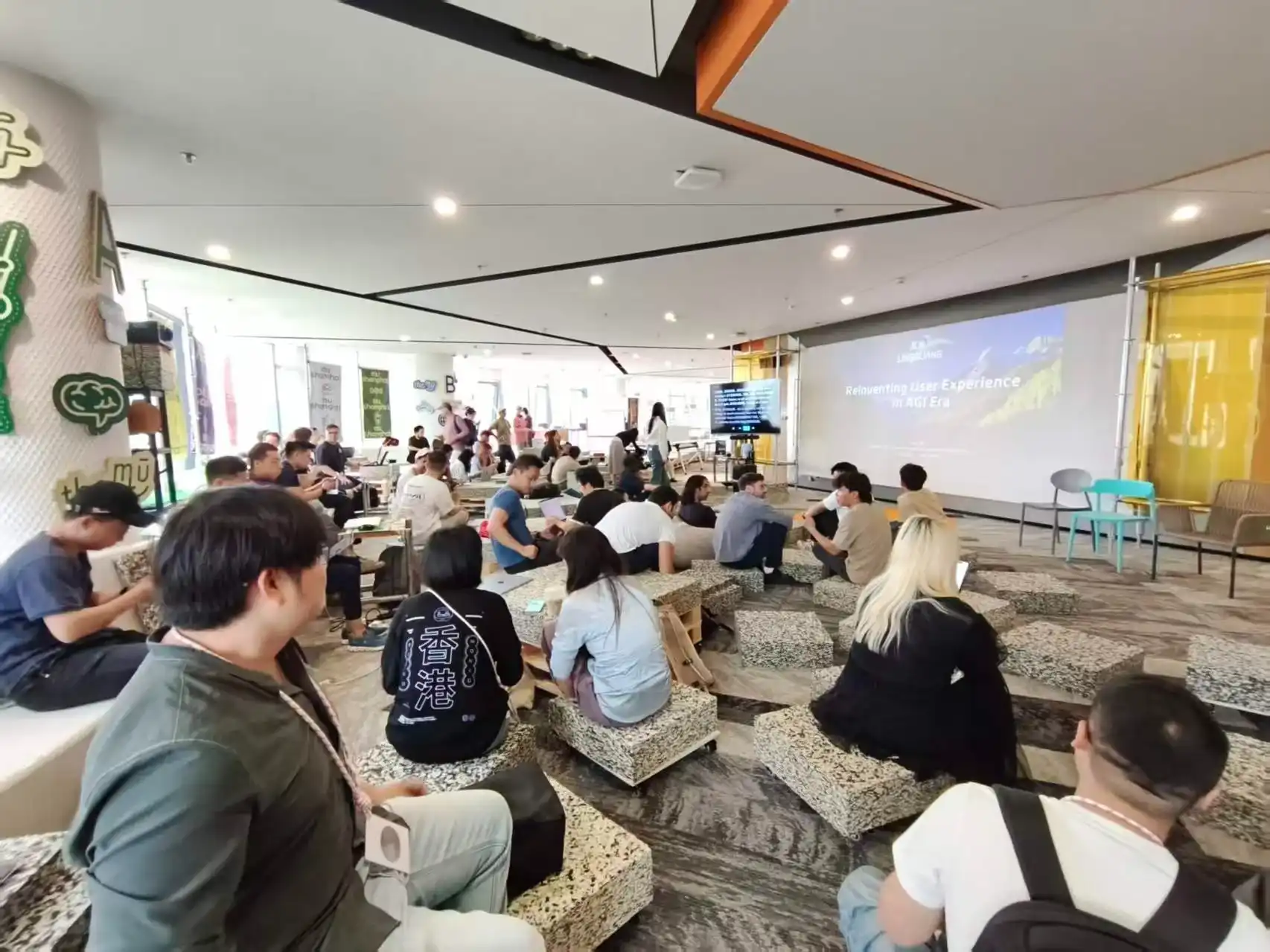
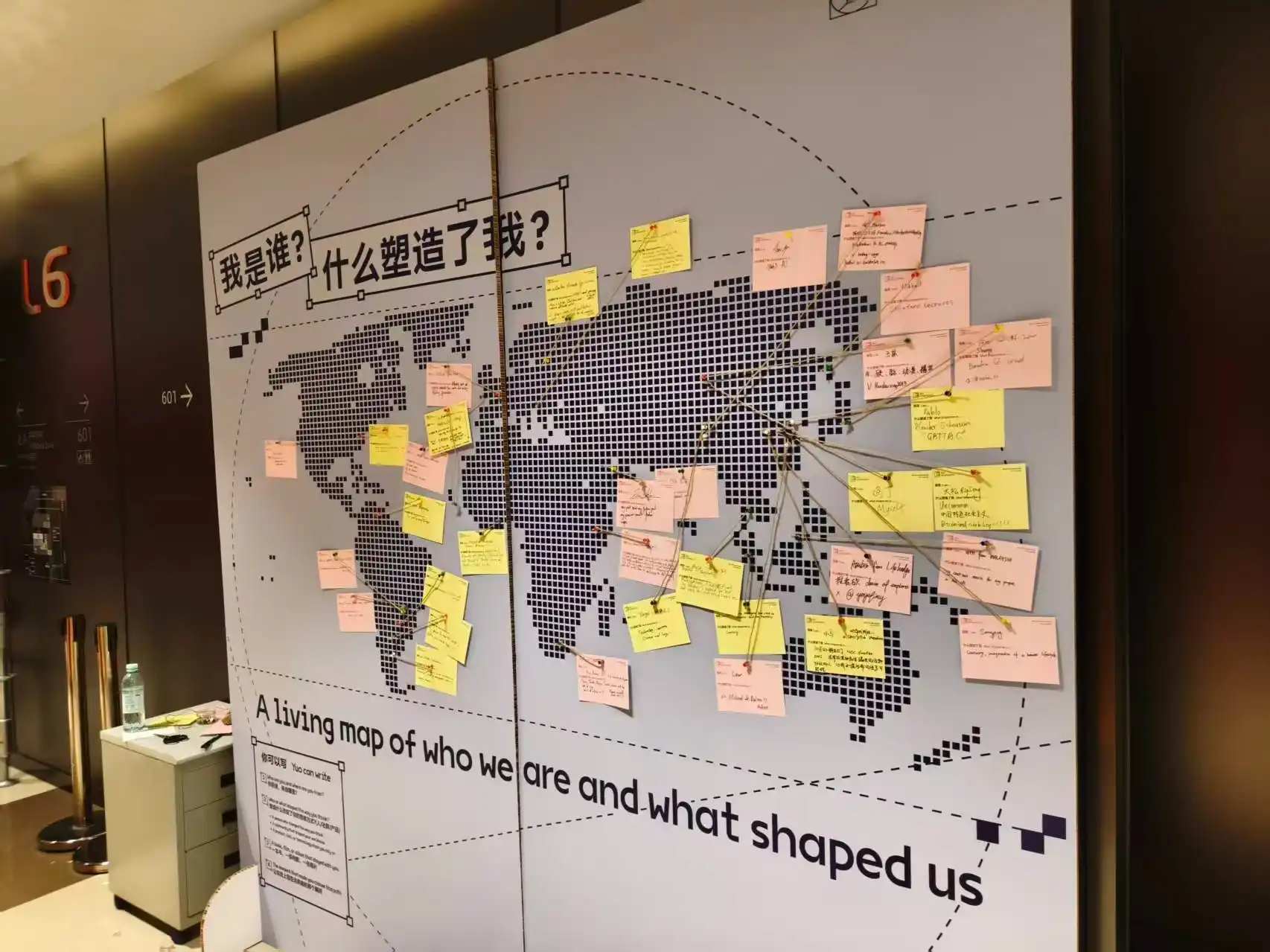
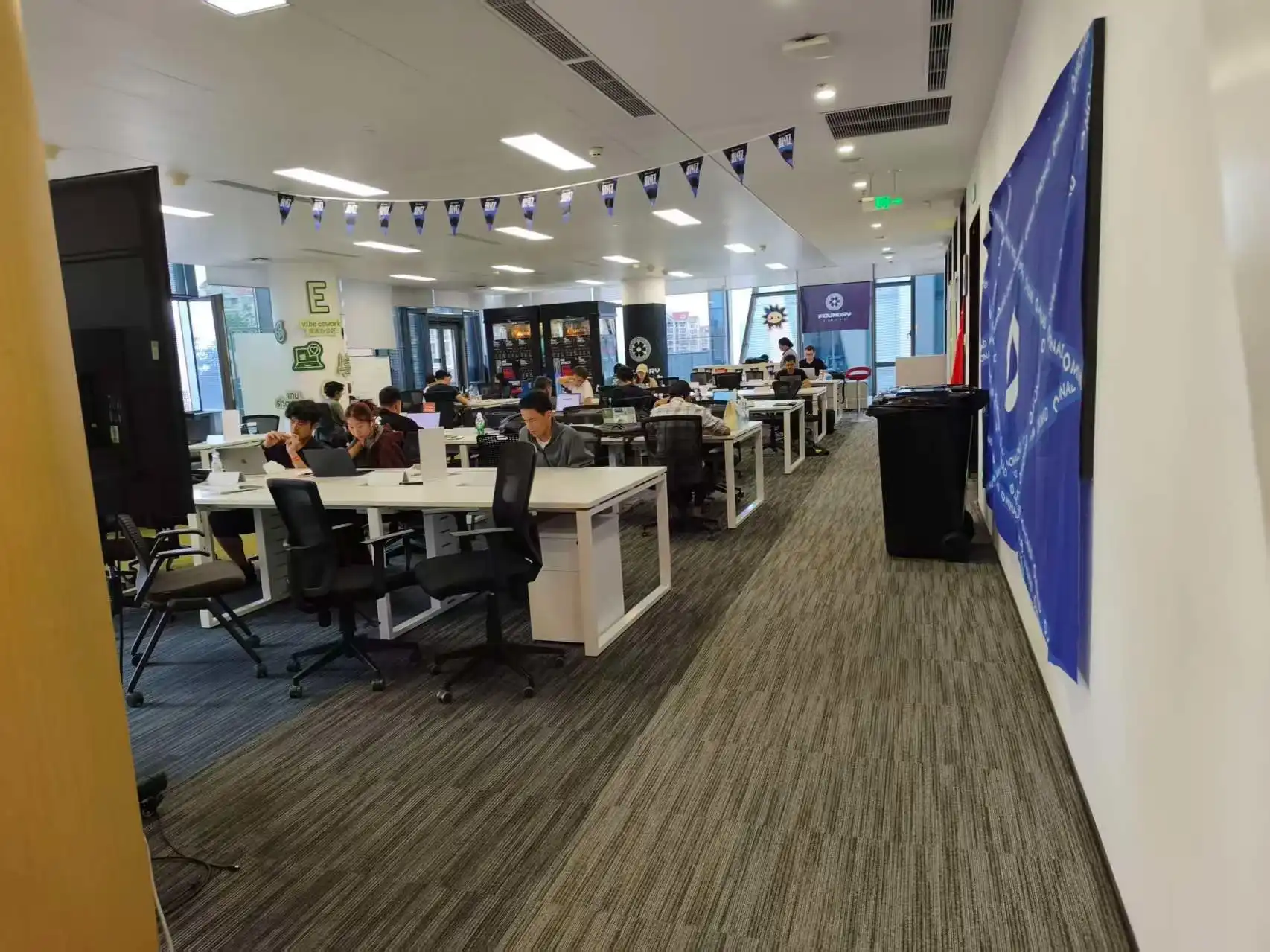
The venue wasn't set up as a traditional hotel conference hall, but as a hybrid space of open-plan work areas, stepped seating pads, bean bags, and temporary projectors. Some people sat at workstations typing code, others gathered on rugs and square cushions listening to talks, while some leaned in corners continuing to work on their products. Colorful mu Shanghai flags hung on the walls. A world map with the question "Who am I? What shaped me?" was covered with sticky notes and connecting lines, resembling an identity network being collectively filled in by participants.
Through conversations at the scene with multiple organizers, project teams, investors, and model company representatives, PANews found that AI entrepreneurship is entering a new phase. If "who can access models faster and build products" was the first phase of AI entrepreneurship; then the second phase is "who can find real-world scenarios, acquire users, build communities, and survive long enough." If models are the utilities (water, electricity, gas), then what is truly scarce now is no longer just the ability to connect the pipes, but who can find the people who most need the water.

A Deep Social Experiment with Global Developers

The most unusual aspect of mu Shanghai was first reflected in its organizational form. Founder Sun mentioned in an interview with PANews that mu didn't start in China initially, but spread in forms like pop-up cities and startup communities in places like Thailand, Argentina, Africa, and Japan. Compared to traditional two- or three-day conferences, it emphasizes a group of people entering the same city for about a month to co-create, exchange, live, and build relationships.

This format naturally gives the event a strong community attribute. According to Sun, about 2000 people registered for this mu Shanghai, with over 800 ultimately selected. The participant composition was also quite diverse: Chinese participants accounted for about 20%, other Asian regions like Japan, Korea, India about 18%, Southeast Asia about 16%, Latin America, the US, and Europe about 10%, 10%, and 11% respectively, and Africa about 6%. By industry background, AI practitioners accounted for about 40%, Web3-related practitioners about 20% to 30%, with additional groups from hardware, biotech, investment, etc.
Sun explained the appeal of this event format in the interview: "After leaving university, people rarely have that kind of deep relationship again. It's also hard to form such connections in work and big cities, so I think it's very valuable." In his view, what mu attempts to replicate is not the fleeting traffic of traditional conferences, but a relationship density closer to university, community, and shared living.

The scene indeed felt closer to this state. The main stage wasn't always the center of the space; subtitles next to projection screens, temporary display racks, and computers scattered everywhere together formed the daily backdrop of the event. During a sharing session on user experience, the audience wasn't neatly seated on chairs but dispersed among low cushions, the floor, and open workstations. The speaker shared at the front, while people below listened while taking notes, replying to messages, or continuing to work on their projects. This slightly loose state was closer to the real way developer communities operate.
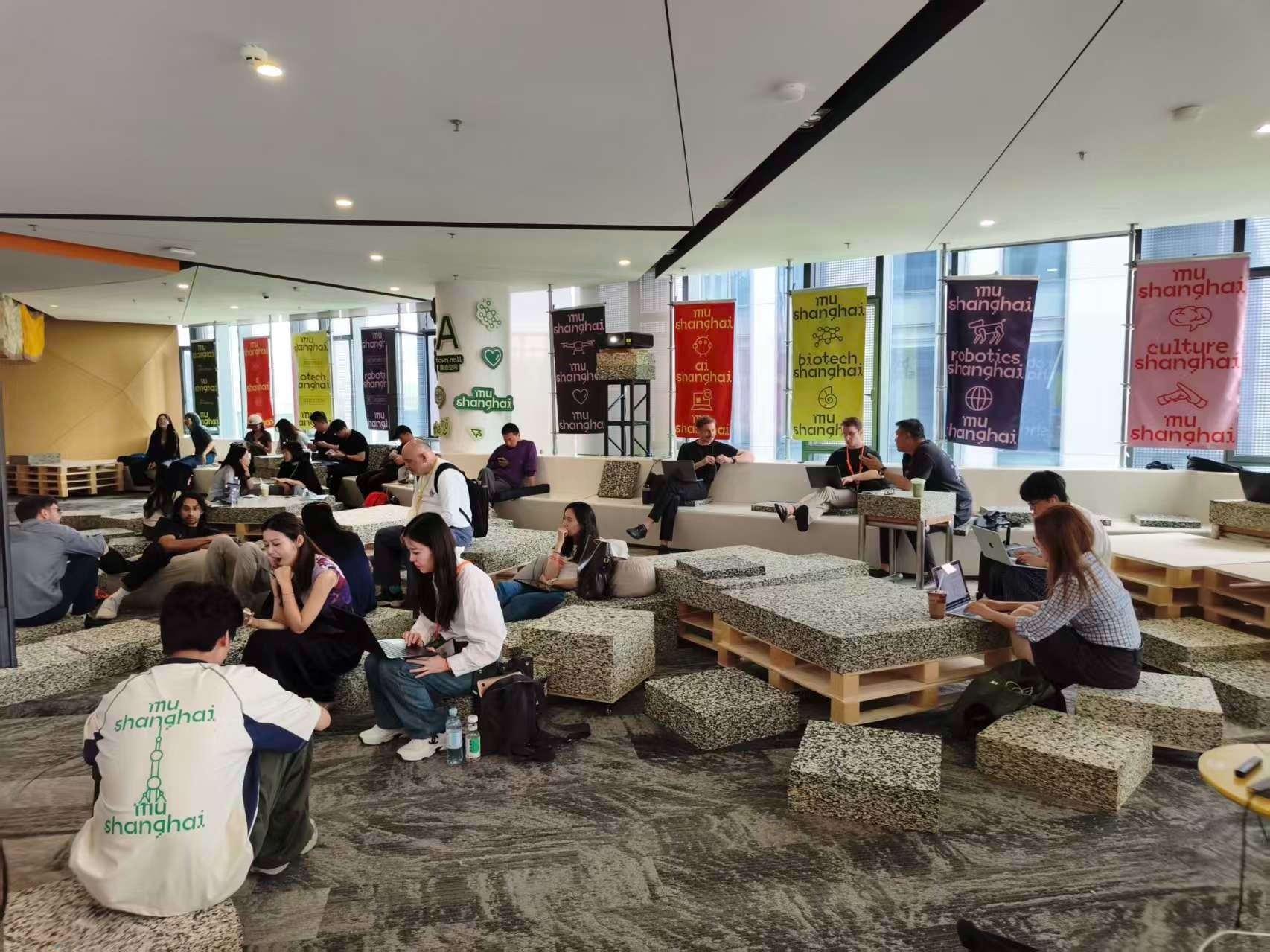
The significance of these numbers lies not in the event scale itself, but in showcasing an organizational logic different from traditional exhibitions. Traditional conferences often connect brands and users, companies and clients; mu Shanghai felt more like connecting Chinese and foreign developer cultures. There were large model roundtables, hackathons, co-creation activities, language learning, community sharing, and impromptu discussions. Feng Wen, Product Lead at MiniMax, mentioned in an on-site exchange that the atmosphere here wasn't just about "taking the stage to share about AI," but also included cultural exchange, developer co-creation, and community participation.

The presence of a large number of Web3 practitioners also made this connection more complex. What the Web3 industry has accumulated over the past few years isn't just on-chain assets and speculative narratives, but also a set of methods for community mobilization, global collaboration, social media dissemination, and developer organization. As AI entrepreneurship shifts from competing on model access to competing on user reach, this set of methods regains value.

From 'How to Build' to 'Who to Sell To': AI Entrepreneurship Enters Deep Waters

The most obvious feeling PANews had at the scene was that AI entrepreneurs are no longer excited for long about "whether they can build a product." Multimodal models, code generation tools, Agent frameworks, and automated workflows are rapidly lowering the barrier for product prototyping. A small tool that previously required designers, engineers, and operations to complete might now have an initial version built by a few people in a few nights using AI coding tools.

Newer data better illustrates this change in threshold. The AI Pulse survey conducted by JetBrains in January 2026 showed that 90% of professional developers already routinely use at least one AI tool at work, and 74% have adopted specialized AI tools for developers. For entrepreneurs, "being able to build" is becoming a more common capability, no longer a natural barrier.

However, once the product is built, the real problems begin. A founder named Nathan told PANews he is working on a product to help AI entrepreneurs find startup directions. The logic is that AI can already expand information collection range, solidify the judgment and taste of serial entrepreneurs into a set of rules, and then let AI discover signals of business opportunities. But this product itself reveals a larger reality: as building products becomes easier, "what exactly to build" becomes the scarcer question.

Nathan told PANews: "With AI coding tools, making something new is already fast. The real key is whether this direction is worth pursuing." The product he is making essentially productizes the act of "finding direction." This case is small but reflects a new change in AI entrepreneurship: when execution is amplified by AI, judgment becomes the scarce asset.

In the roundtable "Innovative Practices and Path Exploration in the AI Consumer Ecosystem" hosted by PANews, multiple guests expressed similar views: AI indeed makes rapid prototyping, demo samples, and initial launch easier, but the truly difficult parts of entrepreneurship haven't disappeared. User acquisition, commercialization, community stickiness, user education, and human-to-human connections still require teams to have more composite capabilities.

In other words, AI lowers the development threshold, not the entrepreneurship threshold. In the past, the first hurdle in product competition was "can it be built?" Now that this hurdle is significantly lowered, the real filtering starts moving later to distribution, scenarios, and commercialization. An on-site intervieee summarized it as: making tools isn't hard now; what's hard is getting the product, IP, and value seen by more people.

This is also a common dilemma faced by many AI tools. The more tools there are, the harder it is for users to choose; the stronger the models, the easier it is for single-point functions to be swallowed by the next model update. For entrepreneurs, a product that seems viable today might lose its raison d'être in 6 months because underlying model capabilities improve. Therefore, the real question isn't "whether to do AI," but whether one can find a specific scenario that the model cannot completely erase in the short term.

AI usage is rapidly spreading, but between tool usage and stable value, there still lies scenarios, processes, governance, and organizational capabilities.

Web3 People Flooding into AI, Not Just Chasing Hype

If viewed only from a narrative perspective, Web3 people flooding into AI might seem like just another hype migration. But at mu Shanghai, there were more practical reasons behind this migration.

On one hand, the wealth effects, capital dividends, and technological dividends of the crypto industry are waning, and many practitioners are looking for new tech directions; on the other hand, AI applications恰好 need the capabilities Web3 is most familiar with: community, globalized communication, developer relations, and social media distribution.

A senior Web3 practitioner said bluntly on-site that the crypto industry has been around for 10 years, and most of the capital and knowledge arbitrage opportunities are over; now it's better to move towards new tech directions. He advised entrepreneurs to gradually shift their careers, personal brands, and asset allocation towards AI, rather than continuing to heavily bet on cryptocurrencies. This assessment may not represent all Web3 practitioners, but it did reflect the real mindset of some people present.

He expressed it directly: "I think AI is worth long-term investment. By investment, I don't just mean using tools, but gradually shifting one's career, personal brand, and asset allocation towards AI." His personal choice was to transition into an AI-focused blogger, holding a sports camera to film Vlogs of teams building AI products at the event.

Such judgments may not represent all Web3 practitioners, but they were enough to illustrate the on-site atmosphere: AI is no longer just an optional track, but is becoming a direction for some Web3 practitioners to reconfigure their time, assets, and professional identities.

The AI-driven social media assistant XerpaAI had a booth at the event. Their staff said in an interview, "We are a pure AI project, technically not much related to Web3. But from the user side, we will definitely reach Web3 users. For example, the X AI Assistant will serve some Web3 users with operational needs." This statement well represents the ambiguous relationship between current AI applications and the Web3 community: the product doesn't have to be Web3, but users, dissemination, and early needs often cannot avoid Web3.

In on-site exchanges, model company representatives also mentioned that the user groups of AI and Web3 are increasingly difficult to completely separate; many heavy users of AI tools originally come from Web3 backgrounds. Especially in scenarios like Hong Kong and Shanghai, AI and Web3 often share the same group of high-frequency event attendees, early users, and community dissemination nodes. For them, they don't reject whether community members are Web3 users; as long as the theme is AI, everyone's goals are aligned.

From this perspective, Web3 entering AI isn't just a "change of scene." What Web3 brings isn't the on-chain technology itself, but a set of methods on how to gather global developers around a project, sustain discussions, and contribute attention. For current AI applications, this capability might be harder to replicate than a short-term feature.

Hardware, Supply Chain, and the Chinese Foundation

Compared to the anxiety over "whether AI software apps will be eaten by models," discussions on AI hardware, embodied intelligence, and the Chinese supply chain at the scene felt more certain. Multiple interviewees mentioned that as AI enters the real world in the future, hardware, robotics, embodied intelligence, and multi-sensory interaction will see greater opportunities. In the consumer-grade AI roundtable hosted by PANews, Feng Wen, Open Platform Product Lead at MiniMax, also predicted that smart hardware, robotics, and embodied intelligence will reach an important inflection point in the next three to five years; AI will no longer exist only in software interfaces but also enter the real physical world.

Outside the venue, the robotics track is also becoming a focus. A human vs. robot parcel sorting competition hosted by overseas robotics company Figur on May 18 sparked widespread online discussion. Even though humans won by a narrow margin within 10 hours, it's clear that over longer timeframes, robots have become the winners. The Stanford HAI "2026 AI Index" also shows that AI agents' accuracy in real-world computer task tests like OSWorld improved from about 12% to 66.3%, autonomous driving has begun to see scaled deployment, and China's Apollo Go completed 11 million fully driverless trips cumulatively.

AI entering the real world through hardware, robotics, and on-device deployment is no longer just a distant narrative.

This is precisely the special advantage of the Chinese ecosystem. Sun repeatedly mentioned in the interview that China possesses almost the entire supply chain from hardware, AI, life tech to infrastructure. For overseas entrepreneurs, if they want to do AI hardware, whether it's raw materials, factories, engineers, or rapid prototyping capabilities, it's ultimately hard to avoid China. He also revealed that for many entrepreneurs coming from overseas to China for this event, the goal was to experience and closely observe China's complete industrial chain.

Sun stated: "As long as you're doing hardware, overseas teams will eventually return to China to find supply chains, raw materials, engineers, and prototyping capabilities." He believes that in the next five to ten years, more international talent will come to China to find supply chains, raw materials, talent, and capital. For overseas entrepreneurs, China is not just a market, but a set of infrastructure for product realization.

A venture capital professional told PANews on-site that their main goal for participating was to see if there were more hard tech, embodied intelligence, and world model projects, rather than purely consumer applications. Their logic was that if the replication cost of software AI is decreasing, then hardware, supply chain, and real-world interaction might instead become barriers harder to be directly erased by model updates.

However, the attractiveness of the Chinese AI ecosystem to overseas developers doesn't come only from the supply chain. The emergence of domestic models like DeepSeek, Kimi, MiniMax, Zhipu, and Qwen has made overseas developers start to reconsider Chinese model capabilities. But Chinese models going overseas still face trust and deployment challenges. Feng Wen, Open Platform Product Lead at MiniMax, mentioned that Chinese models mainly gain attention and brand influence overseas through open source, but many overseas developers still worry about data, compliance, and trust issues. Even if models are open source, most people may not have enough computing power to deploy them themselves, leading to the emergence of an intermediary layer where US companies deploy Chinese open-source models and then provide them to overseas clients.

For overseas developers, the attractiveness of the Chinese AI ecosystem no longer comes only from cost or market size, but also from continuously expanding model supply, engineering capabilities, and industrial conversion capabilities.

This means the opportunity for the Chinese AI ecosystem isn't a single line. Model capabilities, hardware supply chain, government execution, and developer communities need to operate together to truly bring overseas entrepreneurs in. The role mu Shanghai plays in this process is more like a connector bringing overseas developers into China.

Large Model Companies Begin Competing for Developer Communities

If the competition among large model companies in the past year was mainly reflected in parameters, leaderboards, and prices, then at mu Shanghai, the importance of developer communities was pushed to the forefront. Domestic large model companies don't just need more API calls; they need developers to know about them, trust them, and be willing to build applications around their models.

Feng Wen mentioned in on-site exchanges that they do a lot of developer-related work. Developer experience, event screening, guest participation, hackathons, judging, token sponsorship, etc., all need to be incorporated into the ecosystem work of model companies.

"Developers are our users, so we value developer experience highly and also hope more developers understand what we are doing," Feng Wen stated. This sentence can almost be seen as a footnote to the ecosystem strategy of domestic large model companies: models are no longer just placed on a platform waiting to be called, but must actively enter spaces where developers gather.

This isn't a choice unique to MiniMax. On-site participants revealed that Zhipu has "Origin Academy" in Beijing, with activities almost every week, and close ties to university resources like Tsinghua and Peking University; AIGC and AGI communities also continuously gather talent through fixed spaces, hackathons, hotpot gatherings, and developer nights. These spaces are becoming offline versions of developer portals.
Behind this is a larger change: model companies are no longer satisfied with "releasing the model." They need documentation, trial platforms, case studies, video tutorials, and also communities, hackathons, and developer events to help users cross the initial threshold. As Agent capabilities improve, user education itself is being reshaped. In the past, developers needed to read documentation, check error codes, and understand parameters themselves; now, Agents can help users read documentation, search for solutions, select models, and automatically correct paths.

For model companies, the real competition isn't just model call prices, but who can enter developers' daily workflows earlier. For application entrepreneurs, the real opportunity isn't just which model to connect to, but whether they can find a group of early users willing to continuously use, provide feedback, and even actively spread the word.

Being Needed, Understood, and Kept

mu Shanghai didn't provide a unified answer for AI entrepreneurship. Some are bullish on hardware, some are making social media growth assistants, some are discovering entrepreneurial opportunities, some discussed cultural出海 and spiritual consumption, while others treated it as an entry point to meet overseas developers and local partners.

But these seemingly scattered clues precisely constitute the most real current state of AI entrepreneurship. Model capabilities continue to advance, but application forms are still searching for stable scenarios; development thresholds are lowered, but distribution and commercialization become more critical; Web3 hype cools, but the community methods it left behind are being absorbed by AI; Chinese supply chain and model capabilities become important, but overseas developers still need a trusted entry point to understand China.

Sun mentioned in the interview that mu Shanghai's long-term goal isn't just to host an event, but to form a continuous space where overseas and domestic people can meet, collaborate, and create new things in the same place. In fact, mu has very few formal employees; much of the work is driven by contributors and partners. This organizational method itself resembles Web3 and open-source communities: low centralization, emphasis on contribution and relationship networks, and thus more attractive to people familiar with this culture.

Of course, this model still has many uncertainties. Whether the event can transform into a long-term space, whether community enthusiasm can solidify into real projects, whether overseas developers will stay long-term in the Chinese ecosystem, whether large model companies can convert developer activities into stable call volumes, all remain to be seen. Communities can create encounters but cannot replace business closure; cities can provide scenarios but cannot guarantee product success.

However, mu Shanghai at least made one trend clear: AI entrepreneurship is moving from "model worship" to "scenario competition," from "making tools" to "being seen by users," from single-point products to comprehensive competition involving communities, supply chains, and cross-national collaboration. For ordinary entrepreneurs, the opportunity brought by AI isn't making everyone a winner easily, but exposing more people earlier to the same, more intense screening process.

When products become increasingly easy to produce, what is truly scarce becomes the ability to understand users, enter scenarios, build trust, and continuously connect people. AI will continue to lower the production cost of tools, but it won't automatically answer "why you?" In this sense, building the product is only the first step; being needed, understood, and kept is the harder second half of AI entrepreneurship.


Пов'язані питання

QWhat is the core shift in the difficulty of AI entrepreneurship discussed in the article about mu Shanghai?

AThe core shift is moving from the initial challenge of 'who can build a product prototype faster using AI models' to the current and more difficult challenge of 'who can find real user scenarios, acquire users, build a community, and survive in the long term.' The scarcity is no longer just the ability to connect to models (the 'plumbing'), but the ability to find those who most need the water.

QHow does the mu Shanghai event differ from a traditional tech conference according to the article?

AThe mu Shanghai event differs by being organized more like a temporary, month-long developer co-living and co-creation space rather than a standard short conference. It focuses on deep social connections and community building among global developers, featuring open workspaces, casual seating, impromptu discussions, and a mix of activities like hackathons and cultural exchanges, rather than a fixed agenda of corporate presentations and exhibition booths.

QWhy are many Web3 practitioners moving into the AI field, beyond just chasing trends?

AWeb3 practitioners are moving into AI because, while crypto industry opportunities are diminishing, the AI application field urgently needs the community-building, global communication, developer relations, and social media distribution skills that the Web3 industry has honed over the past decade. AI applications, even if not blockchain-based, often find their early users and community nodes within Web3 circles.

QWhat unique advantage does China's AI ecosystem offer to global entrepreneurs, especially in hardware?

AChina's AI ecosystem offers a complete hardware and supply chain advantage, including access to raw materials, factories, engineers, and rapid prototyping capabilities. For global entrepreneurs working on AI hardware, robotics, or embodied intelligence, China serves as essential infrastructure for product realization, not just a market.

QAccording to the article, how is the competition among major Chinese AI model companies (LLMs) evolving?

AThe competition is evolving from focusing solely on model parameters, benchmarks, and pricing to actively competing for developer community mindshare and loyalty. Model companies are now heavily investing in developer experience, documentation, tutorials, hackathons, sponsorships, and physical community spaces to integrate themselves into developers' workflows and build trust.

Пов'язані матеріали

Issued Two Work Badges to Unitree

At the keynote of his speech at the Taipei Music Center, Jensen Huang introduced a humanoid robot named Isaac GR00T. This robot, described as a 'reference design,' is a collaboration: its body comes from Unitree Robotics' H2 Plus, its hands from Singapore's Sharpa, and its 'brain'—the chip and full software stack—is from Nvidia, powered by the Jetson Thor. Huang positioned it as a turnkey solution for universities and researchers, aimed at drastically reducing setup time for experiments. On the same day as this reveal, Unitree Robotics passed its IPO review in Shanghai, seeking to raise 4.2 billion yuan, with a significant portion earmarked for developing its own embodied AI model—its own 'brain.' The article draws a parallel to the smartphone industry, where Qualcomm's 'reference design' led to homogenized hardware and concentrated profits in chips and software. It suggests Nvidia's GR00T initiative follows a similar playbook: by open-sourcing the model and framework, it aims to establish the industry standard, potentially relegating hardware makers to low-margin roles. While currently a body supplier for Nvidia's project, Unitree is actively pursuing its own AI brain, having open-sourced initial models and tested a more advanced one. The company faces a critical window to develop a competitive proprietary system before GR00T becomes the default. The article contrasts this with Tesla's vertically integrated approach for its Optimus robot, which uses in-house chips and benefits from its automotive data and manufacturing scale. It concludes that while the robot body still holds technical value and differentiation, the race for the 'brain' will ultimately define the industry's profit centers and power dynamics.

marsbit3 хв тому

Issued Two Work Badges to Unitree

marsbit3 хв тому

Variant: Three L1 Assets That Could Become Primary Stores of Value

The core belief at Variant is that individuals should own their money, identity, and data. A key framework for evaluating first-layer blockchain (L1) networks is viewing their native tokens as potential stores of value (SOV). A good SOV asset is defined by several key attributes: technical durability (its likelihood to exist and function in 5-10 years), scarcity and predictable inflation, censorship resistance, economic productivity (its utility in facilitating economic activity), memetic strength (widespread social consensus on its value), and liquidity. Based on this framework, three L1 assets are highlighted as leading contenders for becoming major SOVs, each excelling in different dimensions: * **Bitcoin (BTC)** is dominant in memetic strength, widely recognized as "digital gold." Its growing belief network among individuals and institutions reinforces its SOV status. * **Ethereum (ETH)** excels in technical durability and adaptability. Its ability to upgrade and a transparent roadmap provide confidence in its long-term resilience against future challenges. * **Zcash (ZEC)** offers superior censorship resistance and privacy through its shielded pools. This provides individuals with a long-term option to protect assets from confiscation or surveillance. The total market for SOV assets like gold is immense (gold's market cap is ~$31T). Despite often surpassing traditional SOVs on these fundamental metrics, digital assets currently capture only a small fraction of this market, representing a significant opportunity for growth. The article posits that multiple digital SOVs can coexist in this expanding space.

链捕手53 хв тому

Variant: Three L1 Assets That Could Become Primary Stores of Value

链捕手53 хв тому

Торгівля

Спот
Ф'ючерси

Популярні статті

Що таке GROK AI

Grok AI: Революція в розмовних технологіях ери Web3 Вступ У швидко змінюваному ландшафті штучного інтелекту Grok AI вирізняється як помітний проєкт, що поєднує сфери передових технологій та взаємодії з користувачами. Розроблений компанією xAI, яку очолює відомий підприємець Ілон Маск, Grok AI прагне переосмислити, як ми взаємодіємо зі штучним інтелектом. Оскільки рух Web3 продовжує процвітати, Grok AI має на меті використати потужність розмовного ШІ для відповіді на складні запитання, надаючи користувачам досвід, який є не лише інформативним, але й розважальним. Що таке Grok AI? Grok AI — це складний розмовний чат-бот, розроблений для динамічної взаємодії з користувачами. На відміну від багатьох традиційних систем ШІ, Grok AI охоплює ширший спектр запитів, включаючи ті, які зазвичай вважаються недоречними або виходять за межі стандартних відповідей. Основні цілі проєкту включають: Надійне міркування: Grok AI акцентує увагу на здоровому глузді, щоб надавати логічні відповіді на основі контекстуального розуміння. Масштабоване управління: Інтеграція допоміжних інструментів забезпечує моніторинг та оптимізацію взаємодій користувачів для покращення якості. Формальна верифікація: Безпека є пріоритетом; Grok AI впроваджує методи формальної верифікації для підвищення надійності своїх результатів. Розуміння довгого контексту: Модель ШІ відзначається здатністю зберігати та згадувати обширну історію розмов, що сприяє змістовним та контекстуально обізнаним дискусіям. Стійкість до атак: Зосереджуючись на покращенні своїх захистів від маніпульованих або зловмисних вхідних даних, Grok AI прагне зберегти цілісність взаємодій з користувачами. По суті, Grok AI — це не просто пристрій для отримання інформації; це занурюючий розмовний партнер, який заохочує динамічний діалог. Творець Grok AI Геній, що стоїть за Grok AI, — це ніхто інший, як Ілон Маск, особа, яка стала синонімом інновацій у різних сферах, включаючи автомобільну промисловість, космічні подорожі та технології. Під егідою xAI, компанії, що зосереджена на розвитку технологій ШІ на користь суспільства, бачення Маска прагне переосмислити розуміння взаємодій з ШІ. Лідерство та основоположна етика глибоко впливають на прагнення Маска розширити технологічні межі. Інвестори Grok AI Хоча конкретні деталі щодо інвесторів, які підтримують Grok AI, залишаються обмеженими, загальновідомо, що xAI, інкубатор проєкту, заснований і підтримується переважно самим Ілоном Маском. Попередні підприємства та активи Маска забезпечують надійну підтримку, що додатково зміцнює довіру до Grok AI та потенціал для зростання. Однак наразі інформація про додаткові інвестиційні фонди або організації, що підтримують Grok AI, не є доступною, що позначає область для потенційного майбутнього дослідження. Як працює Grok AI? Операційна механіка Grok AI є такою ж інноваційною, як і його концептуальна структура. Проєкт інтегрує кілька передових технологій, які сприяють його унікальним функціональним можливостям: Надійна інфраструктура: Grok AI побудований з використанням Kubernetes для оркестрації контейнерів, Rust для продуктивності та безпеки, і JAX для високопродуктивних числових обчислень. Ця трійка забезпечує ефективну роботу чат-бота, його масштабованість та швидке обслуговування користувачів. Доступ до знань у реальному часі: Однією з відмінних рис Grok AI є його здатність отримувати дані в реальному часі через платформу X — раніше відому як Twitter. Ця можливість надає ШІ доступ до останньої інформації, що дозволяє надавати своєчасні відповіді та рекомендації, які можуть бути пропущені іншими моделями ШІ. Два режими взаємодії: Grok AI пропонує користувачам вибір між “Розважальним режимом” та “Звичайним режимом”. Розважальний режим дозволяє більш ігровий та гумористичний стиль взаємодії, тоді як Звичайний режим зосереджується на наданні точних і правильних відповідей. Ця універсальність забезпечує індивідуальний досвід, що відповідає різним уподобанням користувачів. По суті, Grok AI поєднує продуктивність із залученням, створюючи досвід, який є одночасно збагачуючим і розважальним. Хронологія Grok AI Шлях Grok AI відзначений важливими етапами, які відображають його розвиток та етапи впровадження: Початковий розвиток: Фундаментальна фаза Grok AI тривала приблизно два місяці, протягом яких проводилося початкове навчання та налаштування моделі. Випуск бета-версії Grok-2: У значному досягненні була оголошена бета-версія Grok-2. Цей випуск представив дві версії чат-бота — Grok-2 та Grok-2 mini — кожна з яких оснащена можливостями для спілкування, кодування та міркування. Публічний доступ: Після бета-розробки Grok AI став доступним для користувачів платформи X. Ті, хто має акаунти, підтверджені номером телефону та активні принаймні сім днів, можуть отримати доступ до обмеженої версії, що робить технологію доступною для ширшої аудиторії. Ця хронологія відображає систематичний розвиток Grok AI від початку до публічної взаємодії, підкреслюючи його прагнення до постійного вдосконалення та взаємодії з користувачами. Ключові особливості Grok AI Grok AI охоплює кілька ключових особливостей, які сприяють його інноваційній ідентичності: Інтеграція знань у реальному часі: Доступ до актуальної та релевантної інформації відрізняє Grok AI від багатьох статичних моделей, забезпечуючи захоплюючий та точний досвід для користувачів. Універсальні стилі взаємодії: Пропонуючи різні режими взаємодії, Grok AI задовольняє різноманітні уподобання користувачів, запрошуючи до творчості та персоналізації у спілкуванні з ШІ. Передова технологічна основа: Використання Kubernetes, Rust та JAX надає проєкту надійну основу для забезпечення надійності та оптимальної продуктивності. Етичні міркування в дискурсі: Включення функції генерації зображень демонструє інноваційний дух проєкту. Однак це також піднімає етичні питання, пов'язані з авторським правом та поважним зображенням впізнаваних фігур — триваюча дискусія в спільноті ШІ. Висновок Як піонер у сфері розмовного ШІ, Grok AI втілює потенціал трансформаційних користувацьких досвідів в цифрову епоху. Розроблений компанією xAI та керований візією Ілона Маска, Grok AI інтегрує знання в реальному часі з передовими можливостями взаємодії. Він прагне розширити межі того, що може досягти штучний інтелект, зберігаючи при цьому акцент на етичних міркуваннях та безпеці користувачів. Grok AI не лише втілює технологічний прогрес, але й представляє нову парадигму спілкування в ландшафті Web3, обіцяючи залучити користувачів як глибокими знаннями, так і ігровою взаємодією. Оскільки проєкт продовжує розвиватися, він слугує свідченням того, що може досягти перетин технологій, творчості та людської взаємодії.

444 переглядів усьогоОпубліковано 2024.12.26Оновлено 2024.12.26

Що таке GROK AI

Що таке ERC AI

Euruka Tech: Огляд $erc ai та його амбіцій у Web3 Вступ У швидко змінюваному ландшафті технології блокчейн та децентралізованих додатків нові проекти з'являються часто, кожен з унікальними цілями та методологіями. Одним з таких проектів є Euruka Tech, який працює у широкій сфері криптовалют та Web3. Основна увага Euruka Tech, зокрема його токена $erc ai, зосереджена на представленні інноваційних рішень, розроблених для використання зростаючих можливостей децентралізованих технологій. Ця стаття має на меті надати всебічний огляд Euruka Tech, дослідження його цілей, функціональності, ідентичності його творця, потенційних інвесторів та його значення в ширшому контексті Web3. Що таке Euruka Tech, $erc ai? Euruka Tech характеризується як проект, який використовує інструменти та функціональність, що пропонуються середовищем Web3, зосереджуючи увагу на інтеграції штучного інтелекту у своїй діяльності. Хоча конкретні деталі про структуру проекту дещо неясні, він розроблений для покращення залучення користувачів та автоматизації процесів у крипто-просторі. Проект має на меті створити децентралізовану екосистему, яка не лише полегшує транзакції, але й включає прогностичні функції через штучний інтелект, звідси і назва його токена, $erc ai. Мета полягає в тому, щоб надати інтуїтивно зрозумілу платформу, яка сприяє розумнішим взаємодіям та ефективній обробці транзакцій у зростаючій сфері Web3. Хто є творцем Euruka Tech, $erc ai? На даний момент інформація про творця або засновницьку команду Euruka Tech залишається невизначеною та дещо непрозорою. Ця відсутність даних викликає занепокоєння, оскільки знання про бекграунд команди часто є важливим для встановлення довіри в секторі блокчейн. Тому ми класифікували цю інформацію як невідому, поки конкретні деталі не стануть доступними в публічному домені. Хто є інвесторами Euruka Tech, $erc ai? Аналогічно, ідентифікація інвесторів або організацій, які підтримують проект Euruka Tech, не надається через доступні дослідження. Аспект, який є критично важливим для потенційних зацікавлених сторін або користувачів, які розглядають можливість співпраці з Euruka Tech, - це впевненість, що походить від встановлених фінансових партнерств або підтримки від авторитетних інвестиційних компаній. Без розкриття інформації про інвестиційні зв'язки важко зробити всебічні висновки про фінансову безпеку або довговічність проекту. Відповідно до знайденої інформації, цей розділ також має статус невідомий. Як працює Euruka Tech, $erc ai? Незважаючи на відсутність детальних технічних специфікацій для Euruka Tech, важливо враховувати його інноваційні амбіції. Проект прагне використовувати обчислювальну потужність штучного інтелекту для автоматизації та покращення досвіду користувачів у середовищі криптовалют. Інтегруючи ШІ з технологією блокчейн, Euruka Tech має на меті надати такі функції, як автоматизовані угоди, оцінка ризиків та персоналізовані інтерфейси користувачів. Інноваційна суть Euruka Tech полягає в його меті створити безшовний зв'язок між користувачами та величезними можливостями, які пропонують децентралізовані мережі. Завдяки використанню алгоритмів машинного навчання та ШІ, він має на меті мінімізувати труднощі для нових користувачів і спростити транзакційні досвіди в рамках Web3. Ця симбіоз між ШІ та блокчейном підкреслює значення токена $erc ai, який виступає як міст між традиційними інтерфейсами користувачів та розвиненими можливостями децентралізованих технологій. Хронологія Euruka Tech, $erc ai На жаль, через обмежену інформацію про Euruka Tech ми не можемо представити детальну хронологію основних подій або досягнень у подорожі проекту. Ця хронологія, яка зазвичай є безцінною для відстеження еволюції проекту та розуміння його траєкторії зростання, наразі недоступна. Як тільки інформація про значні події, партнерства або функціональні доповнення стане очевидною, оновлення, безумовно, підвищать видимість Euruka Tech у крипто-сфері. Роз'яснення щодо інших проектів “Eureka” Варто зазначити, що кілька проектів та компаній мають схожу назву з “Eureka”. Дослідження виявило ініціативи, такі як AI-агент від NVIDIA Research, який зосереджується на навчанні роботів складним завданням за допомогою генеративних методів, а також Eureka Labs та Eureka AI, які покращують користувацький досвід в освіті та аналітиці обслуговування клієнтів відповідно. Однак ці проекти відрізняються від Euruka Tech і не повинні бути змішані з його цілями чи функціональністю. Висновок Euruka Tech, разом із його токеном $erc ai, представляє обіцяючого, але наразі невідомого гравця в ландшафті Web3. Хоча деталі про його творця та інвесторів залишаються невідомими, основна амбіція поєднання штучного інтелекту з технологією блокчейн є центром інтересу. Унікальні підходи проекту до сприяння залученню користувачів через передову автоматизацію можуть виділити його на фоні прогресу екосистеми Web3. Оскільки крипто-ринок продовжує еволюціонувати, зацікавлені сторони повинні уважно стежити за новинами, пов'язаними з Euruka Tech, оскільки розвиток задокументованих інновацій, партнерств або визначеного дорожньої карти може представити значні можливості в найближчому майбутньому. На даний момент ми чекаємо на більш суттєві інсайти, які можуть розкрити потенціал Euruka Tech та його позицію в конкурентному крипто-ландшафті.

424 переглядів усьогоОпубліковано 2025.01.02Оновлено 2025.01.02

Що таке ERC AI

Що таке DUOLINGO AI

DUOLINGO AI: Інтеграція вивчення мов з Web3 та інноваціями штучного інтелекту В епоху, коли технології змінюють освіту, інтеграція штучного інтелекту (ШІ) та блокчейн-мереж відкриває нові горизонти для вивчення мов. З'являється DUOLINGO AI та його асоційована криптовалюта, $DUOLINGO AI. Цей проект прагне об'єднати освітні можливості провідних платформ для вивчення мов з перевагами децентралізованих технологій Web3. У цій статті розглядаються ключові аспекти DUOLINGO AI, його цілі, технологічна структура, історичний розвиток та майбутній потенціал, зберігаючи чіткість між оригінальним освітнім ресурсом та цією незалежною криптовалютною ініціативою. Огляд DUOLINGO AI В основі DUOLINGO AI лежить прагнення створити децентралізоване середовище, де учні можуть отримувати криптографічні винагороди за досягнення освітніх етапів у мовній компетенції. Застосовуючи смарт-контракти, проект має на меті автоматизувати процеси перевірки навичок та розподілу токенів, дотримуючись принципів Web3, які підкреслюють прозорість та власність користувачів. Модель відрізняється від традиційних підходів до вивчення мов, акцентуючи увагу на структурі управління, що базується на спільноті, що дозволяє власникам токенів пропонувати поліпшення змісту курсів та розподілу винагород. Деякі з помітних цілей DUOLINGO AI включають: Гейміфіковане навчання: Проект інтегрує досягнення на блокчейні та невзаємозамінні токени (NFT), щоб представляти рівні мовної компетенції, сприяючи мотивації через захоплюючі цифрові винагороди. Децентралізоване створення контенту: Це відкриває можливості для викладачів та мовних ентузіастів вносити свої курси, сприяючи моделі розподілу доходів, яка вигідна всім учасникам. Персоналізація на основі ШІ: Використовуючи сучасні моделі машинного навчання, DUOLINGO AI персоналізує уроки, щоб адаптуватися до індивідуального прогресу навчання, подібно до адаптивних функцій, що є в усталених платформах. Творці проекту та управління Станом на квітень 2025 року команда, що стоїть за $DUOLINGO AI, залишається псевдонімною, що є поширеною практикою в децентралізованому криптовалютному середовищі. Ця анонімність має на меті сприяти колективному розвитку та залученню зацікавлених сторін, а не зосереджуватися на окремих розробниках. Смарт-контракт, розгорнутий на блокчейні Solana, зазначає адресу гаманця розробника, що свідчить про зобов'язання до прозорості щодо транзакцій, незважаючи на те, що особи творців залишаються невідомими. Згідно з його дорожньою картою, DUOLINGO AI прагне перетворитися на Децентралізовану Автономну Організацію (DAO). Ця структура управління дозволяє власникам токенів голосувати з важливих питань, таких як реалізація функцій та розподіл скарбниці. Ця модель узгоджується з етикою розширення прав і можливостей спільноти, що спостерігається в різних децентралізованих додатках, підкреслюючи важливість колективного прийняття рішень. Інвестори та стратегічні партнерства На даний момент немає публічно відомих інституційних інвесторів або венчурних капіталістів, пов'язаних з $DUOLINGO AI. Натомість ліквідність проекту в основному походить з децентралізованих бірж (DEX), що є різким контрастом до стратегій фінансування традиційних компаній у сфері освітніх технологій. Ця модель знизу вгору вказує на підхід, орієнтований на спільноту, що відображає зобов'язання проекту до децентралізації. У своєму білому документі DUOLINGO AI згадує про формування співпраці з неуточненими “блокчейн-освітніми платформами”, спрямованими на збагачення своїх курсів. Хоча конкретні партнерства ще не були розкриті, ці спільні зусилля натякають на стратегію поєднання інновацій блокчейну з освітніми ініціативами, розширюючи доступ та залучення користувачів у різноманітні навчальні напрямки. Технологічна архітектура Інтеграція ШІ DUOLINGO AI включає два основні компоненти на основі ШІ для покращення своїх освітніх пропозицій: Адаптивний навчальний двигун: Цей складний двигун навчається на основі взаємодій користувачів, подібно до власних моделей великих освітніх платформ. Він динамічно регулює складність уроків, щоб вирішувати конкретні проблеми учнів, зміцнюючи слабкі місця через цілеспрямовані вправи. Розмовні агенти: Використовуючи чат-боти на базі GPT-4, DUOLINGO AI надає платформу для користувачів, щоб брати участь у симульованих розмовах, сприяючи більш інтерактивному та практичному досвіду вивчення мови. Інфраструктура блокчейну Побудований на блокчейні Solana, $DUOLINGO AI використовує комплексну технологічну структуру, яка включає: Смарт-контракти для перевірки навичок: Ця функція автоматично нагороджує токенами користувачів, які успішно проходять тести на компетентність, підкріплюючи структуру стимулів для справжніх навчальних результатів. NFT значки: Ці цифрові токени позначають різні етапи, яких досягають учні, такі як завершення розділу курсу або оволодіння конкретними навичками, що дозволяє їм обмінюватися або демонструвати свої досягнення в цифровому форматі. Управління DAO: Члени спільноти, наділені токенами, можуть брати участь в управлінні, голосуючи за ключові пропозиції, що сприяє культурі участі, яка заохочує інновації в курсах та функціях платформи. Історичний хронологічний графік 2022–2023: Концептуалізація Основи DUOLINGO AI закладаються з створення білого документа, що підкреслює синергію між досягненнями ШІ у вивченні мов та децентралізованим потенціалом блокчейн-технологій. 2024: Бета-реліз Обмежений бета-реліз представляє пропозиції з популярних мов, винагороджуючи ранніх користувачів токенами в рамках стратегії залучення спільноти проекту. 2025: Перехід до DAO У квітні відбувається повний запуск основної мережі з обігом токенів, що спонукає обговорення в спільноті щодо можливих розширень на азійські мови та інші розробки курсів. Виклики та майбутні напрямки Технічні труднощі Незважаючи на свої амбітні цілі, DUOLINGO AI стикається з суттєвими викликами. Масштабованість залишається постійною проблемою, особливо в балансуванні витрат, пов'язаних із обробкою ШІ, та підтриманням чутливої, децентралізованої мережі. Крім того, забезпечення якості створення контенту та модерації в умовах децентралізованої пропозиції створює складнощі у підтримці освітніх стандартів. Стратегічні можливості Дивлячись у майбутнє, DUOLINGO AI має потенціал використовувати партнерства з мікрокреденційними академічними установами, надаючи блокчейн-верифіковані підтвердження мовних навичок. Крім того, розширення через різні блокчейни може дозволити проекту залучити ширші бази користувачів та додаткові екосистеми блокчейну, покращуючи його взаємодію та охоплення. Висновок DUOLINGO AI представляє інноваційне злиття штучного інтелекту та блокчейн-технологій, пропонуючи альтернативу, орієнтовану на спільноту, традиційним системам вивчення мов. Хоча його псевдонімна розробка та нова економічна модель несуть певні ризики, зобов'язання проекту до гейміфікованого навчання, персоналізованої освіти та децентралізованого управління освітлює шлях вперед для освітніх технологій у сфері Web3. Оскільки ШІ продовжує розвиватися, а екосистема блокчейну еволюціонує, ініціативи на кшталт DUOLINGO AI можуть переосмислити, як користувачі взаємодіють з мовною освітою, наділяючи спільноти та винагороджуючи залучення через інноваційні механізми навчання.

450 переглядів усьогоОпубліковано 2025.04.11Оновлено 2025.04.11

Що таке DUOLINGO AI

Обговорення

Ласкаво просимо до спільноти HTX. Тут ви можете бути в курсі останніх подій розвитку платформи та отримати доступ до професійної ринкової інформації. Нижче представлені думки користувачів щодо ціни AI (AI).

活动图片












