L1 is Dead, Long Live Appchain

marsbitОпубліковано о 2026-04-20Востаннє оновлено о 2026-04-20

Анотація

"L1 is Dead, Appchain Rises" critiques the failure of current Layer-1 (L1) blockchain models, arguing their tokens are trending toward zero. The author identifies key flaws: linear token emissions that incentivize selling rather than value creation, weak value propositions like "gas token" and "governance" narratives, mismanagement by bloated "foundations" or "labs" that drain value through excessive spending and token sales, and poor industry leadership focused on short-term narratives and overhyped trends like RaaS and high TPS. The solution proposed is a fundamental shift. New L1 token models are needed, moving away from the "low float, high FDV" paradigm that disadvantages retail investors. Fundraising should be sufficient only for launch, not excessive. Token unlocks should be tied to real milestones like CEX listings or DeFi integration. The ultimate goal should be for L1 tokens to become widely used mediums of exchange, not just fuel for networks. Value is increasingly moving to the application layer, with successful apps building their own chains (appchains). The author concludes that L1s must build sustainable value by creating useful applications and services, fostering strong holder communities, and achieving self-sustainability without relying on continuous token emissions.

Author:iwillpat

Compiled by: Jiahuan, ChainCatcher

Since the era of "Rollup as a Service" (RaaS) began, the outcome was already predetermined. This is the precursor to the execution layer entering a death spiral and commoditization.

What I mean is, general-purpose L1 tokens will continue to trend towards zero, and likely no exceptions. I will try to explain why, and what I would do differently if I were an L1 operator.

The main drivers of L1 failure are as follows: linear token releases, failed value propositions, poor governance, and industry "leadership".

I will briefly elaborate on these points—these are just personal views, not definitive conclusions.

Linear staking releases in their current form have some benefits, namely distribution through liquid staking ("My 7% APY!"), but they fail in several key aspects.

Delegated Proof of Stake (DPoS) makes it easy for armchair "decentralization fundamentalists" to participate in network security, but it does not properly incentivize insiders, users, and developers. At best, it incentivizes people to hold tokens, doing nothing to create any real value.

The most classic argument I've heard about PoS is: large validators have an economic incentive not to dump on you. But that hasn't stopped them from selling every possible allocation and block reward.

This leads to my next point: they sell because L1 tokens have no long-term value proposition.

Tissue Paper Thin

The "gas token" and "governance" narratives are tired and unconvincing—like two-ply Bounty paper towels that disintegrate when wet. The value of a network token depends on what you can buy with it.

So the goal of all blockchain teams should be to push their token as a currency as widely as possible. In the pursuit of higher TPS and lower block times, the industry's vision of "peer-to-peer electronic cash" seems to have been lost.

Let's be brutally honest: throughput, TVL, and low latency give the token no value. Liquidity and usage rate do.

This next point is the most substantial and painful: blockchain "Labs". (And various foundations.)

Selling at unlock, large-discount OTC deals, eye-watering operational expenses, incentive programs to attract hot money, hiring "KOLs"... we can all name a few.

Ultimately, every dollar spent by Labs is a tax on token holders. Unless that Labs generates revenue through some service, first-party wallet, or application, it is surviving by selling tokens.

This in itself is not bad—they provide valuable services through engineering resources, explorers, and APIs. But if Labs does not bring net new buy pressure to the token, and expenses are climbing unsustainably, it is slowly bleeding to death.

One of the primary goals of Labs should be to build the network into a permissionless, self-sustaining system that passes the "hands-off test". Eventually, business development should be community-driven, and the network should have its own spiritual "CTO".

This doesn't require 400 employees; 30-40 excellent people are enough, plus those developing first-party apps and services.

Finally—after this I'll share my "solution"—cryptocurrency has been led astray by many large capital allocators and advisors.

Putting aside FTX, Celsius, and Luna, we have been force-fed by the industry's biggest players: short-term narratives, excessive leverage, "maximal extractable value", like stuffing a pathetic, bloated retail turkey.
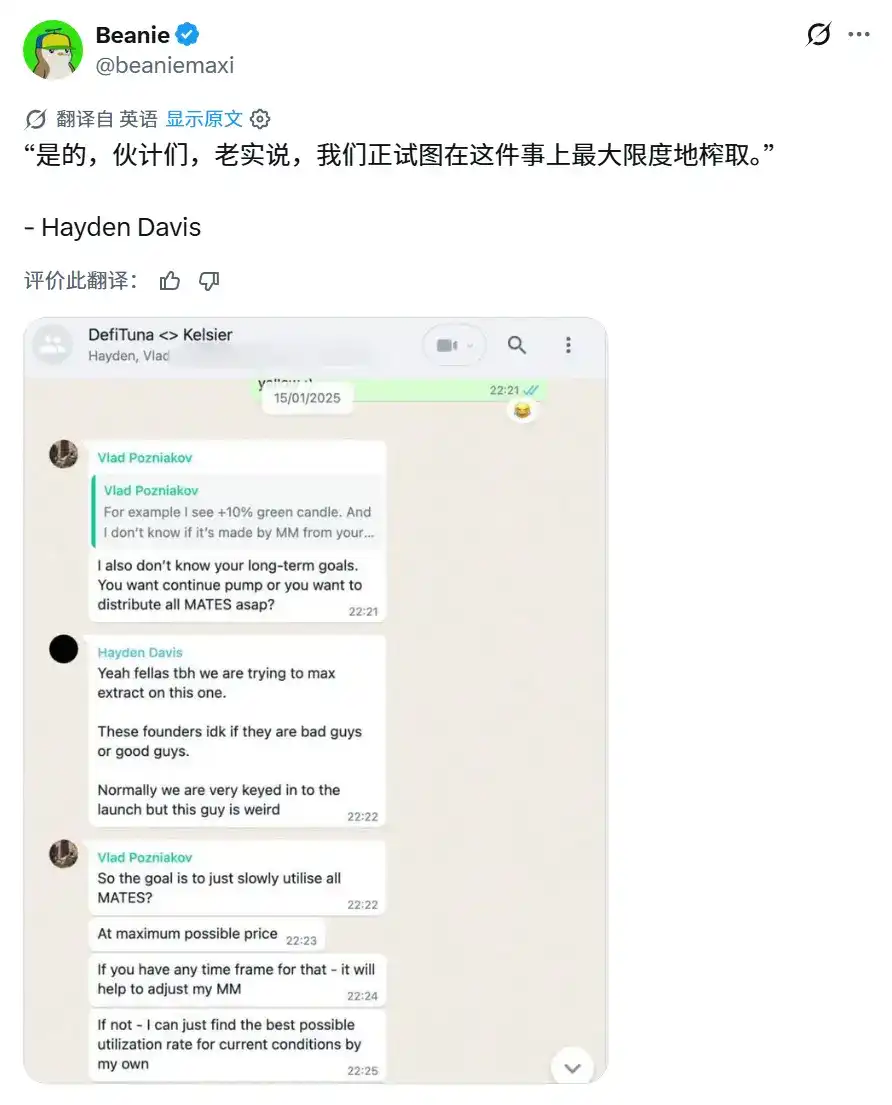
Promoting TPS over smart contract security, investing in the 10th general-purpose blockchain, raising funds at outrageous valuations, raising far more capital than needed, claiming security advantages that simply don't exist... these are all classic symptoms of severe crypto brain rot.

Placing bold bets on the direction of the industry is one thing—privacy coins, MoveVM, tokenized IP, decentralized social.

But burning money into another idiotic hype cycle or short-term cash grab is another matter entirely: RaaS, data availability, any L1 that tokens at a product with a multi-unicorn valuation before having a product, infrastructure solutions for crypto problems that don't exist or generate revenue...

(Full disclosure: I don't claim to be an investment genius, but I can do basic math. Buy pressure must exceed sell pressure.)

Where to Next?

Next, I will briefly talk about where the industry should go.

We need new L1 token models and a completely different way for crypto VCs to play. The current "low float, high FDV" paradigm works when valuations are lower and there is incremental capital flowing in.

But retail is no longer willing to pay for seed-round valuations that are 1000x at TGE, nor withstand the selling pressure from massive unlocks and insider staking rewards 12 months later.

L1s simply don't need hundreds of millions to launch a mainnet—unless I'm missing something. Raise enough to build the platform and go to market, then raise more later; everyone will be better off.

Token unlocks should be tied to milestones like CEX liquidity, payments, and DeFi lending, and on-chain governance should be given higher priority. Foundations should maintain at least some transparency regarding their balance sheets, expenses, and investments.

Retail doesn't want to pay for network security (i.e., validator rewards). Eventually, the network should be able to sustain itself without any staking rewards.

Maybe staking rewards shouldn't have existed from the start, and network or Labs revenue should go directly to validators. Then, see how hard validators would work.

Less and less value is flowing to the base layer, and we shouldn't be investing so much in their development. Gas fees on all chains are trending towards zero, successful applications are migrating to their own chains, and cross-chain bridging has never been easier.

So you can draw this conclusion: it's better to build an application (or appchain) first and then vertically integrate—Hyperliquid, Pump, etc. have done this.

I'm not saying to stop investing in general-purpose blockchains, but I do believe the core function of a network token should ultimately be a truly useful medium of exchange—permissionless L1s should be liquidity hubs for DeFi and testing grounds for new applications.

These are not new ideas. I think many L1 teams have realized: to survive, they need to build their own applications and services. The treadmill of foundations surviving by selling tokens is slowing down.

If you work in these teams on something that doesn't generate revenue, you might want to start thinking about what value you can create.

Interestingly, mass adoption by retail or institutions seems far less important than building a strong holder community and keeping them happy. When in doubt, ask the community.

Even if their advice is terrible, at least ask them who their favorite and least favorite person on your team is.

I hesitated for weeks about posting this. This is not a well-structured thought piece; it's more like a bunch of shower thoughts.

My point is: all L1s are making the same serious mistakes, differing only in luck and timing. The best-performing projects survive, usually due to stronger leadership and faster delivery, but the question of a sustainable value proposition remains unanswered.

We can continue down this long and painful path of value extraction, watching BTC maxis and sats stackers continue to outperform; or, we admit the problems with the current L1 model and start building for a slightly fairer outcome.


Трендові криптовалюти

Пов'язані питання

QWhat are the main reasons the author believes that general L1 tokens will trend towards zero?

AThe author cites four main reasons: linear token releases, failed value propositions, poor governance, and flawed industry leadership that prioritizes short-term gains over sustainable development.

QAccording to the author, why do large validators in Proof-of-Stake systems continue to sell their tokens despite economic incentives not to?

AThey sell because L1 tokens lack a long-term value proposition; the 'gas token' and 'governance' narratives are weak, and token value ultimately depends on what it can be used to purchase.

QWhat criticism does the author level against blockchain 'Labs' and Foundations?

AThe author criticizes them for acting as a tax on token holders by selling tokens to fund high operational expenses, over-hiring, and unsustainable spending without generating net new buy pressure for the token.

QWhat does the author propose as a better model for launching and funding L1s?

AThe author suggests that L1s do not need hundreds of millions to launch, token unlocks should be tied to milestones like CEX listings and DeFi adoption, and governance should be more community-driven with greater transparency from foundations.

QWhat is the author's view on the future direction of the industry, and what does 'Appchain' represent in the title?

AThe author believes value is moving away from base layers (L1s) and that the future lies in application-specific blockchains (Appchains), where successful applications migrate to their own chains, enabling vertical integration and a more sustainable model.

Пов'язані матеріали

Base Under Pressure

**Title: The Pressure Mounts for Base** Base, the Ethereum Layer 2 scaling solution backed by Coinbase, is facing significant pressure and public scrutiny from its leadership following the launch of Robinhood Chain. Base co-founder Jesse Pollak recently acknowledged strategic missteps, admitting that the chain's past focus on social and creator tokens (e.g., through Farcaster, Zora) failed to deliver sustainable adoption. He has refocused on core infrastructure, handing leadership of the Base App back to Coinbase's Cobie. While Base remains a top L2 contender alongside OP Mainnet and Arbitrum, and boasts the highest TVL (nearly $12B), its weaknesses are being highlighted by the new competitor. Key criticisms include its slow progress on decentralization. Base has faced issues with its single sequencer causing block production halts, and L2BEAT is reportedly considering downgrading its decentralization rating from Stage 1 to Stage 0. This contrasts sharply with the rapid initial success of Robinhood Chain, whose DEX quickly entered the top five by volume. The leadership styles of the parent companies are also being compared: Robinhood's CEO actively engages with new projects, while a recent incident where Coinbase's Brian Armstrong briefly changed his profile picture—sparking and then crashing a related meme token—drew community ire and mockery. Pollak stated Base is working with Coinbase on tokenized stocks backed 1:1 by real equity, differentiating it from Robinhood's derivatives model. However, the article argues that Base's most urgent task is to address its long-standing technical and trust issues. With more traditional finance players likely to emulate Robinhood's path, Base must use this competitive pressure to solidify its position as long-term financial infrastructure.

Foresight News13 хв тому

Base Under Pressure

Foresight News13 хв тому

White House Concession Removes Ethical Hurdle, Clarity Act Races Against Final Window Before Recess?

On July 21st, industry sources reported that the Trump administration has agreed to include an ethics provision in the "Clarity Act" (Digital Asset Market Clarity Act of 2025). This concession addresses the long-standing conflict-of-interest concerns regarding government officials and the crypto industry, potentially removing the final major obstacle to the bill's progress. Additionally, Patrick Witt, the executive director of the White House's Digital Asset Advisory Committee, confirmed he will remain in his role to help finalize the bill, alleviating previous concerns about his potential departure. The Clarity Act aims to establish a unified federal regulatory framework for the U.S. digital asset market. Its core objective is to resolve regulatory ambiguity by defining different types of digital assets (digital commodities, investment contract assets, and permitted payment stablecoins) and clarifying the respective oversight roles of the SEC and CFTC. This would end the long-running jurisdictional dispute between the two agencies and provide clearer compliance paths for the industry. With the ethics issue moving toward resolution, the most urgent challenge now is time. The U.S. Congress is set to begin its August recess in mid-August, leaving only a few working weeks to finalize the text and advance the bill through the Senate. Industry advocates, like the Blockchain Association's Kristin Smith, stress that this is a critical moment. If negotiations conclude successfully in the coming weeks, the Clarity Act could pass a key hurdle before the recess; otherwise, it may face significant delays. If enacted, the Clarity Act could mark a historic turning point in crypto regulation. By providing a clearer and more predictable legal framework, it aims to reduce uncertainty for businesses, developers, and traditional financial institutions looking to enter the digital asset space, potentially setting a global benchmark for market structure regulation.

Odaily星球日报18 хв тому

White House Concession Removes Ethical Hurdle, Clarity Act Races Against Final Window Before Recess?

Odaily星球日报18 хв тому

AI Era, Industrial Revolution, and Future Civilization Interview — Zhang Dingwen: The Future Does Not Belong to Chasers

"AI Era, Industrial Revolution and Future Civilization: An Interview with Zhang Dingwen – The Future Does Not Belong to Those Who Chase" In this interview, entrepreneur Zhang Dingwen reflects on his entrepreneurial journey and philosophy, moving beyond discussions of financing or success to emphasize understanding the "era" itself. He argues that true entrepreneurs should not chase short-term trends ("winds"), but position themselves in the direction of long-term technological and societal evolution. Zhang shares key lessons from his early days, including the realization that user value does not automatically translate to commercial value. For him, the core of entrepreneurship is not building a company but constantly upgrading one's own "cognition" – the ability to interpret information, ask the right questions, and understand the underlying "causes" behind business outcomes, not just the effects. His thinking has evolved from a focus on creating good products to a strategic focus on building "entrances" – platforms that naturally connect users to digital services. He sees smart wearables, like watches, not merely as hardware but as potential future gateways combining technological, financial, social, and even fashion attributes to create sustained user relationships and ecosystems. Ultimately, Zhang's vision transcends individual products or companies. He discusses business competition in three stages: product, platform, and finally, "civilization" – where the greatest companies influence how society operates by defining new rules and ways of life. He believes the mission of a truly great enterprise is to solve problems of its time, build enduring trust, and contribute lasting value, leaving behind not just wealth but a positive impact on how the world works. The future, he concludes, belongs not to the fastest, but to those with the correct long-term direction and a commitment to continuous learning and evolution.

marsbit29 хв тому

AI Era, Industrial Revolution, and Future Civilization Interview — Zhang Dingwen: The Future Does Not Belong to Chasers

marsbit29 хв тому

Cryptocurrency & Stock Market Barometer丨Strategy Cash Reserves Increase to $3.23 Billion, Halting BTC Purchases; Vanguard and Other Asset Managers Increase Holdings in Strategy Stock (July 21)

Market Overview & Warnings: The article warns of high volatility in South Korean stocks and continued dependence on U.S. stocks on geopolitics. Chinese A-shares remain under pressure. It advises against using leverage in current equity markets. For crypto-linked stocks, most have limited growth except Robinhood, with caution advised. U.S. Stock Market: Bearish bets on U.S. stocks, particularly targeting AI-related companies, have reached record highs since 2010, signaling deep skepticism about the sustainability of the AI-driven rally. Tech and chip stocks led a market decline, with the Philadelphia Semiconductor Index potentially entering a bear market. Increased expectations for Federal Reserve interest rate hikes and geopolitical tensions contributed to the negative sentiment. Bitcoin Treasury Company Updates: * Strategy: Increased its cash reserves to $3.23 billion and paused Bitcoin purchases. Several major asset managers, including Vanguard Group and Capital Group, increased their holdings of Strategy (MSTR) stock. * Global corporate Bitcoin buying slowed significantly to just $1.33 million last week. * Other notable activity: Strive purchased 21 BTC; ORANGE JUICE raised $40 million for Bitcoin acquisitions; Bitcoin Japan Corp. raised $60 million, allocating $4.08 million for its first BTC purchase. Other Crypto Treasury Holdings: * Ethereum: BitMine increased its ETH holdings to 5.78 million, nearing its 5% of supply goal. Its total crypto assets, cash, and securities are valued at $11.5 billion. * Solana: No significant corporate treasury activity reported. * Altcoins: HypeStrat made no adjustments to its treasury; its mNAV ratio fell to a long-term low. (Note: This summary is for informational purposes only and does not constitute investment advice.)

marsbit30 хв тому

Cryptocurrency & Stock Market Barometer丨Strategy Cash Reserves Increase to $3.23 Billion, Halting BTC Purchases; Vanguard and Other Asset Managers Increase Holdings in Strategy Stock (July 21)

marsbit30 хв тому

Торгівля

Спот

Популярні статті

Як купити ERA

Ласкаво просимо до HTX.com! Ми зробили покупку Caldera (ERA) простою та зручною. Дотримуйтесь нашої покрокової інструкції, щоб розпочати свою криптовалютну подорож.Крок 1: Створіть обліковий запис на HTXВикористовуйте свою електронну пошту або номер телефону, щоб зареєструвати обліковий запис на HTX безплатно. Пройдіть безпроблемну реєстрацію й отримайте доступ до всіх функцій.ЗареєструватисьКрок 2: Перейдіть до розділу Купити крипту і виберіть спосіб оплатиКредитна/дебетова картка: використовуйте вашу картку Visa або Mastercard, щоб миттєво купити Caldera (ERA).Баланс: використовуйте кошти з балансу вашого рахунку HTX для безперешкодної торгівлі.Треті особи: ми додали популярні способи оплати, такі як Google Pay та Apple Pay, щоб підвищити зручність.P2P: Торгуйте безпосередньо з іншими користувачами на HTX.Позабіржова торгівля (OTC): ми пропонуємо індивідуальні послуги та конкурентні обмінні курси для трейдерів.Крок 3: Зберігайте свої Caldera (ERA)Після придбання Caldera (ERA) збережіть його у своєму обліковому записі на HTX. Крім того, ви можете відправити його в інше місце за допомогою блокчейн-переказу або використовувати його для торгівлі іншими криптовалютами.Крок 4: Торгівля Caldera (ERA)Легко торгуйте Caldera (ERA) на спотовому ринку HTX. Просто увійдіть до свого облікового запису, виберіть торгову пару, укладайте угоди та спостерігайте за ними в режимі реального часу. Ми пропонуємо зручний досвід як для початківців, так і для досвідчених трейдерів.

500 переглядів усьогоОпубліковано 2025.07.17Оновлено 2026.06.02

Як купити ERA

Обговорення

Ласкаво просимо до спільноти HTX. Тут ви можете бути в курсі останніх подій розвитку платформи та отримати доступ до професійної ринкової інформації. Нижче представлені думки користувачів щодо ціни ERA (ERA).

活动图片