KuCoin Institutional Premiere 2026 Highlights Long-Term Growth and Market Resilience

TheNewsCryptoОпубліковано о 2026-02-13Востаннє оновлено о 2026-02-13

Анотація

The inaugural KuCoin Institutional Premiere 2026, held in Hong Kong, emphasized long-term structural growth and institutional engagement over short-term price volatility. KuCoin CEO BC Wong and COO Ethan Cheng highlighted the importance of building credibility through discipline, transparency, and robust risk management during challenging market periods. Discussions centered on portfolio risk management, liquidity dynamics, execution efficiency, and security requirements, reflecting a shift toward structural stability and resilience. The event underscored that institutional participation in digital assets is increasingly driven by fundamentals rather than speculation, signaling the maturation of the cryptocurrency market.

A continuous focus on long-term structural growth and institutional participation was underlined during the first KuCoin Institutional Premiere 2026, which took place in Hong Kong. This event took place against the background of the recent movement of Bitcoin.

A total of over one hundred institutional customers and partners from various marketplaces across the world were present at the event. The Chief Executive Officer of KuCoin, BC Wong, and the Chief Operating Officer, Ethan Cheng, gave introductory comments in which they discussed the wider context of the current market cycle. Rather than basing conversation on short-term pricing swings, both CEOs focused on a broader fundamental question: how institutions and service providers may enhance long-term trust, governance standards, and operational resilience during times of downturn.
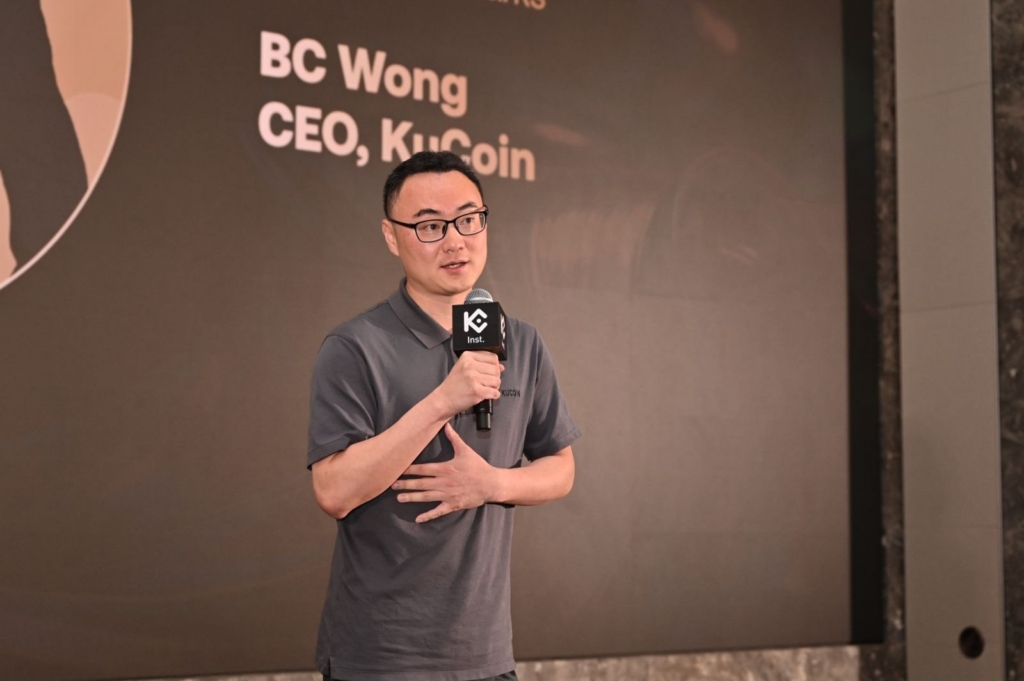
BC Wong, CEO of KuCoin, said:

“Volatility is a natural feature of digital asset markets. Long-term credibility is built not in periods of expansion, but through discipline, transparency, and robust risk management when market conditions are challenging.”

Ethan Cheng, COO of KuCoin, added:

“Institutional engagement in digital assets is increasingly driven by structural fundamentals rather than short-term price movements. Periods of volatility reinforce the importance of long-term alignment and risk-aware participation.”

This change in focus was mirrored in the conversations that took place throughout the evening. The viewpoints of the representatives of the institutions were discussed and shared about the management of portfolio risk, liquidity dynamics, execution efficiency, and security requirements. In a market climate that is more conservative, the conversation focused less on short-term success and more on how to preserve structural stability, responsiveness, and transparency in the market.

Amid the event, which was KuCoin Institutional’s first annual meeting of its sort, it acted as both a reflection on previous collaboration and an affirmation of ongoing commitment amid a period of less activity. A cautious posture was communicated to industry players during a gathering that took place in the midst of market uncertainties.

Although prices are subject to change, institutional discourse and structural development continue. The top actors in the sector have given a clear signal to the wider financial world, which is that the institutional underpinning of cryptocurrency is no longer founded on speculation, but rather on the methodical development of a mature, global market structure.


TagsexchangeKuCoin

Пов'язані питання

QWhat was the main focus of the KuCoin Institutional Premiere 2026 event according to the article?

AThe main focus was on long-term structural growth, institutional participation, and building long-term trust, governance standards, and operational resilience during market downturns, rather than short-term price movements.

QWhich KuCoin executives spoke at the event and what key points did they emphasize?

ACEO BC Wong emphasized that long-term credibility is built through discipline, transparency, and robust risk management during challenging market conditions. COO Ethan Cheng added that institutional engagement is increasingly driven by structural fundamentals rather than short-term price movements.

QWhat topics were discussed by institutional representatives during the event?

AThey discussed portfolio risk management, liquidity dynamics, execution efficiency, security requirements, and how to preserve structural stability, responsiveness, and transparency in the market.

QHow does the article characterize the current institutional approach to cryptocurrency markets?

AThe article states that institutional involvement is no longer primarily based on speculation but on the methodical development of a mature, global market structure, focusing on long-term alignment and risk-aware participation.

QWhere did the KuCoin Institutional Premiere 2026 take place and what was significant about this event?

AThe event took place in Hong Kong and it was KuCoin Institutional's first annual meeting of its kind, serving as both a reflection on previous collaboration and an affirmation of ongoing commitment during a period of market uncertainty.

Пов'язані матеріали

Global Stock Market's Storm Center: South Korea's Stock Market De-leveraging Is Largely Complete

Storm's Eye: South Korean Market De-leveraging Nears Completion The recent sharp correction in South Korean equities, with the KOSPI index dropping 32% from its June high, has been a key trigger for global tech stock volatility. The core driver was not a fundamental shift but a forced de-leveraging process within the market's unique structure, which is now largely complete. Two main leverage channels amplified the sell-off: 1. **Leveraged ETFs:** Their size, proportionally four times larger than in the U.S., peaked near $50 billion. Their mandatory daily rebalancing mechanism created a vicious cycle of "price drop → forced selling → further drop." Approximately 75% of this excess has been unwound, shrinking to $26 billion, with regulatory curbs now blocking new inflows. 2. **Hedge Fund Leverage:** Using swaps to magnify exposure, hedge funds saw their net long positioning fall by over 50% from peak levels. The most intense phase of this institutional de-leveraging is over. In contrast, **retail margin debt** poses minimal systemic risk. At 0.5% of market cap, it is far lower than in the U.S. or China, lacks automatic triggers, and is concentrated in smaller stocks. The conclusion: the high-leverage structures most prone to "chain-reaction selling" have been substantially cleared. The market is transitioning from a liquidity-driven crash to one priced more on fundamentals. The article argues that the AI trend—centered on Korean memory chips—remains intact. This episode represents a painful but necessary clearing of crowded trades, not the end of the AI revolution. For investors, the key question is conviction in the long-term AI direction; if the trend is real, current volatility is a cost of entry, not a terminal risk.

链捕手1 год тому

Global Stock Market's Storm Center: South Korea's Stock Market De-leveraging Is Largely Complete

链捕手1 год тому

Торгівля

Спот
活动图片




