Kelp DAO Vulnerability Triggers Exodus of Hundreds of Billions; Two Major DeFi Lending Pathologies Clash Head-On

marsbitОпубліковано о 2026-05-29Востаннє оновлено о 2026-05-29

Анотація

Title: Kelp DAO Exploit Triggers $15 Billion Exodus, Exposing a Clash Between Two DeFi Lending Models. In April 2026, a hacker exploited a LayerZero bridge vulnerability in the Kelp DAO project, minting $292 million in fake rsETH tokens. These were deposited into Aave as collateral to borrow real Ethereum, draining the protocol's liquidity. Within three and a half days, Aave saw $15 billion in deposits flee, forcing a costly $160 million bailout. The root cause was identified as Aave's governance, which had previously voted to set rsETH's loan-to-value ratio to a risky 93%, leaving minimal safety margin. This incident starkly contrasts with the experience of Morpho, the second-largest DeFi lending protocol. Some fake rsETH also flowed into Morpho, but the exposure was limited to $1 million across isolated, pre-configured markets, preventing systemic contagion. The event highlights a fundamental divergence in DeFi lending architectures. Aave employs a shared liquidity pool model, where all deposits back all approved collateral assets, governed by DAO vote. This creates systemic risk, as seen when even users who never interacted with rsETH faced frozen funds. Furthermore, Aave's governance, influenced by leveraged borrowers, prioritized their interests during the crisis, even lowering borrowing rates for frozen markets at the expense of safer depositors. Its supplemental insurance mechanism, Umbrella, also failed as providers withdrew capital when needed. Morpho operates on...

Author: Vaidik Mandloi

Compilation: Saoirse, Foresight News

The underlying principles of all lending protocols in DeFi are largely similar: users deposit stablecoins or Ethereum into a shared liquidity pool, and borrowers draw funds from it after pledging assets; decentralized autonomous organizations (DAOs) vote to decide which assets can serve as collateral and their corresponding loan-to-value (LTV) ratios. Aave has developed a deposit scale of $500 billion precisely by relying on this model. For most of DeFi's development, this has been the industry's sole operating model, and its rationality has never been truly questioned.

However, on April 18, 2026, a hacker exploited a vulnerability in the LayerZero cross-chain bridge of the Kelp DAO project to forge rsETH tokens worth $292 million. The hacker deposited these counterfeit tokens into Aave as collateral to borrow real Ethereum. Within hours, the utilization rates of Aave's major mainstream lending markets reached 100%, meaning all available funds within the protocol had been fully borrowed. Over the next three and a half days, the platform lost $15 billion in deposits. Ultimately, Aave had to collaborate with various ecosystem parties to conduct a rescue, raising $160 million to cover the losses.

Although this vulnerability originated from the Kelp DAO project, the root cause of such massive losses lies in Aave's governance mechanism. As early as January of this year, a community vote decided to raise the collateral factor for rsETH to 93%, leaving only a 7% safety margin for such assets. It was this single decision that brewed one of the largest bank runs in the history of DeFi lending.

On the same day, some of the forged rsETH tokens also flowed into Morpho, the second-largest DeFi lending protocol. However, the risk exposure was only $1 million and dispersed across two independent, small isolated markets, failing to trigger a chain-reaction crisis.

Upon conducting in-depth research into this incident, I discovered that behind this event lies far more than a simple security attack.

Core Differences Between the Two Models

To understand why Aave hemorrhaged billions while Morpho remained largely unscathed, we must first clarify the fund placement and operational logic of the two protocol types.

When you deposit USDC into Aave, the funds flow into a single master liquidity pool, supporting lending activities for all community-approved assets like Ethereum and staked tokens. Depositors cannot choose the type of collateral asset their funds correspond to; all related rules are set by DAO votes. Therefore, when rsETH faced collapse risk, even ordinary users who had only deposited USDC and never touched rsETH found their assets frozen—everyone's funds were in the same risk pool, suffering collective losses.
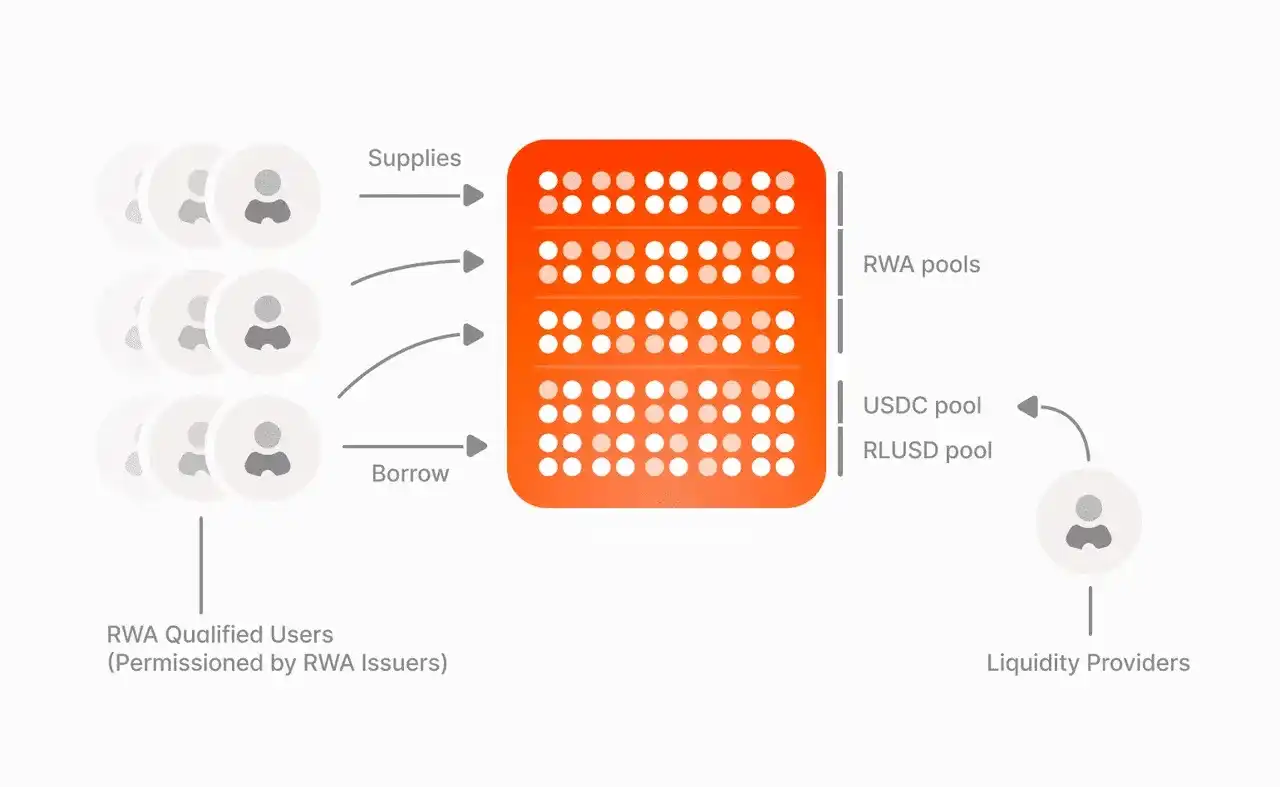
Source: BingX

More critically, while the market was halted and users couldn't withdraw, Aave's governance layer actually lowered the borrowing rates for the frozen Ethereum markets, aiming to protect borrowers who had leveraged rsETH. Since deposit rates are directly linked to borrowing rates, depositors with the lowest risk and principal security saw their deposit yields shrink further.

In traditional credit systems, lenders with the lowest risk enjoy priority in repayment. However, Aave completely inverted this rule. The reason is that borrowers engaged in rsETH leveraged trading are also the most active voting group in community governance. When risk erupts, high-risk participants holding governance power naturally prioritize protecting their own interests.

Aave launched an insurance mechanism called Umbrella in late 2025, attempting to address such bad debt risks. Users could stake Ethereum; if the protocol incurred bad debts, the staked assets would be used for compensation. However, after the Kelp DAO crisis erupted, 18,922 out of 23,507 staked aWETH positions entered an unstaking waiting period, with nearly 80% of the insurance pool's funds withdrawing collectively.

This mechanism ultimately failed completely. On-chain insurance relies on voluntary user participation, and capital providers inevitably choose to exit when real risk materializes—after all, their assets only face substantial loss when a crisis occurs. This leads to such insurance often existing during peaceful times but becoming ineffective precisely when protection is needed.

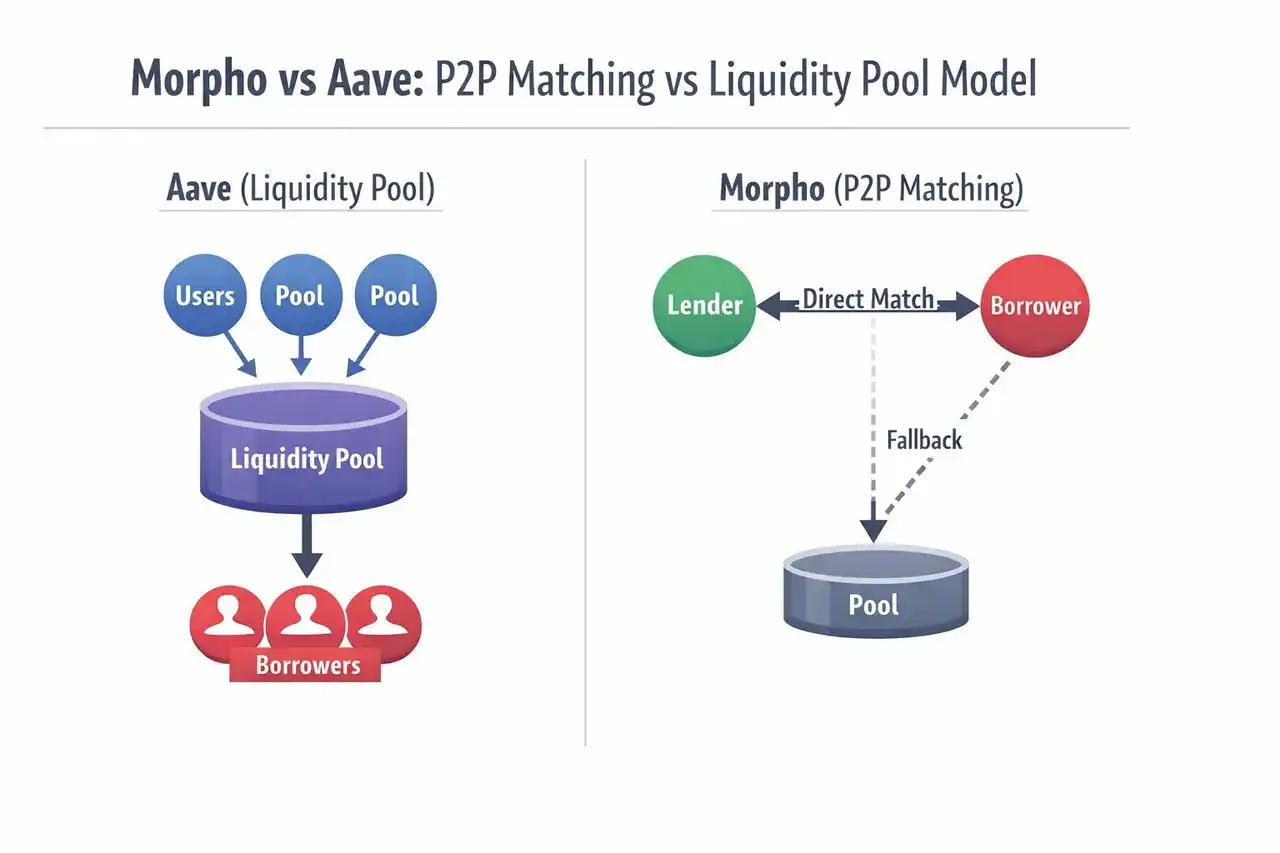
Morpho's operational model is entirely different. It abandons the unified shared liquidity pool. Anyone can create an independent, isolated lending market, pre-setting the loan asset, collateral asset, price oracle, and interest rate model. Once parameters are deployed, they cannot be modified. To adjust risk levels, one can only create a new market.
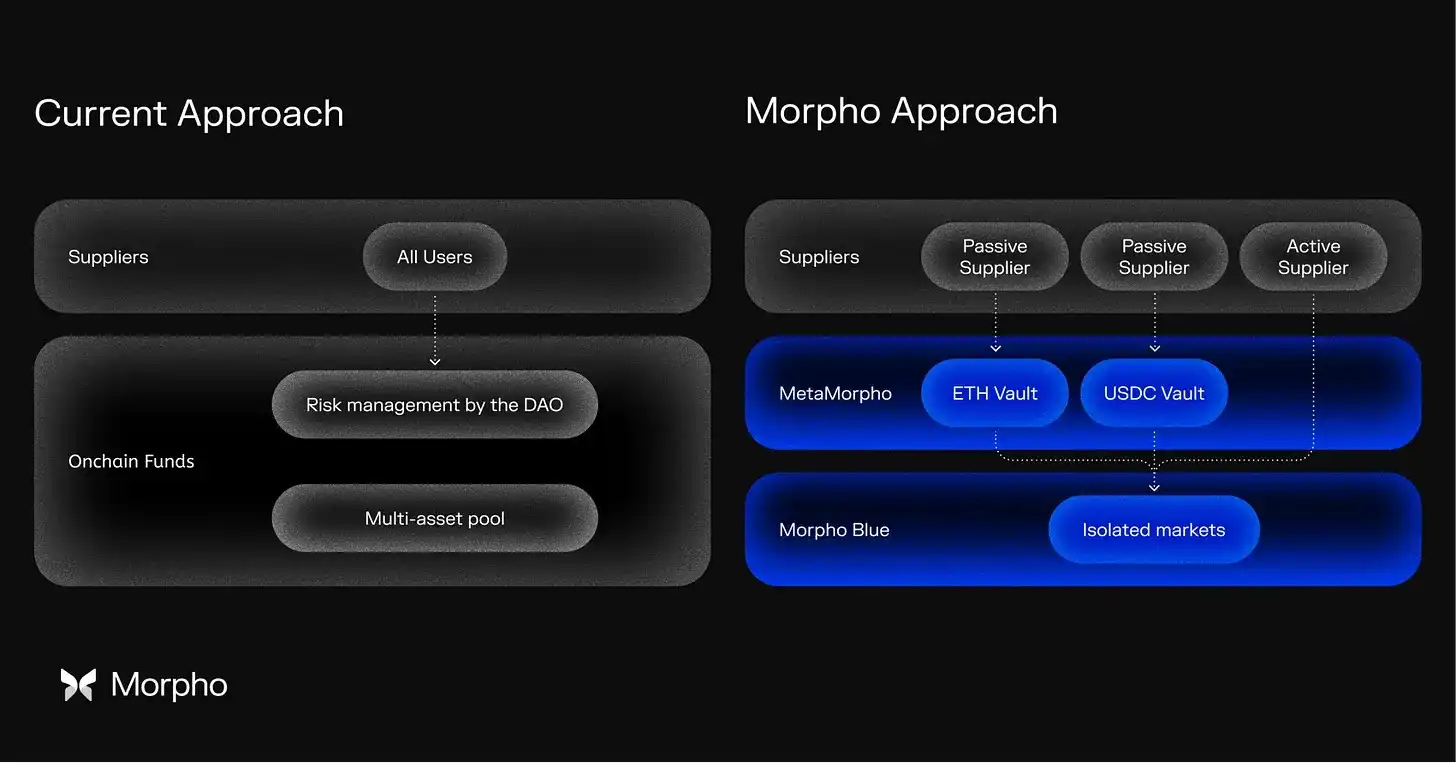
Differences in underlying architecture between the traditional DeFi lending model (represented by Aave) and Morpho's "Morphological" model.

Furthermore, Morpho introduces independent risk management institutions (Stewards), such as Gauntlet and Steakhouse Financial. These entities establish vaults, allocate funds to different markets based on their own analysis, and charge performance fees; if losses occur, they are confined within their own vaults. Gauntlet also provided risk advice for Aave, but in Aave's system, its professional opinions were often overruled by token holders seeking high yields through voting, a situation Morpho prevents at its root.

The Overlooked Hidden Cost

Aave and Morpho are currently the two most widely applied lending models in the crypto space: Aave uses the shared liquidity pool model where all deposits are aggregated, with risk rules set by community votes; Morpho advocates the isolated market model, where each lending pair is independent, with risks managed autonomously by professional institutions.

The Kelp DAO vulnerability exposed the flaws and weaknesses of the shared pool model. But even during stable periods without security incidents, this model harbors a long-overlooked hidden cost. Aave's three core markets on Ethereum (Ethereum, USDT, USDC) contribute 89% of the platform's lending volume. In these three markets, deposit rates are consistently 25% to 35% lower than borrowing rates. This spread essentially represents idle funds lying dormant in the liquidity pool; depositors cannot profit from them, yet borrowers still bear the full borrowing cost.

The interest rate mechanism adjusted based on utilization rates can push rates higher when risk increases but cannot activate idle funds when lending demand is low, leaving large amounts of assets stranded in the pool generating no yield. In these three markets alone, the annual value erosion due to idle funds amounts to approximately $52 million, close to a quarter of Aave's annualized revenue for one quarter. Even zeroing out the reserve ratio and canceling platform fees cannot solve the idle fund issue—it's an inherent shortcoming of the shared pool architecture.

Morpho's interest rate model aims to maintain a utilization rate of around 90%, significantly higher than Aave's 60% to 80% range. This model can sustain high utilization because deposits within the platform are not re-used as collateral for other loans, avoiding chain-liquidation risks at the source and thus eliminating the need to reserve large amounts of capital as a risk buffer. When lending demand is strong and funds are heavily borrowed, rates automatically increase, attracting more depositors; when lending demand is weak, rates decrease, stimulating borrowing. The entire system achieves dynamic balance without requiring community votes.
Source: Gate.com

Actual data confirms its advantage: even after deducting Steward fees, the yield offered to depositors by Morpho's top USDC vaults still exceeds that of Aave and Compound. Currently, Morpho's deposit-to-loan ratio is 41%, while Aave's is 39%, and the former's scale reaches tens of billions of dollars, meaning the yield advantage benefits all depositors on the platform day after day.

Institutional Choice: Which is More Trustworthy?

Surprisingly, all of Coinbase's crypto asset lending services are built on Morpho. The related loan scale has now surpassed $2 billion, and over 100 million platform users are indirectly enjoying the returns provided by Morpho.

Most users aren't even aware they are using DeFi services. Coinbase did not develop its own lending system nor choose another platform. The core reason is that Morpho's underlying architecture allows the platform to independently set risk parameters, select partner risk institutions, and maintain full control over the entire product experience.

Apollo Global Management, a global asset manager with over $1 trillion in assets under management and 30 years of experience in private credit, recently signed a four-year cooperation agreement, planning to acquire up to 90 million MORPHO tokens, accounting for 9% of the total token supply. The institution is connecting its tokenized fund assets to Morpho as collateral, with Gauntlet responsible for vault management and market stress testing.

Beyond that, Anchorage Digital, the first federally chartered native crypto bank in the US, has connected its institutional clients managing hundreds of billions to Morpho vaults; SG-FORGE, the compliant arm of French banking giant Société Générale, is the first licensed bank to implement DeFi lending business through Morpho.

These heavily regulated traditional financial institutions collectively chose Morpho, with a highly consistent core demand: the isolated market model allows them to meet their own compliance and risk control requirements without relying on DAO decisions. In contrast, all market rules in Aave inevitably involve community voting, completely incompatible with institutions' need for autonomous control.

Changes in the regulatory environment have further amplified this trend. The US "GENIUS Act" stipulates that stablecoin issuers cannot directly distribute investment returns, meaning stablecoin institutions require neutral underlying infrastructure to activate vast amounts of idle assets. US-related projections show that by 2028, the scale of stablecoin reserves invested in US Treasury bonds will surge from the current $120 billion to over $1 trillion. This massive pool of capital urgently needs a lending foundation that allows asset custodians to control their own risks, and Morpho is currently the most fitting choice.

Пов'язані питання

QWhat was the root cause of the massive $15 billion deposit outflow from Aave following the Kelp DAO exploit?

AThe root cause was Aave's governance mechanism. Earlier, the community had voted to increase the loan-to-value (LTV) ratio for rsETH to 93%, leaving a very thin safety margin of 7%. When fake rsETH tokens were deposited as collateral, it quickly drained the shared liquidity pool, causing the massive withdrawal.

QWhat is the fundamental difference in the operational models between Aave and Morpho as described in the article?

AAave uses a shared liquidity pool model where all deposits are pooled together to back all approved assets, with rules set by DAO governance. Morpho uses an isolated market model, where each lending market is separate with its own parameters set at creation, managed independently by professional risk stewards.

QWhy did Aave's Umbrella insurance mechanism fail during the crisis, according to the article?

AThe mechanism failed because it relies on voluntary participation. When the crisis hit, nearly 80% of the staked insurance funds (aWETH) entered the unstaking period and were withdrawn. Participants were incentivized to leave to avoid losses, rendering the insurance pool ineffective when it was needed most.

QWhat 'hidden cost' does the shared pool model like Aave's incur during normal market conditions?

AA significant hidden cost is idle capital due to low capital efficiency. In Aave's top three markets, the spread between deposit and borrow rates (25-35%) represents idle funds that earn no yield for depositors but whose cost is still borne by borrowers, leading to an estimated annual value drain of $52 million.

QWhy are regulated traditional financial institutions like Coinbase and Apollo Global Management choosing Morpho over Aave for their DeFi lending operations?

AThey choose Morpho because its isolated market model allows them to set their own risk parameters and choose their risk stewards, giving them full control and compliance. This is essential for meeting regulatory requirements, unlike Aave's model where all market rules are subject to community DAO votes.

Пов'язані матеріали

SpaceX, OpenAI, Anthropic: The Three AI Giants Racing for IPO, Which One Is Worth Betting On?

SpaceX, OpenAI, and Anthropic are poised for historic IPOs within weeks, potentially raising a combined $180 billion—a sum exceeding the entire internet bubble's fundraising. The hosts of the Limitless Podcast argue this isn't just individual company financing but an unprecedented capital concentration for AI infrastructure, driven by an insatiable need for compute, data centers, power, and chips. SpaceX's IPO is notable for reportedly changing market index rules to allow faster inclusion, potentially funneling trillions in passive retirement funds into its stock, despite its unproven space-based data center business model. In contrast, Anthropic demonstrates explosive growth, with ARR reportedly hitting $45 billion and approaching profitability, fueled by strong enterprise adoption of products like Claude Code. Google's separate $80 billion raise highlights the immense capital pressure, even for giants. The discussion acknowledges bubble risks but leans optimistic. The hosts contend the massive spending is building essential physical infrastructure for the next technological era. A key bottleneck isn't capital but the real-world limits of chip manufacturing and construction speed. As long as demand for AI compute outstrips supply, this investment cycle represents a foundational build-out rather than a purely financial bubble. All three companies are seen as foundational bets on the future, with Anthropic often cited as the most immediately compelling due to its proven revenue trajectory.

marsbit39 хв тому

SpaceX, OpenAI, Anthropic: The Three AI Giants Racing for IPO, Which One Is Worth Betting On?

marsbit39 хв тому

From 'Old Guys' to 'New Favorites': How AI Is Revaluing Old Infrastructure from Dell to Nokia?

From "Vintage Tech" to "New AI Darlings": How AI Revalues Old Infrastructure One year ago, tech giants like Dell, Nokia, Cisco, and Western Data were seen as slow-growth, low-valuation stories, far from the AI spotlight dominated by players like Nvidia. Now, these legacy tech stocks are gaining market attention, sparking debate on whether this is genuine industry revaluation or a temporary narrative. As AI moves from model parameters to real-world data centers, the market is recognizing companies with proven delivery and infrastructure capabilities. This shift marks a change in the AI investment thesis: from pure model and GPU focus to the complex systems engineering required for deployment. Companies like Dell, HPE, and Corning are being revalued not for being "sexy" AI innovators, but for their decades of accumulated expertise in supply chains, enterprise delivery, and infrastructure—assets that have become critical in the AI buildout phase. The revaluation is unfolding across three key infrastructure lines: 1. **Servers & System Integration:** Dell and HPE are emerging as crucial system integrators or "general contractors" for AI data centers, translating GPU orders into complete, deployable server racks integrated with power, cooling, and networking. 2. **Networking & Connectivity:** AI's scale demands robust high-speed connections. Corning (fiber optics), Nokia (AI-RAN, 6G), and Cisco (data center switches) are gaining importance for enabling efficient data transfer within and between AI clusters. 3. **Storage:** Beyond high-speed memory (HBM/DRAM), the AI data explosion is driving demand for high-capacity hard drives (HDDs) from companies like Western Digital and Seagate to handle training data, logs, and cold storage cost-effectively. For this revaluation to be substantive and not just a narrative, three criteria are key: 1) Concrete AI-related order and revenue growth (e.g., Dell's AI server sales), 2) Upward revisions to company financial guidance, and 3) Sustainable improvements in profit quality, not just top-line revenue spikes. In essence, AI's transition to a real construction phase is re-pricing "old assets" against "new demand." The opportunity, however, is selective. Only those legacy firms that are demonstrably integrated into the capital expenditure chains of data center and enterprise AI deployment are likely to experience a true "logic re-rating" rather than just a temporary valuation bounce.

marsbit45 хв тому

From 'Old Guys' to 'New Favorites': How AI Is Revaluing Old Infrastructure from Dell to Nokia?

marsbit45 хв тому

The Merger of Codex and ChatGPT Marks the Beginning of a Major Reshuffle in Programming Tools

OpenAI is shifting its strategic focus from ChatGPT to Codex, merging them along with the browser tool Atlas into a unified desktop super-app. This move signals an internal belief that Codex, originally a programming tool, represents the next evolution of AI more than conversational models like ChatGPT. Over the past year, Codex's weekly active users have surged past 5 million. The key distinction is that while ChatGPT answers questions, Codex executes tasks. Enterprises increasingly value this ability to get work done over simply receiving advice. Consequently, Codex is attracting professionals beyond developers, including analysts, bankers, marketers, and product managers. OpenAI's reorganization and increased investment in Codex stem from recognizing that the future of AI competition lies in execution capabilities, not just conversation. The company is launching role-specific plugins (e.g., for data analysis, sales, design) to transform Codex into a broad knowledge work platform that automates and redefines white-collar workflows. Beyond being a tool, Codex reflects OpenAI's ambition to redefine software. New features like "Sites"—which generates interactive websites from documents—and collaborative "Annotations" aim to create a paradigm where the AI understands the goal and handles the tools and steps, functioning more like a digital colleague than traditional software. The ultimate goal is a unified experience where the user cares only about the completed task.

marsbit54 хв тому

The Merger of Codex and ChatGPT Marks the Beginning of a Major Reshuffle in Programming Tools

marsbit54 хв тому

Interpreting Investment Opportunities in the Age of Great Navigation, Invesco Great Wall Fund Releases '2026 Report on Chinese Enterprises Going Global'

Invesco Great Wall Fund has released its "2026 China Corporate Globalization Report," titled "The 'Great Navigation Era' of Chinese Enterprises." The report analyzes the new trends and investment opportunities as Chinese companies expand globally, moving from simple product exports to comprehensive overseas operations involving services, branding, and local production. Driven by factors like trade friction, the pursuit of higher profit margins abroad, and policy support, globalization is becoming essential for Chinese companies. The report outlines an evolution: from early product export ("Globalization 1.0") to the current "Globalization 2.0," characterized by overseas capacity, capital goods investment, consumer brand expansion, and service exports. Chinese firms' competitive advantages are highlighted, including a vast engineer talent pool, low-cost and robust infrastructure, and complete industrial clusters. Specific sectors with significant出海 potential are identified: * **Capital Goods** (e.g., engineering machinery, power equipment): Benefiting from global demand, especially in Belt & Road markets and the AI-driven power grid upgrade cycle. * **Consumer Brands**: Transitioning from cost to brand advantage, leveraging供应链 efficiency. * **Technology & Innovation**: Including AI applications, optical modules within global tech supply chains, and new energy vehicles focusing on local production. * **Pharmaceuticals**: Chinese biotech firms are becoming preferred partners for global pharma, with potential for breakthrough drugs in areas like oncology and weight loss. The report concludes that corporate globalization represents a sustained, core theme for China's capital markets, though companies must navigate challenges like geopolitics and localization.

marsbit1 год тому

Interpreting Investment Opportunities in the Age of Great Navigation, Invesco Great Wall Fund Releases '2026 Report on Chinese Enterprises Going Global'

marsbit1 год тому

Торгівля

Спот
Ф'ючерси

Популярні статті

Як купити DAO

Ласкаво просимо до HTX.com! Ми зробили покупку DAO Maker (DAO) простою та зручною. Дотримуйтесь нашої покрокової інструкції, щоб розпочати свою криптовалютну подорож.Крок 1: Створіть обліковий запис на HTXВикористовуйте свою електронну пошту або номер телефону, щоб зареєструвати обліковий запис на HTX безплатно. Пройдіть безпроблемну реєстрацію й отримайте доступ до всіх функцій.ЗареєструватисьКрок 2: Перейдіть до розділу Купити крипту і виберіть спосіб оплатиКредитна/дебетова картка: використовуйте вашу картку Visa або Mastercard, щоб миттєво купити DAO Maker (DAO).Баланс: використовуйте кошти з балансу вашого рахунку HTX для безперешкодної торгівлі.Треті особи: ми додали популярні способи оплати, такі як Google Pay та Apple Pay, щоб підвищити зручність.P2P: Торгуйте безпосередньо з іншими користувачами на HTX.Позабіржова торгівля (OTC): ми пропонуємо індивідуальні послуги та конкурентні обмінні курси для трейдерів.Крок 3: Зберігайте свої DAO Maker (DAO)Після придбання DAO Maker (DAO) збережіть його у своєму обліковому записі на HTX. Крім того, ви можете відправити його в інше місце за допомогою блокчейн-переказу або використовувати його для торгівлі іншими криптовалютами.Крок 4: Торгівля DAO Maker (DAO)Легко торгуйте DAO Maker (DAO) на спотовому ринку HTX. Просто увійдіть до свого облікового запису, виберіть торгову пару, укладайте угоди та спостерігайте за ними в режимі реального часу. Ми пропонуємо зручний досвід як для початківців, так і для досвідчених трейдерів.

177 переглядів усьогоОпубліковано 2024.12.11Оновлено 2026.06.02

Як купити DAO

Обговорення

Ласкаво просимо до спільноти HTX. Тут ви можете бути в курсі останніх подій розвитку платформи та отримати доступ до професійної ринкової інформації. Нижче представлені думки користувачів щодо ціни DAO (DAO).

活动图片