Just Now, Chinese AI Enters Top 2 in Global Programming, Only Claude Remains Ahead

marsbitОпубліковано о 2026-05-27Востаннє оновлено о 2026-05-27

Анотація

**China's AI Ranks Second Globally in Programming, Trailing Only Claude** Today, Alibaba's Qwen3.7-Max achieved a score of 1541 on the Code Arena benchmark, securing fourth place globally and surpassing top models like GPT-5.5 and Gemini 3.5 Flash. Among the top positions, it is now the only non-Claude model, placing second overall after Anthropic's Opus models. Before this official ranking, Qwen3.7-Max had already gained recognition overseas. In practical tests, it outperformed rivals on tasks like creating a self-training Tetris AI and generating complex 3D models, often at a significantly lower cost. Developers praised its ability, especially when integrated with tools like Hermes Agent and OpenCode, to effectively replace models such as GPT-5.5. In a hands-on challenge to create a 3D racing game from a detailed prompt, Qwen3.7-Max delivered a fully playable HTML file in the first attempt, requiring only minor bug fixes. It uniquely included a start menu and sound effects—details missed by other models. While competitors like Gemini 3.5 Flash and Claude Opus 4.6 produced less polished or functional versions, and GPT-5.5 had its own quirks, Qwen3.7-Max stood out for its initial completeness and playability. This performance stems from its design as an "Agent Base Model," built for long-duration, autonomous task execution. Internal tests show it can run continuously for 35 hours, making over 1158 tool calls without context degradation or instruction drift. Key technical ...

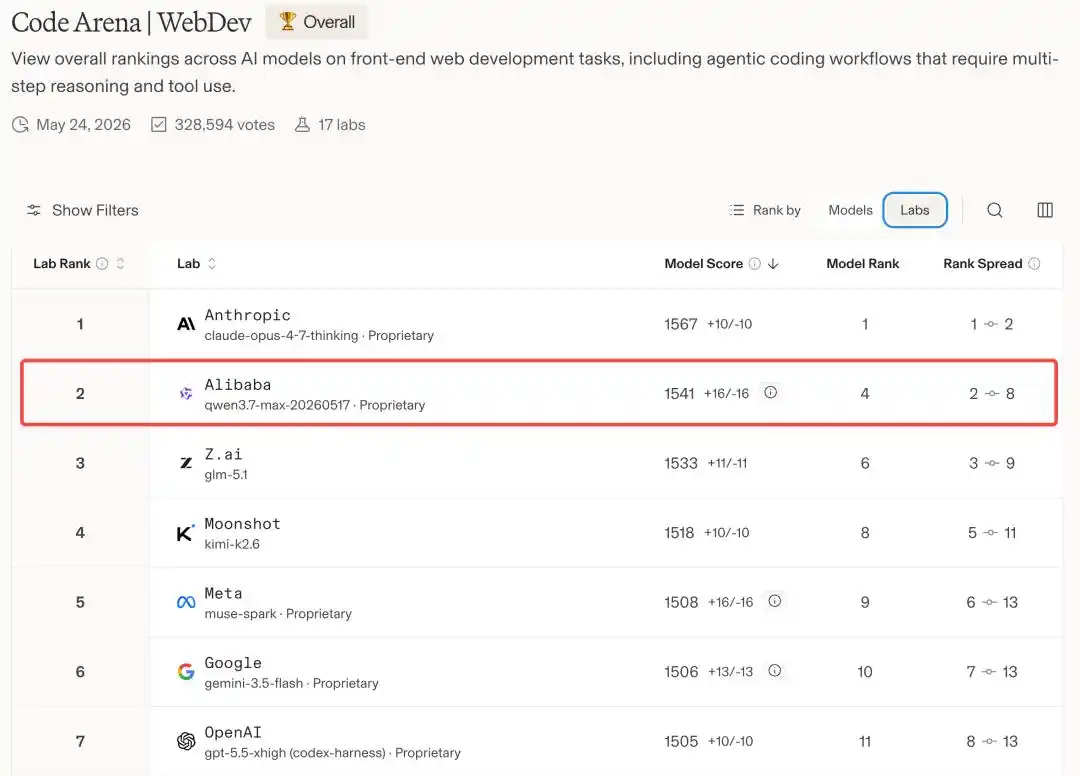
Today, the latest Code Arena leaderboard is out!

Qwen3.7-Max, with a score of 1541 points, broke into the global top four, surpassing top-tier models like GPT-5.5 and Gemini 3.5 Flash.

Ahead of it, only Claude Opus 4.7 and Opus 4.6 remain.
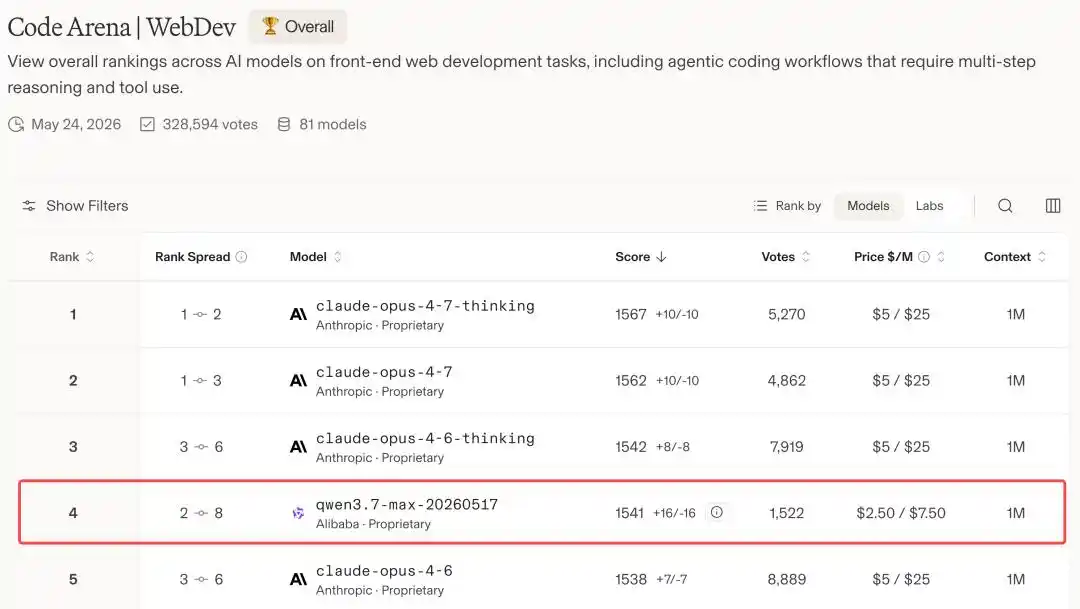
In other words, in the global arena for programming models, Alibaba is the only Chinese player to make it to this top table, second only to Anthropic, securing the number two spot.

Qwen3.7-Max Breaks into Global Top Five

The Only Non-Claude Model

Even before the Code Arena leaderboard was released, Qwen3.7-Max had already made a name for itself among overseas developer communities.


Atomic Chat conducted a head-to-head comparison, pitting Opus 4.7, GPT-5.5, and Qwen3.7-Max against each other on a task to write a self-training Tetris AI.

The result? Qwen3.7-Max not only outperformed both Opus 4.7 and GPT-5.5 at a token cost of just $1.32 but also improved performance by 56%.
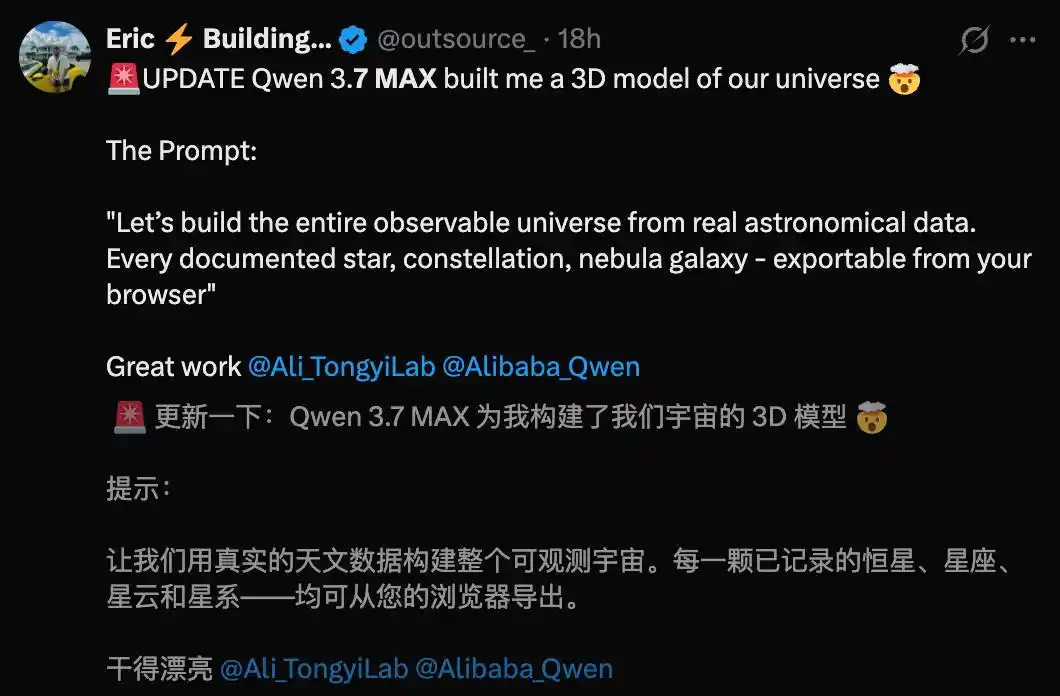
Another overseas developer had Qwen3.7-Max build a 3D model of the universe, and the result was described as stunning.
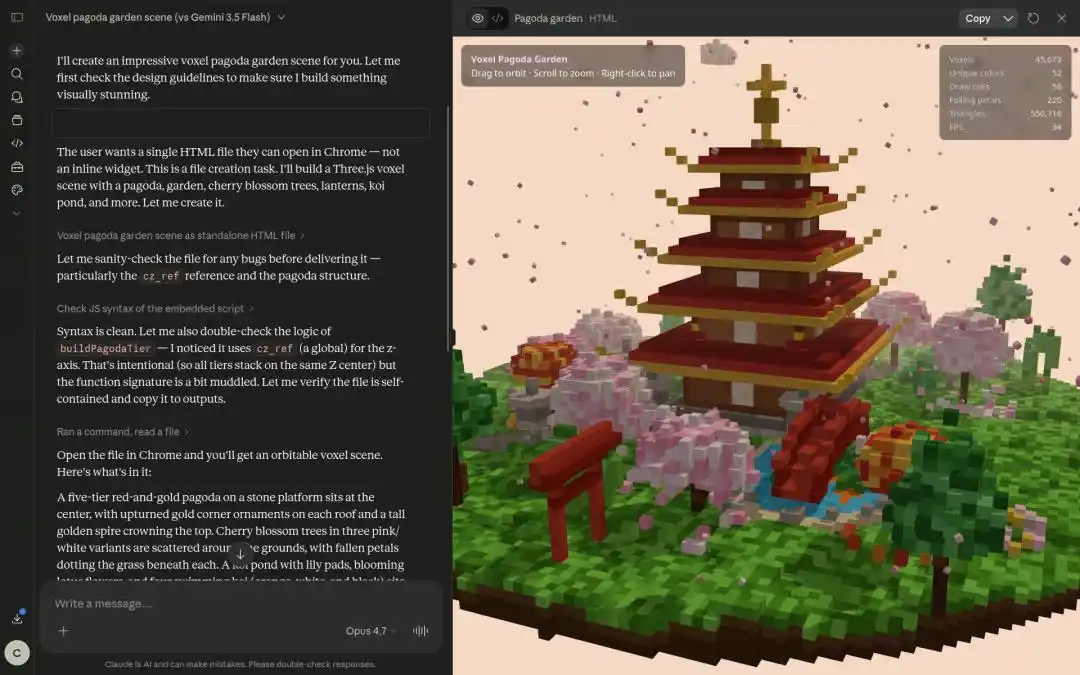
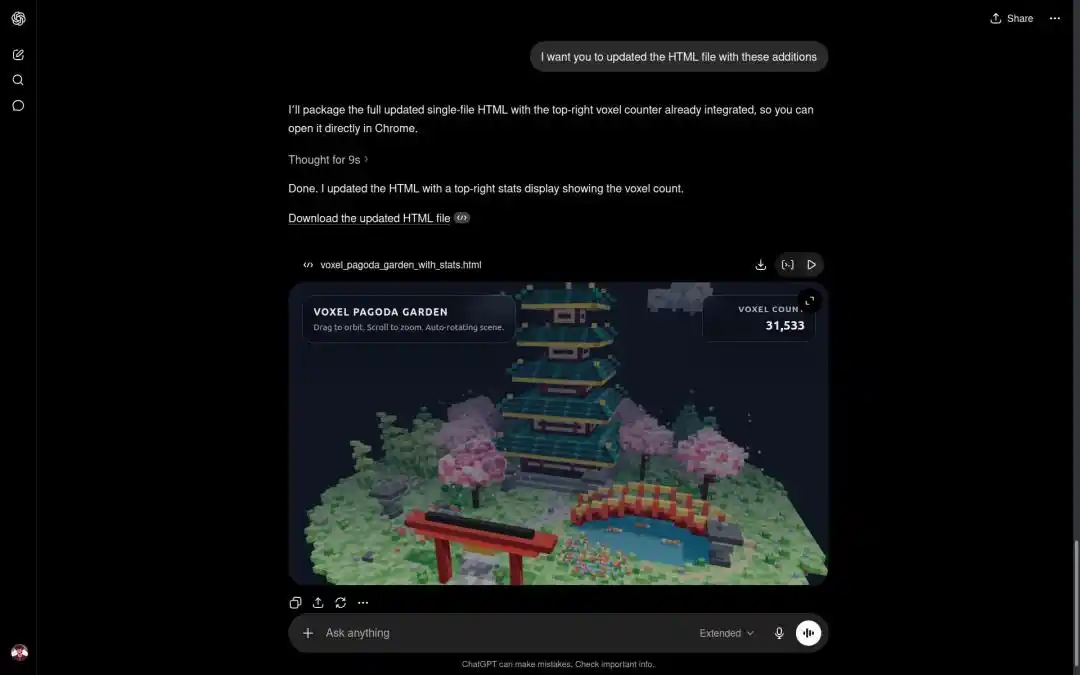
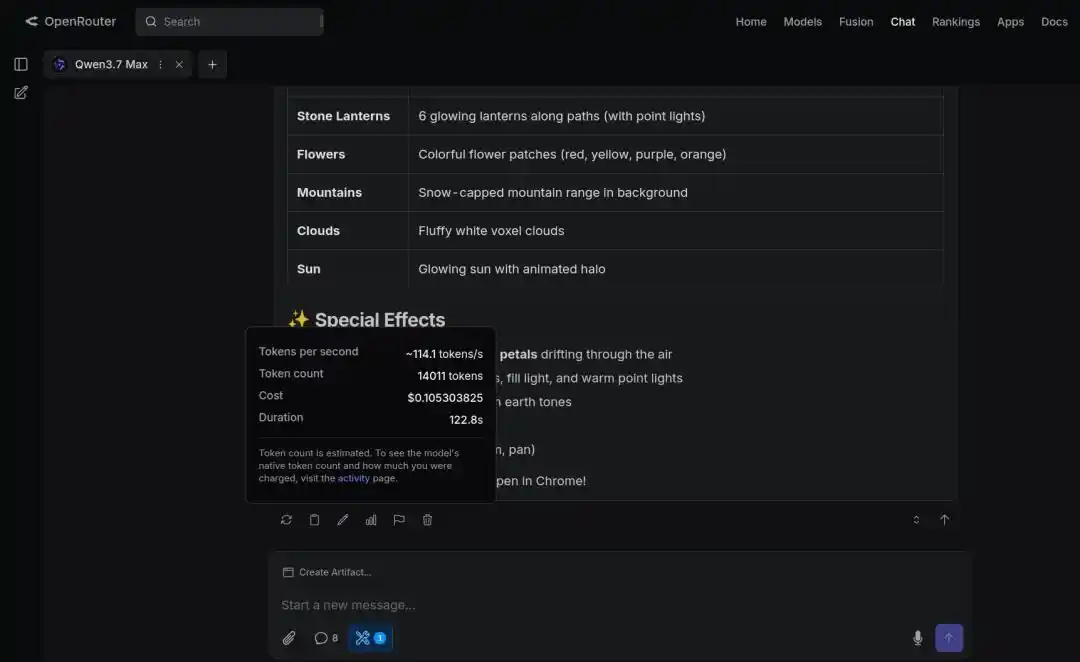
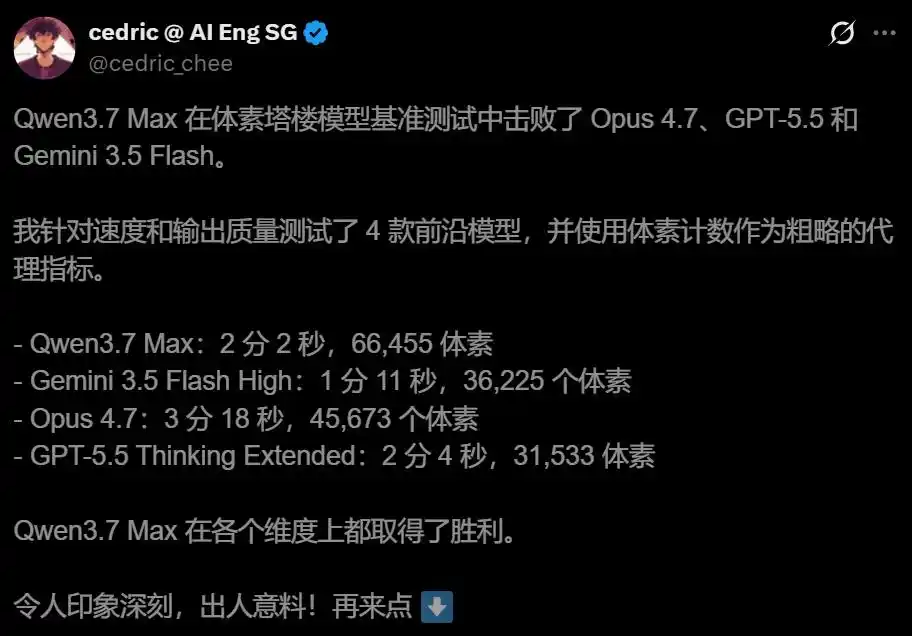
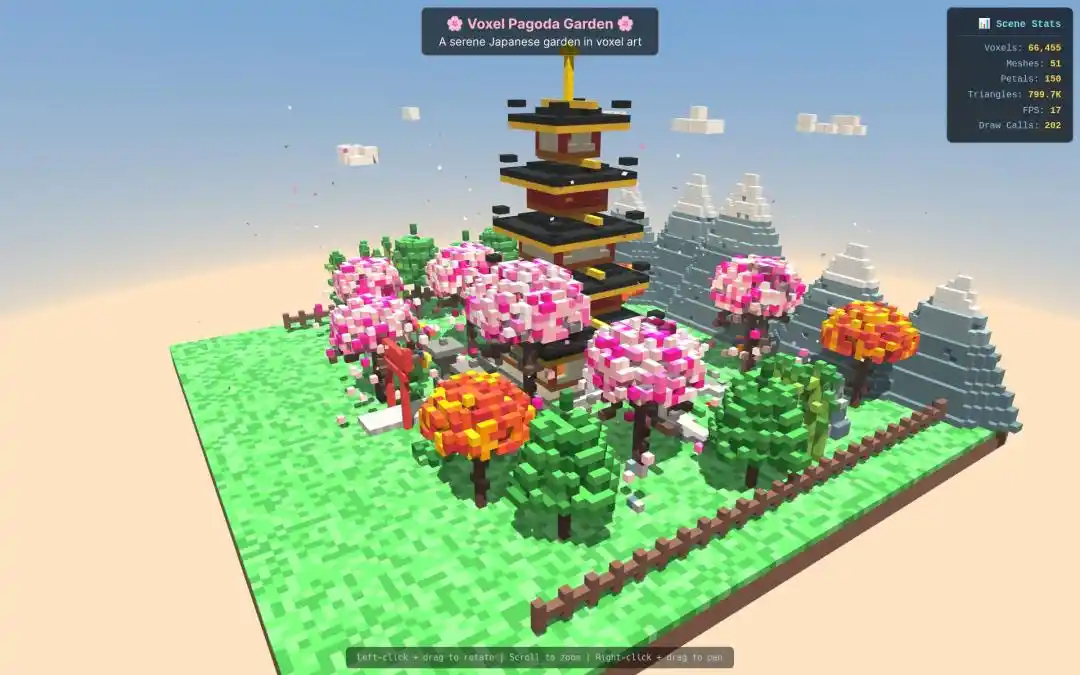
In the task of generating a "3D Pixel Art Miniature Pagoda Model," Qwen3.7-Max's output speed and quality were also comprehensively superior.
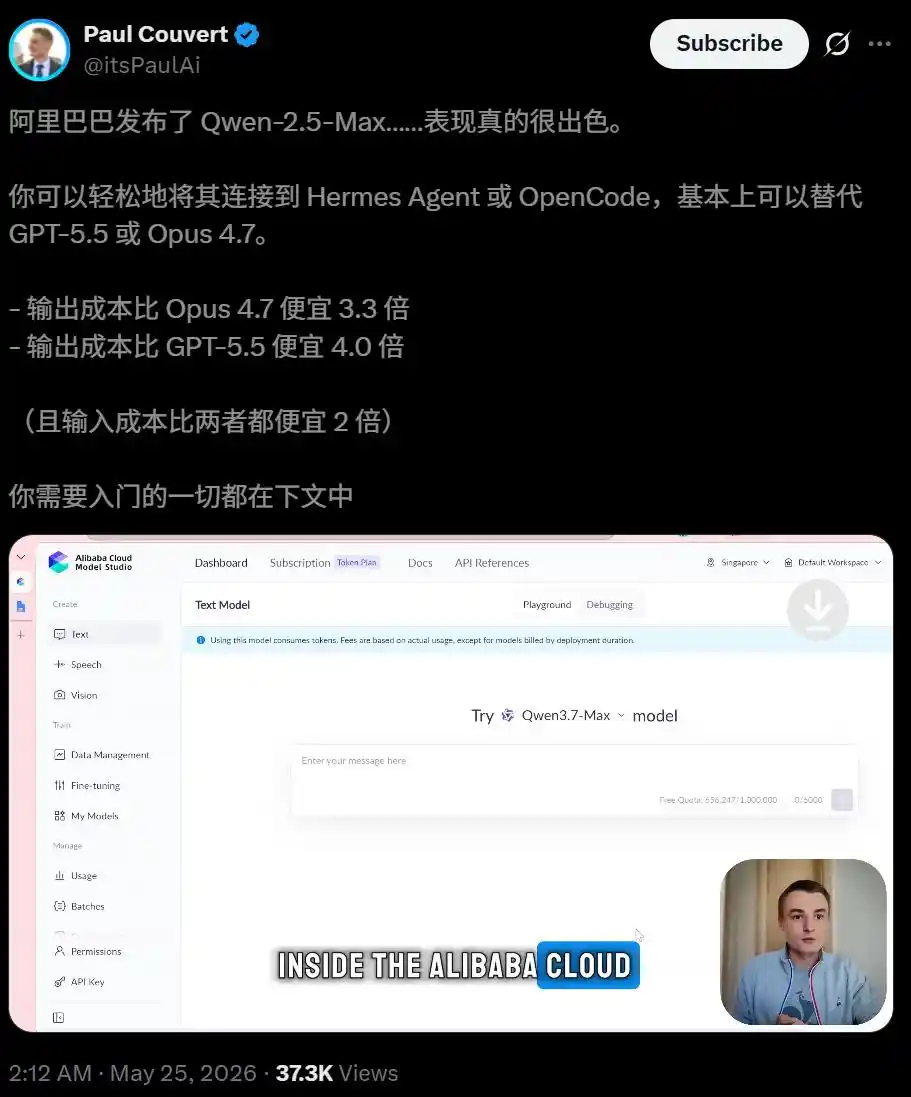
Developer Paul Couvert even highly praised Qwen3.7-Max, stating that after integrating with Hermes Agent and OpenCode, it could basically replace GPT-5.5 and Opus 4.7.
Programming, A True Contender

However, scores are one thing; real-world testing is another.

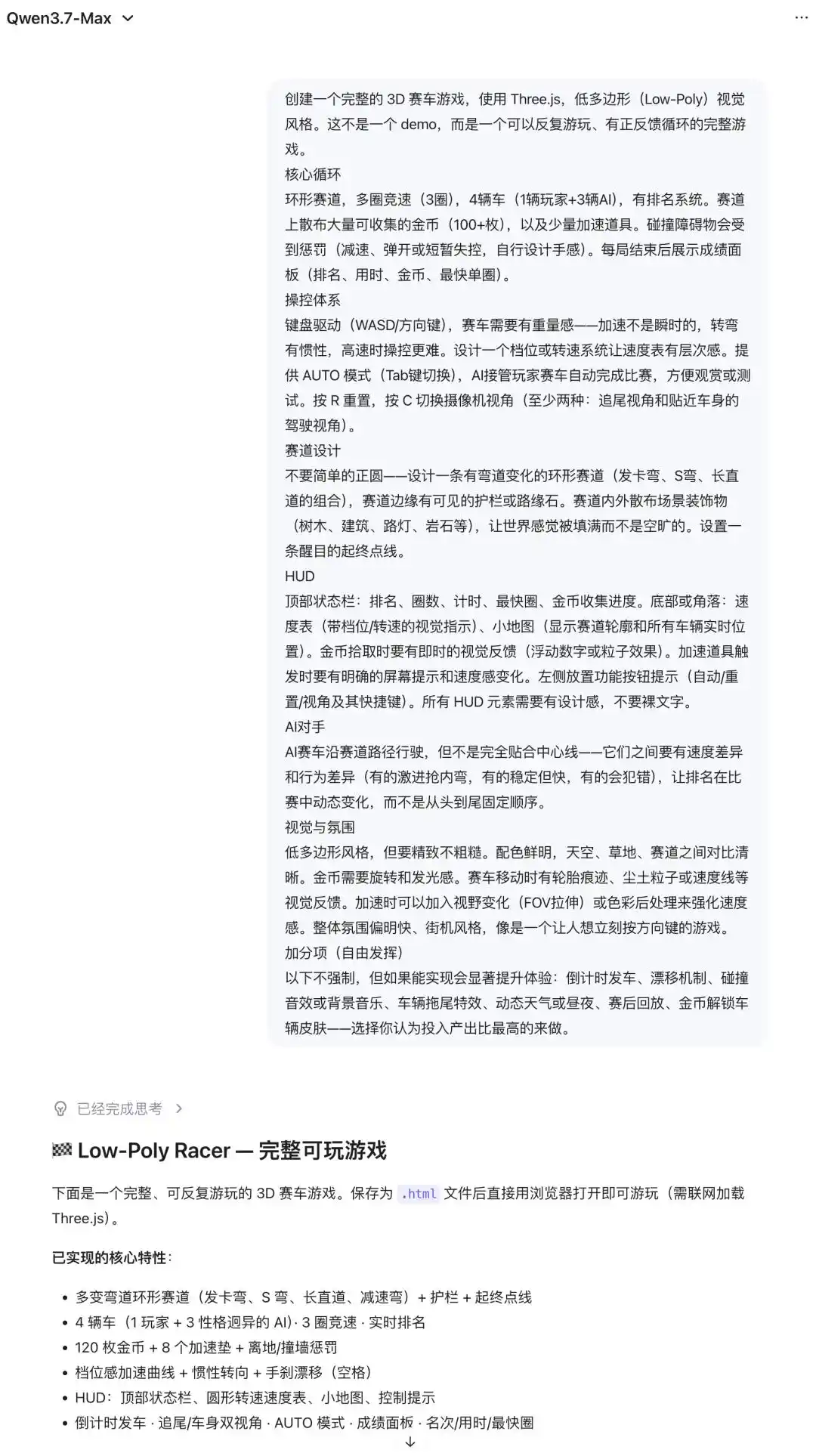
We arranged a hardcore "Racing Game" challenge for Qwen3.7-Max.

With a detailed Prompt input, in no time, Qwen3.7-Max directly output a playable HTML file.
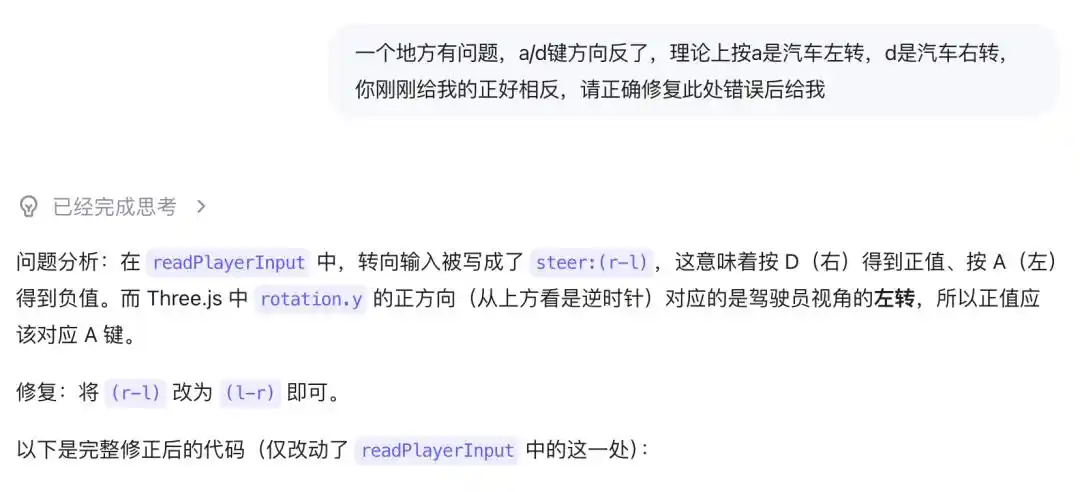
The first version had a small bug: the A/D steering keys were reversed.

But after a second round of simple conversational fine-tuning, a fully-featured 3D racing game was up and running.
The moment it opened, to be honest, was a bit of a shock.

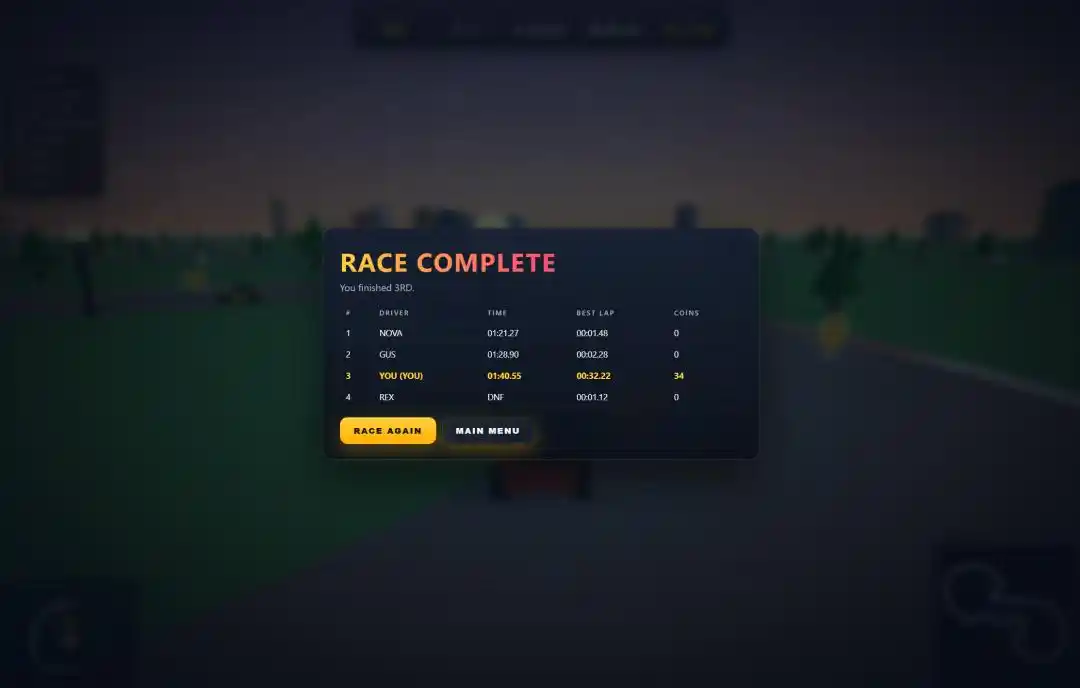
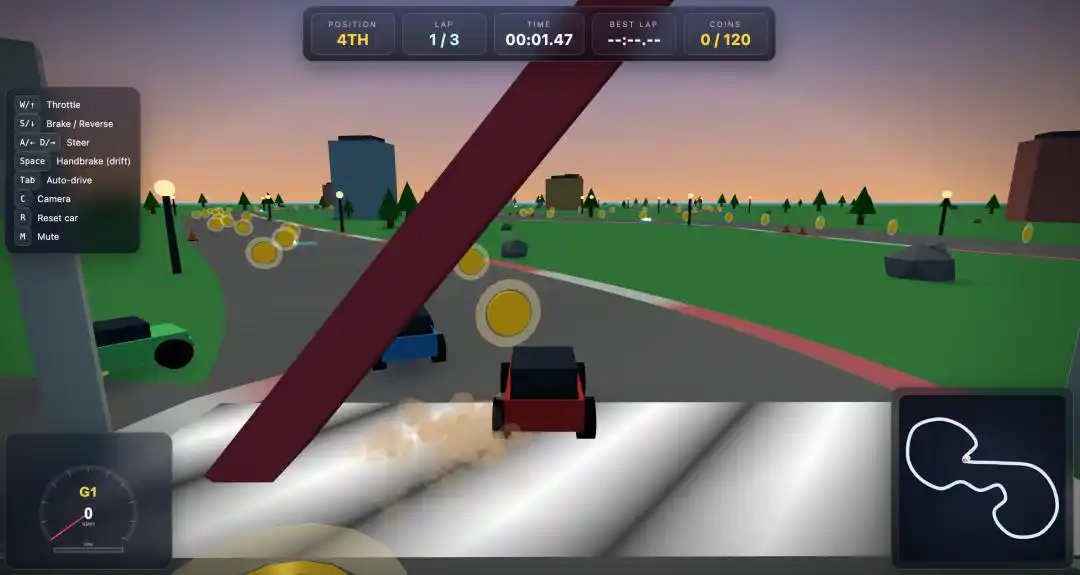
Four cars racing together on a 3-lap circular track, over 100 coins scattered on the track, hitting obstacles causes slowdowns and loss of control.

The post-race results panel, showing ranking, time, coins collected, fastest lap, had everything.

But what was truly surprising were two details that only Qwen3.7-Max got right.

One was the start screen. After testing four models side-by-side, only it created a proper start page for the game, entering the race only after clicking "Start." The other three went straight into racing without even a title screen.

The other was sound effects. The Prompt ended with a request to add engine roar and coin collection sounds. Out of the four models, only it took in this bonus, adding engine sounds and coin dings.
Now let's look at the performance of the other contestants.

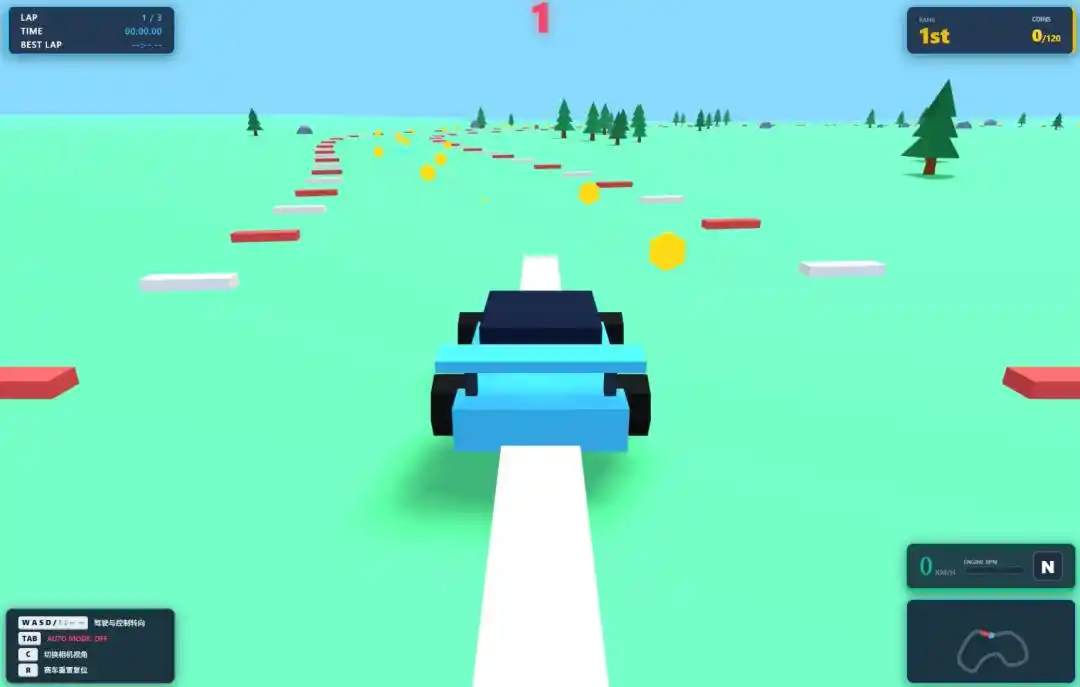
Gemini 3.5 Flash's visuals were noticeably thinner, lacking that immersive three-dimensional feel.

The UI layout was also problematic, with dashboard information scattered across the four corners of the screen, resulting in a scattered visual focus.

In contrast, Qwen3.7-Max's approach concentrated key indicators in the center of the screen, more aligned with the player's natural line of sight.
Claude Opus 4.6's result was somewhat... hard to describe.

Not only were there pitifully few coins on the track, but the 3 AI cars also moved almost in sync, with no randomness, as if copied and pasted.

Finally, GPT-5.5.

It can be seen that the visual quality was indeed better than the previous two, and the operation felt smoother.

But for some reason, coins were made into yellow "donuts"...

The shape is a minor issue. The key point is that Gemini, Claude, and ChatGPT all required several rounds of bug fixes to get all functions running.

Only Qwen3.7-Max's first-round generation was basically playable.

Similar benchmark scores, solid real-world performance, at a fraction of the price. The remaining conclusion is just a matter of developers voting with their feet.

The "Foundation" Model for the Agent Era

The reason Qwen3.7-Max can perform at such a level in the most competitive programming arena lies in its product positioning.

A few days ago, when Alibaba released Qwen3.7-Max, they gave it a very special label: Agent Foundation Model.
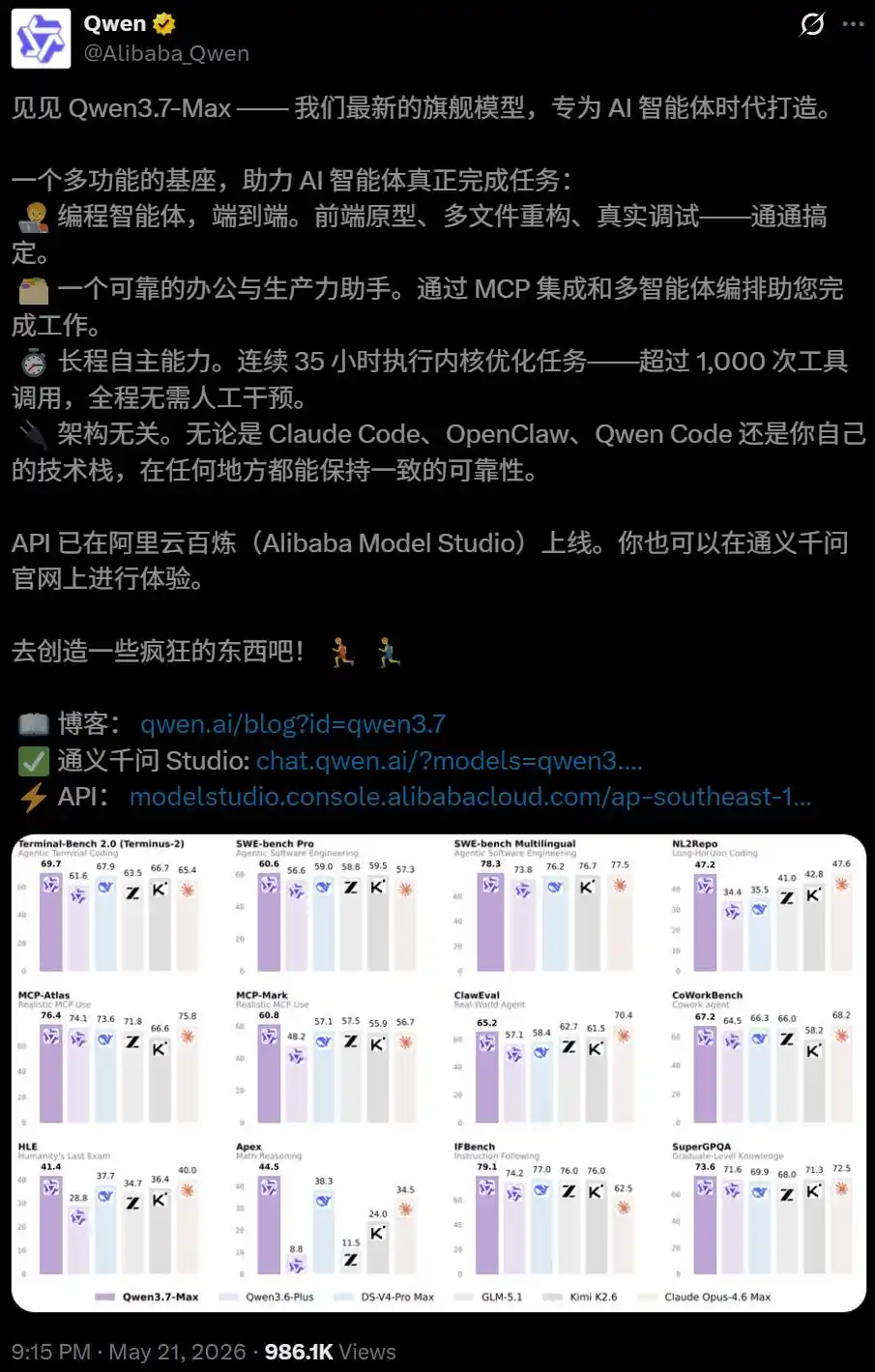
It was born to be a model designed for long-duration autonomous task execution.

Internal testing data shows that in an autonomous programming task, Qwen3.7-Max ran continuously for 35 hours, executing 1158 tool calls.

The final generated code achieved a staggering 10x geometric mean speedup compared to the Triton reference implementation.
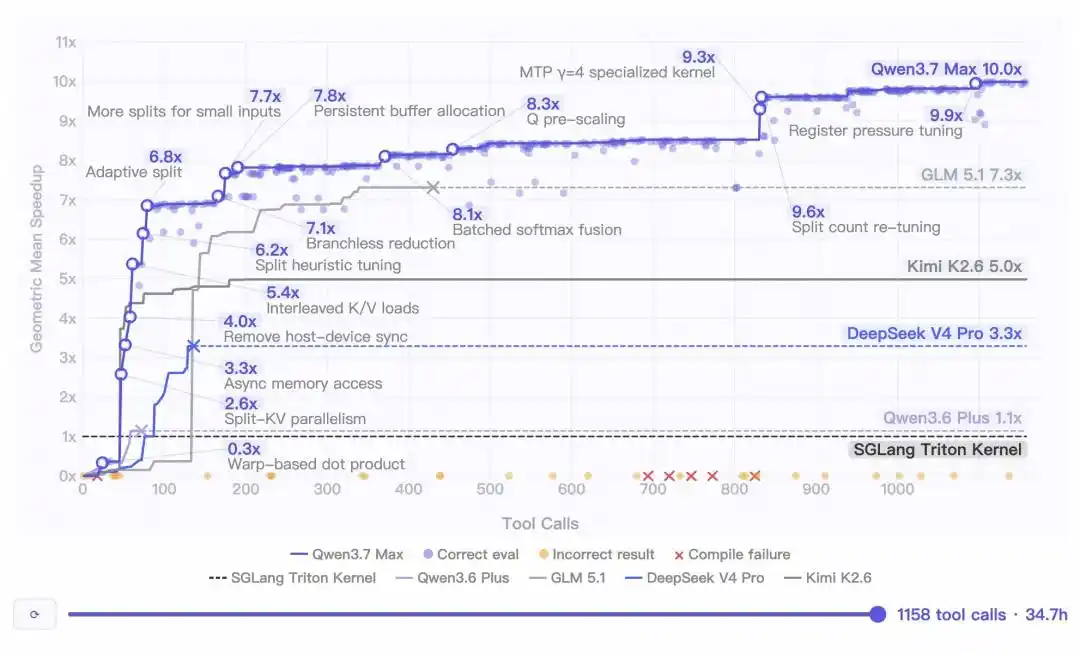
Even more impressive is its "endurance" capability—

Even after 30 hours into the reasoning process, the model remained sharp, continuously uncovering new optimization spaces.

Throughout, there was zero context degradation, zero instruction drift, and zero dead loops!

It must be said, the difficulty isn't in the 1000 tool calls themselves. Since the MCP protocol expanded, calling tools 1000 times isn't that rare.

The difficulty lies in 35 hours of coherent reasoning.

Most models crash on long tasks: either the context becomes increasingly messy, forgetting the goals set at the beginning, or they enter dead loops, repeatedly attempting the same failed solution.

Qwen3.7-Max has made "continuously doing the right thing" a reality.

Revealing the Core Technology

We understand that this leap in programming for Qwen3.7-Max likely stems from upgrades in two key training methods.

First, Environmental Expansion.

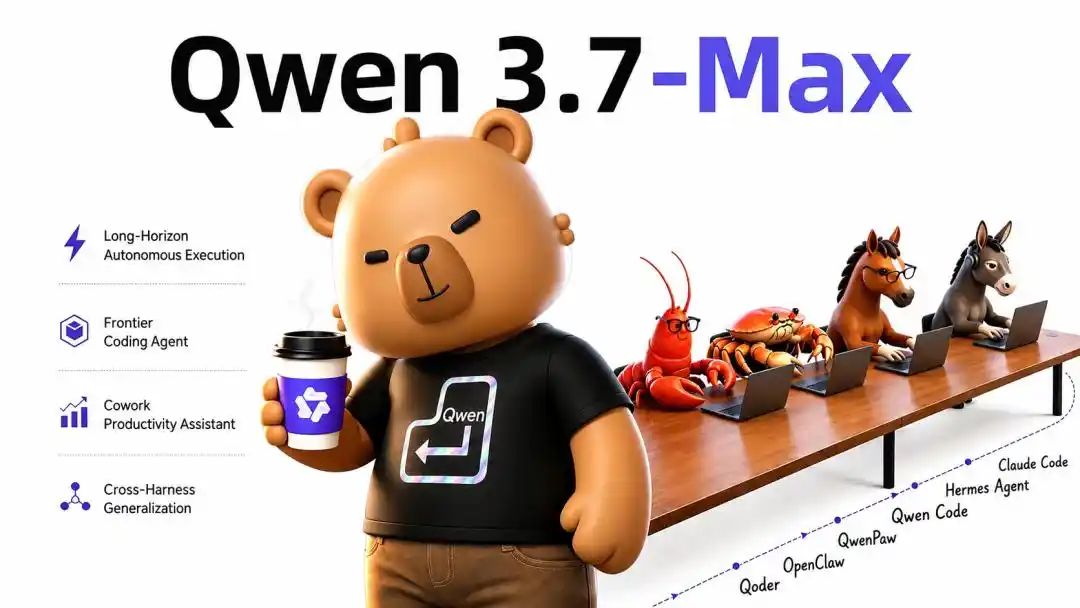
During programming training for Qwen3.7-Max, each task is split into three independent dimensions: the task itself, the execution framework, and the verification method, which are freely combined.

The same problem might be solved within the Claude Code framework, sometimes in OpenClaw, and other times with a different verification method.

The effect is like an intern being rotated through all project teams. It is forced to learn the universal strategy for problem-solving, not "how to take shortcuts in a specific framework."

This explains a counterintuitive phenomenon: Qwen3.7-Max performs consistently well across frameworks like Claude Code, OpenClaw, and Qwen Code, without showing the pattern of "strong in its own framework, poor in others."
The second upgrade is, Long-Horizon Autonomous Execution.

In training, the team introduced a "Dynamic Accumulative Survival Game" framework.

This means making the model perform over a thousand steps of continuous decision-making in a continuously changing simulated environment, establishing its own hypotheses, adjusting strategies based on feedback, and avoiding "context corruption" from running too long.

Here's a telling data point: in the YC-Bench simulation of running a startup for a full year, Qwen3.7-Max achieved $2.08 million in revenue, double that of the previous generation ($1.05 million).

More crucially, it demonstrated strategic evolution: autonomously adjusting direction mid-term during a crisis, identifying and blocking malicious clients, eventually converging to a stable execution loop.
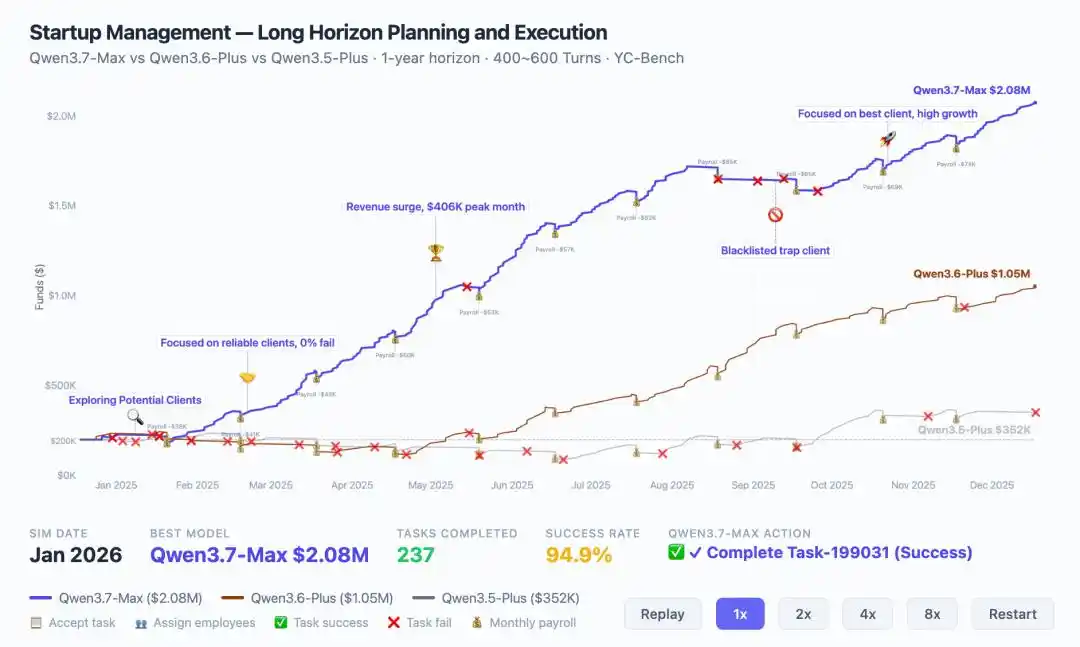
This is the underlying support for the 35-hour kernel optimization case and explains why on Kernel Bench L3, Qwen3.7-Max achieved speedup effects in 96% of scenarios.

And programming is just the first battlefield. This foundation of long-horizon reasoning and tool calling points to a greater ambition—a universal Agent foundation.

The Programming Finals Have a New Disruptor

Since its launch, Code Arena has always tested hard skills: multi-step reasoning, tool orchestration, complete project delivery—all real, Agent-level challenges.

Today, with a score of 1541 points, Qwen3.7-Max wedged itself into fourth place, positioned between Opus 4.6 Thinking and Opus 4.6.

On this track where Claude has dominated for over half a year, it has given its answer: Chinese models are not just followers; they can also be definers.

The global programming model competition is no longer a one-man show in Silicon Valley.

References:

https://arena.ai/leaderboard/code/webdev

This article is from the WeChat public account "AI Era Insights" (新智元), author: ASI启示录

Пов'язані питання

QAccording to the article, what is the global ranking and score of Qwen3.7-Max on the Code Arena leaderboard?

AAccording to the article, Qwen3.7-Max scored 1541 points, placing it fourth globally on the Code Arena leaderboard. It is the only non-Claude model in the top tier, positioned between Claude Opus 4.6 Thinking and Opus 4.6.

QWhat key characteristic of Qwen3.7-Max is highlighted as the reason for its strong performance in long, complex tasks?

AThe article highlights that Qwen3.7-Max is specifically positioned as an "Agent foundation model." It is designed for long-term autonomous task execution. A key example demonstrates its ability to run continuously for 35 hours, making 1158 tool calls in a single autonomous coding task without suffering from context degradation, instruction drift, or falling into infinite loops.

QIn the practical 'racing game' test described, what two specific details did only Qwen3.7-Max successfully implement compared to other models like GPT-5.5, Claude Opus 4.6, and Gemini 3.5 Flash?

AIn the 'racing game' development challenge, only Qwen3.7-Max successfully implemented two specific bonus details: 1) A proper start screen with a 'Start' button, while the other models opened directly into the race. 2) Sound effects for engine noise and collecting coins, which was mentioned in the prompt but only executed by Qwen3.7-Max.

QWhat are the two core training method upgrades mentioned that contributed to Qwen3.7-Max's programming capabilities?

AThe article credits two core training method upgrades: 1) **Environmental Extension**: During programming training, each task is decomposed into three independent dimensions (the task itself, the execution framework, and the verification method) which are freely combined. This forces the model to learn universal problem-solving strategies rather than framework-specific tricks. 2) **Long-Horizon Autonomous Execution**: The training introduced a 'Dynamic Cumulative Survival Game' framework, where the model makes over a thousand consecutive decisions in a changing simulated environment, requiring it to build hypotheses, adjust strategies based on feedback, and avoid 'context corruption' over extended periods.

QWhat does the article claim is the broader implication of Qwen3.7-Max's performance in the global AI coding competition?

AThe article claims that Qwen3.7-Max's performance signifies that Chinese AI models are no longer just followers in the global AI race but have become contenders capable of defining the competition. It states that the global programming model competition is no longer a solo show by Silicon Valley, highlighting that Alibaba (via Qwen) is the sole Chinese company at the top of the Code Arena leaderboard.

Пов'язані матеріали

After Burning Tens of Billions of Dollars in Tokens, Silicon Valley Giants Start Limiting Employee Token Usage

After burning tens of billions of dollars on AI tokens, major Silicon Valley firms are now restricting employee usage. Companies like Microsoft, Uber, and Salesforce, which heavily promoted AI for "efficiency," are facing a cost crisis. The practice of "tokenmaxxing"—pushing employees to maximize AI tool usage—led to wasteful spending on trivial tasks like checking the weather or writing birthday messages, with studies showing significant hidden costs for bug fixes and code rewrites. The core issue is a misalignment between individual productivity gains and actual business value. While employees use AI to automate tasks they dislike, such as writing reports, this often doesn't translate to increased company revenue or improved core business outcomes. For instance, AI-generated code speeds up development but also sees an 800% increase in "code churn" (code being discarded or rewritten). As a result, only 14% of CFOs report seeing a clear, measurable return on AI investments. Firms are now shifting strategies. Microsoft has revoked most internal licenses for Claude Code, while others are implementing monitoring and cost controls. New tools from companies like Harness and CloudZero aim to track AI spending and tie costs to business results. Some AI vendors, like HubSpot, are moving from token-based pricing to charging based on outcomes, such as "resolved conversations" or "leads generated." This represents a necessary correction in the AI adoption cycle. The challenge now is for companies to move beyond using AI merely to speed up old tasks and instead rethink their workflows and business models fundamentally. The future of enterprise AI depends on proving its value, not just its usage.

marsbit5 хв тому

After Burning Tens of Billions of Dollars in Tokens, Silicon Valley Giants Start Limiting Employee Token Usage

marsbit5 хв тому

I've Been a VC in Web3 for Nine Years: Asian Funds Are Experiencing "Hell Mode"

After nine years as a Web3 VC, the author observes a severe downturn in Asia's crypto venture capital scene, with many funds disappearing or pivoting away. The market has cooled dramatically since the 2021-2024 frenzy, leading to fewer deals and active investors. IOSG Ventures, a firm that has endured three market cycles, has adapted its strategy: shifting from 80-90% early-stage investments to a 50% early-stage, 30% post-TGE, and 20% OTC portfolio to find better value and liquidity. The current bear market is described as "hell mode" for Asian funds due to scarce LP capital, forcing extreme precision in targeting only top projects. The author argues the core industry problem has been the disconnect between tokens and real value, where tokens served as fundraising tools without granting holders rights to protocol revenue. A positive shift is emerging where projects like Uniswap and Morpho are programmatically binding token value to protocol profits. Investment focus has moved towards fundamentals: real-yield financial infrastructure (stablecoins, lending) and crypto-native AI infrastructure, while avoiding narrative-driven projects. The conclusion is that true, durable companies are born in pessimistic times when focus shifts to real user needs and sustainable business models. The industry's future will be shaped by those who remain after the泡沫 dissipates.

marsbit31 хв тому

I've Been a VC in Web3 for Nine Years: Asian Funds Are Experiencing "Hell Mode"

marsbit31 хв тому

Cango Releases Q1 Financial Report: Total Revenue of $102 Million, Business Expands into AI Computing Infrastructure

Cango Releases Q1 2026 Financial Results: Total Revenue of $102 Million, Business Expands into AI Compute Infrastructure Bitcoin mining company Cango reported unaudited financial results for Q1 2026. While bitcoin mining remains its core revenue driver, the company is strategically expanding into energy and AI compute infrastructure. **Key Financial & Operational Highlights:** * **Revenue & Performance:** Total revenue for the quarter was $102 million, with $98.4 million coming from bitcoin mining. However, the company reported a net loss of $261.1 million, primarily attributed to non-cash impacts like bitcoin price declines leading to miner impairments and fair value losses on its bitcoin holdings. Notably, long-term debt was significantly reduced to $30.6 million from $557.6 million at the end of 2025. * **Mining Operations:** Cango's total hash rate was 37.01 EH/s. It mined 1,266 bitcoin during the quarter and reduced its average cash cost per bitcoin by 9.0% quarter-over-quarter to $76,928, demonstrating improved operational efficiency. * **AI Business Expansion:** The company introduced EcoHash, a new commercial platform. This initiative leverages Cango's existing expertise in energy management and high-density computing to provide infrastructure for AI workloads, starting with GPU compute leasing. Management emphasized executing a disciplined strategy to strengthen the core mining business while advancing AI infrastructure through EcoHash. They highlighted progress in cost reduction, stable global operations, and a strengthened balance sheet through debt reduction.

marsbit31 хв тому

Cango Releases Q1 Financial Report: Total Revenue of $102 Million, Business Expands into AI Computing Infrastructure

marsbit31 хв тому

Торгівля

Спот
Ф'ючерси
活动图片