Japan's Bond Market to Go Fully 'On-Chain'

marsbitОпубліковано о 2026-05-11Востаннє оновлено о 2026-05-11

Анотація

The article details Japan's urgent move to tokenize its Government Bonds (JGBs) on the blockchain, specifically via the Canton Network, in a landmark 2026 proof-of-concept. With over $9 trillion in circulation, JGBs are a cornerstone of Asian institutional collateral, but their legacy settlement system is slow and limited to Tokyo business hours. This inefficiency risks JGBs losing their premier status to faster, 24/7 tokenized U.S. Treasuries, already being settled on Canton by giants like DTCC and JPMorgan. Canton Network was chosen for its unique architecture, enabling atomic, real-time settlements while ensuring strict data privacy and legal compliance—critical for sovereign debt. The shift to "always-on" collateral promises transformative benefits: reducing forced asset sales during market stress by allowing direct collateral posting, eliminating settlement risk in repo transactions, and integrating tokenized commercial bank deposits for institutional-grade cash settlement. This convergence of major sovereign bonds (U.S., Japanese, European) on Canton positions it as a potential new global financial rail, akin to SWIFT for collateral movement. The article frames this as a profound efficiency upgrade within the existing financial system, empowering traditional institutions with superior infrastructure rather than displacing them.

Original Author: Vaidik Mandloi

Compiled and Organized by: BitpushNews

On a Saturday in August 2025, something happened that should have set every cryptocurrency chat group on the internet ablaze. Bank of America, Citadel Securities, the Depository Trust & Clearing Corporation (DTCC), and Société Générale settled a US Treasury repo transaction over a blockchain in real-time over the weekend.

For context, repo is one of the most fundamental trades in institutional finance: one party sells government bonds to another with an agreement to buy them back the next day, typically to raise short-term overnight cash.

This is the 'plumbing' of the financial system. Banks, hedge funds, and central banks use repo daily to manage liquidity, with trillions of dollars flowing through this market. And this was the first time ever such a transaction was settled atomically, nearly instantaneously on a blockchain, outside of market hours, with participants being some of the world's largest financial institutions.

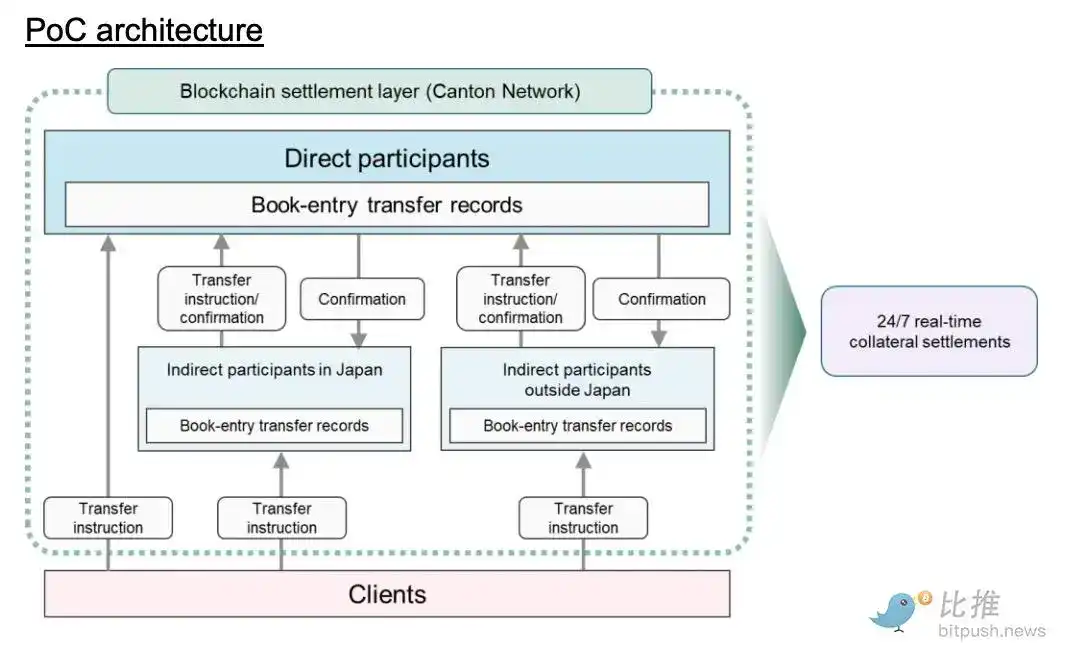
Eight months later, on April 20, 2026, the Japan Securities Clearing Corporation (JSCC), Mizuho Financial Group, Nomura Holdings, and Digital Asset launched a Proof-of-Concept (PoC) aimed at moving Japanese Government Bond (JGB) collateral onto the Canton Network.

JGBs are one of Asia's most critical financial instruments, with over $9 trillion in circulation, making them the single most widely used collateral asset in the region's institutional markets. When banks and hedge funds across Asia need to collateralize their leveraged positions, JGBs are often the go-to choice. And now, that entire collateral system is moving on-chain.

This is arguably the biggest blockchain news of 2026.

This article will analyze why JGBs are the perfect asset to tokenize first, why Canton Network keeps winning institutional orders while public chains battle for retail traffic, and how exactly 'round-the-clock' collateral settlement changes global trading desks.

Why JGBs? Why Now?

For decades, Japan has tried to make the yen a global reserve currency, a wish that never truly materialized. Even today, the yen accounts for only about 4-6% of global reserves, trailing the US dollar, the euro, and even the pound sterling.

But something unintended happened in the process: Japanese government bonds became one of the fastest-growing collateral assets on the Euroclear Collateral Highway—the infrastructure for moving collateral among the world's large financial institutions. Foreign ownership of JGBs has climbed to about 11.9%, meaning roughly ¥144 trillion is held by institutions outside Japan.
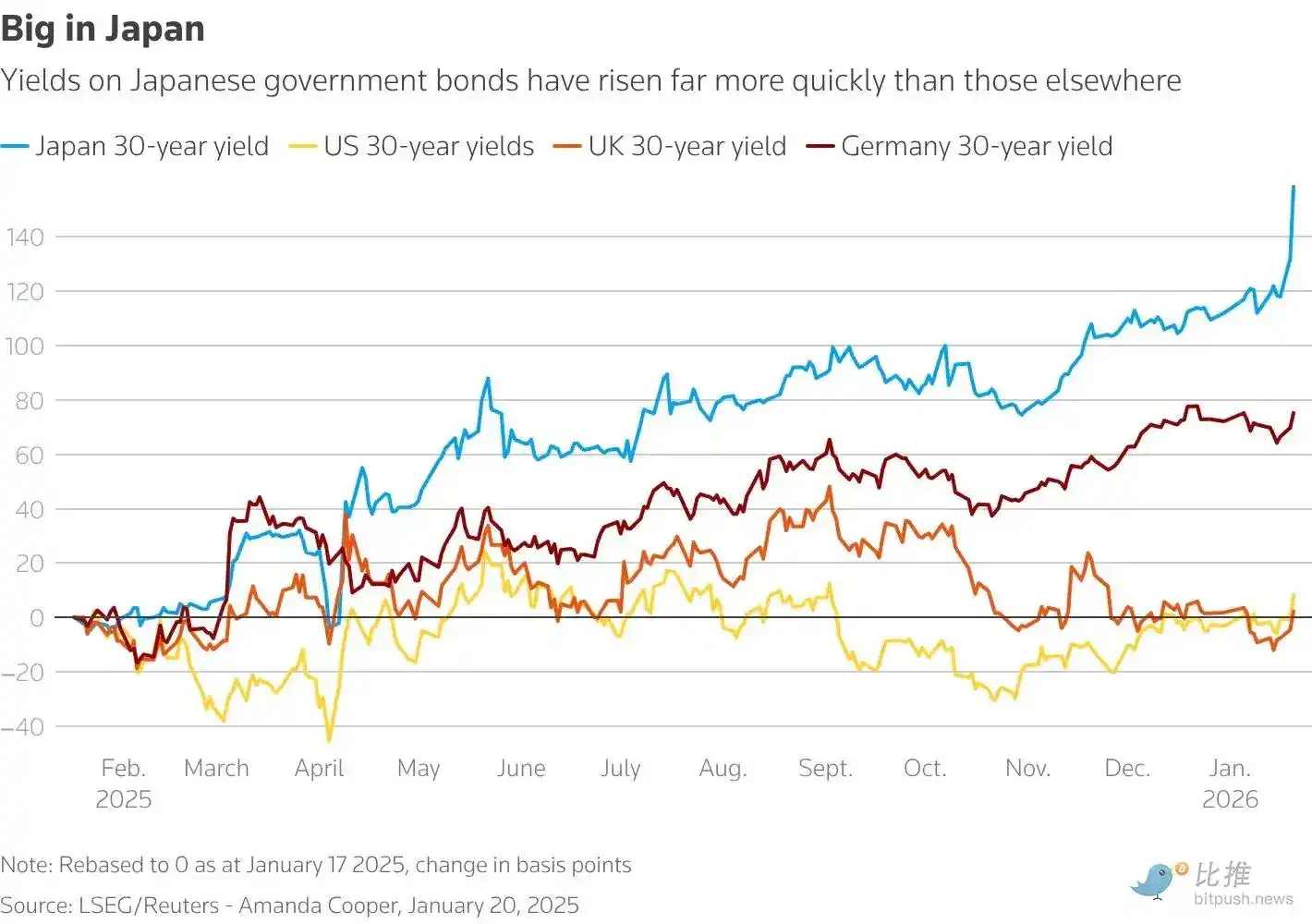
In institutional finance, collateral is everything. Every leveraged position, every derivatives trade, every repo requires high-quality assets as security. Backed by the world's third-largest economy and with virtually no default risk, JGBs are one of the few global assets that qualify. When a hedge fund in Singapore builds a leveraged position, or a bank in London covers a derivatives exposure, JGBs are frequently used as collateral.

Cryptocurrency's most important infrastructure victory is happening inside traditional finance. Without Japan winning the 'currency war,' JGBs have become the operational infrastructure for Asian institutional finance.

The problem is, the entire collateral system operates like it's 1995. Moving JGB collateral between two institutions passes through a layered holding structure: the Bank of Japan (BOJ) at the top, then Hofuri (Japan's securities depository), then a custodian bank, then a sub-custodian. Each layer requires separate reconciliation and operates only during Tokyo business hours (roughly 9 AM to 3 PM JST).

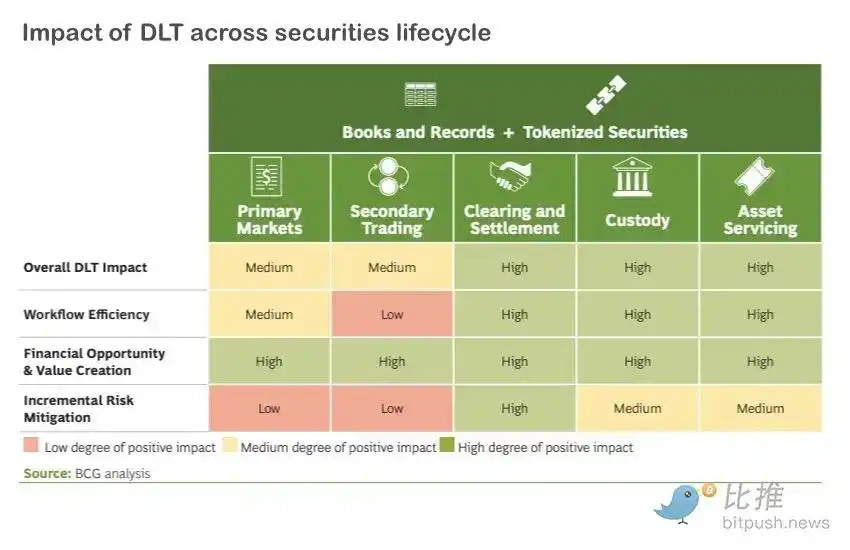
A collateral transfer that should take seconds ends up taking days. During those days, that collateral is 'stuck.' A trading desk in New York needing it at 10 PM has to wait for Tokyo to wake up. A GFMA (Global Financial Markets Association) and BCG study estimates blockchain could unlock $100 billion in trapped collateral globally; for a bank doing $100 billion in daily repo volume, tokenized settlement alone could save $150-300 million annually in operational costs.
Here's something unsettling for Japan: the US is already moving.

DTCC, which custodies $99 trillion in US securities and processes $3.7 quadrillion in annual transactions, partnered with Digital Asset in December 2025 to tokenize US Treasuries on the Canton Network. This means the core of US securities infrastructure is moving towards 24/7 tokenized settlement.

Broadridge is already processing $354 billion in daily tokenized Treasury repo trades on the same network; JPMorgan's Kinexys has processed over $1.5 trillion in cumulative volume through its on-chain payment rail. US Treasuries are rapidly becoming 'always-on, always-movable' collateral assets, while JGBs remain locked in Tokyo's business hours.

If you're a global fund manager needing to post collateral for a margin call at 2 AM, and you can choose between tokenized US Treasuries that settle instantly or JGBs that you have to wait 6 hours for Tokyo to open to move, you choose US Treasuries every time.

Scale that choice across thousands of trading desks, and JGBs risk losing their 'top-tier collateral' status. For a country whose sovereign debt is deeply interwoven into Asia's financial collateral system, this is even an existential issue. The four companies in the JGB on-chain trial used the word 'urgent' in their press release. Given the pace of US infrastructure evolution, it's hard to disagree.

Why Canton Keeps Winning

When Japan's JSCC had to choose a network for JGB collateral, they chose Canton—the same chain DTCC, Broadridge, and JPMorgan are already using. The reason lies in the extremely stringent demands sovereign bond collateral places on a network.

Sovereign bond collateral has a specific set of requirements most blockchains can't meet. When Mizuho Bank transfers JGB collateral to a counterparty in London, the transaction must comply with Japan's Book-Entry Transfer Act. The blockchain record needs to be synchronized at a legal level with Hofuri's official register.

Every party in the transaction (from clearinghouse to custodian to counterparty) can only see data they are authorized to view under Japanese and international securities law. And the entire process requires atomic settlement—the collateral and payment must move at the same instant, or neither moves.

This is an incredibly complex set of constraints. Canton was chosen because its architecture is designed to solve precisely these issues. Each institution runs its own ledger, and cross-institution transactions sync only the data each party is authorized to see. Smart contracts written in Digital Asset's Daml language dictate who can see what and who must authorize each step.

Thus, when JSCC, Mizuho, and Nomura move JGB collateral on Canton, the clearinghouse sees the full picture, Mizuho sees its side, Nomura sees its side, and no one sees anything they shouldn't. Canton is now the only global network enabling three major sovereign bond collateral pools (US Treasuries, Japanese bonds, European bonds) to move across borders, in real-time, 24/7. No other network (public or private) comes close.
What Does 'Round-the-Clock' Collateral Actually Change?

Most coverage of tokenized on-chain settlement stops at 'it's faster.' But speed is just the beginning; the real transformation is in how the system behaves under stress.

Consider what happened in March 2020 during the COVID pandemic. Markets crashed, volatility spiked, and initial margin requirements for equity futures jumped 100% in weeks. Funds unable to meet margin calls were forced to sell assets to raise cash.

But selling assets into a falling market pushes prices lower, triggering more margin calls, forcing more selling. This feedback loop is one of the most dangerous dynamics in finance and nearly broke the system again during the UK LDI pension crisis in September 2022.

How 24/7 tokenized settlement changes this:

  • Direct Collateralization: Currently, when facing a margin call, most funds must first sell assets for cash. With on-chain collateral, funds can directly pledge JGBs or US Treasuries to meet requirements without first converting to cash. The 'forced selling spiral' weakens because fewer institutions dump assets into a falling market just for liquidity.
  • Solving 'Give-to-Get': In traditional repo, the cash lender sends money first and receives collateral later. During this window, one party is exposed. Banks bake this 'intraday exposure' into their haircuts and funding costs.
  • Atomic Execution: With on-chain atomic settlement, both legs of a trade (collateral and cash) move at the same instant. Santander tested this in December 2024, executing $50 million and €50 million in intraday repos on JPMorgan's Kinexys, automatically unwinding them three hours later. Intraday repos, once requiring complex third-party setups or committed credit lines, become routine.

More significantly, in a Canton demo in January 2026, the London Stock Exchange Group (LSEG) brought its Digital Settlement Hub (DiSH) into the trade. DiSH uses tokenized commercial bank deposits as the cash leg, not stablecoins.

This is because banks don't settle billion-dollar trades with USDC—USDC is a private IOU, not 'money good.' DiSH tokens represent actual deposits at regulated banks and can be transferred on-chain 24/7. This solves the cash leg problem, the final piece for institutional adoption. Now, Japan plans to plug JGBs into this same infrastructure.

What This Means

If the JGB trial succeeds, and US Treasuries are already live, with European sovereign bonds also in demos, Canton, in my view, is starting to look like the next SWIFT.

It's a single network becoming the default layer for moving the world's most important collateral across borders. Like SWIFT, once enough institutions join, leaving becomes almost impossible. Network effects compound. Each new sovereign bond class joining benefits existing participants and makes it harder for newcomers to compete.

I think this merits reflection. We in crypto spent years debating decentralization, worrying about single points of failure, building a system no single entity could control the trajectory of. And now, historically the most significant blockchain deployment is converging on a single permissioned network managed by the same institutions that run global finance.

Is this good or bad? It depends on what you believe this is all about. If the goal is to improve capital market efficiency, lower settlement risk, and unlock trillions in trapped collateral, it's working. If the goal was to diminish the power of existing financial institutions, it's doing the opposite—the same gatekeepers are just getting more sophisticated infrastructure.

I don't think that makes it unimportant. Settling government bonds on a blockchain, 24/7, cross-border, atomically, is a genuine upgrade to how global finance operates. But I do think it's worth being honest about what 'kind' of upgrade this is—it's an efficiency revolution: the plumbing is being rebuilt, but the plumbers are the same.


Пов'язані питання

QWhat are JGBs, and why are they considered a critical asset in the Asian institutional finance system according to the article?

AJGBs are Japanese Government Bonds. They are considered a critical asset because, with a circulating value exceeding $9 trillion, they are the most widely used single collateral asset in the region's institutional markets. Supported by the world's third-largest economy and virtually default-free, they are a preferred, high-quality asset for securing leverage positions and derivatives transactions across Asia.

QWhat key problem does the current, traditional JGB collateral settlement system face, and what potential does blockchain technology offer to solve it?

AThe current system operates within limited Tokyo business hours, requiring transfers to pass through multiple holding layers, which takes days and leaves collateral 'frozen' and unavailable. Blockchain technology enables real-time, atomic settlement 24/7. This can unlock an estimated $100 billion in trapped collateral globally and save banks billions annually in operational costs by streamlining the process.

QWhy did Japan's JSCC and associated institutions choose the Canton Network for their JGB tokenization proof-of-concept?

AThey chose the Canton Network because its architecture is specifically designed to meet the stringent requirements of sovereign bond collateral. It allows each institution to run its own ledger while synchronizing only authorized data across parties, ensuring compliance with Japanese securities law. Canton is also the network already being used by major US financial infrastructure players like DTCC for US Treasury tokenization, creating a unified system for cross-border collateral movement.

QHow does the article suggest that 24/7 tokenized collateral settlement could fundamentally change financial market behavior during periods of stress, like the March 2020 crash?

AIt could mitigate the dangerous 'forced selling spiral.' During a crash, funds facing margin calls could directly pledge tokenized JGBs or US Treasuries as collateral without first selling assets for cash. This reduces the need to dump assets into a falling market just to raise liquidity, thereby weakening the feedback loop that exacerbates price declines and further margin calls.

QWhat significant comparison does the article make regarding the Canton Network's potential role in the future of global finance, and what underlying irony or contradiction does it highlight about the blockchain deployment?

AThe article suggests Canton is beginning to look like the next SWIFT—a single default network for moving the world's most important collateral across borders. The highlighted irony is that this historically significant blockchain deployment is converging on a single, permissioned network managed by the very incumbent financial institutions it was once thought might be disrupted. It represents an efficiency revolution in the 'plumbing' of finance, but the 'plumbers' (the established gatekeepers) remain the same.

Пов'язані матеріали

A 134% Surge, 75 P/E Ratio: Why Is the Market Paying Up for Murata's 'Zero Growth'?

Murata Manufacturing, the world's largest passive components maker, saw its stock price surge 134% over the past year and hit a record high on May 28th, despite reporting nearly zero growth in operating profit for its latest fiscal year. This has pushed its valuation to a P/E ratio of approximately 75x. The disconnect is driven by a fundamental market re-rating. The catalyst was a late-May meeting where management upgraded the AI investment cycle outlook to "lasting until around 2030" and noted that demand for its components is roughly double its supply capacity, with customers prioritizing securing volume over price. While Murata's revenue grew only 5.0% and operating profit stagnated at ¥281.8 billion for the fiscal year ending March 2026, its guidance for the current fiscal year projects a 34.8% jump in operating profit to ¥380 billion. This sharp growth is underpinned by expectations that its AI/data center-related revenue will nearly double from ¥170 billion to ¥325 billion, becoming a key pillar of its business. Analysts highlight that this growth stems not from broad price hikes but from a shift towards higher-value, cutting-edge MLCCs for AI servers, where Murata holds over 70% market share. The market is now pricing Murata not as a cyclical component maker but as a critical "AI pick-and-shovel" supplier with structural pricing power. However, the high valuation also carries risk if future AI demand or quarterly guidance falls short of the elevated expectations.

marsbit8 хв тому

A 134% Surge, 75 P/E Ratio: Why Is the Market Paying Up for Murata's 'Zero Growth'?

marsbit8 хв тому

a16z: Why Do Prediction Markets Matter?

Prediction markets, which allow users to trade on the outcome of future events, have gained significant traction, especially in the U.S. At their core, these markets function like any other market by aggregating information from all participants and translating it into a price signal—in this case, the perceived probability of a specific event occurring. Unlike polls or surveys that offer static snapshots, prediction markets provide dynamic, quantifiable probability estimates that update in real-time as new information and participants enter. A key advantage is the incentive structure: participants risk their own capital, which encourages serious research and trading based on genuine knowledge. This can surface information that traditional methods might miss. Furthermore, prediction markets can be created for a vast array of specialized questions—from geopolitical events to AI model performance—that aren't covered by traditional financial markets. However, several challenges remain. Infrastructure issues include reliably determining event outcomes and resolving disputes. Market design must ensure participation from well-informed individuals while preventing manipulation, such as insider trading or attempts to sway public perception by artificially moving prices. Addressing these concerns around rules, participation, and contract design is crucial. If these hurdles are overcome, prediction markets could evolve into a powerful, widely-used tool for forecasting and navigating uncertainty.

marsbit19 хв тому

a16z: Why Do Prediction Markets Matter?

marsbit19 хв тому

Interview with 7 Ordinary Professionals: After AI Arrived, How Are You Doing?

This article interviews seven professionals from diverse fields like Web3, bulk chemical trading, digital agriculture, and traditional wholesale to examine the impact of AI on their work. Key themes emerge from the discussions. AI has become integral to their workflows, primarily for increasing efficiency in tasks such as coding, content creation, research, and data analysis. Individuals across roles, from developers to managers, report that AI tools like ChatGPT and Claude have significantly reduced workloads and accelerated learning, creating opportunities for "super individuals" or one-person teams. However, this efficiency comes with a double-edged sword. It intensifies competition, pushing professionals to constantly learn new tools and adapt, leading to widespread anxiety about job security and a heightened pressure to keep pace. Interviewees anticipate significant job reductions in roles like administrative support, finance, HR, customer service, and some creative fields. A recurring view is that AI acts as a "great equalizer," amplifying the capabilities of those who use it effectively while leaving others behind, potentially deepening polarization. Despite AI's capabilities, interviewees identify enduring human strengths. AI struggles with tasks requiring deep contextual understanding, complex judgment in areas like risk assessment and system stability (especially in finance/Web3), nuanced human communication, and handling exceptions in logistics and manufacturing. These areas remain firmly in the human domain. Consequently, many professionals are refocusing their career strategies. They plan to evolve from task executors into "complex system owners," "super coordinators" managing AI agents, or specialists in high-level areas like business context, risk control, product design, and personal branding. In summary, the article portrays AI not as an optional tool but as a transformative force reshaping job demands. While it automates routine work, it also creates new forms of pressure and competition. The future, as seen by these professionals, belongs to those who can strategically integrate AI to augment uniquely human skills like judgment, responsibility, and strategic oversight.

marsbit34 хв тому

Interview with 7 Ordinary Professionals: After AI Arrived, How Are You Doing?

marsbit34 хв тому

Satoshi Nakamoto Sued? $83.7 Billion Worth of BTC Up for 'Legal Claim'

An anonymous individual known as Noah Doe, along with two Wyoming LLCs, has filed a lawsuit in the New York Supreme Court. They are attempting to use New York's "lost and found" laws to claim legal ownership of approximately 837 billion USD worth of Bitcoin held in 39,069 dormant addresses. Crucially, this list includes addresses believed to belong to Bitcoin's creator, Satoshi Nakamoto (holding around 837 billion USD), alongside other long-inactive addresses from Mt. Gox and early Bitcoin holders. The plaintiff's legal strategy hinges on classifying these public Bitcoin addresses as "lost property." They submitted a USB drive containing only the public addresses to the New York Police Department, sent OP_RETURN notifications on the Bitcoin blockchain, and issued press releases. Their argument is that after these efforts and a waiting period, they should be granted ownership. A key, and highly controversial, claim is an unnamed "independent expert" valuing each address at under 10 USD, allowing for a faster legal process. Analysts from Galaxy point out major flaws in the case. The plaintiff never physically possessed the Bitcoin or private keys. The "under 10 USD" valuation is considered unrealistic, and allowing anonymous companies to claim such vast assets is highly unusual. Even if the plaintiff wins, they would only receive a court declaration of ownership, not the actual private keys to move the Bitcoin. The real danger lies in this court document acting as a "cloud on title." If any of these Bitcoins are later transferred to a regulated exchange or custodian, the plaintiff could present the judgment to freeze the assets, forcing the true owner into lengthy and de-anonymizing litigation to prove ownership. The outcome is uncertain, but the case highlights potential legal risks for dormant cryptocurrency holdings.

marsbit39 хв тому

Satoshi Nakamoto Sued? $83.7 Billion Worth of BTC Up for 'Legal Claim'

marsbit39 хв тому

Торгівля

Спот
Ф'ючерси
活动图片




