Japan's Bond Market to Go Fully 'On-Chain'

marsbitОпубліковано о 2026-05-11Востаннє оновлено о 2026-05-11

Анотація

The article details Japan's urgent move to tokenize its Government Bonds (JGBs) on the blockchain, specifically via the Canton Network, in a landmark 2026 proof-of-concept. With over $9 trillion in circulation, JGBs are a cornerstone of Asian institutional collateral, but their legacy settlement system is slow and limited to Tokyo business hours. This inefficiency risks JGBs losing their premier status to faster, 24/7 tokenized U.S. Treasuries, already being settled on Canton by giants like DTCC and JPMorgan. Canton Network was chosen for its unique architecture, enabling atomic, real-time settlements while ensuring strict data privacy and legal compliance—critical for sovereign debt. The shift to "always-on" collateral promises transformative benefits: reducing forced asset sales during market stress by allowing direct collateral posting, eliminating settlement risk in repo transactions, and integrating tokenized commercial bank deposits for institutional-grade cash settlement. This convergence of major sovereign bonds (U.S., Japanese, European) on Canton positions it as a potential new global financial rail, akin to SWIFT for collateral movement. The article frames this as a profound efficiency upgrade within the existing financial system, empowering traditional institutions with superior infrastructure rather than displacing them.

Original Author: Vaidik Mandloi

Compiled and Organized by: BitpushNews

On a Saturday in August 2025, something happened that should have set every cryptocurrency chat group on the internet ablaze. Bank of America, Citadel Securities, the Depository Trust & Clearing Corporation (DTCC), and Société Générale settled a US Treasury repo transaction over a blockchain in real-time over the weekend.

For context, repo is one of the most fundamental trades in institutional finance: one party sells government bonds to another with an agreement to buy them back the next day, typically to raise short-term overnight cash.

This is the 'plumbing' of the financial system. Banks, hedge funds, and central banks use repo daily to manage liquidity, with trillions of dollars flowing through this market. And this was the first time ever such a transaction was settled atomically, nearly instantaneously on a blockchain, outside of market hours, with participants being some of the world's largest financial institutions.

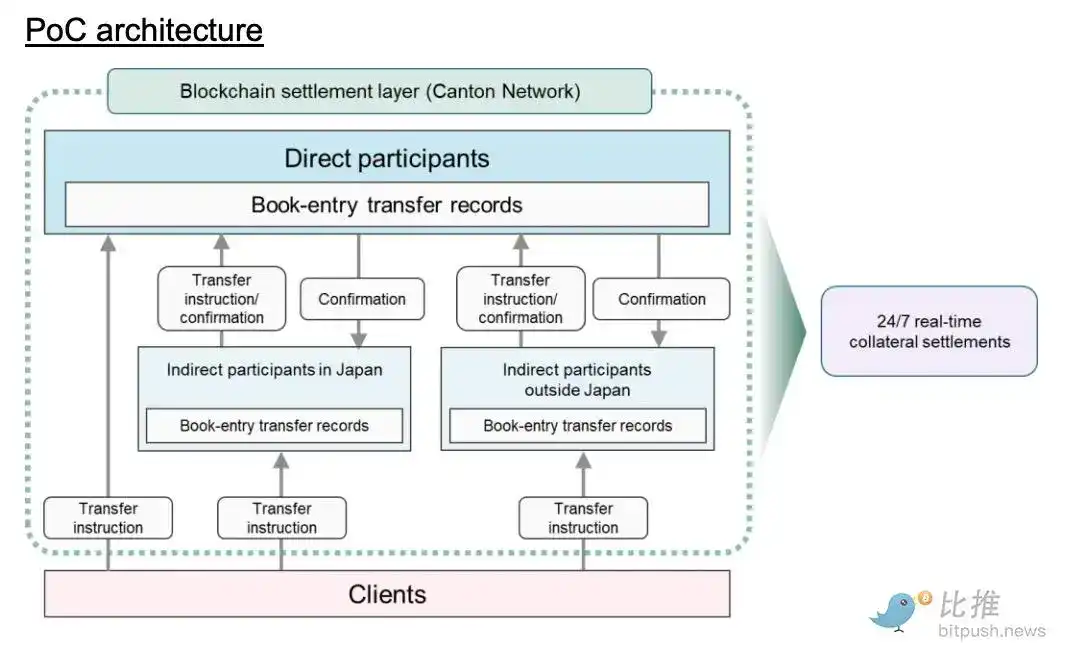
Eight months later, on April 20, 2026, the Japan Securities Clearing Corporation (JSCC), Mizuho Financial Group, Nomura Holdings, and Digital Asset launched a Proof-of-Concept (PoC) aimed at moving Japanese Government Bond (JGB) collateral onto the Canton Network.

JGBs are one of Asia's most critical financial instruments, with over $9 trillion in circulation, making them the single most widely used collateral asset in the region's institutional markets. When banks and hedge funds across Asia need to collateralize their leveraged positions, JGBs are often the go-to choice. And now, that entire collateral system is moving on-chain.

This is arguably the biggest blockchain news of 2026.

This article will analyze why JGBs are the perfect asset to tokenize first, why Canton Network keeps winning institutional orders while public chains battle for retail traffic, and how exactly 'round-the-clock' collateral settlement changes global trading desks.

Why JGBs? Why Now?

For decades, Japan has tried to make the yen a global reserve currency, a wish that never truly materialized. Even today, the yen accounts for only about 4-6% of global reserves, trailing the US dollar, the euro, and even the pound sterling.

But something unintended happened in the process: Japanese government bonds became one of the fastest-growing collateral assets on the Euroclear Collateral Highway—the infrastructure for moving collateral among the world's large financial institutions. Foreign ownership of JGBs has climbed to about 11.9%, meaning roughly ¥144 trillion is held by institutions outside Japan.
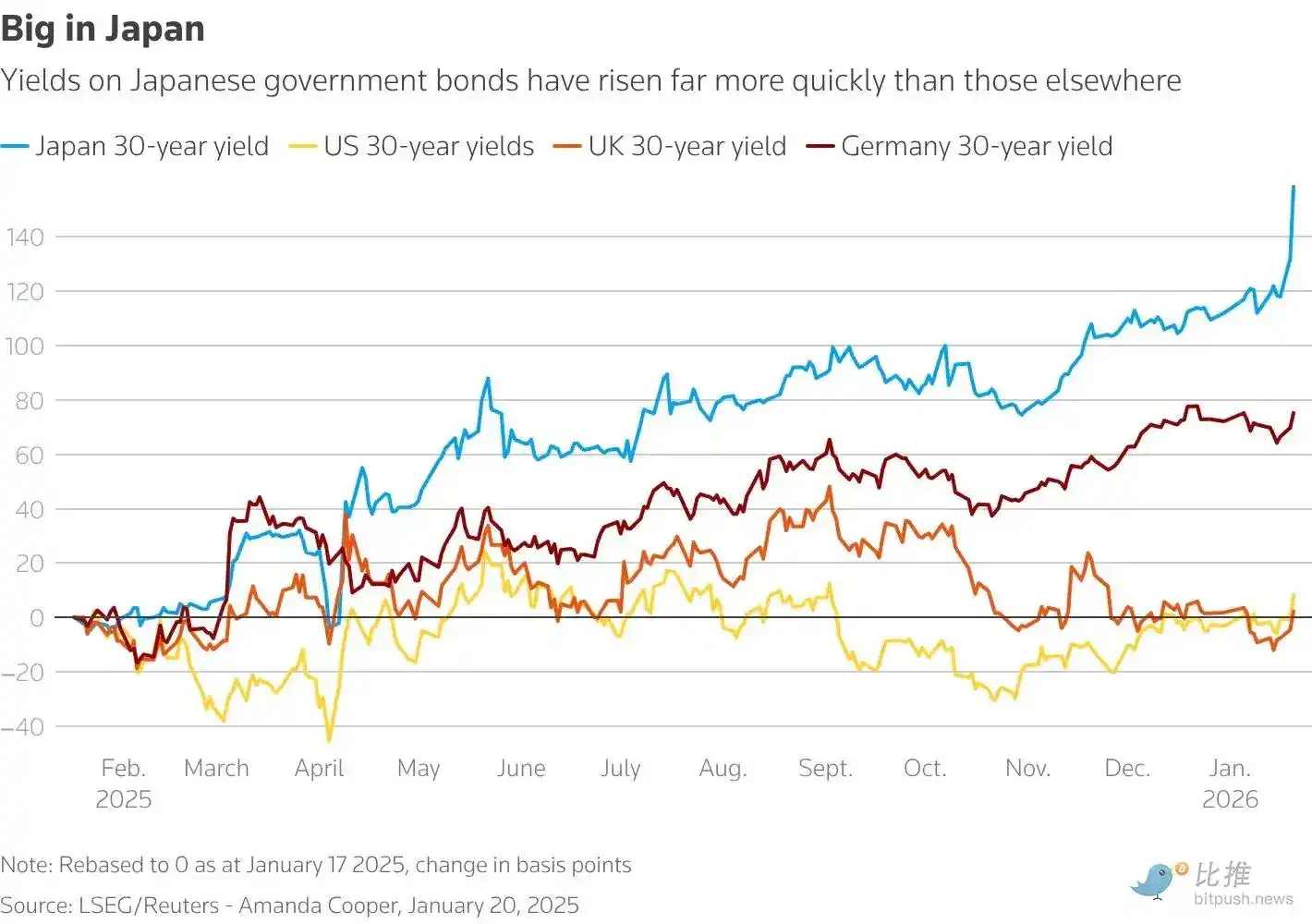
In institutional finance, collateral is everything. Every leveraged position, every derivatives trade, every repo requires high-quality assets as security. Backed by the world's third-largest economy and with virtually no default risk, JGBs are one of the few global assets that qualify. When a hedge fund in Singapore builds a leveraged position, or a bank in London covers a derivatives exposure, JGBs are frequently used as collateral.

Cryptocurrency's most important infrastructure victory is happening inside traditional finance. Without Japan winning the 'currency war,' JGBs have become the operational infrastructure for Asian institutional finance.

The problem is, the entire collateral system operates like it's 1995. Moving JGB collateral between two institutions passes through a layered holding structure: the Bank of Japan (BOJ) at the top, then Hofuri (Japan's securities depository), then a custodian bank, then a sub-custodian. Each layer requires separate reconciliation and operates only during Tokyo business hours (roughly 9 AM to 3 PM JST).

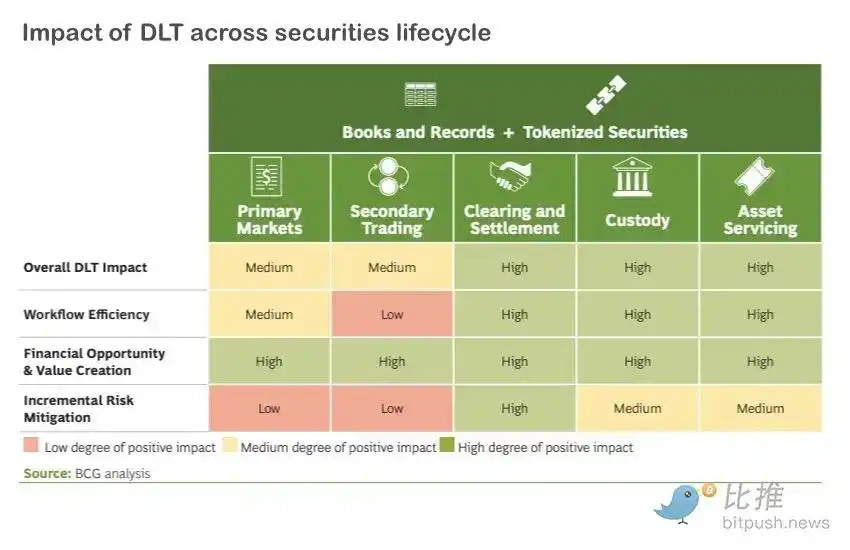
A collateral transfer that should take seconds ends up taking days. During those days, that collateral is 'stuck.' A trading desk in New York needing it at 10 PM has to wait for Tokyo to wake up. A GFMA (Global Financial Markets Association) and BCG study estimates blockchain could unlock $100 billion in trapped collateral globally; for a bank doing $100 billion in daily repo volume, tokenized settlement alone could save $150-300 million annually in operational costs.
Here's something unsettling for Japan: the US is already moving.

DTCC, which custodies $99 trillion in US securities and processes $3.7 quadrillion in annual transactions, partnered with Digital Asset in December 2025 to tokenize US Treasuries on the Canton Network. This means the core of US securities infrastructure is moving towards 24/7 tokenized settlement.

Broadridge is already processing $354 billion in daily tokenized Treasury repo trades on the same network; JPMorgan's Kinexys has processed over $1.5 trillion in cumulative volume through its on-chain payment rail. US Treasuries are rapidly becoming 'always-on, always-movable' collateral assets, while JGBs remain locked in Tokyo's business hours.

If you're a global fund manager needing to post collateral for a margin call at 2 AM, and you can choose between tokenized US Treasuries that settle instantly or JGBs that you have to wait 6 hours for Tokyo to open to move, you choose US Treasuries every time.

Scale that choice across thousands of trading desks, and JGBs risk losing their 'top-tier collateral' status. For a country whose sovereign debt is deeply interwoven into Asia's financial collateral system, this is even an existential issue. The four companies in the JGB on-chain trial used the word 'urgent' in their press release. Given the pace of US infrastructure evolution, it's hard to disagree.

Why Canton Keeps Winning

When Japan's JSCC had to choose a network for JGB collateral, they chose Canton—the same chain DTCC, Broadridge, and JPMorgan are already using. The reason lies in the extremely stringent demands sovereign bond collateral places on a network.

Sovereign bond collateral has a specific set of requirements most blockchains can't meet. When Mizuho Bank transfers JGB collateral to a counterparty in London, the transaction must comply with Japan's Book-Entry Transfer Act. The blockchain record needs to be synchronized at a legal level with Hofuri's official register.

Every party in the transaction (from clearinghouse to custodian to counterparty) can only see data they are authorized to view under Japanese and international securities law. And the entire process requires atomic settlement—the collateral and payment must move at the same instant, or neither moves.

This is an incredibly complex set of constraints. Canton was chosen because its architecture is designed to solve precisely these issues. Each institution runs its own ledger, and cross-institution transactions sync only the data each party is authorized to see. Smart contracts written in Digital Asset's Daml language dictate who can see what and who must authorize each step.

Thus, when JSCC, Mizuho, and Nomura move JGB collateral on Canton, the clearinghouse sees the full picture, Mizuho sees its side, Nomura sees its side, and no one sees anything they shouldn't. Canton is now the only global network enabling three major sovereign bond collateral pools (US Treasuries, Japanese bonds, European bonds) to move across borders, in real-time, 24/7. No other network (public or private) comes close.
What Does 'Round-the-Clock' Collateral Actually Change?

Most coverage of tokenized on-chain settlement stops at 'it's faster.' But speed is just the beginning; the real transformation is in how the system behaves under stress.

Consider what happened in March 2020 during the COVID pandemic. Markets crashed, volatility spiked, and initial margin requirements for equity futures jumped 100% in weeks. Funds unable to meet margin calls were forced to sell assets to raise cash.

But selling assets into a falling market pushes prices lower, triggering more margin calls, forcing more selling. This feedback loop is one of the most dangerous dynamics in finance and nearly broke the system again during the UK LDI pension crisis in September 2022.

How 24/7 tokenized settlement changes this:

  • Direct Collateralization: Currently, when facing a margin call, most funds must first sell assets for cash. With on-chain collateral, funds can directly pledge JGBs or US Treasuries to meet requirements without first converting to cash. The 'forced selling spiral' weakens because fewer institutions dump assets into a falling market just for liquidity.
  • Solving 'Give-to-Get': In traditional repo, the cash lender sends money first and receives collateral later. During this window, one party is exposed. Banks bake this 'intraday exposure' into their haircuts and funding costs.
  • Atomic Execution: With on-chain atomic settlement, both legs of a trade (collateral and cash) move at the same instant. Santander tested this in December 2024, executing $50 million and €50 million in intraday repos on JPMorgan's Kinexys, automatically unwinding them three hours later. Intraday repos, once requiring complex third-party setups or committed credit lines, become routine.

More significantly, in a Canton demo in January 2026, the London Stock Exchange Group (LSEG) brought its Digital Settlement Hub (DiSH) into the trade. DiSH uses tokenized commercial bank deposits as the cash leg, not stablecoins.

This is because banks don't settle billion-dollar trades with USDC—USDC is a private IOU, not 'money good.' DiSH tokens represent actual deposits at regulated banks and can be transferred on-chain 24/7. This solves the cash leg problem, the final piece for institutional adoption. Now, Japan plans to plug JGBs into this same infrastructure.

What This Means

If the JGB trial succeeds, and US Treasuries are already live, with European sovereign bonds also in demos, Canton, in my view, is starting to look like the next SWIFT.

It's a single network becoming the default layer for moving the world's most important collateral across borders. Like SWIFT, once enough institutions join, leaving becomes almost impossible. Network effects compound. Each new sovereign bond class joining benefits existing participants and makes it harder for newcomers to compete.

I think this merits reflection. We in crypto spent years debating decentralization, worrying about single points of failure, building a system no single entity could control the trajectory of. And now, historically the most significant blockchain deployment is converging on a single permissioned network managed by the same institutions that run global finance.

Is this good or bad? It depends on what you believe this is all about. If the goal is to improve capital market efficiency, lower settlement risk, and unlock trillions in trapped collateral, it's working. If the goal was to diminish the power of existing financial institutions, it's doing the opposite—the same gatekeepers are just getting more sophisticated infrastructure.

I don't think that makes it unimportant. Settling government bonds on a blockchain, 24/7, cross-border, atomically, is a genuine upgrade to how global finance operates. But I do think it's worth being honest about what 'kind' of upgrade this is—it's an efficiency revolution: the plumbing is being rebuilt, but the plumbers are the same.


Пов'язані питання

QWhat are JGBs, and why are they considered a critical asset in the Asian institutional finance system according to the article?

AJGBs are Japanese Government Bonds. They are considered a critical asset because, with a circulating value exceeding $9 trillion, they are the most widely used single collateral asset in the region's institutional markets. Supported by the world's third-largest economy and virtually default-free, they are a preferred, high-quality asset for securing leverage positions and derivatives transactions across Asia.

QWhat key problem does the current, traditional JGB collateral settlement system face, and what potential does blockchain technology offer to solve it?

AThe current system operates within limited Tokyo business hours, requiring transfers to pass through multiple holding layers, which takes days and leaves collateral 'frozen' and unavailable. Blockchain technology enables real-time, atomic settlement 24/7. This can unlock an estimated $100 billion in trapped collateral globally and save banks billions annually in operational costs by streamlining the process.

QWhy did Japan's JSCC and associated institutions choose the Canton Network for their JGB tokenization proof-of-concept?

AThey chose the Canton Network because its architecture is specifically designed to meet the stringent requirements of sovereign bond collateral. It allows each institution to run its own ledger while synchronizing only authorized data across parties, ensuring compliance with Japanese securities law. Canton is also the network already being used by major US financial infrastructure players like DTCC for US Treasury tokenization, creating a unified system for cross-border collateral movement.

QHow does the article suggest that 24/7 tokenized collateral settlement could fundamentally change financial market behavior during periods of stress, like the March 2020 crash?

AIt could mitigate the dangerous 'forced selling spiral.' During a crash, funds facing margin calls could directly pledge tokenized JGBs or US Treasuries as collateral without first selling assets for cash. This reduces the need to dump assets into a falling market just to raise liquidity, thereby weakening the feedback loop that exacerbates price declines and further margin calls.

QWhat significant comparison does the article make regarding the Canton Network's potential role in the future of global finance, and what underlying irony or contradiction does it highlight about the blockchain deployment?

AThe article suggests Canton is beginning to look like the next SWIFT—a single default network for moving the world's most important collateral across borders. The highlighted irony is that this historically significant blockchain deployment is converging on a single, permissioned network managed by the very incumbent financial institutions it was once thought might be disrupted. It represents an efficiency revolution in the 'plumbing' of finance, but the 'plumbers' (the established gatekeepers) remain the same.

Пов'язані матеріали

KOL's Perspective: Why Is SOL Set to Rise from This Point?

**Summary: Why SOL is Positioned for Growth at This Level** The article argues that SOL is poised for an upward move from its current price point, citing several key factors. Primarily, SOL has just broken out of a 4-month consolidation phase. This breakout signals a return of risk appetite to the broader crypto market, as SOL is seen as a key indicator of overall crypto health. The token's ownership has reportedly shifted from short-term traders and tourists to long-term accumulators, leading to low volume. Any meaningful increase in trading activity could thus trigger significant upward momentum. Fundamental strengths include strong institutional adoption, integration with DeFi and RWAs (Real-World Assets), and the potential benefits from the Clarity Act. Despite its high volatility—having dropped 70% from its all-time high but still up 12x from its bear market low—SOL is highlighted as one of the few tokens from the last cycle to reach new highs. It boasts a robust ecosystem of applications, users, and protocols. Future catalysts include the expected influx of AI developers following the Miami Accelerate conference, which focused on AI on Solana. Furthermore, Solana is positioned as the premier chain for memecoin activity, a trend expected to continue and drive network usage and fees. The article concludes that recent price action reflects a healthy transfer to long-term holders, setting the stage for growth.

marsbit7 хв тому

KOL's Perspective: Why Is SOL Set to Rise from This Point?

marsbit7 хв тому

Those Pre-Bitcoin PoW Protocols Have Recently Been Reimplemented

This article details a recent surge in replicating pre-Bitcoin Proof-of-Work (PoW) protocols, specifically focusing on Hal Finney's 2004 RPOW (Reusable Proofs of Work). Within five days in May 2026, multiple independent builders in the Bitcoin/cypherpunk community launched projects inspired by this early electronic cash proposal. The initiative began with Fred Krueger's `rpow2.com`, a centralized but auditable system that replaced RPOW's original IBM 4758 hardware with Ed25519 signatures. Initially a faithful replica, it later adopted Bitcoin-like features (21M supply cap, difficulty adjustment) and a controversial 5.24% founder allocation. This sparked rapid forks, including `rpow4.com` which incorporated full Bitcoin parameters, a prediction market (`rpowmarket.com`), and a DEX (`rpow2swap.com`). Concurrently, Mike In Space created a prototype of Wei Dai's 1998 b-money proposal (`b-money.replit.app`), pushing the historical exploration even further back. The article contrasts these centralized, server-dependent experiments with Bitcoin's core innovation of decentralized, trustless consensus. It also highlights a parallel development: the `HASH` project on Ethereum, which uses smart contract hooks to enable a purely fair-launch, browser-mineable PoW token with 0% allocations to team or VCs. The collective activity is framed as a meme-driven, educational exploration of cypherpunk history rather than a serious financial movement, with all projects heavily disclaiming any investment value.

marsbit12 хв тому

Those Pre-Bitcoin PoW Protocols Have Recently Been Reimplemented

marsbit12 хв тому

South Korean Exchanges 'Battle' Regulators, Challenging the Boundaries of Enforcement and Legislation

South Korea's cryptocurrency industry is engaged in a rare, direct confrontation with regulators. The Financial Intelligence Unit (FIU), the primary anti-money laundering (AML) watchdog, has recently imposed heavy penalties on major exchanges like Upbit and Bithumb for alleged violations involving unregistered overseas VASPs and AML procedures. However, exchanges are now actively challenging these actions in court and through industry associations. In a significant shift, the Seoul Administrative Court ruled in favor of Upbit's operator, Dunamu, overturning part of an FIU-ordered business suspension. The court found the FIU's penalty criteria and justification insufficiently clear. Similarly, the court suspended the enforcement of a six-month business suspension against Bithumb pending a final ruling, citing potential irreversible harm to the exchange. Beyond legal battles, the industry is contesting proposed legislative amendments. The Digital Asset eXchange Alliance (DAXA) strongly opposes a draft rule that would mandate Suspicious Transaction Reports (STRs) for all crypto transfers over 10 million KRW (~$6,800). DAXA argues this "poison pill" clause violates legal principles and would overwhelm the STR system, increasing reports from 63,000 to an estimated 5.45 million annually for major exchanges, thereby crippling effective AML monitoring. This conflict highlights a structural tension in South Korea's crypto governance: comprehensive digital asset laws are still developing, while regulators rely heavily on AML enforcement. The industry's move from passive compliance to active legal and legislative challenges signifies a new phase, pressing for clearer rules and more proportionate enforcement. While short-term disputes may intensify, this clash could ultimately lead to a more mature and sustainable regulatory framework for South Korea's vibrant crypto market.

marsbit1 год тому

South Korean Exchanges 'Battle' Regulators, Challenging the Boundaries of Enforcement and Legislation

marsbit1 год тому

After 50x Storage Surge, Justin Sun Always Looks to the Next Decade

Sun Yuchen, known for his controversial stunts like a $30 million lunch with Warren Buffett (canceled due to a kidney stone) and eating a $6.2 million duct-taped banana, is often overshadowed by a significant fact: his decade-long track record of spotting major investment trends. In 2016, he famously advised young people to invest in Bitcoin, Nvidia, Tesla, and Tencent instead of buying property. A hypothetical $20,000 investment in Nvidia and Tesla from that list would now be worth over 50 million RMB. His latest major call was on November 6, 2025, predicting a "50x storage opportunity" tied to the AI boom, which materialized with Sandisk's stock surging nearly 50-fold by 2026. Looking ahead, Sun now focuses on the next frontier: Physical AI. He identifies four key areas: 1. **Embodied AI/Robotics**: He sees this reaching its "iPhone moment," with companies like UBTech and Galaxy General leading in commercialization. 2. **Drones**: Viewed as the first commercially viable form of Physical AI, revolutionizing sectors from warfare (e.g., AeroVironment's Switchblade) to logistics. 3. **Spatial Computing**: Beyond VR, it's about AI understanding physical space, a foundational technology for robotics and autonomous systems, exemplified by Apple's Vision Pro. 4. **Space Exploration**: After a 2025 suborbital flight with Blue Origin, Sun advocates for space as the ultimate frontier, discussing blockchain's potential role in space asset management and data transactions. His investment philosophy involves betting on entire, inevitable trends rather than single companies. For robotics, he sees Tesla (the body/manufacturer) and Nvidia (the brain/AI platform) as complementary plays. In defense drones, he highlights companies making tanks obsolete (AeroVironment) and those augmenting fighter jets (Kratos). For space, he participated in Blue Origin's flight and anticipates SpaceX's potential IPO to redefine the sector's valuation. Sun Yuchen's vision frames the next two decades not as a revolution in information flow (like the internet), but in the fundamental operation of the physical world through AI-powered robots, autonomous systems, and spatial intelligence, ultimately extending human and AI activity into space. While many still focus on conventional assets, he continues to look toward the next technological horizon.

marsbit2 год тому

After 50x Storage Surge, Justin Sun Always Looks to the Next Decade

marsbit2 год тому

Торгівля

Спот
Ф'ючерси
活动图片